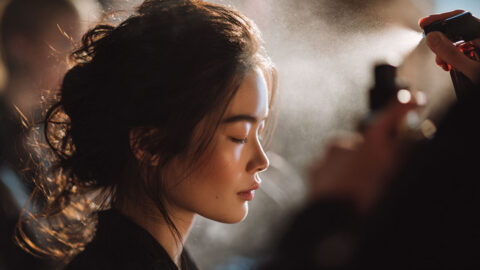
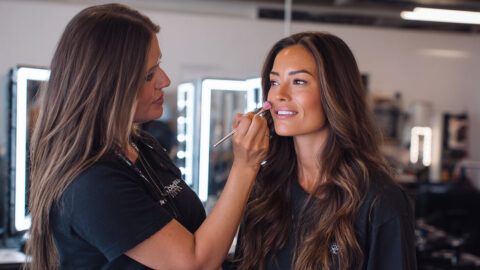
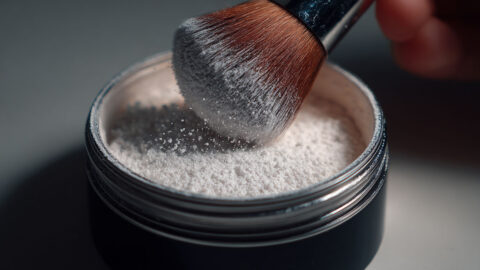
Cream blush goes on over a finished base. Put 2 to 3 small dots on the apples of your cheeks, tap them in, and blend up and out toward the temples.
The formula has an emollient base, so it melts into skin. That’s also why it goes on before setting powder. Powder underneath makes cream blend poorly and the finish looks textured.
Most people use their fingers. The American Academy of Dermatology’s 2019 guidance for acne-prone skin says to use applicators instead, because fingers transfer oil to the face. A damp sponge or a stippling brush gives the same tapped-in result.
How to Apply Cream Blush Step by Step

Dot the blush onto the apples of your cheeks after base makeup, tap it in with your fingertips, and blend up and out toward the temples. Thin layers work better than one heavy pass.
- Finish skincare, foundation and concealer, then let the base settle for about a minute.
- Warm a small amount of blush on your fingertip.
- Smile, then place 2 to 3 small dots on the top of each apple, never below the fullest point of the cheek.
- Tap and press the color into skin with your fingertips, a damp sponge or a stippling brush.
- Blend up and out toward the temples until no edge shows.
- Add a second thin layer only if the color reads too soft in daylight.
- Wait about 30 seconds, then set with a light dusting of translucent powder.
The dot count depends on the product. Beauty Bay’s tutorial uses 2 to 3 dots of a liquid cream and Maybelline starts with 1 to 2. Glossier goes smaller, a single tiny dot squeezed onto your fingers.
For a sheer wash, use one dot per cheek and blend it wide. For bolder color, add a second layer on the apples only, and tap it in before the first one dries down.
Faces Canada recommends applying while the base is still slightly tacky, and waiting 30 seconds before any powder goes on.
Dry patches grab cream unevenly. A proper routine for prepping skin before makeup fixes most of that before the blush ever comes out.
Should Cream Blush Go On Before or After Foundation?

After foundation and concealer, and before setting powder. Most brand tutorials agree on that order, though not all of them.
Charlotte Tilbury’s 2025 tutorial puts cream blush after foundation, concealer, cream bronzer and liquid highlighter, and before any powder, to prevent lifting and texture. The e.l.f. guide gives the same warning about face powder under cream. That’s the majority view.
Maybelline notes that some people apply cream blush before foundation to tone the color down. It works, but the foundation then moves the color around. I’d skip it. A smaller dot over the finished base softens things just as well and you keep control.
| Product | Position | Reason |
|---|---|---|
| Foundation, concealer | Before blush | Gives the cream a base to melt into |
| Cream bronzer, liquid highlighter | Before powder | Same cream stage as the blush |
| Setting powder | After blush | Powder under cream blends badly |
| Powder blush | After blush | Layers on top for pigment and wear |
The same wet-before-dry logic runs through the whole face, which is the basic idea behind layering makeup in the right order.
Powder foundation is the one exception worth knowing. Cream drags and patches over a powdered base, and Thin Lizzy’s guide pairs powder bases with powder blush for exactly that reason.
Once the cream is blended, press the powder in lightly. A walkthrough on applying setting powder covers how to do it without sweeping the blush away.
Which Tool Works Best for Cream Blush?

Fingers, for most people. Body heat warms the cream and the pressure stays light. A sponge or brush earns its place when you want softer edges or tighter control.
| Tool | Finish | Best for | Drawback |
|---|---|---|---|
| Fingers | Warm, skin-like | Sheer sticks and gels, beginners | Edges need more blending |
| Damp sponge | Soft, diffused | Pressing color in, softening edges | Needs washing, wears out |
| Stippling brush | Light, precise | Controlled placement | Requires tapping, not sweeping |
| Duo fiber brush | Airy, diffused | Sheer build-up | Less color per pass |
Rose Inc quotes makeup artist Manuel Espinoza on using the ring finger, since it applies the lightest pressure.
Fenty Beauty’s directions for Cheeks Out Freestyle Cream Blush name two tools, fingertips or its Face Shaping Brush 125.
Why a damp sponge works
Beautyblender’s own instructions say to wet, squeeze, then bounce. Selfridges lists the brand’s reasoning as a damp sponge absorbing less product, so each application uses less.
Beautyblender’s care guidance, as retailers such as Selfridges list it, puts replacement at every 3 months. Between replacements, a guide to cleaning makeup sponges keeps old cream from building up inside the foam.
When a brush is the better call
Charlotte Tilbury says a brush gives a more precise application than fingers. Beauty Bay’s tutorial presses blush in with a Zoeva 125 stippling brush, then dabs a W shape from one cheek across the bridge of the nose to the other.
Tap, never sweep. Swiping with any tool pulls foundation off the skin underneath.
The more base you want left undisturbed, the more you tap. Fingers and a damp sponge tap naturally. A brush only does if you make it.
Cream Blush Formats: Stick, Pot, Balm and Liquid

Sticks, pots or compacts, balms, and liquid or gel creams all count as cream blush. They share an emollient base that melts into skin and blends into a dewy, skin-like flush, but the format decides how much pigment lands per touch.
Powder blush is the main alternative, and an overview of the different types of blush shows where cream fits among them.
Stick cream blush
Westman Atelier Baby Cheeks goes on directly or via fingers or a brush. Blend from the middle of the cheekbone in a small oval motion, up and outward. The same stick works on lips for a monochrome look.
A direct swipe deposits the most pigment in one spot. Start at the apple and blend before the cream cools.
Pot and compact cream blush
Pots reward warming. Press a fingertip into the pan and rub it for a few seconds before it touches the cheek, which is the step e.l.f. calls out in its tutorial.
Fenty Beauty describes Cheeks Out Freestyle Cream Blush as sheer and buildable, applied at the tap of your fingertip.
Balm cream blush
Merit Flush Balm is a dome-shaped pot you swipe onto cheeks or lips and blend with your fingers (Merit, via Sephora). SheerLuxe describes the texture as waxy without feeling greasy.
The catch, per PureWow, is that some shades need more swipes than others before the color shows.
Liquid and gel-cream blush
Glossier Cloud Paint comes in a 10 mL tube. Squeeze a tiny dot onto your fingers, dab it on the apples, blend up and out, and mix shades on the back of your hand if you want a custom color.
Liquid formulas follow the same tap-and-blend sequence, and a separate guide on applying liquid blush covers where they differ.
Allure notes that gels stay put on oily skin but are hard to blend on drier skin.
Where to Place Cream Blush for Your Face Shape
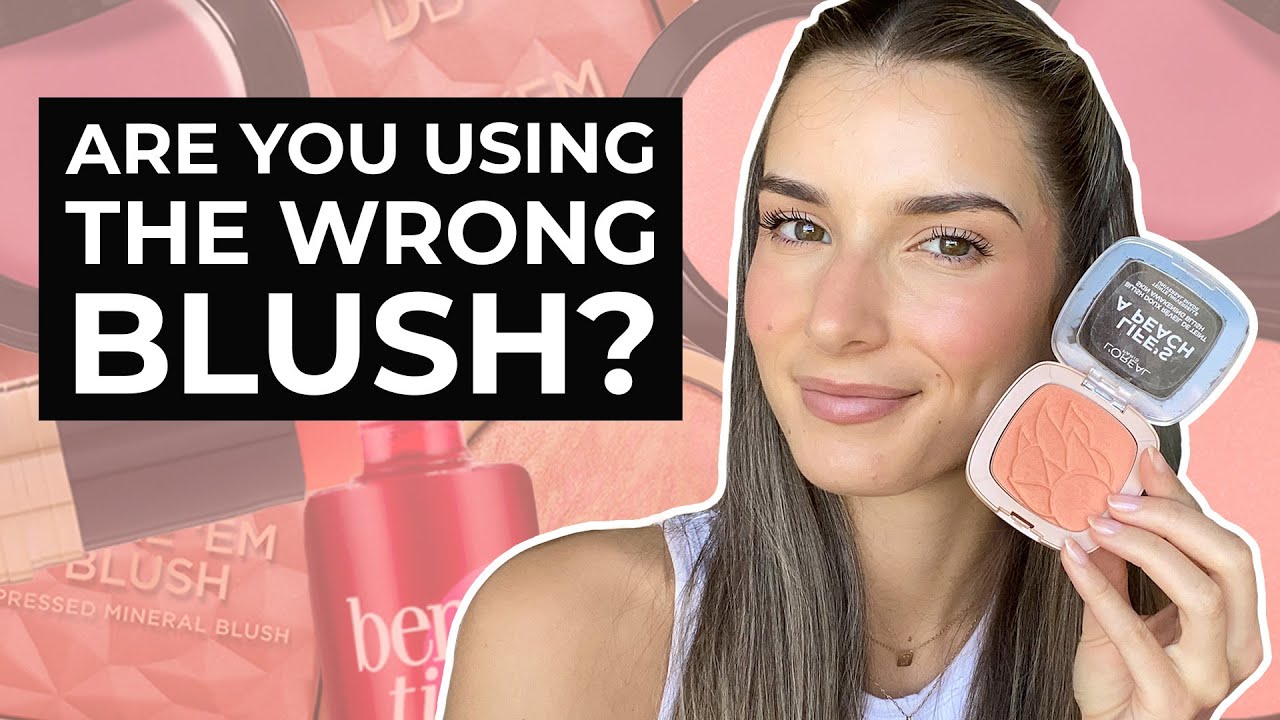
Start at the apples of the cheeks and blend up and out toward the temples. Face shape changes how high you go and how far the color travels.
Smile to locate the apples. Going too low makes the blush look like it’s pulling the face down (Beauty Bay). And keep the edges blended, because a visible line is the quickest way to make cream look heavy.
| Face shape | Placement | Goal |
|---|---|---|
| Round | Apples, then up along the cheekbones to the temples | Slim the face |
| Square | Apples, softly down into the cheek hollows | Soften angles |
| Long | Apples up toward the temples, with a touch on the chin | Shorten the face |
That table follows Allure. KIKO disagrees on round faces, placing blush from the cheekbones to the corner of the mouth and blending out to the hairline.
They’re solving different problems. Allure wants lift, while KIKO spreads the color across the lower cheek. Pick the goal first, then check the result in daylight.
Thin Lizzy adds one more rule for angular faces. A soft, circular application on the fullest part of the cheek balances them.
For a wider breakdown, a guide to applying blush on different face shapes covers every shape, including ones this table skips.
e.l.f. and Charlotte Tilbury both put a touch of cream on the bridge of the nose for a sun-kissed look.
How to Choose a Cream Blush Shade for Your Skin Tone
Match shade to skin depth first, then fine-tune by undertone. Maybelline’s shade guide sets the goal, which is a color that warms the face without washing it out.
Formula plays a part too. Allure notes that sheer cream and gel blushes look best on very pale and very dark complexions, because the skin shows through.
If you can’t tell your depth, Live That Glow sorts it by sun reaction. Burning easily without tanning reads as fair, burning with a slight tan as light, tanning easily as medium, and never burning as olive or dark.
If the sun test leaves you unsure, a guide to matching makeup to your skin tone goes deeper on depth and undertone.
By skin tone depth
| Depth | Shade families | Watch for |
|---|---|---|
| Fair | Baby pink, light peach, soft rose | Picks up color fast, so go light |
| Medium | Apricot, rose, coral, copper | Widest range, match undertone |
| Deep | Orange, brick, burgundy, bronze-brown | Blue-based pinks can turn ashy |
Revlon warns that a heavy hand on fair skin reads as too intense. Buxom flags cool, blue-based pinks and berries as a risk on warm-toned deep skin.
Sources split on medium skin. Buxom points to soft rosy pinks, while Lancome Pro Artist Antonia Basile, quoted in Woman and Home, steers medium skin toward warm apricots, roses and copper.
Undertone settles it, and Basile says as much herself. Choose a shade with a similar undertone to your skin.
By undertone
Cool undertones suit soft pink or dusty rose on fair to light skin, and raspberry or deep berry on medium to deep skin (Revlon).
Warm undertones go with peach, apricot, coral and terracotta. Maybelline pairs its Cheek Heat Gel Cream Blush in Coral Ember with dark skin and warm undertones.
If you really can’t tell, Faces Canada calls peachy pink the safest bet across depths.
Undertone picks the shade family, and depth decides how saturated it should look.
Which Skin Types Suit Cream Blush, and When to Skip It

Cream blush suits dry, normal and mature skin best, and it’s the weakest pick for very oily skin. The emollient base adds moisture where skin lacks it, and extra slip where skin already has plenty.
| Skin type | Cream blush fit | Adjustment |
|---|---|---|
| Dry | Strong | Moisturize first, build thin layers |
| Mature | Strong | Sheer or blurring formulas, no heavy shimmer |
| Combination | Mixed | Cream if cheeks run dry, powder if they run oily |
| Oily | Weakest | Oil-free formula, set with powder |
Dry and mature skin
Woman and Home’s panel of makeup artists says cream blush on dry skin gives a lit-from-within glow. Dry patches still grab pigment, though, so a routine built for makeup on dry skin matters more than the blush itself.
On mature skin the experts disagree. Shop TODAY quotes makeup artist Jonet Williamson avoiding liquid blush because it can settle into fine lines, but Marie Claire says liquid and cream textures are often the best choice because they crease less.
Both camps agree on the bigger point, which is that cream or blurring formulas beat matte powder. Marie Claire’s Lisa Caldognetto adds that heavy shimmer exaggerates fine lines.
One more tip from the Shop TODAY experts is to apply blush after primer but before foundation. It lines up with the minority order covered earlier.
Oily and combination skin
The American Academy of Dermatology recommends oil-free, water-based makeup for oily skin, and says products labeled matte help cut shine.
Verdicts on cream blush itself are mixed. Allure says it can migrate and fade on oily skin, Maybelline calls powder the better choice for very oily skin, and Faces Canada says cream works if you set it with translucent powder.
The dermatologists add a wrinkle for acne-prone skin. They advise applicators over fingers, since fingers transfer oil, which runs against the finger-first advice in most cream blush tutorials.
The same guidance says to wash makeup brushes with soap and water every seven to 10 days, and this guide to washing makeup brushes shows how.
When cream blush is the wrong pick
Skip it on very oily skin if you won’t set it. Skip it on acne-prone skin if you apply with unwashed fingers or tools. Hot, humid days are tricky too, since Mirenesse says cream can last through a warm day but only with thoughtful layering.
In those cases a powder blush, or a cream-to-powder formula that sits on top of the skin, is the better call.
How to Make Cream Blush Last All Day

Start on a moisturized, primed base, layer a thin powder over the cream, and lock everything with setting spray. That handles most fading problems.
Prep does half the work. No7 makeup artist Nic Chapman says moisturizer and primer give makeup something to grip, and the habits behind making makeup last all day carry over to the cheeks.
| Method | Backed by | Catch |
|---|---|---|
| Cream, then powder blush | Melissa Hernandez (BeautyCrew) | Needs a matching shade |
| Powder first, then cream stamped on with a dense brush | Patrick Ta, Sara Wren (Milk Makeup) | Swiped cream turns pasty |
| Translucent powder and spray only | Leigh (Makeup.com) | Less pigment to build on |
The order is contested. Wren describes layering powders under cream blushes as a pigment “sandwich”, while Chapman warns that liquid over powder creates a paste and a patchy finish.
Leigh, quoted by Makeup.com, cautions against the popular powder-over-cream tip altogether.
Hernandez pairs the Dior Backstage Rosy Glow Stick with its matching powder blush. The cream gives the fresh flush, and the powder adds dimension and locks color without turning cakey.
Setting spray as the final coat
Wren compares setting spray to a top coat that locks in blush and the rest of the makeup. For technique, see this guide to applying setting spray.
When color fades mid-day, Milk Makeup suggests adding pigment back with a sponge dampened with setting spray, a brush or your fingers.
Leigh has a workaround for extra wear time. She presses a lipstick into the apples of her cheeks with a fingertip.
Why Cream Blush Turns Patchy and How to Fix It

Patchy cream blush usually comes down to a base that hasn’t settled, too much pigment in one spot, or dry skin underneath. Each has its own fix.
Makeup artist Glazer, quoted by Makeup.com, says to give foundation a few moments to settle before dabbing a heavier texture on top. Her placement guideline is to start the blush a two-finger distance away from the base of the nose.
If there’s too much pigment, Faces Canada suggests patting a little foundation around the edges to soften the intensity.
Dry patches are a separate problem. L’Oreal Paris says low humidity and cold weather dry skin out, so makeup clings to flaky spots, and a face mist helps blend patchy areas.
The logic matches any guide on fixing patchy makeup. Moisture and patience beat more product.
- Mist your face lightly with a hydrating face mist.
- Tap the patchy area with a damp sponge until the color diffuses.
- Pat a little foundation around the edges if the color is still too strong.
- Add a thin layer of cream to any gap, then reset with setting spray.
Cream Blush FAQ
How do you fix too much cream blush?
Pat a little foundation around the edges to soften the color, according to Faces Canada. If you wipe the area clean and start over, put a touch of moisturizer or primer there first.
Can cream blush double as a lip tint?
Yes, when the formula is made for lips as well as cheeks. Read the directions first, then use the same shade on both for a monochrome look.
A light tap on the bridge of the nose ties it together.
Does cream blush need foundation underneath?
No. It blends fine onto bare, moisturized skin, and Maybelline’s advice is to start with a small smudge you can build on.
Use less than you would over foundation, because nothing underneath softens the color.
Can you use cream blush on your eyelids?
Sometimes. Balm-style formulas are often sold for eyes, lips and cheeks, and a soft wash on the lid is a common use.
Others carry an avoid-contact-with-eyes warning, so check the directions before going near the lash line.
The Simplest Cream Blush Setup to Start With
A sheer gel-cream or balm, tapped on with clean fingertips over finished foundation and set with translucent powder, is the easiest place to begin. Sheer, buildable pigment forgives a heavy hand.
Get the shade right first, matched to your undertone. Then keep the order straight, base, cream, powder. Fingertips before any brush.
That ranking is deliberate. A wrong shade can’t be blended into a right one, and a wrong order leaves patches. Swapping tools takes seconds.
The trade-off is that sheer formulas need more layers when an evening look calls for deeper color, and each layer adds blending time.
Makeup artist Glazer, quoted by Makeup.com, places liquid or cream highlighter after the blush has settled and been misted with setting spray. A guide to applying cream highlighter covers that next step.

She started writing on the site after fielding the same questions from clients and friends often enough to just write the answers down: which red won't turn orange on a warm undertone, how to keep lipstick from feathering into fine lines, why a "12-hour" formula rarely survives dinner.
Every review on the site follows the same rule she uses with paying clients: wear it first, then decide if it's worth recommending.
- How to Make Eyeliner Last Longer Without Smudging - August 31, 2026
- How to Make Eyeshadow Last Longer All Day - August 29, 2026
- How to Find Your Undertone in 5 Easy Steps - August 27, 2026