Your lipstick survived dinner, three drinks, and a shower. Now it will not leave.
The problem is not that you are being too gentle. That pigment is pinned down by a silicone film, and silicone does not dissolve in water. Soap slides across it. Face wash slides across it. You can stand at the sink working at it for two minutes and walk away with sore lips and roughly the same color you started with.
So the whole question of how to remove matte lipstick turns on using something oily enough to break that film, and then leaving it there long enough to work.
What Is Matte Lipstick Removal
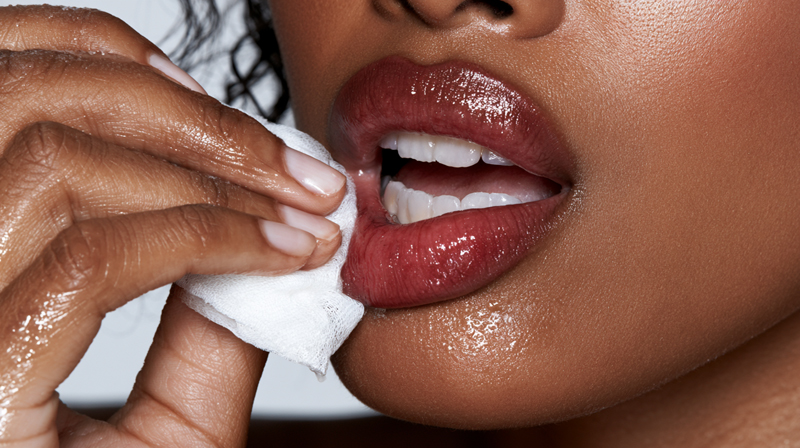
Two separate jobs are involved, and most people only ever do the first one.
The first job is dissolving the polymer mesh sitting on top of the lip, which takes an oil-soluble solvent. That is the part that feels like progress, because color comes away on the pad. The second job is the leftover tint that has already worked its way into the outer keratin layer. That does not lift with solvent at all. It gets buffed off slowly or it fades on its own.
Cream formulas barely produce the second problem. Transfer-proof mattes almost always do.
The gap between a cream bullet and a cured liquid matte comes down to formulation, which is worth understanding before you touch a cotton pad. If you want the background on what makes a matte finish matte, the pigment-to-emollient ratio explains most of it.
Time cost splits the same way. A cream lipstick lifts in one pass of about 10 seconds. A transfer-proof matte needs 30 to 60 seconds of dwell time before anything moves.
Why Matte Lipstick Does Not Come Off With Water or Face Wash
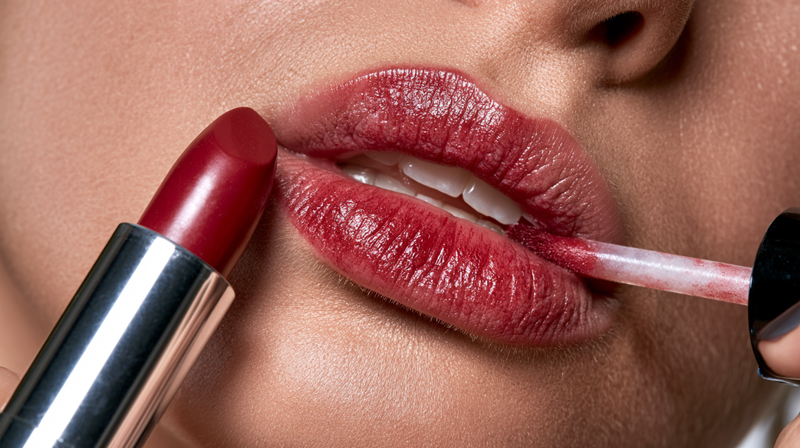
Blame the film formers. They are silicone resins, and water has no effect on them. Trimethylsiloxysilicate and its relatives build a hydrophobic barrier designed to survive sweat, wine glasses, and detergent, so a surfactant cleanser just travels over the top of it.
Silicone suppliers describe trimethylsiloxysilicate as forming a soft, flexible film with water repellency and resistance to detergent and water wash-off, which is exactly the property you are fighting at the sink. Shin-Etsu, one of the largest suppliers, sells it pre-dissolved in volatile carriers such as isododecane and cyclopentasiloxane, in grades sorted by film strength.
Water is up against more than one thing at once here:
- Volatile solvents like isododecane flash off after application and leave a flexible polymer mesh behind
- Pigment load runs high while emollient content runs low, so there is little oil left for water to grab
- Bromo acid dyes such as D&C Red 21 and D&C Red 27 react with lip tissue directly, producing a stain independent of the film above it
- Nothing in a foaming cleanser is a solvent for any of that
Cosmetics and Skin’s history of indelible lipstick notes that these water-insoluble fluorescein dyes were adopted precisely because they worked on dry lips and reacted with lip tissue to leave a stain more intense than anything before them. The first of them, an acid form of eosin, is still on ingredient lists today as D&C Red No. 21 (CI 45380).
One caveat worth knowing: these dyes only stain in their free acid form. When the same colorant appears as a lake (Red 27 Lake, for instance), it is bound to an insoluble substrate and sits on the surface instead of reacting. Check which version your ingredient list names before blaming the dye.
Soap makes it worse. Surfactants strip lip lipids before they touch the pigment, and the lip’s stratum corneum runs only about three to five cell layers deep against roughly 15 to 20 on ordinary facial skin, per Skin Inc. That is where the burning and flaking start.
Not every matte behaves the same, though, and knowing which one you have on changes the removal method. Anyone comparing the different lipstick formulas on the market will notice the finish label says less about wear than the delivery format does.
The Difference Between Transfer-Proof and Traditional Matte
Wax-and-clay mattes sit on the surface and never really bond to anything. A film-forming liquid matte cures, which is a completely different situation once you want it off.
| Type | Structure | Removal difficulty |
|---|---|---|
| Bullet matte (MAC Retro Matte, NARS Powermatte Lipstick) | Wax, clay, silica fillers | Low, one balm pass |
| Liquid matte (SuperStay Matte Ink, Stunna Lip Paint) | Cured silicone film | High, saturation required |
| Matte lip stain | Dye bound to keratin | Highest, fades rather than lifts |
Mordor Intelligence puts matte as the fastest-growing finish at a 7.81% CAGR over 2025 to 2030, while satin held 43.41% of 2024 share. More matte on the market means more of this problem, not less.
What Removes Matte Lipstick Best
Cleansing balm, if you want the short answer. It melts on contact, it stays put while it works, and it usually finishes the job in one or two passes. Cleansing oil comes next, then bi-phase remover, then micellar water, then petroleum jelly and plain plant oil at the slow end. Micellar water on its own almost always leaves a ring of stain sitting at the lip line.
Comparisons of cleansing methods consistently favor a two-step oil-then-water routine over micellar water alone. One widely circulated figure puts residue removal at roughly 96% for double cleansing against about 63% for micellar water and rinsing. Treat that number as directional rather than definitive: it was measured on sunscreen residue on facial skin, it traces back to secondary sources rather than a named peer-reviewed trial, and no equivalent lip-specific study exists. The mechanism still holds, since lip pigment sits under the same class of silicone film formers.
| Remover | Dwell time | Passes needed |
|---|---|---|
| Cleansing balm | 20 to 30 sec | 1 to 2 |
| Cleansing oil | 30 sec | 2 |
| Bi-phase remover | 15 to 20 sec | 2 |
| Micellar water | 45 sec | 3+ |
| Petroleum jelly | 60 sec or overnight | 2 |
Clinique Take The Day Off and Banila Co Clean It Zero both carry enough solvent to break silicone, and the guidance on using Take The Day Off properly applies to lips as much as to the rest of the face.
With oils, emulsification is the thing to check. DHC Deep Cleansing Oil rinses clean, which matters, because oil left sitting on the lip holds pigment against it.
Bi-phase removers such as Lancome Bi-Facil need shaking every single time you pick up the bottle. The silicone-and-water split is how the product works. It is not the product going off.
Bioderma Sensibio H2O is a standard micellar water rather than a waterproof-specific one, so it handles surface color and stops there. If you want the micellar route to stand a chance, reach for a bi-phase or oil-in-water version built for long-wear makeup, such as Garnier Micellar Cleansing Water in Oil. The same limits show up when taking off waterproof formulas anywhere on the face.
Coconut oil gets recommended constantly. It is slow on cured films and I would reach for it fourth, not first.
Removers That Damage Lips
Skip these. All of them strip the lipid barrier faster than they touch pigment.
- Alcohol-based wipes dehydrate the vermilion and sting quickly on skin that is already compromised
- Acetone has no business anywhere near lip tissue
- Bar soap brings high pH and heavy surfactants with zero solvent action
- Hot water plus scrubbing is friction on a barrier with no sweat glands and virtually no sebaceous glands to replace what you take off
Skin Inc. reports that transepidermal water loss has been measured at roughly three times higher on the lip than on the cheek, partly because lips carry fewer ceramides than skin elsewhere on the body. Barrier damage here shows up fast.
How to Remove Matte Lipstick Step by Step
Blot, saturate, press, work outside-in, then double cleanse. That runs about 90 seconds for a liquid matte. Swiping at any stage drags pigment onto the skin around the mouth and adds passes, and the extra passes are where most of the irritation comes from.
- Blot the surface with a dry tissue first. This lifts loose pigment before any product touches the lip and cuts one full pass off the process.
- Saturate a cotton round with balm or oil until it is visibly wet, not damp.
- Press and hold for 20 to 30 seconds. Do not rub.
- Work from the outer lip line inward, using a fresh section of the pad for each quadrant.
- Take a second, clean pad to the inner lip and the wet line, then rinse and follow with your usual face cleanser.
That last step is the double cleanse applied to lips. Oil breaks the film, water-based cleanser takes the oil off.
Tool preference is personal. I use flat cotton rounds because reusable pads shed fibers into balm, though muslin cloth works if you already have one at the sink.
How to Remove Liquid Matte Lipstick
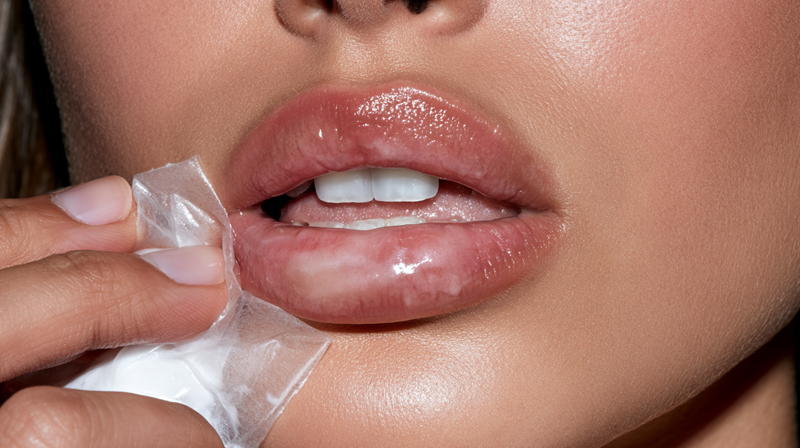
Sixty seconds of balm saturation, no friction at all. Cured film responds to solvent contact time and ignores pressure entirely, which is the opposite of what instinct tells you. Formulas like KVD Beauty Everlasting, Stila Stay All Day, and Jeffree Star Velour behave more like a thin coating than a cosmetic.
The matte finish segment of liquid lipstick alone was valued at USD 1.2 billion in 2024 and is projected to reach USD 2.6 billion by 2034 at a 7.5% CAGR, per Reports and Data, which explains why this specific removal question keeps coming up.
For the press itself, load balm onto the pad, cover the whole lip, hold, then fold the pad over and hold again on the corners. The corners need the second round because liquid matte pools where the vermilion meets the wet line. Pull the lower lip taut with one finger and press the pad flat into the crease.
Flakes get softened with balm and lifted. Peeling one off takes living cells with it, and you will feel that for two days.
The dryness complaint is worth putting in context. A Rutgers Center for Dermal Research poster on lip hydration opened by noting the common consumer perception that matte lipsticks do not transfer easily but can feel drying, then measured what actually happened: every lipstick tested, regardless of brand or type, increased measured hydration to some degree over a two-hour wear window. So the tightness people report is largely about the film’s feel and the removal that follows, not a straightforward moisture deficit during wear.
Technique overlaps heavily with taking off liquid lipstick in general, and one product in particular has its own quirks worth reading on getting SuperStay Matte Ink off cleanly.
How to Remove Matte Lipstick Without Makeup Remover
Olive oil, petroleum jelly, and full-fat dairy all break matte lipstick down. Petroleum jelly is the one I would grab, because it holds contact time without evaporating or running down your chin. Honey, toothpaste, and baking soda do nothing useful, and two of the three are abrasive.
| Household option | Time to work | Best for |
|---|---|---|
| Petroleum jelly | 60 sec or overnight | Cured liquid matte |
| Olive or almond oil | 45 sec | Bullet matte |
| Jojoba oil | 45 sec | Sensitive lips |
| Full-fat yogurt | 2 min | Residual tint |
Petroleum jelly earns its top spot on physics. A 2017 review in Clinical Medicine & Research, summarized by MDedge, reports that petrolatum at a minimum concentration of 5% reduces transepidermal water loss by more than 98%, with 170 times the water vapor loss resistance of olive oil, while lanolin, mineral oil, and silicones such as dimethicone manage 20% to 30%.
Full-fat yogurt combines lactic acid with lipids, which loosens surface tint. It will not touch a cured film, so use it after the oil step rather than instead of it.
Lip balm works in a pinch. Apply thickly, wait, wipe with tissue.
Sugar scrubs alone, toothpaste, and baking soda circulate constantly online. None of them dissolve silicone, and all three abrade a barrier that is already thinner than facial skin. The broader logic behind clearing makeup with no dedicated remover on hand is the same: find the fat, skip the grit.
How to Remove Matte Lipstick Stain Left on Lips
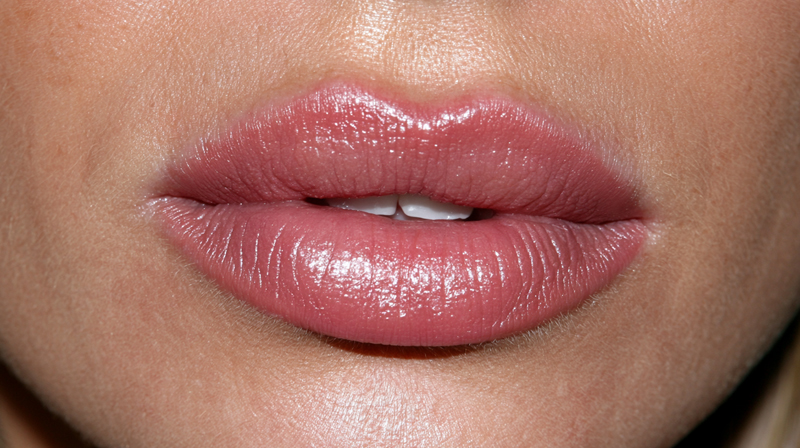
That tint left behind after the film is gone is not product anymore. It is dye bound to keratin. Buffing with a soft toothbrush and balm lifts most of it in about 30 seconds, and whatever survives that fades as the surface layer sheds.
How fast that happens is less settled than beauty writing usually implies. The familiar 28-to-40-day figure comes from older estimates; more recent work puts complete epidermal turnover closer to 40 to 56 days in adults, slowing further with age. No reliable published figure exists for lip vermilion specifically, so treat any precise number for lips as an estimate rather than a measurement.
Why it happens comes down to pigment chemistry. Lake pigments bond to an insoluble alumina substrate and stay non-migratory. Bromo acid dyes like D&C Red 27 and Red 21 penetrate and react, which is the whole point of how a lip stain works.
Ranked by how fast they actually work:
- A soft toothbrush with balm on it, 30 seconds of light circular pressure, no scrubbing
- Sugar and oil buffing, twice weekly at most and never on cracked lips
- Overnight occlusion under a thick layer of something like Laneige Lip Sleeping Mask or Aquaphor Lip Repair
- Doing nothing, which handles most stain within several days
Over-exfoliating to chase a stain is the single most common mistake here. Chasing a shade of pink for three days costs more barrier damage than the stain was ever worth.
Frequency limits matter more on lips than anywhere else on the face, and the safe cadence for buffing lips without harsh products tops out at twice a week even when they look fine.
How to Clean Up Matte Lipstick Around the Lip Line
Use a flat cotton swab dipped in bi-phase remover rather than a full pad. The swab gives you roughly a 3mm working surface, which is enough to erase a smudge without disturbing the color you want to keep. Concealer covers mistakes. Remover deletes them.
Two different problems get confused here. Smudged pigment sitting on skin comes off in seconds. Pigment that has settled into perioral lines needs a different approach.
Flat swabs beat pointed ones, since a pointed tip drags color sideways into the line you are trying to clean.
On concealer versus remover: concealer sharpens a soft edge, remover fixes an actual mistake. Layer concealer over wet pigment and it turns grey.
Lip liner residue outlasts the lipstick above it, because pencil formulas run heavier on wax and iron oxides. Hit the liner line last, with a fresh swab.
Perioral lines matter more to people than most beauty writing admits. A 2015 survey of aesthetically oriented women over the age of 50, cited in the perioral rhytids chapter on Plastic Surgery Key, found 54% selected perioral skin as the area they were most likely to treat.
Pigment caught in those lines needs a swab pressed perpendicular to the crease, then rolled. Wiping parallel just spreads it.
Most edge messes trace back to application, not removal. If color keeps migrating past the border, the fix sits upstream in stopping lipstick from feathering in the first place, and a sharp lip liner boundary does more for cleanup than any swab technique.
What Damages Lips During Matte Lipstick Removal
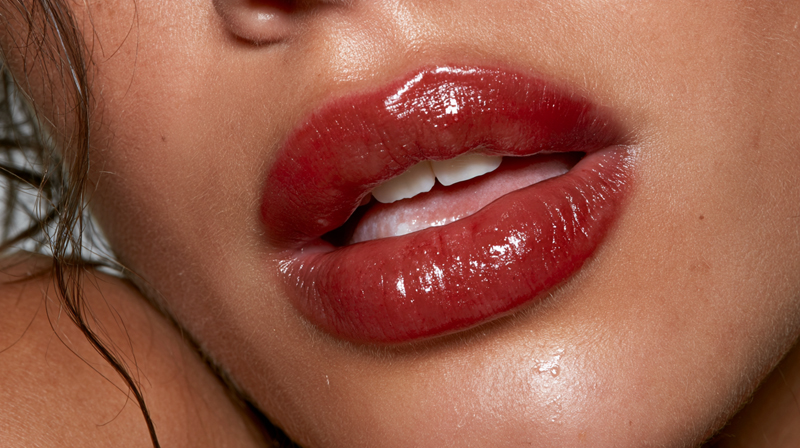
Rubbing does most of the damage. Friction on tissue with no sweat glands and almost no sebaceous glands strips lipids faster than it strips pigment. Over-exfoliating, alcohol-based removers, leftover balm residue, and sleeping in matte lipstick account for most of the rest.
Freeman and Stephens’ 1999 analysis of 75 recalcitrant cheilitis cases referred to a tertiary contact dermatitis clinic found 36% involved irritant contact dermatitis and 25% allergic contact dermatitis, with 19% attributed to atopic eczema. Irritation was the single most common cause, most often from lip licking. Bear in mind this was a referral population, not a general one, so the proportions describe stubborn cases rather than everyday chapping.
The mistakes I see most, roughly in order:
- Rubbing instead of pressing, which is mechanical damage to a barrier three to five cells thick
- Going after a stain with a scrub on lips that have not recovered from the last round of scrubbing
- Skipping the rinse, so leftover balm holds pigment against the lip and blocks whatever you apply afterward
- Using a high-alcohol eye remover on lip tissue when it was formulated for eyelid skin
- Sleeping in matte lipstick, which is a full night of film with zero moisture underneath
A 2023 Contact Dermatitis study from Siriraj Hospital in Thailand reviewed 5,366 patients referred for patch testing and found cheilitis in 410 of them, or 7.6%, with allergic contact cheilitis diagnosed in 32% of those cases. Patients’ own products were among the most common culprits. Separate North American Contact Dermatitis Group data covering 2001 to 2018 found cheilitis referrals rising steadily over the period, with cosmetics including lip products the leading allergen source.
Eye and lip removers are often sold as one product, and the alcohol content varies wildly between them. Anyone reaching for the same bottle they use for mascara should check the label first, because the technique for lifting eye makeup safely assumes eyelid skin, not lip tissue.
Formula matters too. Gallates, ricinoleic acid, and ester gum turn up repeatedly in patch testing for lip products, which is a reason to know what actually goes into a lipstick before blaming the remover.
How to Care for Lips After Removing Matte Lipstick

Get an occlusive balm back on within 5 minutes of the final rinse. Water loss on the lip runs about three times higher than on the cheek, so the gap between clean and tight is short. Ceramides, shea butter, lanolin, squalane, and hyaluronic acid are the ingredients worth looking for on the label.
Research summarized by Typology points to a study of 31 volunteers who applied a 2% pseudo-ceramide lip balm four times daily. After four weeks, researchers noted a 65% improvement in lip softness, a 25% decrease in water loss, and an overall rise in stratum corneum ceramides.
A separate test of 105 people found that after a single application of a ceramide-enriched lip balm, 97% reported more hydrated lips and 98% said their lips looked plumper. Both are self-reported outcomes on small panels, so read them as encouraging rather than conclusive.
| Ingredient | Function | Best season |
|---|---|---|
| Petrolatum, lanolin | Occlusive seal | Winter |
| Ceramides | Barrier rebuild | Year round |
| Hyaluronic acid, glycerin | Humectant pull | Humid months |
| Shea butter, squalane | Emollient softening | Year round |
Humectants alone can backfire in dry air. With little atmospheric moisture to draw on, they do less than the label promises, which is why glycerin-only balms produce that reapply-every-20-minutes cycle. Pair them with an occlusive and the problem mostly disappears.
La Roche-Posay Cicaplast Levres and Aquaphor Lip Repair both pair occlusion with barrier ingredients, which is the combination that holds overnight.
If the lips are already cracked, stop all exfoliation for 7 days. Occlusive only, twice daily, and no matte lipstick until the flaking stops. If cracking, bleeding, or scaling persists beyond a couple of weeks despite that, see a dermatologist rather than switching products again, since persistent cheilitis often has a contact allergen behind it that patch testing can identify.
Prep is the underrated half of this. Balm applied 10 minutes before color makes the next removal shorter, and the full logic behind keeping lips hydrated under a matte formula starts there rather than at the sink. Building the aftercare into a standing lip care routine beats treating it as damage control.
Which Removal Method Matches Each Matte Formula
Bullet matte takes oil. Liquid matte takes balm. A stain mostly takes time, and no amount of product changes that. Matching the remover to the formula cuts total contact with the lip, which is the real goal. Stick formats held 58.95% of the 2024 lipstick market while liquid formats are forecast to grow at an 8.34% CAGR over 2025 to 2030, per Mordor Intelligence.
| Formula | Remover | Dwell | Aftercare |
|---|---|---|---|
| Bullet matte | Cleansing oil | 20 sec | Standard balm |
| Liquid matte | Cleansing balm | 60 sec | Occlusive balm |
| Matte lip stain | Balm plus buffing | 30 sec, repeat daily | Overnight mask |
| Matte lip liner | Bi-phase on a swab | 15 sec | Standard balm |
| Glitter-topped matte | Balm, then fresh pad | 45 sec, two passes | Occlusive balm |
With sensitive or dry lips, keep the dwell times exactly as they are and cut the number of passes instead. One long press beats three short ones every time.
Fragrance-free balm removers cause the fewest problems here. Bi-phase formulas with high alcohol content cause the most.
Fastest route overall is cleansing balm on a saturated pad, roughly 45 seconds door to door for a liquid matte. Gentlest is petroleum jelly left on for a minute, then tissue, which is slower but involves no surfactant contact at all.
Charlotte Tilbury Matte Revolution sits between categories, closer to a bullet matte in wear but heavier in pigment, so treat it like a liquid matte on the first pass.
The whole equation shifts depending on how the color goes on. Applying thinner layers with a brush cuts removal time noticeably, which is one more argument for the technique side of putting matte lipstick on properly. Understanding how liquid lipstick is formulated explains why it always lands at the top of the difficulty scale.
FAQ on How To Remove Matte Lipstick
Does coconut oil remove matte lipstick?
It works, just slowly. Wax-based bullet formulas give way in about 45 seconds, but cured silicone films barely budge. Cleansing balm does the same job in half the time with fewer passes.
Why does matte lipstick leave a stain on my lips?
Bromo acid dyes like D&C Red 27 and D&C Red 21 react directly with lip tissue instead of sitting on top of it. That reaction creates a tint independent of the film above, so it survives every remover you throw at it. The lake versions of the same colorants sit on the surface and do not stain.
How long does it take to remove liquid matte lipstick?
About 90 seconds start to finish. Budget 60 seconds of dwell time with balm on a saturated cotton round, then 30 seconds for the second pass, rinse, and follow-up cleanser.
Can I use micellar water on matte lipstick?
Yes, but expect three or more passes and a leftover ring at the lip line. A standard micellar water like Bioderma Sensibio H2O handles surface color only. Cured film needs an oil-based solvent, or at minimum a bi-phase or oil-in-water micellar formula made for long-wear makeup.
Is it bad to sleep in matte lipstick?
Sleeping in matte lipstick means a full night of film over tissue that loses water about three times faster than cheek skin. Expect flaking by morning, especially with transfer-proof formulas.
How do I remove matte lipstick without a makeup remover?
Petroleum jelly first, olive or jojoba oil second. Apply thickly, wait 60 seconds, wipe with tissue. Skip toothpaste, baking soda, and sugar scrubs, since none of them dissolve silicone and all three abrade the lip.
Why does matte lipstick dry out my lips?
Matte formulas run high on pigment and low on emollients, then add volatile solvents that flash off after application. What stays behind is a polymer mesh with no moisture underneath it. Measured hydration during wear is often fine, so much of the tight feeling comes from the film itself and from harsh removal afterward.
How often can I exfoliate my lips to remove stain?
Twice a week maximum, and never on cracked lips. Soft toothbrush buffing with balm is gentler than sugar scrub. Any remaining tint typically fades on its own within several days as the surface layer sheds.
What is the gentlest way to remove matte lipstick?
Petroleum jelly, 60 seconds, then tissue. Zero surfactant contact and no friction. Slower than cleansing balm, but the right pick for sensitive lips or a barrier that is already compromised.
Should I use eye makeup remover on matte lipstick?
Only fragrance-free bi-phase formulas, and shake the bottle first. High-alcohol eye removers are dehydrating on the vermilion, since they are built for eyelid skin rather than lip tissue.
Conclusion
Getting good at how to remove matte lipstick has almost nothing to do with which bottle you buy. It comes down to dwell time. Press, wait, and let the solvent do the work your fingers were doing badly.
The rest follows from that. A saturated cotton round beats three dry passes, and a proper double cleanse beats scrubbing every time.
What you do in the 5 minutes after matters as much as the removal itself. Occlusive balm goes on before the lip has a chance to tighten.
Try one change tonight: blot with tissue before you touch any product. That single step cuts a full pass off the process, and your lips will notice by the end of the week.

She started writing on the site after fielding the same questions from clients and friends often enough to just write the answers down: which red won't turn orange on a warm undertone, how to keep lipstick from feathering into fine lines, why a "12-hour" formula rarely survives dinner.
Every review on the site follows the same rule she uses with paying clients: wear it first, then decide if it's worth recommending.
- How to Make Eyeliner Last Longer Without Smudging - August 31, 2026
- How to Make Eyeshadow Last Longer All Day - August 29, 2026
- How to Find Your Undertone in 5 Easy Steps - August 27, 2026