Clinique Take The Day Off Cleansing Balm goes on dry skin, with dry fingertips, and comes off with warm water. The mousse in the same range does the reverse and goes on wet skin. The Makeup Remover for Lids, Lashes & Lips gets a cotton ball.
Clinique places the balm first in a nightly double cleanse, ahead of the cleanser and any treatment products.
Cotton-pad wiping belongs to the remover, not the balm.
How to Use Clinique Take The Day Off Cleansing Balm Step by Step

Massage a walnut-sized amount of balm over dry skin with dry fingertips, rinse well with warm water, then pat dry.
Clinique’s directions, as printed on Bluemercury and QVC listings, stop there.
- Start with dry hands and a dry face. No water and no cleanser first, since Clinique puts the balm before any cleanser or treatment product.
- Scoop out a walnut-sized amount. That is the starting dose on Adore Beauty’s product page.
- Massage it over dry skin with your fingertips. The solid balm turns into a silky oil as it warms. Clinique gives no massage time, so keep going until the makeup has visibly loosened.
- Rinse well with warm water. The oil turns milky and lifts off.
- Pat dry. At night, move straight on to a second cleanser.
After the rinse, the routine runs balm, then cleanser, then treatment products.
Wet hands undo the method, and it’s an easy mistake to make with the tap already running. Water reaches the balm’s emulsifier early, and the balm turns milky before it has dissolved anything.
Which Take The Day Off Product Matches Your Routine?

Pick by format. The balms and the oil go on dry skin, the mousse needs wet skin, and the eye remover is cotton ball only.
Besides the original balm there is a charcoal version, a cleansing oil, a facial cleansing mousse and the lids, lashes and lips remover. The table follows Clinique’s own directions as printed by Ulta, QVC, John Lewis and Bluemercury.
| Product | Goes on | Comes off | Skin type |
|---|---|---|---|
| Cleansing Balm | Dry skin, fingertips | Rinse with warm water | All skin types |
| Charcoal Cleansing Balm | Dry skin, fingertips | Rinse with warm water | Dry combination to oily |
| Cleansing Oil | Dry face, fingertips | Rinse with water | All skin types |
| Facial Cleansing Mousse | Wet skin, avoid eyes | Rinse | All skin types |
| Makeup Remover for Lids, Lashes & Lips | Saturated cotton ball | Wipe, rinse with cool water | All skin types |
The mousse is the usual mix-up. Clinique’s own customer answer on Ulta says it should not remove eye makeup and points to the lids, lashes and lips remover instead.
Original or Charcoal: Which Balm Fits Your Skin?
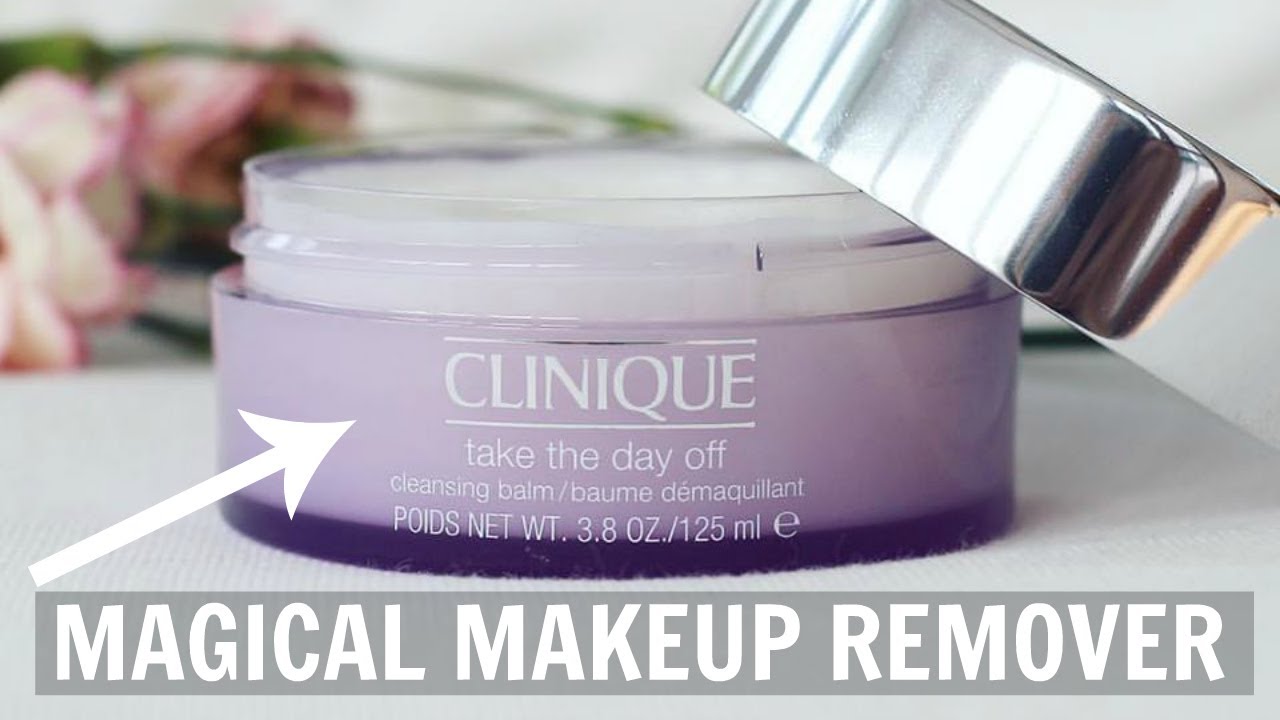
The original is listed for all skin types. Bluemercury’s listing says it’s made with fewer than 10 ingredients, and the texture is a solid balm that melts into oil as it warms.
The charcoal version is listed for dry combination, combination oily and oily skin. It adds Japanese charcoal, which Clinique positions as a detoxifying, pore-clearing ingredient. The texture change and the rinse are the same as the original.
The method is identical for both, and there is a separate walkthrough on how the charcoal balm is applied if that is the one you own.
If you are unsure, the original is the safer default because Clinique lists it for every skin type.
Which Size Is Worth Buying?
The 200 ml size was listed at 55.20 euros (276 euros per litre) on lookfantastic NL and 48 pounds on lookfantastic UK in October 2026.
The 125 ml size (listed as 3.8 oz in the US) sold for $44 at Bluemercury. Prices move by retailer and country, so check your own market.
The 125 ml is the standard size, and the 200 ml is the supersized version with the lowest per-litre price where retailers publish one. The 30 ml mini is sold on its own, and lookfantastic also bundles it with the 200 ml.
I’d buy the mini first if you have never used a balm near your eyes. Eye stinging is a recurring complaint in retailer reviews, and a small jar costs less to be wrong about.
Why Does the Balm Work on Dry Skin?
Oil dissolves oil, and that’s the logic here. The formula is oil-based, so it breaks down makeup and sunscreen when it meets them directly. Water only joins at the rinse, where an emulsifier turns the oil milky and carries everything off.
Dermatologists quoted by NBC News Select describe oil-based cleansers as the better match for makeup and sunscreen, and for sebum too, since all of those are oil-based.
One correction worth making. Clinique lists the mousse and the lids, lashes and lips remover as oil-free. The balm is not, so any description of it as oil-free is wrong.
What Is in the Balm?
- Ethylhexyl palmitate comes first on the ingredient list and is an emollient oil.
- Safflower seed oil is next in the base, and Clinique says it helps break up skin’s natural oil and dissolve hard-to-remove makeup.
- Caprylic/capric triglyceride adds a third oil.
- Sorbeth-30 tetraoleate is the emulsifier, which lets the oil mix with water and rinse off without a greasy film, according to SpecialChem’s ingredient profile.
Water, tocopherol and phenoxyethanol sit at the end of the list, as shown on Ballantynes’ product page.
Ingredient lists vary by market and batch, so check the pack in your hand.
What Does the Balm Dissolve?
Clinique’s copy names tenacious face makeup and eye makeup, and sunscreen as well.
Cleveland Clinic dermatologist Jane Wu, MD, gives waterproof makeup and sunscreen as the main reasons to start a cleanse with an oil-based product.
What Should You Use After the Balm?

A water-based cleanser. Clinique’s pairing is the Take The Day Off Facial Cleansing Mousse, with its All About Clean cleansers as the named alternative.
The mousse goes on wet skin, morning and night, avoiding the eye area. The formula uses a naturally derived cleansing system with coconut plus 10% glycerin and hyaluronic acid, and Jarrold’s listing shows it as oil-free and fragrance free.
The second step matters because a balm that is not fully rinsed can leave a waxy feel, as Sephora reviewers report. A Feelunique reviewer who rinses the balm clean still follows it with a foamy cleanser.
Can You Skip the Second Cleanse?

Clinique’s position is simple. Balm is step 1 and mousse is step 2, every night, as a double cleanse.
Cleveland Clinic’s explainer, featuring Jane Wu, MD, sees it differently. It calls double cleansing usually unnecessary and offers micellar water as an alternative first step. The same guide warns that an oil-based cleanser used alone can cause breakouts on acne-prone skin.
Both can be true. Keep the second cleanse on nights with long-wear makeup or water-resistant sunscreen, and treat it as optional on bare-faced days.
How Often Should You Use Take The Day Off Cleansing Balm?

Once a day, at night, as the first cleanse. Morning use is optional, and the mousse covers it.
The sources agree on the evening and split on the morning.
Clinique’s line on Bluemercury’s listing is “Every night, Take The Day Off”, and the balm is step 1 of the nightly double cleanse. The mousse is the product marked for morning and night. MECCA’s 250 ml listing goes further and says to use the balm day and night. The American Academy of Dermatology only asks you to wash twice a day and to remove makeup (eye makeup included) before bed.
The AAD sets a washing schedule, not a product. A morning wash with the mousse meets it, and the balm stays a night step because that is when makeup and sunscreen come off.
Skinsort’s routine data (updated July 2023 for the original balm, March 2024 for the charcoal balm) shows how people use it in practice. Of the 715 routines that include the original balm, 92% use it in the evening and 92% use it every day. The charcoal balm appears in 41 routines, 95% of them daily.
Community routines are self-selected, so read them as habit, not advice.
Can You Use the Balm Around the Eyes?
Clinique and its retailers say yes, a minority of reviewers report stinging, and the answer depends on your eyes.
Clinique’s copy on Sephora’s Middle East listing says the balm removes stubborn face and eye makeup, waterproof or long-lasting, and calls it ophthalmologist tested. MECCA’s 250 ml listing tells you to smooth it over skin and eyes, then rub off gently with warm water and a muslin cloth.
Clinique’s own customer answer on Ulta, given in reply to a question about the mousse, calls the lids, lashes and lips remover an eye-safe formula for waterproof makeup. It says nothing about the balm, and Clinique’s balm copy on other retailers’ listings describes the balm as ophthalmologist tested and safe for sensitive eyes. The two statements don’t contradict each other, but they aren’t the same claim either.
On the problem side, Sephora reviewers report burning and blurry vision after longer rubbing on waterproof mascara. A Well.ca reviewer describes foggy vision when the balm reaches the eyes, and a lookfantastic reviewer was left with a film on the lids that took hard rubbing to remove.
Others report no trouble at all. A Feelunique reviewer calls it the only balm that does not sting, and a Beauty Bay reviewer reports no eye irritation.
Waterproof mascara splits reviewers too. One Sephora reviewer still wipes mascara off with Clinique wipes because the balm falls short, while others say it lifts waterproof mascara easily.
If the mascara holds on, there are other ways to remove waterproof makeup that don’t depend on rubbing longer.
AAD guidance says to take eye makeup off before bed and to avoid scrubbing, even when removing makeup. The same logic applies to taking off eye makeup with the balm. Use light pressure, keep contact short and rinse for a long time.
If your eyes burn or blur on the first try, stop and switch to the Makeup Remover for Lids, Lashes & Lips.
When Does the Balm Not Work Well?

It struggles with sensitive eyes, leaves a waxy film for some people, can be hard to rinse, and sometimes misses stubborn eye makeup on the first pass. The table pulls together what reviewers report and what to try.
| Problem | What reviewers report | What to try |
|---|---|---|
| Eye irritation | Burning, blur, fog (Sephora, Well.ca) | Shorter contact, then the lids, lashes and lips remover |
| Waxy film | Greasy or waxy feel after rinsing (Sephora, Well.ca) | Longer warm rinse, then the mousse |
| Hard to rinse | Charcoal balm on oily skin (Feelunique) | Warm water with a muslin cloth |
| Makeup left behind | Mascara and eyeliner not fully gone (Feelunique) | Add the eye remover before the balm |
MECCA and Beauty Bay both pair the balm with a muslin or cleansing cloth. That is the practical fix for the rinse problem.
Failure is uncommon in aggregate. On lookfantastic’s 125 ml listing, only 16 of 948 reviews give one or two stars.
Acne-prone skin is the clearest wrong-fit case. The AAD’s makeup guidance for acne-prone skin names an oil-free makeup remover, and the balm is oil-based, so the oil-free mousse and eye remover fit that guidance better.
Skip or swap the balm if your eyes burn or blur on first use or breakouts follow regular use. The same goes if you simply want an oil-free routine.
Clinique Take The Day Off Cleansing Balm FAQ
Can you wipe the balm off with a cotton pad?

No. The balm is rinsed with warm water, and cotton-pad wiping is the method for the Makeup Remover for Lids, Lashes & Lips.
MECCA’s listing allows a muslin cloth with warm water for a gentle rub-off.
Is the balm fragrance free?
Yes. Retailer copy for the 125 ml balm lists it as free of fragrance, and the ingredient list carries no fragrance entry.
Check the pack in your market, since lists vary by region.
Is Take The Day Off Cleansing Balm non-comedogenic?
Yes, per Clinique’s own product copy. The formula facts for the 125 ml balm list it as non-comedogenic, and the same line appears on Boots, John Lewis and Jarrolds listings that reproduce Clinique’s wording.
Clinique also describes the balm as non-greasy and non-drying, and says it cleans thoroughly and rinses off completely. Formula claims can differ by market, so check the pack in your hand.
Does the balm work on lipstick?
Yes. Clinique’s step 1 copy says the balm melts tough face, eye and lip makeup, so the same dry-skin massage covers lipstick.
Rinse well with warm water afterward, then follow with the second cleanse.
Is Take The Day Off Cleansing Balm Worth Using Nightly?
Take The Day Off Cleansing Balm earns a nightly place on days with long-wear makeup or water-resistant sunscreen. A lighter first cleanse handles bare-faced days.
You trade speed for protection, two cleanses every night against one micellar-water step.
Test the 30 ml mini on your eyes first. Keep the second cleanse until rinsing leaves no film, and move up to the 125 ml or 200 ml after that.
The mini-first order front-loads the risk. Eye stinging and a waxy film surface on first use, so a small jar limits the cost of being wrong.
Position verified October 2026. A reformulated ingredient list or revised Clinique directions would change this sequence.

She started writing on the site after fielding the same questions from clients and friends often enough to just write the answers down: which red won't turn orange on a warm undertone, how to keep lipstick from feathering into fine lines, why a "12-hour" formula rarely survives dinner.
Every review on the site follows the same rule she uses with paying clients: wear it first, then decide if it's worth recommending.
- How to Make Eyeliner Last Longer Without Smudging - August 31, 2026
- How to Make Eyeshadow Last Longer All Day - August 29, 2026
- How to Find Your Undertone in 5 Easy Steps - August 27, 2026