Clinique’s directions for All About Eyes are short. Twice a day, morning and night, pat a sparing amount over the whole eye area with your ring finger, under the eyes and on the lids.
The cream-gel goes on after the 3-Step Skin Care routine, which ends with moisturizer. That’s from Clinique’s directions on retailer listings. General guidance, such as MasterClass’s, puts moisturizer after the eye cream instead, and for this product the label wins.
Clinique lists the cream for all skin types and says it is ophthalmologist tested.
How to Apply Clinique All About Eyes Step by Step

The ring finger is the one Clinique specifies, and the amount is small. Retailer listings from Sephora UK to Ballantynes carry the same direction as of 2026.
- Finish your skincare and pat the eye area dry.
- Take a small amount onto the pad of your ring finger.
- Dot it under the eye, then across the lid.
- Pat gently until the cream is absorbed. No rubbing, no dragging.
- Repeat on the other eye, then move on to makeup or your next step.
How much All About Eyes to use
Clinique says “sparingly” and leaves it there. The directions on retailer listings stop at that word.
MasterClass suggests a pea-sized amount on the ring finger for eye creams in general. For a cream-gel this light, treat that as a ceiling rather than a target.
Start small. A second dab is easy to add, but taking product back off means rubbing, which is exactly what the patting motion is meant to avoid.
Why the ring finger and the patting motion matter
Eyelid skin is thin. A measurement study of upper-eyelid skin found about 0.3 mm near the lash margin and about 1.1 mm just under the brow, while Skin Inc puts the rest of the facial skin at around 2 mm.
Thinner skin tolerates less tugging, and Look Fantastic’s product copy for the cream says it melts in with no need to rub or pull. So don’t rub it in, and don’t pull the skin taut to apply it.
Should You Apply Clinique All About Eyes Before or After Moisturizer?

After. Clinique’s directions say to use All About Eyes morning and night after the 3-Step Skin Care routine, which ends with moisturizer.
That routine starts with a liquid facial soap and moves to exfoliating with Clinique’s clarifying lotion. Moisturizing comes last, with Dramatically Different Moisturizing Lotion+, and Clinique runs the whole thing twice a day.
| Source | Where the eye cream goes | Basis |
|---|---|---|
| Clinique label | After 3-Step Skin Care, so after moisturizer | Brand directions for its own routine |
| Skinsort community routines | Typically step 6 in a routine | User-built routines, updated July 2024 |
| MasterClass | Before toner, serums and moisturizer | General advice for any eye cream |
Why the sources disagree
The gap comes down to scope, not skin. Clinique writes its directions around its own system, so “after 3-Step” means after its moisturizing lotion. MasterClass is covering any eye cream from any brand.
Follow the label, since it’s the only one of the three written for this product.
If your moisturizer is a hydrator like Clinique’s Moisture Surge, which Clinique pairs with its eye products on retail listings, the same order applies.
How often to use it
Clinique’s label says twice a day, morning and night. Skinsort’s routines tell a different story: 98% of 488 use it daily, but only 31% use it both morning and evening.
That means fewer than a third of logged routines follow the label’s twice-daily direction. Skinsort’s routines are user-submitted and the data was last updated on July 26, 2024, so read it as habit, not as proof of what works.
Sunscreen over All About Eyes in the morning
Eye cream goes on before sunscreen, and makeup goes on last.
Clinique’s directions don’t mention sunscreen, but MasterClass lists it among the products that go on after eye cream.
UCLA Health recommends SPF 30 or higher and counts the eyelids and the area between the inner eye corner and the nose bridge among the spots people tend to miss.
Using Clinique All About Eyes Under Concealer and Foundation
Put the cream on first and the makeup after. Clinique calls the cream-gel non-creep and says it helps hold eye makeup in place.
Look Fantastic’s product copy goes further and calls it a primer that stops makeup creasing or sinking into lines. That wording comes from the retailer, not from Clinique’s label.
Before the makeup goes on
Use the same sparing layer from the directions, since less product leaves less to shift under concealer. Clinique gives no wait time. The order is skincare, eye cream, makeup.
One Well.ca reviewer lets the cream set for about 15 minutes before any other cream or makeup. That’s a personal habit, not a Clinique instruction, and it’s a long wait on a work morning.
Once the cream has settled, a refresher on using concealer over a hydrated base is worth a read.
When the cream still creases under concealer
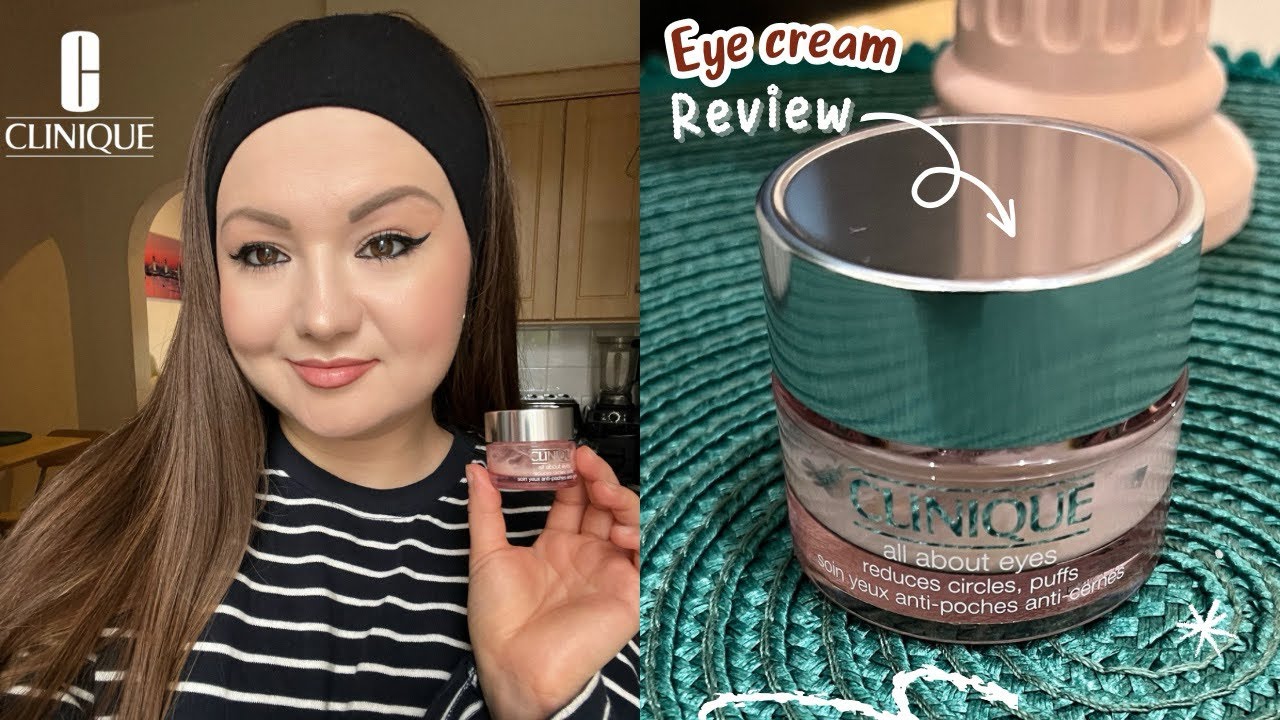
A Well.ca reviewer said All About Eyes Rich made their under-eye concealer crease and cake, and they went back to the original. Another Well.ca reviewer uses the original as a daytime eye cream because it absorbs without an oily residue that makes eyeliner and shadow travel.
Two reviews are anecdotes, not a trial. They do point to the heavier Rich texture as the first variable to swap.
If creasing continues even with the original, this guide to preventing creasing under the eyes is the next place to look.
What Is in Clinique All About Eyes?

Look Fantastic’s EU listing names caffeine and whey protein, plus a vitamin C derivative called magnesium ascorbyl phosphate. The texture is a lightweight cream-gel.
Retailers print Clinique’s list with a warning that it changes, so the list on your own box overrides anything quoted here.
Key ingredients in the original
Bluemercury’s copy puts caffeine up front, along with vitamin C and whey protein, as the formula’s headline ingredients. The vitamin C on the list is magnesium ascorbyl phosphate, not plain ascorbic acid. Whey protein appears as whey protein (lactis protein), with no function stated.
A 2025 review in the Journal of Skin and Stem Cell reports that water-soluble derivatives like this one offer enhanced stability and lower irritation potential, but require enzymatic activation in the skin.
Clinique does not publish concentrations. The list shows what is present, not how much.
The list opens with cyclopentasiloxane and water, which is the base behind the light cream-gel texture.
What the testing claims cover
Clinique says its formulas have gone through nearly 6 million allergy test applications to date, and its brand pages describe every product as allergy tested and 100% fragrance free.
Ophthalmologist tested is a separate line, filed under what Clinique calls its Eye Safety Promise.
Listings don’t repeat all of this. Bluemercury’s original shows “fragrance free” on some size entries and not others, but the brand-wide claim covers the formula either way.
Ballantynes and Flannels both list it for all skin types.
Original, Rich or Serum: Which Clinique All About Eyes to Use
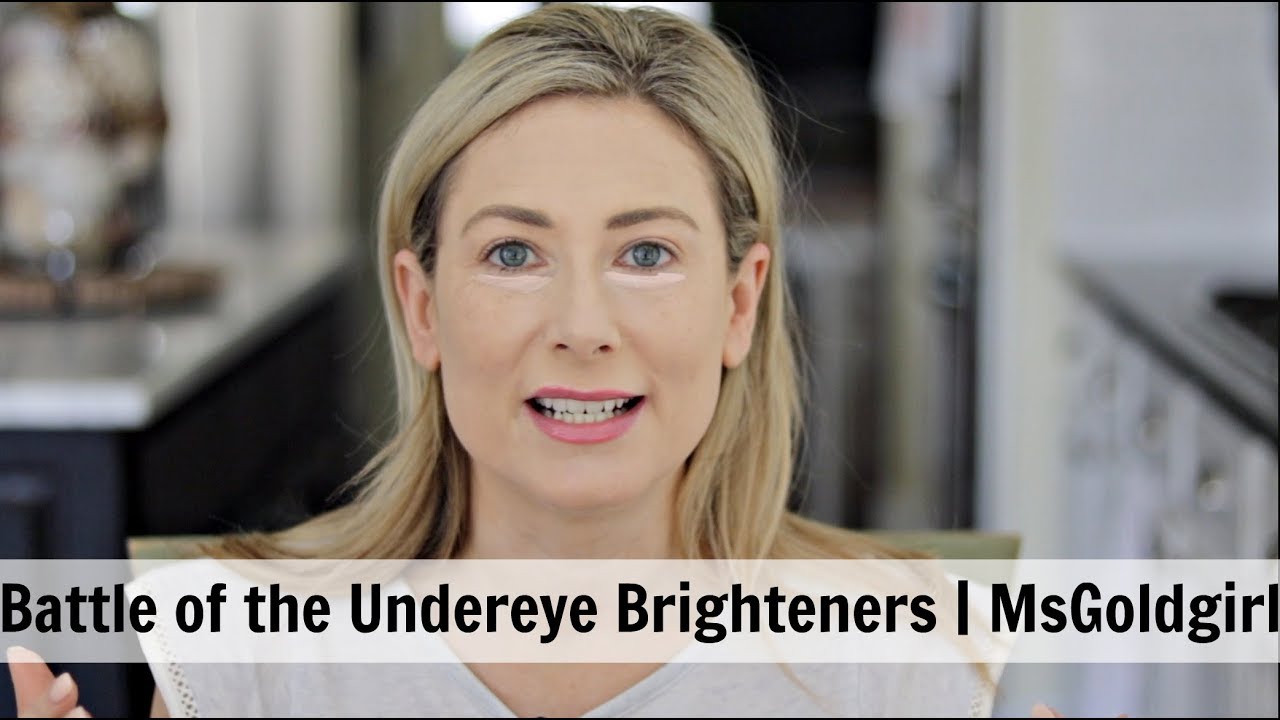
The original suits a lightweight cream-gel under daily eye makeup. Rich is for skin that wants more moisture. The Serum De-Puffing Eye Massage is a different kind of product, a cooling rollerball step.
| Version | Texture | Headline ingredients | Suits |
|---|---|---|---|
| All About Eyes | Lightweight cream-gel | Caffeine, whey protein, vitamin C derivative | Daily eye makeup |
| All About Eyes Rich | Moisture-rich cream | Caffeine, hyaluronic acid, whey protein | Dry skin |
| Serum De-Puffing Eye Massage | Oil-free rollerball serum | Caffeine, panthenol, sodium hyaluronate | A cooling extra step |
Rich shows up at Sephora Middle East and Ulta as “All About Eyes Rich Eye Cream with Hyaluronic Acid”. Check the name on the box against the ingredient you are shopping for.
Which version fits your routine
The original is the default for anyone wearing eye makeup every day, and Clinique’s directions are written around it.
Rich gets a “creamy boost of moisture” in Bluemercury’s description. Next’s listing says it strengthens the skin’s moisture barrier against common irritants, and Sephora Middle East adds that it’s safe for contact lens wearers.
Macy’s describes the serum as oil-free and fast-drying, so it can sit over or under makeup, and it’s used twice a day.
No listing says you must combine them. Macy’s names the eye cream as a companion to the serum, which is as close to a pairing as Clinique gets.
Sizes on sale
The original and Rich both come in 15 ml and 30 ml. The Serum comes in one size, 15 ml (0.5 fl oz).
Clinique gives no duration per size. A sparing layer stretches either one.
When Clinique All About Eyes Does Not Work for You
A cream can’t fix every cause of dark circles, and some skin simply reacts to it. The claims are cosmetic ones too, which matters if your expectations run higher.
Circles and puffiness a cream cannot change

Mayo Clinic lists genetics among the most common causes of dark circles. What looks like dark circles can also be shadows from puffy eyelids, or hollows that develop with aging. Rubbing or scratching the eyes is on the list too.
Clinique words its claims to match, as “diminishes the appearance of” puffs and undereye circles. Mayo Clinic notes that products made for dark circles are not FDA regulated, though their ingredients have been shown in studies to reduce the appearance to some degree.
Changes under only one eye that worsen over time are a reason to see a healthcare professional, per Mayo Clinic.
When the skin reacts
In a retrospective review of 61 patients from academic oculoplastics practices (2002 to 2014), creams and lotions accounted for 24.6% of allergic eyelid dermatitis cases, and rubbing or manipulation was a factor in 30%.
Reviewers describe a similar pattern on Clinique’s eye products. A Macy’s reviewer reported itching after the serum. Over on Ulta, someone described burning from the original. A Well.ca reviewer had dryness and allergy around the eyes after using Rich with Moisture Surge 100H.
Those are single reports, not proof the cream caused anything. Still, allergy tested describes how a formula was tested, not a promise that your eyelids will tolerate it.
Singapore’s NHG Health advises avoiding the suspected cosmetic and seeing a doctor, with patch testing to confirm an allergy.
- Stop using the product
- Keep other new products off the area
- See a doctor if itching, burning or swelling continues
- Ask about patch testing
Clinique All About Eyes FAQ
Is Clinique All About Eyes safe for contact lens wearers?
Clinique states that All About Eyes Rich is safe for contact lens wearers, according to Sephora Middle East’s listing.
The original is listed as ophthalmologist tested, with no contact lens claim on the listings checked. Read the box, or ask Clinique, before assuming the same applies.
How should you layer All About Eyes with retinol or other actives?
Clinique’s directions don’t mention retinol or any other active, so the brand gives no guidance either way.
If the eye area stings or itches after adding one, stop the newer product first and see a doctor if it continues, in line with NHG Health’s advice on suspected cosmetic reactions.
How long does All About Eyes take to work?
Clinique gives no timeline for the original. Rich is described as working both instantly and over time, and the serum as brightening over time.
Well.ca reviewers report anything from under one week to six months of consistent use. Those are individual accounts, not trial data.
Should you store All About Eyes in the fridge?

No, it’s not required. Clinique’s directions never mention chilling.
MasterClass says cold eye cream can soothe, especially in warmer months, and some Adore Beauty customers chill Rich for a cooling effect.
Deciding Whether Clinique All About Eyes Earns a Second Jar
Clinique All About Eyes earns a repurchase when the undereye area feels hydrated, concealer sits without creasing and nothing itches or burns. A failed test is a reason to change one variable, not to abandon the routine.
Stop at the first itching or burning, and fix layering before you change version. Rich is only worth trying for persistent dryness.
That order runs from safety to cost. Layering is free, while a new version means paying for a different product, and changing one thing at a time keeps any reaction traceable to its cause.
The trade-off sits with Rich, which buys moisture and gives up the original’s lighter finish under makeup.
This advice reflects retailer listings checked in October 2026. A reformulated box or a new ingredient list changes it, because the list printed on your box overrides any listing.

She started writing on the site after fielding the same questions from clients and friends often enough to just write the answers down: which red won't turn orange on a warm undertone, how to keep lipstick from feathering into fine lines, why a "12-hour" formula rarely survives dinner.
Every review on the site follows the same rule she uses with paying clients: wear it first, then decide if it's worth recommending.
- How to Make Eyeliner Last Longer Without Smudging - August 31, 2026
- How to Make Eyeshadow Last Longer All Day - August 29, 2026
- How to Find Your Undertone in 5 Easy Steps - August 27, 2026