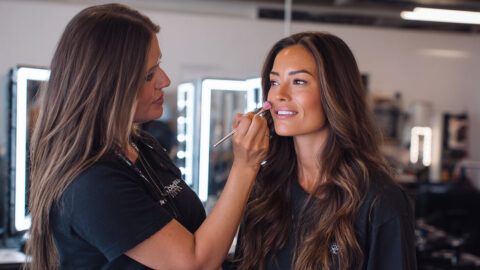
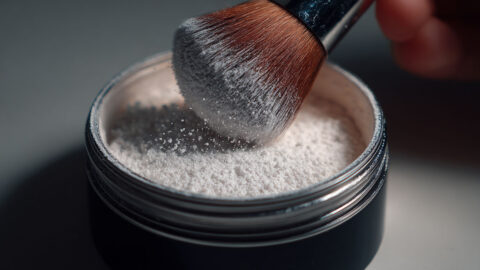
Fill the whole lip with a waxy liner and set it with translucent powder. Then build the color in thin layers, blotting each one through a tissue. The liner and powder hold the line at the edge, which is where the formula tends to start moving.
Bleeding is just color and oil traveling past the lip line, most often down the vertical fine lines that deepen with age. Age isn’t the only trigger though. Revlon’s lip care guidance lists excess oil along the lip line as the usual culprit on younger skin, so the fix depends on which one you’re dealing with.
Why does lipstick bleed into the skin around your mouth?
Revlon’s guidance points to fine lines around the mouth and excess oil along the lip line. Either one gives pigment and oils a way past the edge. Most people lean toward one, and the pattern on your skin usually shows which.
Thin vertical streaks above the lip mean fine lines are carrying the color. A soft, fuzzy halo around the whole mouth points to oil breaking the formula down. See both and you stack the fixes, barrier first and powder last.
Bleeding and feathering are the same migration, and most makeup artists treat stopping lipstick from feathering as the same job. Smudging is something else. That’s color rubbing onto teeth, cups and masks, and a barrier at the lip line won’t fix it.
Fine lines as the cause
Vertical lines give pigment and oil a direct path onto the skin. They come from:
- Repeated lip pursing
- Collagen loss with age
- Sun exposure
- Smoking
- Dehydration
A photonumeric-scale study covered by Healio in 2016 tied perioral wrinkling severity to age, female gender and years of smoking.
The edge of the red lip matters as much as the lines. A Juvederm Volift lip study protocol on ClinicalTrials.gov notes that as collagen production diminishes, the Cupid’s bow and vermilion border lose their distinction. Mount Sinai dermatologist Joshua Zeichner told Yahoo Lifestyle that lipstick bleeds onto the skin because the border has lost structure.
Oil and heat as the cause
A lipstick holds more liquid than it looks like it does. Castor oil can reach 50% of a lipstick formula and is usually the first ingredient on the label, according to SpecialChem’s formulation guide (updated 2007).
Waxes such as candelilla and carnauba keep that oil in a solid stick, so a formula that feels firm still carries plenty of mobile liquid. Knowing what lipstick is made of explains why creamy sticks travel more than dry ones.
Skin oil around the mouth then breaks the formula down from the outside in, so color slides even when there are no lines at all (Revlon). Oils also flow more easily as they warm. A formula that holds in a cool room can start moving in summer heat.
How to prep lips and the lip line before applying lipstick
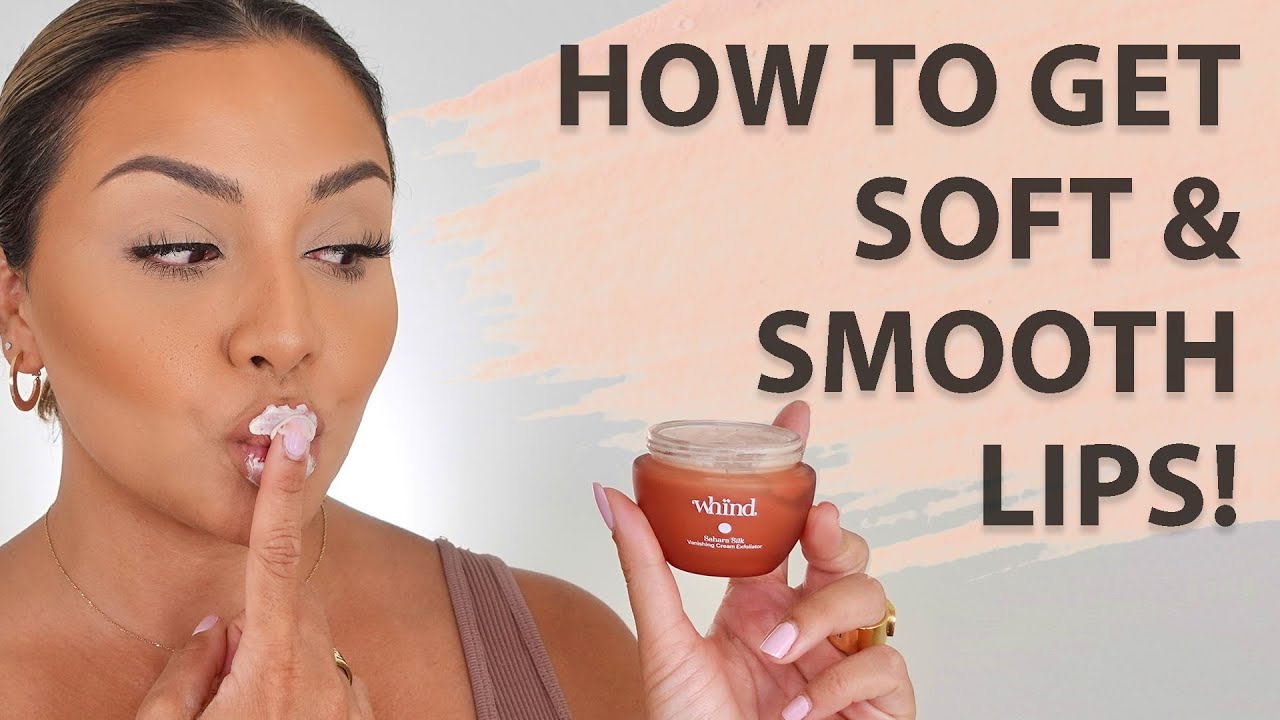
Prep mostly means smoothing the skin and then sealing the border. Hydration sits in between, and the timing matters more than the product.
Start with exfoliation. Dry flakes make lipstick catch on rough spots and slide into lines, as Red Apple Lipstick explains. A gentle natural exfoliation removes them, and L’Oreal Paris advises massaging for around 30 seconds, up to three times a week.
Hydrate hours ahead instead of minutes before. The American Academy of Dermatology recommends a non-irritating lip balm several times a day and before bed, with ingredients such as castor seed oil, ceramides, dimethicone or mineral oil. Camphor, menthol and eucalyptus irritate dry lips.
Lips that stay tight and flaky need dedicated care for dry lips before any barrier product will hold.
Should you wear lip balm under lipstick?
The sources split. makeup.com says to moisturize right before color goes on. Revlon lists over-moisturizing without blotting as one of the most common causes of bleeding, and makeup artist Ruby Hammer says to blot a balm off completely.
Balm put on right before lipstick leaves a slick layer, and color slips on it unless you blot it down first. Put it on earlier and blot, and the lips stay soft while the surface gives the lipstick something to grip.
Hydrate the night before and through the day, then blot until the lip surface feels matte. Under a primer, skip the balm.
Building a barrier at the lip border

Lip primer goes on as a thin coat over the whole lip and its edges, and it needs to dry before any color. A light layer of concealer or foundation around the border works too, and Revlon calls it especially effective for deeper fine lines.
Thrive Causemetics takes a different route. It dabs its waterproof eyeshadow primer around the lip edge, above base makeup, to block oils from migrating in. These barriers stack, so use as many as you need.
MAC’s Prep + Prime Lip lists dimethicone first on its ingredient list, and it tells you to cover the edges. Dimethicone is a silicone oil that the AAD includes among non-irritating lip ingredients.
The catch is texture. Skinsort’s ingredient database notes that dimethicone can contribute to pilling, and people with silicone allergies should avoid it.
Does lip liner stop lipstick bleeding?
Yes, but only when the pencil is firm and waxy, fills the whole lip, and gets set with powder. An outline on its own leaves the center slick, and the liner can slide under the lipstick.
Thrive Causemetics explains that long-wearing liners are thicker and drier than creamy or glossy products, and that’s what lets them hold a boundary. Sally Beauty credits the waxy ingredients in the pencil for the barrier effect.
Full-lip fill and powder set
Revlon calls liner the single most effective tool against feathering when used correctly. It names the two most common reasons liner fails: outlining only, with bare lip left in the center, and skipping the powder step after lining, which lets the liner shift when lipstick is pressed on top.
A soft, creamy pencil is a third trap, since it doesn’t hold an edge the way a firm, waxy one does.
Fill the lips completely with liner and press a thin dust of translucent powder over it, using a fingertip or a small brush. Lipstick goes on after that, from the center outward.
A guide to applying lip liner covers the technique in more detail.
Choosing a liner shade
Brands disagree here. L’Oreal Paris says to match the lipstick. RMS Beauty’s Rose-Marie Swift says to match your natural lip tone instead, while makeup.com says a clear liner works under any shade.
Whichever you pick, choosing a lip liner comes down to formula first and shade second.
A clear liner works under every lipstick, so one pencil covers the whole makeup bag, and it leaves no outline as the lipstick wears. It adds no pigment, though, so it can’t reshape or redefine the lip.
A liner in your natural lip tone fades without the stenciled outline, according to Swift. Bold or dark lipsticks need a closer match, and Swift herself says to use a red liner with red.
Then there’s the matched liner, which blends with the lipstick and sharpens the lip contour. Once the lipstick fades it shows as an outline, and you need a new pencil for every shade.
Which lipstick formulas bleed least?
Matte and satin finishes bleed least. Glossy and balm-like formulas bleed most because, per Revlon, they stay mobile on the lip surface.
| Formula | Bleed risk | Why | How to wear it |
|---|---|---|---|
| Liquid matte | Low | Sets to a dry finish | One precise coat |
| Matte or satin bullet | Low to moderate | Less slip than cream | Daily wear, brush on |
| Cream | Moderate to high | Oil-rich base keeps moving | Line, fill and blot |
| Gloss or balm-like | Highest | Stays fluid on the lip | Center only, over a set base |
Thrive Causemetics ties bleed risk to shine. The glossier the product, the higher the risk.
Liquid mattes lead on staying power because a liquid lipstick sets to a dry finish instead of staying fluid, and L’Oreal Paris names it the best bet for all-day color without bleeding.
The cost is comfort. Nykaa’s guide to liquid mattes and bullets notes that long-wear liquids can feel tight and crack after several hours, and a US patent (8,377,425) records that commercial transfer-resistant lip products have been reported to be uncomfortable to wear and drying.
Dry, flaking lips undo the prep from the previous section. A formula that bleeds less isn’t worth wearing if it dries you out.
Satin is the usual compromise when full matte feels tight. A comparison of matte versus satin lipstick shows how the two finishes differ in feel and wear.
If you’re set on cream or gloss, line and fill the lips first. Apply color to the center and blend toward the edge with a fingertip, as makeup artist Rebecca Casciano advises. Build thin layers and blot between each one, and keep gloss to the center, away from the border.
Applying and setting lipstick in the right order

Barrier first, liner second, powder third, then color in thin layers with a blot after each. Get the order wrong and the barrier stops doing its job.
- Blot off any balm until the lips feel dry
- Dab primer or a sheer layer of concealer around the lip border
- Fill the whole lip with liner and press a thin veil of translucent powder over it
- Apply one thin layer of lipstick with a lip brush, working from the center outward
- Blot with a single-ply tissue
- Apply a second thin layer
- Hold the tissue over the lips and dust translucent powder through it with a fluffy brush
Bobbi Brown artist Hollie Ellis describes nearly the same sequence: pencil at the edges and through the center, a finger blot, then tissue and setting powder to remove excess lipstick and hold the rest in place.
Her colleague Warren Dowdall goes a step further and lines both before and after the lipstick goes on, which adds structure to the lips and helps prevent feathering (Woman & Home).
A lip brush gives tighter control along the edges than a bullet, as Ruby Hammer points out. Napoleon Perdis has customers fill the lips with liner first and then work the bullet from the center outward, which keeps heavy product away from the border.
The general mechanics of applying lipstick follow the same center-out logic.
Sources disagree on powder. Beauty Bible rolls a translucent-powder cotton swab just outside the lip line before any color, and warns that powder over lipstick muddies the shade and dehydrates. Bobbi Brown and Max Factor both press powder through a tissue over the lipstick to lock color in, and Max Factor notes the tissue leaves only a light layer of powder on the lips.
The two methods solve different problems, so they combine well. Powder the border early, then use the tissue method for a light veil once the color is on.
A walkthrough on setting lipstick with powder goes deeper into the powder step.
How to fix lipstick bleeding that has already happened
Lift the stray color, redraw the border, set it, and touch up only the center of the lips. Nothing else on the lip needs redoing.
- Run a clean cotton swab along the outside of the lip line where the color has spread, the method Dermelect’s makeup artist Irwin recommends
- Tap a sheer layer of concealer or foundation along the border with a small brush
- Roll a swab dipped in translucent powder just outside the lip line
- Add color to the center only and stop short of the edge
Concealer covers the stained skin and, according to Red Apple Lipstick, also acts as a barrier against more migration.
For blending technique, see this guide to using concealer.
For mid-day repairs, carry cotton swabs, a small flat brush, concealer, travel-size translucent powder and single-ply tissues.
When lipstick still bleeds despite good technique
Technique has limits. Heat and oily food can overwhelm a barrier that works fine under normal conditions, and so can piling on too much product. Makeup also can’t erase the lines themselves.
Heat, food and over-application
Heat raises sebum output, and humidity keeps sweat on the skin longer, according to a dermatologist quoted by HELLO!. A 2021 study by Jang and colleagues, published by Wiley in the International Journal of Cosmetic Science, found that repeated exposure to alternating hot-humid and cool-dry conditions increased skin sebum content.
| Condition | What it does to the barrier | Adjustment |
|---|---|---|
| Heat and humidity | Adds sebum and sweat at the border | Re-powder the perimeter sooner |
| Oily food | Breaks down lipstick oils and waxes | Choose drier meals, blot after eating |
| Thick application | Pushes excess product past the liner | Thin layers, blot between each |
| Glossy topcoat | Keeps the surface fluid | Center of the lips only |
Faces Canada notes that oils act as natural makeup removers, breaking down even long-wear formulas quickly. Planning the meal matters as much as the lipstick itself, and guidance on eating with lipstick without wrecking the edge helps.
The same source ties a single thick layer to heavy, transfer-prone color. A barrier holds a fixed amount of product, and anything past that spills.
Lines that makeup cannot fill
Makeup manages deep lines. It does not remove them.
Hyaluronic acid filler is one route. Restylane Silk gained FDA approval in 2014 for perioral rhytids in adults 21 and older, and the approval data measure its effect at about 6 months. Juvederm Volbella XC, approved in 2016, is listed at 12 months in a review table of FDA-approved fillers on PubMed Central.
Botulinum toxin runs on a shorter clock. A randomized, blinded trial comparing 7.5 and 12 units of onabotulinumtoxinA, presented at the American Society of Cosmetic Dermatology and Aesthetic Surgery meeting (reported by MDedge), found a durable response of about 12 to 16 weeks.
Topical retinoids are slow and modest, and the evidence is thin for this area. In a registered trial of a retinol complex product (ClinicalTrials.gov NCT03302559), the 23 participants who completed the study had a mean perioral improvement score for coarse lines of 0.8 at week 12, half the 1.6 recorded around the eyes.
Put the durations side by side and the pattern is clear. Toxin fades in 3 to 4 months, fillers in 6 to 12. These come from different studies and products, not head-to-head tests, but keeping lines soft is a recurring commitment either way.
Fillers are not a fit for everyone. The FDA stated that Restylane Silk’s safety in patients with Fitzpatrick skin type VI has not been established, and the product is contraindicated for people with a history of hypersensitivity or anaphylaxis (MDedge).
Mount Sinai dermatologist Joshua Zeichner points to filler for a lost border and a few drops of Botox for muscle-driven lines. His daily advice is simpler. Apply sunscreen to the skin around the mouth every morning.
Anyone booking filler should check how long to wait before wearing lipstick after lip filler.
Lipstick Bleeding FAQ
Can you stop lipstick from bleeding without lip liner?
Partly. A sheer concealer barrier, a powder step and thin blotted layers all reduce bleeding without a liner, according to Revlon.
Liner remains the single most effective tool, so lean on those steps when a pencil isn’t an option.
Does setting spray stop lipstick from bleeding?
As a finishing step, sure. Sally Beauty recommends a lipstick sealer after application to prevent bleeding.
It doesn’t build a barrier, so the lip line still needs liner and powder to hold its edge.
Will green color corrector hide bleed marks around the lips?
It hides leftover stain, as long as it stays very sheer. Layer concealer or foundation over it so the skin still looks natural, as Red Apple Lipstick advises.
For technique, see this guide to applying color corrector.
How do you keep lipstick off your teeth?
Blot after application. Press a tissue between your lips to lift excess product, a step makeup.com credits with preventing color on teeth.
Thin layers help too, since Faces Canada ties one thick coat to transfer-prone color. More methods are covered in this guide to keeping lipstick off your teeth.
Which Step Matters Most Against Lipstick Bleeding?
A full-lip liner fill set with translucent powder matters most. It covers both causes at once, since the waxy pencil blocks migration along fine lines and the powder absorbs the oil that breaks a formula down.
In priority order, which isn’t the same as application order, the liner fill and powder set comes first. Thin layers blotted between coats come second, and concealer or primer at the border comes third.
One step that handles both causes outranks two that each handle one. The border barrier ranks last because it helps most on deeper lines, a narrower case.
The cost is finish. This routine gives up some gloss and plush feel in exchange for a crisp edge.
Once the edge holds, wear becomes the next problem, and a guide to making lipstick last longer picks up from there.

She started writing on the site after fielding the same questions from clients and friends often enough to just write the answers down: which red won't turn orange on a warm undertone, how to keep lipstick from feathering into fine lines, why a "12-hour" formula rarely survives dinner.
Every review on the site follows the same rule she uses with paying clients: wear it first, then decide if it's worth recommending.
- How to Make Eyeliner Last Longer Without Smudging - August 31, 2026
- How to Make Eyeshadow Last Longer All Day - August 29, 2026
- How to Find Your Undertone in 5 Easy Steps - August 27, 2026