Lipstick colors for cool undertones are a shade category within lip cosmetics that pairs blue or pink pigment bases to skin carrying a cool, rather than golden, undertone. That undertone stays fixed regardless of how light or deep the skin appears on the surface.
The category spans five core families, blue-red, berry, plum, mauve, and cool rose, each built on a different position along that same cool pigment base.
Pantone’s SkinTone Guide, a color-matching standard built from measurements of actual human skin, catalogs 138 skin tones under codes where the first two digits identify hue and undertone, the same hue-first logic that separates a cool-toned lipstick from a warm one (Pantone, 2025).
What are cool undertones?

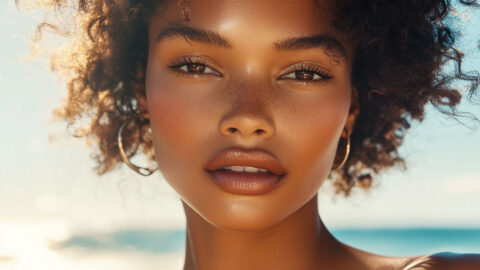
Cool undertones are the pink, red, or blue hues that sit beneath the surface of the skin, separate from how light or deep that skin looks on top. A person can have very fair skin with a cool undertone or deep skin with that same undertone.
Undertone stays fixed through life, while surface tone shifts with sun exposure and the season.
- Cool undertones: pink, red, or blue hues under the skin, often paired with veins that read blue or purple.
- Warm undertones: yellow, golden, or peach hues under the skin, often paired with veins that read green.
- Neutral undertones: an even mix of both, without a strong pull toward pink or gold.
Someone who reads as neutral can usually borrow shades built for lipstick for neutral undertones without much adjustment.
Anyone who leans the opposite way should look at guidance built for lipstick colors for warm undertones instead, since the pigment logic runs in reverse.
How to test whether you have a cool undertone
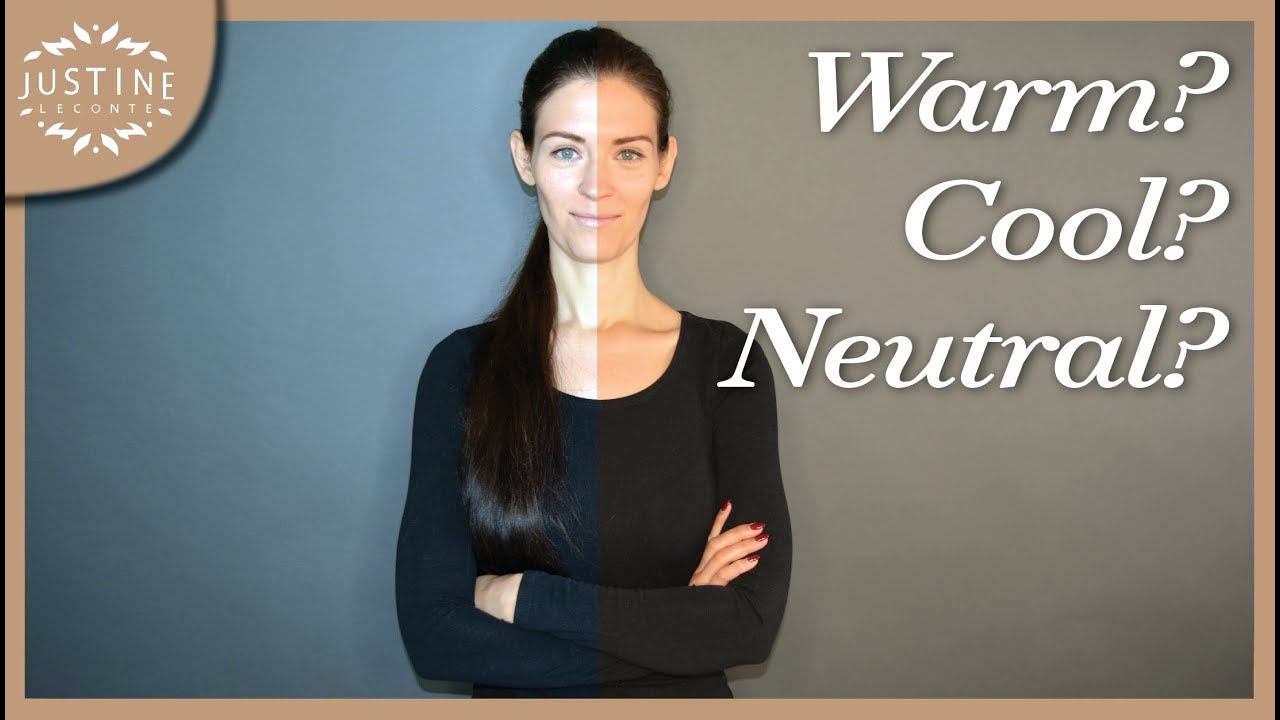
Confirming a cool undertone takes more than one test, since no single method is fully reliable on its own. Running two or three checks together gives a clearer picture than any single check alone.
- Vein test: check the veins on the inside of the wrist in natural light. Blue or purple points to cool, green points to warm.
- Jewelry test: hold silver and gold against the skin. Cool undertones usually look better against silver or platinum.
- White fabric test: compare pure white against off-white or cream near the face. Cool undertones tend to suit the pure white better.
- Sun reaction test: note how the skin responds to sun exposure. Cool undertones tend to burn or turn pink before any tan develops.
Running these checks together lines up with the broader process of learning how to match makeup to skin tone, not just lipstick.
What makes a lipstick shade cool-toned
A lipstick reads as cool-toned when its base pigment carries blue or pink rather than yellow or orange. That base pigment decides whether a shade brightens cool skin or flattens it.
- Blue-based pigment: sits on the cool side of the color wheel and creates contrast against pink or blue-toned skin.
- Yellow-based pigment: sits on the warm side and tends to blend into cool skin rather than brighten it.
MAC Cosmetics groups blue-red lipstick shades under cool and neutral undertones, and groups brick red, coral, and warm nude shades under warm undertones, according to its own current shade guidance (MAC Cosmetics, 2026).
Color reference systems like Pantone classify pigment the same way, which is why the same blue-red reads as cool across different brands.
Best lipstick colors for cool undertones

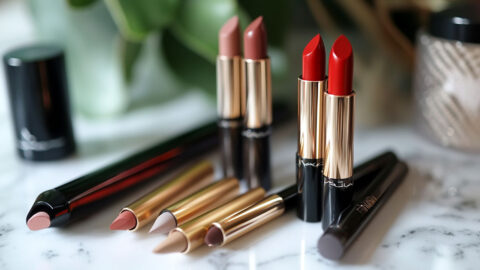
The core shade families that work for cool undertones are blue-red, berry, plum, mauve, and cool rose. Each one carries a blue or pink pigment base rather than an orange or yellow one.
Carole Jackson’s 1980 book Color Me Beautiful, which sold over a million copies, first popularized matching shades like these to cool-season coloring (StoryInColor, 2026).
| Shade family | Undertone base | Best occasion | Skin depth fit |
|---|---|---|---|
| Blue-red | Blue | Evening, formal | Fair to deep |
| Berry | Blue-pink | Fall, everyday bold | Medium to deep |
| Plum | Violet | Evening, statement | Fair to deep |
| Mauve | Pink-brown | Work, daily wear | Fair to medium |
| Cool rose | Pink | Everyday | Fair to deep |
This list narrows the field fast, though a broader framework for how to pick lipstick color covers factors like occasion and lip shape too.
Red lipstick shades for cool undertones
The reds that flatter cool undertones are blue-red and cherry red, both sitting opposite the orange-red family. Wine red joins them as a deeper, evening-leaning option.
Blue-red and cherry red
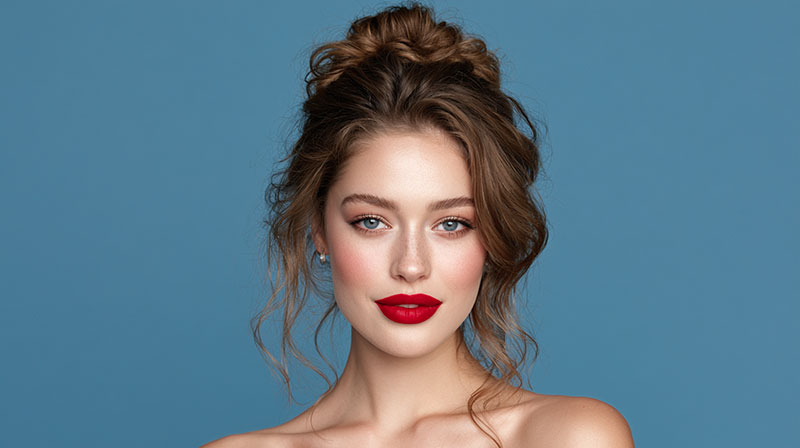
Blue-red is the boldest cool-friendly red, built on a pigment base that creates strong contrast against cool skin.
Cherry red sits slightly warmer than pure blue-red while staying in cool territory, which makes it a softer entry point.
Ruby Woo, MAC’s signature blue-red matte lipstick, launched in 1999 and has remained one of the brand’s best-selling shades since its debut (Fashionista, 2020).
The difference between these and a cool vs warm red lipstick comes down almost entirely to that blue versus orange base.
Wine red
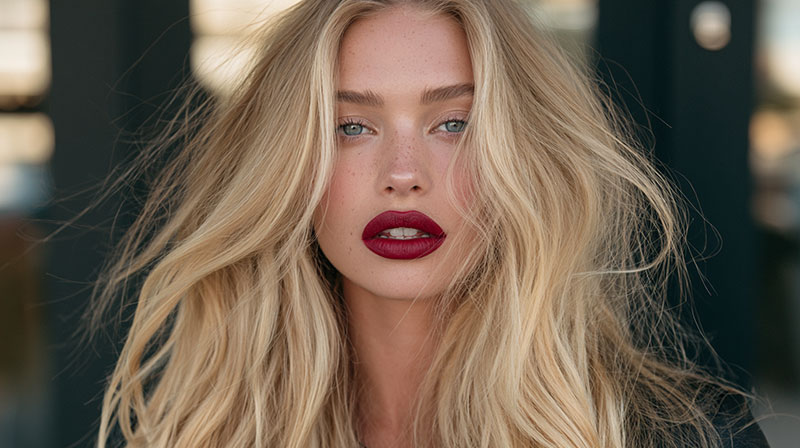
Wine red adds depth without leaving cool territory.
Unlike a warm brick red, wine keeps its blue-violet base even in low light, which is part of why it photographs well at night.
Blue-based reds also tend to make teeth look brighter by contrast, a detail covered in this look at what color lipstick makes teeth look whiter.
Berry and plum shades for cool undertones
Berry and plum are the shade families most associated with cool undertones, since both lean toward blue or violet rather than orange. Raspberry and beet-berry suit medium to deep cool skin especially well.
Pinterest search interest in dark cherry lipstick shades rose 235% year over year, alongside a 325% jump in searches for berry-toned lipstick (Accio, 2025).
MAC’s Rebel, a blue-toned purple-magenta shade, is a well-known example of plum built specifically on a cool base.
Berry:
- Works across fair, medium, and deep cool skin without heavy adjustment
- Reads as polished with minimal other makeup
- Can look purple-tinted under warm indoor lighting
Plum:
- Adds drama for evening wear
- Layers well over a matching lip liner for definition
- Can overwhelm very fair skin when applied too heavily
Building intensity slowly matters here, since the same guidance for how to wear dark lipstick applies to both berry and plum in their deepest forms.
Pink and mauve shades for cool undertones
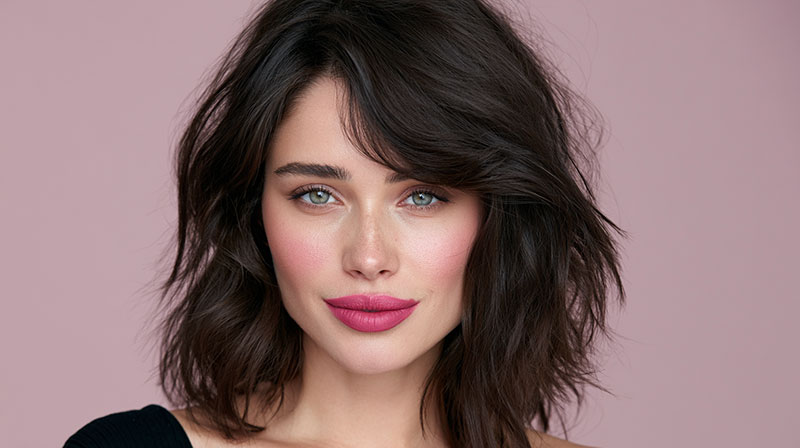
Pink and mauve are the most wearable cool-toned shades for daily use, since they read as natural rather than bold. A rosy mauve, a clear cool rose, and a brighter blue-pink rose cover most everyday needs.
| Shade | Best for |
|---|---|
| Rosy mauve | Understated, everyday wear |
| Clear cool rose | Work and casual settings |
| Blue-pink rose | Weekend, brighter looks |
Charlotte Tilbury’s Pillow Talk, one of the most recognized rosy-nude shades on the market, sits close to this cool rose family.
Getting the proportions right matters more than the exact shade, which is why how to wear pink lipstick is worth a look before committing to one.
Nude shades for cool undertones
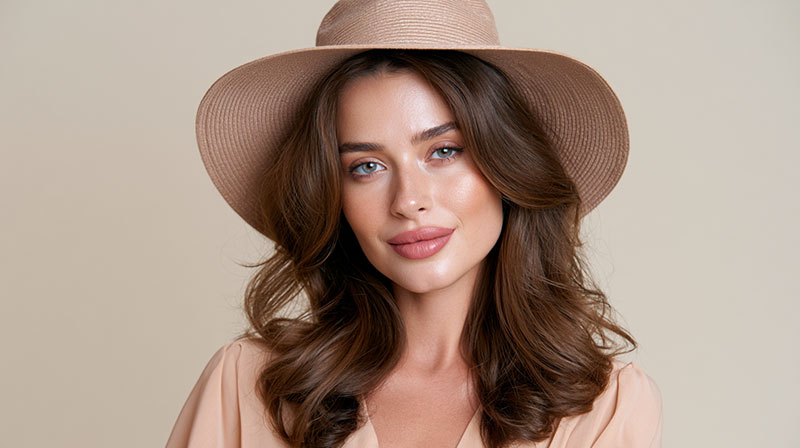
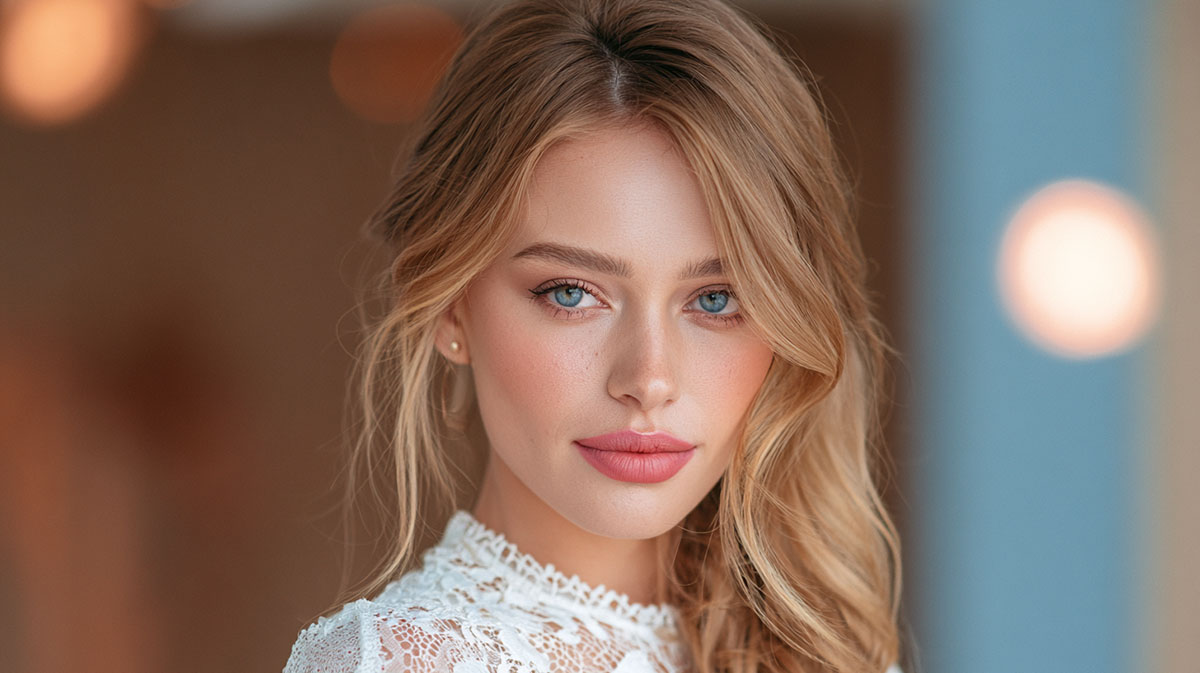
Nude lipstick for cool undertones works best when it leans pink or rose rather than peach or golden beige. The wrong base turns a nude flat and washed out instead of polished.
A L’Oréal Paris consumer survey found 64% of women are actively shopping for nude lipstick shades, ahead of berry, pink, and red (L’Oréal Paris, 2026).
- Pink-based nude: the safest starting point for cool undertones, since it echoes the skin’s own pink cast.
- Rosy-brown nude: works for medium to deep cool skin, adding warmth in depth without adding warmth in pigment.
NARS Turkish Delight, a dusty rose-nude, is a widely recommended pick for cool and neutral undertones.
Anyone still unsure what separates a good nude from a bad one should start with what is nude lipstick, since the category is broader than most people assume.
From there, how to pick a nude lipstick covers the undertone-matching steps in more depth.
Does lipstick finish change how a cool-toned shade looks
Finish changes how much of a shade’s undertone actually shows. Matte intensifies pigment and makes the blue or pink base more obvious, while gloss and sheer formulas dilute it toward neutral.
Satin held 43.41% of the global lipstick market in 2024, and matte was the fastest-growing finish, projected at a 7.81% CAGR through 2030 (Mordor Intelligence, 2025).
| Finish | Pigment intensity | Best for |
|---|---|---|
| Matte | High | Bold cool-toned looks, evening wear |
| Satin | Medium | Everyday cool-toned wear |
| Cream | Medium | Comfortable daily coverage |
| Gloss or sheer | Low | Testing a new cool shade with less commitment |
Ilia Beauty builds its cream lip color line to keep pigment payoff high without the dryness matte formulas can bring.
The difference in wear time and comfort is covered in more depth in this matte vs satin lipstick comparison.
Cream formulas get their own breakdown in what is cream lipstick, worth a look before settling on a finish for daily wear.
Lipstick colors cool undertones should avoid
Orange-red, brick red, and peach-toned nudes work against cool undertones. These shades share a yellow or orange pigment base that flattens cool skin instead of brightening it.
Shimmer finishes, which often carry a warm gold-toned pearl, accounted for 37.2% of lipstick revenue in 2024 (Grand View Research), making them one of the more common ways a cool-toned look gets pulled off course by accident.
- Orange-red and brick red: create a muddy, flattened contrast against cool skin instead of brightening it.
- Peach and coral nudes: tend to read ashy or grey on cool undertones rather than natural.
- Gold-shimmer finishes: clash with blue-based pigment even when the base shade itself is cool.
None of this is absolute. A warm shade worn as a thin, sheer stain reads differently than the same shade applied at full strength, and some cool-toned faces can still carry it off in small doses.
Anyone with the opposite undertone should ignore this list entirely and follow how to wear coral lipstick instead, since coral is built for warm pigment.
Best cool-toned shades by skin tone depth
The five cool shade families work differently depending on how deep the skin is, not just its undertone. Pigment intensity needs to scale up as skin depth increases, or the color disappears instead of standing out.
Fair cool skin
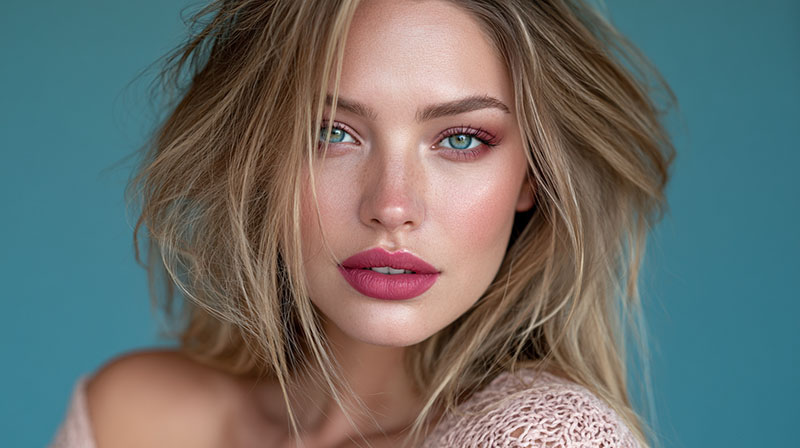
Softer shades read best here. Mauve and rosy nude stay wearable for daytime, while a full blue-red creates strong, deliberate contrast for evening.
Fenty Beauty built its lipstick range around this kind of span, covering fair through deep cool skin within the same collection.
A deeper breakdown of what works specifically here lives at lipstick colors for fair skin.
Medium cool skin
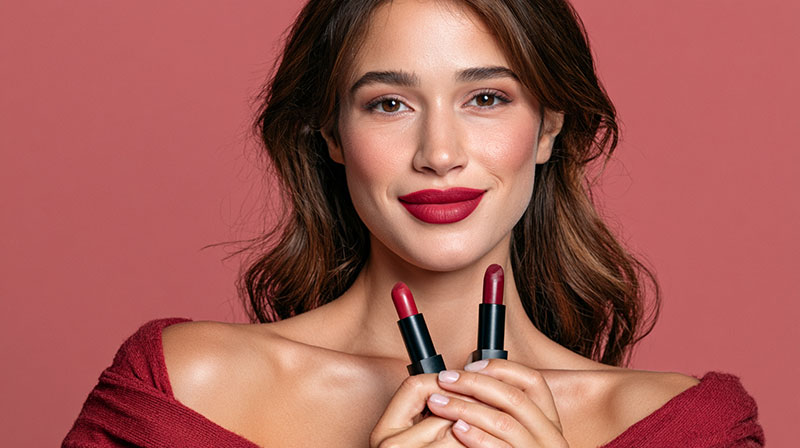
Medium cool skin can carry more saturation without looking harsh.
Raspberry, wine, and true blue-red all read clearly here without washing out or overwhelming the face.
- Raspberry berry
- Wine red
- True blue-red
Deep cool skin
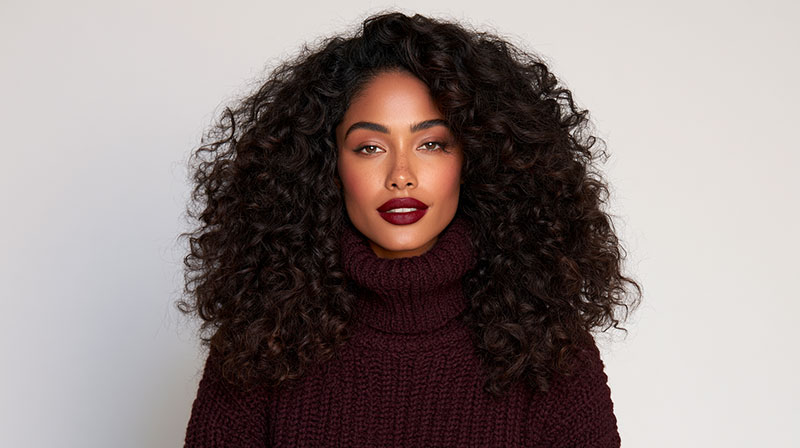
Deep cool skin carries the most pigment payoff of the three groups.
Rich plum, deep berry, and full-strength wine build color without getting lost against the skin the way a lighter shade would.
More specific picks for this depth are covered in lipstick colors for dark skin.
How to choose a cool-toned lipstick shade
Choosing a cool-toned lipstick shade comes down to a short, repeatable process. Confirm undertone first, then narrow by shade family, then test in real light before buying.
Color cosmetics return rates run 12% to 25%, with lipstick sitting at the low end of that range and shade mismatch as the leading cause (Banuba, 2026).
- Confirm undertone using at least two of the vein, jewelry, or white fabric tests.
- Match that undertone to one of the five core shade families: blue-red, berry, plum, mauve, or cool rose.
- Test the shade in natural light against the inner wrist, not under store lighting alone.
- Start with a lower-commitment format, such as a stain or a sample size, before buying full size.
- Pair with a liner one shade deeper than the lipstick to prevent bleeding and extend wear.
Sephora’s in-store Color IQ tool is one option for cross-checking a self-assessed undertone against a device reading.
Once the shade is picked, how to apply lipstick covers the application steps that make it wear evenly.
Pairing it correctly is covered separately in how to choose lip liner, useful for the last step above.
FAQ on Lipstick Colors For Cool Undertones
What tools or products help confirm a shade match before buying?
Physical swatch testing under natural light remains the most reliable method.
In-store diagnostic tools like Sephora’s Color IQ can supplement a self-assessment, and testing lip liner along the jawline offers a quick way to confirm before committing to a shade.
Can someone with cool undertones wear orange or coral lipstick?
Yes, though not at full strength.
Sheer or blotted application softens the orange base enough to avoid the ashy contrast a bold coral creates.
Pairing it with a cool-toned blush keeps the rest balanced against the warm lip color.
Does undertone theory apply the same way to lip liner and gloss?
Yes. Lip liner follows the same blue-or-yellow pigment logic as lipstick, and matches the shade family rather than the skin tone.
Gloss and sheer formulas carry pigment too, just diluted, so a warm-based gloss can still clash with cool skin.
Can undertone change with tanning or seasons?
No. Tanning darkens surface melanin, which is different from the underlying pink, blue, or yellow cast that defines undertone.
A person’s undertone stays constant across seasons even as their surface skin tone shifts lighter or darker.
Are the 12-season color analysis categories reliable for lipstick shopping?
They add precision. The four-season system sorts by undertone alone, while the 12-season system layers in depth and clarity, useful for someone whose coloring sits between two seasons.
Neither replaces a direct vein or jewelry test.
What is the difference between skin tone and undertone?
Skin tone is the visible surface color: fair, medium, or deep.
Undertone is the hue beneath it, running cool, warm, or neutral.
Two people can share the same skin tone and wear completely different lipstick shades because their undertones differ.
What Should You Try First With Lipstick Colors For Cool Undertones?
Lipstick colors for cool undertones perform best when the first purchase is a cool rose or mauve rather than a bold blue-red, since a low-risk everyday shade confirms the undertone match before spending on a statement color.
Building a cool-toned wardrobe works best in a fixed order.
- Cool rose or mauve first, to confirm the undertone match with minimal risk
- Blue-red or berry next, once that match holds up in daylight
- Plum or wine last, since deep pigment punishes a wrong undertone call hardest
Starting cautious costs drama. A cool rose rarely disappoints, but it skips the high-contrast statement a blue-red or plum delivers, so the trade-off is a slower route to bold looks in exchange for fewer wasted purchases.
Once a shade is confirmed, wear time becomes the next variable, and how to make lipstick last longer covers the techniques that keep it intact past a coffee cup.

She started writing on the site after fielding the same questions from clients and friends often enough to just write the answers down: which red won't turn orange on a warm undertone, how to keep lipstick from feathering into fine lines, why a "12-hour" formula rarely survives dinner.
Every review on the site follows the same rule she uses with paying clients: wear it first, then decide if it's worth recommending.
- How to Make Eyeliner Last Longer Without Smudging - August 31, 2026
- How to Make Eyeshadow Last Longer All Day - August 29, 2026
- How to Find Your Undertone in 5 Easy Steps - August 27, 2026