Pigment ratio decides whether a lipstick reads warm or cool. Not the name on the tube, not how bright the color looks under the lights at a makeup counter. Warm shades lean on orange, yellow, and gold bases, and that distinction matters most for people with warm or golden undertones who keep buying “the perfect red” only to get it home and realize it does nothing for them.
Cosmetic chemists set that placement through the actual pigment mix rather than through whatever a shade gets called on the label. The classification runs across every lipstick finish and price tier there is, and it’s judged against the cool and neutral families sitting on the other side of the color wheel.
The red iron oxide pigment behind most warm-toned lipstick reds and browns carries a specific registration: Color Index 77491, approved for cosmetic use under 21 CFR 73.2250 (U.S. Food and Drug Administration, current as of 2026).
What Are Warm Lipstick Colors?

Two lipsticks can share a name and a price tag and still land on opposite sides of the color wheel. One “classic red” runs warm, sold three shelves over from an identically named one that doesn’t, and the two do completely different things on skin. The pigment changed. The marketing copy didn’t.
Coral, terracotta, rust, cinnamon, brick red: all warm, all built on that same orange-yellow base, and each one shows up across nearly every format in the range of lipstick types sold right now, sticks and liquids and stains alike.
Ignore the name printed on the label. What matters is the undertone pigment underneath it.
What Makes a Lipstick Shade Warm?

Color theory has a name for this: the warm-cool contrast, formalized by the Swiss artist and color theorist Johannes Itten during his years teaching at the Bauhaus. Cosmetic chemists are still working from the same basic logic almost a century later when they mix pigment for a new shade.
Ratio does the real work. Push more yellow or orange into a red and it drifts toward brick or rust. Push more blue in, and the same red drifts toward berry or fuchsia instead, and the shift required to flip that read is smaller than most people assume.
That’s why two lipsticks can carry the exact same name and behave like entirely different products. A brand’s “classic red” might run warm one season and cool the next with no warning on the packaging, and the difference between warm and cool reds usually comes down to a few percentage points of orange versus blue base, nothing more dramatic than that.
Pigment base is the deciding factor. Not the shade name on the sticker.
How Do You Know If You Have a Warm Undertone?
None of the tests below are scientific in a lab sense. But checking your veins, your jewelry, and how your skin looks against plain white paper gives a reliable enough read to shop shades built for warm undertones without just guessing at the counter.
Vein Test
Check the inside of your wrist in daylight, not under a bathroom bulb at eleven at night. Indoor lighting throws this test off more than people expect.
- Veins that look more green than blue usually point to a warm undertone.
- Veins that lean blue or purple usually point to cool.
- A visible mix of both usually lands you closer to neutral.
Do it near a window if you can manage it. Overhead kitchen lighting has ruined more than one vein test.
Jewelry Test
Gold looking brighter against your skin than silver does is the warm signal, and for a lot of people this one’s obvious within a few seconds of holding a bracelet up to the wrist. Silver winning that comparison points the other way, toward cool.
- Hold both metals against bare skin on the same day, in the same light.
- Watch for which one makes your skin look brighter rather than washed out.
- Do it again on a cloudy day and a sunny one, since light shifts the read more than most people account for.
White Paper Test
Hold a plain sheet of white paper right up against your bare face, no makeup on, and look at what your skin does against it. Yellow, golden, or peachy against that stark white background points to a warm undertone. Pink, red, or bluish points to cool.
The three tests won’t always agree with each other, and that’s normal rather than a sign you did something wrong. When they conflict, the undertone usually sits closer to neutral, and lipstick built for neutral undertones tends to work better at that point than forcing a label onto skin that doesn’t quite fit one.
Which Skin Tones Suit Warm Lipstick Colors?
Warm lipstick works across every skin tone that exists. Which specific shade flatters, though, depends heavily on how light or deep the skin actually is, and a lot of general beauty advice falls apart right here because it treats “warm skin” as one single category instead of a range.
Google built the Monk Skin Tone Scale in 2022 with Harvard sociologist Dr. Ellis Monk, a ten-shade system meant to replace the older six-shade Fitzpatrick scale from 1975 (Google, 2022). It’s a more precise reference point than the fair-medium-deep split most beauty guides still default to.
Fair and Medium Warm Skin

Lighter warm skin tones tend to do better with shades that don’t overpower the face.
- Peach and coral read as fresh instead of washed out.
- Light terracotta adds a bit more depth without going heavy.
- Deep brick or rust can swallow very fair skin whole, more than people expect going in.
Sheer and satin formulas tend to sit better than full-opacity mattes on this skin range too, since shades built for fair skin are often formulated with lighter pigment concentration from the start.
Olive Skin

Olive skin carries a yellow-green cast underneath, and muted warm shades tend to look richer against it than bright, clear ones do. Terracotta and softened brick tones do especially well here, mostly because they echo the yellow-based warmth already sitting in the skin.
Bright, clear coral is the one that struggles a little. It can read slightly chalky by comparison, oddly enough, given that coral is still technically warm. A dustier, more muted version of that same coral usually fixes it.
Deep Warm Skin

- Rust and cinnamon show up rich instead of muddy.
- Deep brick red reads sophisticated rather than harsh.
- Pale peach tends to wash out and disappear against deeper skin.
Deeper warm skin tones can carry the most saturated shades in the whole warm family without losing definition, more range than any other skin depth really gets. Full-pigment mattes and creams generally outperform sheer formulas here, and shades built for deeper skin tones tend to lean into that saturation instead of shying away from it.
What Are the Main Warm Lipstick Shade Families?
Coral, terracotta, brick red and rust, cinnamon and peach. Those names cover most of what gets sold as warm lipstick, each one sitting at a different point along the orange-to-brown spectrum and flattering a slightly different undertone depth.
| Shade Family | Pigment Base | Best Skin Match | Typical Finish |
|---|---|---|---|
| Coral | Orange-pink | Fair to medium warm | Satin, gloss |
| Terracotta | Muted orange-brown | Olive, medium warm | Matte, satin |
| Brick red and rust | Deep orange-red | Olive, deep warm | Matte, cream |
| Cinnamon and peach | Brown-orange, soft pink-orange | Fair to deep, varies by tone | Cream, satin |
Coral
Coral sits at the lightest, most orange-pink end of the family. It reads fresh rather than dramatic, which explains why it takes over spring and summer collections every year without fail.
- Works best on fair to medium warm skin.
- Goes chalky fast when applied too thick on deeper skin.
- Pairs naturally with a light satin or gloss finish.
Terracotta
Terracotta is the muted, clay-based mid-tone. It reads more sophisticated than coral, and it works especially well on olive and medium warm skin, where the muted base matches the yellow-green undercurrent already present in the skin.
It also makes a solid everyday alternative to bright red. The dusty finish reads polished instead of flat, which is honestly why so many “your lips but better” shades end up being some version of terracotta.
Brick Red and Rust

Brick red and rust push further into orange-red territory, more saturation and less pink than terracotta.
- Best on olive and deep warm skin.
- Reads sophisticated rather than aggressive when kept matte.
- Pairs well with a defined lip liner for a sharper edge.
MAC’s own product page names Chili, a warm brick red, as the brand’s number one lipstick shade worldwide (MAC Cosmetics), and it’s held that spot across several reformulations. Deeper, more brown-leaning matte shades in this family resist fading into pink the way some lighter warm reds do over the course of a day.
Cinnamon and Peach
Cinnamon leans brown and functions as a warm neutral, easy, not really a statement shade. Peach goes the other direction, lighter and pinker, a low-commitment everyday pick that suits fair to medium warm skin especially well.
Pantone named Peach Fuzz its color of the year for 2024, a soft peach blending pink and orange pigment (Pantone, 2024), which says something about where the fashion side of things has been leaning.
Cinnamon suits deeper, warmer skin best. Peach works better the fairer the skin gets. That’s really the whole split.
Which Lipstick Finish Works Best for Warm Shades?

Finish changes how loud a warm shade reads more than almost any other variable. Matte pushes pigment to its most intense. Satin and cream soften it down for daily wear. Gloss and stain sheer it out into something lighter and more casual.
Which one’s “best” really just depends on how bold you’re trying to look, not on the undertone itself.
Matte Finish
Matte holds the biggest share of the lipstick finish market, 44.6% of product-type sales in one 2025 industry breakdown (Market.us, 2025). There’s a reason for that.
It intensifies warm pigment for a bolder, truer color, and it wears the longest without constant touch-ups. It also tends to photograph well under most lighting, more than people expect until they see themselves in a flash photo with lipstick that’s already faded.
The tradeoffs are real too. Matte dries lips out faster than other finishes and shows texture or flaking more easily, and once it’s on, it’s genuinely hard to fix without wiping the whole thing off and starting again.
Anyone new to the format can get a full rundown of what matte lipstick actually is and how the formula differs from cream or satin bases.
Satin and Cream Finish
Satin and cream do the opposite job, softening warm pigment instead of cranking it up, which makes them the easier pick for daily wear. They’re more comfortable on dry lips, easier to blend, and less obvious if they wear unevenly over a few hours.
What you give up is payoff. Less pigment strength than matte, and more frequent reapplication.
Anyone deciding between the two heavier finishes can weigh matte against satin directly, since the pigment payoff and the wear time differ more than most people expect going in.
Gloss and Stain Finish
Gloss and stain go further still, sheering warm pigment out into the lightest version of any shade in the family.
| Finish | Pro | Con |
|---|---|---|
| Gloss | Shine, plumping effect | Shortest wear time |
| Stain | Soaks in, survives eating and drinking | Limited color range, hard to build up |
Neither finish holds color as true to the original swatch as matte manages across a full day of wear.
Which Warm Lipstick Colors Suit Which Season?
Warm lipstick splits across two seasonal color types, warm autumn and warm spring, going back to a color analysis system that’s older than most people using it probably realize.
Carole Jackson’s 1980 book Color Me Beautiful first grouped people into four seasonal palettes based on undertone and contrast level. The system’s been refined since into a twelve-season model that splits each original season into finer categories, but the warm-autumn-versus-warm-spring split still holds up as the basic starting point.
Warm Autumn
Warm autumn pairs with deeper, more muted shades. Rust and cinnamon read rich instead of flat, deep terracotta beats bright coral here, and brick red consistently outperforms clear, orange-heavy reds on this palette.
Anyone building out a full autumn lip rotation can browse shades made for the fall season for a wider range than this shortlist covers.
Warm Spring
Warm spring wants the opposite: brighter, cleaner versions of the same warm family, clarity instead of muted depth.
| Trait | Warm Autumn | Warm Spring |
|---|---|---|
| Preferred shades | Rust, cinnamon, brick red | Coral, peach, light terracotta |
| Clarity level | Muted, low clarity | Clear, high clarity |
A closer look at shades suited to spring covers more of the range than just coral and peach.
Which Warm Lipstick Shade Fits Which Occasion?
The exact same warm lipstick can read completely differently depending on where you’re wearing it and what kind of light you’re standing under. Office calls for restraint. Bridal calls for longevity, something that survives tears and hours of photography. Evening is really the one place saturation helps, strong enough to hold up once the lighting turns artificial.
Everyday and Office
Office-appropriate warm shades stay low on saturation, close to your natural lip color rather than announcing themselves.
- Peach and light terracotta read polished rather than done-up.
- Warm nudes work across nearly any meeting room or presentation.
Bright coral or a full-opacity brick red, meanwhile, can read as too much for a conservative office. A satin or cream finish tends to suit this setting better than a heavy matte since it looks less deliberate under fluorescent lighting.
Bridal
Bridal lip color has one job beyond looking good in the mirror: surviving tears, kissing, and hours of photography without needing a touch-up every twenty minutes.
Warm rose-brown and soft terracotta tend to photograph the most naturally here, reading like an enhanced version of the bride’s own lip color rather than an obvious color statement. Coordinating the lip with the rest of the day’s wedding makeup look matters more for this occasion than any other, since it has to hold up across a ceremony, a reception, and a full memory card of photos afterward.
Evening
| Occasion | Best Warm Shade | Why |
|---|---|---|
| Office | Peach, warm nude | Reads polished, not overdone |
| Bridal | Rose-brown, soft terracotta | Photographs naturally, reads as enhanced skin |
| Evening | Brick red, rust | Holds up under dim, artificial light |
Saturated brick red and rust outperform lighter warm shades the moment the lighting shifts to candles, string lights, or a dim venue bulb. Building a full look for makeup made for a night out usually means leaning into that saturation instead of away from it.
Warm Lipstick Shades Worth Trying, by Brand
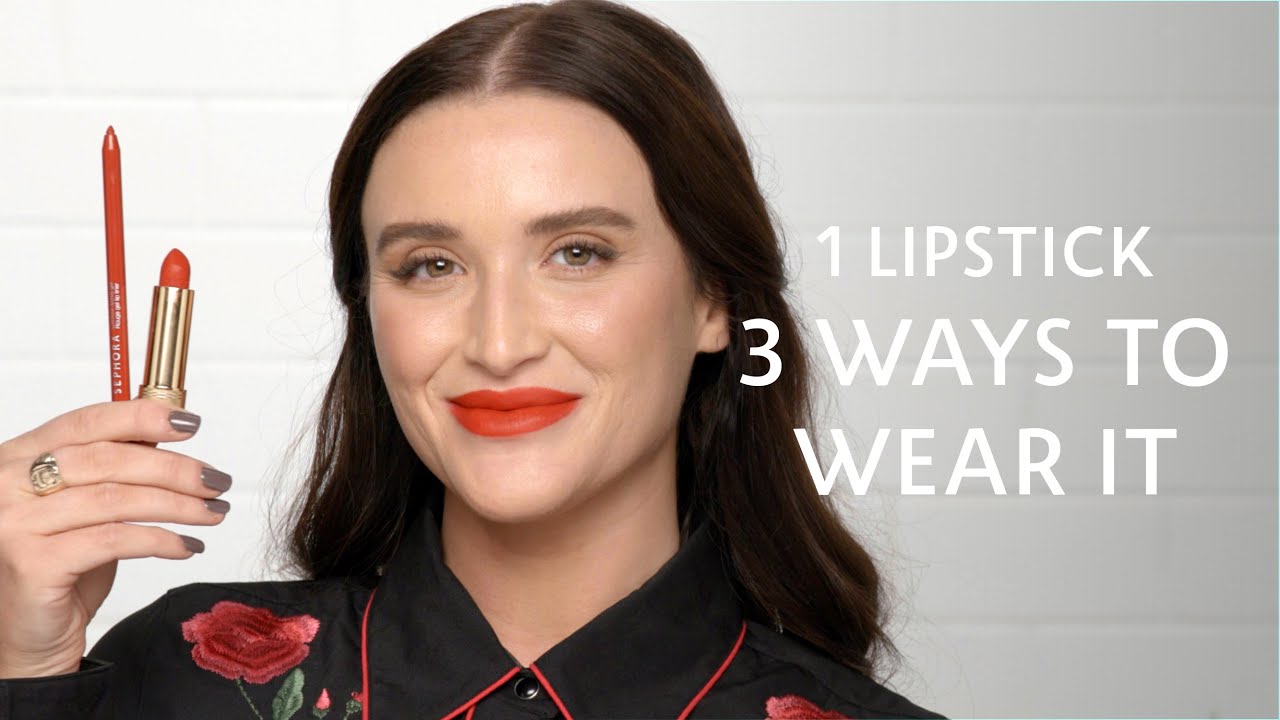
A color description only gets you so far when you’re shopping. Named shades make the category easier to navigate, and the four below span drugstore and high end price points while sitting inside the same warm pigment family.
| Shade | Brand | Undertone Family | Finish |
|---|---|---|---|
| Dancer | Maybelline | Brick red | Liquid matte |
| Trendsetter | Huda Beauty | Terracotta-brown nude | Liquid matte |
| Walk of No Shame | Charlotte Tilbury | Berry-copper | Matte |
| Dolce Vita | NARS | Dusty rose, warm | Sheer cream |
Drugstore Shades
Maybelline’s own product description names Dancer, from the Super Stay Matte Ink line, as a warm brick red (Maybelline). It sits in the same undertone family as pricier brick and rust shades, the long-wear liquid matte formula holds up through a full day, and it costs a fraction of what the high end versions in this same family go for.
Anyone weighing red-adjacent warm options can look at general guidance on choosing a red lipstick before deciding how far into brick or rust territory to go.
High End Shades
NARS, Charlotte Tilbury, and Huda Beauty come up constantly when people ask for a high end warm shade by name.
NARS’s own site describes Dolce Vita as an iconic dusty rose, though independent swatch testing notes warmer undertones underneath that description, in a sheer, glossy-cream finish (NARS Cosmetics). Charlotte Tilbury sells Walk of No Shame as a berry-rose shade, but independent swatches tend to read it as a warm-toned copper red instead, in a matte finish (Charlotte Tilbury).
Huda Beauty’s Trendsetter lands as a terracotta-clay, brown-nude liquid matte according to independent swatch reviews. Anyone drawn to that particular family can look at broader guidance on wearing brown lipstick for styling beyond just this one shade.
When Do Warm Lipstick Colors Not Work?
Warm lipstick stops working the moment the undertone, the lighting, or the rest of the makeup actively fights the orange-based pigment instead of supporting it. A handful of specific situations cause this over and over.
Cool undertone skin is the most common mismatch. Orange and gold pigment reads muddy or dull against it instead of warm and glowing, since there’s no matching warmth in the skin underneath to play off. Anyone whose testing points toward cool rather than warm gets more consistent results from shades built for cool undertones instead of forcing a warm one to cooperate.
Skin pH plays a bigger role than most people realize too. Average skin surface pH sits around 4.7, more acidic than most lipstick formulas (Lambers et al., International Journal of Cosmetic Science, 2006), and that acidity interacts with the iron oxide pigments common in warm reds. A bright brick red can shift toward a duller, ashier brown just a few hours into wear because of it.
Fluorescent lighting is its own problem. Standard fluorescent bulbs can fall below a Color Rendering Index of 80, the point where red tones specifically start reading as distorted or brownish instead of true to shade (S-Polytec, 2026). A warm lipstick that looks rich in daylight can look completely flat under that kind of bulb, no fault of the lipstick itself.
And a warm lip paired with cool-toned eye or cheek makeup can visually fight itself, since the two undertone families pull the eye in different directions at once. Browsing cool-toned makeup looks makes that mismatch obvious pretty fast once you see it side by side with a warm lip.
How Do You Test a Warm Lipstick Shade Before You Buy It?
Testing a shade properly takes about five minutes, and it prevents the single most common buying mistake: judging color from the back of your hand instead of your actual lips.
- Test along the jawline, not the hand. Hand skin often carries a different undertone and thickness than face skin, so a shade that looks perfect on the wrist can read completely differently once it reaches the lips.
- Check it in natural light. Store lighting is rarely neutral, and warm-toned pigment happens to be exactly the kind of color that shifts most under artificial bulbs.
- Wear it for two to three hours before deciding. That’s enough time for skin pH and body heat to interact with the pigment, so any oxidation or color drift shows up before you’ve paid for it, not after.
- Compare it side by side with a shade that’s already proven flattering. Holding a new brick red next to one you know works makes any undertone mismatch obvious almost immediately.
Skipping the wait-and-recheck step is the single most common reason a lipstick looks perfect in the store and disappointing by lunchtime.
FAQ on Warm Lipstick Colors
What’s the Difference Between Warm and Cool Lipstick Shades?
Pigment base is the whole answer here. Warm pulls from orange, yellow, or gold. Cool pulls from blue or pink. The same shade name, red for instance, can land on either side depending on that ratio, not on how bright the color looks.
Should You Buy Drugstore or High End Warm Lipstick?
Price doesn’t decide the undertone family, formulation quality does. High end formulas often blend pigment more finely and wear more evenly across a full day, but drugstore versions can match that same warmth at a fraction of the cost. Budget rarely decides whether a shade actually flatters you.
How Do You Apply Warm Lipstick for the Most Flattering Finish?
Line the lips first to sharpen the edge, then fill in from the center outward. Blot, then add a thin second layer for depth. General steps for applying lipstick go into more detail on this, including how liner changes the outcome.
What Mistakes Do People Make When Choosing a Warm Lipstick Shade?

Judging color straight from the tube instead of on actual skin tops the list by a wide margin. Skipping the undertone test entirely and just guessing comes in a close second. A guide on picking lipstick color covers the rest, including the common trap of copying an influencer’s shade instead of matching your own undertone.
Does Warm Lipstick Oxidize or Change Color Over the Day?
Yes, though not every formula drifts the same amount. Priming lips before application and picking a longwear liquid or matte formula slows that shift the most. Blotting and reapplying around the two-hour mark keeps the original tone visible for the rest of the day.
Can Warm Lipstick Be Worn With Cool Toned Makeup or Clothing?
Clothing’s the easy part. A warm lip sits fine next to navy, black, or icy blue, since fabric color and lip pigment read independently of each other. Cool-toned eye or cheek makeup is the trickier pairing, since both undertones are competing on the same face at once.
Where Do You Start With Warm Lipstick Colors?
Start with one versatile terracotta or brick red in a satin or matte finish. That single purchase covers the widest range of skin tones and occasions, and a second shade should really only follow once the first one’s proven reliable across daylight and indoor lighting both.
- One terracotta or brick red as the anchor shade.
- A lighter peach or coral for office wear.
- A saturated rust or berry-copper for evening.
That order trades immediate visual impact for reliability. A bold rust or a vivid coral makes a stronger first impression walking out the door, sure, but a muted terracotta earns its place across more actual days of the week.
Once a shade family is settled, matching it to what the rest of an outfit is doing becomes the next practical step, covered in guidance on choosing lipstick color for an outfit.

She started writing on the site after fielding the same questions from clients and friends often enough to just write the answers down: which red won't turn orange on a warm undertone, how to keep lipstick from feathering into fine lines, why a "12-hour" formula rarely survives dinner.
Every review on the site follows the same rule she uses with paying clients: wear it first, then decide if it's worth recommending.
- How to Make Eyeliner Last Longer Without Smudging - August 31, 2026
- How to Make Eyeshadow Last Longer All Day - August 29, 2026
- How to Find Your Undertone in 5 Easy Steps - August 27, 2026