Most lipstick advice defaults to brown eyes and assumes it works for everyone. Green eyes throw a wrench in that. They’re genuinely rare, real eye-color research puts them at around 2 percent of the global population (Scientific Reports, 2024), which is probably why so much generic shade advice never actually accounts for them.
The shades that work come down to basic color theory, not whatever’s trending in a compact this season. Red, terracotta, berry, and coral sit opposite green on the color wheel, and that opposition is what makes green eyes stand out instead of blending into the rest of the face.
Makeup artists and beauty retailers lean on this exact logic during shade consultations: testing how a lipstick’s undertone plays against skin undertone and eye color, rather than picking based on whatever’s popular that month.
What Is the Best Lip Color for Green Eyes
Red, terracotta, berry, and coral are the shades worth focusing on. Not because of a seasonal trend, but because of straightforward color contrast. They sit opposite green on the wheel, and that opposition is what makes green eyes look brighter instead of flatter next to the mouth.
Most lip color advice online skips this reasoning entirely. Eye-color research published in Scientific Reports in 2024 puts green eyes at roughly 2 percent of the global population, against 79 percent for brown. Guides get written for the majority and then reused for everyone else, green eyes included, without adjusting anything.
A few shade families cover most of what actually works:
- Red family, including brick red and true red
- Terracotta and warm rust tones
- Berry and rosewood shades
- Coral and warm pink
Which one lands best depends on undertone, skin depth, and hair color. That’s what the rest of this guide narrows down.
Why Complementary Colors Make Green Eyes Stand Out

Red sits directly opposite green on the color wheel, and that’s the entire mechanism at work here. Complementary colors amplify each other instead of blending together, and putting a red-family lipstick near green eyes does exactly that. The eyes read brighter and sharper almost the moment the color goes on.
Saturation plays into it too. A muted brick red still creates contrast, but a brighter, more saturated red pushes the effect further, since a duller version of the same red has less pop to lend the eyes.
Opposite colors amplify each other. Matching ones tend to flatten instead. That’s really the whole rule, dressed up differently across a hundred beauty articles.
Fenty Beauty’s Stunna Lip Paint became something of a proof point for this exact idea: one true red shade the brand marketed as flattering an unusually wide range of skin tones, largely because contrast, not undertone matching, was doing most of the work.
Red carries extra weight in makeup history beyond the color theory too, whatever cultural baggage a shade like that picks up over a century of use, which is probably part of why it keeps getting recommended regardless of eye color.
The effect softens at the edges. Very light green eyes that lean toward hazel, or very dark ones that read almost olive, don’t get quite the same lift. Contrast still helps. It’s just less dramatic on those in-between shades.
How Skin Undertone Decides the Right Lip Shade
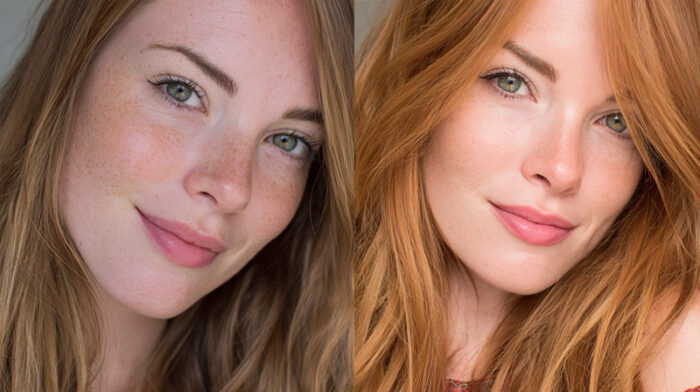
Skin undertone decides which version of red, berry, or coral actually looks right, more than skin tone depth or eye color itself.
Warm undertones carry gold-based reds and terracotta well. Cool undertones lean toward blue-based berries and rosewood instead.
| Undertone | Shade Family | Example Shade | Best Finish |
|---|---|---|---|
| Warm | Terracotta, brick red | Burnt orange-red | Matte or cream |
| Cool | Berry, rosewood | Blue-red, plum | Satin or matte |
| Neutral | True red, mauve | Classic red | Any finish |
Two tests settle most of the uncertainty, and neither takes longer than a minute. Check the veins on the inside of your wrist: blue or purple points to a cool undertone, greenish points to warm, and a mix of both usually means neutral. Or hold silver and gold jewelry against the skin: cool undertones favor silver, warm favors gold, and if both look equally fine, that’s neutral too.
Sephora’s in-store shade-matching tools sort recommendations by undertone rather than color alone, which is the same logic driving everything in this section.
Warm-leaning skin generally does better working from a set of shades built for warmer undertones instead of grabbing whatever’s on the shelf. Cool undertones need the same kind of narrowing, just aimed the other direction, since orange-leaning reds can look chalky or slightly off against cooler-leaning skin.
Most people never actually check. They just assume an undertone based on how deep or light their skin looks, instead of running either test above.
Neutral undertone has the widest range of workable shades, since it splits the difference between warm and cool without pulling hard toward either side.
Best Lip Color for Green Eyes by Skin Tone
Skin tone depth adds a second layer on top of undertone, changing how saturated a shade needs to be before it actually shows up clearly.
Fair Skin
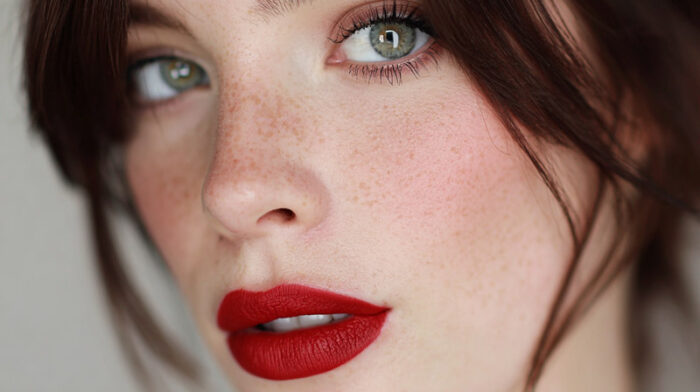
Fair skin carries brighter, lighter reds and coral better than deep berry, which can look heavy and aging against a paler complexion.
Clear red, coral, and warm pink all read well here. Near-black berry and deep oxblood usually don’t. On very fair skin, those darker shades can tip into looking heavy, sometimes aging the whole look rather than framing it.
Charlotte Tilbury’s Pillow Talk built its reputation on exactly this kind of pairing, a rosy nude that reads soft rather than washed out on fair skin.
For anyone with genuinely fair skin, sticking to brighter, warmer reds beats reaching for something deep and saturated just because it looked good on someone else.
Medium Skin
- Terracotta and warm brick red
- Rosewood and muted berry
- Warm coral for daytime
Medium skin has the widest margin for error out of any depth here. Terracotta and rosewood both work, sometimes even shades you’d expect to clash, because undertone tends to show through more clearly at this depth than it does on very fair or very deep skin.
Olive Skin
Warm to neutral, almost by definition. Olive skin carries brick red and warm berry without looking muddy the way an overly pink nude often does.
Icy pink nudes are the one to skip. They fight the yellow-green base in olive skin instead of blending into it. Brick red, warm berry, and deep coral go the other direction and actually work with that base tone rather than against it.
Deep Skin
Deep skin can carry the most saturated shades on this whole list. The depth of the skin itself absorbs pigment intensity that would look like too much on someone lighter.
- Deep red and oxblood
- Rich berry and plum
- Bold fuchsia for evening
NARS built much of its reputation on exactly this kind of saturated, pigment-heavy shade holding up on deeper skin without fading into the background.
Shade ranges built with deeper skin in mind tend to skew richer and more pigmented across the board. That’s not an accident. It’s the point.
Best Lip Color for Green Eyes by Hair Color
Hair color pulls in a second variable alongside skin undertone, and the two do not always point the same direction.
Redheads
Natural red hair is rare, just 1 to 2 percent of the global population according to population genetics research on the MC1R gene, so most lipstick guides default to brunette or blonde coloring and skip this group almost entirely.
That gap is exactly why orange-based reds keep getting recommended for redheads when they shouldn’t be. Red hair already carries warmth, and stacking more of it flattens the whole look instead of adding contrast.
Brick red, blue-red, and berry pull from the opposite direction instead, adding contrast rather than piling more warmth onto warmth. This is exactly why shade lists built for redheads tend to skip orange-red altogether.
Blondes
- Soft coral
- Rosewood
- Muted berry
Soft coral and rosewood are the easiest match of the bunch, needing almost no adjustment for most blondes.
Blonde hair already creates a lot of natural contrast against most skin tones, so the lip color doesn’t have to work as hard.
Bolder reds still work for blondes who want more drama. They just read a little stronger against lighter hair than the same shade would on brunettes.
Brunettes
Brunettes carry the boldest reds and berries on this entire list without the color competing against hair tone the way it sometimes does on blondes or redheads.
Bobbi Brown has spent decades arguing for exactly this kind of natural-tone pairing, matching lip intensity to what the rest of the coloring can actually support.
The deepest range on this whole list sits here too, oxblood, dark berry, blackened red among them.
When hair color and skin undertone disagree, undertone wins. It has a bigger effect on how a shade reads against the actual complexion underneath it.
Best Lip Color by Green Eye Shade Variant

The exact shade of green eyes shifts the recommendation slightly, though undertone still matters more than which version of green you have.
Hazel-Green Eyes
Hazel-green eyes carry warm terracotta and brick red especially well, since the brown and gold flecks running through the iris pick up warmth from the lip color.
- Terracotta
- Brick red
- Warm coral
Pat McGrath’s bold, high-pigment reds are often cited as the reference point for this exact kind of warm contrast.
Blue-Green Eyes
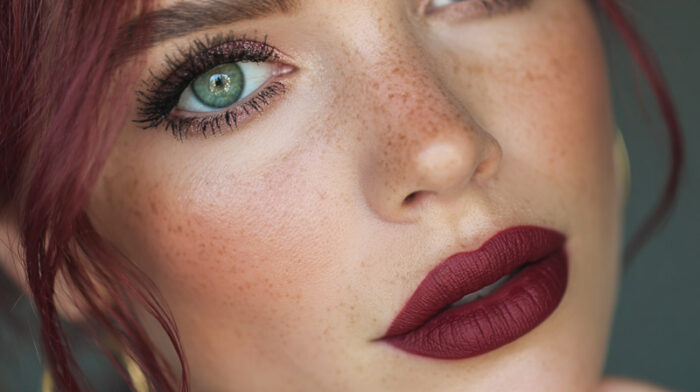
Blue-green eyes carry cool berry and rosewood with more contrast than warmer shades manage, since the blue undertone in the eye pairs naturally with blue-based reds.
A true red still works here. It just reads slightly cooler than the same shade would on hazel-green eyes. If you’re picking one shade to lean into, make it blue-red or plum over anything orange-leaning.
Olive-Green Eyes
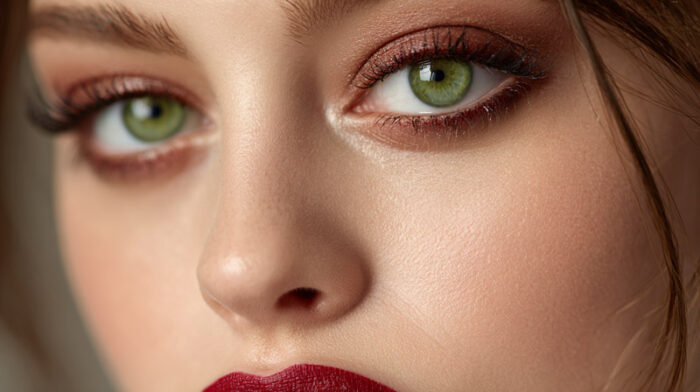
Deeper and more muted than the other two variants. Olive-green eyes carry deep red and muted berry without washing out, since the eye color itself already sits on the darker end of green.
Anything too sheer or frosted tends to disappear against this particular eye shade instead of standing out, so that’s the one to skip.
Variant matters less than undertone across all three of these. A cool-undertone person with hazel-green eyes still does better in berry than in warm terracotta, regardless of the eye shade guidance above.
Best Lip Color Finish for Green Eyes

Finish changes how the exact same shade reads against green eyes, sometimes as much as the color choice itself.
None of this happens in a vacuum, either. Satin and cream finishes together held 44.34 percent of the global lipstick market in 2025, while matte was the fastest-growing finish, tracking toward a 7.59 percent CAGR through 2031, according to Mordor Intelligence. Whatever you reach for, you’re not exactly alone in that preference.
Matte Finish
Matte absorbs light instead of reflecting it, which intensifies contrast and suits bold red or berry shades especially well against green eyes.
The upside is real: longest wear time, strongest color payoff of the three finishes. The downside is real too. Matte can look severe for daytime, and it tends to dry lips out if you skip a balm underneath first.
MAC’s Ruby Woo built its reputation as the reference point for this kind of high-contrast matte red, and it still gets recommended for that same reason today.
The technical definition of a matte finish, essentially little to no shine and a heavier pigment load, explains why it reads so differently from satin or gloss on the same lips.
Satin and Cream Finish

Satin and cream sit between matte and gloss. That middle ground makes them the default pick for daytime, since you still get real pigment payoff without the shine of a full gloss.
It’s a softer visual hit than matte, but it still holds moisture reasonably well without giving up much pigment in the trade.
L’Oreal Paris built its Color Riche Shine line around this exact middle ground, a shiny but non-sticky finish that reads softer than a true gloss.
The technical difference between satin and matte really just comes down to how much light each one reflects back.
Gloss Finish
Gloss works best on lighter coral and rosewood, less so on deep berry, which can look heavy once shine sits on top of already-dark pigment.
Gloss is low maintenance. Hydrating, easy to reapply, forgiving if your technique is a little sloppy. The tradeoff is wear time. It’s the shortest-lasting of the three finishes here, and it transfers onto glasses, straws, and pretty much anything your mouth touches.
Best Lip Color for Green Eyes by Occasion
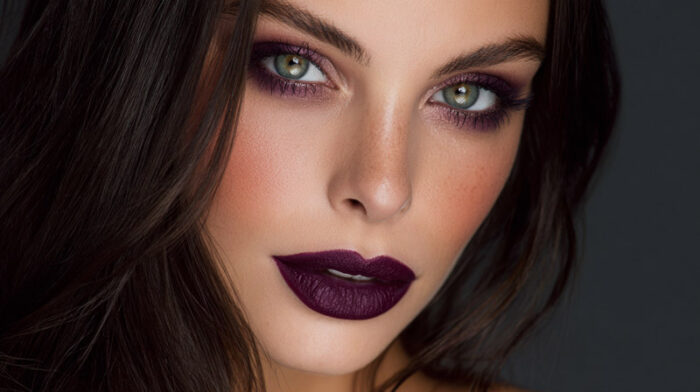
Occasion decides intensity more than anything else covered so far, pulling the same undertone-appropriate shade in a lighter or bolder direction depending on where it’s headed.
| Occasion | Shade Direction | Typical Finish |
|---|---|---|
| Everyday | Sheer, low-saturation | Satin or tinted balm |
| Evening | Saturated, high-contrast | Matte or liquid matte |
| Bridal | Soft, photo-stable | Long-wear satin or cream |
Everyday
Nude remains one of the most consistently requested lipstick categories at the counter, competing directly with red and berry for the top spot in most seasons.
That preference carries over here. Sheer terracotta, rosewood, and soft coral do the same contrast work as bolder shades, just at a lower volume.
Rare Beauty built its lip line around exactly this kind of low-effort, everyday-wearable shade rather than anything meant to be the focal point of a look.
- Sheer terracotta
- Soft rosewood
- Warm coral tint
Evening
- Saturated matte red
- Deep berry or oxblood
- Blackened plum for maximum drama
Evening calls for the volume everyday wear intentionally avoids. Saturation and finish both go up, since low light tends to flatten anything sheer.
Huda Beauty has leaned into exactly this kind of high-saturation, high-drama lip for years, betting on maximum pigment over anything subtle.
It’s worth building the rest of a proper night out look around a lip color like this, rather than treating it as an afterthought.
Bridal
Bridal favors shades that hold up through hours of photos and close contact, which usually rules out anything too sheer or too dark.
Soft rosewood, muted berry, and low-saturation warm coral tend to work well through an entire wedding day. Blackened shades and anything overly glossy tend to fail instead. They photograph poorly under flash, and they’re the first thing to transfer onto a champagne glass during the toast.
A broader set of wedding makeup looks shows how a lip color like this actually sits alongside the rest of a bridal face, not just in isolation.
Lip Colors to Avoid with Green Eyes
Certain shades work against green eyes rather than for them, flattening the exact contrast the rest of this guide is built around.
| Shade to Avoid | Why It Clashes | Swap Instead |
|---|---|---|
| Orange-based red | Piles warmth on warmth, flattens contrast | Blue-red or brick red |
| Icy pink nude | Fights yellow-green undertones | Warm rosewood |
| Frosted or shimmer finish | Dulls the contrast effect | Matte or satin in the same shade |
Orange-based red already isn’t in as much demand as cooler or neutral reds generally. Against green eyes specifically, it performs even worse.
The gap between a cool-leaning red and a warm, orange-leaning one comes down to which side of the wheel it sits on, and that distinction matters more here than in most other eye-color pairings.
A closer look at cool versus warm red lipstick breaks down exactly where that line sits.
Very light, sheer washes of any color tend to underperform too, since they don’t carry enough pigment to create real contrast against the eyes.
Key Lip Shades That Complement Green Eyes

These shades cover most of the undertone and skin tone combinations discussed so far, pulled together as a single reference instead of scattered across each section.
- Brick red works for warm undertones, fair to olive skin, in a matte or cream finish.
- Blue-red suits cool undertones at pretty much any skin depth, in satin or matte.
- Terracotta leans warm too, best on medium to olive skin, in a cream finish.
- Rosewood fits cool to neutral undertones, fair to medium skin, satin finish.
- Deep berry is the pick for cool undertones on deeper skin, worn matte.
Brick and rust-toned red is in real demand too, not just because it works for green eyes. It’s consistently one of the most requested red families at makeup counters overall.
Revlon’s Fire and Ice, launched back in 1952, is still cited as a reference point for a true, universally wearable red that leans neither warm nor cool.
A closer breakdown of how to choose a red lipstick goes deeper into narrowing red specifically down to one shade.
For anyone leaning toward a matte look from the list above, a wider set of matte lipstick shades expands on each of these in that finish.
How to Find Your Best Lip Color for Green Eyes
Finding the right shade comes down to testing method more than product research, since the same red can look completely different under store lighting versus daylight.
Makeup carries one of the highest return rates in retail, around 15.7 percent, according to Mindera’s analysis of AI and AR retail try-on tools, and a wrong-shade purchase is usually the reason why.
- Figure out undertone first, using the vein test or the jewelry test covered earlier.
- Note skin tone depth (fair, medium, olive, or deep) to narrow how saturated a shade needs to be.
- Swatch two or three candidate shades on the back of the hand or inner wrist. Not the lips, not yet.
- Step outside, or at least near a window, and check the swatch in daylight. Indoor lighting shifts how warm or cool a shade reads, sometimes by a lot.
- Apply the front-runner directly to the lips and compare it against bare lips in a mirror. Skip the phone camera for this part.
Ulta Beauty’s in-store consultations and virtual try-on tools follow roughly this same sequence, just with a beauty advisor or a screen doing the comparison instead of a window.
The most common mistake at this stage is buying based on how a shade looks in the tube rather than how it looks applied, which is exactly what swatching is meant to prevent.
A general walkthrough on picking lipstick color covers the same testing logic for shades outside this specific eye-color pairing.
When This Lip Color Advice Does Not Apply
This entire guide assumes green eyes are the fixed variable and lip color is the one being adjusted. That assumption breaks down in a few specific situations.
- Colored contact lenses change the eye color the pairing is based on, which makes every recommendation above apply to the lens color instead of the natural one underneath.
- Personal style and comfort override color theory every time. A shade that photographs perfectly on paper is the wrong pick if it doesn’t feel like the person wearing it.
- Bold or editorial makeup looks are often built to ignore color-matching logic on purpose, using clashing color as the actual point of the look.
- Skin conditions, allergies, or sensitivities can rule out certain formulas or pigments regardless of how well the shade matches on paper.
Screen and camera color rendering is worth flagging too. A shade that looks correct in a mirror can shift several degrees warmer or cooler once it’s captured on a phone camera or under artificial studio light.
None of this contradicts the logic covered earlier. It just marks where that logic stops being the deciding factor.
FAQ on Best Lip Color For Green Eyes
Does Lip Liner Change How a Shade Reads Against Green Eyes
Lip liner shapes the edge and helps pigment hold through a full wear. It doesn’t touch the undertone logic underneath, though. Stick to a liner from the same shade family and the color stays consistent instead of picking up a second, competing tone.
Do Drugstore Lipstick Shades Work as Well as High-End Shades for Green Eyes
Pigment quality and finish shift by price point, sure, but the undertone-matching logic stays exactly the same across drugstore and prestige lines. A ten-dollar brick red in the right undertone beats a forty-dollar orange-based red every time. Brand tier has nothing to do with it.
Does Lipstick Look Different in Photos Than in Person Against Green Eyes
Camera flash and screen white balance can shift a shade several degrees warmer or cooler, which flattens the exact contrast this pairing depends on. Testing a shade in daylight before an event actually matters more than testing it under a ring light.
Is Red Lipstick Always Safe for Green Eyes Regardless of Undertone
Red creates the strongest contrast in general, but undertone still decides which red works. An orange-based red on someone with a cool undertone flattens the effect almost as fast as skipping red altogether. Undertone always wins over shade family alone.
Can Lip Color Make Green Eyes Appear to Change Color
Lip color doesn’t touch the pigment in the iris, obviously, but strong contrast can make green read brighter and more saturated to whoever’s looking. Warm reds and berries create that illusion most reliably. Matching or muddy tones do the opposite and mute it.
Where Should You Start With Best Lip Color For Green Eyes?
Start with undertone. That’s the one decision everything else in this guide hangs off of, from skin tone pairing to hair color to which finish actually makes sense for a given day. Skip that step and you’re picking shades by trend instead of by what actually works on your face.
Undertone first, skin tone depth second, occasion and finish last. That order matters more than which specific shade name you land on.
Get undertone right and a shade rarely needs to change color family for a new setting. What shifts instead is finish, matte for evening, satin for daytime, while the underlying red or berry or coral stays the same.
Picking the right shade is only half of it. A guide to how to apply lipstick covers the technique that keeps any of these shade combinations looking precise instead of smudged by midday.

She started writing on the site after fielding the same questions from clients and friends often enough to just write the answers down: which red won't turn orange on a warm undertone, how to keep lipstick from feathering into fine lines, why a "12-hour" formula rarely survives dinner.
Every review on the site follows the same rule she uses with paying clients: wear it first, then decide if it's worth recommending.
- How to Make Eyeliner Last Longer Without Smudging - August 31, 2026
- How to Make Eyeshadow Last Longer All Day - August 29, 2026
- How to Find Your Undertone in 5 Easy Steps - August 27, 2026