Dab a thin layer of corrector onto the discolored spot and blend the edges until the tint fades. A complexion shade or foundation goes on top.
The NYX Pro Fix Stick Correcting Concealer comes with six corrector shades (green, pink, yellow, dark peach, apricot and brick red), and the same stick format also has its own range of complexion shades.
Skin depth matters more than the concern when you pick a shade. As of October 2026, NYX’s US product page limits green to light to medium skin tones and gives apricot and brick red to deep ones.
A Boozt listing carrying NYX copy and NYX’s own color corrector guide both say green suits all skin tones, so swatch the shade before relying on either range.
Which NYX Product Is the Color Correcting Concealer?

Most people mean the Pro Fix Stick Correcting Concealer. It neutralizes discoloration with 6 corrector shades, and the same line has 18 complexion shades for concealing and brightening.
NYX also sells a six-shade Color Correcting Palette, which is a separate cream product, so the name alone can point to either one.
Coverage is medium and buildable, the finish is natural, and it resists creasing. NYX puts hyaluronic acid in the formula and markets it as a stick that glides on without drying out.
The NYX Professional Makeup US product page, as of October 2026, lists the following.
- 24 shades in total
- Six color correctors in green, pink, yellow, dark peach, apricot and brick red
- 18 complexion shades for concealing and brightening
- 12-hour wear, which is a brand claim stated for the complexion shades and not an independent test
- Medium, buildable coverage with a natural finish
It works the way color correctors cancel out unwanted tones do in general. An opposing hue sits over the discoloration.
You can mix custom shades with the palette. The stick can’t do that, though it brings complexion shades along in the same format.
Matching Pro Fix Stick Corrector Shades to Skin Concerns

Green is for redness on light to medium skin. Pink and yellow brighten fair skin, with pink reaching up to medium and yellow up to light. Dark peach, apricot and brick red handle discoloration on medium to rich deep skin.
The pairing follows the color wheel. NYX’s guidance on its palette page is to choose a hue that contrasts with the discoloration.
| Shade | Treats | Skin depth |
|---|---|---|
| 0.1 Green | Redness | Light to medium |
| 0.2 Pink | Discoloration, dullness | Fair to medium |
| 0.3 Yellow | Discoloration, dullness | Fair to light |
| 0.4 Dark Peach | Discoloration, dark areas | Medium to deep |
| 0.5 Apricot | Hyperpigmentation, dark areas | Deep |
| 0.6 Brick Red | Deep discoloration | Rich deep |
Ranges as stated on the NYX Professional Makeup US product page, October 2026.
Shade Choice for Under-Eye Circles
Skin depth decides which corrector fits under the eyes.
- On fair to medium skin, 0.2 Pink is the shade NYX itself names for brightening under the eyes.
- Medium to deep skin does better with 0.4 Dark Peach, since peach tones counter the blue and purple cast of dark circles (BeautyCrew).
- Deep skin points to 0.5 Apricot, which NYX positions for dark areas on deep skin, or to 0.6 Brick Red, which NYX’s color corrector guide names for dark circles on deep skin. Sheerluxe’s makeup artists also steer deeper skin toward a true orange corrector.
Yellow covers fair to light skin, though NYX’s stick copy describes it as a general brightener.
Shade Choice for Deep Skin Tones

Half the correctors target deeper skin.
Dark peach, apricot and brick red cover medium to rich deep tones. NYX aims brick red at deep discoloration on rich deep skin.
Apricot is the pick for dark spots. The layering logic matches general advice on covering hyperpigmentation with makeup, which is to correct thin first and conceal after.
NYX’s own copy contradicts itself on redness. The US product page says green neutralizes redness on light to medium skin tones, while a Boozt listing carrying NYX copy and NYX’s color corrector guide both say it works on all skin tones.
Treat both ranges as starting points. Swatch green on the jawline before trusting either one on deeper skin.
How to Apply NYX Pro Fix Stick Correcting Concealer Step by Step

Start with primed skin, and keep the corrector on the discolored area only.
- Prep the skin with moisturizer and primer. NYX’s own pick on the Pro Fix Stick page is its Marshmellow Primer.
- Choose the corrector by concern and skin depth, using the shade table above.
- Swipe a thin layer onto the discolored area only. NYX’s color corrector guide says correctors are not meant to go all over like foundation.
- Pat and blend the edges until the tint fades into the surrounding skin.
- Layer a complexion shade over the corrector, as NYX instructs for a finished look.
- Add a second thin layer of corrector only where color still shows through.
Primer gives the stick an even surface to glide over, which is why using makeup primer correctly comes before any corrector.
Redness, Under-Eye Circles and Dark Spots
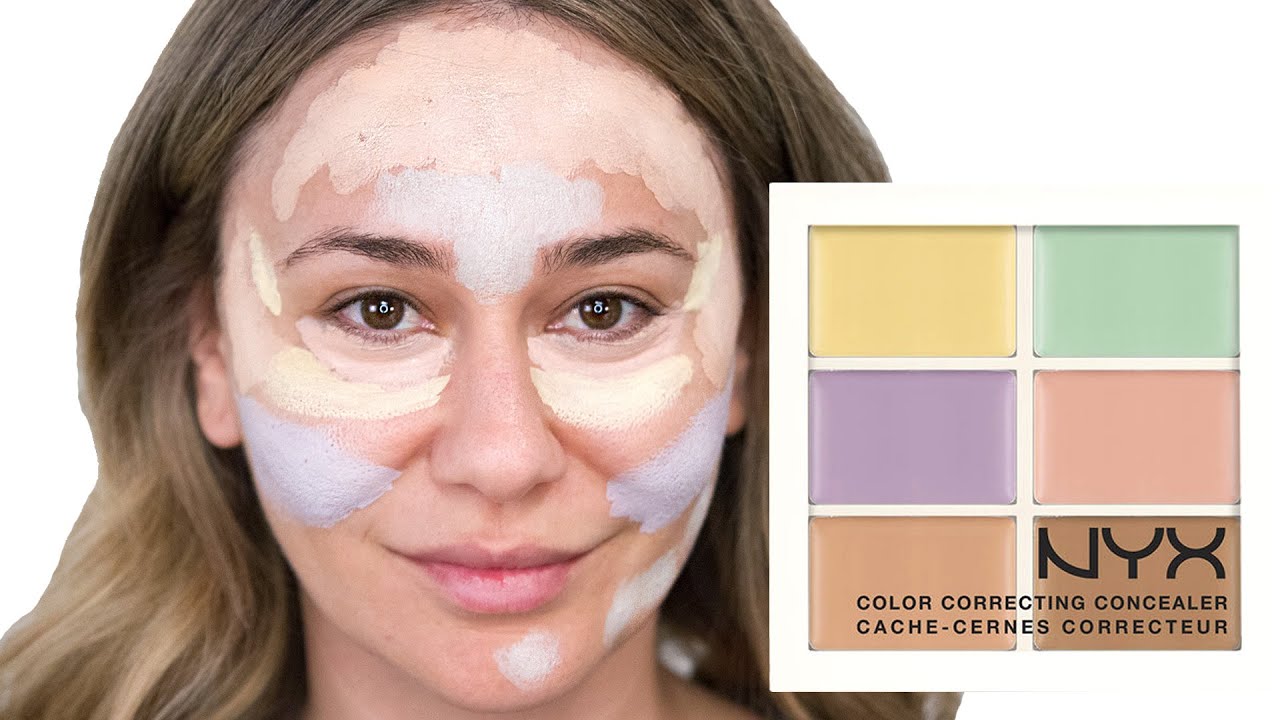
Placement is where the stick differs most between concerns. Applying color corrector follows one rule everywhere. Keep it thin and targeted, and blend it before anything else goes on.
For redness, dot green on the red area only, such as around the nose or on a blemish. Press gently, because NYX warns against rough blending when redness comes with breakouts or irritation.
Under the eyes, a thin layer goes along the darkest band and into the inner corners, which is the spot BeautyCrew flags as the one people skip. NYX adds that pink can also go on after concealer for an extra brightening boost.
For dark spots, tap the shade that fits your depth (apricot or brick red on deep skin) onto the spot itself and nowhere else. Then cover it with a complexion shade that matches the surrounding skin.
Blending With Fingers, a Sponge or a Brush

NYX, NARS and BeautyCrew don’t agree on the tool, but all three say to pat rather than sweep.
NYX says to blend a very thin layer with your preferred tool. NARS recommends stippling with fingers or its #10 concealer brush, and BeautyCrew pairs a damp makeup sponge with a patting motion to avoid smudging.
- Fingers are quick and fine for small areas.
- A damp sponge gives softer edges, and dampening it stops it from soaking up the stick.
A small brush also works on blemishes and inner eye corners, though I wouldn’t bother with one anywhere else.
Sweeping drags the corrector off the spot and exposes the discoloration again. Pat in thin layers instead.
How to Layer Concealer, Foundation and Powder Over the Corrector
The corrector sits at the bottom of the stack. Over it goes either a complexion shade or foundation plus concealer, with powder only where the area creases or shifts.
NYX’s own materials describe two orders, and Clarins backs the longer one.
The shortcut is corrector followed by a Pro Fix complexion shade, and the Pro Fix Stick page presents that as the finished routine. The longer version runs prime, spot-correct, foundation, then a concealer matched to the foundation. That is the sequence in NYX’s color corrector guide, and Clarins lists the same primer, foundation, concealer order.
The shortcut is enough when discoloration is the only problem. If the whole face needs coverage, do the full base.
Either path is a case of layering makeup so each product keeps to one job.
Choosing the Complexion Shade
Match the complexion shade to your skin, not to the discoloration.
- Find the undertone first, whether warm, neutral or cool
- Pick the shade closest to both skin tone and undertone
That is NYX’s method for the Pro Fix line. NYX’s corrector guide and The Zoe Report agree on the principle, which is that the concealer on top should match the foundation shade, since its job is to hide circles and not highlight them.
Setting, Wear Time and Touch-Ups

The Zoe Report says to set under-eye concealer with loose powder, or it rubs off and the circles peek through again. e.l.f. warns that heavy baking leaves under-eyes drier and more textured.
In practice that means a light press and no heavy bake. The technique for applying setting powder matters more here than the powder itself.
NYX attaches its 12-hour claim to the complexion shades on its US page, while a Boozt listing applies it to the whole stick. Neither comes with a published test, and the research for this guide found no independent wear data.
If dark circles show again later in the day, SheKnows suggests adding a very light layer of corrector over the makeup.
When the Pro Fix Stick Falls Short and What to Use Instead

The stick has gaps, and NYX’s palette or concealer wand fills most of them.
- Severe discoloration is a stretch for it. The stick is medium coverage, while NYX positions its palette for the most severe discoloration concerns.
- Sallow skin needs lavender, which NYX recommends for sallowness, and none of the stick’s correctors is lavender.
- Palette pans can be layered into a new shade, but stick shades are fixed.
- A corrector that is too orange for your skin, or applied too heavily, shows through the concealer (e.l.f.).
Dry skin makes that last one worse. A hydrating eye cream under the corrector helps, per e.l.f., and the same prep is the base of any plan to prevent creasing under the eyes.
| Product | Format and shades | Price | Best for |
|---|---|---|---|
| Pro Fix Stick Correcting Concealer | Stick; fixed correctors plus complexion shades | $10.00 (NYX US) | One or two concerns, plus concealing |
| Color Correcting Palette | Cream pans; mint green, lavender, peach and yellow among six layerable shades | $12.00 (NYX US) | Mixing shades, sallowness, severe discoloration |
| HD Studio Photogenic Concealer Wand | Liquid wand; concealer shades plus green, yellow and lavender | $6.00 (lavender, Walmart listing) | Spot fix in lavender or green, or topping a corrector |
Prices as listed in October 2026: NYX US pages for the stick and palette, Walmart’s listing for the lavender wand shade. Walmart’s wand prices vary by shade and seller.
Shade counts for the wand disagree. NYX’s category page says 20 shades, while Walmart’s listing says 23, including green, yellow and lavender correcting shades.
Check the live NYX page before buying a wand shade.
As a rule, buy the stick if you have one or two concerns and want concealing too. The palette only makes sense if you need to mix shades, and for lavender alone the $6.00 wand shade costs half as much.
NYX Pro Fix Stick Correcting Concealer FAQ
Do you need to use it every day?
No. Ulta’s color-correcting guidance says to apply correctors as needed for specific concerns or occasions.
On days when no redness, dark circles or spots show, the complexion shades alone are enough.
Is the Pro Fix Stick suitable for all skin types?
NYX states that it works on all skin types and all skin tones. That is a brand claim, so swatch your shade on the jawline before a full application.
The formula is infused with hyaluronic acid to keep the stick from feeling dry.
Can you wear two corrector shades at once?
Yes, on different areas. Ulta’s guidance allows several correctors on one face when each treats a separate concern, such as green on the cheeks and a peach shade under the eyes.
Keep each shade confined to its own discoloration.
Is it vegan and cruelty free?
Yes, according to NYX’s product copy, which describes the stick as vegan and cruelty free.
Formulas get updated, so check the packaging on your tube for the current claim.
Is it a morning or an evening product?
Morning, judging by community routine data. Skinsort’s May 2025 update shows 88% of the 26 routines using shade 02 Fair place it in the morning.
The sample is small, but it fits a product that sits under foundation and concealer.
Which Pro Fix Stick Corrector to Buy First
A first-time buyer of the NYX Pro Fix Stick Correcting Concealer should pick one corrector for the single most visible concern at their skin depth. Everything else in the line can wait until that shade blends cleanly.
Pair it with one complexion shade matched to your foundation, and add a second corrector only if tint still shows.
Concealer alone cannot cancel a red or blue cast, so the corrector earns the first purchase.
The break-even sits at the second corrector. Two sticks cost $20 against $12 for the palette, though only the sticks add complexion shades.
Verified against NYX’s US pages on October 11, 2026. A revised depth range for green would change the first pick on deeper skin.
With the corrector settled, using concealer well over corrected skin is the next skill worth tightening.

She started writing on the site after fielding the same questions from clients and friends often enough to just write the answers down: which red won't turn orange on a warm undertone, how to keep lipstick from feathering into fine lines, why a "12-hour" formula rarely survives dinner.
Every review on the site follows the same rule she uses with paying clients: wear it first, then decide if it's worth recommending.
- How to Make Eyeliner Last Longer Without Smudging - August 31, 2026
- How to Make Eyeshadow Last Longer All Day - August 29, 2026
- How to Find Your Undertone in 5 Easy Steps - August 27, 2026