Most people toss their mascara on schedule but hang onto concealer for years without a second thought.
Knowing how long does concealer last is not just a shelf-life question. It affects your skin health, formula performance, and whether what you are applying is still safe to use near your eyes.
The answer depends on formula type, storage conditions, packaging design, and whether the product is opened or sealed. Liquid, cream, stick, and powder concealers each follow different timelines governed by the PAO symbol on the packaging.
This guide covers expiration timelines by formula, how to read PAO markings, signs of concealer degradation, storage best practices, and how wear time differs from shelf life.
What Is Concealer Shelf Life?
Concealer shelf life is the period during which the formula keeps its pigmentation, texture, and safety for use on skin. Once those qualities start to break down, the product is past its usable window.
The main measurement system is the Period After Opening (PAO), shown as a small open jar icon with a number followed by “M” on the packaging. A “12M” stamp means 12 months from the day you first open it.
There are 2 distinct timelines to know:
- Unopened shelf life: typically 2-3 years from the manufacture date
- Post-opening shelf life (PAO): 6-24 months depending on the formula type
EU Cosmetics Regulation 1223/2009 requires a PAO symbol on any product with a shelf life over 30 months. Products lasting under 30 months must carry a “best before” date (the hourglass symbol) instead. The FDA does not mandate expiration dates on cosmetics at all, leaving it to manufacturers to set their own windows.
For daily users, the PAO is the more useful reference. The manufacture date tells you when it was made. The PAO tells you when to stop using it.
RMS Beauty, for example, lists its UnCoverup Concealer with a PAO of 12 months and a sealed shelf life of 36 months. That 24-month gap shows exactly why the two numbers matter independently.
—
How Long Does Concealer Last After Opening?
Liquid concealer lasts 6-12 months after opening. Cream and stick concealers last 12-18 months. Powder concealers last up to 24 months. The core reason for these differences is water activity. Water-based formulas create a more hospitable environment for microbial growth, which speeds up formula degradation.
| Formula Type | PAO Range | Key Degradation Driver |
|---|---|---|
| Liquid concealer | 6–12 months | Higher water content increases susceptibility to microbial growth and preservative depletion |
| Cream concealer | 12–18 months | Oil oxidation and gradual breakdown of emulsifiers in richer emulsion systems |
| Stick concealer | 18–24 months | Slower air and contaminant exposure due to wax-based, anhydrous structure |
| Powder concealer | 18–24 months | Very low moisture content limits microbial activity; degradation mainly from contamination or binding breakdown |
Liquid Concealer Shelf Life
Liquid concealer has the shortest post-opening window of any formula type. Water-based formulations support faster microbial colony formation once the seal is broken.
Healthline data confirms most liquid concealers carry a 12M PAO, and creamier formulas with oils or butters can turn earlier because oil goes rancid faster than a dry base.
- Doe-foot and pump applicators make a real difference here
- Pump dispensers limit air and bacteria exposure with each use
- Doe-foot wands dip directly into the product, introducing more contamination
Well, the thing is: most people use liquid concealer near the eye area. That proximity to sensitive tissue is exactly why the 12-month window exists, not as a conservative estimate but as a genuine safety boundary.
Cream and Stick Concealer Shelf Life
Cream and stick concealers carry a longer PAO because their formulas contain less free water. Less water means slower microbial activity.
Key difference: cream formulas in pots degrade faster than stick formats because pot packaging exposes the entire product surface to air and fingers each time you open it.
Stick formats self-protect. The product advances from the base, so only the tip contacts air and skin. That structural advantage is part of why stick concealers consistently reach 18-24 months.
Powder Concealer Shelf Life
Powder concealer lasts the longest of any format. With almost no moisture content, the environment inside the compact is inhospitable to bacteria.
According to Free Yourself’s 2025 beauty product shelf life data, powder formulations can last up to 3 years when stored correctly, compared to 1-2 years for liquid versions.
The main degradation risk in powder concealers is not microbial. It is:
- Contaminated brushes pressing bacteria into the compact
- Pigment breakdown from UV exposure
- Moisture entering the compact from humid storage environments
—
How Long Does Unopened Concealer Last?
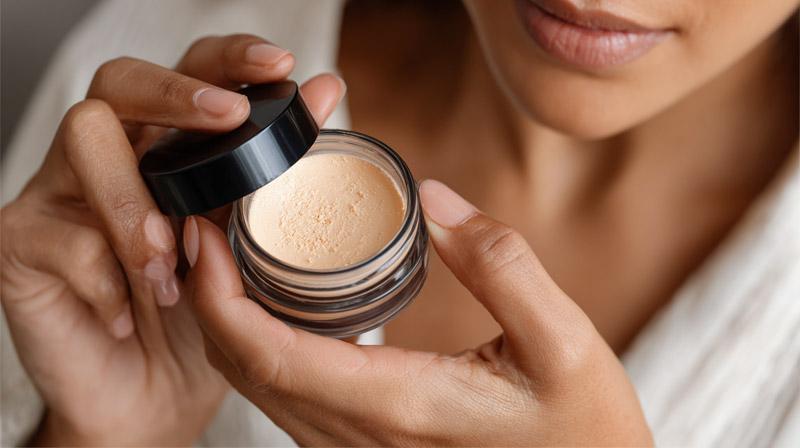
Unopened concealer lasts 2-3 years from the manufacture date when kept in stable conditions. Preservative systems in sealed packaging stay active during this period, but they do not last indefinitely.
Healthline notes that preservatives in makeup break down over time even in unopened products, and no concealer should be kept for more than 3 years regardless of formula type.
The 2 main risks for unopened concealer:
- Heat exposure: temperatures above 25 degrees Celsius accelerate rancidity in oil-containing formulas
- UV exposure: direct sunlight degrades active ingredients and can shift pigment before the product is ever opened
Batch code tools like CheckFresh and CheckCosmetic let you decode the manufacture date from the alphanumeric code printed on the packaging. This matters when you pull an old concealer from a drawer and have no idea when it was made.
One thing worth knowing: products without a PAO symbol (those with a shelf life exceeding 30 months) are not required to display one under EU regulation. The absence of the open jar icon does not mean the product has no expiry window. It means it lasts longer than 30 months sealed. Once opened, standard degradation timelines still apply.
—
What Factors Affect How Long Concealer Lasts?
4 variables directly control how fast a concealer degrades: formula composition, packaging design, storage conditions, and application hygiene. Any one of them can cut the PAO window short.
How Packaging Type Affects Concealer Longevity
Packaging is the most underrated factor in concealer shelf life. The same formula in different packaging can have meaningfully different post-opening windows.
- Pump dispensers: limit oxidation and bacteria contact with each use
- Doe-foot wands: dip into the formula every application, introducing new contamination
- Open-pot packaging: exposes the full product surface to air, fingers, and environmental bacteria
- Stick format: self-sealing by design, slowest contamination rate
This is why 2 concealers with identical formulas but different packaging can have different PAO dates stamped on them.
How Storage Temperature and Humidity Impact Formula Stability
Temperature above 25 degrees Celsius and humidity above 60% are the 2 storage conditions that most consistently shorten concealer life before the PAO date.
Bathroom storage is the most common mistake. Steam from showers creates exactly the high-humidity environment that accelerates microbial growth inside opened products. A bedroom drawer or a cool cabinet away from direct light is significantly better.
A study published in the Iranian Journal of Public Health (2024) examined 320 opened cosmetic samples and identified bacterial and fungal contamination as a consistent finding in products that had been stored in shared, warm, humid environments.
How Application Method Changes the Timeline
Fingers introduce more bacteria into product packaging than clean brushes or sponges. That is not a hygiene lecture. It is a formula degradation fact.
Research from a Jeddah-based microbiology study (2024) found that 44.3% of makeup brush users rarely cleaned their tools, and 27.8% reported skin problems that could be linked to contaminated applicators. Clean brushes directly extend the usable life of the concealer they apply.
Sanitize brushes and sponges weekly with 70% isopropyl alcohol. Replace disposable sponge applicators monthly if used daily.
—
How To Tell If Concealer Has Expired?
5 observable signs confirm a concealer has degraded: smell change, texture change, color shift, performance drop, and visible contamination. You rarely need all 5. Usually 1 is enough.
| Sign | What It Looks Like | Underlying Cause |
|---|---|---|
| Smell change | Rancid, sour, or unusually sharp chemical odor | Oxidation of oils or contamination from microbial growth |
| Texture change | Separation, clumping, graininess, or excessive drying | Breakdown of emulsifiers, solvent evaporation, or destabilization of the formula |
| Color shift | Yellowing, darkening, or orange tint development | Oxidation of pigments and exposure to air/light over time |
| Performance drop | Patchy application, poor blending, reduced coverage or slip | Overall formula instability affecting pigment dispersion and film formation |
| Visible contamination | Spots, fuzziness, film layer, or particulate growth on surface | Mold or bacterial colony development due to compromised preservation |
Smell is usually the fastest indicator. A concealer that smells even slightly off should be discarded. The rancid scent in oil-containing formulas comes from oxidation, which also signals that the preservative system has broken down.
Color shift to orange or yellow is specific to concealer oxidation. Many users assume it is a shade-matching issue. It is not. Healthline confirms that oxidation causes a visible darkening or color change in liquid concealer, a clear sign the formula has passed its prime.
Texture separation in a liquid formula is not something you can fix by shaking the bottle. Once a water-in-oil or oil-in-water emulsion permanently separates, the formula is unstable and should not go on your skin.
—
Does Expired Concealer Cause Skin Problems?
Expired concealer can cause contact dermatitis, clogged pores, acne breakouts, and, when used near the eyes, conjunctivitis and periorbital irritation. The risk is not theoretical. It is tied directly to microbial contamination after preservative breakdown.
A cross-sectional FDA recall analysis published in the Journal of the American Academy of Dermatology (2024) found that 76.8% of cosmetic product recalls between 2011 and 2023 were due to microbial contamination. Bacteria accounted for 80% of those contaminating pathogens, with Pseudomonas aeruginosa leading at 54.9% of bacterial cases.
Eye-area use raises the stakes. Concealer applied under the eyes or on the eyelid area sits adjacent to mucous membranes. Staphylococcus epidermidis and Pseudomonas aeruginosa, both documented in expired cosmetics, can cause stye formation and conjunctivitis in this zone.
Users most at risk from expired concealer:
- People with compromised skin barriers (eczema, rosacea, active breakouts)
- Contact lens wearers who apply concealer near the eye
- Anyone using a product that has exceeded its PAO by more than 3 months
Skin reactions from degraded emulsifiers are a separate issue from microbial contamination. Even without bacteria, a formula where the emulsifier system has broken down can trigger contact dermatitis through direct chemical irritation rather than infection.
If you have had any eye infection while using a concealer, discard it immediately. The product may have been the source, and reusing it will re-expose the same area to the same contaminants.
—
How Does the PAO Symbol Work on Concealer Packaging?
The PAO symbol is an open jar icon with a number followed by “M” (months). The number tells you how long the product is safe and effective after first opening, calculated under standard storage conditions.
Common PAO values on concealers are 6M, 12M, 18M, and 24M. Most liquid concealers sit at 12M. Most powder and stick formats reach 18M or 24M.
3 things most people get wrong about the PAO:
- The clock starts on the day you open it, not the day you buy it
- PAO is calculated under ideal storage conditions. Poor storage (heat, humidity) can invalidate it before the date arrives
- Products without a PAO symbol are not unlimited. Under EU Cosmetics Regulation 1223/2009, products with a shelf life over 30 months are exempt from displaying one
Under EU and UK labeling rules, products with a shelf life under 30 months must carry a “best before” date (hourglass symbol) instead of a PAO. If both symbols appear, the hourglass tells you the unopened window; the open jar tells you the post-opening window.
The FDA does not require PAO labeling on cosmetics sold in the US. That means some US-market concealers carry no expiry information at all. If yours has no PAO and no best-before date, apply the standard formula-type timelines: 12 months for liquid, 24 months for powder, and check for physical signs of degradation from month 6 onward.
RMS Beauty’s UnCoverup Concealer carries a 12M PAO alongside a 36-month sealed shelf life. That transparency is increasingly common in clean beauty brands that want users to understand exactly how to use concealer safely within its functional window.
How Should Concealer Be Stored To Last Longer?
The single most damaging storage mistake is keeping concealer in the bathroom. Steam from showers pushes humidity above 60%, creating exactly the conditions that accelerate microbial growth and formula breakdown inside opened products.
A bedroom drawer or a cool cabinet away from windows is significantly better for concealer longevity, particularly for liquid and cream formulas.
4 storage rules that directly affect concealer shelf life:
- Temperature: keep below 25 degrees Celsius. Heat above this threshold accelerates rancidity in oil-containing formulas
- Humidity: avoid areas with humidity above 60%. The bathroom is the worst location for any liquid concealer
- Light exposure: UV exposure degrades active ingredients. Dark drawers or opaque storage containers protect the formula
- Seal integrity: close lids fully after every use. Partial sealing is one of the fastest ways to shorten a concealer’s usable window
Refrigerator storage works for some water-based concealers. It slows microbial activity, but temperature fluctuations from repeated opening and closing can introduce condensation inside tubes, which adds moisture and bacteria. Stick and powder formats should not be refrigerated as the texture can be permanently altered.
Never add water or product extenders to a drying concealer. This is a formula contamination shortcut. You are introducing unsterile moisture into a product whose preservative system is already past peak effectiveness.
How to Make Concealer Last Longer
Clean application tools directly extend the time between formula degradation. Sanitize brushes and sponges weekly with 70% isopropyl alcohol. Replace disposable sponge wands monthly if used daily.
Avoid touching the doe-foot applicator or product surface with fingers when possible. Fingers introduce Staphylococcus epidermidis and other skin bacteria into the formula with every contact.
- Apply with a clean brush rather than the doe-foot wand where the formula allows
- Dispense product onto the back of your hand before applying to the face
- Write the opening date on the bottom of the tube with a marker
That last one is something I actually started doing after realizing I had no idea when I had opened several products. The PAO clock is useless if you do not know when you started it.
Does Refrigerating Concealer Help?
Refrigeration at 4-8 degrees Celsius slows bacterial growth in water-based liquid concealers. It does not restart the PAO clock or reverse oxidation that has already happened.
Suitable for refrigeration: water-based liquid formulas, some cream concealers in tube packaging.
Not suitable: stick concealers (wax base becomes too firm), powder compacts (condensation risk), and any product already showing signs of formula degradation.
The key limitation is consistency. A concealer moved in and out of the fridge repeatedly is exposed to constant temperature change. Condensation forms inside the packaging and introduces moisture that the preservative system has to manage. For most people, a cool, dark, stable-temperature drawer beats the fridge.
—
How Long Do Specific Concealer Brands Last?

Most liquid concealers from major brands cluster at a 12M PAO, regardless of price point. Stick and powder formats reach 18-24 months. The formula type, not the brand tier, drives the PAO window.
| Brand / Product | Formula Type | PAO (Period After Opening) |
|---|---|---|
| NARS Radiant Creamy Concealer | Liquid | 12M |
| Maybelline Fit Me Concealer | Liquid | 12M |
| Tarte Shape Tape Concealer | Liquid | 12M |
| Charlotte Tilbury Beautiful Skin Radiant Concealer | Liquid | 12M |
| RMS Beauty UnCoverup Concealer | Cream (pot) | 12M |
What stands out: a drugstore liquid like Maybelline Fit Me and a prestige liquid like NARS Radiant Creamy Concealer carry the same 12M PAO. The price difference is not a shelf life difference. Both degrade on the same microbial timeline once opened.
Brands like NARS, Tarte, and Maybelline print PAO symbols clearly on packaging, according to BuyCosmetics.cy. Luxury lines like Charlotte Tilbury or Fenty Beauty may require batch code lookup tools like CheckFresh or Cosmily to confirm the manufacture date.
How to Apply NARS Concealer Within Its Shelf Life Window
NARS Radiant Creamy Concealer uses a doe-foot applicator that dips directly into the formula. This makes hygiene habits more important than with pump formats.
Best practice: dispense product onto the back of a clean hand before brushing onto skin. Never press the doe-foot wand directly onto the face and return it to the tube without cleaning.
Doing this consistently can keep the formula cleaner through the full 12M window. Skip it and the effective life shortens, even if the PAO label has not expired.
Knowing how to apply NARS concealer correctly also reduces over-use, which means the tube lasts longer within its safety window.
—
Does Natural or Clean Concealer Expire Faster?
Yes. Clean and preservative-free formulas expire faster than conventional concealers. The trade-off is real and documented.
According to eFulfillment Service’s 2026 cosmetic expiration guide, clean formulations typically achieve 18-24 months of commercial shelf life versus 24-36 months for conventional formulas. Once opened, the gap is more pronounced. Natural and preservative-free cosmetics can have a post-opening window as short as 3-6 months, according to Alyaka beauty magazine.
Why Natural Preservatives Offer Less Protection
Synthetic preservatives like phenoxyethanol and parabens work consistently across different formula types and pH ranges. Natural alternatives do not.
According to EU cosmetics preservative guidance (EUVerify, 2026), natural preservative systems are more sensitive to pH shifts, less stable when combined with other ingredients, and do not protect reliably against all microorganism types. A formula that passes preservative challenge testing once can fail after minor ingredient adjustments.
- Rosemary extract: antioxidant activity, limited broad-spectrum antimicrobial coverage
- Vitamin E (tocopherol): slows oxidation, does not address bacterial contamination
- Grapefruit seed extract: inconsistent antimicrobial efficacy across studies
ILIA Beauty is a useful example here. Their products use phenoxyethanol as the sole preservative, described as a mild alcohol derived from flowers. ILIA’s PAO for most products is 12 months, with eye products recommended for replacement at 6 months. That 6-month window for eye-area clean products reflects the reduced preservative efficacy near mucous membranes.
Anhydrous Formulas vs Water-Containing Natural Formulas
Water-free (anhydrous) clean formulas last longer than water-containing ones. No water means no water activity, which is the primary driver of microbial growth.
RMS Beauty’s UnCoverup Concealer is anhydrous. Its PAO is 12 months with a sealed shelf life of 36 months, which is strong performance for a clean product. The formula relies on coconut oil, jojoba oil, and candelilla wax rather than a water-in-oil emulsion, removing the main vector for bacterial contamination.
Brands like RMS and ILIA use short or clearly stated PAO windows as a transparency signal. It is not a quality defect. It is the honest cost of removing synthetic broad-spectrum preservatives from the formula.
—
How Long Does Concealer Last on the Skin?
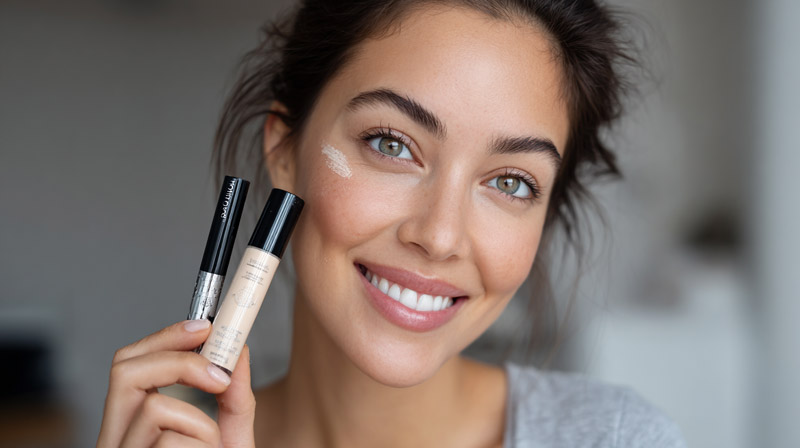
Concealer wear time and shelf life are 2 separate questions. Shelf life is how long the product stays safe in the tube. Wear time is how long coverage holds on your face after application. Both matter, but they have nothing to do with each other.
Average wear time for liquid concealer without primer or setting powder is 4-8 hours, with oily skin and humid conditions reducing that window. With primer, wear extends to 8-12 hours. No7’s oil-free primer formula, for example, is clinically tested to keep makeup in place for up to 12 hours.
Factors That Reduce Concealer Wear Time
Oily skin is the biggest factor. Sebum production breaks down the emulsion between concealer and skin, causing the formula to slip, crease, or disappear from coverage areas within 3-4 hours without additional setting.
3 main wear-time killers:
- Applying concealer over moisturizer without a primer to create grip between the layers
- Skipping setting powder under the eye, where skin movement and oil production are highest
- High humidity environments, which replicate oily skin conditions even on dry skin types
Knowing how to prevent creasing under eyes directly extends concealer wear time. Creasing is not just a cosmetic issue. It signals that the formula is breaking down on the skin surface, which compounds with oil and moisture to shorten visible coverage below the average window.
Products That Extend Concealer Wear Time
Makeup primer creates an adhesive layer between skin and concealer. Setting powder locks the formula in place by absorbing surface oils.
Primer: adds 4-6 hours to average concealer wear. Most effective when applied and allowed to set for 30-60 seconds before concealer goes on top.
Setting powder: the most reliable single step for under-eye concealer longevity. Baking (pressing translucent powder onto concealer and leaving for 1-2 minutes before dusting off) further extends the wear window and reduces creasing.
Setting spray: adds flexibility and moisture resistance on top of powder. Urban Decay’s All Nighter Setting Spray claims up to 24-hour wear when used as part of a full setting routine.
Knowing how to apply setting powder correctly is the most practical step most people skip. A single layer of translucent powder pressed (not swept) onto fresh concealer adds more longevity than most primers or sprays on their own.
Full-coverage concealers crease faster than lighter-coverage options when used without setting steps. Higher pigment loads require more product, which sits thicker on the skin and is more vulnerable to movement and oil breakdown.
FAQ on How Long Concealer Lasts
How long does liquid concealer last after opening?
Liquid concealer lasts 6-12 months after opening. Water-based formulas support faster microbial growth once the seal breaks. Check the PAO symbol on packaging. If it smells off or the texture has separated, discard it regardless of the date.
How long does unopened concealer last?
Unopened concealer stays viable for 2-3 years from the manufacture date under stable storage conditions. Preservatives remain active in sealed packaging. Heat and UV exposure can shorten this window before the product is ever opened.
How long does powder concealer last?
Powder concealer lasts up to 24 months after opening. Low moisture content makes it inhospitable to bacteria. The main risks are contaminated brushes pressing bacteria into the compact and humidity entering the packaging during storage.
How do I know if my concealer has expired?
Look for 5 signs: rancid or sour smell, texture separation, color shift toward orange or yellow, reduced coverage, and visible spots on the surface. Smell change is usually the fastest indicator that the formula has degraded.
What does the PAO symbol mean on concealer?
The PAO symbol is an open jar icon with a number followed by “M.” It tells you how many months the concealer is safe after first opening. The clock starts on the day you open it, not the purchase date.
Can expired concealer cause skin problems?
Yes. Expired concealer can cause contact dermatitis, clogged pores, and acne breakouts. Used near the eyes, it raises the risk of conjunctivitis. Microbial contamination after preservative breakdown is the primary cause of these reactions.
Does natural or clean concealer expire faster?
Yes. Clean formulations typically achieve 18-24 months of shelf life versus 24-36 months for conventional formulas. Preservative-free products can expire in as little as 3-6 months post-opening due to limited broad-spectrum antimicrobial protection.
How should I store concealer to make it last longer?
Store concealer in a cool, dark drawer away from humidity. Avoid bathrooms. Keep lids sealed after every use. Apply with clean brushes rather than fingers to reduce bacteria transfer into the formula with each application.
How long does concealer last on the skin?
Without primer or setting powder, concealer lasts 4-8 hours on skin. Adding primer extends wear to 8-12 hours. Setting powder, especially baked under the eyes, is the most reliable single step for extending visible coverage throughout the day.
Does stick concealer last longer than liquid?
Yes. Stick concealer lasts 18-24 months after opening compared to 6-12 months for liquid. The wax base contains less free water, which slows microbial activity. The self-sealing format also limits air and bacteria exposure with each use.
Conclusion
This conclusion is for an article presenting the full picture of concealer shelf life, from the PAO symbol to formula-specific degradation timelines.
Liquid concealer expires faster than cream, stick, or powder formats. That is not opinion. It is microbiology.
Batch code tools, clean storage habits, and sanitized brushes are the practical steps that keep a formula usable through its full post-opening window.
Clean and preservative-free concealers carry shorter timelines by design. Knowing that upfront prevents skin reactions from expired product rather than discovering it through a breakout.
Check the open jar symbol on your packaging. Write the opening date on the tube. Discard anything showing concealer oxidation, texture separation, or odor change.
Your skin will thank you for it.

She started writing on the site after fielding the same questions from clients and friends often enough to just write the answers down: which red won't turn orange on a warm undertone, how to keep lipstick from feathering into fine lines, why a "12-hour" formula rarely survives dinner.
Every review on the site follows the same rule she uses with paying clients: wear it first, then decide if it's worth recommending.
- How to Make Eyeliner Last Longer Without Smudging - August 31, 2026
- How to Make Eyeshadow Last Longer All Day - August 29, 2026
- How to Find Your Undertone in 5 Easy Steps - August 27, 2026