People tend to talk about NARS concealer as if it were a single product, but NARS sells two and writes separate directions for each. Radiant Creamy Concealer is the one that suits the under-eye area. Soft Matte Complete Concealer does more for blemishes and dark spots, and it handles uneven texture too.
The Soft Matte Complete directions start with a minimal amount that you build up gradually. NARS also says the same shade can read slightly differently between the two formulas, depending on coverage and finish. For both, the method comes down to tapping on small amounts and setting them right away.
Which NARS concealer formula should you use?

Radiant Creamy for under the eyes, Soft Matte Complete for spots, dark patches and texture. The two share a shade system, so the decision comes down to finish and coverage, plus the part of the face you are covering.
| Feature | Radiant Creamy | Soft Matte Complete |
|---|---|---|
| Finish | Luminous, no shimmer | Velvety matte, soft-focus |
| Coverage | Buildable, medium | High, full |
| Format | Wand applicator | Pot, oil-free |
| Best zone | Under eyes, brightening | Spots, redness, texture |
- Under-eye circles and tired eyes go to Radiant Creamy, since the NARS pairing guide uses it to add brightness around the eye area.
- For breakouts and dark spots, plus any redness, use Soft Matte Complete, which NARS positions for superior spot coverage.
- Eyelids are a Soft Matte Complete job as well. Press it on with a fingertip, in a shade that evens the lid.
NARS markets Radiant Creamy at 16 hours of wear, and that is the brand’s own claim. In its launch review, Beaut.ie got over 8 hours out of Soft Matte Complete. Different products and different methods, so the two numbers don’t rank the formulas.
Sources don’t agree on the matte formula under the eyes. NARS lists under-eye circles among its uses. A Cult Beauty shopper review calls it a spot concealer instead and says the thick texture makes it wrong for under eyes.
Dryness is another split. A NARS community post recommends Radiant Creamy for dry and combination skin, but a reader comment on The Beauty Look Book found it drying under the eyes and preferred the matte.
If you can only buy one, go by the problem you cover most. Under-eye darkness points to Radiant Creamy, and recurring spots point to Soft Matte Complete.
How to choose your NARS concealer shade and undertone

Undertone comes first, depth second. NARS shade names carry both. There is a depth tier such as Light 1 or Deep 2, and an undertone note such as neutral, peach, pink or golden.
Chantilly is Light 1 with neutral undertones, per NARS shade listings. Custard is Medium 1, also neutral. Cannelle is Light 2.75 with peach undertones.
If you aren’t sure of your own undertone yet, start with a guide to matching makeup to your skin tone and narrow it down to NARS names from there.
NARS tells shoppers to let concealer dry down on skin before confirming a match, and it warns that the same shade can read slightly differently across formulas. The Beauty Look Book’s 2017 comparison backs that up. It found Radiant Creamy leaning a little more yellow than Soft Matte in matching shades.
Soft Matte Complete launched with 16 shades (Beaut.ie). Cult Beauty’s 2022 shade guide counts 30.
Old swatch posts miss the newer shades, so check the current range before you rule out a match.
Under-eye shade versus blemish shade

Under the eyes, match your skin for plain coverage, or go a step lighter if brightening is the goal.
On blemishes the match has to be exact, because a lighter shade lifts the spot and outlines it.
One concealer in one shade rarely does both jobs well.
When one shade lighter than foundation works
Cult Beauty’s shade guide puts the brightening range at one to two shades lighter than your skin tone. Make-up artist Rose Gallagher writes in Yahoo Life UK that a shade lighter gives a very brightening effect.
A NARS community tip pairs a slightly lighter shade with the inverted triangle placement, blended out with the ring finger.
Lighter works when the shadow is mild. On blue or purple circles it fails, because a lighter shade lifts the area without neutralizing the color. That job belongs to a color corrector (covered below).
How to prep skin before applying NARS concealer
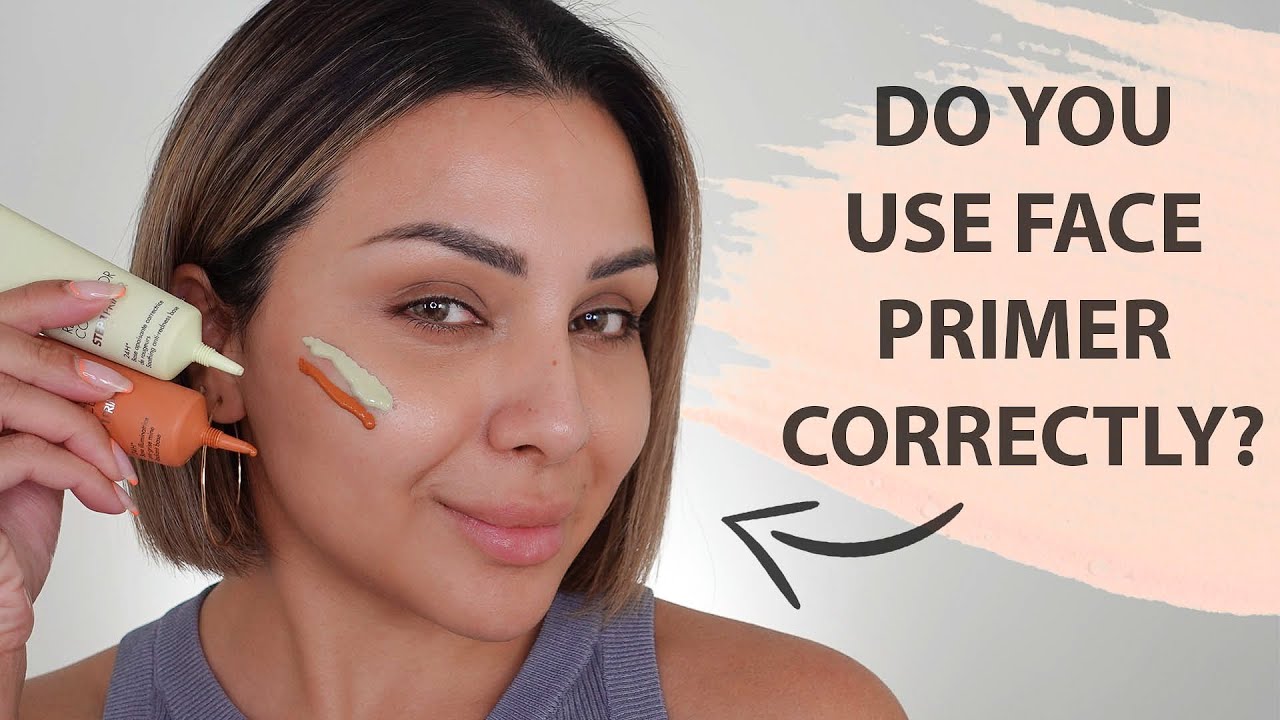
Hydrate first and let it absorb. Primer goes only where your skin turns shiny. Concealer sits on whatever is underneath it, so dry patches and slick patches both show through the finish.
Rose Gallagher says a hydrating eye product eases surface dryness and keeps concealer looking fresh (Yahoo Life UK).
Give the eye cream a few minutes to sink in. Product that is still wet makes the concealer slide.
A full routine of prepping skin before makeup also covers cleansing and sunscreen, but the eye area needs only eye cream and then a thin moisturizer wherever the skin feels tight.
- Dry skin wants eye cream plus moisturizer, with no mattifying primer near the eyes. Pair it with Radiant Creamy.
- If your skin is oily, use a light moisturizer, then primer on the T-zone and around the nose, and put Soft Matte Complete on spots.
- Combination skin gets primer only on the oily zones and eye cream everywhere else.
NARS Soft Matte Primer is a water-gel aimed at excess oil (sweat and sebum included), according to Cult Beauty’s product copy. Customer reviews split on how well it controls oil, and one LookFantastic reviewer says it dries the skin out without a moisturizer underneath.
For anyone new to the step, a walkthrough on using makeup primer shows where it sits in the sequence.
One small habit from the NARS community is to warm a tiny amount of Radiant Creamy on the back of your hand before it touches your face.
Does NARS concealer go before or after foundation?
After foundation, in most routines. Color corrector is the exception, since it goes on first, under both.
Finish applying your NARS foundation first so you can see what the face still needs. Concealer goes only where the base falls short.
The sources split on the under-eye zone itself.
One NARS community routine runs corrector, then foundation over the whole face including under the eyes, then concealer on top, which hides any tint the corrector leaves behind.
Another member skips foundation there and layers a brightening concealer, then a neutral concealer over it, blending with a dense foundation brush. The reason given is that foundation under the eyes looks cakey.
Skip foundation under the eyes if the area looks cakey or creases. Keep it there if you want one unified base color across the face.
Blue or purple circles call for corrector. NARS Radiant Creamy Color Corrector uses red-toned pigments to neutralize those tones and comes in four shades (Light, Medium, Medium-Deep and Deep).
A general walkthrough on applying color corrector covers the basics. The NARS directions for its own version are short. Put a thin layer on the circles, stipple it in with fingers or the #10 Radiant Creamy Concealer Brush, then go over it with the concealer shade that matches your skin.
NARS states the corrector does not change the shade of foundation or concealer.
Corrector adds a layer, and extra layers crease. If your circles are mild, skip it and use the lighter-shade route instead.
Fingers, brush or sponge: which tool works best?

Fingertips under the eyes, a small brush on blemishes, and a damp sponge when you want a sheer, airbrushed layer. Pick by zone, not by habit.
| Tool | Pros | Cons |
|---|---|---|
| Fingertips | Warmth melts the cream, easy tapping control | Less precise on small spots |
| Small brush | Exact placement, controlled amount | Extra purchase, needs washing |
| Damp sponge | Sheer, even finish | Soaks up product |
NARS sells a brush for each formula. The #10 Radiant Creamy Concealer Brush is a small, fluffy synthetic brush rated sheer to medium coverage, built to blend cream across the under-eye area.
For the matte formula, NARS points to the Soft Matte Concealer Brush for spots and the #12 Cream Blending Brush for layering and smoothing.
Technique matters as much as the brush itself, and a general walkthrough on applying makeup with a brush covers the basics.
Sponges split opinion. One NARS community member avoids them because they absorb product and blends with a dense foundation brush instead, while others blend upward from the corners with a damp sponge and swear by it.
If you go the sponge route, a guide to applying makeup with a sponge shows how to dampen it properly. If the concealer still vanishes into it, go back to fingertips.
How to apply NARS concealer step by step
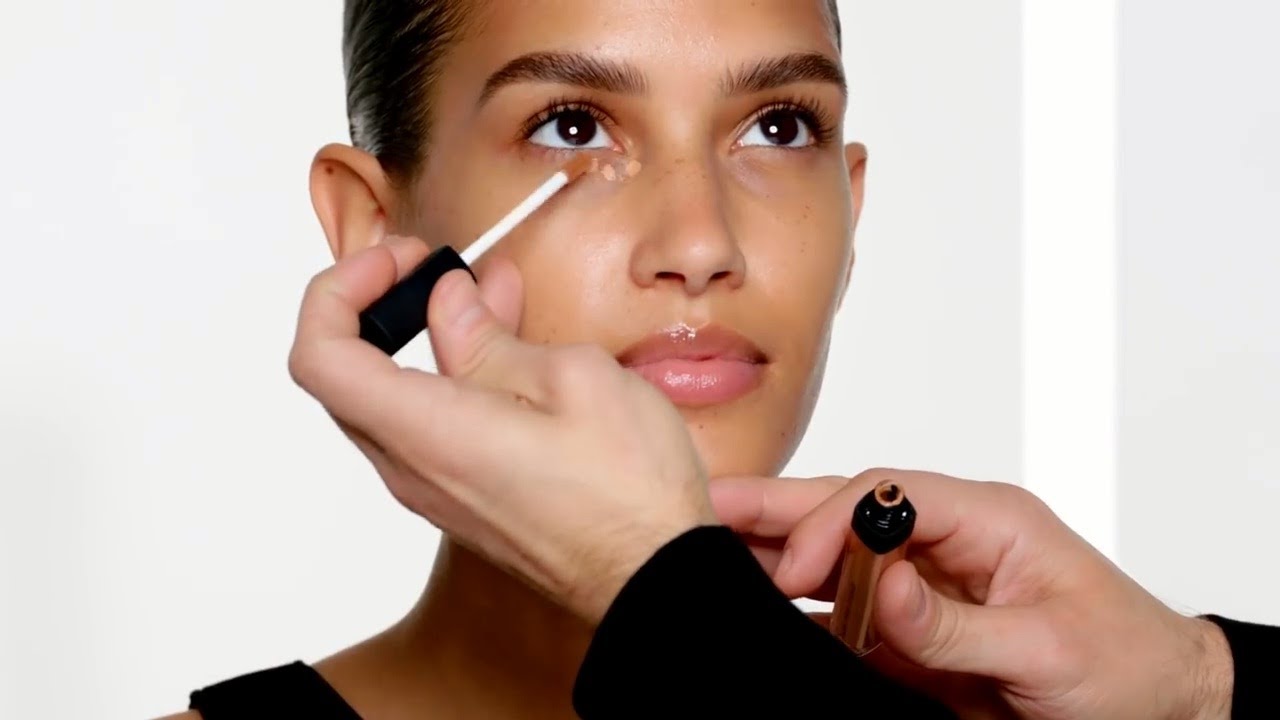
Place small dots, tap them in and add product only where coverage is still short. The routine is the same for both formulas, though the amount and the tool change.
- Finish skin prep and foundation, plus any color corrector, so you can see what is left to cover.
- Dot Radiant Creamy near the inner and outer corners of the eyes, 2 to 3 small dots in all (a NARS community tip). For Soft Matte Complete, pick up a minimal amount on a fingertip or the Soft Matte Concealer Brush.
- Place it by zone. That means under the eyes and on each blemish, plus any redness beside the nose.
- Tap, never drag. On a blemish, blend the edges and leave the center alone.
- Build in thin layers, only where the area still shows.
- Set before you move on to the next product.
Sources disagree on shape under the eyes. One NARS community member uses an inverted triangle, while another says to skip the big triangle and dot only the inner and outer corners so the look stays light.
Use the triangle when the whole area needs coverage. Use corner dots when the center of the under-eye is fine.
For blemishes, NARS directs Soft Matte Complete users to take a minimal amount, dab it on the spot, build gradually and blend over the spot and the skin around it. Acne scars get a stippling motion instead, as do pores and wrinkles, per NARS.
On active breakouts, press rather than rub, and see a guide to covering acne with makeup for the layers around the spot.
The NARS tutorial for Radiant Creamy names redness and texture as targets, hyperpigmentation too. Stubborn patches need their own approach, which a guide to covering hyperpigmentation with makeup explains.
Pairing Radiant Creamy and Soft Matte Complete in one look
One NARS community routine splits the jobs between two shades. A lighter concealer goes on the under-eyes, plus the chin and forehead, and a skin-matching concealer goes on blemishes and uneven areas.
Translate that to two formulas. Blend the cream first, then press the matte onto spots, so the blending never drags the heavier layer around.
Where the two meet, tap the border with a clean fingertip. Set both zones afterward.
How to set NARS concealer so it stays put
Set it right after blending, with a thin dusting of translucent powder pressed under the eyes. If you wait, the cream settles into lines before the powder can hold it.
Rose Gallagher says in Yahoo Life UK that setting almost immediately is the key to stopping concealer from sitting in fine lines. A NARS community member makes the same point and tells shoppers to dust translucent powder over the concealer straight after tapping it in.
Sources split on how long powder should sit. Gallagher and the first community tip say set it at once, while another NARS member leaves powder on the under-eyes while finishing the rest of the face.
Dust lightly, then let it sit only if the area stays shiny or creases.
Clarins advises using powder sparingly and only where you need it, and favors finely milled formulas. NARS Light Reflecting Setting Powder is translucent. A NARS community creator says it avoids exaggerating under-eye texture, pulls back shine without fully mattifying and works best used only on oily or creasing areas.
NARS’s own directions for the loose powder say to dip the #10 Powder Brush, tap off the excess and sweep in circles from the center outward. A step-by-step on using NARS Light Reflecting Setting Powder shows the same motion.
Pressing the powder in with a puff or a smaller brush gives a more blurred finish than sweeping.
NARS describes Soft Matte Complete Concealer as lying flat without settling into fine lines. Powder on spots is therefore optional, while under the eyes it remains a judgment call.
For the technique in general, a guide on applying setting powder covers the amount and the tools.
Why does NARS concealer crease or look cakey, and how do you fix it?

Almost every concealer problem traces back to too much product on skin that wasn’t ready for it. The fix is a thinner layer and better prep, with the right formula for the zone.
| Problem | Cause | Fix |
|---|---|---|
| Creasing | Too much product, dry skin, grippy primer, late setting | Thin layers, hydrate and wait, light powder |
| Caking | Heavy layering, pressing hard, matte formula on dry skin | Use less, tap with fingers, switch to Radiant Creamy under eyes |
| Patchiness or pilling | Mattifying formula on mature skin, primer mismatch | Match water-based concealer with water-based primer |
| Oxidation | Shade turns darker or orange as it dries | Test dry-down, re-match shade in store |
Creasing
Clarins training manager Charlotte McHale says concealer usually creases because too much was applied. Make-up artist Deenihan, quoted by Makeup.com, calls excess product the number-one culprit.
Grazia US also reports that many primers are designed to grip foundation and can make concealer catch in fine lines. Keep primer off the under-eye area.
A guide on preventing creasing under the eyes covers the wider routine around this fix.
Caking and patchiness
Make-up artist Jonet Williamson, quoted by Grazia US, says mattifying formulas tend to settle into fine lines and turn patchy, and Chanel Temple adds that mattifying products strip glow and moisture from the under-eye area.
A Space NK customer review notes Radiant Creamy is water-based, so a water-based primer prevents pilling. If your base is already patchy, a guide to fixing patchy makeup walks through the repair.
Oxidation
The sources conflict here. Cult Beauty’s 2022 shade guide says Soft Matte Complete does not oxidise, yet a Cult Beauty shopper review reports a color change.
Customers at Space NK and Lyko say Radiant Creamy darkens or turns orange after a few hours. Treat it as a shade-match problem. Let the concealer dry down on your skin and get matched in store.
When NARS concealer is the wrong fit
- Concealer alone will not help dry, crepey under-eyes, says makeup artist David Deibis, quoted by Grazia US.
- On mature skin, Soft Matte under the eyes is a risk. NARS says it does not settle into lines, but several artists warn mattifying formulas generally do.
- Heavy coverage on a thin area only accentuates the line you are trying to hide.
Reserve Soft Matte Complete for spots and texture. Use Radiant Creamy for the eye area, and fix the dryness before you reach for either.
NARS Concealer FAQ
Can NARS concealer double as a highlighter or contour?

Radiant Creamy Concealer can do both, according to NARS. For highlighting, pick one to three shades lighter than your concealer shade and place it on the high points of the face.
For contour, use a deeper shade in the hollows of the cheeks.
How do you use Soft Matte Complete Concealer as an eyeshadow base?
NARS’s concealer pairing guide uses it to even out the eyelid. Press a thin layer onto the lid with a fingertip, in a shade that evens out your skin tone, then apply eyeshadow over it.
Can you wear NARS concealer without foundation?
Yes, for light to medium coverage. One NARS community routine uses a skin-matching shade on blemishes and uneven areas and a lighter shade under the eyes, chin and forehead, then blends with fingers and sets with translucent powder.
Is there a smaller size for testing a shade?
NARS sells a Mini Radiant Creamy Concealer, and retailer staff point shoppers to it for trying a shade before committing to the full size.
A store test is still the better check, since NARS notes the same shade can vary slightly between formulas.
How do you clean a NARS concealer brush?
Work a small amount of gentle soap or brush shampoo into the bristles and rinse until the water runs clear. NARS says to keep the handle dry and to reshape the fibers after rinsing.
Touching Up NARS Concealer Without Caking
Touch up NARS concealer by tapping eye cream over the faded area, then adding a small dot of concealer only where darkness shows through. A second full layer is what makes it cake.
Eye cream goes on first, tapped over the faded area. A dot of Soft Matte Complete Concealer follows, on visible darkness only, and the touch-up stays unpowdered.
Make-up artist Deenihan, quoted by Makeup.com in 2021, taps eye cream over concealer to smooth it out. As of October 2026, the NARS pairing guide names Soft Matte Complete Concealer for touch-ups, since its matte finish needs no powder.
Eye cream refreshes without covering anything, and the matte formula covers but adds a layer, so pick based on what the area needs.
For wear time beyond the eye area, a guide to making makeup last all day is the natural next step.

She started writing on the site after fielding the same questions from clients and friends often enough to just write the answers down: which red won't turn orange on a warm undertone, how to keep lipstick from feathering into fine lines, why a "12-hour" formula rarely survives dinner.
Every review on the site follows the same rule she uses with paying clients: wear it first, then decide if it's worth recommending.
- How to Make Eyeliner Last Longer Without Smudging - August 31, 2026
- How to Make Eyeshadow Last Longer All Day - August 29, 2026
- How to Find Your Undertone in 5 Easy Steps - August 27, 2026