Green corrector goes over red pimples and peach or orange over brown marks, and both go on before foundation. That leaves the concealer on top with very little color to hide.
The American Academy of Dermatology says people with acne can wear makeup, as long as the products don’t clog pores and the acne medication goes on first.
How you apply it seems to affect how patients feel, too. In a 2002 European Journal of Dermatology study, eight acne patients taught by a cosmetician improved their Dermatology Life Quality Index score from 7.8 to 2.8 (lower is better) after two weeks of daily wear.
How to Cover Acne with Makeup Step by Step

The order runs from the skin outward, and the heaviest product ends up on the smallest area. That’s what keeps acne coverage from going cakey.
- Cleanse gently, then moisturize. If you use acne medication, it goes on first and gets time to dry (AAD).
- Apply a broad-spectrum SPF 30 or higher.
- Smooth an oil-free primer over oily zones and rough patches.
- Dab corrector on each mark, green over red pimples and peach or orange over dark spots.
- Press a thin layer of non-comedogenic foundation over the face.
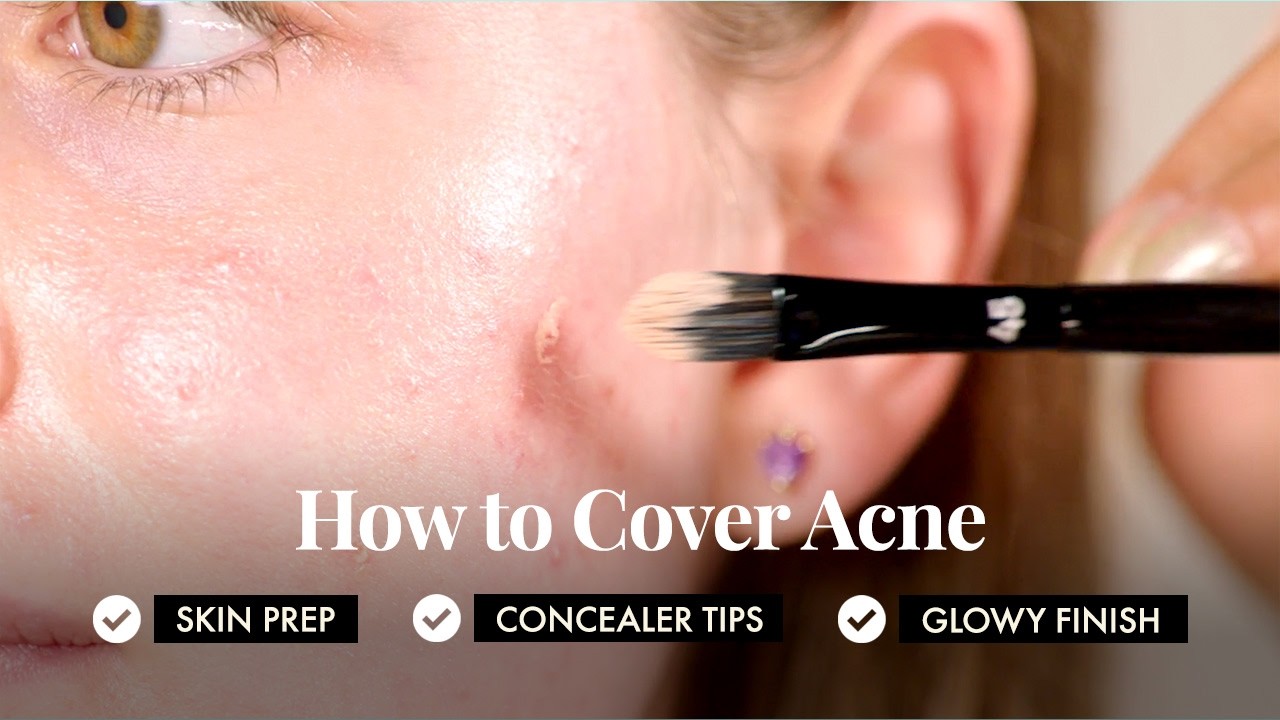
- Tap concealer onto the spots that still show, using a small clean brush.
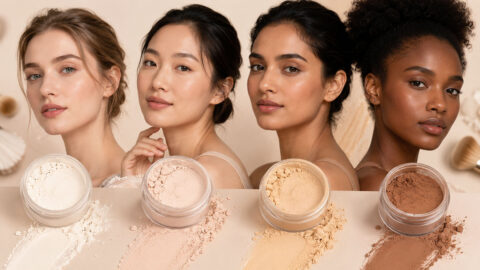
- Set with a light dusting of translucent powder.
- Add setting spray if the day is long.
One thin layer of foundation is plenty, since all it has to do is even out the tone. How you put it on matters more than which one you buy, and a guide to applying foundation properly covers pressing versus dragging.
Concealer is the last wet step and only goes where color still breaks through. A closer look at concealer technique shows how little a single pimple needs.
On a one-pimple day, prep, corrector and concealer are enough. Skip the rest.
How to Prep Acne-Prone Skin Before Makeup

Prep decides how everything after it looks. The AAD recommends a gentle cleanser and an acne-friendly moisturizer, and says to apply makeup with a feather-light touch so the skin isn’t irritated.
Wash with the gentle cleanser and rinse it off completely with water, never scrubbing. Then comes an oil-free or non-comedogenic moisturizer, SPF 30 or higher, and an oil-free primer only in the places that need it. A longer guide to prepping skin before makeup walks through each layer.
Primer smooths the surface so foundation glides instead of catching. If primers are new to you, this explainer on what makeup primer actually does covers the types.
Acne treatments and makeup order
Medication goes on first and makeup after it, as the AAD advises.
Benzoyl peroxide and salicylic acid both dry the skin, so put a moisturizer between the treatment and the foundation. Otherwise dry patches flake right through the base.
Pimple patches under makeup
A 2024 study abstract published in the Journal of the American Academy of Dermatology followed people aged 12 to 35 for 14 days. Popped lesions improved significantly by day 1 and day 4, while closed papules responded less and more slowly.
On the plus side, a patch gives concealer a flat base over a surfaced pimple and keeps your fingers off it. Thin, matte patches with beveled edges more or less disappear under makeup.
The downsides are real, though. Hydrocolloid needs fluid to absorb, so patches do little for closed or cystic lesions. Opaque ones show up as a white dot in daylight, and all of them need clean, dry skin to stick.
Dr. Ruth McTighe recommends applying the patch after cleansing and thorough drying. Dr. Jane Yoo says to see a dermatologist for cystic or nodular acne rather than lean on patches alone.
Which Makeup Formulas Are Safe for Acne-Prone Skin?

Look for oil-free, non-comedogenic or non-acnegenic on the label, but treat that as a starting point rather than proof.
Does makeup cause acne?
It can, though not by default. Breakouts triggered by pore-clogging cosmetic ingredients are called acne cosmetica, and the AAD says they often clear once the product is dropped.
The catch is the delay. New blemishes show up later, so people treat the breakout and then cover it with the product that caused it (AAD).
Formulation matters more than the act of wearing makeup. A 1976 Cutis study found that a comedogenic-free formulation cut acne cosmetica among a clinic’s acne-prone women from 25% to under 5%.
Labels and ingredients to look for
Non-comedogenic means a product is less likely to clog pores. Non-acnegenic is the same idea aimed at acne itself, and oil-free just means no added oils, which suits shine-prone skin.
JAMA Dermatology (2018) pointed out that FDA keeps no list of comedogenic ingredients, so brands can print non-comedogenic claims without a standardized test behind them. Read the ingredient list and stop using anything that coincides with new breakouts.
Salicylic acid is the active the AAD names for makeup on acne-prone skin. A foundation that lists it as an active is regulated as an OTC acne drug, and FDA’s monograph sets the range at 0.5 to 2 percent.
Mineral formulas built on silica, titanium dioxide and zinc oxide absorb oil and camouflage redness, according to a Cutis review of acne myths.
Choosing a coverage level
| Coverage level | Fits | Trade-off |
|---|---|---|
| Concealer only | One to three pimples | Leaves the rest of the skin bare |
| Tinted moisturizer | Mild breakouts and redness | Texture and dark marks still show |
| Full-coverage foundation | Widespread acne, scars, dark marks | Cakes fast when layered |
L’Oreal Paris lists Infallible Total Cover among its picks for acne cover-ups. Dermablend sells a salicylic acid mousse foundation with medium, matte coverage (Dermstore).
Shade match counts as much as formula, and this guide to choosing a concealer explains undertone matching.
Which Color Corrector Cancels Which Acne Mark?
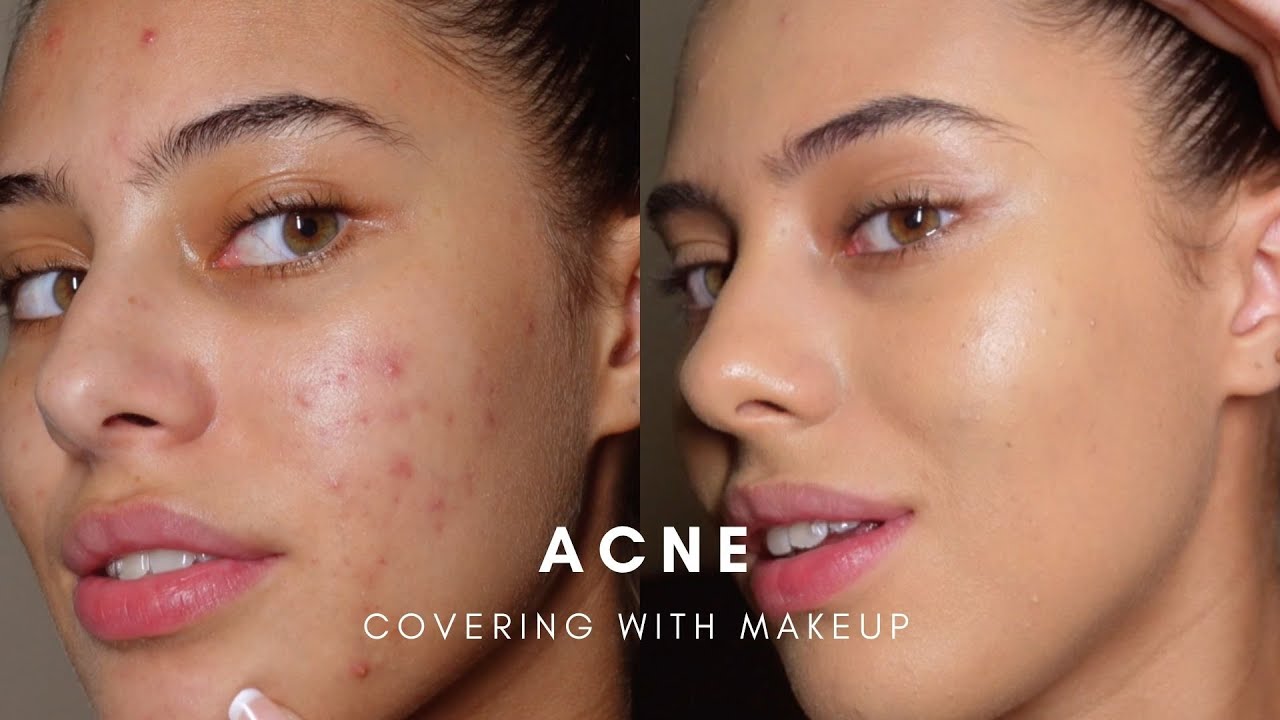
Green cancels red, while peach, orange or red cancels brown, blue-gray and purple tones. Skin depth decides how warm the shade should run.
| Mark | Corrector shade | Best skin depth |
|---|---|---|
| Red pimple or lingering red mark | Green | Light to medium (yellow or olive on some deeper tones) |
| Brown spot with a purple or blue tint | Peach or light orange | Fair to light |
| Brown or gray-blue spot | Orange or apricot | Medium to tan |
| Deep brown or blue-gray mark | Orange or red-orange | Deep (Fitzpatrick types IV to VI) |
The logic comes from the color wheel, where opposite shades neutralize each other. A short explainer on what a color corrector is covers the full shade range.
The Fitzpatrick scale sorts skin by sun response. Dermatology guidance on color correction calls for an orange-toned corrector over blue-toned marks and a red-undertone corrector over purple-toned discoloration on types IV to VI, and a yellow-based corrector for redness on those deeper tones.
Dark marks are the bigger coverage problem on deeper skin. A 2002 study of acne in skin of color, cited in a Journal of Clinical and Aesthetic Dermatology review, found acne-induced post-inflammatory hyperpigmentation in 65.3% of African-American, 52.7% of Hispanic and 47.4% of Asian patients.
Post-inflammatory hyperpigmentation shows up as a brown mark, while the red or pink version is post-inflammatory erythema. They need different shades.
Sources disagree on red pimples over deeper skin. Beauty editorials default to green, but Dr. Pimple Popper’s guide on SLMD says a yellow or olive corrector can look more seamless there.
Test both on one pimple. If green turns gray or muddy on your skin, switch to yellow or olive.
Corrector goes on before foundation, as a thin layer on the mark only. A step-by-step on applying color corrector shows the pat-and-blend motion.
The usual mistakes are a shade that’s too light, which turns dark spots ashy, and too much product, which emphasizes the discoloration it was meant to hide.
IT Cosmetics sells Bye Bye Redness, a neutralizing color-correcting cream with full-coverage pigments plus colloidal oatmeal, aloe and avocado.
How to Cover Each Type of Acne Lesion
Color correction handles red and brown marks, and whiteheads only need a thin dot of concealer. Cystic acne gets as little product as possible, and scars call for a smoothing primer.
Red pimples and whiteheads
For a red pimple, correct with green, then press an opaque, non-comedogenic concealer close to your skin tone over the center. A whitehead that has surfaced can be patched overnight, with a thin dot of concealer the next morning.
For one or two pimples, natural coverage is enough. Foundation over the whole face is optional.
Cystic acne
Makeup changes the color of a cyst, not its size.
Keep the routine short. Correct, dot concealer, stop. Extra layers on a raised lesion only add bulk.
Deep, painful lesions need a dermatologist, not more product.
Dark marks and post-acne redness
Dark marks need a warm corrector under the concealer, not a thicker concealer. A walkthrough on covering hyperpigmentation with makeup adds technique for larger patches.
Sun exposure deepens these marks. A Journal of Clinical and Aesthetic Dermatology review lists photoprotection, including daily sunscreen, as first-line care for post-inflammatory hyperpigmentation, because UV exposure can darken the marks further. That’s one more reason SPF sits under makeup.
Scars and texture
Makeup cannot erase pitted or raised scars. It only changes how light hits them.
- A silicone-based primer fills indentations slightly.
- Shimmer and dewy finishes highlight uneven skin, so keep them to the cheekbones (Faces Canada).
- Makeup artist Irwin (quoted in mindbodygreen) presses a little powder into the scar, adds a thin layer of concealer, then sets it again.
- Dermablend suggests dotting concealer on scars before foundation.
Sponge, Brush or Fingertip: Which Tool and Technique Works Best?
A small brush or a clean damp sponge beats bare fingers on acne-prone skin, and pressing beats rubbing every time.
Choosing the tool
A damp sponge presses in foundation and corrector without dragging, and the Beautyblender is the best-known one. A small brush places concealer on a single spot with precision.
For one pimple, a cotton swab is a disposable option. Makeup artist Ryno Mulder uses one with a drop of concealer taken from the back of a clean hand. Fingertips warm the product, but the AAD points people toward applicators instead.
Foundation goes on best with a sponge, and a guide to applying makeup with a sponge covers the technique in more detail.
Concealer is a brush job. A walkthrough on applying makeup with a brush covers loading and blending.
Pressing, stippling and layering
Press, do not rub.
Rubbing lifts concealer straight off the blemish, according to Dr. Pimple Popper’s guide on SLMD. The AAD adds that makeup should go on with a feather-light touch to avoid irritating the skin.
Stippling is a quick tapping motion that lays product down without moving the layer underneath. Build coverage in thin layers and stop the moment the spot disappears.
Sources split on one detail, which is the concealer texture for a pimple.
Ryno Mulder avoids creamy concealers on pimples because they can make them flare again within hours, and prefers a high-coverage liquid that matches the skin exactly. Nyssa Green goes the other way and favors a creamy, full-coverage formula tapped in with a small brush.
Both want a light touch. A workable rule of thumb (not a tested finding) is liquid for oily, inflamed skin and creamy for dry skin and healed marks.
How to Set Makeup Over Acne and Keep It From Looking Cakey
Powder sets liquid and cream products and setting spray extends their wear. Neither rescues a layer that was too thick to begin with.
Powder or spray?
Sources disagree on powder. Most routines set concealer with translucent powder, while a Daily Star beauty column warns that dusting powder over scars and pimples can draw more attention to them.
The middle path is a light dusting with a small, fluffy, tapered brush, the method Ryno Mulder uses on pimples. Skip dry or textured patches, and see this guide on applying translucent powder for the motion.
Laura Mercier lists its talc-free Translucent Loose Setting Powder Ultra-Blur as fragrance-free and non-comedogenic. The brand also claims 16 hours of wear for this powder, which is a brand claim rather than an independent test.
Setting spray adds hold without more powder. Nyssa Green recommends One/Size On ‘Til Dawn Mattifying Waterproof Setting Spray, per AOL’s pimple guide.
Fixing cakey and creased makeup
Too much product is the leading cause of cakey makeup, according to makeup artist Alexandria Gilleo in mindbodygreen.
Dry skin makes it worse, since foundation and powder catch on flakes and look splotchy (makeup artist Alexandra French, mindbodygreen). Repeated touch-ups stack another layer on the same spot, and thick or very matte formulas dry out and crack, per e.l.f. Cosmetics.
A breakdown of why makeup looks cakey goes deeper on each cause.
If the spot already looks heavy, swap to a clean tool. A brush or sponge loaded with product only adds more.
How to Remove Makeup and Clean Tools on Acne-Prone Skin

Take off everything before bed, eye makeup included, as the AAD advises, and wash the tools that touched your face on a fixed schedule.
Dermatologist Samer Jaber says clogged pores from sleeping in makeup can significantly raise breakouts, as reported by The Healthy.
Removing makeup
- Dissolve long-wear or waterproof makeup first with micellar water or a cleansing balm.
- Rinse with lukewarm water.
- Wash with a gentle cleanser, the second pass of a double cleansing routine.
- Pat dry and moisturize.
Skip alcohol-based removers. Dr. Engelman, quoted on Makeup.com, says alcohol dehydrates and irritates the skin barrier.
If you slept in makeup, double-cleanse the next morning and swap the pillowcase, per Dr. Sandra Lee on SLMD.
Keeping tools clean
Aston University researchers (Journal of Applied Microbiology, 2019) surveyed beauty blender users, and 93% said they had never cleaned their sponge. Sponges stay damp after use, which the team flagged as a driver of bacterial growth.
Sponges for liquid makeup need spot cleaning after every use, according to Geisinger. A walkthrough on cleaning makeup sponges covers the soap and drying steps.
Brush schedules are where authoritative sources diverge. The AAD says to clean makeup brushes every week, while Cleveland Clinic washes brushes used for wet products weekly and puts brushes used for dry products such as powder and blush at once a month.
The gap tracks the product, since wet formulas harbor bacteria faster than dry ones. For active acne, Dr. Alexis Granite washes foundation brushes and sponges daily (Marie Claire UK), and a guide to washing makeup brushes covers the method.
Never share tools. Acne-causing bacteria, dead skin cells and oil from other people’s skin stick to brushes and applicators, per the AAD.
When Makeup Cannot Fix Acne
Makeup stops being the right tool when acne is moderate to severe, open, or not responding to treatment.
It hides color and treats nothing. Covering a flare for months can delay the care that would clear it.
The AAD says it can take four to eight weeks to see some improvement from over-the-counter acne treatments. If nothing changes by then, book a dermatologist.
- Hormonal or severe acne rarely responds to over-the-counter products (WeDerm).
- Acne that changes your mood or social life is reason enough to book a visit.
- Open or freshly picked lesions need clean hands, clean tools and no thick layers.
Dr. Ruth McTighe warns that a patch over a popped but unclean pimple can trap bacteria. Cleanse first, then patch.
Heavy formulas also fail on skin dried out by treatment. A guide to applying makeup on dry skin helps when a light base is the better call.
For one or two pimples, corrector and concealer on the spots is all you need. A few active spots call for tinted moisturizer plus spot concealer. A full flare means thin full-coverage product on the affected zones only, patches overnight, and a dermatologist visit if it lasts past the four to eight week mark.
FAQ About Covering Acne with Makeup
Should you pop a pimple before covering it with makeup?
No. Popping prolongs healing and raises the risk of scarring and post-inflammatory hyperpigmentation, the AAD warns.
If the pimple has already surfaced, a thin hydrocolloid patch flattens it and keeps your fingers away.
Can you work out in makeup?
Ideally no. Sweat and makeup together can clog pores, so remove it before training (Makeup.com).
Wash gently afterward, since the AAD advises cleansing after sweating.
How do you cover acne on the back and chest?
Use a body formula labeled transfer-resistant, set it with powder, and let it dry fully before dressing.
Bumps on the back and chest are not always acne, and WeDerm notes that moderate to severe body acne usually needs prescription treatment. Get a dermatologist to confirm what you are covering.
What changes when acne sits on the forehead, chin or jawline?
The routine stays the same, but the triggers shift. Hair oil can cause forehead acne, per the AAD, so keep hair products off the hairline.
Touching flares acne too (AAD), so set chin and jaw spots with powder and keep your hands away from them.
How long can a pimple patch stay on under makeup?
Most patches wear for several hours or overnight and are ready to come off once they turn white or cloudy.
For daytime wear, pick a thin patch designed to sit under makeup, as Dr. Jane Yoo notes many now are.
Where to Start When Covering Acne with Makeup
Start with removal and clean tools. Concealer shade and technique come after.
New breakouts add more marks to hide, so the habits that keep skin clear save more work than any layering trick. Remove makeup every night, wash your tools on schedule, and switch to oil-free, non-comedogenic formulas. Corrector, thin layers and spot concealer come last.
The order matches cost to payoff. The first two steps change what the skin does, while the last one changes only how it looks.
The downside is visible texture. Thin layers read as skin but leave raised bumps and pitted scars in view, and heavier layers that hide them cake faster and demand a double cleanse at night.

She started writing on the site after fielding the same questions from clients and friends often enough to just write the answers down: which red won't turn orange on a warm undertone, how to keep lipstick from feathering into fine lines, why a "12-hour" formula rarely survives dinner.
Every review on the site follows the same rule she uses with paying clients: wear it first, then decide if it's worth recommending.
- How to Make Eyeliner Last Longer Without Smudging - August 31, 2026
- How to Make Eyeshadow Last Longer All Day - August 29, 2026
- How to Find Your Undertone in 5 Easy Steps - August 27, 2026