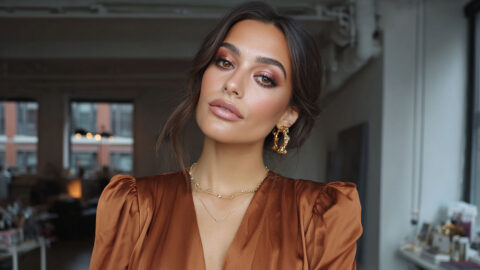
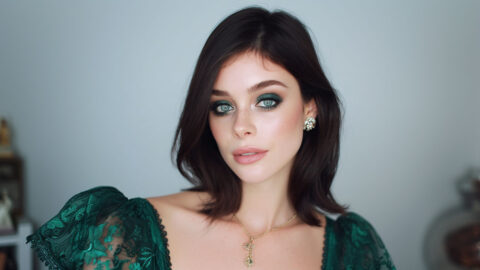
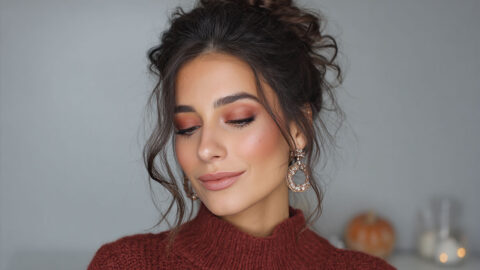
Most brides start with a folder of saved photos, and most of those photos show someone with different skin, different eyes and a different dress. That mismatch is why a look that seemed perfect on screen can fall flat at the trial.
Google added a skin tone filter to beauty searches in Image Search in May 2022, and it demonstrated the feature with a search for bridal makeup looks. Filtering saved inspiration down to a tone close to yours shows how a style sits on skin like yours, which helps before you pay for a trial.
Which Wedding Makeup Looks Are Most Popular, and How Do They Differ?
Natural, soft glam, classic, full glam, boho and vintage cover most of what brides ask for. What separates them is eye definition, lip color and how much coverage the skin needs.
Any of them has to last from the ceremony through the reception and still read well in daylight and under flash, which is what separates bridal makeup from ordinary event makeup.
| Look | Defining features | Best for | Main risk |
|---|---|---|---|
| Natural | Sheer base, matte neutral shadow, nude glossy lip | Daytime, garden, simple gowns | Texture and fading show |
| Soft glam | Satin skin, blended brown or smoky eye, pink-nude lip | Almost any venue | Easy to over-build |
| Classic | Defined eye, structured brow, red or nude lip | Church, ballroom, black-tie | Red lip needs upkeep |
| Full glam and dramatic | Smoky eye or cut crease, sculpted cheeks, full lashes | Evening, large venues | Heaviest touch-up load |
| Boho | Sun-kissed skin, warm earthy shadow, soft lip | Beach, outdoor, destination | Shine in heat |
| Vintage | Winged liner, shaped brow, red or berry lip | Themed or retro weddings | Looks costume-like if era and dress clash |
Demand leans toward the light end of that list. Searches for a no-makeup bridal look rose 72% year over year in Pinterest’s 2025 wedding trends report.
Natural Wedding Makeup

The skin does the work here. Coverage stays sheer and the eyes get soft matte shades, with whatever color there is saved for the cheeks and lips.
The Knot’s 2026 trend roundup sets the brows with a tinted gel and picks matte eyeshadow for staying power. The lip is nude, with gloss over it.
The catch is that nothing covers a mistake. Uneven texture and fading are visible, so skin prep and a trial count for more here than they do for glam.
The Knot also suggests asking the artist whether airbrush or traditional application suits a lightweight finish better.
Soft Glam

Satin skin, a light contour, soft brown shadow, defined brows, and a lip somewhere between pink-nude and bronze-pink. That’s the usual recipe, and it’s polished without looking heavy.
Jane Iredale’s bridal look book gives its version a soft smoky eye with copper cheek highlights, while Jess Bonilla Beauty’s classic variant sticks to brown shadow and a pink-nude lip. Plenty of other soft glam looks only change those shades. It’s the safest pick for most people, honestly, because it forgives a lot.
Classic Bridal Makeup
A classic look always has a defined eye and structured brows, so the lip ends up deciding which version you get.
The red lip version pairs winged liner and sculpted brows with a matte base. It’s the Old Hollywood formula that makeup educator Lissette Waugh (LMI, 2025) matches to evening and black-tie weddings.
With a nude lip, The Mercury describes a lightweight full-coverage base, subtle contour and champagne, taupe or brown shadow. That suits daytime ceremonies better.
So the lip gets chosen first, and the rest follows from it.
Full Glam and Dramatic Looks

This is the high-impact end of the range: bold eyes, sculpted cheekbones, full lashes, and a lip chosen to balance the eye instead of fighting it. Smoky eyes and cut crease (a defined crease line against a lighter lid) are the usual picks, with strong contour alongside. The lip stays quieter than the eye.
Expect the heaviest touch-up load of any style. Dark shadow and liner show every smudge, and cut crease fails on hooded lids because the fold hides the crease.
The Knot’s 2026 roundup lists bold and colorful eyeshadow among the year’s trends, so color is creeping into this category too.
Boho Bridal Makeup
Boho reads as lived-in and sun-warmed. Bronzed skin and warm, earthy shadow, with a lip that looks stained rather than painted.
The Wed’s guide for beach brides leans on ocean-inspired hues and iridescent highlights over dewy skin. In heat, that dewiness needs blotting and a setting spray, or it turns to shine by cocktail hour.
Vintage Looks
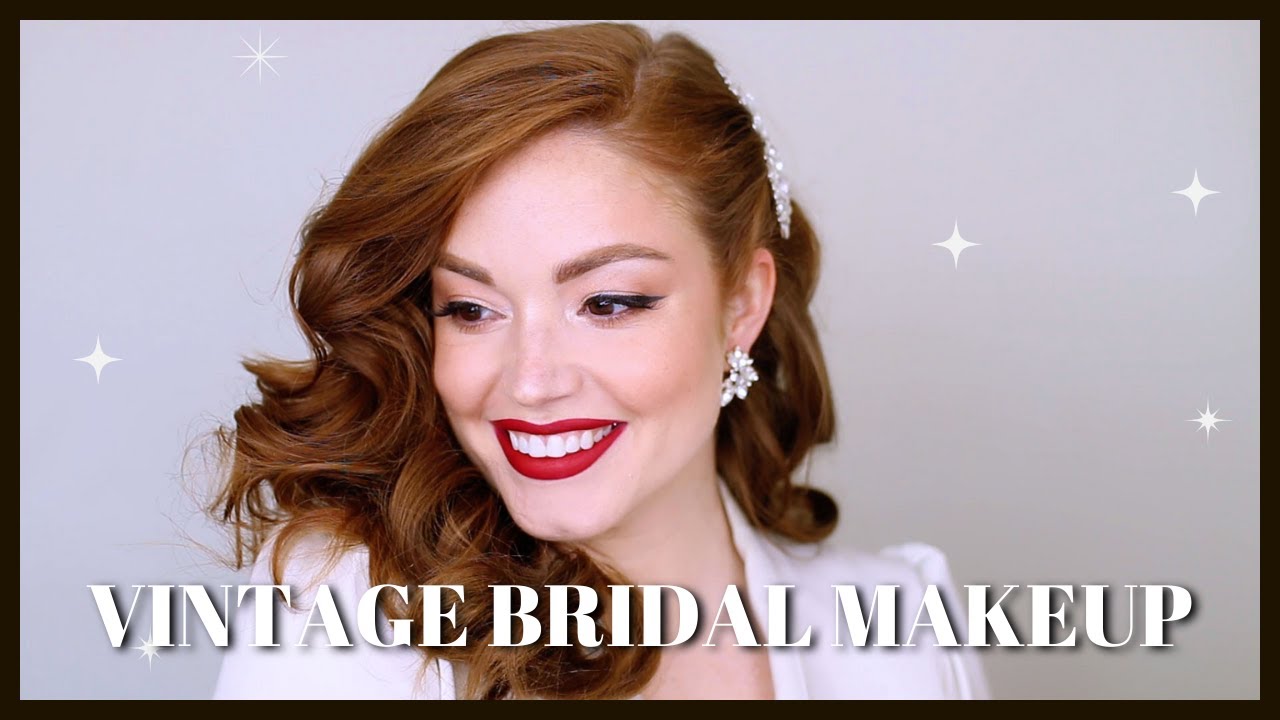
Vintage borrows from one decade, so the dress and venue have to back it up. Something Turquoise pairs vintage-style weddings with a bold cat eye and vibrant red lipstick.
Brow shape and lip color change with every era, and a rundown of vintage makeup looks makes the choice easier.
A 1950s wing on a modern minimalist gown looks like a costume. Match the era to the dress first.
How Do You Match a Wedding Makeup Look to Your Skin Tone and Undertone?

Undertone (warm, cool or neutral) gets settled first. Once it is, blush and lip color come from that family and highlighter follows. Skin depth decides how strong a shade can be before it looks harsh or disappears.
Reading Undertone
Undertone stays the same whether skin is fair or deep, and it steers the whole color story.
Warm undertones lean toward peach, coral and terracotta, with a golden highlighter. Cool ones suit rose, berry and mauve, plus a pearl highlighter. Neutral is the awkward middle, since most shades work and the dress and lighting end up deciding.
Warm undertones also have a dedicated set of lipstick shades that suit warm skin, which narrows the lip choice quickly.
Skin Tone Scales: Fitzpatrick and Monk
The Fitzpatrick scale was formalized in 1975 and sorts skin by how it reacts to sun, not by how a shade looks next to a dress. EyeWiki, the American Academy of Ophthalmology’s reference, notes it started with four types for lighter skin and was extended to six.
Google’s Monk Skin Tone Scale, announced in May 2022, uses 10 shades. Google and Dr. Ellis Monk surveyed about 3,000 people across the US, and according to Reuters’ report on the launch, a significant number said a 10-point scale matched their skin as well as a 40-shade palette did.
Neither scale is a foundation chart. Shades still get matched by swatching on the face, and a guide to matching makeup to your skin tone covers that step.
One practical use: Google’s launch demo for the Monk scale was that same Image Search for bridal makeup looks with a skin tone filter. Narrowing inspiration photos to a tone close to yours shows how a look actually sits on skin like yours.
Mature and Sensitive Skin
Mature skin looks smoother in cream blush and a light base than in layered powder, which settles into lines.
Sensitive skin needs patch testing before the trial. Rhiannon Paige, a makeup artist at Blys, suggests brides with allergies work with their artist on a skincare plan well ahead of the date.
Which Eye Color and Eye Shape Pairings Work Best for Wedding Makeup?
Shades opposite the iris on the color wheel make it stand out. Blue eyes take copper and peach, green eyes do better with plum and wine, and brown eyes can wear almost anything as long as there’s some definition. Eye shape then decides where that color goes.
Matching Shadow to Eye Color
| Eye color | Shades that stand out | Go easy on |
|---|---|---|
| Brown | Bronze, gold, plum, deep green | Flat brown with no liner |
| Blue | Copper, peach, warm taupe | Shadow that matches the iris |
| Green | Plum, wine, mauve | Green shadow that competes |
Charlotte Tilbury’s wedding eye guide shows how far one palette stretches, pitching its Pillow Talk set for brides, bridesmaids and guests alike. Brown eyes have the widest choice, which is why a full guide to eye makeup for brown eyes is worth reading before the trial.
Hooded Eyes and Other Shapes
Hooded eyes hide the crease, so shadow placed on the lid vanishes when the eyes open. There’s a step-by-step on makeup for hooded eyes, and the short version goes like this.
Makeup artist Laura Geller suggests a slightly deeper matte shade just above the natural crease, blended upward. Liner should stay understated, since thick liner leaves no lid to see. Curling the lashes first and then using mascara or lashes that lift helps too. While blending, look straight ahead so the shade lands where it will show (Anthony Nguyen, via Coveteur).
Round eyes gain length when liner and the darker shade pull toward the outer corner. Downturned eyes take a small upward flick instead of a drooping wing.
How Do You Choose a Wedding Makeup Look for Your Venue, Season and Dress?
Match the look to the conditions it has to survive and the dress it has to sit beside. Heat and humidity favor light cream bases, evening light favors more definition, and a white or ivory gown favors color that stays soft near the face.
Outdoor and Destination Weddings

Outdoor weddings are hard on a base. Sun adds shine and raises the sunscreen need, and humidity softens a heavy base and loosens liner. Wind lifts lashes and pushes hair into lip color.
Light cream products and a setting spray hold better than layers of powder. On beach and destination days, waterproof mascara and a shorter product list win.
Cleveland Clinic (2024) advises sunscreen of at least SPF 30, reapplied about every two hours. Moffitt Cancer Center points to SPF powders and tinted compacts for reapplying sunscreen over makeup without wrecking the base.
Summer and Winter Adjustments
Season changes color temperature and finish more than it changes technique.
In summer that means a lighter base and bronzed skin, with a vibrant coral lip per Make Me Bridal. Winter goes the other way, with neutral lips and sharp brows, the pairing Make Me Bridal calls winter-wedding chic. Indoor heating dries skin, so hydrate beforehand and pick a satin base over a flat matte.
Evening Ceremonies

Low light mutes soft color, so evening weddings can carry more definition.
The Wed’s evening suggestion is soft charcoal around the eyes, a nude lip and sculpted skin, which contrasts well with a delicate gown. For black-tie, a red lip with winged liner is the stronger option.
Matching the Dress
Something Turquoise lists the dress as one of the first anchors for choosing a look, next to venue and theme. White and ivory fabric sits right under the face, so a guide to makeup looks for a white dress is a good place to compare lip and eye combinations.
With low or off-shoulder necklines, carry the base down the neck and chest. Stark white sits well with cooler pinks and berries, while ivory or champagne does better with warmer peach and coral.
Why Does Wedding Makeup Look Different in Photos, and How Do You Prevent Flashback?
Light-reflecting ingredients can throw a camera flash back at the lens, and the white or ashy cast that results is called flashback. The usual causes are zinc oxide, titanium dioxide and silica, which sit in SPF makeup, setting powders and some concealers.
What Causes Flashback
Both L’Oreal Paris guidance and the cosmetic science blog A Makeup Scientist point at two ingredient groups.
SPF filters, meaning zinc oxide and titanium dioxide, turn up in foundations, concealers, primers and powders that list SPF. Silica is common in translucent setting powders.
Check the ingredient lists of the base, concealer and powder for these before the wedding day.
Sun Protection Versus Photos: Where Sources Disagree
Dermatology guidance and makeup-artist advice pull in opposite directions here. Moffitt Cancer Center says makeup SPF is no substitute for real sunscreen, while A Makeup Scientist says to skip SPF products on the face when flash photography is coming.
The two positions fit together once the numbers are clear. SPF does not stack: Moffitt’s example is an SPF 30 sunscreen under an SPF 15 foundation, which still gives only SPF 30.
So an SPF-free foundation and concealer cost nothing in protection when a broad-spectrum sunscreen of SPF 30 or higher goes on first. Moffitt puts that sunscreen on at least 10 to 15 minutes before makeup and notes that SPF 30 blocks 97% of UVB rays.
Midday touch-ups are the weak point. Moffitt recommends a physical sunscreen when reapplying over makeup, and mineral filters are the flashback culprits, so schedule reapplication after the portraits and test the product with flash at the trial.
Matte or Luminous: Which Photographs Better
Neither finish wins outright, since light and skin type decide it.
Matte controls shine under flash and fits the black-tie Hollywood look, though it can flatten texture. Luminous has a fan in makeup artist Shanna Naomi, who told The Knot that dewy skin looks youthful and radiant in both natural light and photographs. The risk is heat, where oil competes with the glow.
Melanie Herriot says brides were once told to wear heavier makeup to show up in photos, and that modern artistry has put that myth to rest (Who What Wear).
Testing Before the Wedding Day
Take a front-flash phone photo, which Paperlust notes mimics many candid reception shots, then repeat it in daylight and in shade. Check under the eyes, the T-zone and anywhere powder went on. Shoot again a few hours later, once the makeup has settled.
If an engagement shoot is on the calendar, treat it as a dress rehearsal and read up on makeup for a photoshoot first.
How Do You Make a Wedding Makeup Look Last All Day?

Longevity comes from formula choice and layering order, not from adding more product.
Skin prep carries more weight than any product that follows it, so a routine for prepping skin before makeup is worth practicing before the makeup trial.
- Cleanse and moisturize, then let each layer settle before the next goes on.
- Apply a primer matched to skin type: hydrating for dry skin, mattifying for oily.
- Build a long-wear foundation in thin layers and stop once the tone is even.
- Place cream blush and cream contour before any powder.
- Set only where oil shows (T-zone, sides of the nose, under-eye lines) with a small amount of powder.
- Mist setting spray over the finished face to bind the layers.
- Wait an hour, then check the smile lines and under-eye area for creasing.
The same logic applies on an ordinary day, and there is a separate guide on how to make makeup last all day.
Airbrush Versus Traditional Foundation

Airbrush has a reputation for outlasting traditional foundation, and the sources split on whether it earns it.
The Knot’s airbrush guide calls it sweat-resistant and transfer-proof, so it lasts longer, though the same guide lists a higher price and a narrower shade range as the trade-offs.
Bridal artist Anny Chow argues the opposite, that finish and longevity depend on the artist’s skill, not the tool. Online Makeup Academy adds that an experienced artist’s traditional base holds just as long, while contour and under-eye concealer are harder to place with an airbrush.
My read: airbrush suits a thin, light finish on skin that takes it well. Traditional wins when you need fuller coverage or a specific shade, and the trial settles it.
Where Do Wedding Makeup Looks Go Wrong?
Most failures trace back to something untested: a new product, a new technique or a shade nobody checked over a few hours. Each one has a cheap fix before the day.
| Failure | Why it happens | Fix |
|---|---|---|
| Untested product | Irritation or allergy shows up on the day | Patch test, then wear it at the trial |
| Shade that oxidizes | Foundation deepens or turns orange within hours | Wear a swatch for several hours first |
| Over-layered base | Weight settles into smile lines and under the eyes | Thin layers, powder only where oil shows |
| Harsh contour | Hard edges read as stripes in photos | Blend until no line remains |
| Treatments too close to the date | Skin reacts or tone shifts | Finish them well ahead |
The Ordinary’s patch test guide has you apply a small amount to the upper forearm or inside of the wrist, repeating on the same spot over one to three days, and stop at any redness, burning, itching, blistering or irritation. It also notes that a passed patch test does not guarantee the same result on the face.
Oxidation is the easiest failure to miss in a short appointment. A shade that matches at 10 a.m. can drift by the vows, so read up on how to stop foundation from oxidizing before settling on a base.
Creasing sneaks up quietly too. Thin layers keep the weight off, and a separate guide covers how to prevent creasing under the eyes.
A safe rule is nothing new in the final month. Joy’s wedding guide treats the trial as the place to work out the look and its adjustments before the pressure of the day, so anything that hasn’t been worn there stays in the bag.
When Should You Book a Makeup Artist and Schedule a Trial?
Book the artist first, 9 to 12 months out for in-demand dates, then schedule the makeup trial once the dress, veil and jewelry are decided. Sources disagree on how far ahead the trial belongs, and the right answer depends on whether the artist is already chosen.
Booking the Artist
Joy’s 2026 hair and makeup guide recommends booking 9 to 12 months ahead. Venue coordinators make a good referral source because they see the results of many artists.
Ask how many people the artist can fit into your getting-ready window. Joy builds the schedule with 15-minute buffers between each person.
Timing the Trial: Where Sources Disagree
Joy puts the trial 4 to 6 weeks out, near enough to final skin condition and hair color to read true. Glam Squad goes earlier, advising three to six months, which leaves room for a second trial or a change of artist.
Easy Weddings names the concrete risk of going late: a bad result a few weeks out means hunting for a new artist in a hurry.
If the artist is already chosen from a portfolio, 4 to 8 weeks out is enough. If the trial doubles as the audition, do it three months or more ahead.
Joy also schedules spray tans 2 to 3 days before the wedding and hair color 1 to 2 weeks before, so skin and hair have settled before makeup goes on.
What to Bring and Ask

A combined hair and makeup trial runs long, so pick a day that already has a reason to be dressed up, such as a bridal shower or a dress fitting.
Bring a photo or fabric swatch of the neckline, plus the veil and jewelry if they’re chosen (Glam Squad). Reference looks you like are useful, and so are ones you don’t. Your skincare routine and any allergies go in the bag too.
A few questions are worth asking the artist up front.
- Will you personally do my makeup on the wedding day? (Paperlust)
- Is the trial credited toward the booking?
- Do you offer touch-ups during the day?
How Much Do Wedding Makeup Looks Cost?
The Knot’s 2026 Real Weddings Study puts the bride’s makeup at $150 on average, while Zola’s cost index puts total hair and makeup at $982. The numbers differ because they measure different baskets, not because the sources disagree.
Price Ranges for the Bride, Party and Trial
The Knot surveyed 10,474 US couples married in 2025 and reports what one person paid, which came to a $150 average for the bride’s makeup (The Knot 2026 Real Weddings Study). Zola builds its figures from its own platform data and prices hair and makeup together, landing at a $982 average with a typical range of $800 to $1,200 (Zola Wedding Cost Index).
Zola also lists a makeup trial at $150 to $300 and bridesmaid makeup at $60 to $125 per person. Because the trial is its own line, it sits on top of the day-of fee. Ramble Creek, one wedding beauty provider, quotes about $580 for a bride’s hair, makeup and both trials.
What Moves the Price
Several things push the number up or down.
- City, since pricing tracks regional cost of living (Paperlust)
- Artist experience and portfolio
- Airbrush application, which costs more than standard
- Party size, because each extra person adds time and a fee
- Travel to the venue
A newer artist building a portfolio is the cheapest route, provided the portfolio shows your skin tone and the kind of look you want. Skipping the trial to save money is a false saving.
Artist or DIY?
Doing your own makeup is realistic for natural and soft looks and risky for anything long-wear or photographed with flash. One bride practicing her own wedding look posted her drugstore-product results to Reddit’s MakeupAddiction forum, and commenters told her to run a mini photo session in similar lighting first (Fox News).
| Option | Pros | Cons |
|---|---|---|
| Hire an artist | Tested look, trained application, timeline handled | Cost, booking lead time, one point of failure |
| Do it yourself | Lowest cost, full control of the look | Hard to judge your own flash photos and symmetry, nerves on the day |
If you go DIY, a step-by-step on doing makeup for a wedding belongs in the practice plan, along with at least one full-length wear test.
Wedding Makeup Looks FAQ
How is wedding makeup different from regular event makeup?

Wedding makeup is built to last a full day, from the ceremony through the reception, and to hold up through heat, hugs and tears.
It also has to photograph well in daylight and under flash, which is why it gets tested at a makeup trial first.
Should bridal makeup be heavier than everyday makeup?
No. It should be more defined, but the base stays light enough to move and breathe.
Stronger brows and a clearer eye read better in photos, as does a lip with some color.
How do you keep wedding makeup from smudging when you cry?
Use waterproof mascara and a long-wear liner, and press a tissue under the lashes instead of wiping.
For the under-eye area, see how to stop mascara from smudging under the eyes.
Which products belong in a wedding day touch-up kit?
Pack blotting papers, a pressed powder that passed the flash test, the exact lip color, a small concealer and cotton swabs.
Skip anything new. A product that wasn’t worn at the trial doesn’t go in the kit.
Do glasses change how you plan wedding makeup?
Yes, because lenses change how the eyes read. Lenses that shrink the eyes call for stronger liner and lifted lashes, and magnifying lenses call for softer definition.
Wear the glasses to the trial so the artist can adjust shadow and brow placement around the frames.
Do bridesmaids and the mother of the bride need to match the bride’s makeup?
No. Matching finish and intensity matters more than matching colors, so nobody outshines the bride in photos.
For ideas on keeping the party cohesive, browse bridesmaid makeup looks.
Putting the Plan in Order
Shortlist two or three wedding makeup looks first, then book an artist whose portfolio shows your skin tone, and hold the makeup trial until the dress is chosen.
The look direction sets which portfolios are worth searching. Booking fixes the date and the budget, and the trial then tests the look against the real neckline, veil and jewelry.
A trial priced at $150 to $300 (Zola) can cost one to two times the $150 average for a bride’s makeup (The Knot 2026), so it is the last line item worth cutting. The trade-off is paying early for certainty.
These prices and trends were verified in October 2026. A jump in local artist rates or a fully outdoor ceremony would change the budget split and the choice of base.

She started writing on the site after fielding the same questions from clients and friends often enough to just write the answers down: which red won't turn orange on a warm undertone, how to keep lipstick from feathering into fine lines, why a "12-hour" formula rarely survives dinner.
Every review on the site follows the same rule she uses with paying clients: wear it first, then decide if it's worth recommending.
- How to Make Eyeliner Last Longer Without Smudging - August 31, 2026
- How to Make Eyeshadow Last Longer All Day - August 29, 2026
- How to Find Your Undertone in 5 Easy Steps - August 27, 2026