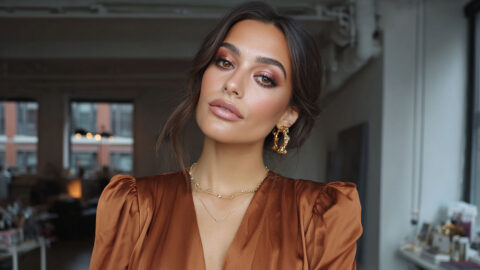
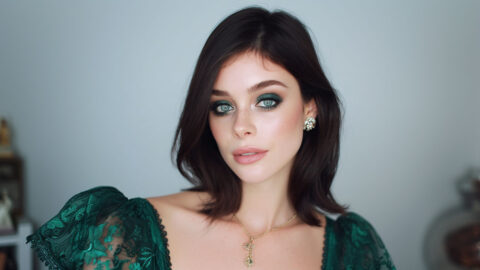
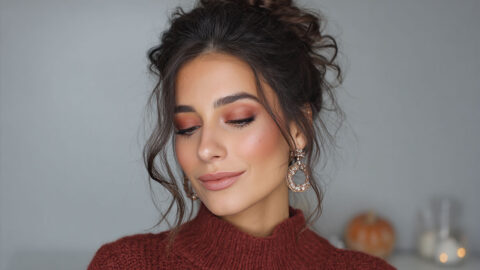
Standard advice treats white as a blank canvas and says to go for a glowing base. Under flash, that advice backfires. Zinc oxide, titanium dioxide and shimmer particles bounce the light back and show up as a white cast. A 2025 PLoS One study measured the dose effect, and visible white cast rose as zinc oxide concentration rose.
Color still matters, obviously. Clean girl, soft glam, a classic red lip, a smokey or winged eye and a colored monochrome look all work against white. Which one suits you comes down to your skin undertone and whether the dress is bright white or ivory.
What makeup looks work best with a white dress?

Clean girl, soft glam, a classic red lip, a smokey or winged eye and a colored monochrome look all hold up against white. Mostly it comes down to how much contrast you want next to the fabric.
White reads as a neutral, so none of them clash. The table sorts them by intensity.
| Look | Intensity | Key colors | Best for |
|---|---|---|---|
| Clean girl | Low | Glowy base, nude lip, neutral eye | Daytime, graduation |
| Soft glam | Medium | Rosy blush, bronze lid, satin lip | Dinners, engagement photos |
| Classic red lip | Medium to high | True or blue-red, bare eyes | Parties, formal events |
| Smokey or winged eye | High | Charcoal, brown, black liner | Nights out, white parties |
| Colored monochrome | Medium to high | Coral or fuchsia lip, matching cheek | Summer, daytime parties |
Clean girl and no-makeup makeup
Cosmetify’s December 2023 trend analysis ranked clean girl makeup first for festive looks, with over one billion TikTok hashtag views, and dewy makeup second at 288 million.
makeup.com’s version for a white dress keeps it simple, a glowy base and a nude lip with a neutral eye.
Bustle’s rundown of the TikTok version of the kit is short.
- Tinted moisturizer or BB cream
- Eyebrow pomade
- Natural-looking blush
- Lip balm, tint or oil
Soft glam

Soft glam sits between natural and full glam.
makeup.com’s angelic version goes heavy on blush and brows, adds a little mascara and finishes with a glossy lip. For the lid and base, a step-by-step soft glam routine keeps the blending in the right order.
Classic red lip
The Old Hollywood version pairs a red lip with winged liner and matte skin. The modern one drops the liner for bare eyes, groomed brows and a skin-like base.
Line the lip, fill it in and blot once, a sequence laid out in a full guide to applying red lipstick cleanly. Red is the strongest single contrast you can put next to white.
Smokey eye and winged liner
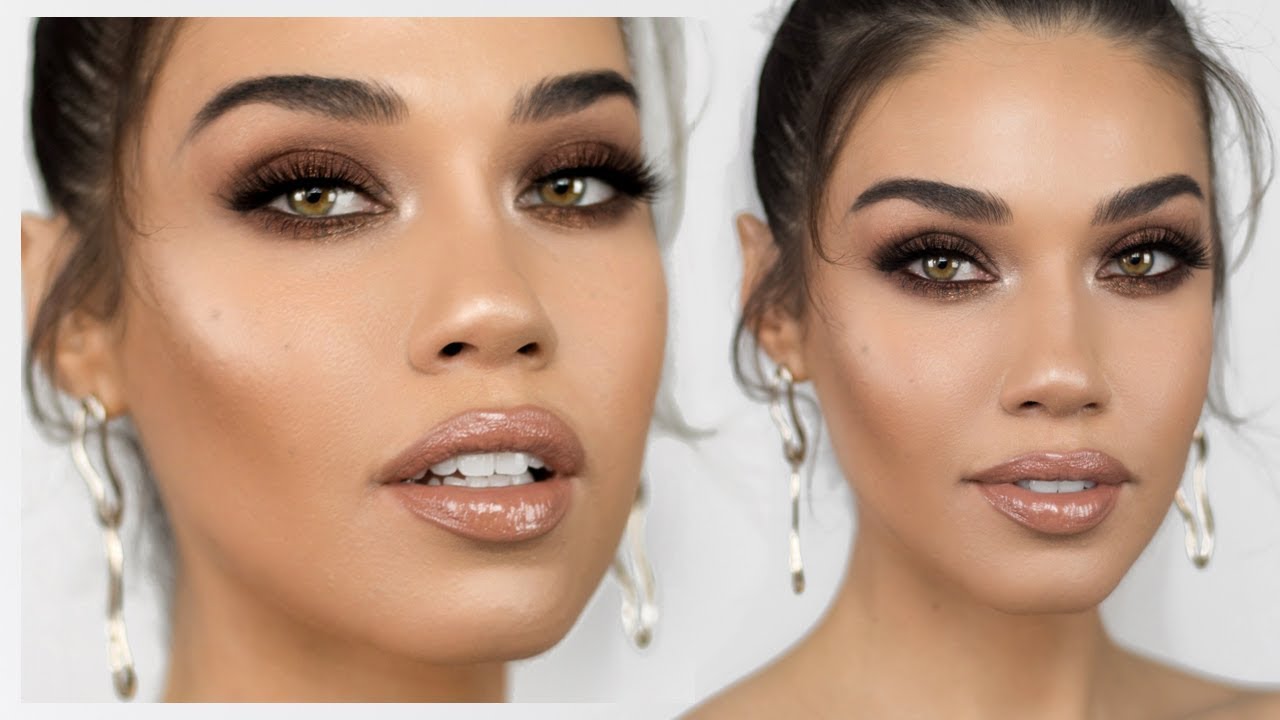
A dark eye gives the highest contrast of the five looks, and makeup.com names a winged eye as its edgier option for white.
Keep the lip soft when the eye is dark.
Colored and monochrome looks

These go one of two ways. A bright coral or fuchsia lip over a clean eye, or a vivid lid over a subtle base.
Maybelline India’s monochromatic version matches lid, cheek and lip in one color family. Its green-shadow look is the eye-led option, and its coral-lip look is the lip-led one.
How skin undertone and dress shade change the palette
Undertone decides which reds, pinks and bronzes read as skin instead of sitting on top of it. The shade of the dress then pushes the whole palette warmer or cooler by comparison.
Finding your undertone
Silver jewelry flatters cool undertones and gold flatters warm, so if both work on you, you’re probably neutral.
Hold a white cloth up to your bare face. Skin that turns yellowish against it is warm, and skin that turns bluish or pinkish is cool (Maybelline UK).
Veins that look blue or purple read cool and green reads warm, but skin thickness changes how veins look, so Sterling Style Academy treats this one as a first pass only.
One test on its own can mislead, so run all of them.
For foundation, a guide to matching makeup to your skin tone covers the shade step, and makeup.com notes that shades marked C suit cool undertones.
Bright white, ivory and cream
AFP’s 2011 report on the sale of Marilyn Monroe’s Seven Year Itch dress called it a pleated ivory dress, now cream-colored from age.
Ivory and cream carry a yellow cast that bright white lacks, and that cast changes how warm the palette should run.
The same idea works in reverse on your own face. If bright white flatters your bare skin you lean cool, and if cream flatters more you lean warm. About equal means neutral.
A simple rule covers most cases. When the dress and your undertone point the same way (ivory with warm skin, bright white with cool skin), commit to that temperature. When they conflict, follow your undertone, because the lipstick sits against your skin and not the fabric.
Palette by undertone
Start in the row that matches your test results.
| Undertone | Lip | Blush | Highlighter |
|---|---|---|---|
| Warm | Coral, orange-red, warm berry | Peach, apricot | Gold, champagne |
| Cool | Blue-red, rose, cool berry | Pink, rose | Pearl, silver-pink |
| Neutral | True red, rosy nude | Soft pink or peach | Champagne, pearl |
Pale, olive, tan and deep skin

Pale skin is the one that washes out against white. makeup.com’s fix is a light bronzer on the forehead, cheek hollows and neck.
Olive, tan and deep skin tones each carry all three undertones, according to Maybelline UK, so run the tests before choosing a shade family.
Shade range decides how close a match gets. Fenty Beauty launched Pro Filt’r in 2017 with 40 shades and extended it to 50 (Cosmetics Business), and Pro Filt’r Fluid Flex, released in September 2026, offers 50 all-new shades with more neutrals and fine-tuned undertones.
Deeper complexions also have a dedicated walkthrough on doing makeup for dark skin.
Which lip color works with a white dress?
Red is the safest strong choice, and makeup.com says it almost always works with white. Nude-pink, coral, fuchsia and berry each suit a different undertone and occasion.
For a longer shade-by-shade list, a guide to lipstick colors that suit a white dress goes deeper.
Red

The shade has to match your undertone. MAC describes Ruby Woo as a vivid blue-red retro matte, which is the cool end of the range, while warm reds lean orange.
A breakdown of cool versus warm red lipstick shows which skin each one flatters.
Stephen and McKeegan’s 2010 study in Perception had participants adjust lip color on facial photographs. They raised redness contrast on female faces to look more attractive and feminine, and cut lip blueness more on female faces than on male ones.
The sample was Caucasian and the task was digital, so the study points to a shade direction and not to any product.
Nude and pink

Nude-pink is the natural partner for a clean girl base. Charlotte Tilbury’s Pillow Talk lipstick wardrobe shows how far one family stretches, from nude-pink in the Original through berry-pink in the Medium to berry-rose in the Intense.
Go one shade deeper than your natural lip color.
Coral, fuchsia and berry
makeup.com treats the lips as the place for a color pop with a white dress, and names fuchsia and bright coral.
Berry suits evening, where the extra depth reads as deliberate.
Lip liner and bleed control
makeup.com’s tip is to line the lips with an invisible liner before lipstick so the color does not bleed.
A clean edge matters most with red and fuchsia.
Lip color pros and cons
| Lip family | Pros | Cons |
|---|---|---|
| Red | Works with almost any white dress, strongest contrast | Undertone must match, needs a clean edge |
| Nude-pink | Soft, pairs with any eye look | Needs the right depth for your skin |
| Coral or fuchsia | Color pop, suits summer | Needs liner to hold its shape |
| Berry | Depth for evening | Reads heavy in daylight |
How to pick eye makeup by eye color and look intensity
Choose the shade opposite your eye color on the color wheel for contrast, or its neighbor for a softer match. Keep daytime lids neutral and save smokey or winged looks for evening.
Pairings by eye color
- Brown eyes pair with warm browns and gold, or with navy, purple and emerald for contrast
- Blue eyes do well with orange-based shades such as copper, orangey-gold and deep orange-browns
- For green eyes, plum, burgundy, and red or orange-red tones
- Hazel eyes take nude rose gold with brown, gold, purple and green accents
These pairings come from e.l.f. Cosmetics and Ulta Beauty’s color wheel guides.
Makeup artist Melissa Hurkman, speaking to Glamour South Africa, adds two liner swaps, burgundy for green and brown eyes and warm brown on the waterline for blue and gray.
Daytime eyes
Neutral and bronze lids read polished without competing with the lip.
A matte warm brown in the crease, mascara and set brows is enough.
Evening eyes
A smokey eye needs blending more than product, and a walkthrough on building a smokey eye covers the order.
Charcoal or brown shadow and smudged liner do most of the work. Metallic lids are an option too (Pat McGrath Labs sells loose metallic pigments), and so are false lashes (Huda Beauty is known for them).
For the Old Hollywood route, the flick is the hard part, and a guide to winged eyeliner breaks it down.
Mascara and liner wear
L’Oreal Paris lists its Infallible Pro-Last Waterproof Pencil Eyeliner at up to 24 hours of wear, a brand claim worth testing before the day.
Waterproof formulas matter most in summer and at outdoor events.
Which look fits which occasion?
Match intensity to the light and the length of the event. Daylight suits clean girl or soft glam, while evening can take a red lip or a dark eye. For a bridal gown, stick with one look you’ve already tested.
Daytime: graduation and summer parties
Daylight shows every edge, so keep the product light and the colors close to skin.
Cream blush works better than powder here, along with a tinted or satin lip. Brown mascara or a neutral lid keeps the eyes quiet.
A long outdoor ceremony rewards a lighter base, since there is less product to slide or crease.
Evening: prom and white parties
Evening lighting forgives intensity.
A red lip or a dark eye reads as deliberate under low light, and a set of prom-night makeup ideas has eye-led options that sit well against white.
At a white party everyone arrives in white, so the makeup is the only color you control. Go one notch bolder than you would for a regular dinner.
Bridal gowns and the trial

Professional sources disagree on when to book a bridal makeup trial, with windows running from one month to six.
- Makeup artist Atiqah in Singapore Brides (2025) says 1 to 2 months, because the gown is confirmed by then
- Jane Iredale’s bridal timeline says 3 to 5 months
- Glamsquad’s bridal checklist says 3 to 6 months, because the dress and overall wedding theme are likely chosen by then (its FAQ and help center say 1 to 3 months)
Two of the three tie the trial to the dress being settled. Atiqah adds that taste often shifts closer to the date, which nullifies an early trial look.
For an ivory gown, browsing wedding makeup ideas before the appointment gives the artist a reference point.
Book the trial once the gown is final, and photograph the result in daylight and with flash.
How to build a white dress base that lasts all day
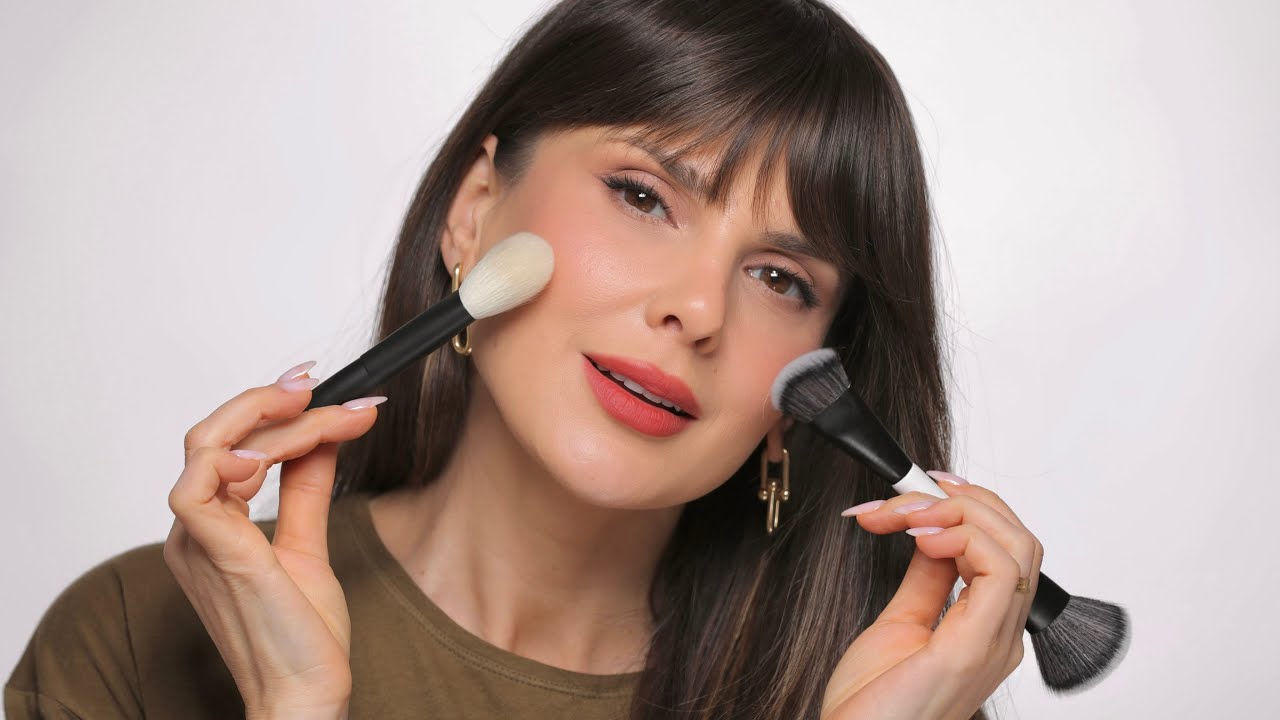
Build the base in thin layers. Moisturizer and primer go first, then medium-coverage foundation matched to the neck, cream blush before any powder, translucent powder only where skin shines and setting spray last. That order carries the wear time.
Choosing a finish: dewy, satin or matte
Sources can’t agree on finish.
makeup.com’s little white dress guide skips matte finishes in favor of an illuminating foundation, and The Every Girl calls intense matte skin a giveaway of heavy foundation. Beautylish community posts on flash photography take the opposite view and read shimmer and highlighter as oiliness. Irish makeup artists quoted by Beaut.ie land in between, preferring a semi-matte base with a slight glow, since fully matte skin looks flat under flash.
Candid Studios, a wedding photography studio, also calls satin the safest bet.
Make satin the default, keep dewy for daylight, and add dimension back to a matte base with a luminous primer.
The base routine, step by step
- Moisturize, then smooth on a primer.
- Use color correcting only where redness shows through, with a corrector opposite red on the color wheel.
- Apply foundation in thin layers and match the shade to your neck.
- Press cream or liquid blush on before any powder.
- Dust translucent powder on shiny zones only.
- Finish with setting spray, held 8 to 10 inches from the face.
Order matters at step 4. Laura Mercier’s own instructions put powder after cream blush, and Beaut.ie’s pro blusher technique piece gives the same rule for liquid blusher.
Rose Inc. quotes makeup artist Manuel Espinoza on using the ring finger for liquid blush, since it applies the lightest pressure.
One Zoe Report reviewer taps Rare Beauty’s Soft Pinch Liquid Blush on right after concealer and softens the edges with a sponge, and a guide to applying cream blush covers the blending.
Setting and wear time
Urban Decay lists All Nighter at up to 16 hours of wear for the original spray and up to 24 hours for the upgraded waterproof formula, according to retailer listings of the brand’s copy.
The instructions differ by version, with four sprays in an X and T pattern for the Ultra Matte spray and at least ten for the upgraded formula. A walkthrough on applying setting spray covers distance and passes.
Laura Mercier gives its Translucent Loose Setting Powder a 16-hour claim and a no-flashback label.
Both sets of numbers are brand claims, not independent wear tests.
When does a glowing base fail in white dress photos?
Under flash. Zinc oxide, titanium dioxide and shimmer particles reflect the light back and show as a white cast, so flash photos need a satin, shimmer-free base while daylight can keep the glow.
What causes flashback
Zinc oxide and titanium dioxide in mineral SPF filters reflect the flash, per Beautylish, while chemical filters absorb light.
Shimmer does its own damage. Makeup artist Neil Scibelli tells Skimm to avoid bronzers and powders with shimmer, and Faces Canada warns that a highlighter built for a club night can flash back at a wedding.
The white patch under the eyes usually comes from concealer. L’Oreal Paris traces it to those same filters in concealer or foundation.
A 2025 PLoS One study, sponsored by the skincare brand Good Molecules according to its preprint, found white cast rising with zinc oxide concentration, with higher concentrations scoring as unacceptable.
It measured visible white cast on skin, not flash reflection, so it supports the dose effect and nothing more.
Where the sources disagree
Skimm’s makeup artist Camara Aunique blames foundation SPF for flashback and advises low or no SPF. Beautylish pins it on the ingredient instead, saying chemical filters photograph fine, and Laura Mercier markets SPF 30 tinted moisturizers designed to avoid flashback.
Read together, filter type and concentration matter more than the SPF number.
Talc gets blamed on forums too, yet Laura Mercier sells a loose powder that lists talc and a talc-free one, and labels both no-flashback.
Decision rule by lighting
| Lighting | Base finish | Skip |
|---|---|---|
| Daylight, no flash | Dewy or satin | Heavy powder buildup |
| Evening or flash | Satin, no shimmer particles | Mineral SPF makeup, shimmer bronzer, chalky shades |
| Unsure | Satin | Any product untested on camera |
Chalky shades that look pink in person can read stark white in photos, per The Style and Beauty Doctor. Laura Mercier’s own advice is a light hand with setting powder.
Sunscreen without the cast
Skipping makeup SPF does not mean skipping sunscreen.
Moffitt Cancer Center recommends broad-spectrum SPF 30 or higher, and SPF 30 blocks 97% of UVB rays. It also notes that SPF layers do not add up, so the highest one applied is the one you get.
Apply sunscreen early and let it absorb, then use a non-SPF base, as Beautylish advises.
For touch-ups, Moffitt recommends physical sunscreen over makeup, the same mineral filters the flash warnings target, so finish reapplying sunscreen over makeup before the photo session starts.
Fixes when flashback has already happened
- Mist a light layer of setting spray over a powdery face (L’Oreal Paris)
- Swatch the base on your hand and take a flash photo before the event (a Beautylish community tip)
For a full shoot rather than event snapshots, a guide to doing makeup for a photoshoot goes further.
FAQ About Makeup Looks for a White Dress
Can foundation rub off on a white dress?
Yes. Cream formulas never dry completely, so makeup artist Laramie, quoted by Marie Claire, advises choosing long-wear formulas. Applying thin layers, then setting with translucent powder and setting spray, also helps.
If a mark lands anyway, makeup artist Lisa Williams presses tape onto it and peels, which lifts the powder before the fabric is washed.
Does white eyeliner work with a white dress?
Yes. White liner on the waterline or inner corner brightens the eye without adding color, and the dress will not compete with it.
Layering it over black kohl adds definition, and a guide to applying white eyeliner covers placement.
Which makeup suits a white lace, mini or off-the-shoulder dress?
The undertone and dress-shade rules stay the same. The style changes only how much skin shows and how casual the dress reads.
Lace and mini cuts lean casual and romantic, so clean girl or soft glam fits. Off-the-shoulder necklines put the neck and shoulders on display, so blend foundation and any bronzer down to match.
Should hair change for a white dress?
No change is required. Let one element lead. A bold lip or dark eye pairs with simple, sleek hair, while soft makeup suits loose waves.
How to Test Your Makeup Look Before the Event
Test the look in daylight beside the dress first, since shade errors against the fabric show there. Take a flash photo of the finished face next, because flash exposes any white cast. The full wear test at event length comes last, once the products are locked.
The satin, shimmer-free base that passes the flash test gives up some glow, and that trade-off comes with the recommendation.
Pack blotting powder, the lip color and a mini setting spray, since an Irish makeup artist quoted by Beaut.ie tells brides to carry blotting powder for shine between photos.
A photographer who confirms natural light only lifts the flash rule. For longer events, a guide to making makeup last all day extends the wear plan.

She started writing on the site after fielding the same questions from clients and friends often enough to just write the answers down: which red won't turn orange on a warm undertone, how to keep lipstick from feathering into fine lines, why a "12-hour" formula rarely survives dinner.
Every review on the site follows the same rule she uses with paying clients: wear it first, then decide if it's worth recommending.
- How to Make Eyeliner Last Longer Without Smudging - August 31, 2026
- How to Make Eyeshadow Last Longer All Day - August 29, 2026
- How to Find Your Undertone in 5 Easy Steps - August 27, 2026