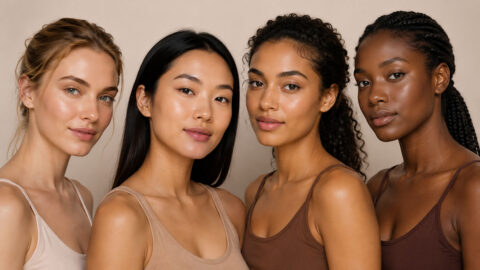
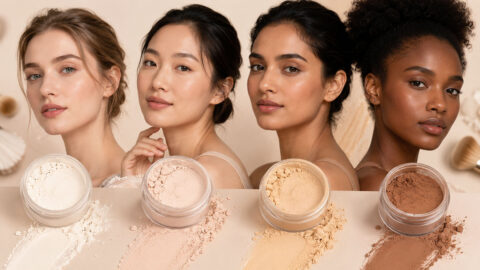
Most makeup advice was built around lighter skin as the default. If you have a dark complexion, you already know that.
Learning how to do makeup for dark skin means understanding undertones, pigmentation, and which formulas actually show up, not just which ones look good in the pan.
This guide covers everything: foundation matching, color correction, concealer, contour, highlight, eyeshadow pigmentation, lip color selection, and setting techniques that work without leaving a white cast or ashy finish.
By the end, you will know exactly how to build a full face that flatters your skin tone, holds throughout the day, and photographs without flashback.
What Makeup for Dark Skin Means

Dark skin is not a single shade. It covers a wide range, from deep brown to ebony, and every point on that spectrum carries its own undertone: warm, cool, or neutral.
That undertone is what most people get wrong. They pick foundation by depth alone, shade-matching to how dark the product looks in the bottle, and then wonder why the result looks ashy, orange, or flat on their face.
McKinsey data shows Black consumers are 5.7 times more dissatisfied with makeup offerings compared to non-Black consumers. Mintel research puts it more plainly: 53% of Black consumers report difficulty finding beauty products that match their skin tone.
A lot of mainstream makeup advice was built around lighter skin as the default. Formulas, undertone guides, and color correction charts were developed with a narrower range in mind. That gap is closing, but slowly. Knowing how to work with your own undertone is still something you largely have to figure out yourself.
Three things that actually drive product selection on dark skin:
- Undertone (warm, cool, or neutral), not just depth of shade
- How a formula behaves after settling, including whether it pulls orange or ashy
- Skin texture and hydration, both of which change how pigments read on the surface
The global black beauty market was valued at USD 9.2 billion in 2024 and is projected to hit USD 31.6 billion by 2034 (Insight Ace Analytic). That growth is pushing more brands to actually invest in shade range depth and undertone variation. But investment in product doesn’t automatically mean the advice catches up.
This guide is about knowing what to look for, what to avoid, and how to put it all together.
How to Identify Your Undertone on Dark Skin
Undertone identification is genuinely harder on deep skin. The visual cues that work for lighter complexions are less obvious, and a lot of guides skip that nuance entirely.
Here is what actually works.
The Three Undertone Categories
Warm undertones carry golden, orange, or red hues beneath the surface. Gold jewelry looks natural. Veins appear more green than blue.
Cool undertones lean toward blue or purple hues. Silver jewelry sits better against the skin. Veins read blue or purple against the wrist.
Neutral undertones are a mix of both. Both gold and silver work. Color choices are more flexible overall.
Practical Tests That Work on Deep Skin
The vein check is a starting point, not a final answer. On very deep skin, veins can be hard to read at all. Use it alongside other methods.
The white fabric test: Hold a bright white piece of fabric next to your face in natural light. If it makes your skin look warm and alive, you likely lean warm. If it washes you out or creates a slight grayish cast, you may lean cool or neutral.
The jewelry test: Gold against warm undertones looks seamless. Silver against cool undertones does the same. If both work equally well, you are probably neutral.
The foundation test: Apply a small amount of a warm-toned and a cool-toned foundation to your jawline. Wait 20-30 minutes. The one that disappears into your skin, rather than sitting on top of it as an obvious stripe, reveals your undertone direction.
Why Undertone Identification Matters More on Deep Skin
Two people with the same depth of skin tone but different undertones need completely different products. A foundation with the right depth but the wrong undertone will look ashy on a cool-toned complexion or orange-red on a warm one.
Undertone stays fixed regardless of tanning, sun exposure, or seasonal skin changes. Surface tone shifts; undertone does not. That makes it the more reliable guide for foundation and concealer selection.
Skincare Prep That Affects Makeup Results on Dark Skin
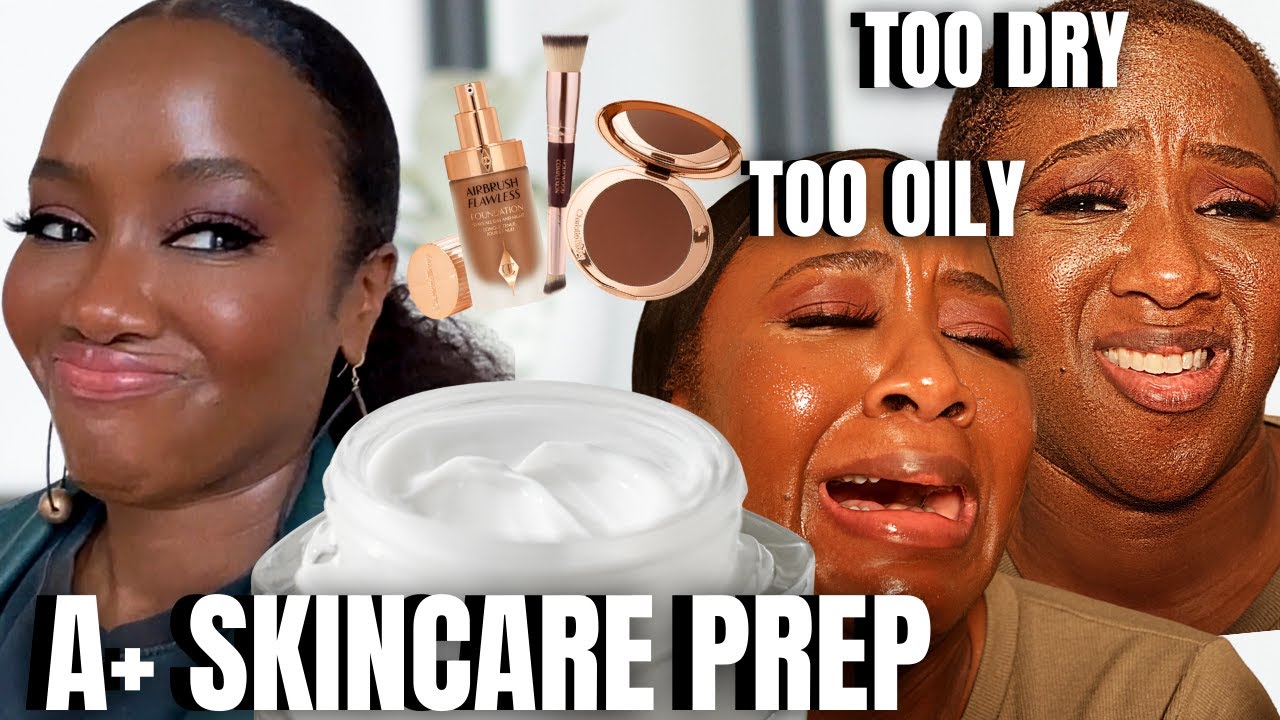
What you put on your skin before makeup directly changes how the makeup behaves. Dry skin reads ashy under foundation. Skin that is too oily will cause formulas to shift color, separate, or break down faster.
Neither of those outcomes is about the foundation being bad. It is about prep.
Color Correcting on Dark Skin
Standard color correction charts do not apply here. The peach and lavender correctors recommended for lighter skin tones do very little on deep complexions.
For dark circles: Orange corrector, applied in a thin layer before concealer. On very deep skin tones, a deeper brick-red corrector works better than a brighter orange.
For hyperpigmentation and post-acne marks: Red-toned correctors help neutralize areas that read darker than the surrounding skin. Apply only to the specific spot, not the whole face.
How much to apply: Thin. One thin layer, then concealer directly over it. Stacking too much corrector creates a texture problem that foundation cannot fix.
The Primer Question
Not every primer is right for dark skin. Some contain high silica levels that create a matte, powder-like film. That film can visually dull the skin and create an ashy surface before foundation even goes on.
| Primer Type | Best For | Watch Out For |
|---|---|---|
| Silicone-based, pore-filling | Textured or uneven skin; visible pores | Can pill on dry skin or when layered over water-heavy skincare |
| Hydrating, water-based | Dry or combination skin | May not grip well with very full-coverage or long-wear foundations |
| Illuminating / skin-tint hybrid | Glowy, satin-finish makeup looks | Can emphasize texture under heavy or matte foundation |
| Color-correcting primer | Overall redness or uneven tone | Limited usefulness for deep pigmentation; shade choice must match undertone correctly |
SPF and the White Cast Problem
Mineral sunscreens with zinc oxide or titanium dioxide leave a visible white cast on dark skin. That cast does not disappear under foundation. It sits there and makes the whole base look lifted from the skin.
Chemical sunscreens absorb into the skin without a cast and are a cleaner base for makeup on deep complexions. If mineral SPF is preferred for skin sensitivity reasons, tinted mineral formulas reduce the issue significantly.
Reapplying SPF over makeup is its own challenge. A setting spray with SPF is one of the few ways to do it without disrupting coverage.
Choosing the Right Foundation for Dark Skin
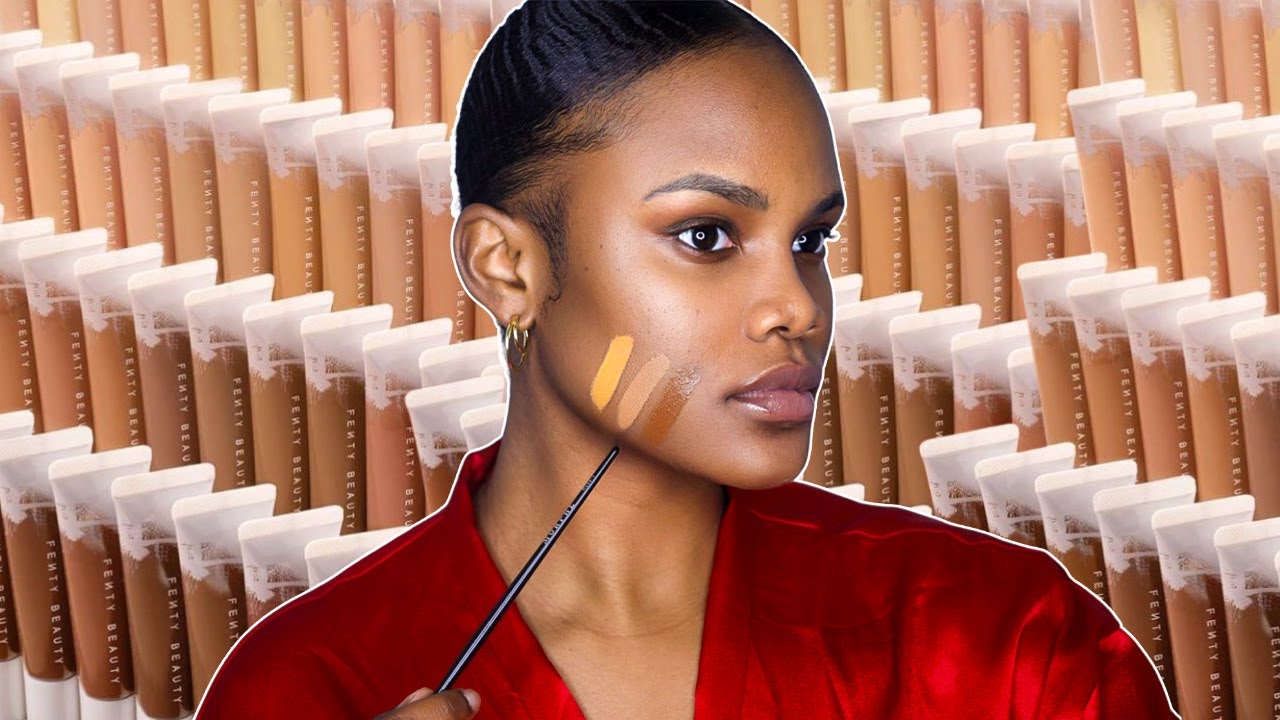
The single biggest frustration with foundation on dark skin is not shade range. It is undertone range. Brands can offer 40 shades and still only give you three undertone directions across all of them, leaving deep shades clustered in warm-orange territory with nothing cool or neutral below a certain depth.
Fenty Beauty changed how the industry talked about this when it launched in 2017 with 40 shades. What made it work was not just the count but the undertone spread across deep shades. That forced other brands to rethink their deep-shade formulations, creating what became known as the “Fenty Effect.”
Foundation Oxidation on Deep Complexions
Foundation darkening after application is a real and common issue. It happens because skin oils, heat, and sometimes product interactions cause pigment to shift once the formula is on the skin.
How to test before buying: Apply a small stripe to your jaw. Wait at least 20-30 minutes before judging the color. A foundation that looks right immediately but turns noticeably darker or more orange by the 30-minute mark is not the right formula.
Thin application layers reduce oxidation. Thick product sitting on the skin means more surface area reacting to oil and air.
Full Coverage vs. Skin Tint on Dark Skin
Full coverage is useful when the goal is to even out significant hyperpigmentation, post-acne marks, or uneven tone across the face. The risk is caking, especially over textured skin. Build coverage in thin layers rather than applying one heavy coat.
Skin tints and tinted moisturizers work well on skin that is already relatively even in tone, or when the goal is a natural, skin-like finish. NARS Tinted Moisturizer and the Rare Beauty Tinted Moisturizer both offer a wider undertone range in deeper shades than many comparable options. The tradeoff is that they cannot cover dark spots on their own. Spot-concealing after applying a skin tint is a cleaner method than loading on full coverage everywhere.
| Finish | Best Skin Type | Risk on Dark Skin |
|---|---|---|
| Matte | Oily, combination | Can look flat or ashy if the formula is too powder-heavy or high in silica |
| Satin | Normal, combination, mildly dry | Generally safe; undertone matching is important for a natural finish |
| Dewy / luminous | Dry, dehydrated skin | Can appear greasy or overly shiny on oily skin by midday |
| Skin tint | Normal to minimal coverage needs | Does not provide enough coverage for hyperpigmentation without corrector or concealer |
Concealer Application for Dark Skin

Concealers fail on dark skin for one of two reasons. Either the shade is too light and creates an obvious pale patch, or the formula has too much white pigment in the base and casts gray under the eye regardless of the shade selected.
One to two shades lighter than your foundation for under-eye coverage is the standard guidance. On deep complexions, even that range should be tested carefully. Anything more than two shades lighter tends to look gray or ghostly, especially in natural light and worse in photography.
Under-Eye Correction
Dark circles on deep skin tend to be blue-purple or very dark brown, not the reddish-purple seen on lighter skin. Orange color corrector applied in a thin layer first brings those circles to neutral before concealer goes on.
Application order:
- Orange corrector, patted (not rubbed) into the darkest areas
- Concealer in a matching or slightly lighter shade
- Set with a finely milled, non-white-cast powder
Rubbing rather than patting is the most common technique mistake. It moves the corrector off the area it needs to cover and blends it into surrounding skin where it is not needed.
Blemish and Hyperpigmentation Concealing
For active blemishes or dark spots on the face, use a concealer that exactly matches your foundation shade or goes one shade deeper. Going lighter draws attention to the spot rather than neutralizing it.
Flashback warning: Some concealers and powders contain high concentrations of silica or HD powder. These cause bright white flashback in photos. On dark skin, this shows up more dramatically than on lighter skin because the contrast is sharper. If photography is part of the occasion, test products under flash before committing to them.
Contour, Highlight, and Blush on Dark Skin

This is where a lot of people end up with muddy, flat, or washed-out results because they are using shades built for lighter complexions. Taupe contours read gray and murky on deep skin. White and silver highlights look chalky. Pink blushes disappear entirely.
The fix is not more product. It is the right product.
Contour Shades That Actually Work
Cool brown, not gray or taupe. The contour shade needs to be deeper than your foundation while staying within the brown family. MAC Cosmetics’ Sculpt powder range and the NYX Contour Palette both offer shades that work specifically on medium-deep to ebony complexions without going ashy.
Placement matters too. Contouring the hollows of the cheeks, the temples, and along the jawline should look like natural shadow, not a stripe. Blend with a fluffy brush in small circular motions rather than sweeping strokes.
Highlight for Deep Skin Tones
Gold, bronze, and copper. These are the highlight shades that read on dark skin. Silver and white-based highlights sit on top of the skin rather than reflecting light through it. The result looks powdery and disconnected from the complexion.
Pat McGrath Labs offers some of the most pigmented gold and bronze highlight formulas available. Juvia’s Place highlighters are another strong option specifically built with deeper skin in mind.
Best placement for dark skin:
- Top of cheekbones
- Bridge of the nose (small amount)
- Cupid’s bow
- Inner corner of the eyes
Blush Placement and Shade Selection
Sheer blush formulas and light pink shades do not show up on deep complexions. The pigment load is too low. Brick red, deep peach, berry, and plum shades all have enough color saturation to read against dark skin without needing excessive product.
Cream blush tends to give better pigment payoff on dark skin than powder at equivalent application effort. It also blends directly into the skin rather than sitting on top of it.
For a reference on how to apply blush correctly across different face shapes, this guide on applying blush on different face shapes is worth working through. Placement shifts the whole look.
Bronzer also earns a place in the everyday routine here. A warm bronze swept lightly across the forehead, nose, and chin adds dimension and warmth that keeps the face from looking flat after foundation and powder go on.
For deeper guidance on applying bronzer without overdoing it, technique matters more than product choice on dark skin.
Eye Makeup on Dark Skin

Pigmentation is everything here. A sheer or low-pigment eyeshadow does not show up on deep skin. It sits there looking like a faint smudge, and no amount of layering a bad formula will fix that.
Makeup artist Danessa Myricks puts it plainly: for deeper skin tones, colors need to be true to show up properly. When they are not, they read chalky and muddy on the skin.
Eyeshadow Colors That Show Up on Deep Complexions
Jewel tones and metallics are where dark skin shines. Emerald green, cobalt blue, deep plum, burnt orange, and rich burgundy all have enough depth and saturation to read clearly against melanin-rich skin.
Gold, bronze, and copper metallics work especially well as lid shades. They reflect light beautifully without the chalky look that silver and champagne shades tend to produce on darker complexions.
What to skip:
- Very light pastels used as main lid shades (fine as highlight, not as color)
- Sheer single-pan shadows with low pigment load
- Taupe and greige shades, which read muddy rather than neutral
Neutral and “Nude” Eye Shades for Dark Skin
Nude for dark skin is not beige. Full stop.
Warm neutral options: medium brown, warm taupe, mahogany, copper, and deep caramel. These read as understated on deep complexions the same way a shell pink reads neutral on fair skin.
Pat McGrath Labs’ Mothership VIII palette is a reference point here. The range of shimmers and deep neutrals in that palette is specifically built for visible payoff on deeper skin tones.
Eyeshadow Application Technique on Dark Skin
Press, do not swipe. Pressing the brush into the shadow and then pressing it onto the lid gives more pigment payoff than sweeping. Sweeping distributes product across a larger area without depositing enough color to show up.
A cream or liquid shadow base changes everything. Applying a cream eyeshadow in a similar tone first, then pressing powder shadow on top, dramatically increases how much the color shows and how long it holds.
Liner color matters too. Celebrity makeup artist Nick Barose notes that navy reads like black from a distance on dark skin while actually popping against the complexion. Black can disappear into the lash line entirely.
Brow Shading for Deep Skin Tones
Soft black or ashy dark brown work for most deep complexions. Blonde, taupe, or warm brown brow products look visually disconnected from dark skin rather than natural.
The brow is part of the overall eye look. A brow shade that does not match the skin’s depth reads lighter than intended, which throws the whole eye composition off.
Lip Color Selection for Dark Skin

The US lip segment generated over $550 million in 2023 (Lipstick Queen data). And still, finding a nude lipstick that actually works on dark skin remains one of the most common frustrations.
The issue is not product availability anymore. It is knowing what to look for.
The Lip Liner First Rule
Dark skin often has naturally deeper lip pigmentation, especially around the outer edges or at the vermilion border. A lipstick applied directly over that variation tends to look uneven or muted because the natural lip color interferes with how the product reads.
Lip liner as a base: Fill the entire lip, not just the edges. This creates a neutral, even surface for lipstick to sit on top of, and the color reads exactly as it looks in the tube rather than being altered by natural lip pigmentation.
For guidance on applying lip liner as a full base rather than just an outline, the technique is straightforward but makes a significant difference in how shades translate on deep skin.
Choosing the right liner shade matters just as much as the lipstick. Knowing how to choose a lip liner that matches or complements a particular lipstick shade saves a lot of trial and error.
Nude Lipstick on Dark Skin
A 2024 study published in Skin Research and Technology identified 11 distinct lip color categories across Caucasian, African, and Hispanic ethnicities. The research highlights how dramatically lip tone varies and why a single “nude” label covers wildly different actual shades.
Shades that work as nude on deep complexions:
- Warm mauve-brown
- Terracotta and brick-adjacent tones
- Deep caramel
- Rich espresso brown
The rule is to pick within one to two shades of your natural lip color, going slightly deeper rather than lighter. Too light looks gray or washed-out on dark skin.
For a fuller breakdown, this guide to matte lipstick for dark skin covers shade selection and formula considerations specific to deeper complexions. And if you are deciding between matte and satin finishes, understanding what each formula actually does is worth knowing. Matte lipstick and satin lipstick behave differently on deeply pigmented lips.
Bold Lip Colors That Work on Dark Skin
Deep red, plum, fuchsia, brick, and berry shades all have enough saturation to deliver impact without disappearing against a dark complexion. Warm reds with brick undertones and blue-based deep reds both translate well, depending on your specific undertone.
Fenty Beauty and Mented Cosmetics have both built ranges with this specifically in mind. Both brands approached bold shades from a starting point of what reads on deep skin, not what looks good in the pan.
The choice between a liquid lipstick and a traditional bullet depends on coverage and finish. Liquid formulas tend to give more consistent pigment payoff in one coat and resist fading better throughout the day.
For building out a full collection of lipstick colors for dark skin, understanding which shade families consistently translate is more useful than chasing individual products.
Lip Prep for Very Dark or Uneven Lips
Exfoliation first. Dry or flaky lips change how lipstick sits and can make even a good formula look patchy within an hour.
A tinted balm worn underneath any lipstick adds hydration and slightly evens out the base before color goes on. For deep or heavily pigmented lips, this step reduces how much the natural lip tone interferes with the lipstick shade.
A solid lip care routine makes a measurable difference in how well lipstick applies and lasts. Consistent prep means less reworking mid-day.
Setting and Longevity for Dark Skin

Setting products fail dark skin in two specific ways: white cast in person, and flashback in photos. Both problems come from the same source.
Silica, the ingredient in most HD and translucent powders, reflects light back toward the camera. On lighter skin, the effect is subtle. On dark skin, the contrast is sharp enough to look like a white mask in flash photography (Lab Muffin Beauty Science).
Setting Powders That Work Without Causing Ashiness
Finely milled, tinted loose powders are the safest category. A setting powder labeled “translucent” is not always actually translucent on deep skin. Many of those powders contain enough white pigment to visually lighten the face over time.
| Product Type | Performance on Dark Skin | Flash Photography Safe? |
|---|---|---|
| High-silica HD powder | Strong mattifying effect, but may leave an ashy cast if over-applied | No. High risk of flashback under strong lighting |
| Banana powder | Adds warmth and lightly brightens medium to deep skin tones | Generally yes, but may appear slightly light on very deep skin if overused |
| Tinted loose powder (skin-matched) | Best overall option for deeper skin tones; maintains tone integrity | Yes, when correctly shade-matched |
| Setting spray only | No powder texture or buildup; preserves skin-like finish | Yes. No flashback risk |
The Baking Technique on Dark Skin
Baking works well for oily under-eye areas and for locking in concealer. But it requires the right powder. Using a high-silica or overly white powder for baking creates a significantly more visible ashy result on dark skin than it does on lighter complexions.
The fix: use a powder that is either matched to your skin tone or is truly translucent (not just labeled that way). Apply it lightly, wait 3-5 minutes, then dust off fully with a large fluffy brush.
Knowing how to apply setting powder with the right tools and pressure makes the difference between a set look and a cakey one.
Touch-Up Strategy for Oily Dark Skin
Blotting papers before powder. Not powder on top of oil. Pressing powder onto oily skin traps the sebum under the product and accelerates the cycle of oxidation and formula breakdown.
Touch-up order:
- Blot with paper first to remove surface oil
- Dust lightly with tinted setting powder if needed
- Finish with setting spray to reactivate coverage
For a full look at keeping makeup in place throughout the day, this breakdown of making makeup last all day covers the layering strategy that holds up across different skin types.
Full Makeup Looks for Dark Skin by Occasion

All the product knowledge in the world does not help unless you know how to put it together. These three looks cover the range from minimal to full glam, and each one is built around what actually shows up and holds on dark skin.
Everyday Natural Look
The goal here is even skin tone without coverage that reads as coverage. Skin tint or lightweight foundation over hydrated skin, spot-concealed where needed, and nothing more on the base.
Build:
- Tinted moisturizer or skin tint in a matched undertone
- Concealer only on dark spots and under-eye area
- Tinted brow gel
- Mascara
- Tinted lip balm in a warm nude
This look works especially well with natural makeup looks that focus on skin quality rather than full coverage. For black girl natural makeup looks specifically, keeping the base skin-like is the defining element. More detailed natural makeup looks on brown skin references can also help with specific skin tone adjustments.
Office or Professional Look
Medium coverage, no shimmer that reads outside the cheekbones, and a polished lip that holds through meetings.
Key decisions for this look:
Foundation: Satin or natural finish at medium coverage. Avoids the heaviness of full coverage and the unpredictability of sheer coverage on uneven skin.
Eye: Defined brow, warm brown or taupe eyeshadow packed into the crease, mascara. Clean liner along the lash line in navy or brown.
Lip: Brown-nude liner as a base, bold matte lip on top. Deep berry, brick red, or warm plum. These shades hold well and photograph cleanly.
This kind of look translates well for interview makeup and similar professional settings where you want impact without anything that reads as costume.
Evening and Full Glam Look
Inclusive beauty brands grew 1.5 times faster than less inclusive counterparts in 2024 (Arbelle), which signals that the product options for full glam on dark skin are genuinely better now than they were even three years ago.
Full coverage base, built in thin layers. A cut crease or smoky eye using jewel tones or deep neutrals. Copper or gold highlight pressed high on the cheekbones. Bold lip in a deep plum, brick red, or fuchsia.
Photography considerations for this look:
- Skip high-silica powders entirely
- Use a tinted setting powder or none at all
- Test under flash before the event
- Set with spray rather than powder for the final step
For full reference on glam black girl makeup looks and dark skin makeup looks, seeing finished looks on similar skin tones helps calibrate product choices more accurately than written descriptions alone. For a full-coverage base that photographs well, this guide on applying foundation covers layering technique that matters especially on deep complexions.
Makeup for Dark Skin in Different Lighting
Natural light is the most flattering. Under natural light, undertones read most accurately and product finish looks as intended.
Indoor fluorescent or LED lighting can make foundation look more ashy or flat, especially if the formula contains any white base pigment. Adding a small amount of warm bronzer to the perimeter of the face counteracts this.
Flash photography is the hardest environment. The contrast between dark skin and a white cast from silica-heavy products is much more dramatic than on lighter complexions. Always test your full face under flash before any event where photography will happen.
FAQ on How To Do Makeup For Dark Skin
How do I find the right foundation shade for dark skin?
Test on your jawline in natural light, then wait 20-30 minutes. Check for undertone, not just depth. Brands like Fenty Beauty and NARS offer the widest undertone range across deep shades. Match the chest for the most accurate read.
Why does my foundation look ashy or orange after a few hours?
That is foundation darkening from skin oils and heat interaction. Apply in thin layers, use an oil-controlling primer, and choose formulas specifically tested on deep skin. Avoid thick application, which speeds up the color shift.
What color corrector should I use for dark circles on dark skin?
Orange or brick-red corrector, not peach. Peach does not cancel out the blue-purple darkness common in deeper complexions. Pat it on lightly before concealer. Use a concealer no more than two shades lighter than your foundation.
What is the best eyeshadow for dark skin tones?
High-pigment formulas only. Jewel tones like cobalt, emerald, and deep plum show up well. Gold, bronze, and copper metallics read beautifully. Press shadow onto the lid rather than sweeping it. Pat McGrath Labs and Juvia’s Place are strong options.
How do I choose a nude lipstick for dark skin?
Skip anything labeled nude without checking the undertone. For deep complexions, true nudes are warm mauve-brown, terracotta, or rich espresso. Use a matching lip liner as a base first to neutralize natural lip pigmentation before applying color.
How do I contour dark skin without it looking muddy?
Use a cool brown shade, never gray or taupe. Taupe reads flat and muddy on deep complexions. Blend with a fluffy brush in small circular motions. MAC Sculpt and NYX Contour Palette both offer shades built for deeper skin tones.
What highlighter works on dark skin?
Gold, bronze, and copper. Silver and white-based highlighters sit on top of dark skin rather than reflecting light through it, looking chalky. Apply to the tops of cheekbones, cupid’s bow, and inner corners. Juvia’s Place and Pat McGrath offer strong options.
How do I stop setting powder from leaving a white cast?
Avoid high-silica or HD powders. These cause visible white cast in person and flashback in photos on dark skin. Use a finely milled tinted powder matched to your skin tone, or skip powder entirely and set with a spray instead.
What blush shades work on dark skin?
Berry, brick red, deep peach, and plum. Light pink and sheer formulas do not show up. Cream blush gives better pigment payoff than powder at the same effort. Apply to the apples of the cheeks and blend upward toward the temples.
How do I make makeup last longer on dark skin?
Start with a hydrating skincare base, use a primer suited to your skin type, and apply foundation in thin layers. Blot with paper before any powder touch-ups. Finish with a setting spray rather than heavy powder to avoid buildup and oxidation.
Conclusion
This conclusion is for an article presenting how to do makeup for dark skin, and the core takeaway is simple: undertone drives every decision.
From foundation oxidation to eyeshadow pigmentation, concealer placement to setting powder flashback, the problems most people run into are not random. They come from using products built around a different skin type as the default.
Deep complexions need jewel tones that actually show up, brown-based contours that do not read gray, and lip liners that neutralize natural pigmentation before color goes on.
Brands like Fenty Beauty, Juvia’s Place, and Pat McGrath Labs have raised the bar for inclusive shade ranges. The tools are there.
Now you know how to use them.

She started writing on the site after fielding the same questions from clients and friends often enough to just write the answers down: which red won't turn orange on a warm undertone, how to keep lipstick from feathering into fine lines, why a "12-hour" formula rarely survives dinner.
Every review on the site follows the same rule she uses with paying clients: wear it first, then decide if it's worth recommending.
- How to Make Eyeliner Last Longer Without Smudging - August 31, 2026
- How to Make Eyeshadow Last Longer All Day - August 29, 2026
- How to Find Your Undertone in 5 Easy Steps - August 27, 2026