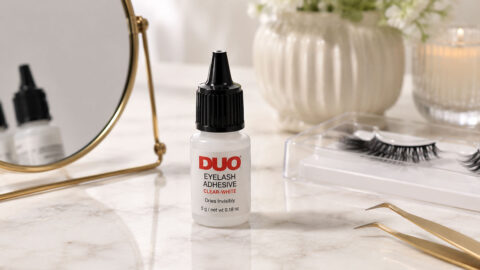
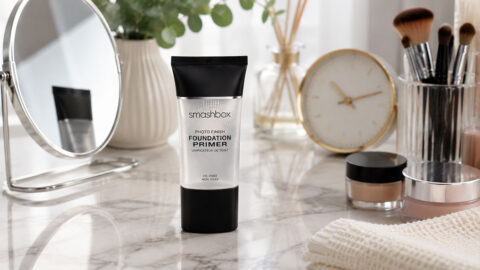
Eyeliner that looks sharp at 8am and sits in a gray smudge by lunch is almost always an oil, tear, heat or friction problem, and the fix isn’t the same for each.
Pigment that drifts onto the upper lid points to oil. If it collects under the eye, tears are the more likely cause.
For most people a dry base under the liner and a matte powder over it does the bulk of the work. A firm gel or waterproof formula picks up whatever is left.
Part of the problem is that the lid never stops moving. The median blink rate in 42 healthy adults was 11 blinks per minute (Nosch et al., Optometry and Vision Science, 2016), so liner that hasn’t set gets pressed against moving skin roughly 11 times a minute.
Why Does Eyeliner Run?

Liner breaks down when oil, tears, sweat or rubbing wear through the film and pull pigment off the lash line. Lid oil gets blamed first, but the right fix depends on what is actually doing the damage.
Eyeliner commonly contains waxes, oils, silicones and natural gums, and it has to survive blinking and sweat on top of the eye’s own oil secretion, according to the University of Waterloo (2015). That’s a lot to ask of a wax-based film.
| Trigger | What it looks like | First fix |
|---|---|---|
| Lid oil | Liner fades or transfers onto the upper lid within hours | Oil-free prep, primer, powder set |
| Tears | Dark streaks under the eye, worst on the lower lash line | Waterproof formula, nothing on the waterline |
| Heat and humidity | Soft smears outdoors or after exercise | Firm gel or waterproof liner |
| Friction | Smudges at the outer corner after rubbing or early blinking | Thin layers, full dry time |
| Product clash | Liner dissolves under rich eye cream, or lashes curled after lining drag pigment | Oil-free serum, curl lashes first |
How to Tell Which Cause You Have
Timing gives it away.
- If the line slides within an hour and you haven’t cried, it’s oil. The pigment ends up in the crease or on the upper lid.
- A streak that starts at the lower lash line and drops after laughing, wind or allergies is tears.
- Smearing that only happens outdoors in summer is heat and sweat.
- Smudges that show up after you touch your face are friction, plain and simple.
Makeup.com’s advice from Giorgio Armani makeup artist Tim Quinn names humidity and tears as the classic liner-ruiners. He adds one more culprit, too much moisturizer right before lining.
Cosmetics a la Carte says the same about rich eye creams, which start dissolving liner. Its senior artist swaps in an oil-free eye serum.
Not all lid oil comes from the skin. The meibomian glands along the lid margin secrete the oils of the tear film’s outer layer, which slows water evaporation (International Workshop on Meibomian Gland Dysfunction, 2011).
How Eyelid Type Changes the Problem
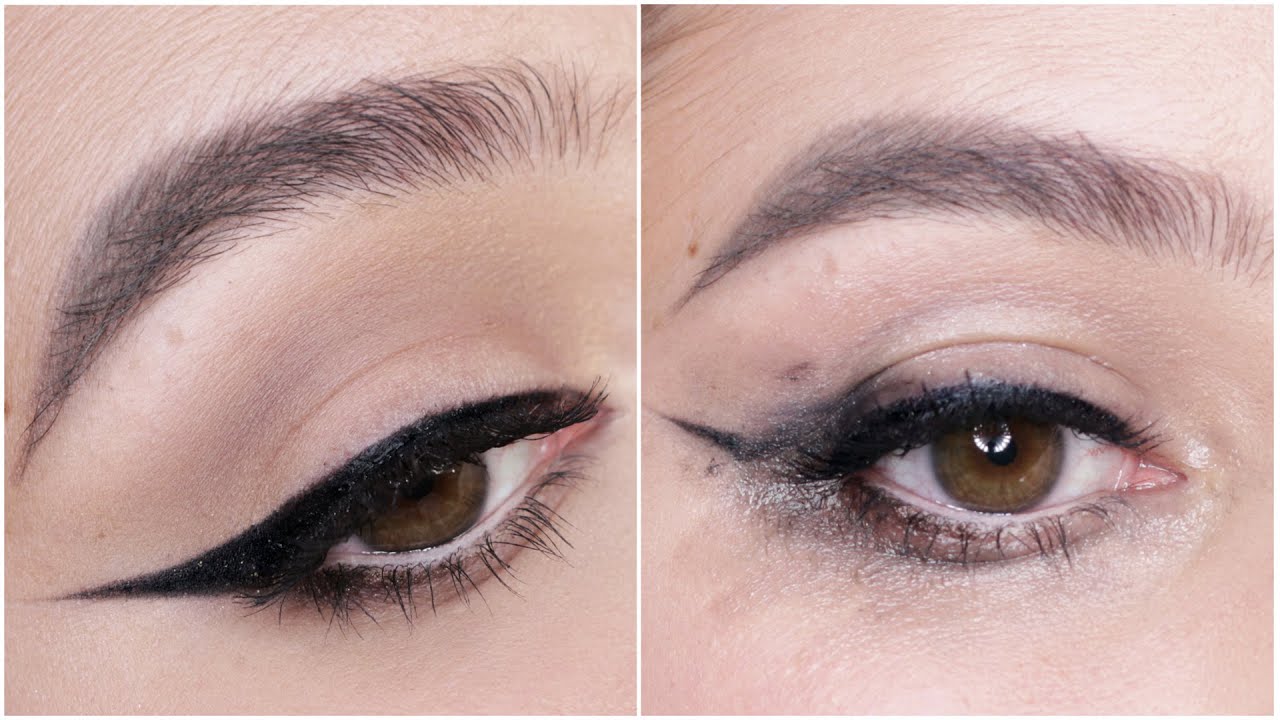
Oil leads on oily lids, but watery eyes, hooded lids and mature lids each fail in their own way.
- Oily lids make liner lose grip and slide, and The Beauty Department notes some longwear formulas still smear here.
- Watery eyes lift liner from the lower lash line whatever the lid oil level.
- On hooded and monolid eyes, the lid fold touches the liner every time the eye opens, so pigment prints onto the skin above.
- Creases and fine lines on mature lids hold pigment and let it drift.
- Dry lids have little oil, so running there usually traces back to tears or friction.
Hooded lids also change where liner should sit and how thick it should be. A guide to makeup that suits hooded lids covers those choices in more detail.
How to Prep Eyelids So Eyeliner Stays Put

Prep goes in one order. Oil-free cleanse, no rich cream, a single grip layer (primer or concealer), then a light powder. Everything else in the routine sits on top of that base.
Start with clean lids. The American Academy of Ophthalmology advises applying eye makeup to clean eyelids only, and an oil-free cleanser leaves no leftover oil behind.
- Quinn says excess moisturizer makes liner smudge, so keep heavy cream off the eye area right before lining.
- Cosmetics a la Carte swaps rich cream for an oil-free eye serum.
- Use one thin coat of primer or concealer, not both.
- Finish with a light dusting of translucent powder, and add sheer pressed powder along the lower lash line before and after lining (Quinn).
Primer is the oily-lid answer. Quinn wants a hefty one such as Urban Decay Primer Potion, and a short walkthrough on applying the Urban Decay eyeshadow primer covers amount and blending.
Sources split on the middle layer. Quinn primes, while makeup artist Zoe Clark, quoted by beaut.ie, uses concealer and powder, then sweeps a matte shadow lighter than the skin tone from lid to brow (Bobbi Brown’s Bone is her example).
Cosmetics a la Carte dots an oil-free, crease-resistant serum concealer over the lids, then sweeps a neutral matte mineral shadow across the lid and buffs it slightly higher toward the brows, so lashes and liner only touch powdered skin. If you go that route, a refresher on working concealer onto the lids keeps the layer thin.
For oily lids, I’d start with primer. Concealer fills the gap for anyone who finds primer too heavy.
Prep has a ceiling. It controls oil, not tears, so watery eyes will still lift liner off a perfect base.
Which Eyeliner Formula Resists Running Best?

On oily lids, matte powder shadow, firm gel and waterproof long-wear pencils run the least. Soft kohl pencils run the most, since they’re built to smudge. That ranking comes from working makeup artists, not lab tests.
| Formula | Wear on oily lids | Main failure | Best use |
|---|---|---|---|
| Soft kohl or kajal pencil | Weak | Smudges by design | Smoky looks, set with shadow |
| Waterproof long-wear pencil | Good | Harsher removal | Daily lash line |
| Gel (pot or pencil) | Good if firm | Whipped gels stay soft | Upper lid, wings |
| Liquid or felt-tip | Good once dry | Transfers if not dry | Precise upper lines |
| Matte powder shadow | Strong | Flakes | Lower lash line |
Product names overlap, so labels mislead. Quinn’s waterproof picks (Giorgio Armani Waterproof Pencil, It Cosmetics No-Tug Waterproof Eyeliner) are pencils, while Refinery29’s artist Keeley mostly lines with gels such as Bobbi Brown Gel Eyeliner and Illamasqua Precision Gel Liner.
Bustle’s advice for oily lids is to skip softer liners like kajal pencils and some whipped gels. The Beauty Department adds that kohl and kajal have a built-in slip.
Kohl needs a label check. The FDA says true kohl (also sold as kajal or surma) is made from heavy-metal salts such as antimony and lead and is not approved as a cosmetic color additive in the US.
Some products use the word only for the shade (FDA Eye Cosmetic Safety page, content current as of June 28, 2022). Readers who want the basics can start with this explainer on what kohl eyeliner is.
Waterproof formulas hold against humidity, and against tears and sweat too. Quinn’s first pick for liner that keeps running is a waterproof one.
The catch is removal. It takes harsher cleansers, which dry the lids (Cosmetics a la Carte), and dry lids promote watery eyes, which brings the running right back. Waterproof also doesn’t mean oil-proof, since The Beauty Department notes some longwear liners still smear on oilier lids.
Cosmetics a la Carte runs its own routine on a water-resistant gel pencil, Superwear. Plan the removal before you buy, and a guide to taking off waterproof makeup walks through it.
The no-liner route works too. Clark taps a dark matte shadow at the lash roots with a slanted brush because eyeshadow, a dry product, is the least likely to run.
The American Academy of Ophthalmology adds a limit. People with dry eyes should avoid powder and other makeup that flakes.
Does Waterline and Lower Lash Line Liner Run More?
Yes. Liner on the waterline sits in the tear film, so it moves and smudges sooner than liner placed on the lash line itself.
The University of Waterloo reported in 2015 that 15 to 30% more eyeliner particles entered the tear film within five minutes when pencil liner went inside the lash line instead of outside it.
The underlying paper (Ng et al., Eye and Contact Lens, 2015) was a pilot with three subjects and one glitter-infused pencil. Contamination peaked at 5 to 10 minutes and was negligible by two hours.
Tears do the same job on the lower lash line. MasterClass notes that lining the waterline makes the eyes water, which smudges both liner and mascara.
- Put powder under the liner, before and after lining.
- Line three-quarters of the lash line rather than all of it (Daily Vanity).
- Or skip the lower lashes entirely, which gives a lifted line that resists smudging (Cosmetics a la Carte).
Eye care sources don’t agree on placement. The American Academy of Ophthalmology says to apply eye makeup outside the lash line, away from the eye, to avoid blocking the oil glands of the eyelids.
A Dermascope myth-check by an esthetician reaches the opposite verdict. It calls waterline liner generally safe if the pencil is sharpened before each use.
Research on chronic wear doesn’t settle it either. A Cureus survey of 207 women (Albdaya et al., 2022) found dry eye symptoms in 71.6% of eye cosmetic users, with inner eyeliner frequency raising prevalence and no link for mascara or external eyeliner.
A 2026 Journal of Clinical Medicine study of 49 women (Alkawally et al.) used masked clinical exams alongside symptom questionnaires. The groups were small, with 10 women wearing no makeup, 18 wearing liner outside the lid margin and 21 wearing it on the lid margin. The authors concluded that liner both outside and on the lid margin showed more ocular staining and poorer meibomian gland secretion quality than no makeup, and they call for larger samples.
Tightlining muddies the advice further. Makeup tutorials use the word for liner pressed between the upper lash roots, while eye care sources use it for the wet inner rim.
For the technique itself, see this tightlining walkthrough.
The practical middle is to keep liner on the lash roots and stop before the wet rim. That placement runs less and avoids the one position the eye care sources flag.
How to Apply Eyeliner So It Does Not Run

Apply liner with a sharp tip, a steady hand and thin layers, then let each layer dry before you blink. Wet liner meets a moving lid with every blink, so technique decides how much pigment stays where you put it.
- Sharpen the pencil or trim the tip. Dr. Alison Ng advises sharpening a pencil thoroughly before each use and cutting a little off twist-up pencils (University of Waterloo, 2015).
- Finish eyeshadow first. MasterClass puts shadow before liner, so no brush crosses fresh liner afterward.
- Hold still. The FDA says never to apply or remove eye cosmetics in a moving vehicle, and a rested hand draws a steadier line anyway.
- Draw short strokes between the upper lashes. Cosmetics a la Carte starts at the outer corner, stops at the pupil and leaves the inner corner bare.
- Build the line thin, then wait. Add a second layer only after the first dries, and keep your head tilted down until liquid liner sets (Refinery29).
On the lower lid, MasterClass recommends small strokes rather than one long pull.
Layering different products helps too. Daily Vanity puts a pencil under liquid liner as an adhesive base on oily lids, and Bustle lists layering among its seven ways to lock a line in place.
That advice sits next to Bustle’s warning against soft kajal pencils on oily lids. The two fit together when the base pencil is a firm, long-wear one.
The usual failure is patching a line that hasn’t dried. Touch-ups on wet liner drag pigment across the lid, so wait, or wipe the area and restart.
For line shape and tool choice, this step-by-step eyeliner guide goes deeper.
How to Set Eyeliner So It Stays in Place

Powder does the heavy lifting. A matte shadow or translucent powder over the line, plus a powder barrier below it, stops most running, and setting spray is an optional second layer.
Powder and Matching Shadow
- MasterClass dabs a matte shadow in the liner’s color over the line with an angled brush, and Refinery29’s artist Keeley presses a dark shadow over liner that keeps transferring to the upper lid.
- Quinn uses translucent powder over the upper line with a fine liner brush, or a cotton bud loaded with powder if you don’t own one.
- For the lower line, The Beauty Department stamps pressed powder directly under the liner with a flat laydown brush, sweeps across, then sweeps again without reloading. A shade slightly lighter than your skin adds a little highlight.
Pick the method by what the line needs. Shadow in the liner’s color seals pencil and gel while adding depth, and translucent powder suits liquid liner once it has fully dried.
Brush choice and pressure matter more than the product, and this guide to applying translucent powder covers both.
Too much powder turns a black line gray. Tap the brush before it touches the lid.
Setting Spray and Sealants
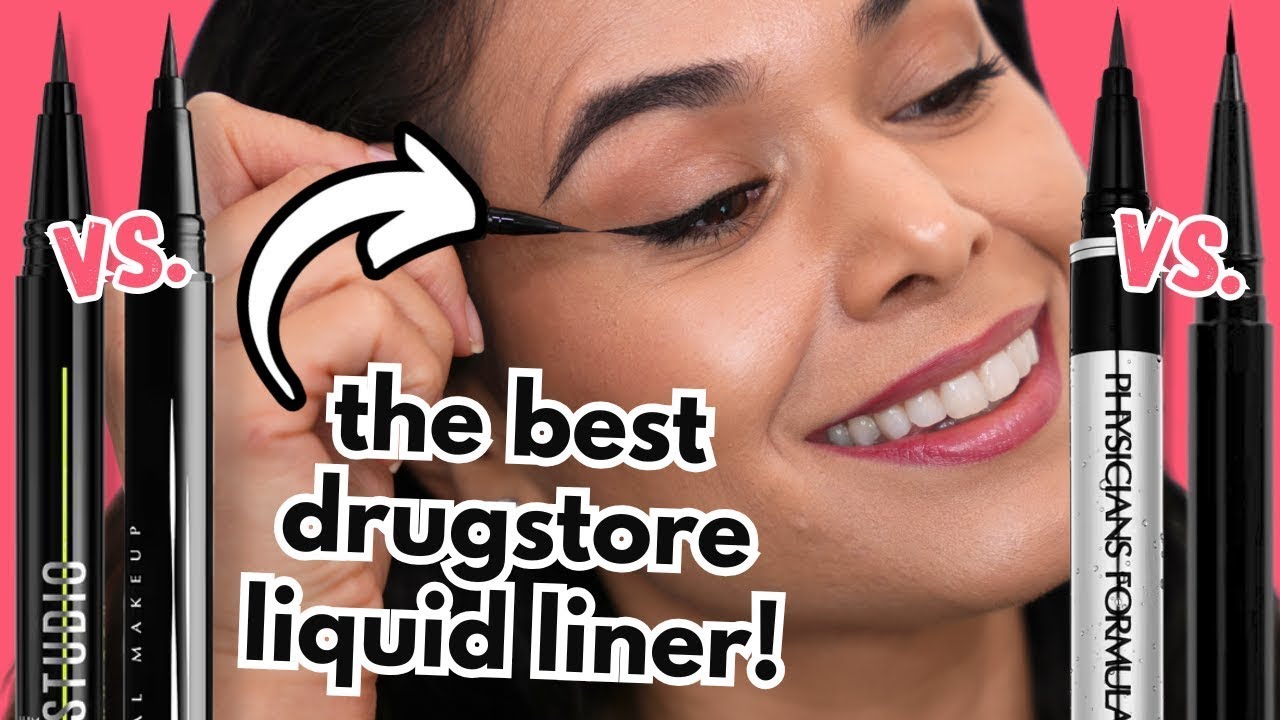
In Urban Decay’s own 7-day study of 50 people, 78% said All Nighter helped their makeup last 16 hours.
That is a brand-run, self-reported figure for whole-face wear, not liner alone. MAC makes a similar claim for Prep + Prime Fix+, up to 12 hours, and says the mist can go on before, during or after makeup (MAC, via its retailer Q&A).
- Close your eyes and hold the bottle 8 to 10 inches away (Urban Decay), or 12 inches for MAC.
- Spray last, after powder.
- Keep it out of the eyes, as the Urban Decay label states.
Technique affects the finish as much as the formula, and a short guide to applying setting spray covers passes and distance.
Sealants go further. Makeup artist Zoe Clark, quoted by beaut.ie, tops liner with Illamasqua’s Sealing Gel to waterproof it, and Bustle suggests a cosmetic-grade sealant for oily lids, watery eyes or water exposure.
Spray adds insurance against humidity. It does not stop tears.
How to Fix Eyeliner That Has Already Run

Lift the smear, clean the stain, then rebuild the base before relining. Skip that order and the next layer of liner just spreads the old pigment around.
- A wet smear comes off best with a clean, dry cotton swab. Lift it, don’t drag it.
- For a dried stain, use a swab or pad dampened with micellar water. Bioderma’s directions for Sensibio H2O say to wipe gently and repeat with a fresh pad until clean, with no rinsing.
- Gray shadow under the eye can be covered with concealer on an angled brush (MasterClass), then set with powder.
Oil is the catch. Biphase removers such as Bioderma’s Sensibio H2O Eye add an oil phase to break down waterproof formulas, and oil left on the lid undoes the base.
After an oil-based remover, blot the area dry and reapply primer before relining. Whatever remover you use, the American Academy of Ophthalmology says to keep it out of your eyes.
Mascara usually smudges for the same reasons, and a guide to stopping mascara from smudging under the eyes fixes that half of the problem.
At night, a full routine to remove eye makeup keeps tomorrow’s base clean.
If liner still runs through prep, a waterproof formula and powder, the eye is the more likely problem, not the product.
The Oculofacial Society (ASOPRS, 2025) says dryness is a common trigger of reflex tearing. When the eye makes too few ordinary tears, it floods the surface with backup tears.
Cosmetics a la Carte describes the other half of the loop. Harsh removal of waterproof liner dries the lids and promotes more watery eyes.
The FDA’s checklist says to stop any eye cosmetic that causes irritation and see a doctor if it persists. Change one variable at a time, formula first, then prep, then setting.
Common Questions About Running Eyeliner
How do I remove waterproof eyeliner without rubbing?

Soak a cotton pad in an oil-based or biphase remover, press it on the closed lid for a few seconds, then wipe once toward the outer corner.
The FDA warns against scratching the eyeball or other sensitive areas while removing eye cosmetics, so skip the scrubbing.
Why does eyeliner transfer to the upper lid?
The lid fold touches the liner every time the eye opens, so hooded and monolid lids show it first.
Let liquid liner dry before you blink, then press a matching matte shadow over the line.
Does curling lashes after lining cause smudging?
Yes. Bustle’s advice is to curl your lashes before you line, since curling afterward means more smudging and more removal.
Will eyeliner hold up when I cry?
Yes, if the liner is waterproof and sealed. Waterproof formulas resist tears, and Bustle suggests a cosmetic-grade sealant on top for watery eyes.
Blot with a tissue instead of wiping, which smears even a formula that held.
How often should I sharpen or replace eyeliner?
Sharpen a pencil before every use. The American Academy of Ophthalmology says to throw away creamy or liquid eye makeup after three months.
Sources split on pencils. The Good Eyes site says up to two years, while other dermatology sources put pencils at about one year.
Is waterline liner safe with contact lenses?
Not without extra risk. Dr. Alison Ng of the University of Waterloo says liner waxes and oils adhere to contact lenses and build up over days, which clouds vision.
Keeping liner on the lash roots and off the wet inner rim cuts that exposure.
What to Change First When Eyeliner Keeps Running
Fix running eyeliner in order of cost. Technique is free, so start there. A better base and powder come next, and a new formula is the last thing to buy, because no product holds on a slick lid.
- Thin layers and full dry time cost nothing.
- An oil-free base, then powder over and under the line.
- A firm gel or waterproof formula, which moves to the front of the queue when tears drive the smudge.
The price of all this is time. Layered prep and dry time add minutes before the day starts, and every added layer is one more product to remove at night.
Placement advice carries a date. As of October 2026 it rests on small studies, and larger trials of liner outside the lid margin would change it.
Once the liner holds, the rest of the face is next, and this guide to making makeup last all day picks it up.

She started writing on the site after fielding the same questions from clients and friends often enough to just write the answers down: which red won't turn orange on a warm undertone, how to keep lipstick from feathering into fine lines, why a "12-hour" formula rarely survives dinner.
Every review on the site follows the same rule she uses with paying clients: wear it first, then decide if it's worth recommending.
- How to Make Eyeliner Last Longer Without Smudging - August 31, 2026
- How to Make Eyeshadow Last Longer All Day - August 29, 2026
- How to Find Your Undertone in 5 Easy Steps - August 27, 2026