Formula does most of the work. In the inventor’s own comparison, described in a US patent filed in 2001 and granted in 2002 (US 6,428,797), a conventional lipstick lost about 90% of its color after a regular meal. The long-wear liquid lipstick the patent describes lost about 10%, and that was with a gloss worn over it.
Longevity does cost something, though. The films that survive a meal also dry out the lips and shrug off plain cleansers.
Why does lipstick fade, smudge and transfer?

Food oils, drinks, saliva and friction break down the waxes and oils that hold pigment on your lips. The center goes first, since talking, eating and sipping all hit it hardest.
The ingredients in a standard bullet explain a lot of this. Waxes and oils give glide and comfort, but they never lock into a hard layer, so anything greasy dissolves them.
Oily food is the worst offender. It works like an oil-based remover and pushes color past the lip line.
Drinks lift a little pigment with every sip, and glass rims take their share too. Licking your lips keeps the surface wet and dries the skin underneath. Heat and humidity soften wax-based sticks until they creep into fine lines.
Even your fingertips play a part. Skin oils break the formula down when you press color in by hand.
None of this is a defect. The formula is doing what it was built to do, which is why the formula is where to start.
Which lipstick formula lasts longest?
Liquid mattes last longest, with lip stains close behind. Bullets and creams fade first because their wax-and-oil base never dries into a film.
A US patent for long-wear lip color (US 11,160,735) defines the term as 4 to 24 hours of wear, with rich color surviving a meal. Brand claims sit inside that window. Maybelline lists up to 16 hours for SuperStay Matte Ink.
Treat that number as a ceiling. How long liquid lipstick lasts on a normal day depends on what you eat, how you prepped and how often you touch your mouth.
| Formula | Wear | Comfort | Weak point |
|---|---|---|---|
| Liquid matte | Longest | Drying | Needs an oil-based remover |
| Lip stain | Long | Light | Fades to a tint, not to bare lips |
| Bullet matte | Moderate | Drier | Shows flakes |
| Satin | Moderate | Comfortable | Smudges at the center first |
| Cream | Shortest | Most comfortable | Transfers and feathers easily |
How film formers hold color on the lips
Liquid mattes pair a volatile solvent with a film-forming resin. The solvent evaporates within minutes and leaves a thin film behind, which is the general pattern described in US patent 7,261,877 on transfer-resistant lip products.
Cosmetic chemist Stephen Alain Ko told FLARE that newer formulas dropped waxes in favor of film formers such as trimethylsiloxysilicate, which build the film as the liquid dries. Isododecane or cyclopentasiloxane usually carries the color and then evaporates, and dimethicone tends to sit alongside the resin.
The film has a price. That same patent names dryness and flakiness as the recurring complaint with these products, so prep matters more here than with any other formula.
Choosing a formula for your day
Guides disagree on this one. Most say matte outlasts shiny, while Glamour South Africa argues for satin with pearl pigment, because it stays put better than a creamy stick without the dryness of a long-wear matte.
The gap between matte and satin finishes matters less than whether you can touch up. A satin you can wear comfortably all day beats a matte you scrub off at lunch.
- If there’s no touch-up window, go with a liquid matte or a stain over well-prepped lips.
- Dry lips do better in a satin or cream, set lightly, as long as you accept shorter wear.
- On a hot or humid day, a liquid matte or bullet matte in thin layers holds up best.
- For a long meal, pick a stain or liquid matte and leave balm or gloss off the top.
How to prep lips so color grips

Skip the flake removal or the early hydration and a liquid matte settles into cracks and looks uneven. A thin grip layer just before color finishes the job.
The outer layer of lip skin is only 3 to 5 cell layers thick, against 15 to 20 on typical skin, and water loss runs about three times higher than on the cheek, according to Skin Inc.
Lips also have almost no oil glands. The surface you hand the lipstick is mostly the one you prepare.
Exfoliate gently
Weekly is enough. A damp washcloth or a soft lip scrub removes the flakes that lift color, and gentle, natural ways to exfoliate your lips work fine if you don’t own a scrub.
Light pressure and a few small circles is all it takes. Skip it entirely on peeling or raw lips, since dermatologists warn that abrasive scrubs make that worse. Pat dry before anything else goes on.
Hydrate hours ahead, then blot
Glamour South Africa says to pat on a clear balm, give it a few minutes to sink in, then blot.
Makeup artist Katie Jane Hughes takes the opposite view. Balm applied right before color makes a slippery base, and pigment slides off it.
Both are right about different timings. Do the heavy hydration earlier, the night before or an hour ahead, then blot off whatever hasn’t absorbed before color goes on.
For overnight care, the American Academy of Dermatology advises a non-irritating lip balm before bed, and a thick ointment such as white petroleum jelly for very dry, cracked lips. A consistent lip care routine beats any last-minute fix.
Add a grip layer
A thin grip layer is the cheapest upgrade in the whole routine.
You can dab foundation or concealer on with a sponge, press in a lip primer, or buff a sheer coat of the lipstick itself on with a fluffy brush, which is the method Katie Jane Hughes recommends. Pick one. Stacking them only adds bulk.
How to apply lipstick in layers so it lasts

Thin layers dry faster and grip better than one heavy swipe, and heavy swipes are what cause feathering. The order is liner, first coat, blot, second coat.
- Prep the lips and add a grip layer.
- Outline the lips with a liner close to the lipstick shade.
- Fill in the whole mouth with the same liner, not just the edge.
- Apply a thin first coat, pressing color in. Let liquid formulas dry fully.
- Blot once with a single ply of tissue.
- Add a thin second coat, then set it with powder if the formula needs it.
Liner works as a barrier against bleeding and also as a base layer of pigment. That’s why makeup artist Ruby Hammer says filling the lips with pencil gives color something to cling to.
If you’ve only ever traced the edge, the technique for applying lip liner across the whole lip is worth a read.
On tools, a brush reaches fine lines and controls the edges (Women’s Weekly, L’Oreal Paris). The tube, according to Glamour South Africa, deposits richer color in one pass. So a brush for edges and thin builds, the tube for a quick first coat.
If color still creeps past the lip line, stopping lipstick from feathering usually means less product and a firmer liner edge. A blot between coats removes the excess that does the creeping.
Do powder and setting spray help lipstick last?

Powder helps most on creamy and satin lipsticks. Setting spray adds little on its own, and a liquid matte gains almost nothing from either because it has already dried to a film.
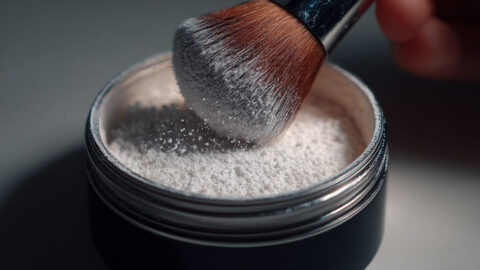
Makeup artist Carl Ray lays a one-ply tissue over the lip color and dusts loose translucent powder through it, which absorbs excess moisture and holds the color in place (as shown on Good Morning America).
The tissue is the control. According to Women’s Weekly, it lets only a thin veil of powder reach the lips, and the full routine for setting lipstick with powder follows the same logic.
| Method | Pros | Cons |
|---|---|---|
| Tissue and powder | Mattifies creamy sticks, cuts transfer | Can dry lips, can look cakey |
| Setting spray | Fast, one mist | Little evidence it works on lips alone |
| No setting step | Keeps comfort and shine | Shortest wear on creamy formulas |
Setting spray on lips
Sprays contain polymers that form a light film over makeup, according to celebrity makeup artist Jennifer Goff. The evidence for lips specifically is thin, since the guidance comes from makeup artists and brand pages rather than wear tests.
NYX tells users to spritz a couple of times, lips included. Makeup artist Mae (quoted by Reader’s Digest) picks a non-moisturizing spray, because extra hydration can make makeup slip.
Let the mist dry on its own. The basics of applying setting spray carry over from the face to the mouth.
Reapply over powder, or stop
Ruby Hammer’s routine goes apply, blot, dust with translucent powder, then add another coat. Glamour South Africa warns against that last step, since reapplying afterward turns the lipstick cakey.
Both hold in different cases. A creamy stick can take a sheer second coat over powder, while a layered liquid matte should be left alone.
How to keep lipstick on while eating, drinking and wearing a mask
A meal splits into before, during and after, and each part has its own fix. Masks and kissing are a different problem, because friction is the issue there, not oil.
Eating and drinking
Scan the menu first. Finger foods and drier dishes touch the lips less, according to Iba Cosmetics.
While you eat, sip through a straw and keep your tongue off your lips (NYX). Skip the balm or gloss on top too, which cuts wear, per Daily Vanity.
Afterward, dab with a napkin to lift food oils. Wiping drags the color around.
There’s a longer, dish-by-dish breakdown of how to eat with lipstick on.
Masks and kissing
Hollie Ellis, a Bobbi Brown Pro Artist, suggests a mattifying lipstick under a mask, or a lip pencil beneath the lipstick to hold the formula in place.
Makeup artist Joy Adenuga recommends pressing and rolling color on with a fingertip for a softer finish that won’t transfer onto the mask.
The two views clash, because skin oil breaks a formula down. The fingertip method works because it builds a sheer, stain-like layer, and a full-coverage coat pressed on by hand brings the oil problem right back.
Formula choice and a set finish are the core of making lipstick transfer proof.
Kissing is a harder test. Ruby Hammer puts it plainly. Lipstick will always transfer to some extent, so the goal is to minimize it.
When and how to touch up lipstick without caking
Touch up when the center has faded, not on a timer. Clean the area, blot, then add one sheer coat to the center only.
A water-based wipe, or a little water on a fingertip, clears greasy residue and patchy edges before the new coat goes on, according to Red Apple Lipstick.
Fill-in matters here too. Makeup artist Nina Park, quoted by Coveteur, fills the whole lip with liner so that fading shows a backup layer of color instead of bare lips.
A small kit in the bag is enough.
- The same lipstick shade
- A matching liner
- A small lip brush
- Lip balm
Thin wins again. A heavy second layer over a half-worn first one is where caking starts.
Check the mirror for smudges while you’re there. If color keeps landing on your front teeth, how to keep lipstick off your teeth covers the fixes.
When does long-wear lipstick backfire, and how do you remove it?
Long-wear lipstick backfires on flaky or irritated lips, on days that need quick color changes, and at removal, when a film that survives a meal also resists plain cleansers.
Where long-wear formulas fail
- On flaky lips, stains soak into the top layer of skin, so dry patches show up as uneven color (e.l.f. Cosmetics).
- The American Academy of Dermatology says products that burn, tingle or sting are irritating, so stop using them on irritated lips.
- Slow removal makes these formulas a poor fit for photo shoots, where makeup artists swap lip colors between looks (FLARE).
- Extremely long-wearing formulas can also stain natural lip color for a while after removal (FLARE).
If lips crack under a matte, the fixes in keeping lips moisturized with matte lipstick can help. Stinging or burning is a reason to stop, not to adjust.
How to remove a long-wear formula
Makeup.com by L’Oreal (2022) advises leaving petroleum jelly on for 3 minutes when an oil-based remover misses color, and MasterClass gives 2 to 3 minutes.
- Massage an oil-based remover over dry lips, then blot away the oil.
- If color remains, coat the lips in petroleum jelly and leave it for about 3 minutes.
- Wipe with a washcloth dampened in warm water.
- Rinse, pat dry and apply a moisturizing lip balm.
Brand guidance agrees. Jouer Cosmetics tells buyers of its long-wear liquid lipstick to take it off with an oil-based makeup remover.
Sources split on micellar water. MasterClass says it can remove stubborn lipstick, while Iba Cosmetics says it may not be enough alone for liquid lipstick.
On film-forming liquids, start with oil. The full routine for removing liquid lipstick adds more product options if you want them.
Common Questions About Lipstick Longevity
How do you keep red or dark lipstick on?
Bright and dark shades last longer than soft ones because they carry more pigment, according to Glamour South Africa.
Smudging is their weak spot, and it shows more on a deep color. Fill the whole lip with a matching liner and blot between coats.
Does humid weather make lipstick wear off faster?
Yes. Heat softens wax-based sticks until they creep into fine lines, so a liquid matte or stain holds its edge better.
Whatever you wear, apply thin layers and set them with translucent powder to give sweat and humidity less to move.
Is toothpaste a safe lip scrub before lipstick?
No. Huda Beauty suggests leaving it on for 10 seconds, but many toothpastes are mint-flavored, and the American Academy of Dermatology lists menthol among the ingredients that irritate lips.
A damp washcloth lifts flakes without the sting.
Can a creamy lipstick be made to last longer?
Partly. A full-lip liner fill, thin layers with a blot between them, and translucent powder pressed through a tissue all extend wear on cream formulas.
A creamy stick still loses to a liquid matte, so plan a touch-up after meals.
How Much Prep Does Everyday Lipstick Wear Need?
Overnight lip care comes first, then a formula matched to the day, then thin coats with one blot. That order follows cost against payoff. Prep costs nothing, a formula costs a purchase, and layering costs a few minutes while adding the least.
Balm or petrolatum overnight and a weekly flake removal cover the prep. Pick the formula by whether you can touch up. Keep the coats thin and blot once.
The trade-off sits in the formula. Wearing a film-forming liquid daily means a removal routine every night, so reserve it for days without a touch-up window.
Lips that tighten under a daily film need recovery time, and caring for dry lips between wears covers that.
As of October 2026, no published wear test of setting spray on lips turned up, so the spray advice rests on makeup artist guidance alone. A controlled study would settle the powder-versus-spray question.

She started writing on the site after fielding the same questions from clients and friends often enough to just write the answers down: which red won't turn orange on a warm undertone, how to keep lipstick from feathering into fine lines, why a "12-hour" formula rarely survives dinner.
Every review on the site follows the same rule she uses with paying clients: wear it first, then decide if it's worth recommending.
- How to Make Eyeliner Last Longer Without Smudging - August 31, 2026
- How to Make Eyeshadow Last Longer All Day - August 29, 2026
- How to Find Your Undertone in 5 Easy Steps - August 27, 2026