Purple eyeshadow comes in more variations than almost any other shade family, and that’s exactly why picking a lipstick to go with it trips people up. A cool violet needs a different lip than a warm-leaning plum, and treating the two the same is where most pairings go wrong.
The shade itself sits somewhere between blue-based violet and red-based plum, and where it falls on that line decides almost everything about the lipstick that goes with it. How warm or cool the shade reads, how much contrast you want, and which finish you pick all shift depending on where the purple actually lands.
None of this is a niche concern either. Eye makeup is projected to grow at a 5.40% compound annual rate through 2029, according to Mordor Intelligence, and purple keeps showing up as one of the shades brands come back to season after season.
What Determines Which Lipstick Goes With Purple Eyeshadow

Undertone decides whether a lipstick reads warm or cool once it sits next to the eye. Contrast is the next piece, whether the lip color leans into the eyeshadow’s own tone or pushes against it instead. Finish matters too, since matte, satin, and gloss all read at pretty different volumes once the whole face comes together.
Nail those and almost any lip color works. Miss on even one and a lipstick that looked fine in the tube can look off the second it’s next to a purple lid, nude shades included. A “safe” nude is not automatically safe here.
Purple itself doesn’t sit still on the undertone scale. Violet and blackberry lean blue. Plum and eggplant lean red. That spread is wider than you get with a single-toned eyeshadow like a bronze or a taupe, and it’s the reason a generic lip-matching rule doesn’t really hold up for this particular color family.
The usual approach to picking a lipstick color still applies underneath all of this. It just gets narrowed down to one thing most guides skip over: what’s actually happening on the eyes. Whether that’s a soft lavender wash or a full purple smoky eye, the lip color is either backing it up or fighting it. There’s rarely a neutral middle ground.
The Color Theory Behind Purple Eyeshadow and Lipstick Pairing

Purple sits opposite yellow on the traditional color wheel, the same RYB model most makeup pairing advice still borrows from. Isaac Newton mapped that relationship back in the 1600s, and it still holds up for complementary colors in makeup, fashion, and design today.
That opposite placement is why a warm, gold-leaning lipstick reads as genuine contrast against a purple lid. It’s not subtle, and that’s kind of the point.
Berry, plum, and mauve work on a different logic. They sit close to purple’s own position on the wheel, so instead of contrast you get something tonal, almost monochrome, which is a much quieter effect overall.
Saturation is what actually decides which direction makes sense. A soft lavender wash wants a gentler pick, something closer to a warm nude than a bright gold-red. A fully saturated eggplant lid can carry more, a warm terracotta-red for instance, without tipping into too much.
Best Lipstick Colors for Purple Eyeshadow, Ranked
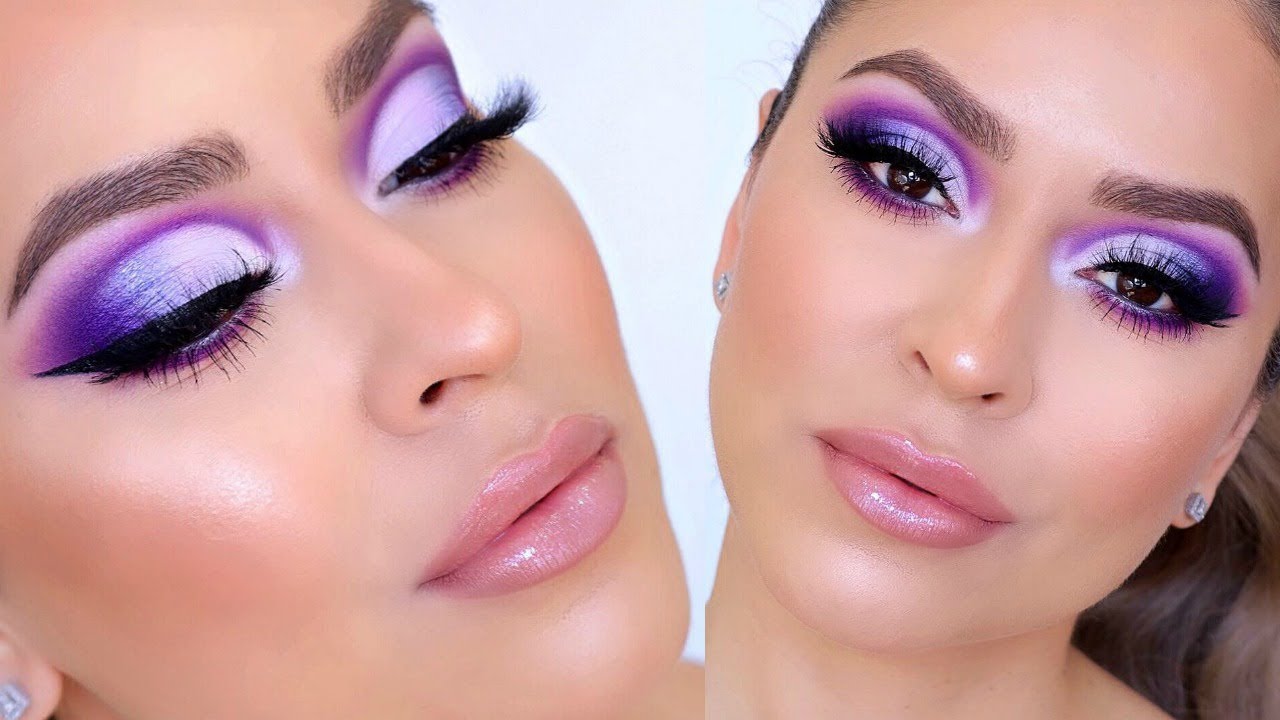
Mauve and warm nude lipstick rank highest here, and for good reason: they hold the contrast-to-tone balance that purple’s split undertone range actually demands. Berry does almost as well.
Red and brown sit a step behind, useful once the purple look gets bolder or leans more neutral. Cool-toned pink is the riskiest of the common picks on this list, and it can clash outright if the purple lid isn’t kept soft.
| Lipstick Shade | Undertone | Best Finish | Works Best With |
|---|---|---|---|
| Warm nude | Warm to neutral | Satin or matte | Lavender, soft lilac |
| Mauve | Cool to neutral | Matte | Plum, eggplant |
| Berry or wine | Cool | Matte or satin | Violet, deep purple |
| Red | Warm or cool, shade-dependent | Matte | Saturated violet, smoky purple |
| Brown | Warm | Satin | Muted mauve, taupe-purple |
Finish matters more here than people expect, and the market numbers back that up. Matte held 44.6% of the lipstick market in 2025, the largest share of any finish (Market.us, 2025), and that lines up with what actually works over a purple lid. Matte holds its ground against shimmer or heavy pigment without competing for shine, which a purple eye tends to have plenty of already.
Satin isn’t far behind at 43.41% of the category in 2024 (Mordor Intelligence). It splits the difference between matte and gloss, and that soft-focus quality suits a lighter lavender or lilac eye better than a hard matte finish does. A closer look at matte versus satin lipstick is worth it if the distinction still feels fuzzy, since one reads flat and bold while the other keeps a slight sheen that catches light near the eyes.
Red is the riskiest option on the table above, though not off the table entirely. Paired with a saturated violet or a full smoky purple eye, it can genuinely work, but a guide on how to choose a red lipstick is worth checking first so the face doesn’t end up with two competing focal points instead of one finished look.
MAC’s Diva, a deep burgundy matte the brand itself recommends for a smoky eye, lands close to the berry and wine row in the table.
Lipstick Shades for Each Purple Eyeshadow Family
Lavender and lilac call for something soft, a nude or a rose. Plum and eggplant can take more weight, so berry or wine make more sense there. Violet is the one that swings both ways: a bold red works, and so does a muted mauve, and which one wins mostly comes down to how saturated the eye look actually is.
Lavender and Lilac Eyeshadow
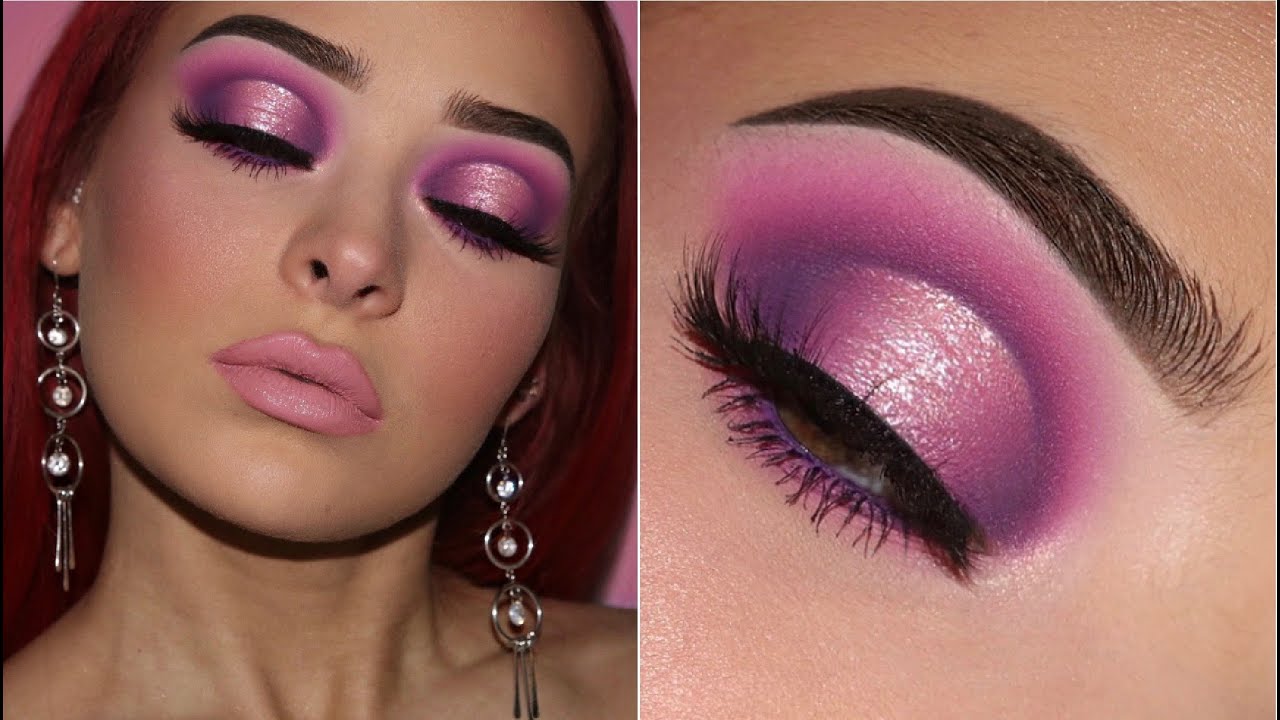
These are the softest members of the purple family, more of a wash of color than a statement, and a heavy or dark lipstick overwhelms them fast.
A soft nude keeps things barely-there. Rose or blush pink adds a bit of warmth without much extra weight. Sheer mauve sits in the middle, enough definition that the lips don’t disappear, but nothing close to bold.
Leaning slightly pink rather than fully beige helps too. Learning how to pick a nude lipstick with that in mind keeps it from washing out against a cool lavender lid.
Plum and Eggplant Eyeshadow

These shades already read as dramatic, so the lipstick needs enough weight to hold up rather than fade into the background. Berry or wine is the safer deep option, close enough to purple on the wheel that it feels intentional instead of random. Chocolate brown works too, and it’s the warmer route, toning the whole look down without going pale.
One caveat worth flagging: a dark, saturated lipstick on top of an already-dark lid can genuinely overwhelm the face. Reading up on how to wear dark lipstick before committing to the full combination isn’t the worst idea.
Violet Eyeshadow
Amethyst Orchid, one of the shades named in Pantone’s Spring/Summer 2026 fashion color trend report, is close to what most people picture when they hear “violet eyeshadow” (Pantone, 2026). It’s the most saturated, attention-grabbing shade in the purple family, and it can take a genuinely bold lip without tipping into too much.
Bold red is the obvious pick, maximum contrast and a finished, almost editorial feel. Muted mauve gets you the same effect quieter, while deep plum skips contrast altogether and just matches the eye, tone for tone, for a look that reads as one solid color story rather than two decisions stacked on top of each other.
Urban Decay’s Naked Ultraviolet palette, built mostly around lavender-to-violet shades, is a decent reference for how far this particular family actually stretches.
Matching Lipstick to Skin Undertone With Purple Eyeshadow

Skin undertone is what decides whether a lipstick reads as flattering or just flat. Warm undertones usually do better with brown, coral-red, or warm mauve. Cool undertones lean toward berry, blue-red, and true mauve instead.
For context, dermatology still classifies skin using the Fitzpatrick scale, six phototypes running I through VI, developed in 1975 by Harvard Medical School dermatologist Thomas B. Fitzpatrick. Cosmetics matching works off a simpler split though, just warm, cool, and neutral. Purple’s own undertone spans both poles of that scale, blue-based through red-based, which is the whole reason a single lipstick rule can’t cover the entire family.
Fair Skin
Fair skin shows color shifts fast, so a lipstick that looks soft in the tube can still come across strong once it’s actually on. Pale, cool-toned purple eyeshadow needs a lip that isn’t going to fight for attention.
Soft rose or blush pink works well for daytime. Muted berry is the better call once it’s evening. A cool-toned nude is the fallback if neither of those feels right on a given day.
Lipstick colors for fair skin generally back this up too, favoring cooler pinks and berries over anything orange-heavy or deeply bronze.
Olive Skin
Olive skin sits between warm and cool, which actually narrows the workable range more than either extreme does. Muted berry, brick red, and warm mauve tend to work well. Anything with a strong blue or pink base is the opposite story. It can read chalky against olive’s natural green-gold cast.
This is really the one undertone where testing a shade against the actual purple eyeshadow, and not just against bare skin, makes a real difference.
Deep Skin Tone
Deep skin carries color with real payoff, so a bold lipstick reads as intentional rather than like too much. Deep berry or oxblood gets the most out of a violet or eggplant eye. Warm brown is the softer, everyday alternative, and rich plum goes fully tonal if that’s the look you’re after.
Lipstick colors for dark skin in general tend to hold their saturation without turning chalky, which leaves more room to match a heavily pigmented purple lid shade for shade.
Lipstick for Purple Eyeshadow by Occasion
Everyday looks tend to do better with something soft, a nude or muted mauve, especially if the purple eye itself is already toned down. Evening can carry more, berry or plum usually. Bridal makeup is its own case: rose or soft berry, generally paired with a muted lavender lid rather than a fully saturated violet.
Bold lip or bold eye rarely works both at once. Something has to lead.
Go bold on the lip and it reads finished for an evening or event look, giving the whole face one clear focal point. The tradeoff is real though. A strong lip can end up competing with an already-saturated purple eye instead of complementing it, and it usually needs a steady hand, plus a lip liner, to hold its edge through the night.
Keep the lip natural instead and the eye stays the obvious focal point, which is more forgiving for daytime and doesn’t ask much of the routine. It can read a little unfinished next to a fully saturated eye look though, and it’s just less memorable under evening lighting or in photos.
Everyday
Daytime purple eyeshadow usually stays light: a wash of lavender, or a soft mauve, rather than anything close to a full smoky look. Warm nude or soft rose lipstick matches that energy. Satin over full matte tends to read less “done,” and a light touch of liner, just enough to clean up the edge, is usually all it needs.
Plenty of everyday makeup looks run on exactly this formula: soft eye, soft lip, nothing fighting for attention.
Evening

Evening lighting forgives a stronger lip, a deeper eye, or both together if the balance is handled carefully. Berry, wine, or a controlled red pairs well with a fully saturated violet or plum eye in this setting.
A light dust of translucent powder around the edges of the lip helps it survive dinner, drinks, and photos without constant touch-ups.
Bridal

Wedding makeup has to hold up across a full day and several different lighting setups, which is why it usually skips a fully saturated violet lid. Rose or soft berry lipstick pairs well with a muted lavender eye without pulling focus from the dress or the florals.
Soft berry adds a touch of color that still reads romantic. Rose is the more classic, photo-safe route. Either way, a long-wear formula matters more here than almost anywhere else, since touch-ups are rarely convenient mid-ceremony.
Most wedding looks built around a lavender or lilac eye lean on exactly this rose-and-berry range for the lips.
Lip Liner Shades That Work Under Purple Eyeshadow Looks
Lip liner works best a shade deeper than the lipstick going over it, not matched exactly. An exact match just flattens lip and liner into one indistinct block of color, which kind of defeats the point of using liner at all.
For anyone unclear on what lip liner actually does beyond outlining, its real job is holding the lipstick’s edge and keeping color from feathering into fine lines around the mouth. Nude lipstick pairs with a warm rose or soft berry liner. Berry or wine wants a liner one shade deeper in the same family. Red lipstick needs a red-brown or brick liner, never a true nude, or the color underneath shows through in an odd way.
Getting this wrong is a common mistake with a bold lip specifically. A proper guide on how to choose lip liner covers the shade logic in more depth than a quick color chart ever can.
A purple-toned liner is worth trying too, deliberately, for anyone who wants the lip and the eye to feel like part of the same color story instead of two separate decisions.
How to Apply Purple Eyeshadow and Lipstick Together
Eyeshadow goes on first. Lipstick goes on last. That order isn’t arbitrary. It lets the final lip color get judged against the finished eye rather than a half-done face.
Lip color applied first almost always ends up slightly mismatched, since the eye look can shift in tone or intensity once it’s actually blended out. Better to have the full picture before locking in the lips.
- Prime the eyelid and let it set for a minute.
- Apply and blend the purple eyeshadow, building from light to dark.
- Clean up any fallout along the lash line before moving on.
- Finish the rest of the face: foundation, blush, brows.
- Apply lip liner in the chosen shade.
- Apply lipstick and check it against the finished eye.
- Adjust the intensity, stronger or softer, before setting the whole look.
Smashbox’s Photo Finish Intensify 24-Hour Shadow Primer is rated for up to 24 hours of crease-free wear, which is the kind of staying power that makes priming worth the extra step before eyeshadow even goes on.
Full coverage with a clean blended edge matters more here than in a single-color look. A patchy purple lid makes almost any lipstick choice look like an afterthought, so it’s worth learning how to apply eyeshadow properly first. The same logic applies to the lips. Liner first, then color, then a light blot, following a clear process for how to apply lipstick keeps the finished combination from looking rushed next to a carefully done eye.
Common Mistakes When Pairing Lipstick With Purple Eyeshadow

Matching the lipstick shade too closely to the eyeshadow is the single most common mistake, and it flattens the whole face into one indistinct block of color instead of two coordinated elements. Ignoring undertone comes in a close second.
It’s not a small problem either. Nearly half of women, 47%, say they’d want help finding the right lipstick color in the first place (Ipsos, 2016), and that figure suggests undertone mismatches are common well outside of eyeshadow pairing specifically.
| Mistake | Why It Fails | Quick Fix |
|---|---|---|
| Lip shade too close to eyeshadow | Flattens lip and eye into one block of color | Shift the lip warmer or cooler than the lid |
| Ignoring undertone | Lipstick clashes with purple’s base tone | Test against the actual eyeshadow, not bare skin |
| High-gloss lip on a shimmery lid | Two light-catching areas compete for attention | Choose matte or satin when the eye already shines |
| Skipping lip liner on a bold shade | Color bleeds or fades unevenly | Line first, even for a soft lip color |
Glossy lipstick reflects light instead of absorbing it, which explains why it competes with a shimmery purple lid instead of complementing it the way a matte or satin finish does.
Filling the whole lip with liner, rather than just outlining it, can add roughly two to four hours of extra wear time to a lip color. That’s exactly what gets lost when the liner step gets skipped, and a bold berry or wine shade is usually the most common casualty. Anyone who’s dealt with color creeping into fine lines already knows why a guide on how to keep lipstick from bleeding is worth the five extra minutes.
NARS Velvet Lip Liner, built on a formula with synthetic wax for extended wear, is more or less designed around avoiding this exact mistake.
When Purple Eyeshadow Does Not Need a Matching Lipstick
A soft, barely-there purple wash doesn’t need a coordinated lipstick at all. When the eye itself isn’t doing much, a bare or balm-level lip works just fine.
That’s actually the majority preference too. 49% of makeup wearers favor a minimal, light-makeup look overall, more than any other style (CivicScience, 2026).
Workplace and daytime settings are the clearest example. A light lavender wash reads professional on its own, and stacking a bold lip on top can tip the whole thing into something better suited for evening.
Full-face bold looks are the opposite case but land on the same answer. When purple eyeshadow is part of a heavily done, editorial-leaning face, a neutral lip is actually what keeps the whole thing from overloading.
Costume and editorial makeup breaks the rule entirely, and that’s fine. Clash is often the point there, and a deliberately wrong lipstick can be the more interesting choice.
Rhode, Hailey Bieber’s beauty line, built its identity almost entirely around this idea, dewy skin and a soft lip doing the work instead of a coordinated, heavily planned color scheme. Plenty of natural makeup looks skip the coordinated lip entirely and still read as finished, which is proof enough that the matching rule is a tool and not a requirement. Full glam looks tend to go the other direction on purpose, using a neutral lip specifically so the eye stays the obvious focal point.
FAQ on What Color Lipstick Goes With Purple Eyeshadow
What Counts as a Mismatched Purple Eyeshadow and Lipstick Pairing?
A mismatch usually comes down to one of a few things: no shared undertone between lip and eye, a bold lip going up against an already-saturated lid, or a finish clash, gloss on top of heavy shimmer being the classic example. Either way, the result reads as two unrelated decisions rather than one pairing.
Can Bold Lipstick Be Worn With Heavily Pigmented Purple Eyeshadow?

Yes, as long as the lipstick sits in the same contrast family as the eye. A deep berry or wine works fine with saturated violet or eggplant. A bright, cool-toned red is trickier and needs a steadier hand, plus a defined lip liner, to keep the whole look from tipping into overload.
Is Red Lipstick a Safe Universal Choice With Purple Eyeshadow?

Not really. Red works best against saturated violet or a full purple smoky eye, and it tends to overwhelm anything softer like lavender or lilac. Cooler purples do better with a blue-based red, while warmer eggplant tones want something closer to brick or brownish red instead.
What Lipstick Color Should Be Avoided Entirely With Purple Eyeshadow?
Frosted or icy lipstick with a strong blue undertone is the one to skip. It fights purple eyeshadow harder than almost anything else, since both are competing for the same blue-based space. Pale iridescent pinks cause a similar problem, washing the whole face out under bright light.
Should Lipstick Be Lighter or Darker Than the Eyeshadow?
Neither rule actually holds up on its own. A lighter lip can soften a saturated, dark purple lid, while a darker lip grounds a pale lavender wash that would otherwise look unfinished. Matching intensity to intensity works better than chasing a fixed light-or-dark rule.
What Lipstick Goes With a Purple Smokey Eye Specifically?
A fully blended purple smokey eye, dark at the crease and soft along the lash line, holds up best against a bold red or a deep berry lipstick, both strong enough to stand up to the smokiness. There are more combinations worth a look in smokey eye makeup looks generally.
What Should You Try First With Purple Eyeshadow Lipstick Pairing?
Warm nude or soft mauve is the place to start. Both sit close to neutral on the contrast scale, so neither one clashes much regardless of whether the eyeshadow leans toward blue-based violet or red-based plum.
From there it’s less about a strict order and more about confidence: berry or wine once the undertone is confirmed, and red or another fully saturated shade reserved for a saturated violet lid or a full smoky eye.
Sticking with nude or mauve as a starting point also just means fewer lipstick purchases overall, even if it costs a bit of contrast between a daytime and an evening version of the same purple eye. The same logic carries over to other cool-toned looks too, including what color lipstick goes with blue eyeshadow, once undertone and contrast start feeling like second nature instead of a checklist.

She started writing on the site after fielding the same questions from clients and friends often enough to just write the answers down: which red won't turn orange on a warm undertone, how to keep lipstick from feathering into fine lines, why a "12-hour" formula rarely survives dinner.
Every review on the site follows the same rule she uses with paying clients: wear it first, then decide if it's worth recommending.
- How to Make Eyeliner Last Longer Without Smudging - August 31, 2026
- How to Make Eyeshadow Last Longer All Day - August 29, 2026
- How to Find Your Undertone in 5 Easy Steps - August 27, 2026