Lip skin has no oil glands, which is the whole reason lip balm exists. An ointment or wax balm seals water in, and a broad-spectrum SPF balm keeps UV out. The lips can’t do either on their own.
Men take more of the sun risk. StatPearls (2023) reports that men develop actinic cheilitis, a precancerous lip condition, more often than women, and attributes the gap to outdoor work and less use of protective lip balm.
Most guys pick a balm by feel, and that’s where it goes wrong. According to the American Academy of Dermatology, a balm that burns or stings, or even just tingles, is irritating the lips, not healing them. Menthol and mint-flavored formulas cause that reaction most often.
Why do men’s lips dry out and crack?

The barrier on lip skin is only a few cells thick and there are no oil glands behind it, so lips lose water faster than the rest of the face. Wind, cold air, sun, licking and mouth breathing all add to the loss.
Men run into nearly all of these on a normal day. A cold commute and a few hours outdoors cover most of it, and heated rooms finish the job.
How lip skin is built
- No hair follicles or sweat glands
- No oil glands, apart from occasional Fordyce spots on the upper lip in some people
- Less melanin than the surrounding skin, which means less built-in UV protection
- Lower ceramide content, so the lip holds onto water poorly
The stratum corneum on the lips is about 3 to 5 cell layers thick, against 15 to 20 on typical skin. Transepidermal water loss measures three times higher on the lip than on the cheek, according to Skin Inc.’s 2023 review of lip anatomy.
Nothing makes up that difference, so whatever balm you put on is doing the barrier’s job.
What dries lips out
Usually a few triggers stack up at once.
Licking backfires. Saliva evaporates and leaves lips drier than before, per Mayo Clinic and the American Academy of Dermatology (AAD).
Cold, dry air does its part too, and AAD says to keep applying balm whenever the air is dry, indoors or out. Sun burns dry lips more easily, and a burn can trigger a cold sore. For anyone who breathes through the mouth at night, AAD suggests a humidifier in the bedroom.
Dehydration, certain medications (acne treatments and diuretics, for example) and metal items held in the mouth, like paperclips or jewelry, also dry or irritate the lips.
Remove the trigger first, then repair the damage. A guide to caring for dry lips covers the repair side in more detail.
What should a lip balm for men contain?

Start with something that seals water in, then add something that softens the surface. Humectants are optional, and they only work when an occlusive sits on top of them.
Occlusives hold water in, and the list is short: petrolatum, white petroleum jelly, mineral oil, dimethicone. Emollients like shea butter, castor seed oil, hemp seed oil and ceramides soften and smooth the rough surface. Glycerin and hyaluronic acid are humectants, which bind water.
All of the occlusives and emollients above are on the AAD’s list of ingredients that help heal chapped lips. The humectants aren’t.
Dermatologist Leslie Baumann, MD, has pointed out that humectants like hyaluronic acid and glycerin can leave lips drier than before when no occlusive offsets them. If either shows up on a label, check that an occlusive is on there too.
Grooming sites split on wax. A 2022 Free Press Journal guide tells men to pick balms without wax, while brand blogs sell beeswax as soothing.
Beeswax is on neither of the AAD’s lists (the helpful ingredients or the ones to avoid), and AAD notes that an ointment seals in water longer than waxes or oils. Wax sticks work for daytime upkeep. Petrolatum is the better pick for cracked lips.
Petroleum jelly draws its own criticism. Some grooming sites call petroleum bases temporary relief that does not restore natural moisture, yet AAD lists both petrolatum and white petroleum jelly among its healing ingredients.
Which lip balm ingredients make dry lips worse?
The AAD’s avoid list is long. Camphor, menthol, eucalyptus, fragrance, lanolin, phenol and salicylic acid lead it, with cinnamon, citrus, mint and peppermint flavoring, octinoxate, oxybenzone and propyl gallate close behind. Skip all of them while lips are chapped.
| Ingredient | Where it shows up | Why it hurts |
|---|---|---|
| Menthol, camphor, eucalyptus, phenol | “Medicated” and cooling balms | The tingle feels like relief but irritates the lip |
| Fragrance, essential oils, mint, cinnamon, citrus flavoring | Scented and flavored balms | Irritates dry lips and invites licking |
| Salicylic acid, lanolin, propyl gallate | Exfoliating and some “repair” formulas | Listed by AAD as irritants for cracked lips |
| Octinoxate, oxybenzone | Chemical-filter SPF balms | AAD lists them while lips are chapped; zinc oxide is the alternative |
Plenty of men read a cool or stinging feeling as proof the product is working. AAD says the opposite. If it burns or stings, or even just tingles, the lips are being irritated and the product should go.
Dermatologist Joshua Zeichner has said that menthol and camphor (and phenol too) soothe at first but can irritate the lips over time.
Ohio State’s Wexner Medical Center adds fragrance and essential oils to the avoid list and recommends an occlusive such as petrolatum until the lips heal. Switching to an unscented, fragrance-free balm takes care of that whole second row of the table at once.
How should men protect their lips from the sun?
Use a broad-spectrum lip balm of at least SPF 15, and SPF 30 or higher if the lips are already dry or damaged. Apply it 15 minutes before going outside and reapply at least every 2 hours.
Lips take more sun damage than most men assume. Lip skin has less melanin, and the lower lip catches more light because it sits more prominently on the face.
StatPearls (2023) reports that men are affected by actinic cheilitis more than women, and attributes the gap to more outdoor work and less use of protective lip balm.
The lower lip takes the brunt of it. 97.5% of 161 actinic cheilitis cases in a 2015 clinical series (Lopes et al.) sat on the lower lip. What comes after is worse than most people expect: squamous cell carcinoma of the lip metastasizes in 11% of cases, against 1% elsewhere on the body (StatPearls, 2023), and up to 95% of lip squamous cell carcinomas begin as actinic cheilitis (StatPearls, 2023).
Reapply at least every 2 hours outdoors (FDA, page updated September 2026).
Label rules and dermatology advice do not line up. FDA’s sunscreen guidance (updated September 10, 2026) asks for broad spectrum SPF 15 or higher, and a sunscreen that is not broad spectrum or falls below SPF 15 must carry a warning that it only helps prevent sunburn, not skin cancer or early skin aging.
AAD sets the bar higher for chapped lips, at SPF 30 or higher with zinc oxide or titanium dioxide. SPF 15 is just the label floor for the skin cancer claim, so if your lips are already in rough shape, buy SPF 30.
Filter type matters too. AAD lists octinoxate and oxybenzone as irritants while lips are chapped, so mineral filters are the better fit for cracked lips.
Badger’s SPF 15 lip balm shows both goals fit in one stick. Its Drug Facts label lists zinc oxide as the only active ingredient, in a base of olive oil, beeswax, cocoa butter, shea butter and vitamin E (tocopherol).
The usual failure is a single morning swipe. Eating, drinking and wiping strip the balm, so a stick applied at 8 a.m. does not cover a full outdoor shift.
Which type of lip balm fits your routine?

An SPF stick in a fragrance-free base covers most men’s daytime needs. Keep a petrolatum ointment for night and for cracked lips, and add a tinted option only if you want color.
| Type | Best for | Main drawback | Examples |
|---|---|---|---|
| Plain wax stick | Pocket carry, daytime upkeep | Seals less than ointment; flavored versions tempt licking | Burt’s Bees |
| Petrolatum ointment | Night use, cracked lips | Greasy and shiny | Vaseline, Aquaphor |
| Mineral SPF balm | Outdoor work, driving, daytime | Needs reapplying every 2 hours | Badger, Blue Lizard |
| Tinted balm | Sheer color without a lipstick look | Shade matching; SPF varies by product | Coola, MDSolarSciences |
| Medicated balm | A quick cooling feel | Menthol, camphor and phenol irritate chapped lips | Carmex, Blistex |
On office days a fragrance-free SPF stick is enough, once in the morning and again after lunch. Outdoor work needs a mineral SPF balm, and it has to be reapplied every 2 hours.
Cracked lips are a different case. White petroleum jelly, day and night, until they heal.
Check the SPF number, not just the word SPF. Badger and Blue Lizard list SPF 15 on their Drug Facts labels, which meets the FDA floor but sits below AAD’s SPF 30 advice for dry lips.
Night is the slot for the thickest product you can tolerate. AAD says to apply balm before bed, and white petroleum jelly when lips are very dry and cracked.
Tinted balms add a sheer wash of color, and this breakdown of tinted lip balm explains what the pigment changes.
Men’s-line labels change the scent and the packaging, but not what the formula does, so read the ingredient list.
What does a daily lip care routine look like for a man?
Most of it comes down to reapplying often and saving the heavy stuff for night.
Morning to night

- After brushing, rinse, pat the lips dry and apply an SPF balm.
- After lunch, and before any stretch outdoors, apply again.
- Each time you catch yourself licking, swipe on balm instead.
- At night, wash your face, then apply a thick ointment or a lip mask with ceramides.
- On flaky days only, exfoliate gently, then seal with balm.
A shiny balm without SPF protects nothing from UV. In WebMD’s 2025 review of actinic cheilitis, dermatologist Veena Vanchinathan adds that high-shine formulas may raise the risk by reflecting light.
Keep one balm on the desk and another in the car or jacket. The routine only works when the product is within reach right when you notice you’re licking.
A broader walkthrough of a lip care routine covers more product options than the steps above.
How and how often to exfoliate

Most men can skip it.
Dermatologist Suzanne Friedler tells Healthline that healthy lips do not need exfoliation. It earns a place only when lips tend to flake.
It makes sense when lips flake and feel rough and the skin is still intact, with no cracks or sting. Leave it alone if lips are cracked, split or bleeding, or if a product just made them burn.
Sources disagree on frequency. The Dr. Squatch blog suggests a gentle scrub or washcloth once every few weeks, while Healthline and TODAY both land on 1 to 2 times per week for very dry lips.
More isn’t better, though, and the ranges agree on that. Ohio State’s Wexner Medical Center warns that people scrub chapped lips expecting relief, and the scrubbing only makes the problem worse.
A sugar and oil scrub handles flaky days, and this guide to exfoliating lips naturally covers other homemade options. Follow any scrub with balm.
Adjusting for winter, outdoor work and office air
| Situation | Adjustment | Basis |
|---|---|---|
| Cold, windy days | Balm with sunscreen first, then a scarf over the mouth | Mayo Clinic |
| Outdoor trades | Wide-brimmed hat and UV-protective clothing alongside the SPF balm | StatPearls (2023) |
| Dry office air | Balm within reach and water through the day | AAD, NHS |
| Daily mask or respirator | Check the mouth corners for cracking and keep balm or ointment on them | Cleveland Clinic (lists face masks as an angular cheilitis trigger) |
Outdoor trades get the heaviest adjustment because sun damage on the lips builds over years, not seasons.
How do you heal chapped lips that are already cracked?
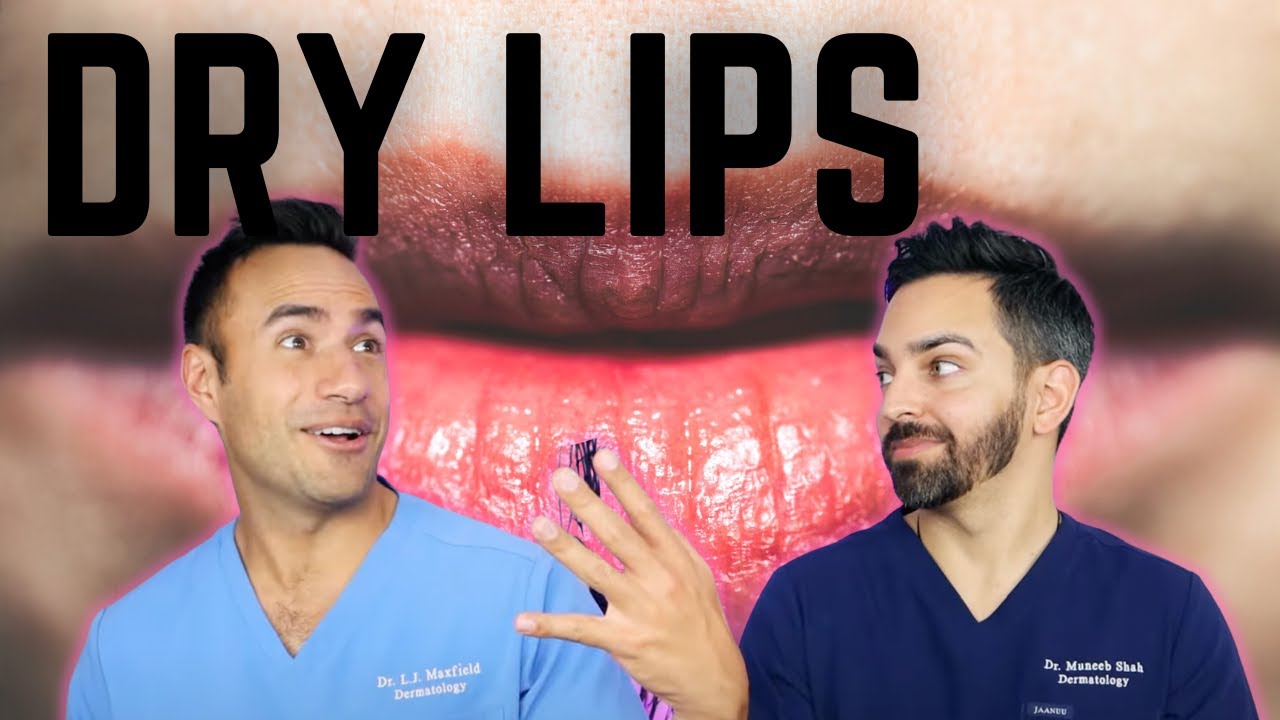
Most cracked lips heal in 2 to 3 weeks of consistent care, according to the AAD. The job in that window is keeping the cracks sealed and clean, and leaving them alone.
Wash your hands before applying balm. NHS guidance says never to share one either, since sharing spreads germs.
Go thick at night. Cosmetic chemist Kelly Dobos notes in Skin Inc. (2023) that thicker balms or a lip mask before bed can be better tolerated than daytime wear and allow faster recovery.
NHS says picking or biting flaky skin slows healing, so don’t. And if one balm stalls, NHS suggests trying a different one, since some people react to fragrances, dyes or other cosmetic ingredients. Swap it out instead of stacking a second product on top.
Healing stalls if a product stings or if picking keeps reopening the cracks. It also stalls when the cause was never dryness to begin with.
How do shaving and a beard change lip care?
The AAD’s men’s shaving tips cover the face, with no lip-specific step. The useful rules come from combining that advice with what dermatology says about lip products.
Shave after a shower, when skin is warm and moist (AAD). Let the foaming cream sit to soften the hair, shave with the grain, and finish with a moisturizer that carries sunscreen.
Around the lips, choose an alcohol-free aftershave balm or lotion, because WebMD’s men’s skin care slideshow advises skipping alcohol-based aftershaves, which can make shaving irritation worse. Apply the SPF lip balm at the same step as the sunscreen moisturizer so the lips don’t get skipped.
Fragrance is the bigger worry. North American Contact Dermatitis Group patch-test data (2001 to 2004, published in Dermatitis in 2008) ranked fragrance mix, Myroxylon pereirae (balsam of Peru) and nickel as the most common relevant allergens in patients whose only problem was on the lips.
Reuzel’s beard balm directions tell users to work the product through the beard, and the balm ships in scented versions (Wood & Spice, Clean & Fresh). Product worked in that close to the mouth can reach the upper lip.
Choose fragrance-free beard products and keep them off the lip line. The fragrance-free rule the AAD sets for lip products is a fair test for anything that sits next to them.
When do dry lips need a doctor?
See a doctor when dry lips do not improve inside the 2 to 3 week self-care window, or sooner for swelling, pain, blisters, bleeding or a rough patch that stays on the lower lip.
NHS guidance is sharper on one point. Lips that are hot, painful and swollen may be infected, and a GP can prescribe an antibiotic or antifungal cream.
| Condition | Where it shows | Clears on its own? |
|---|---|---|
| Chapped lips | Whole lip surface | Usually, within the 2 to 3 week window |
| Angular cheilitis | Mouth corners | No, the cause needs treating |
| Cold sore | Lip edge | Usually, within 1 to 2 weeks |
| Actinic cheilitis | Lower lip | Unlikely |
Cracks at the mouth corners
Cleveland Clinic (last updated June 2021) explains the mechanism: saliva pools in the corners, the skin dries and cracks, and bacteria or fungi can move into the cracks.
Ill-fitting dentures, drooling in sleep, oral thrush, misaligned teeth, eczema, skin allergies and wearing a face mask can all set it off. Diabetes, low iron, B vitamins or protein, rapid weight loss, smoking and stress raise the risk.
Treatment follows the cause: antifungal creams, antibiotics for bacterial infection and topical steroids to calm swelling and pain, with balm or petroleum jelly keeping the corners protected. The condition is usually not serious, but it can come back.
Blisters after a tingle
A tingle, burn or itch on the lip edge often arrives before the blisters of a cold sore.
Cold sores come from the herpes simplex virus, most often type 1, which stays dormant and reactivates. UC Davis Student Health and Counseling Services (page updated March 2026) lists sun, extreme cold and skin trauma at the site of earlier sores as triggers, and counts sunscreen lip balm as part of prevention.
Antivirals work best when started at the first symptom. Frequent or seemingly random recurrences are worth raising with a doctor, because prophylactic antivirals can cut the number of outbreaks.
A rough patch on the lower lip that will not clear
Early actinic cheilitis passes for chapped lips. In WebMD’s 2025 review, dermatologist Veena Vanchinathan describes the pattern as lips that stay rough for months no matter how much balm goes on.
The signs start with a sandpaper-like texture on the lower lip, white or red patches that persist, and a blurred or wrinkled border between lip and surrounding skin. Later stages bring scaling, ulceration, pain or bleeding.
Sources disagree on how often it turns into cancer. StatPearls (2023) puts progression to squamous cell carcinoma at 6 to 10% of cases, while WebMD (medically reviewed June 2025) gives 10 to 30%.
Neither range makes waiting safe. WebMD says actinic cheilitis is unlikely to resolve alone, and StatPearls recommends a biopsy for persistent suspicious lip lesions because many lesions judged precancerous on exam proved to be carcinoma under the microscope.
Roughness on the lower lip that won’t go away needs a dermatology appointment. That goes double for fair-skinned men with long outdoor exposure.
When the balm or toothpaste is the cause
Among patients in North American Contact Dermatitis Group testing (2001 to 2004) who had only lip involvement, 38.3% of the 196 were diagnosed with allergic contact cheilitis.
The trigger is often a product already in the bathroom. A published case series traced allergic contact dermatitis of the lips to peppermint oil in a lip balm, and a Contact Dermatitis report of two cases tied allergic contact cheilitis to tin (stannous fluoride) in toothpaste.
The NACDG authors conclude that patch testing identifies contact allergy in lip dermatitis. Ask for it when cheilitis is severe or returns after treatment.
Balm can’t treat an infection or an allergy, and it does nothing for a precancerous patch. Piling on more of it only delays the diagnosis.
Common Questions About Lip Care for Men
Do men really need lip balm?
Yes, and an SPF version matters most. FDA’s sunscreen guidance (updated September 2026) lists the lips among the frequently forgotten spots and tells people to use SPF lip balm there.
A plain balm still earns its place for dryness.
Can you get addicted to lip balm?
No. Dermatologist Melissa Piliang calls the idea that balm stops your lips making their own moisture a myth, according to Cleveland Clinic.
The reapplication cycle comes from irritating ingredients such as phenol or menthol, and salicylic acid too, which dry lips out. A non-irritating balm is safe at the several times a day the AAD recommends.
Can men use lip balm made for women?
Sure. Neither AAD nor NHS guidance sorts lip products by sex, and both judge them on ingredients.
NHS flags fragrances, dyes and cosmetic ingredients as the usual sensitivities, so read the list instead of the label.
Do honey and coconut oil work on dry lips?
Partly. Coconut oil is generally classed as an emollient and honey as a humectant, but neither appears on the AAD’s list of ingredients that help heal chapped lips.
Honey’s sweetness invites licking, and Healthline advises people with pollen or bee venom allergies to avoid it. White petroleum jelly, which the AAD does list, is the safer home option.
Can I put hydrocortisone on chapped lips?
Not as a first step. Steroid creams treat inflammatory causes such as angular cheilitis, so the cause needs confirming before you use one.
NHS says a pharmacist can advise on treatments for dry or sore lips.
The Short Version for Your Routine
A fragrance-free SPF balm for the day and white petroleum jelly for night and chapped lips will cover almost everyone. Anything beyond that is preference.
Order matters because the two problems differ in permanence. SPF balm comes first, since it prevents damage that stays. White petroleum jelly comes second, since it repairs damage that heals. Any balm that stings gets retired on sight.
Chapped lips resolve once the skin barrier is sealed, while actinic cheilitis is unlikely to clear without treatment. That asymmetry sets the order.
The cost is attention. An SPF balm protects only while it sits on the lips, so reapplying matters more than the brand.
This holds as of October 2026 and changes if the FDA moves its SPF 15 label floor or the AAD revises its SPF 30 guidance.

She started writing on the site after fielding the same questions from clients and friends often enough to just write the answers down: which red won't turn orange on a warm undertone, how to keep lipstick from feathering into fine lines, why a "12-hour" formula rarely survives dinner.
Every review on the site follows the same rule she uses with paying clients: wear it first, then decide if it's worth recommending.
- How to Make Eyeliner Last Longer Without Smudging - August 31, 2026
- How to Make Eyeshadow Last Longer All Day - August 29, 2026
- How to Find Your Undertone in 5 Easy Steps - August 27, 2026