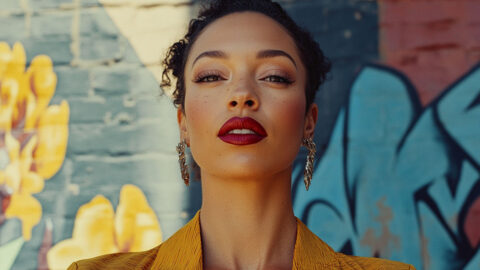
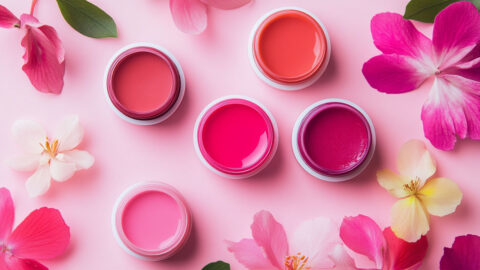
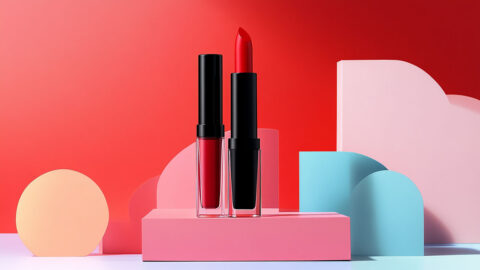
Editors call it frosty lipstick, or pearl lipstick, and the names are interchangeable. What you get is an icy, metallic-pearl sheen that matte, cream and satin formulas don’t produce, and it comes from mica-based pearl pigments that reflect light off the lips. The look defined 1990s and early 2000s makeup, then returned in 2025 and 2026.
The sheen is optical, not dyed. A thin titanium dioxide coat on mica reflects bluish white, and a thicker coat moves the reflection through yellow, magenta, purple, blue and green (Journal of the Society of Cosmetic Chemists, 1972). Coat thickness sets the pearl color, separate from whatever color pigments sit underneath.
What Is Frosted Lipstick?

Light-reflecting pearl pigments sit over the color and give the lips a pearly sheen instead of flat color. Editors say frosty or pearl lipsticks, and sometimes icy, but they all describe the same effect.
The sheen sits on top of the color and catches light. Coverage runs anywhere from a sheer wash to an opaque pastel, and the tint shifts with the shimmer color (QC Makeup Academy).
Frost is a finish rather than a formula. That’s why it turns up across the wider types of lipstick, in glosses, and as a topper (MAC markets its Haku shade, a 40th-anniversary bringback, as a frosted topper to layer over another lip color).
It’s also not glitter. Retailer Bluemercury’s frosted makeup guide builds the modern look on finely milled pearl and iridescent pigments, not chunky particles.
What Makes Lipstick Frosted?
The pearl comes from mica platelets, natural or synthetic, coated with metal oxides such as titanium dioxide or iron oxide. They reflect and refract light over the color pigments, and that’s the sheen.
Coatings chemists describe these pigments as plate-like mica flakes layered with thin oxide films (PCI Magazine). The optics work the same way on lips.
The thickness of the coat sets the pearl color. A thin titanium dioxide layer on mica reflects bluish white, a slightly thicker one yellowish white, and further thickness moves through yellow, magenta, purple, blue and green (Journal of the Society of Cosmetic Chemists, 1972). According to US patent 4,954,175, a titanium dioxide coat of 120 to 135 nm is where coated mica reflects blue.
Reading the ingredient list of a frosted lipstick
MAC’s Frost Lipstick is the clearest public example. Brands print one list for every shade, which makes lipstick ingredient lists tricky to read.
The reflective pigments are mica (CI 77019), synthetic fluorphlogopite and bismuth oxychloride (CI 77163). Titanium dioxide (CI 77891) handles coating and opacity, since it’s the white oxide that coats mica and builds the pearl. The actual color comes from iron oxides (CI 77491, 77492, 77499), carmine (CI 75470, the red colorant), and FD&C and D&C lakes.
Synthetic fluorphlogopite is a lab-made mica analog. The Cosmetic Ingredient Review Expert Panel judged it safe as used in cosmetics (International Journal of Toxicology, 2015). Bismuth oxychloride-mica powders give a soft, high-luster pearl that presses well, per US patent 8,475,846.
On MAC’s label, mica, titanium dioxide, iron oxides, bismuth oxychloride and carmine all sit after a +/- marker. Each shade holds only some of them.
Why a label cannot confirm the finish
Mica and titanium dioxide appear in plenty of lipsticks that aren’t frosted. An ingredient list narrows the field but never settles the finish.
Listings also disagree. Beauty Bay’s page for MAC Frost shows synthetic fluorphlogopite in the base, while MAC’s UAE page for shade CB 96 leaves it out, so check the exact shade page.
On the US side, the FDA lists mica among the color additives permitted in lipstick and exempts it from batch certification.
In the EU, titanium dioxide stays a listed colorant under entry 143 of Annex IV to Regulation (EC) No 1223/2009. Regulation (EU) 2021/850 added a reference to its restricted use under Annex III.
The SCCS opinion of 6 October 2020 (SCCS/1617/20) examined inhalation exposure. It states that it does not apply to pearlescent pigments, because titanium dioxide is only a minor part of those composites.
Frosted Lipstick Shades

Frosts run from icy pink, white and silver to warm gold and pale nude, and the pearl tint pulls the base color cooler or warmer.
- MAC Frost in CB 96 is a bright pinky-orange with pearl.
- MAC Frost in Angel reads as a soft pink beige with shimmer.
- Milani Color Statement Metallic Lipstick in Pink Frost is a coral-pink with a metallic finish.
- Chanel Rouge Coco Flash in Washed Beige is a cool, shimmery brown, per Russh.
Pearl color and base color are separate choices. Raw-material supplier Geotech describes a frosted beige formula that pairs a nude base with violet interference shimmer, so the shade shifts in light.
Opacity matters as much as hue. Lipstick Queen founder Poppy King told Refinery29 that current frosts are far sheerer than the chalky pastel-white versions of earlier decades, and Russh’s March 2026 edit calls today’s finish sheerer and less chalky.
Sheer frosts work alone or layered, which makes sheer lipstick formulas the easier starting point for anyone wary of the chalky 90s look.
How Does Frosted Lipstick Differ From Matte, Cream, Satin, Shimmer and Metallic Finishes?

It mostly comes down to how each finish handles light. Pearl platelets give a cool, scattered sheen, matte reflects almost none, and gloss reflects as a wet film.
| Finish | Light reflection | Texture and coverage | Best for |
|---|---|---|---|
| Frosted | Pearly, cool sheen | Smooth to chalky, sheer to opaque | Dimension, fuller-looking lips |
| Matte | Almost none | Flat, high pigment, drier feel | Bold, even color |
| Cream and satin | Low to soft glow | Smooth, medium coverage | Everyday comfort |
| Shimmer | Fine sparkle over any base | Depends on the base formula | Adding glints to a color |
| Metallic | High, foil-like | Dense, creamy | Statement looks |
| Gloss | High, wet-look | Sheer to moderate color, slick | Shine and volume |
Shimmer is the one people confuse with frost most often. It’s a particle effect that can sit in any base, while frost is the pearl-heavy version with a cooler cast. MAC describes its Frost formula as high-pearl and semi-lustrous, so the shine reads pearly, not wet.
Metallic is a separate optical thing. A pearlescent pigment changes color with viewing angle, while a metallic flake changes only in lightness (PCI Magazine). On shelves the labels blur anyway. Milani sells Pink Frost as a metallic lipstick built on light-reflecting pigments and mica (CI 77019), so a shade name tells you less than the finish line does. Dedicated metallic lipsticks run denser and more foil-like.
Gloss shines from a wet film over the lips. Frost shines from pigment platelets in the color itself.
The two can be combined. Dior’s Addict Stellar Gloss in Shimmer Nude is a frosted gloss, and the format difference itself is covered in this lip gloss vs lipstick comparison.
If you want light-catching dimension without wet shine, pick frost. Matte is for flat color, and cream or satin wins when comfort matters most.
Who Does Frosted Lipstick Suit, and When Does It Not Work?
Soft, conditioned lips carry frost best, and so do wearers who want dimension without wet shine. Dry, lined or flaking lips are a poor match, because pearl pigment catches the light on every ridge.
Makeup artist Laura Mercier makes the same call. Frosted lipsticks usually look poor on dry or wrinkled lips, and a light shimmer is the safer step down (Oprah.com).
On the plus side, frost adds dimension, and pressed into the center of the lips it reads as fuller (Terry Barber, MAC). Finer pearl particles give a smoother finish and more even application, according to makeup artist Philippe Chansel. It also layers over a cream lipstick as a topper.
Against that, it shows lip lines, flaking and dryness. Thick, dry formulas accentuate lines, says makeup artist Brett Freedman (Scary Mommy). Silver shimmer can look ashy on darker skin tones, one makeup artist told Refinery29, and the same piece calls frost harder to wear over coral, peach, pale pink and orange shades.
For lip lines, Freedman uses a clear lip line barrier pencil to hold color inside the lines.
Dry lips need prep more than any other finish asks for it. The routine for applying lipstick on dry lips matters a lot here, because pearl shows every flake.
Thin lips get a break. A frost concentrated at the center adds apparent volume, which pairs well with general guidance on applying lipstick on thin lips.
On darker skin, golden shimmer or a tone-on-tone frost is the easiest pick, according to that Refinery29 makeup artist.
Opinion splits on pale pink. The same artist finds frost hardest in pale pinks, yet a pale shimmering pink is the shade driving the current revival (NewBeauty).
Frost is a poor first choice for chapped lips and a good one for lips that are already smooth. When in doubt, start sheer.
How to Apply Frosted Lipstick
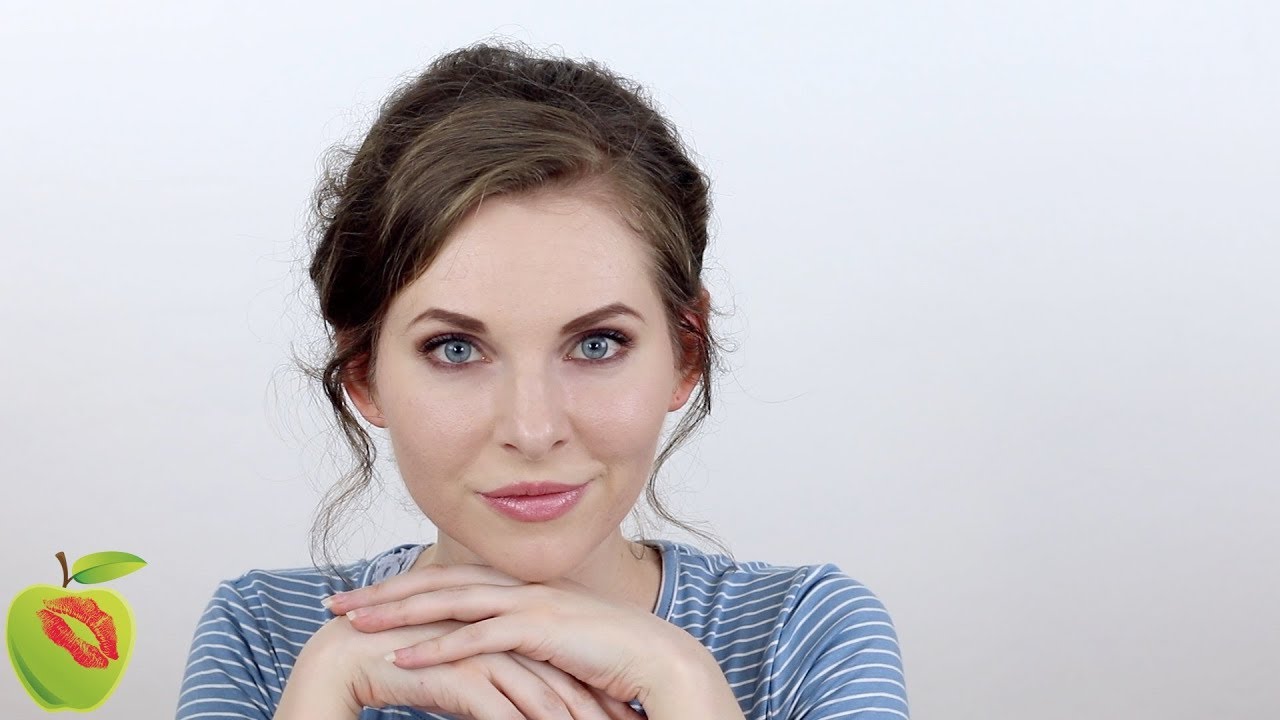
Thick pearl on unprepped lips highlights every flake, so prep is most of the job.
Start with soft, smooth lips, which can mean learning to exfoliate lips naturally first. QC Makeup Academy also advises choosing finer pearl and a creamy base, the two features that keep a frost from drying the lips out.
- Exfoliate flaking skin gently, then press on a balm until the lips feel soft.
- Line the lips with a pencil darker than the lipstick for 90s contrast, or a nude liner close to the natural lip tone.
- Swipe the frost on in one thin layer, from the bullet or with a brush.
- Add a second pass at the center for volume, or keep a sheer coat across the whole mouth (Barber).
- Blot the edges with a fingertip so the liner blends into the color, a technique from a Charlotte Tilbury lip tutorial.
The liner step is where most frosts go wrong, so it pays to learn how to apply lip liner cleanly before the pearl goes on.
Sources split on the pencil. Mega and NSSG recommend a darker pencil for the 90s contrast, while makeup artist Hannah Stephenson told Grazia to start with a nude liner close to the natural lip tone.
Dark gives you the retro look and nude suits daily wear. Keep the rest of the face quiet either way, as QC Makeup Academy suggests.
How to layer frost over or under another lipstick
Over a cream lipstick, frost adds metallic finish, shine and dimension, like a shimmer topcoat, says Lipstick Queen founder Poppy King. Under a non-shimmer lipstick or gloss it gives a subtler opalescent look (King). Under an opaque color it mutes the shimmer, which is the method QC Makeup Academy suggests for easing in.
Bare lips with a sheer shimmer on top are the lowest-commitment version of all.
How to create a frosted lip with nude lipstick and highlighter
NSSG’s method is simple. Apply a nude lipstick that isn’t matte, then dab a little highlighter on top. A cream or satin nude works, and a fingertip presses the highlighter onto the center of the lips.
Check the highlighter label for lip use. The FDA’s list of color additives permitted in cosmetics separates colors cleared for lipstick from those cleared only for external use.
How Did Frosted Lipstick Go From the 1990s to Today?
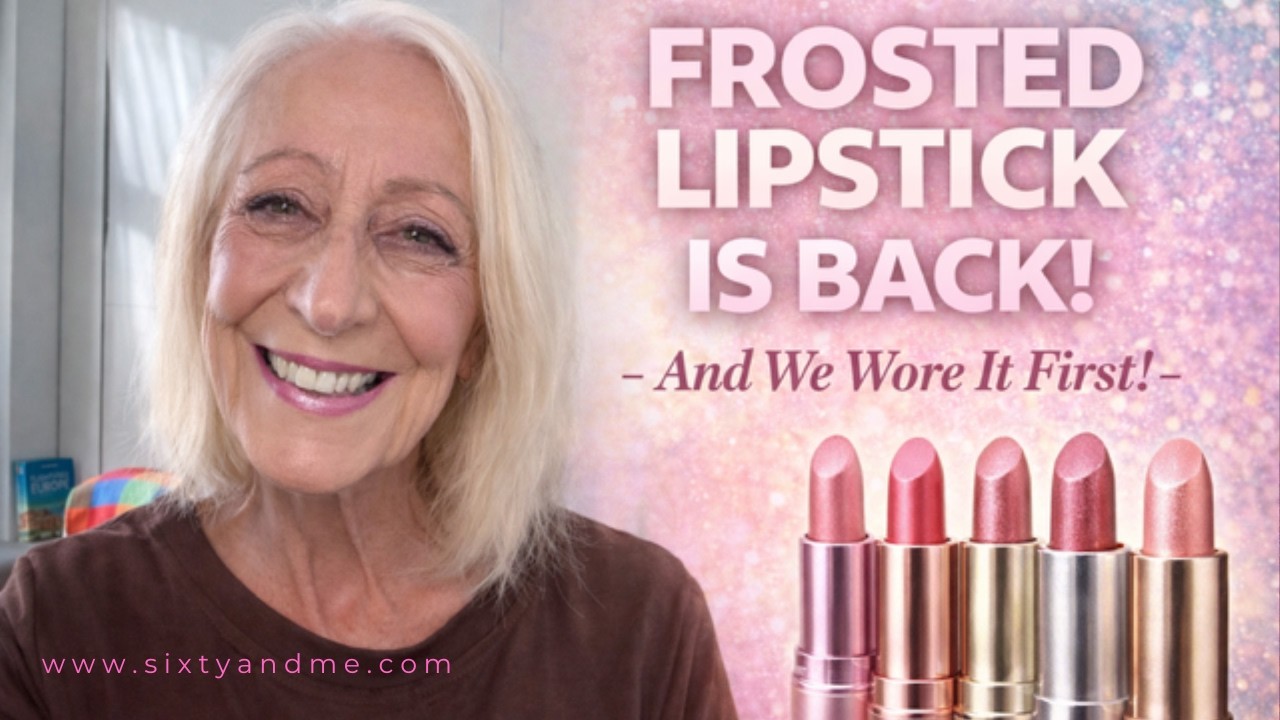
Frost peaked in the 1990s and early 2000s, then lost ground to matte through the 2010s. The return in 2025 and 2026 followed a pale shimmering pink from L’Oreal going viral on TikTok.
- In the 1990s it was a red-carpet staple, and QC Makeup Academy cites Alicia Silverstone among the names.
- Pamela Anderson, Britney Spears, Paris Hilton and Kate Moss wore the look in the early 2000s, per NSSG.
- Kylie Jenner launched Lip Kit by Kylie in November 2015, a matte liquid lip color with a matching liner (AFP-Relaxnews).
- QC Makeup Academy flags a comeback in 2016, and Grazia sees the look growing through 2023 ahead of a 2024 surge.
- By 2025 and 2026, L’Oreal Colour Riche in Ballerina Shoes was selling out after a viral TikTok review (NewBeauty).
Taken together, those sources show frost resurfacing at least three times in about ten years. “Comeback” overstates how far it ever left.
Sources also date the golden age differently. Terry Barber, MAC’s creative director of makeup artistry, calls it a 90s makeup craze and QC Makeup Academy agrees, while Bustle ties the look to the early 2000s. The peak spans both decades.
Liner contrast defined the 90s version. Barber describes frosted lips contoured with generous lip liner, a staple of 90s makeup looks.
Earlier decades are harder to pin down. Charlotte Tilbury’s makeup history guide describes sherbet pinks, peaches and powdery nudes on 1960s makeup looks, a precedent for pale lips but not a documented frost finish. A few explainers push the look back to the 1980s without dated sources, so this article starts at the 1990s.
Revlon’s Super Lustrous in Iced Amethyst was the gateway shade for a Bustle writer rediscovering the look, who tied the frosted lip to the early 2000s.
Formulas changed on the way back. Chansel says finer pearl particles give a smoother finish and more even application, which answers the chalky reputation the look earned.
Not everyone is sold. Hypebae reports that some TikTok users see the Ballerina Shoes shade as a fleeting microtrend, while others swear by it.
Frosted Lipstick FAQ
Is the mica in frosted lipstick ethically sourced?
Not always. India is one of the world’s largest sources of mica, and together with Madagascar it accounts for nearly half of global mica exports (Responsible Mica Initiative). Investigations published in 2016 by the Thomson Reuters Foundation and by SOMO and Terre des Hommes documented child labor in the mines of Bihar and Jharkhand.
The Responsible Mica Initiative, formed in January 2017, lists more than 110 members on its website. Synthetic fluorphlogopite is the lab-made alternative.
Is frosted lipstick vegan?
Not by default. Some shades use carmine (CI 75470), a red colorant derived from cochineal insects, and several frost formulas also list beeswax (Cera Alba).
The FDA requires cosmetics containing carmine to declare it by name, so the label settles the question shade by shade.
Which frosted lipsticks do beauty editors recommend?
Grazia names Illamasqua’s Treasure for frosted sheen and Suqqu’s marble lipstick for a sheerer, satin-like option. Russh picks YSL’s Loveshine in Stardust Love for an iridescent shimmer that stays frosty without feeling rich.
Start with the sheerest of the three.
Is there a budget alternative to a luxury frosted lipstick?
Yes. NSSG points to Revlon’s Super Lustrous in Skyline Pink, a drugstore pick it compares to a pale iridescent MAC shade.
Testing a Frosted Lipstick Before You Buy
A frosted lipstick suits you when it holds up on bare lips, in two kinds of light, at its sheerest. Test in that order, because an early failure rules out a shade no later step can rescue.
Swatch on bare lips, not the wrist. Look at it in daylight and again indoors. Then try a sheer coat before you go opaque.
Pearl shifts with viewing angle and the shimmer shade alters the lip tint, so one swatch under shop lighting proves little.
The sheer route carries a trade-off. It swaps the high-contrast impact of the 90s version for a quieter veil.
Recheck the pack at purchase, because MAC’s own product pages state that ingredient lists can change over time (verified October 2026).
Once a frost passes the test, picking a lipstick color that suits your skin tone is the natural next step.

She started writing on the site after fielding the same questions from clients and friends often enough to just write the answers down: which red won't turn orange on a warm undertone, how to keep lipstick from feathering into fine lines, why a "12-hour" formula rarely survives dinner.
Every review on the site follows the same rule she uses with paying clients: wear it first, then decide if it's worth recommending.
- How to Make Eyeliner Last Longer Without Smudging - August 31, 2026
- How to Make Eyeshadow Last Longer All Day - August 29, 2026
- How to Find Your Undertone in 5 Easy Steps - August 27, 2026