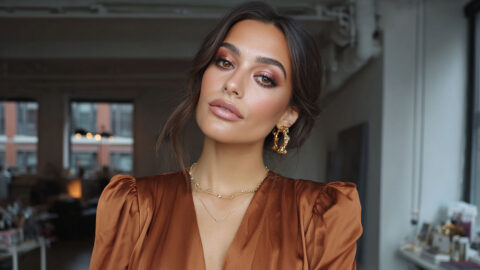
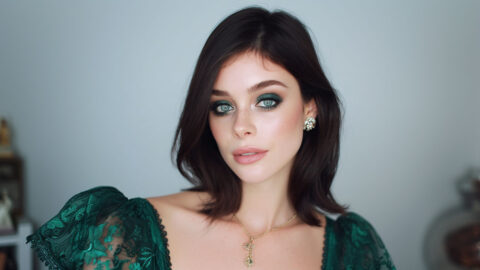
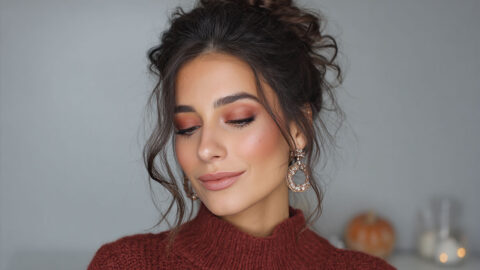
Ask anyone to picture an 80s face and the answer is roughly the same. Electric blue or teal shadow, pink blush parked high near the temples, thick brows, and lips that are either frosted or very bright. The style grew out of music and television, from London’s Blitz Club to the ABC series Dynasty, and new wave, new romantic, punk, glam rock and power makeup each pulled it in a different direction.
One US rule shapes any modern recreation. Under FDA regulation 21 CFR 70.5(a), a color additive cannot be used in the eye area unless its listing specifically permits that use.
Fluorescent neon pigments fall outside that permission, so their shades belong on cheeks and lips, not near the lashes.
What Makes a Makeup Look Read as 80s?

Intensity does most of the work, and placement does the rest. Every feature got its own bright color at the same time, which means the face has no single focal point.
Period roundups keep landing on the same palette. Eyes ran electric blue, teal, purple and neon pink, with colored liner and mascara on top, while cheeks went hot pink, red or berry. Lips could be fuchsia, plum, bubblegum pink or red.
All of it sat on an even, blank-canvas base. Charlotte Tilbury’s 80s tutorial builds medium-coverage foundation under a light veil of pressed powder, and Frankie magazine (2017) calls for a matte finish foundation.
Not every 80s face was neon, though. Woman & Home points to natural skin with a dark red lip, bushy brows and a soft brown smoky eye as looks from the decade that still work.
The decade before had its own loud moments, so the break was about intensity and placement, not a jump from bare to painted.
L’Oreal Paris’s year-by-year look-back lists pastel purple and blue eyeshadow returning in 1975 and bold colored lips and eyeliner by 1976. Lancome describes the 70s as a shimmer decade, with pearl added to blushers and eyeshadows.
So what changed in the 80s was shade strength and how high color sat on the face. For comparison, the makeup styles of the 70s ran on pastels and shimmer.
How Was Eye Makeup Done in the 80s?

Shadow ran from the lash line up to the brow in two or three shades, with the crease blown out toward the temples.
Cyndi Lauper took blue shadow right up to the brow and sometimes past it toward the hairline, according to Yours magazine.
Charlotte Tilbury’s 2024 recreation builds the eye in layers. A punchy pink cream base goes down first, then a deep purple blended up and out toward the temples for the crease. A darker shade traces the upper and lower lashes for depth. Gold sweeps across the lid, with sheer shimmer on the brow bone and inner corners, and colored liner sits close to the lashes before extra coats of mascara, black or colored.
Her liner step uses a violet kohl eyeliner run as close to the lash line as possible. You end up with a thin line of color instead of a heavy wing.
The soft version exists too. Woman & Home names the brown smoky eye with defined lower lashes as the easiest 80s eye to wear now.
Blending the crease upward and outward follows standard technique, so the basics of applying eyeshadow carry over.
Where Did 80s Blush Go on the Face?

Up. Color started at the apples of the cheeks and swept up and back to the temples, a placement called draping.
Charlotte Tilbury’s 80s history describes the color running into the edges of the eyeshadow and, on some faces, the hairline.
The brush goes through the hollows of the cheeks and onto the temples, not just the apples. A small amount of liquid contour underneath keeps the shape defined.
The shades are the ones from the palette above, and the same history says you could never apply too much.
Layering matters. Liquid or cream product went on first, with powder blush over it. Her tutorial dots a pink glow wand on the apples, then drapes a shimmering pink powder across the cheek.
For the cream layer, the usual steps for applying cream blush still work.
The purpose was lift. Everything in the decade was meant to look raised and dynamic, blush most of all.
Draping this high needs adjusting to the face. A guide to blush placement by face shape shows where to start.
Which Lip Colors and Brow Shapes Defined the Decade?

Lip color covered a lot of ground, from bright pink and fuchsia to plum and red, in matte, satin, glossy or frosted finishes. Brows went thick, brushed up and close to natural.
The brow shift has a date. L’Oreal Paris puts it at 1984, when full, bold brows on fashion supermodels led women to stop plucking.
L’Oreal Paris lists hot pink and fuchsia, the more pigmented the better, plus classic red. Charlotte Tilbury prefers fuchsia in a satin finish, overlined with a purple-berry liner, and Lancome calls the glossy, high-impact version of the decade’s lip “power lips.”
Pearly frosted lipstick finishes ran through the 70s, 80s and much of the 90s, according to The Zoe Report. Baby pink and brown-toned shades were the most popular.
On brows, Nylon points to Brooke Shields and Madonna as the references, thick and slightly unruly. Charlotte Tilbury defines the tail with light, hair-like strokes and brushes the inner brow up for volume.
Cyndi Lauper paired her blue shadow with big false lashes and a bright red lip, per Yours magazine. For a bolder contrast now, this list of lip colors that work with blue eyeshadow narrows the shades.
Which Brands and Products Made the Looks Possible?
Where you bought color decided what you got. Drugstore shelves and department store counters stocked different parts of the 80s palette, and direct-selling consultants covered the rest.
| Brand | Where it sold | Known for |
|---|---|---|
| Revlon | Department stores and drugstores | Lipstick and nail color |
| CoverGirl | Mass market, drugstore shelves | Face and eye color, ads with named models |
| Max Factor | Retail, from a Hollywood film-makeup base | Eye shadow and brow pencils sold outside the film industry |
| MAC Cosmetics | Department store counters staffed by makeup artists | High-pigment color, matte red lipstick |
| Clinique | Department stores | Allergy-tested, dermatologist-guided line |
| Mary Kay and Avon | Direct selling through consultants | Product demonstrations at home |
Max Factor was the old name in the group. Its heritage page dates public sales of eye shadow and eyebrow pencils to 1916.
MAC launched in March 1984 from a counter in a Toronto department store, staffed by professional makeup artists, which the brand calls an industry first.
Its own history says other major makeup brands of the time were mostly skincare companies, while MAC set itself up as a color authority. An intense matte red lipstick became an early favorite after a photo shoot with the then fast-rising Madonna.
Direct selling had its own turn. Mary Kay’s consultant force was cut in half, to 100,000, between 1983 and 1985, according to the International Directory of Company Histories.
Recreation tutorials from Charlotte Tilbury and Frankie end up with the same shopping list. Cream and powder eyeshadow, colored liner, mascara, a brow pencil, powder blush and a bright lipstick.
Chasing the exact original shade is rarely worth the effort. Matching the finish and the pigment level does more.
What Were the Main 80s Makeup Sub-Styles?
New wave, new romantic, punk, glam rock and power makeup account for most of the decade’s faces. Each came from a different scene, which is why one tutorial misses most of them.
The sub-styles side by side

| Sub-style | Signature elements | Reference figures | Best for |
|---|---|---|---|
| New wave | Severe liner, wild shadow colors and shapes | Grace Jones, Annabella Lwin, Steve Strange | Club nights, editorial shoots |
| New romantic | Ornate, theatrical makeup for all genders | Boy George, Steve Strange, Duran Duran | Costume events, stage |
| Punk | Heavy black liner, angular brows, dark or deep red lips | Siouxsie Sioux | Halloween, alternative nights |
| Glam rock and metal | Lipstick, eyeliner and mascara as standard, teased hair | Poison, Motley Crue | Costume parties, concert nights |
| Power makeup | Strong lips and winged liner under shoulder-padded dressing | Joan Collins as Alexis on Dynasty | Evening events, photo shoots |
New wave and new romantic share the same London club circuit. Falmouth Anchor (2019) describes the New Romantics as people who celebrated frills and ostentatious makeup, while i-D describes new wave as the whimsy of the Blitz Kids married to the chaos of punk.
Sources file Siouxsie Sioux under different labels, with Fred Perry calling her a punk icon and i-D putting her under new wave. Her cat-eye and dark lip fed straight into later goth makeup looks, so pick the label by which version you copy.
How MTV, Dynasty and pop stars spread the looks
The route ran from London clubs to television screens.
Duran Duran, Spandau Ballet and Culture Club all got their start at Steve Strange’s London club, the Blitz, according to the Irish Times (2015). MTV went on air on August 1, 1981, per EBSCO Research Starters.
In MTV’s first years, 1981 to 1984, bands from the UK, Ireland and Australia sat in heavy rotation, partly because those bands were the keenest to make videos (EBSCO Research Starters). Video let American teens see what those artists looked like and copy it.
No single source states the chain outright, but the dates line up. The acts born at the Blitz were British, and British acts were the group MTV leaned on most in its early years.
Dynasty carried the power side. It premiered on ABC on January 12, 1981 and ranked first among TV programs in the 1984-85 season, according to Lifetime.
Alexis Carrington’s structured suits with oversized shoulder pads set the frame (Zoomer, 2021). Lancome’s decade-by-decade lip history calls the era one of big hair, power dressing and power lips.
Which 80s Makeup Look Fits Your Occasion?
Costume parties and Halloween call for the full period look. A night out can handle one loud feature, and daytime works with a single accent.
Period-accurate
Eye, lip and cheek colors worn together read as 80s at a glance, which is how makeup artist Sam Visser builds it (Harper’s Bazaar Singapore). It’s the right pick for costume parties and themed nights.
The catch is that very frosty shadows can look dated, makeup artist Rachel Goodwin told The New York Times in 2014 (as reported by the Star Tribune).
Modernized

Toned-down color makes the look wearable (L’Oreal Paris). Easy entry points include colored mascara, deep burgundy mascara for a subtle version, or one orange shadow across the lid (Woman & Home).
What you give up is the all-features effect that signals the era.
Costume level

This gets you the strongest visual effect for a single night. Face-paint and novelty colors need the same FDA color-additive check as any cosmetic, though, and some are not cleared near the eyes.
The artists disagree on how much to wear. Visser puts bold eye, lip and cheek colors on together, L’Oreal Paris advises a neutral lip under bold shadow or blush, and Goodwin says to pick one color to focus on.
Both positions hold up. Coordinated color is the period-accurate answer, and the single-focus version is what survives daylight.
If you keep one bright lip over neutral eyes, this guide on how to wear bright lipstick covers the shade choice.
Daytime is the narrowest case. One accent, such as colored mascara, sits closer to everyday makeup looks than to a costume.
Shade depth against your complexion matters as much as the era. Makeup artist Deanna Paley told The Zoe Report that on fair complexions a light pink reads natural and deeper berry contrasts, while on deeper complexions a lighter pink contrasts and deeper tones look natural.
How to Do 80s Makeup Step by Step

Work from base to eyes to brows to lips, then finish with blush and a setting step.
Frankie magazine’s 2017 tutorial asks for tiny, small and medium eyeshadow brushes plus a blush brush, two or three bright shadows, one strong cheek color and a warm red lipstick. You also need a brow tool, and false lashes if you want them.
- Prep skin, then build an even base with foundation, concealer and a light veil of powder.
- Sweep the first shadow from the inner corner up to the crease, or all the way to the brow for the full look. Stop halfway across the lid to leave room for the second color.
- Fill the other half of the lid with the second shadow and blend toward the outer corner.
- Deepen the crease and trace the upper and lower lash lines with a darker shade.
- Run colored liner close to the lashes.
- Highlight the brow bone and inner corners.
- Coat the lashes in mascara, with extra coats if the look calls for it.
- Fill the brows and brush the inner hairs up.
- Line and fill the lips, then drape blush from the cheek hollows to the temples.
Artists disagree on the starting point. Charlotte Tilbury builds the base before the eyes, while makeup artist Mai Quynh did the eyes first on a dark-shadow punk look so fallout would not mark the foundation or blush, as she told The Hollywood Reporter in 2013.
The rule that follows: with loose or heavily pigmented powder shadows, do the eyes first. With cream shadows, start with the base.
False lashes are optional, and the technique is covered in this guide to applying false eyelashes.
Setting spray goes on last, after blush. The steps for applying setting spray are the same as for any modern look.
Where Do 80s Makeup Recreations Go Wrong?
The biggest trouble comes from neon pigments near the eye. Shades that vanish on the skin and products used or removed without a label check cause most of the rest.
Neon near the eyes
In the US, a color additive cannot be used in the eye area unless its regulation specifically permits that use, according to FDA’s color additives fact sheet (21 CFR 70.5(a)).
The numbers are blunt. 8 fluorescent colors are approved for cosmetics, and none is permitted near the eyes (reported by Truth in Advertising and Cosmetics & Toiletries). FDA approved luminescent zinc sulfide for limited cosmetic use in August 2000, the only luminescent color approved, and not for near the eyes (FDA Novelty Makeup page). On the product side, 4 of 10 shades in Urban Decay’s Electric Pressed Pigment Palette carried a US warning against use in the immediate eye area (Musings of a Muse, March 2014).
Urban Decay said the restriction applies only in the US, and that the same shades are approved around the eyes in every other country where it sells. That is a conflict between jurisdictions, not a finding that the pigments harm eyes.
Courts have treated the gap the same way. Plaintiffs in a proposed class action in California’s Central District said Huda Beauty sold Neon Obsessions palettes as eyeshadow despite additives not approved for the eye area, and a settlement was preliminarily approved (HBW Insight).
In a separate ColourPop suit, a district judge noted FDA had not approved the additives for eye use but had not found them likely to cause injuries, and the case went to the Ninth Circuit (HBW Insight).
In practice, put neon on cheeks and lips, and check the ingredient list against FDA’s Summary of Color Additives before it goes near the lashes.
Kohl labels
FDA keeps an import alert on cosmetics that contain kohl, which it treats as an unsafe color additive. Some makers use the word only to name a shade, so read the ingredient declaration (Cosmetics & Toiletries, reporting FDA).
Weak payoff on deeper skin

Bright shadows look washed out more often on darker skin tones, according to Birchbox (2015). An eyeshadow primer is the usual first fix.
When primer is not enough, Birchbox contributor Deepica Mutyala preps the lid with a creamy white eyeshadow stick. It neutralizes the lid color and gives even dim shadows a bright base.
Removal and testing
Remove the color the way the label says, as FDA advises for novelty makeup. For eye products, the steps for removing eye makeup apply.
FDA and CDC both advise testing a new product on a small patch of skin first to catch allergic reactions (Skin Inc.).
Common Questions About 80s Makeup Looks
What is the easiest 80s makeup look for a beginner?
Pick one accent and keep the rest of the face neutral. Colored mascara is one of the easiest entry points, according to makeup artist Dana Arcidy in Woman & Home.
A soft brown smoky eye with defined lower lashes is another simple option.
Did men wear 80s makeup?
Yes. New Romanticism embraced makeup for all genders (Falmouth Anchor, 2019), and Prince wore eyeliner in his 1999 video (Complex).
Glam metal bands also treated lipstick, eyeliner and mascara as standard.
What hair goes with 80s makeup?
Big, teased hair is the standard pairing. Charlotte Tilbury’s 80s history ties the makeup to big hair, and glam metal bands combined heavy makeup with teased hair.
What was the 80s beauty mark?
Artists drew on an artificial mole as a signature detail. Yours magazine lists a beauty spot as part of Madonna’s look, and Prince placed his on the central left cheekbone.
What replaced 80s makeup in the 1990s?
Quieter color and thin brows. Brows turned thin and over-tweezed (Luxe Beat Magazine) and neutral eyeshadows pushed out frosty blue (L’Oreal Paris), while clear gloss got layered over every lipstick shade (Lancome).
Where to Start with 80s Makeup Looks
Start with cheeks and lips, then add eye color last. Blush and bright lipstick carry the decade’s signal and face no eye-area approval question.
That means draped blush in pink, red or berry, a fuchsia, plum or red lip, and eye color only after you’ve checked the ingredient list.
The order puts the cheapest mistakes first. A missed lipstick shade costs one swap, and the eye step comes last because it has the most rules to check.
There is a trade-off. Until the eyes carry color, the face reads as a modern take on the decade, and costume or photo-accurate recreations need all three steps.
Choosing the blush formula is the first purchase, and the guide to types of blush narrows it.

She started writing on the site after fielding the same questions from clients and friends often enough to just write the answers down: which red won't turn orange on a warm undertone, how to keep lipstick from feathering into fine lines, why a "12-hour" formula rarely survives dinner.
Every review on the site follows the same rule she uses with paying clients: wear it first, then decide if it's worth recommending.
- How to Make Eyeliner Last Longer Without Smudging - August 31, 2026
- How to Make Eyeshadow Last Longer All Day - August 29, 2026
- How to Find Your Undertone in 5 Easy Steps - August 27, 2026