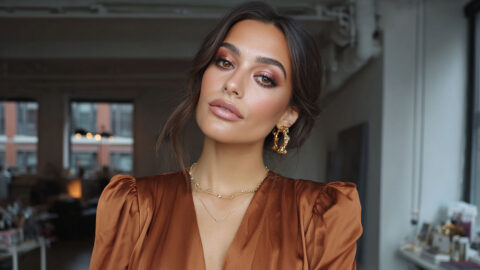
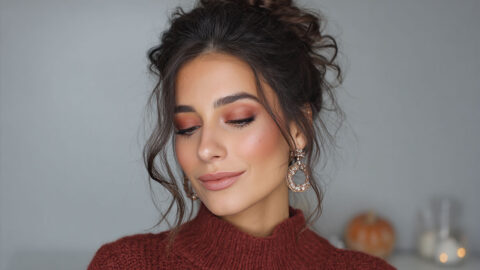
Glitter belongs on your face. Not just at festivals or on New Year’s Eve, but any time you want your eye makeup to actually do something.
Glitter makeup looks have expanded well beyond chunky loose glitter and craft store sparkle. Fine iridescent pigment, pressed glitter eyeshadow, holographic liner, face gems, body glitter gel. The category is broader than most people realize.
This guide covers everything from cosmetic-grade glitter basics and product selection to step-by-step application, glitter eye looks by eye shape, shade recommendations by skin tone and eye color, current trends, and the mistakes that cause most glitter looks to fall apart by midnight.
What Is Glitter Makeup

Glitter makeup uses light-reflective particles applied to the face, eyes, or body to create a sparkling effect. It sits in its own category, separate from shimmer, metallic, and duochrome finishes, each of which behaves differently on skin.
The cosmetic glitter market was valued at approximately USD 1.1 billion in 2024 and is projected to reach USD 1.9 billion by 2033, growing at a 7.3% CAGR (Verified Market Reports). That growth tracks directly with the rise of bold, expressive beauty across social platforms.
Glitter vs. Shimmer vs. Metallic vs. Duochrome
These four finishes get mixed up constantly. They are not the same thing.
| Finish | Particle Type | Effect on Skin | Best Use |
|---|---|---|---|
| Glitter | Large, visible flakes | High sparkle, dimensional, reflective | Lids, body accents, editorial looks |
| Shimmer | Fine micro-particles | Soft glow that blends into skin | Everyday eye looks, subtle highlighting |
| Metallic | Dense fine pigment | Foil-like, mirror finish | Cut creases, graphic liner, bold lids |
| Duochrome | Light-shifting pigment | Changes color depending on angle/light | Artistic eye looks, statement lids |
Particle Size and What It Changes
Fine glitter (around .008 inches) sits closer to a shimmer finish. It blends easily and suits everyday glitter eye makeup looks without looking overly dramatic.
Chunky glitter uses larger flakes, typically .040 hex size and above. These are the particles you see in festival glitter looks and editorial shots. They catch light at a distance and create a much more theatrical result.
Particle size also affects fallout. Larger flakes travel further during application, which is why having a cleanup plan before you start saves a lot of cleanup after.
Glitter Formulations
Loose glitter pigment gives the most intense payoff but requires a glitter adhesive underneath to stay put.
Pressed glitter eyeshadow is easier to work with and delivers more control, though the finish is slightly less intense than loose.
Glitter gel and glitter liner come pre-mixed with a binding formula, making them beginner-friendly. The Stila Glitter and Glow liquid eyeshadow and the NYX Glitter Goals Liquid Liner are two widely used examples.
Glitter Makeup Products and Tools

The products you choose matter as much as the technique. Using the wrong adhesive or applicator is the fastest way to end up with glitter fallout across your entire face halfway through the night.
Festival and special event applications drive 35% of seasonal demand spikes in the cosmetic glitter category, with eye makeup applications showing a 6.8% annual growth rate (Data Horizzon Research, 2024).
Glitter Adhesives
Dedicated glitter glue is the cleanest option. NYX Professional Makeup Glitter Primer and Mehron Mixing Liquid both work well under loose cosmetic glitter.
Duo Eyelash Adhesive (the clear version) is a widely trusted workaround for chunky glitter and face gems. It holds well and dries clear, which means placement errors don’t show through.
Skip craft glue entirely. Even formulas marked non-toxic are not designed for eye area use and can cause irritation or worse.
Pressed vs. Loose Glitter
Pressed glitter eyeshadow palettes from brands like Urban Decay and Pat McGrath Labs are worth keeping in rotation. They give you control and minimal fallout.
Loose glitter pigment delivers a more intense, custom finish. But it needs to be paired with primer and applied with a flat, dense brush rather than a fluffy blending brush. A fluffy brush scatters particles. A stiff flat brush packs them in.
Brushes and Applicators
Most professionals reach for one of three options:
- Silicone brush: picks up loose glitter cleanly without absorbing product
- Flat shader brush: good for pressed glitter and gel formulas
- Fingertip: actually one of the best applicators for loose glitter, since body heat helps the adhesive grip
A damp flat brush also works. The moisture acts as a temporary binder and reduces fallout during packing.
Managing Fallout
Do your glitter eye makeup before foundation. Any fallout lands on bare skin and wipes away cleanly. If you do foundation first, you will be picking glitter particles out of your base for the next 20 minutes.
A folded piece of tape pressed lightly under the eye lifts stray particles without disturbing anything. This is a standard on-set trick that translates well to everyday application.
Glitter Eye Looks

The eye is where most glitter makeup happens. It is also the zone with the most variation, from a subtle inner corner highlight to a full-lid chunky glitter look.
Learning to apply glitter eyeshadow cleanly takes a few tries, but the technique becomes second nature fast once you understand how adhesion actually works.
Cut Crease with Glitter Lid
One of the most structured glitter looks you can do. The cut crease creates a sharp line between the crease shadow and the lid, then the glitter fills that lower lid space.
Use concealer on a flat brush to carve out the lid area before packing glitter. This gives you a clean edge and a bright base that makes the glitter color pop harder. Metallic eyeshadow in a matching shade works as an underlay before adding loose glitter on top.
Full Glitter Lid
Best for: party looks, New Year’s Eve, formal evening events.
Prime the lid, apply a cream or metallic shadow as a base, then pack loose glitter or pressed glitter eyeshadow over the entire lid. Build in layers. Rushing this creates patchy coverage that shifts during the night.
Finish the outer corner and crease with a matte transition shade in a complementary color so the glitter has a frame and doesn’t bleed into undefined territory.
Glitter Liner Look
Easier than a full lid, and honestly one of the most wearable options for everyday glitter makeup. A graphic liner look using glitter gel along the upper lash line, or a floating liner above the crease, creates impact without requiring full coverage.
Donni Davy, head makeup artist on Euphoria and co-founder of Half Magic Beauty, has consistently used glitter liner as a standalone statement rather than just a supporting element. That influence shows in how widely this approach has been picked up in everyday makeup.
Glitter Inner Corner Highlight
The most beginner-friendly glitter eye technique. Press a small amount of fine glitter or iridescent pigment into the inner corner of the eye. It opens the eye, adds dimension, and works on top of almost any other eye look.
To learn how to do inner corner highlight correctly, the key is placement: right at the tear duct, not drifting inward or upward. A tiny flat brush or fingertip gives the most precision.
Smoked-Out Glitter Eye
A softer, blurred approach. Instead of sharp edges, the glitter sits within a diffused shadow base that has been blended outward at the edges. The result reads as glamorous rather than editorial.
ColourPop’s Super Shock Shadows work particularly well for this. The formula packs on intensely but blends at the edges without completely losing the glitter effect.
Glitter Eye Looks for Hooded Eyes
Hooded eyes lose lid space when the eyes are open, so placement needs to adjust. Keep glitter on the outer two-thirds of the lid rather than the inner corner, and bring it slightly above the natural crease so the sparkle stays visible.
For a full breakdown of makeup looks for hooded eyes, the general principle is: place your products where they will still show once the eye is open, not just where they look correct in the mirror with eyes half-closed.
Glitter Eye Looks for Monolids
Monolid placement tip: center of the lid gets the most exposure when eyes are open.
A full metallic or glitter lid works beautifully on monolids. The flat lid surface actually shows off fine glitter and shimmer eyeshadow more evenly than deep-set eye shapes. Cut crease techniques need to be adapted since there is no natural crease to work with, but a graphic glitter liner along the lash line or above the lid creates strong definition without requiring one.
Glitter Face and Body Looks

Glitter doesn’t stop at the eye. Face gems, glitter highlight on the cheekbones, and full body glitter gel for festivals are all part of how this category is actually used.
Among the top glitter makeup trends tracked for 2024, face gems and rhinestone accents were consistently listed alongside glitter lids as the most searched and recreated looks, driven largely by Coachella and concert culture.
Glitter Freckles and Face Gems
Two very different applications that both live in the face decoration category.
Glitter freckles use a fine brush or dotting tool with cosmetic glitter gel to place small individual dots across the nose and cheeks. They read as playful and work well for festival glitter looks and editorial shoots.
Face gems require a stronger adhesive than standard glitter glue. Duo Lash Adhesive or a dedicated gem adhesive keeps them placed for hours. Placement around the eye, along the cheekbone, or at the temple in patterns is the most common approach seen in concert and euphoria makeup looks.
Highlighted Cheekbone Glitter
Pressed glitter or a chunky iridescent glitter gel swept across the top of the cheekbone adds dimension to any look. The key is keeping it contained to the highest point of the cheekbone only.
Fenty Beauty’s Body Lava and similar illuminating products introduced a mainstream audience to wearing glitter-adjacent shimmer across the face and body. Charlotte Tilbury’s Legendary Muse face shimmer follows a similar concept but in a more concentrated pressed format.
Body Glitter for Festivals and Events
Body glitter requires a body-safe formula, not the same product you’d use on your face. Most dedicated body glitter gels use a gel or lotion base that adheres glitter to skin without requiring a separate adhesive.
Around 55% of cosmetic brands have integrated biodegradable glitter into their lines (Global Growth Insights, 2024), responding to growing demand for eco-friendly options. Bio Glitter and EcoStardust are two brands leading this shift in the body glitter space specifically.
Collarbones, shoulders, and the decolletage are the most common body placement zones for festival glitter looks. Apply after all clothing is on to avoid transfer.
Glitter Makeup Looks by Occasion

The same glitter technique that works for a music festival looks completely out of place at a professional event. Occasion shapes the choice of finish, particle size, and how much of the face the glitter actually covers.
Festival Glitter Looks
Full intensity. Chunky glitter, face gems, body glitter, iridescent makeup across the lid and cheekbone. Glitter makeup has been trending in festival culture since Euphoria first aired in 2019 and has not lost momentum since. Coachella 2024 made face gems and rhinestone liner as standard as any other festival beauty element.
The practical concern at festivals is longevity in heat. Use a dedicated setting spray over the full face after completing glitter placement. It locks particle adhesion and extends wear through the day.
New Year’s Eve and Holiday Party Looks
This is where a full glitter lid or a glitter cut crease with a bold lip gets its best setting. The combination of soft glam makeup looks as a base with glitter added to just the lid creates a party look that reads polished rather than costume.
Silver, gold, and holographic glitter shades all work here. Holographic and iridescent effects now account for 28% preference over traditional glitter in consumer surveys (Data Horizzon Research, 2024), which reflects how much the category has expanded beyond flat metallic finishes.
Everyday Wearable Glitter Makeup
Yes, glitter can be everyday. Fine glitter or a shimmer eyeshadow in a neutral tone, packed on the lid and paired with clean skin, reads as polished rather than dramatic.
The difference between editorial and everyday is particle size and coverage. Keep it to fine glitter, stay within the lid, and pair it with minimal other makeup. The inner corner highlight technique is the easiest daily option.
Bridal and Formal Glitter
Bridal glitter: subtle. Fine iridescent pigment or pressed glitter in champagne or gold, applied to the inner corner or lower lashline only. Photographs well without overwhelming the face.
Formal evening: more room to go bold. A full glitter lid with a nude or barely-there lip is the standard formula. It focuses all the attention on the eyes without competing elements.
For complete wedding makeup looks inspiration and for prom makeup looks that incorporate sparkle, particle size and longevity are the two factors that matter most in formal settings.
Editorial and Runway Glitter
No limits. Pat McGrath Labs built a significant part of its identity on extreme glitter and iridescent makeup in runway and editorial contexts. Chunky glitter covering the full eye socket, glitter blush, glitter lip, layered holographic finishes. These looks exist to push what the face can hold.
For anyone interested in editorial makeup looks as creative practice rather than wearable makeup, glitter is one of the most accessible entry points since it transforms even a basic eye look into something photographic.
Glitter Makeup by Skin Tone

Glitter reflects whatever light hits it, which means the base color of the glitter interacts directly with skin tone. Some shades disappear. Others pop. Knowing which is which saves a lot of second-guessing at the makeup counter.
Fair Skin
Best glitter shades: silver, white, pastel pink, light holographic, baby blue.
Warm gold on very fair skin can sometimes read as muddy rather than glowing, particularly on cool undertones. Silver and icy shades create stronger contrast and more visible sparkle. Pastel glitters in lavender or mint also work well since they show up clearly without overpowering fair skin.
For a complete picture of lipstick colors for fair skin to pair with glitter eye looks, cool-toned nudes and light pinks complement silver and holographic glitter best.
Medium Skin Tones
| Glitter Shade | Why It Works | Best Look Type |
|---|---|---|
| Gold | Warm contrast that enhances most skin tones | Full lid, cut crease |
| Bronze | Adds depth and warmth to eye looks | Smoked-out glitter eye |
| Copper | Creates dimension without looking flat | Inner corner highlight, glitter liner |
| Champagne | Soft, neutral sparkle for subtle glow | Everyday wear, bridal looks |
Deep Skin Tones
Jewel tones, chunky gold, and holographic glitter show up most powerfully on deeper skin. Colors that tend to disappear on fair skin, rich emerald, sapphire, deep plum, become their most intense on dark skin.
Chunky gold glitter on deep skin in full-lid application is genuinely one of the more striking glitter eye looks across any skin tone. The contrast between the gold flakes and the skin reads dramatically well in both natural and artificial light.
For lipstick colors for dark skin that pair well with bold glitter eye looks, deep berries, warm reds, and nude-brown shades keep the focus balanced between the eyes and lips.
Undertone Matters Too
Warm undertones (yellow, golden, peachy) pair best with gold, copper, and bronze glitters. Cool undertones (pink, blue-red, ashy) work better with silver, white, icy holographic, and jewel-toned glitters.
Neutral undertones can work across both categories, which is the most flexible starting point for experimenting with iridescent makeup and duochrome eyeshadow finishes.
How to Apply Glitter Makeup Step by Step
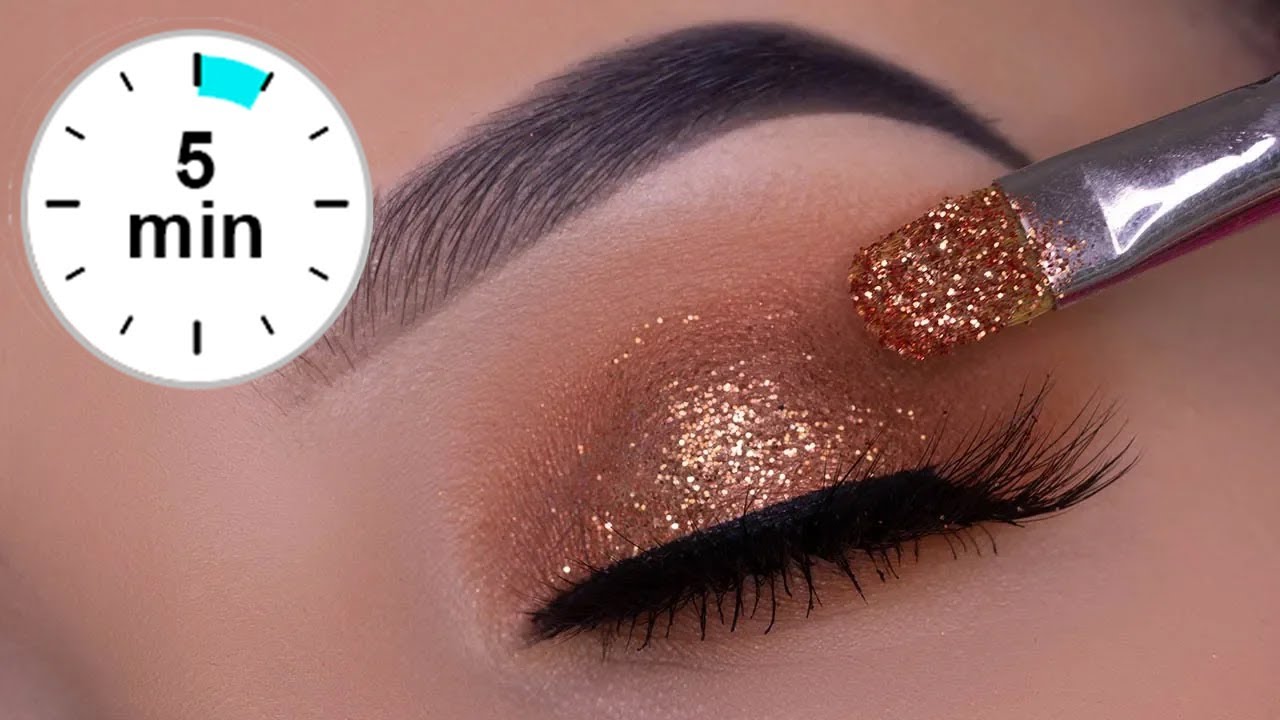
Most glitter application problems come down to two things: wrong order of operations, and skipping adhesive. Fix those two, and everything else falls into place.
Do glitter before foundation. Any fallout lands on bare skin and lifts off cleanly with tape or a cotton swab. Do it after, and you’re pulling glitter out of your base for the next ten minutes.
Priming the Area
Step one is always primer. A tacky eyeshadow primer like Anastasia Beverly Hills Primer Potion gives you roughly 60 seconds of working time per section, which is enough to place and press glitter without rushing.
Apply primer only where the glitter will go. Extending it wider increases the risk of particles migrating onto surrounding skin later.
Applying Glitter Glue or Adhesive
Primer alone is not enough for loose glitter pigment. You need a dedicated adhesive layer on top.
- NYX Professional Makeup Glitter Primer works cleanly under loose cosmetic glitter
- Mehron Mixing Liquid binds glitter into a workable paste before applying
- Duo Lash Adhesive (clear version) is a reliable option for chunky glitter and face gems
Apply glitter glue in thin, even layers. Thick application causes sliding and bunching once the glitter is packed on.
Packing vs. Pressing Technique
Press. Do not swipe.
Swiping drags particles across the adhesive and creates uneven coverage. Pressing a flat brush or fingertip straight down and lifting straight up keeps the glitter exactly where you placed it. Build intensity by adding layers, letting each one dry for about 30 seconds before the next.
A damp brush picks up loose glitter more efficiently than a dry one. The moisture acts as a temporary binder that reduces fallout during application.
How to Apply Loose Glitter Without Mess
The tissue trick: place a folded tissue under the eye before you start. It catches fallout before it hits your base makeup.
Work in small sections. Try to cover the full lid in one go and you’ll have patchy results and particles everywhere. Apply glitter adhesive to one small zone, press glitter onto that zone, let it set, then move to the next section. Scotch tape lifts stray particles from finished areas without disrupting surrounding makeup.
Sealing and Setting
Finish with a setting spray misted from about 15 cm away, in both an X and T shape across the face. This locks adhesion without disturbing particles that are still settling.
Skip setting spray mid-application. Moisture introduced too early can dilute the adhesive and cause premature flaking before the look is finished.
How to Remove Glitter Makeup

Oil dissolves adhesive far more effectively than water alone. An oil-based cleansing balm massaged gently over the area lifts glitter without scrubbing, which matters especially around the eye where skin is thinner.
Two-step removal process:
- Apply cleansing balm or oil cleanser, massage lightly, wipe with a soft cloth
- Follow with micellar water on a cotton pad, pressed and held for 10 seconds before wiping outward
Do not rub. Glitter particles that haven’t dissolved yet can scratch the skin surface, particularly when pressed with friction. One firm, slow wipe outward is always better than repeated scrubbing.
For how to remove eye makeup that includes glitter adhesive specifically, a dedicated eye makeup remover that is oil-based works faster than micellar water alone as a first step.
Glitter Makeup Trends
Glitter search interest peaks sharply in December (holiday season) and again in May through June (festival season), according to Accio trend data from 2024 to 2025. Those two windows drive the majority of glitter product searches each year.
Burgundy glitter mascaras surged +411.5% year over year, while glitter mascaras overall grew +296.7% YoY, driven by TikTok and festival beauty content (Accio, 2025).
Euphoria-Inspired Glitter and Its Mainstream Reach
Glitter makeup has been a consistent trend in festival culture since Euphoria first aired in 2019. The show’s impact did not stay in the festival lane.
Donni Davy, head makeup artist on the series and co-founder of Half Magic Beauty, built looks around rhinestones, iridescent shimmer, holographic finishes, and glitter liner used as a standalone element rather than a supporting detail. Half Magic Beauty has since landed in Sephora, bringing that specific aesthetic into mainstream retail.
Holographic and Duochrome Glitter
Holographic and iridescent effects now account for 28% preference over traditional flat glitter in consumer purchasing surveys (Data Horizzon Research, 2024). The shift reflects a broader move toward multidimensional finishes that change with light and movement.
Duochrome eyeshadow sits in this category. The color-shift effect reads differently than standard glitter and works in both editorial and everyday contexts without looking costumey.
Glitter Graphic Liner as a Standalone Look
Single-element glitter looks have become the dominant everyday approach. Rather than covering the full lid, a glitter liner placed along the lash line or as a floating crease accent creates impact with one product.
This trend gained traction at Coachella 2024 and 2025 and has since filtered into everyday beauty. Crystal liner using rhinestones placed along a wing or at the outer corner is a direct extension of the same idea.
Glitter Blush and Glitter Lip Trends
Glitter blush: a fine iridescent pigment swept across the cheekbone in place of or over standard blush. The effect is subtle in daylight, more visible in artificial light, which makes it well-suited for evenings out.
Glitter lip: Fenty Beauty’s Diamond Bomb and Gloss Bomb Shimmer Stix made glitter lip products mainstream again. The approach works best as a topcoat over a lip liner base rather than on bare lips, which gives the glitter something to adhere to and extends wear significantly.
For disco makeup looks or New Year’s Eve makeup looks specifically, glitter lip plus a smoked-out glitter eye is the most searched combination in that context.
Clean vs. Maximalist Glitter Aesthetics
| Aesthetic | Glitter Use | Best For |
|---|---|---|
| Clean glitter | Inner corner highlight, fine shimmer only | Everyday wear, work events |
| Soft glam glitter | Full lid in neutral-toned shimmer | Dates, formal events |
| Festival maximalist | Full lid + face gems + body glitter | Festivals, concerts, raves |
| Editorial | Graphic placement, chunky or experimental glitter | Shoots, runway, creative looks |
Glitter Makeup for Different Eye Colors

The principle behind eye color and glitter shade pairing is contrast and complement. Some shades make the iris color pop by contrasting against it. Others warm or cool the eye depending on the tone they share with it.
Brown eyes are the most flexible. They work across almost every glitter color because brown contains warm and cool undertones simultaneously, giving it compatibility with both metallic and jewel-toned finishes.
Best Glitter Shades for Blue Eyes
Warm tones create the strongest contrast against blue eyes and make the color read more vivid.
- Copper, bronze, and gold glitter create a warm-to-cool contrast that intensifies blue
- Peach shimmer neutralizes the blue-violet undertone and makes eyes look more rested and open
- Champagne and rose gold work well for daytime without looking heavy
According to Jane Iredale lead makeup artist Kevin Mendleson, peach shimmer is specifically useful for blue eyes because it neutralizes undertones that can make blue eyes look tired (SheKnows).
Best Glitter Shades for Green Eyes
Violet-based glitters are the strongest choice. Green and red sit opposite on the color wheel, and violet contains red, which is why plum, eggplant, and mauve glitters make green eyes look significantly more vivid.
Gold and warm bronze also work well, enhancing the amber and olive undertones often present in green eyes. Charlotte Tilbury recommends golden green and iridescent mint as particularly effective complements for green eyes specifically.
Best Glitter Shades for Brown Eyes
Brown eyes genuinely suit most glitter shades, which is both a benefit and a trap. It helps to narrow by undertone rather than trying everything.
Warm brown eyes: gold, copper, bronze, terracotta glitter.
Cool or dark brown eyes: deep plum, sapphire, emerald, and blue-based glitters read dramatically against dark irises without disappearing.
Turquoise glitter placed at the inner corner of brown eyes creates an unexpected contrast that works particularly well in natural daylight. For full looks using these combinations, makeup looks for brown eyes covers both glitter and non-glitter pairings across eye depths.
Contrast vs. Complement Approach
| Approach | How It Works | Best Eye Colors |
|---|---|---|
| Contrast | Uses opposite tones on the color wheel to make eyes stand out | Blue, green, hazel |
| Complement | Shares undertones to deepen or warm the natural eye color | Brown, amber, dark hazel |
| Neutral | No direct color relationship; relies on balance and softness | All eye colors |
Common Glitter Makeup Mistakes

Most glitter problems are predictable. The same errors come up repeatedly, and they all have direct fixes.
Using Craft Glitter Instead of Cosmetic-Grade
This is the one that causes actual harm. Craft glitter is cut from sheets of plastic or metal with sharp, irregular edges. Those edges can scratch the cornea. Cosmetic-grade glitter uses rounded, uniformly cut particles and materials tested for skin safety.
All About Vision notes that craft glitter’s hexagonal cuts and non-cosmetic dyes are not suitable for use on skin, let alone near the eyes. The risk is real, not theoretical.
If a product doesn’t specifically say cosmetic-grade or FDA-compliant, don’t put it on your face.
Skipping Glitter Glue
Primer alone does not hold loose glitter through a full day or night. Without a dedicated adhesive layer, particles migrate, fall into the crease, and end up under the eye within a few hours.
The fix: glitter glue over primer, applied thin, not thick. Let it get tacky before pressing glitter onto it.
Overloading Product and Losing Definition
More glitter in one pass does not create a more intense result. It creates a thick, clumped layer that cracks and sheds faster than a properly built look.
Multiple thin layers, each dried fully before the next, give better coverage and significantly better longevity. Rushed, heavy application is the most common reason glitter looks end up looking messy rather than polished.
Glitter Creasing in the Eye Area
Creasing happens when glitter sits on an oily or unprepared lid surface. The crease catches particles as the eye opens and closes throughout the day.
- Apply a matte eyeshadow base before glitter to reduce lid oiliness
- Use eyeshadow primer, not just foundation or concealer, as the base layer
- Set primer lightly with translucent powder before adding glitter adhesive
Mismatched Glitter Finish with the Rest of the Look
Chunky festival glitter paired with a full, polished foundation base and a structured lip looks incongruous. Subtle shimmer on an otherwise bare face with glossy skin looks considered.
The glitter finish should read as intentional, not accidental. If the rest of the makeup is clean and minimal, keep glitter fine and placed. If the look is maximalist, chunky glitter and face gems make sense. Matching the intensity of the glitter to the overall look is what separates a deliberate aesthetic from something that just looks unfinished.
For a full overview of full glam makeup looks and where bold glitter fits within them, the principle is always the same: every element should feel like it was chosen together, not layered on separately.
FAQ on Glitter Makeup Looks
Is craft glitter safe to use as makeup?
No. Craft glitter has sharp, irregular edges that can scratch the skin and cornea. Always use cosmetic-grade glitter that is FDA-compliant or EU-certified. The difference matters, especially for any application near the eyes.
Do I need glitter glue for every glitter look?
For loose glitter pigment, yes. Eyeshadow primer alone won’t hold particles through a full night. Glitter adhesive applied over primer creates the tacky base that keeps loose cosmetic glitter in place without fallout.
What is the best glitter eye look for beginners?
The inner corner highlight. Press a small amount of fine iridescent pigment into the tear duct area using a fingertip. It opens the eye, adds sparkle, and requires almost no technique to get right.
How do I stop glitter from falling onto my foundation?
Do all glitter application before foundation. Place a folded tissue under the eye to catch fallout. Use pressing motions, never sweeping. Lift stray particles with Scotch tape rather than wiping, which spreads them further.
What glitter shades work best for brown eyes?
Brown eyes are versatile. Warm tones like gold, copper, and bronze enhance depth. For contrast, try sapphire or deep plum. Turquoise glitter at the inner corner creates unexpected dimension that reads well in both natural and artificial light.
Can I wear glitter makeup every day?
Yes, with the right finish. Fine shimmer eyeshadow or a subtle pressed glitter in a neutral shade on the lid reads as polished, not dramatic. Keep particle size small and placement contained for a wearable everyday glitter look.
What is the difference between glitter and shimmer eyeshadow?
Particle size. Shimmer uses densely packed micro-particles that blend into skin for a soft glow. Glitter eyeshadow has larger, distinct flakes that create visible, dimensional sparkle. The two behave differently during application and require different tools.
How do I remove glitter makeup without irritating my skin?
Start with an oil-based cleansing balm. Massage gently and wipe with a soft cloth. Follow with micellar water on a cotton pad, pressed and held for 10 seconds before wiping outward. Never rub. Friction drags undissolved particles across the skin.
What glitter makeup looks work for hooded eyes?
Place glitter on the outer two-thirds of the lid and bring it slightly above the natural crease. This keeps sparkle visible when the eye is open. A glitter liner along the upper lash line also works well without requiring lid space.
Which glitter makeup trends are most popular right now?
Graphic glitter liner as a standalone look, face gems at the temple and cheekbone, and holographic finishes over traditional flat glitter. Glitter blush and glitter lip topcoats are also growing fast, driven largely by TikTok and festival culture.
Conclusion
This conclusion is for an article presenting glitter makeup looks across every skill level, skin tone, eye color, and occasion.
Whether you’re working with loose glitter pigment and Duo adhesive for a full festival look, or just pressing fine shimmer eyeshadow into the inner corner for a Tuesday, the same rules apply: cosmetic-grade only, primer first, press don’t swipe.
Holographic finishes, chunky iridescent glitter, graphic glitter liner, face gems. None of it is complicated once you understand adhesion and fallout.
Pair your glitter eye with the right lipstick shades for your skin tone, match particle size to the occasion, and remove everything properly at the end of the night.
Sparkle intentionally. It shows.

She started writing on the site after fielding the same questions from clients and friends often enough to just write the answers down: which red won't turn orange on a warm undertone, how to keep lipstick from feathering into fine lines, why a "12-hour" formula rarely survives dinner.
Every review on the site follows the same rule she uses with paying clients: wear it first, then decide if it's worth recommending.
- How to Make Eyeliner Last Longer Without Smudging - August 31, 2026
- How to Make Eyeshadow Last Longer All Day - August 29, 2026
- How to Find Your Undertone in 5 Easy Steps - August 27, 2026