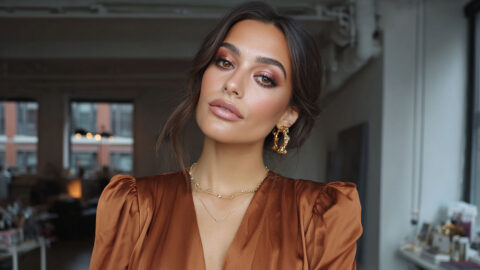
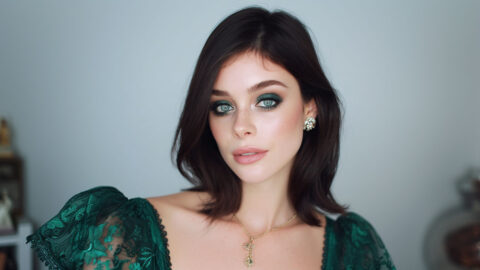
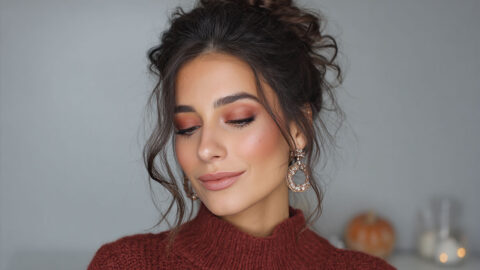
Brown eyes don’t need eyeshadow that matches them. What actually works is color that pushes against the brown, purple against brown, green against brown, gold turning up warmth that’s already sitting there. That’s the whole logic behind most eyeshadow, liner, and mascara pairings built for brown eyes: pick something from the far side of the color wheel and let the contrast do the work the shade itself can’t.
The techniques that carry out that logic (cut crease, halo eye, smokey eye) mostly aren’t about color at all. They’re about placement, and placement changes hard depending on whether the eye is hooded, monolid, or deep set. Same shadow, same brush, completely different result once the eyes are actually open.
One number worth keeping in mind before any of the palette talk: a poll conducted for the American Academy of Ophthalmology found that 45 percent of the US population has brown eyes, reported by All About Vision in 2021.
What Are Makeup Looks for Brown Eyes?

Contrast is the goal, not matching. A shadow that blends straight into the iris basically disappears. One that sits opposite it on the color wheel is the one that actually shows up, in a photo or across a room.
Brown handles cool and warm shadow differently than blue or green eyes do. That’s part of why a purple that looks flat on a blue-eyed friend can look genuinely sharp on you, same product, different base underneath it.
What separates an actual brown-eye look from someone grabbing a random palette off the shelf comes down to a few things happening at once: the color gets picked for contrast instead of preference, the technique shifts with eye shape (hooded, monolid, almond, round, deep set, whatever you’re working with), the shadow intensity has to match how dark or light the brown actually runs, and the whole approach changes again depending on the occasion, a five-minute morning wash versus full bridal glam. The sections below pick each of those apart on their own.
What Eyeshadow Colors Work Best for Brown Eyes?

Purple and plum sit almost directly opposite brown on the color wheel, so they give the strongest contrast of anything here. Deep plum specifically holds up better than a lighter lavender, since the depth reads clearly even against very dark irises.
Green comes in close behind it. Forest, olive, and emerald all count as near-complementary, and they read as bold without tipping into harsh the way a badly blended plum sometimes can.
Gold and copper work differently. They’re not true opposites on the wheel, they’re warm-on-warm, so instead of contrasting they intensify the warmth already sitting in a brown iris. Under daylight that reads as high impact even without technical contrast behind it.
Bronze and chocolate brown do the least of the four. There’s no real contrast happening, just tonal depth, which is exactly why they’re the pick for anyone who wants something subtler than a full plum lid.
Brown eyes carry the highest melanin concentration of any iris color, and that density is a big part of why a genuine complementary shade shows up so clearly instead of getting lost. The American Academy of Ophthalmology estimates 70 to 80 percent of the global population has some shade of brown eyes, which is also why brown ends up being the default canvas most eyeshadow formulas and palettes get built around in the first place.
Undertone matters too. Warm undertones pick up gold, copper, and bronze easily. Cool undertones, a grayer or more olive base under the brown, tend to grab purple and slate instead.
A purple lid changes what looks right on the mouth, and the lipstick shade that pairs with purple eyeshadow usually needs to sit warmer than the shadow itself, or the whole face reads flat.
Gold does the opposite. Once the lid goes metallic, the lip color that works with gold eyeshadow tends to stay muted so the eye keeps the attention.
Best Eyeshadow Palettes for Brown Eyes
Daily wear usually comes down to warm neutrals: copper, bronze, terracotta. Plum and slate palettes are the ones that actually earn their keep at night, when the contrast reads as intentional instead of loud.
How much blending experience someone already has probably matters more than price here.
| Palette | Shade Family | Finish | Best For |
|---|---|---|---|
| Urban Decay Naked | Warm neutrals, taupe | Matte and shimmer mix | Everyday wear, beginners |
| Anastasia Modern Renaissance | Copper, burnt orange, plum | Matte-heavy | Bold contrast, evening |
| Too Faced Chocolate Bar | Cocoa, bronze, gold | Shimmer-forward | Warm undertones, low effort |
| Morphe 35O | Orange, rust, olive | Mixed, budget pigment | Practicing blending on a budget |
Urban Decay’s original Naked Palette is basically the case study for why warm neutrals sell so well to brown-eyed customers specifically. It sold more than 30 million units and passed $1 billion in lifetime sales after its 2010 launch. The 2024 limited relaunch sold out online within a month, which says something about how much demand never really went away.
A palette with two or three built-in matte transition shades is the easier starting point for beginners. Blending a crease without one is usually where people give up on the whole look. Once someone’s past that stage, the pull is usually toward more pigment saturation and less hand-holding, since they don’t need the tutorial baked into the palette anymore.
Makeup Looks for Brown Eyes by Eye Shape
Placement matters more than color once eye shape enters the picture. The same purple or copper shadow reads completely differently depending on how much lid space is actually visible once the eyes are open, which is why a technique that works beautifully on almond eyes can fall apart on a hooded lid using the exact same product.
| Eye Shape | Placement Focus | What to Avoid |
|---|---|---|
| Hooded | Shadow above the crease, not inside it | Heavy shimmer on the mobile lid |
| Monolid | Gradient wash, no defined crease line | Hard crease lines with no blend |
| Almond and round | Standard crease placement, minimal adjustment | Over-correcting a shape that already works |
| Deep-set | Light shades on the lid to bring it forward | Dark shadow all over, which recedes the eye further |
Hooded Eyes
A fold of skin covers part or all of the crease once hooded eyes are open, which is the whole problem with this shape. Shadow placed only inside the crease vanishes the second the eye opens, so placement has to shift above where the crease would sit if there were no fold. A matte transition shade helps soften that edge before it climbs toward the brow bone, and heavy shimmer is worth skipping on the lid itself, since it folds and creases faster on hooded skin than it does anywhere else.
A full breakdown of makeup techniques built specifically for hooded eyes covers placement in more depth than a shape overview really can.
Monolid Eyes
There’s little to no visible crease on a monolid, so a hard shadow line doesn’t really have anywhere to sit. Gradient placement works better than anything defined. Color builds up from the lash line in a soft wash instead of getting boxed into a crease shape that isn’t really there.
A halo effect, light through the center, deeper toward the edges, tends to open the eye up more than one flat color swept across the whole lid does.
Almond and Round Eyes
Almond eyes already come with a visible crease and proportions that don’t need much help, so most standard placement just works without adjustment. It’s the shape most tutorials are unconsciously built around, honestly.
Round eyes need a bit more thought. Pulling shadow slightly outward and upward at the outer corner elongates the shape instead of drawing more attention to its roundness, and that outer-corner definition is really the one adjustment that matters. Everything else about the process stays close to what works on almond eyes anyway.
Deep-Set Eyes
Deep-set eyes sit further back in the socket, and dark, heavy shadow just pushes them back further still. Light and mid-tone shades on the lid do the opposite, they bring the eye forward. The darkest shade in the look should really only show up at the outer corner, blended into a small V rather than swept across the whole lid the way it might be on almond eyes.
Makeup Looks for Different Brown Eye Shades
Dark brown needs more saturation just to stay visible against all that pigment. Light brown is the forgiving one, shimmer and pastel tones show up easily since there’s less competing with whatever’s on top. Amber-brown and hazel-brown are the moving targets. Both shift depending on which secondary tone, green, gold, or gray, happens to be strongest that day.
Dark Brown Eyes
Almost black-brown irises absorb more light than any other brown shade, so pale or low-pigment shadow basically disappears on contact. Deep plum, emerald, and metallic copper are the ones that hold their color instead of washing out, and they’re the most forgiving shades to work with on this depth of brown.
- Matte black or espresso liner along the lash line for definition that doesn’t compete with the shadow
- Metallic gold or bronze at the center of the lid for a highlight that actually reads
- Pale pastels on their own tend to vanish. Skip them unless they’re paired with something darker
Light Brown Eyes
Less melanin means shimmer, pastel, and low-saturation shadow all stay visible instead of getting swallowed the way they would on a darker iris. Less pigment competition also means less product gets the job done, a thin layer of soft rose-gold or champagne works fine for daytime, and muted lavender or dusty mauve on the lid alone gives quick contrast without needing to build out a full crease.
It’s a genuinely forgiving shade to practice on. Heavy-handed blending mistakes just don’t show up the way they would on a darker iris, which is probably why so many beginner tutorials default to it.
Amber-Brown Eyes
There’s a warm, golden-yellow fleck sitting inside the brown base on amber eyes, and green and gold amplify it directly. Olive, moss, and antique gold pull that amber tone forward rather than fighting it.
Cool-toned shadow still works here, icy purple or slate gray, but it mutes the amber instead of lifting it. That’s not necessarily a flaw. It just reads as a deliberate contrast choice rather than an amplifier, which is a different effect entirely.
Hazel-Brown Eyes
Hazel-brown shifts depending on lighting, clothing, even which pigment happens to sit closest to the pupil that day. There’s no fixed palette that works every time here. Shadow choice really just needs to follow whichever tone is strongest in the moment.
Anyone building a routine specifically around this range should check out a guide focused on hazel eye makeup looks, since hazel behaves differently enough from straight brown that it deserves its own approach rather than a subsection.
Application Techniques for Brown Eye Makeup
Smokey eye, cut crease, halo eye, and tightlining cover most of what shows up in brown eye makeup looks. None of them are really about which color gets used. They’re about where the color sits, and in what order it goes on, since shadow applied after liner blends differently than shadow applied before it.
Smokey Eye
Depth here comes from layered, blended shadow, not one flat color dumped across the lid. The order matters more than how many products get used. Going light to dark, then blending backward, is what keeps a smokey eye from turning muddy instead of smoky, which is the failure mode almost everyone hits the first few times they try it.
- Apply a light transition shade across the whole lid and slightly above the crease
- Add a mid-tone shade into the crease and blend with a fluffy blending brush
- Pack the darkest shade onto the outer third and lower lash line
- Blend the edges where the shades meet until there’s no visible line
- Set with translucent powder before adding mascara, so fallout doesn’t sit on top of finished shadow
A step-by-step version of how to build a full smokey eye covers brush choice and blending order in more depth than a technique summary can manage.
Cut Crease
A cut crease separates the lid from the crease with a sharp line of concealer or light shadow instead of blending the two together. Definition is the entire point, not blending, and the line has to stay genuinely crisp or the whole look stops reading as a cut crease at all.
It takes a small precision brush, a lighter shade for the lid, a deeper one for the crease, and patience. Mostly patience, actually, since cleaning that edge with concealer is the slow part nobody enjoys.
This technique flatters brown eyes in particular. The sharp lid-to-crease contrast still reads clearly on hooded or monolid shapes, shapes where a soft smokey blend tends to get lost entirely.
Halo Eye
A light, often shimmery shade goes in the center of the lid for a halo eye, with darker shadow pushed into the inner and outer corners. That center placement is what actually creates the brightening effect. Eyes read as more awake, more open, which matters especially on brown eyes since a fully dark lid can start to look heavy fast.
A small dot of shimmer at the inner corner finishes it off without adding more product across the whole lid. Gold or champagne in the center, plum or espresso at the corners, is the combination that shows up most often on brown eyes doing this technique.
Tightlining and Winged Liner

Tightlining fills the gaps between upper lashes at the root, sitting along the waterline itself rather than the visible skin above it. Lashes end up looking thicker without any visible liner line doing the work, which is the appeal.
Eyeliner isn’t a small category, either. It holds the largest single product-type share of the eye makeup market, 33.28 percent in 2025 according to Mordor Intelligence, ahead of eyeshadow, mascara, and every other eye product type individually.
Winged liner takes that same line and extends it outward and slightly upward from the outer corner. It lengthens the eye rather than just defining it, which is a different job than tightlining is doing.
A closer look at how to tightline the upper lash line covers the tool and angle questions that come up most with this step.
Makeup Looks for Brown Eyes by Occasion
Occasion decides how much shadow, shimmer, and precision a look can reasonably carry, more than any color rule ever will. A five-minute morning routine and a full bridal application are solving two completely different problems, even when they’re pulling from the exact same palette.
Everyday

A single transition shade, a thin liner line, mascara. That’s basically the whole formula, and anything that needs real blending time gets skipped on a weekday morning regardless of how good it would look. Speed wins over intensity here. A bronze or taupe shadow swept across the lid in under a minute genuinely does more for a Tuesday than a full cut crease ever will.
- One warm neutral shadow, blended with fingers if a brush isn’t within reach
- Brown or black liner along the lash line only, no wing
- Mascara on the top lashes, tinted brow gel to finish
A broader set of everyday makeup looks covers how this same low-effort approach extends past the eyes, into base and lip choices.
Bridal
Bridal makeup has to survive tears, photography, and several hours under light that keeps changing, which rules out anything that isn’t properly set. Soft glam is the default for a reason: a light wash of neutral shadow, liner that’s defined without tipping harsh, waterproof mascara. That combination was the most common approach for 2025 weddings.
Money-wise, the average US bride spent about $300 on professional wedding-day hair and makeup in 2025, roughly $150 for hair and $150 for makeup, according to The Knot’s 2026 Real Weddings Study.
Warm, low-shimmer shadow photographs best on brown eyes. Heavy glitter tends to catch camera flash in a way that reads as too bright once the photos come back, which isn’t obvious in the mirror beforehand.
Full breakdowns of wedding makeup looks go further into hair pairing and touch-up kits than an occasion overview really can.
Evening and Date Night

Low light forgives a lot. Pigment and shimmer that would look overdone at noon just reads as intentional once the sun’s down, which is why evening looks can carry more of both. Metallic shadow in particular reads best under artificial light. Copper, bronze, and deep plum catch candlelight and lamp light in a way flat matte shades just can’t.
A darker lower lash line, smudged rather than sharply lined, adds intensity fast without needing the full smokey eye buildup behind it.
Office and Editorial
Office makeup sticks close to skin-tone neutrals, with liner that’s defined but still soft, and it avoids shimmer since overhead fluorescent lighting catches it in ways that don’t flatter anyone. Editorial goes the other direction entirely, and on purpose. Bold placement, visible technique, shadow with real contrast, none of that gets softened, because softening it would defeat the point.
It’s not really a skill gap between the two. It’s audience. One of them is built to disappear into a room full of people, the other exists specifically to be photographed.
Which Eyeshadow Finish Works Best for Brown Eyes?
Satin and matte are the safe defaults, they read clearly without competing against the eye’s natural warmth. Shimmer and metallic add more impact but come with more risk, mostly of looking patchy or overdone if the lid isn’t prepped first.
Matte blends without catching light unevenly and holds a crisp line for something like a cut crease, which makes it usable for pretty much any occasion. It can look flat or chalky without a cream base underneath though, and patchiness shows up more visibly on matte than it does on shimmer.
Shimmer adds dimension and brightness, works especially well for halo placement, and photographs nicely since it catches light. The downside shows up mid-application and again mid-day: fallout lands under the eyes while it’s going on, and it tends to settle into fine lines or hooded creases by the time afternoon rolls around. Getting glitter and shimmer eyeshadow application right mostly comes down to order of operations: concealer and setting powder go on after the shadow, not before.
Metallic has the highest impact of any finish here and holds up under stage or event lighting, reading clearly even against very dark brown irises. It’s also the hardest finish to blend cleanly, and the edges can look harsh without a transition shade laid down first.
Satin sits in between matte and shimmer. It’s forgiving for daily wear and doesn’t take much skill to apply evenly, though it has less impact than shimmer or metallic and can read as a little dull under bright event lighting.
Matching Brown Eye Makeup to Skin Tone

Skin tone mostly changes how much pigment a shadow needs to read clearly. It doesn’t change which color family actually works. Fair skin needs less intensity to show contrast, deep skin needs more saturation or it washes out, and undertone, not just how deep the skin tone runs, is usually what decides whether a shade ends up flattering or just flat.
| Skin Tone | Shadow Intensity Needed | Watch For |
|---|---|---|
| Fair | Low to medium | Shadow reading darker than intended in photos |
| Medium | Medium | Widest workable range, fewest restrictions |
| Deep | Medium to high | Pale shades disappearing without enough pigment |
Dermatologists classify skin by tone and sun reactivity using the Fitzpatrick scale, a six-category system developed in 1975 by dermatologist Thomas B. Fitzpatrick. It wasn’t built with makeup in mind at all. But the same range it describes, from very fair to deeply pigmented, happens to be exactly what shifts how much shadow pigment a look actually needs.
Fair Skin
There’s the least natural contrast happening against most eyeshadow shades on fair skin, so even mid-intensity colors show up strong. A little goes a long way. The same thin layer of shadow reads as noticeably more intense on fair skin than it would on medium or deep skin.
- Cool-toned purples can look almost black in photos if applied too heavily
- Bronze and copper stay warm instead of turning muddy, since fair skin isn’t competing with the warm pigment
- Blending edges matters more here. Any hard line shows up clearly against lighter skin
Medium Skin
Medium skin tolerates the widest range of shades without needing intensity adjustments in either direction. Cool purples, warm coppers, and neutral bronzes all read clearly with no extra product or extra blending required. It’s genuinely the easiest tone to work with.
A broader explainer on how to match makeup to skin tone covers foundation and blush pairing alongside eyeshadow, since the same undertone logic carries across the whole face, not just the eyes.
Deep Skin
Pale, low-opacity shadow can disappear entirely on deep skin, so pigment saturation matters more here than almost anywhere else in this guide. Metallic gold, copper, and jewel-toned purple hold their color and read clearly where a sheer wash of the same shade would just fade in.
Fenty Beauty built part of its reputation on exactly this problem. Its 2017 foundation launch shipped with 40 shades specifically because deeper skin tones had been underserved by the standard 8 to 12 shade ranges most brands offered, a gap Time magazine recognized that same year.
Eyeshadow has the same underserved-range issue, not just foundation. A palette with only one or two deep, saturated shades leaves deep skin tones with fewer usable options than lighter skin tones get from the exact same product.
A deeper resource on makeup for dark skin covers base and cheek product pairing that goes further than eyeshadow choice alone.
Tools and Products for Brown Eye Makeup Looks
A blending brush, a primer, and a fine-tip liner brush cover most of what these techniques actually need. Everything past those three is refinement, not requirement.
- A fluffy blending brush, for softening the line between transition and crease shades so nothing reads as a hard edge
- A small precision brush, for placing color into the lower lash line and cleaning up cut crease edges
- Eyeshadow primer, so pigment actually has something to grip, which matters more on oily lids than dry ones
- An angled brush or fine-tip pen, for shaping brow product and controlling winged liner in one pass
Real Techniques and Sigma Beauty both built entire brush lines around that blending step specifically, splitting synthetic bristles for cream formulas from denser natural-hair blends meant for powder pigment.
Understanding what eyeshadow primer actually does explains why two people can use the identical palette and still walk away with different results. Primer changes how a shadow reads more than the shadow formula itself does, in most cases anyway. A pigmented purple applied straight to bare lid skin oxidizes and fades faster than the same shadow going on over a thin primer layer.
Brow gel and mascara finish a look rather than build it, but skip them and the eye makeup reads unfinished even when the shadow work underneath is flawless. Setting spray extends wear on the whole face, not just the eyes, and that matters most for bridal or evening looks that need to survive several hours straight.
Brushes need upkeep too. The American Academy of Dermatology recommends washing makeup brushes every 7 to 10 days, since product buildup on the bristles hurts both blend quality and skin health. A brush loaded with old, oxidized pigment just doesn’t blend as cleanly, no matter how good the shadow formula underneath actually is.
When These Makeup Looks Don’t Work for Brown Eyes

A brown eye look goes from flattering to flat for a small, repeatable set of reasons, and none of them have much to do with skill level.
- Shadow color sits too close to the eye’s own undertone, producing no visible contrast
- Shimmer or glitter gets placed into a hooded crease, where it settles and reads as buildup instead of definition
- Blending removes every edge on monolid eyes, leaving nothing for the eye to visually anchor to
- Primer gets skipped, so color oxidizes and creases by midafternoon
The undertone problem is the hardest one to catch in the mirror. A bronze shadow on a warm, medium-brown iris can look completely fine under warm bathroom lighting and still read as nearly invisible once photos come back.
The hooded-crease failure gets worse as the day goes on. Shimmer that looked fine at 9am has usually migrated by early afternoon, and what was supposed to be definition turns into a dark smudge instead.
Loose glitter carries a physical risk too, not just a cosmetic one. According to the American Academy of Ophthalmology, it’s a common cause of corneal irritation and infection, particularly for contact lens wearers. An estimated 40.9 million US adults, about 16.7 percent, wear contact lenses according to the Centers for Disease Control and Prevention, which makes loose glitter a real exclusion for a meaningful chunk of any audience, not some minor footnote.
Monolid failure runs in the opposite direction from hooded failure. It’s too much blending, not too little, that erases the placement decisions made earlier.
None of this is permanent. Every one of these traces back to a single fixable step: swap the finish, adjust the placement, or add the primer that got skipped in the first place.
FAQ on Makeup Looks For Brown Eyes
Does Black Eyeliner Work Better Than Brown Liner on Brown Eyes?
Black gives the sharpest definition of the two, and it works for winged liner or tightlining on pretty much any brown eye shade. Brown liner reads softer, more of a daytime thing.
Dark brown eyes can handle black without any trouble. Lighter brown eyes tend to look more natural with brown as the base instead.
Is There a Real Difference Between Hazel-Brown and True Brown Eye Makeup?
There’s a real difference, though it’s more about responsiveness than the actual color logic. Hazel-brown carries shifting green or gold flecks inside a brown base, while true brown stays one consistent tone throughout.
Purple and green still work for contrast either way. Hazel-brown just responds more to whichever secondary tone happens to be strongest on a given day.
How Much Does a Good Brown Eye Eyeshadow Palette Cost?
Anastasia Beverly Hills Modern Renaissance typically retails near 42 dollars. Too Faced Chocolate Bar sits close to 49.
Budget options exist well below both, but price usually tracks pigment quality and how well a palette actually blends, not shade count or how big the palette looks in the box.
How Long Does a Brown Eye Makeup Look Last Before It Needs Touch-Ups?
6 to 8 hours, roughly, for a primed and properly set look before creasing starts showing. Waterproof mascara and gel liner push past that window.
Oily lids or high humidity cut it shorter no matter what formula gets used, which is why primer ends up being the biggest single variable in how often touch-ups are needed.
Which Celebrities Are Known for Brown Eye Makeup Looks?
Priyanka Chopra, Zendaya, and Selena Gomez come up constantly in beauty coverage on this topic. Their red carpet looks regularly pair purple, green, or metallic gold shadow against their eye color, and beauty publications tend to cite those specific looks as reference points people can recreate at home.
What Should You Fix First in Makeup Looks For Brown Eyes?
Most of the breakdowns happen at the prep and contrast stage, not the technique stage. That means shade selection and primer come before blending skill or finish choice whenever a look isn’t reading right, no matter how tempting it is to blame the brush.
The order runs three steps deep: undertone contrast against the brown base first, primer beneath the pigment second, placement matched to eye shape third.
Contrast comes first because a technically clean winged liner or a perfectly blended matte crease still fails outright on the wrong shade family. It’s a slower fix than swapping a brush stroke, undertone correction takes real time, but skipping it means every other fix is just delaying the same problem.
The same logic carries over to a different eye color entirely in makeup looks for green eyes, where the complementary shade family shifts toward red, rose, and burgundy instead of the warm neutrals that work so well on brown.

She started writing on the site after fielding the same questions from clients and friends often enough to just write the answers down: which red won't turn orange on a warm undertone, how to keep lipstick from feathering into fine lines, why a "12-hour" formula rarely survives dinner.
Every review on the site follows the same rule she uses with paying clients: wear it first, then decide if it's worth recommending.
- How to Make Eyeliner Last Longer Without Smudging - August 31, 2026
- How to Make Eyeshadow Last Longer All Day - August 29, 2026
- How to Find Your Undertone in 5 Easy Steps - August 27, 2026