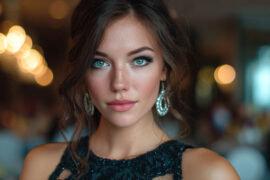

Blue makeup looks are having a moment that refuses to end. Pinterest data shows searches for “blue eyeshadow aesthetic” climbed 65%, and runway after runway keeps putting cobalt, navy, and cerulean on the lid.
Whether you want a soft periwinkle wash for a casual day or a full sapphire smoky eye for a night out, blue works across every skin tone and eye color. The shade just has to be right.
This guide covers the best blue makeup looks from classic smoky eyes to graphic liner, monochrome blue, glitter finishes, and lower lash line techniques. You’ll also find product picks, color theory tips for your specific eye color, and how to remove blue pigment without staining your lids for two days.
What Is a Blue Makeup Look?

A blue makeup look is any makeup application where blue functions as the primary or accent color across the eyes, lips, or face. It can be a full cobalt smoky eye or just a thin line of sapphire on the waterline. Both count.
The range of blues used in makeup is wide. Cobalt, navy, cerulean, baby blue, teal, electric blue, powder blue, periwinkle. Each one sits differently on the skin and creates a different mood.
But there’s a difference between a blue-dominant look and a look that simply includes a blue element. A navy mascara worn with a full neutral eye is not the same thing as a cobalt smoky eye paired with a nude lipstick. The first uses blue as a detail. The second builds the entire look around it.
Blue Pigment in Makeup Has Ancient Roots
Blue pigment on the face goes back thousands of years. Ancient Egyptians crushed lapis lazuli and azurite to create blue and blue-green eye pigments, applying them with thin sticks made of ivory or wood. Both men and women wore eye color daily, and blue held spiritual significance alongside its beauty function.
The color resurfaced hard in the 1960s. Twiggy and the mod movement made pastel blue lids a signature. Elizabeth Taylor’s portrayal of Cleopatra in 1963 brought saturated blue eyeshadow back into popular culture, and Revlon launched liquid eyeshadows in shades like “Blue Snow Drop” to meet demand.
Blue faded through the minimal ’90s, came back briefly in the early 2000s, and then surged again around 2023-2024. Pinterest’s Predicts report showed searches for “blue eyeshadow aesthetic” jumped 65%, and “aqua makeup look” searches doubled. Gen Z and Millennials drove most of that interest.
The global color cosmetics market reached $86.4 billion in 2024, according to IMARC Group. Blue’s continued presence on runways and social media feeds is one sign that bold color is a lasting preference, not a blip.
Which Skin Tones Work Best with Blue Makeup?

Every skin tone works with blue. That’s the short answer. The longer answer is that the shade of blue matters more than the skin tone itself.
The trick is matching intensity and undertone. Warm undertones tend to look better in blue-greens and teals, while cool undertones can wear pure blue and icy blue without it looking off. But honestly, I’ve seen warm-toned people pull off electric blue with zero issues. Rules are loose here.
Blue Shades for Deep and Dark Skin
Best shades: cobalt, electric blue, royal blue, bright teal.
Deep skin tones can carry intense pigment without it overwhelming the face. Electric blue eyeshadow on dark skin is one of the strongest color combinations you’ll see. The contrast is sharp and clean. Cobalt pops immediately against rich melanin, which is why so many runway looks pair deep skin with bold blue shadow.
Pastel blue can work too, but it needs a strong base. Without an eyeshadow primer, lighter shades tend to look ashy on deeper complexions. A cream base underneath fixes that. For lip color coordination, lipstick shades that suit dark skin in warm browns or rich berries will ground the blue without competing with it.
Blue Shades for Medium and Olive Skin
Best shades: teal, cerulean, denim blue, turquoise.
Medium and olive skin tones already carry green and yellow undertones. Teal and cerulean play off those natural undertones instead of fighting them. Turquoise sits especially well on olive skin because it echoes the warmth in the complexion.
Pure cobalt also works here, just blend it carefully at the edges. A slightly sheered-out application with a fluffy brush keeps it wearable for daytime. If you’re pairing blue eyes with a lip color, lipstick colors for olive skin in mauves and warm nudes will balance the overall look.
Blue Shades for Fair and Light Skin
Best shades: powder blue, icy blue, periwinkle, baby blue, soft navy.
Fair skin and blue can go wrong fast if the pigment is too saturated without proper blending. Powder blue and periwinkle are the most forgiving starting points. They read as soft and intentional rather than theatrical.
That said, navy works beautifully on fair skin when used as a liner or smudged along the lash line. It’s softer than black but carries more drama than brown. If you want a full-lid blue moment, check that your lip color suits fair skin by keeping it neutral or going with a soft pink.
Classic Blue Smoky Eye
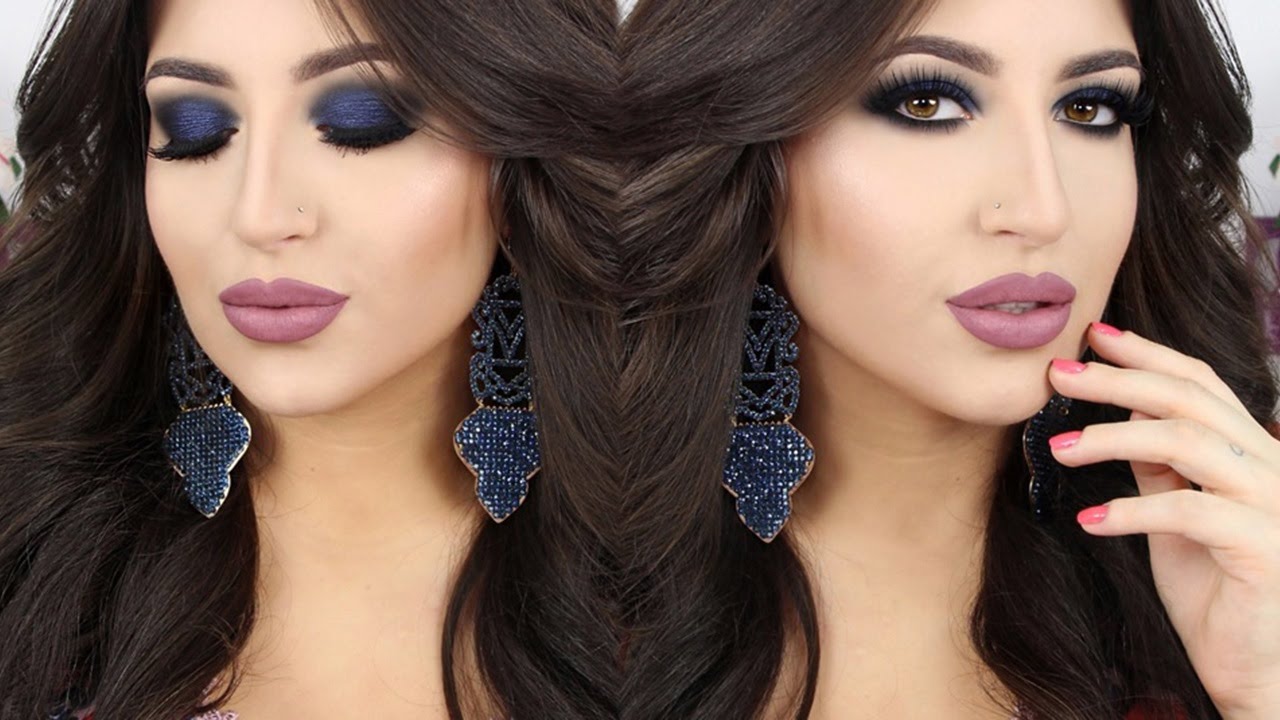
This is the blue look that most people picture first. It’s also the one that gets searched the most. And for good reason. A blue smoky eye done well looks editorial without being unapproachable.
The structure is the same as any smokey eye. Transition shade in the crease, main color on the lid, deepest shade in the outer corner, lower lash line blended out. The difference is you’re working with blue pigment, which behaves differently than brown or black.
Building the Look Step by Step
Start with eyeshadow primer. This is non-negotiable with blue. Without a tacky base, blue powder fades to a grayish wash within a couple of hours.
Pack a medium blue onto the center of the lid with a flat shader brush. Press it on, don’t swipe. Then take a deeper navy or midnight blue into the outer corner and crease. Blend where the two shades meet, but don’t overblend. You’ll lose the color payoff entirely.
Run that deeper shade along the lower lash line with a pencil brush. Finish with black in the outer V if you want more depth, or leave it as a pure blue gradient. Some people like adding a shimmer to the center lid for dimension. That works especially well if you’re going out at night.
Common Mistakes with Blue Smoky Eyes
Overblending is the biggest one. Blue pigments lose intensity faster than neutrals when you blend too aggressively. You end up with a muddy gray-blue that looks like a bruise rather than a smoky eye.
Skipping a transition shade is the other common problem. Going straight from skin to intense blue creates a harsh line. A matte taupe or warm brown in the crease softens the edge and makes the whole thing look intentional.
The best formula pairing for this look is a cream shadow as a base with powder layered on top. The cream gives the blue something to grab onto, and the powder sets it in place. MAC Deep Truth, Lethal Cosmetics, and Danessa Myricks all make singles with strong blue pigment that work well for this technique.
Bright Blue Graphic Liner

Graphic liner flips the whole approach. Instead of blending and diffusing, you’re going for sharp, clean lines. A bright blue graphic liner is loud, and that’s the point.
This look showed up heavily on Spring 2025 runways. According to Accio’s trend data, 73% of Spring 2025 runway shows featured blue eyeshadow or liner in some form. Graphic liner was the dominant format for editorial presentations, often paired with bare skin and minimal base makeup.
How Graphic Liner Differs from a Traditional Wing
A standard winged eyeliner follows the lash line and flicks up at the outer corner. Graphic liner goes somewhere else entirely.
Floating crease liner: drawn along the crease with the lid left bare underneath. Creates negative space that looks striking in photos.
Double wing: two parallel lines extending from the outer corner, one following the upper lash line and one below.
Geometric shapes: triangles, rectangles, or abstract angles placed around the eye. This is the editorial end of the spectrum.
Inner corner graphic: sharp lines or dots concentrated at the inner corner, leaving the rest of the eye clean.
Tools and Products That Make It Easier
Tape. Seriously. A small piece of tape placed at the angle you want gives you a guide for clean edges. Pull it off gently after the liner sets.
For the liner itself, felt-tip pens give the most control. NYX Epic Wear Liner in Sapphire has a firm tip that holds a sharp line. Suva Beauty Hydra Liners are water-activated cake liners that dry matte and don’t budge. They take a minute to mix, but the precision is worth the extra step.
An angled brush with a gel liner is the other option. Slower than a pen, but you get more control over thickness. And if you’re working with applying eyeliner for the first time in a graphic style, an angled brush lets you correct mistakes before the product sets.
Keep the rest of the face stripped back. A blue graphic liner with a heavy base and contour and bold lip looks chaotic. Let the liner carry the look.
Soft Blue Wash of Color
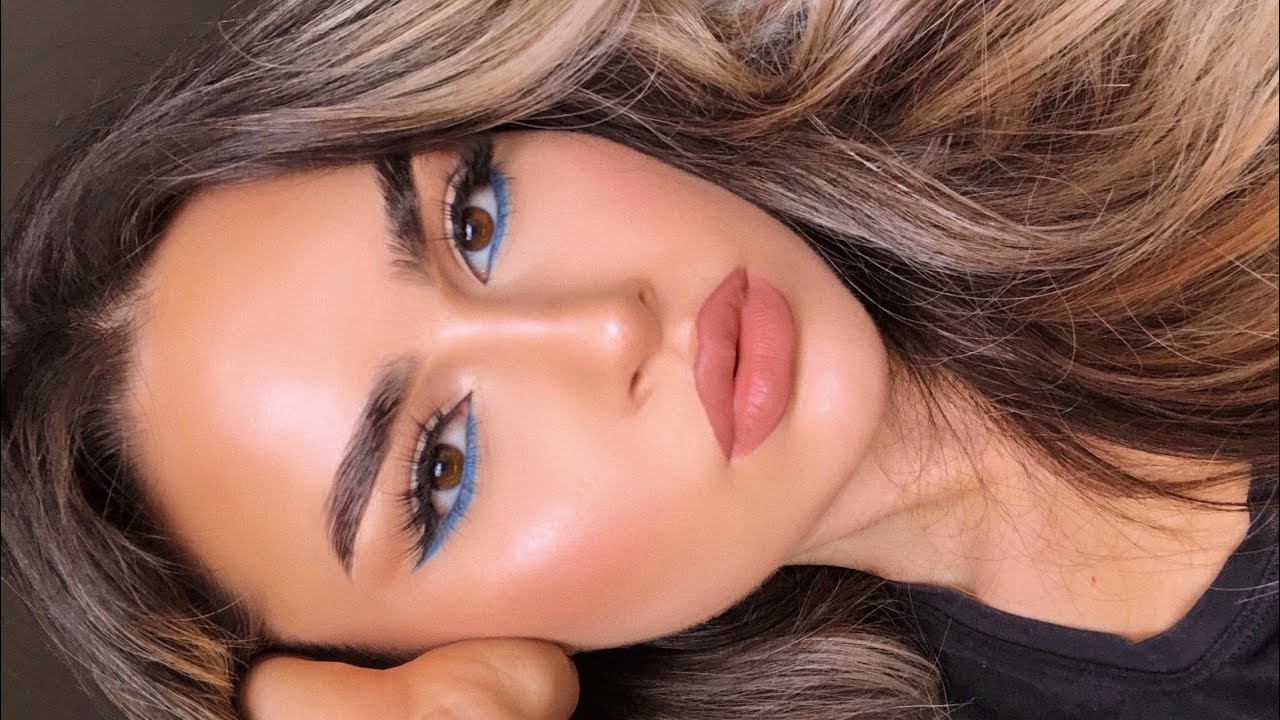
Not every blue makeup look needs to be dramatic. A soft wash of color across the lid is the most wearable version of this trend, and it works for people who like the idea of blue but don’t want to commit to a full smoky eye or a sharp liner.
Refinery29 reported that Chanel makeup artist Ninni Nummela identified soft washes of muted colors, specifically in shades like baby blue and powder pink, as one of the top makeup directions for 2025. The look is deliberately imperfect: sheered out, not precise, applied casually.
How to Apply a Blue Wash
Use your fingers. That’s the easiest way. Take a cream eyeshadow or liquid shadow in baby blue or periwinkle, dot it on the center of the lid, and blend outward with your ring finger. Done in about 15 seconds.
A fluffy brush works too if you’re using powder, but you’ll get a more diffused, almost watercolor-like effect with fingertip application. The warmth from your skin helps cream products melt into the lid.
Finnish makeup artist Jenny Jansson, who works across fashion and editorial, said in a Vogue Scandinavia interview that all you need for this look is a clean lid, a clean finger, and a blending brush. Add pigment slowly until the shade looks right.
Best Product Types for This Look
| Product Type | Finish | Best For |
|---|---|---|
| Cream shadow stick | Soft shimmer | Quick application, no brush needed |
| Liquid eyeshadow | Buildable sheer | Watercolor effect, smooth blending |
| Light powder shadow | Matte or satin | Softest, most diffused result |
Glossier Lidstar, Kosas 10-Second Liquid Shadow, and Rare Beauty all make sheer formulas that suit this approach. You’re not looking for full pigment payoff here. You want a hint. A suggestion of color.
Pair it with a natural makeup look on the rest of the face. Bare skin or light tinted moisturizer, soft mascara, maybe a tinted lip balm. That’s it. The blue wash works because it’s the only statement.
Blue Monochrome Makeup

A monochrome blue look means blue on the eyes, blue on the cheeks, and blue on the lips. All at once. And before you think “costume,” hear me out. This isn’t about matching everything to the exact same shade. It’s about tonal coordination across the face.
The key is variation within the blue family. A deep navy on the eyes, a soft blue-violet blush, and a sheer blue-tinted lip. Each element reads differently, but together they create a cohesive color story. That’s what separates monochrome from clown paint.
Blue Across Eyes, Cheeks, and Lips
Eyes: This is where the strongest pigment goes. A matte cobalt or midnight blue on the lid, blended into the crease. You can keep it simple, just a wash of color, or build it into a smoky eye. The eye carries the look.
Cheeks: Blue-toned blush exists, and more brands are making it. A cool-toned lavender or blue-violet blush placed on the cheekbones gives a flushed, almost ethereal quality. Place it higher on the cheekbone than you normally would, closer to the under-eye area. Subtlety matters here.
Lips: Full-on blue lipstick works for editorial shoots and bold makeup looks, but for daily wear, a blue-tinted gloss or a sheer cool-toned lip is more realistic. MAC Matte Royal is one of the few widely available true blue lipsticks. When applying lipstick in a statement shade like blue, clean lip edges are everything, so applying lip liner first prevents bleeding and gives a sharper shape.
Balancing Intensity in a Monochrome Look
Pick one feature to go bold on. If the lip is a strong blue, the eye should be softer. If you went heavy on a navy smoky eye, the lip stays sheer.
Editorial examples from Valentino and Versace runway shows demonstrate this balance well. Pat McGrath’s work frequently uses blue across the full face, but she varies the saturation at each point. That’s the difference between a look that feels artistic and one that feels like too much.
Blue mascara sales grew 22% year-over-year in Q1 2025, according to industry sales data. The fact that people are buying blue mascara in addition to (not instead of) neutral mascara shows that blue is being integrated into existing routines rather than replacing them. A monochrome blue look is the most ambitious version of that integration.
If you’ve never tried monochrome before, start with something easier like pink makeup looks or purple makeup looks, where the products are more widely available and easier to blend. Then graduate to blue once you’re comfortable coordinating color across the face.
Blue Lower Lash Line and Waterline Looks

Sometimes the smallest placement makes the biggest difference. A pop of blue on the lower lash line or waterline takes about 30 seconds and completely changes how your eyes read.
This is the look for people who want blue in their routine but don’t want to deal with full-lid blending or graphic shapes. It’s low commitment and surprisingly flattering, especially on brown and hazel eyes where the blue contrast draws attention to the warm tones in the iris.
Blue on the Waterline
A kohl or gel pencil in cobalt or sapphire, applied directly to the lower waterline, creates an immediate pop of color. Urban Decay’s 24/7 pencil in Chaos is a long-standing favorite for this. It’s soft enough to glide on the waterline without tugging, and the pigment holds for several hours before fading.
The trick is choosing a formula that won’t migrate. Waterlines are wet, and cheap pencils will smudge into a blurry mess within an hour. Gel and wax-based formulas stick better than standard pencils.
If you’re working with blue on the waterline, keep the upper lid neutral. A light wash of brown or taupe, clean mascara, and nothing else. The blue on the waterline carries enough visual weight on its own.
Smudged Blue Under the Lower Lashes
Mordor Intelligence data shows eyeshadow is forecast to grow at a 4.83% CAGR through 2030, the fastest rate among eye makeup categories. Lower lash line looks are contributing to that growth because they make eyeshadow feel accessible to people who are intimidated by full-lid application.
Take a small pencil brush and press a powder or cream blue shadow along the lower lash line, starting from the outer corner and stopping at the center of the eye. Blend the edge slightly with a clean brush. That’s it.
This works particularly well as a date night makeup look because it’s subtle enough for low lighting but still registers as intentional. Pair it with well-applied mascara on the top lashes and a neutral lip.
Blue Glitter and Metallic Eye Looks

Glitter and metallic finishes take blue from wearable to statement-level. These are night out looks, festival looks, concert looks. Not Tuesday morning at the office (unless that’s your thing, and honestly, respect).
The visual difference between metallic blue and glitter blue matters. Metallic blue has a smooth, foil-like finish that reflects light evenly. Glitter blue has visible particles that catch light at different angles, creating a more textured, dimensional effect.
Glitter Placement and Safety
Cosmetic-grade glitter vs. craft glitter: this is a safety issue, not a preference. Craft glitter has sharp edges that can scratch the cornea. Cosmetic-grade glitter is rounded and tested for use near the eyes. Always check the label.
Biodegradable glitter options from brands like EcoStardust and Bio Glitter have gained traction as people look for alternatives to plastic-based formulas.
Best placement for blue glitter:
- Center lid press (pack onto the center of the lid with a finger for maximum impact)
- Inner corner pop (a tiny dot of blue glitter at the inner corner, paired with a neutral lid)
- All-over foil (blue metallic pigment pressed across the entire lid for a mirror-like finish)
Products for Blue Metallic and Glitter Looks
| Product | Type | Best For |
|---|---|---|
| Pat McGrath metallic pigments | Loose metallic | Full-lid foil finish |
| ColourPop Super Shock Shadow (blue shades) | Cream-to-powder | Quick shimmer application |
| Lemonhead LA Spacepaste | Glitter paste | Festival and editorial looks |
| Pressed glitter palettes | Pressed glitter | Beginner-friendly, less mess |
Charlotte Tilbury’s limited-edition Denim Dimension palette, released in 2025, included shimmer and matte blue shades specifically designed for the blue eye trend. Vogue Scandinavia noted it was one of the most versatile blue palettes available for building both soft and dramatic looks.
Keep the base minimal for glitter makeup looks. Heavy foundation and contouring combined with a glitter lid fights for attention. Clean skin, groomed brows, and the glitter eye as the single focal point. That’s the formula.
Blue Makeup for Different Eye Colors
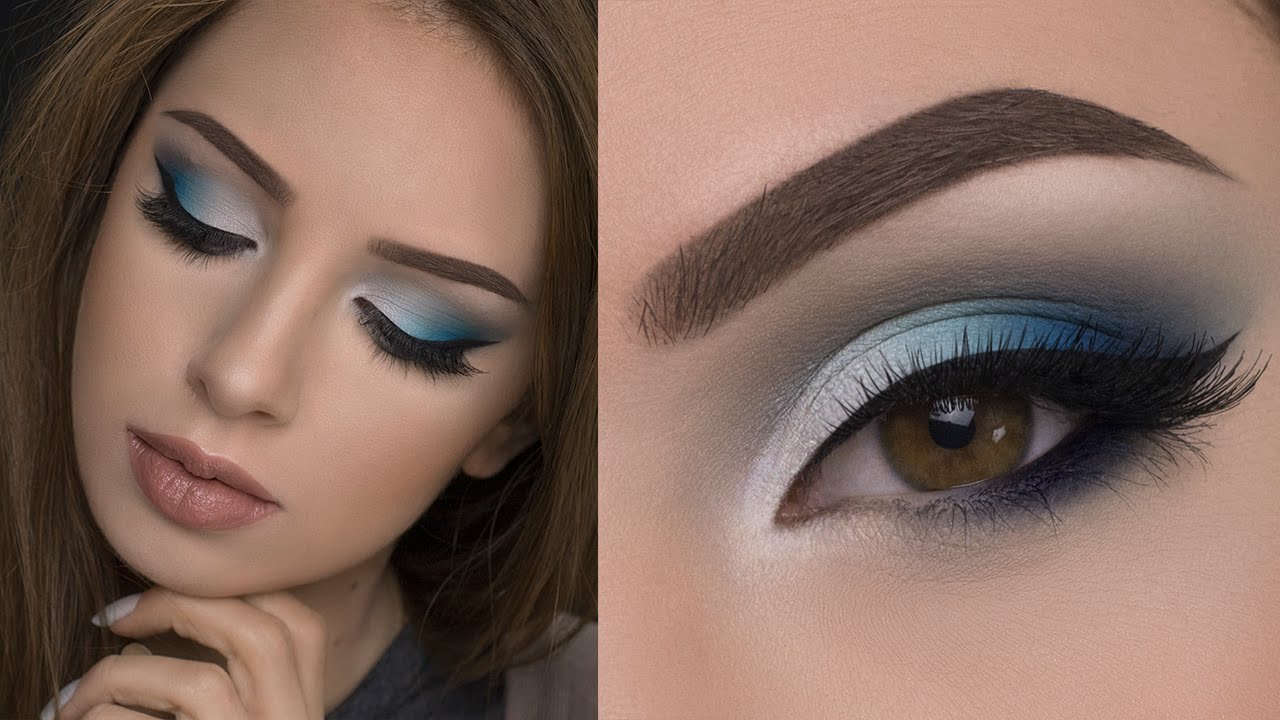
Color theory matters here. Blue eyeshadow interacts differently with each eye color, and knowing why helps you pick the right shade instead of guessing.
The color wheel is the simplest tool for understanding this. Colors that sit opposite each other on the wheel create the strongest contrast. Colors that sit next to each other create harmony. Both approaches work with blue, depending on what you’re going for.
Blue Eyeshadow on Brown Eyes
This is one of the strongest color combinations in makeup. Blue and brown (orange-adjacent on the color wheel) are near-complementary colors, which means they intensify each other when placed together.
L’Oreal Paris notes that blue eyeshadow makes brown eyes look brighter and richer by pulling out the subtle gold and amber tones in the iris. Cobalt and electric blue create the boldest contrast, while teal and cerulean offer a softer version of the same effect.
If you have brown eyes and want to try blue for the first time, eye makeup for brown eyes in a navy shade along the lash line is the easiest entry point. It reads as an upgrade from black liner without feeling like a huge leap.
Blue Eyeshadow on Blue Eyes

Common concern: “Won’t blue on blue look flat?”
It can. But only if the shades are too similar. Light blue eyes with a light blue shadow will wash each other out. The fix is contrast within the blue family. Navy shadow on light blue eyes creates depth. Electric blue on gray-blue eyes adds intensity.
Charlotte Tilbury’s team recommends deep blues for lighter blue eyes, because the contrast between the shadow and the iris makes both appear more vivid. Pairing blue eyeshadow with warm brown tones in the crease also helps by creating a frame that separates the shadow from the eye color.
Blue Eyeshadow on Green and Hazel Eyes

Green and blue are neighbors on the color wheel, so they blend into each other harmoniously. But to create visual pop rather than just harmony, lean toward blue-violet or blue-teal shades.
Blue-teal on green eyes brings out the cooler tones and gives the iris a more intense green appearance. Blue-violet on hazel eyes pulls out the golden flecks by creating a cool-warm contrast that makes those warm tones glow.
Hazel eyes are actually the most versatile for blue. Because hazel contains brown, gold, and green tones, nearly every shade of blue creates some form of complementary contrast. That flexibility means you can wear cobalt, navy, teal, or periwinkle and get a good result.
Products That Make Blue Makeup Looks Easier

The right product cuts your application time in half and keeps the color from fading by lunch. Blue pigments are tricky. They oxidize differently than warm tones, and cheap formulas tend to look chalky or patchy within an hour. The products listed here are tested for pigment intensity and longevity.
The global eye makeup market was valued at $17.55 billion in 2023 and is expected to reach $27.27 billion by 2030, according to market research. Eyeshadow is the fastest-growing segment within that, partly driven by the blue color trend pushing people to experiment beyond neutral palettes.
Blue Eyeshadow Palettes Worth Buying
Charlotte Tilbury Denim Dimension: nine shades spanning matte, shimmer, and high-shine blues. Works for both a sheer wash and a full saturated look. This was built specifically for the blue eye trend.
Dior Diorshow 5 Couleurs (shade 279 Denim): four blues with a neutral anchor shade. Luxury price, but the pigment payoff and blendability justify it for anyone committed to wearing blue regularly.
For budget options, NYX Ultimate Shadow Palette and ColourPop pressed shadow singles in blue shades deliver strong color for a fraction of the price. If you’re experimenting with eyeshadow looks for the first time, start affordable.
Blue Eyeliners by Formula Type
| Formula | Best Pick | Why It Works |
|---|---|---|
| Felt-tip liquid | NYX Epic Wear in Sapphire | Sharp lines, fast-drying |
| Gel pencil | Urban Decay 24/7 in Chaos | Smooth glide, waterline-safe |
| Water-activated cake | Suva Beauty Hydra Liner | Matte finish, editorial precision |
| Cream pot | MAC Fluidline | Buildable, smudge-friendly |
Each formula serves a different purpose. Felt-tip for graphic liner. Gel pencil for blue eyeliner looks on the waterline. Water-activated cake for editorial work. Cream pot for smoky, smudged liner effects.
Blue Mascaras That Actually Show Up
Most blue mascaras are too sheer. You swipe them on and get… nothing. Maybe a slight tint in direct sunlight if you squint.
The ones that actually deliver visible blue are fewer than you’d think. LH Cosmetics makes a bright cobalt mascara that reads blue even on dark lashes. MAC Extended Play Lash in a blue shade also works without being too subtle.
Swedish makeup artist Linda Hallberg noted in a Vogue Scandinavia interview that blue mascara pairs beautifully with bare skin or a nude lip. No other eye makeup needed. Just the lashes. It’s one of the simplest ways to try blue without doing a full look.
Eyeshadow primer is the unsung hero here. The eyeshadow primer market was valued at $3.8 billion in 2024 (Wise Guy Reports) and it’s growing because people are realizing that primer is what makes or breaks color payoff. For blue specifically, Urban Decay’s eyeshadow primer and NYX’s eye base both create a tacky surface that grabs blue pigment and holds it in place all day. Without primer, blue fades faster than any other color family. Use it every single time.
How to Remove Blue Makeup Without Staining

Blue pigments stain more than almost any other color. If you’ve ever taken off a blue smoky eye and still looked vaguely like a Smurf the next morning, you already know this.
The reason is chemical. Blue dye compounds bind strongly to skin, and many blue eyeshadows use synthetic colorants like FD&C Blue No. 1 or ultramarines that cling harder than warm-toned pigments. Removal requires a specific approach.
The Right Removal Process
Step one: oil-based cleanser or micellar water on a cotton pad, pressed (not rubbed) against the lid for 20-30 seconds. Let the product dissolve the pigment before you move the pad.
Step two: gently wipe in one direction. No scrubbing. Rubbing pushes pigment into the texture of your skin and makes staining worse.
Step three: follow with a regular cleanser. Banila Co Clean It Zero, Bioderma Sensibio, and DHC Cleansing Oil are all effective at breaking down stubborn pigment.
Preventing Stains Before They Happen
Eyeshadow primer doubles as a stain barrier. Seriously. When you apply primer before your blue shadow, the primer sits between the pigment and your skin. At the end of the day, you’re removing shadow from the primer layer, not from your actual eyelid.
This is one of the most practical eyeshadow application tips for anyone working with bold colors regularly. No primer means direct contact between pigment and skin, which is exactly how you end up with blue-stained lids for two days.
If staining does happen (and it will at some point), a gentle oil like coconut oil or jojoba oil on a cotton round, held against the stained area for a minute, usually lifts residual color. Don’t panic. Don’t scrub. The skin around your eyes is thin and tears easily.
For your eye makeup removal routine overall, adding an oil-based step specifically for bold colors saves you from dealing with ghost pigment. It’s an extra 30 seconds that makes a real difference.
FAQ on Blue Makeup Looks
What skin tone looks best with blue eyeshadow?
Every skin tone works with blue. Deep skin tones pair well with cobalt and electric blue. Medium and olive tones suit teal and cerulean. Fair skin looks best in powder blue and periwinkle. The shade matters more than the skin tone itself.
Is blue eyeshadow hard to wear daily?
Not if you go sheer. A soft wash of baby blue or periwinkle applied with your finger takes seconds. Pair it with bare skin and soft makeup everywhere else. It reads as intentional, not costume-like.
What lip color goes with blue eyeshadow?
Neutral tones work best. A nude lipstick or soft pink lets the blue eye stay the focal point. For monochrome looks, a sheer blue-tinted gloss works too. Avoid bold red lips with heavy blue shadow, as it splits focus.
Does blue eyeshadow work on brown eyes?
Brown eyes are one of the best matches for blue eyeshadow. Blue and brown sit near-opposite on the color wheel, creating strong complementary contrast. The blue pulls out the gold and amber tones in brown irises, making them look richer.
How do I stop blue eyeshadow from fading?
Always use eyeshadow primer. It creates a tacky base that grabs blue pigment and holds it in place. Layer a cream shadow underneath powder for extra staying power. Then lock everything with a setting spray at the end.
What is the best blue eyeliner for beginners?
A felt-tip pen like NYX Epic Wear Liner in Sapphire gives the most control. It dries fast and holds a clean line. For a smudged, softer effect, try a gel pencil like Urban Decay 24/7 in Chaos instead.
Can I wear blue mascara alone without eyeshadow?
Yes. Blue mascara on bare lids with clean skin is one of the simplest easy makeup looks you can try. It adds a flash of unexpected color without requiring any blending skill at all.
How do I remove blue eyeshadow without staining my eyelids?
Press an oil-based cleanser or micellar water onto the lid for 20 seconds before wiping. Don’t rub. Blue dye compounds bind strongly to skin, so dissolving first prevents the pigment from being pushed into skin texture.
What blue eyeshadow shades are trending right now?
Cobalt and denim blue are leading the current cycle. Charlotte Tilbury’s Denim Dimension palette and Dior’s 5 Couleurs in shade 279 Denim both launched to meet demand. Softer periwinkle and powder blue remain popular for everyday wear.
Is blue makeup only for special occasions?
Not at all. A smudge of navy on the lower lash line or a sheer blue wash on the lid works for everyday makeup. Blue becomes occasion-only when you default to glitter or heavy pigment. Sheered out, it’s completely wearable.
Conclusion
Blue makeup looks give you range that most color trends can’t match. A navy smoky eye for a formal event, a powder blue wash for brunch, a cobalt graphic liner for a party. Same color family, completely different energy each time.
The products have caught up to the demand. Eyeshadow palettes from Charlotte Tilbury and Dior, water-activated liners from Suva Beauty, and pigmented blue mascaras from LH Cosmetics all make execution easier than it was even two years ago.
Start with one element. A blue pencil on the waterline or a single swipe of cream shadow on the lid. Build from there once you’re comfortable.
Blue works on every eye color and every skin tone when you match the shade correctly. Don’t overthink it. Pick a blue, put it on, and see what happens. That’s how most good creative looks start anyway.

She started writing on the site after fielding the same questions from clients and friends often enough to just write the answers down: which red won't turn orange on a warm undertone, how to keep lipstick from feathering into fine lines, why a "12-hour" formula rarely survives dinner.
Every review on the site follows the same rule she uses with paying clients: wear it first, then decide if it's worth recommending.
- What Is CC Cream and How Is It Different? - July 16, 2026
- What Is Skin Tint and Why Everyone Is Obsessed - July 11, 2026
- What Is Foundation and How Do You Choose One? - July 6, 2026