

Summarize this article with:
Your foundation looked flawless for fifteen years. Then one morning, it didn’t. That’s not your imagination, it’s your skin telling you the rules have changed.
Mature makeup looks aren’t about wearing less or playing it safe. They’re about switching to techniques and formulas that actually work with aging skin, not against it.
Collagen loss, dryness, hooded lids, thinning lips. These shifts change how every product performs, from your primer to your lipstick. And most of the advice out there still caters to smooth, young skin.
This guide covers what actually works. You’ll find specific foundation strategies, eye makeup techniques for hooded eyes, blush placement that lifts instead of drags, lip color that won’t feather, and occasion-based looks you can build in minutes.
What Is Mature Makeup?

Mature makeup is any cosmetic application specifically adjusted for skin that has lost elasticity, volume, or moisture over time. It’s not about age on a driver’s license. Some people notice these shifts at 38, others not until their late 50s.
The difference between mature makeup and regular makeup comes down to how products interact with changing skin texture. Fine lines, crepe-textured lids, thinning lips, and drier patches all change the way foundation sits, how powder settles, and where pigment migrates throughout the day.
A common misconception? That mature makeup means wearing less. It doesn’t. It means wearing smarter. Different formulas. Different placement. Different tools.
The global anti-aging cosmetics market hit $56.71 billion in 2024, according to Precedence Research, and is expected to nearly double by 2034. That kind of growth signals something clear: women over 40 are not scaling back their beauty routines. They’re investing more and expecting products built for their actual skin.
A NielsenIQ and World Data Labs report named Gen X consumers “beauty’s most important consumers,” spending $279 billion per year on beauty products. And that figure is projected to climb past $430 billion within the next decade. Hashtags like #matureskin, #over40makeup, and #over40 rank among the most-viewed on TikTok, with growing search volume year over year.
Laura Geller built an entire brand identity around the phrase “made for mature skin.” Brands like IT Cosmetics and Bobbi Brown now formulate with ingredients like hyaluronic acid, niacinamide, and peptides specifically targeting the needs of aging complexions. The shift isn’t subtle.
If you’re someone who Googles how to apply makeup so it takes years off or spends twenty minutes trying to keep concealer from settling into under-eye lines, this category exists for you.
Why Skin Changes Affect Product Performance
Your foundation worked perfectly for fifteen years. Then one Tuesday it looked terrible. This isn’t your imagination.
Skin undergoes real structural changes that directly affect how makeup performs. Collagen production slows, oil output drops, and cell turnover rates decrease. The result? Products that used to glide on and stay put now cling to dry patches, pool in creases, or disappear entirely by lunch.
Collagen and Elasticity Loss

Collagen decline starts in your mid-20s, but the visible effects compound after 40. Skin becomes thinner and less resilient. Foundation that once sat smoothly on a plump surface now sinks into fine lines around the mouth, eyes, and forehead.
The global anti-aging products market reached $52.44 billion in 2024, per Grand View Research, growing at a 7.7% annual rate. A huge chunk of that spending goes toward products that address exactly this problem.
Dryness and Reduced Oil Production
Sebum production drops noticeably during perimenopause and menopause. That means your skin’s natural moisture barrier weakens.
Powder products (which many of us relied on for decades) start clinging to flaky patches. Matte foundations that used to control shine now make skin look flat and papery. This is the number one reason cream and liquid formulas have taken over the mature makeup conversation.
Structural Shifts That Change Technique
It goes beyond texture. Physical changes require entirely different application strategies:
- Hooded lids: The skin above the crease folds over the mobile lid, making traditional eyeshadow placement invisible once your eyes are open
- Thinning lips: Lip borders lose definition, and lipstick formulas with certain ingredients can feather into surrounding lines
- Sparse brows: Hair growth slows and thins, changing the frame of the entire face
- Hyperpigmentation: Sun damage, hormonal changes, and post-inflammatory marks become more visible as skin tone grows uneven
Professional makeup artist Amanda Ramsay, who specializes in clients over 40, estimates that about 80% of the women she works with struggle specifically with eye makeup because of hooded lids and changing skin texture.
Foundation and Base Products for Mature Skin
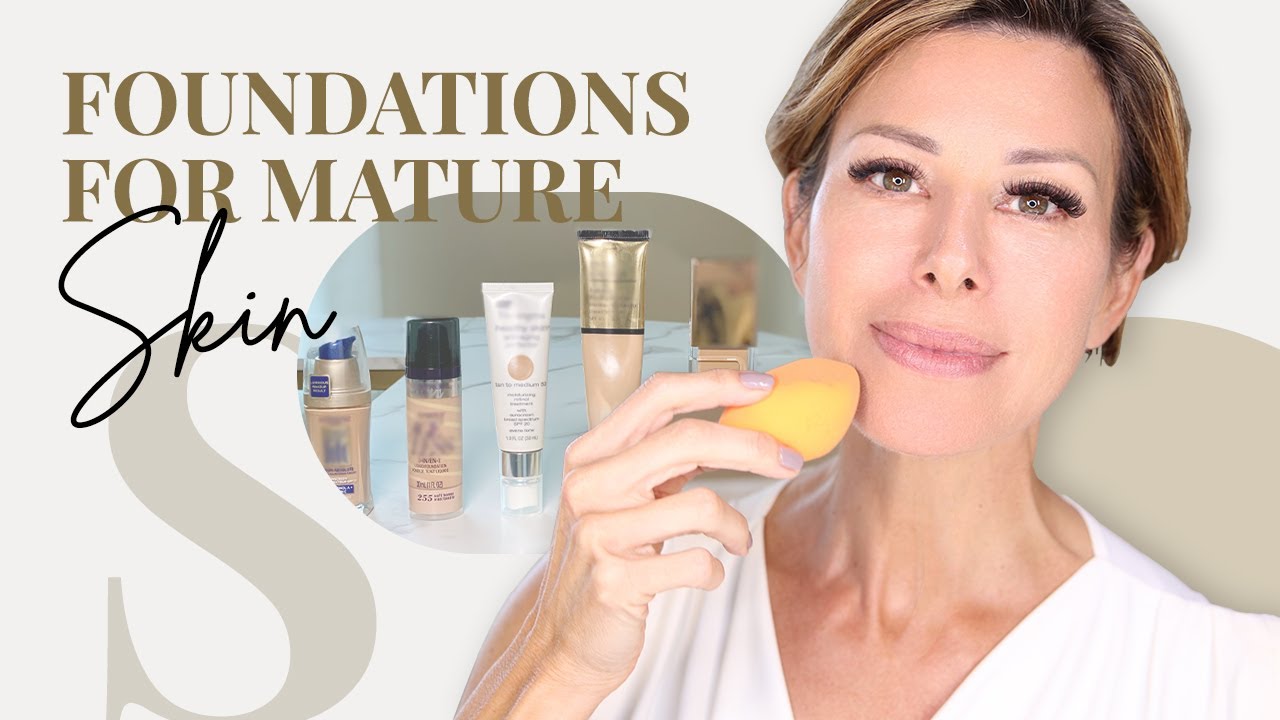
Foundation is where most people feel the change first. The one you’ve used for years suddenly looks cakey by midday, or it clings to every line on your forehead like a road map.
The fix isn’t just switching brands. It’s rethinking the entire approach to base makeup.
Lightweight Formulas Over Full Coverage
Heavy, matte foundations are the fastest way to add ten years to a mature face. They settle into lines, emphasize texture, and create that “mask” look nobody wants.
Hydrating, lightweight formulas outperform everything else on aging skin. Tinted moisturizers, skin tints, and serum foundations give coverage without sitting on top of texture.
| Base Product Type | Coverage Level | Best For | Finish |
| Tinted Moisturizer | Sheer | Daily wear and minimal imperfections. | Dewy |
| Skin Tint / BB Cream | Light | Casual settings and evening out skin tone. | Natural |
| Serum Foundation | Light-Medium | Dry skin and smoothing fine lines. | Luminous |
| Liquid Foundation | Medium-Full | Photography, special events, and long wear. | Satin |
IT Cosmetics CC Cream remains a consistent favorite because it blends skincare with color correction. Laura Mercier’s Tinted Moisturizer has a loyal following for its lightweight feel. L’Oreal’s Age Perfect Radiant Serum Foundation specifically targets mature skin with vitamin B3, glycerin, and SPF 50.
The hybrid makeup market (products that combine cosmetic coverage with skincare benefits) was valued at $21.21 billion in 2024, according to Market Research Future, and is projected to nearly double by 2035. This tracks with what women over 40 actually want: fewer products that do more.
Primer: What Actually Works
Silicone-based primers blur pores and smooth texture by creating a thin film over the skin. They’re effective for photographs and events.
Water-based primers add hydration without that slippery feeling some people dislike. If your skin leans dry (and most mature skin does), a hydrating primer with glycerin or hyaluronic acid makes foundation perform significantly better.
Skip mattifying primers unless your T-zone is genuinely oily. Matte on dry skin looks chalky within an hour.
Concealer Mistakes That Add Years
Under-eye concealer might be the single most misused product in a mature routine. Took me forever to realize that layering on more concealer only made things worse.
The problem is straightforward: thick concealer + fine lines = instant creasing. And baking (packing loose powder under the eyes to set concealer)? That technique works on smooth, young skin. On mature skin, it looks like cracked paint.
What works instead:
- Use a thin, hydrating concealer applied in a very small amount
- Dab and press with a fingertip or damp sponge rather than swiping
- Skip powder under the eyes entirely, or dust a tiny amount only on the outer corner
For covering stubborn dark spots and hyperpigmentation, a peach or orange color corrector underneath concealer works better than piling on more product. The correcting step neutralizes the discoloration, so you actually need less concealer on top.
Eye Makeup Techniques for Hooded and Mature Lids

This is where frustration lives. Your eyeshadow vanishes the second you open your eyes. Your eyeliner transfers onto the crease within an hour. Mascara smudges underneath before you even leave the house.
Hooded eyes are a natural part of aging. As skin loses elasticity, the area above the crease folds forward and partially covers the mobile lid. It doesn’t mean you stop wearing eye makeup. But it does mean you adjust.
Eyeshadow Placement for Visible Results
Traditional advice says “blend into the crease.” But when the crease is hidden under a fold of skin, that advice is useless.
The fix is applying shadow above your natural crease, onto the area that’s actually visible when your eyes are open. Look straight into a mirror with your eyes open. That’s your canvas. The shadow goes there, not behind a fold nobody can see.
Keep your eyes open while you work. This is one of the biggest technique shifts from standard eye makeup for hooded lids. You’re placing color where it reads, not where it would read on a different eye shape.
On the shimmer versus matte question: shimmer isn’t the enemy. But placement is everything. A touch of shimmer on the center of the mobile lid (the part between your lashes and the crease) catches light beautifully when you blink or look down. Shimmer all the way up to the brow bone, though, emphasizes the hood and adds visible texture.
Eyeliner and Mascara That Won’t Transfer

Gel pencils outperform liquid liner on hooded eyes because they set without feathering and resist smudging between the fold of skin. Tightlining (pressing color into the lash roots rather than drawing a visible line) gives definition without the risk of transfer.
For mascara, tubing formulas are the practical choice. They form tiny tubes around each lash and remove with warm water, rather than flaking or smudging. If your traditional mascara leaves raccoon circles by noon, switching to a tubing formula fixes the problem immediately.
Quick reference on what to skip versus what works:
- Skip heavy shimmer on the brow bone
- Skip thick liquid liner across the full lid
- Try cream eyeshadow sticks for fast, crease-resistant color
- Try waterproof gel pencils set with a matching powder shadow
Eyebrow Shaping for Thinning Brows
Brows do more heavy lifting on a mature face than almost any other feature. Sparse, thinning brows can make the entire face look washed out, even with perfect foundation and eye makeup.
Microfeathering strokes drawn with a thin pencil mimic actual hair and look natural. Block-filled brows (coloring in the whole shape with a heavy hand) read as flat and outdated. A tinted brow gel adds fullness and holds hairs in place without the precision work of pencil strokes.
The tail of the brow thins first, so that’s where most filling effort should go. Don’t forget it. This is a small step that changes the whole face dramatically.
Blush and Bronzer Placement on Mature Skin

Cream blush is having a moment, and honestly it deserves one. On mature skin, cream and liquid formulas outperform powder blush in almost every situation.
Powder can settle into texture and make dry skin look even drier. Cream blush blends into the skin rather than sitting on top of it, giving what makeup artists describe as a “lit from within” finish. Multiple pros working with mature clients echo this, noting that powder formulas can draw attention to wrinkles and fine lines.
Why Placement Matters More Than Product
Where you put blush changes everything on a face that’s lost volume.
The old rule was “smile and apply to the apples of your cheeks.” On a mature face, this actually drags color downward and can make the face look heavier. Apply blush higher on the cheekbones instead, blending upward toward the temples. This creates a visible lift.
Several makeup artists recommend keeping blush placement no lower than the nostrils. And blending direction matters: go up and back, toward the ears, rather than in circles on the apple of the cheek.
Bronzer and the Draping Technique
Heavy contour sculpting doesn’t translate well to mature skin. The sharp lines and deep hollows that look dramatic in tutorials often read as harsh shadows on a face with less volume.
A light hand with a warm bronzer, swept along the high points where the sun would naturally hit (forehead, bridge of nose, tops of cheekbones) adds warmth without severity.
Draping with cream blush, where blush replaces traditional contour by being placed along the cheekbone and blended up toward the temple, is a modern alternative that works especially well. Rare Beauty’s Soft Pinch, ILIA’s Multi-Stick, and Tower 28’s BeachPlease tinted balm are frequently recommended for their buildable, skin-friendly formulas.
The face makeup market globally reached $40 billion in 2024, per IMARC Group, with foundation holding the largest product segment share. But blush sales have surged alongside the cream formula trend, driven partly by social media visibility and partly by the sheer effectiveness of these newer formulas on textured skin.
Lip Color That Works With Thinning Lips

Lips thin. Lines form around the mouth. Products bleed. These aren’t flaws, they’re just what happens. And the fix is simpler than most people think.
Lip Liner Is No Longer Optional
Lip liner is the single most underrated product in a mature makeup routine. It creates a physical barrier that prevents lipstick and gloss from feathering into the fine vertical lines around the mouth.
Choosing the right shade matters. Match it to your natural lip color or your lipstick shade, not darker. The visible dark liner with a lighter lip inside? That’s a look from 1997 and it adds years instantly.
Apply it along the natural lip line, then blend slightly inward so there’s no harsh edge. Some people gently overline by a hair to restore lost volume, but restraint is the key word. A millimeter, not more.
For all-day hold, look into longer-lasting liner formulas or set your liner with a simple technique that keeps it in place all day.
Lipstick Formulas: Hydrating Wins Over Matte
Ultra-matte liquid lipsticks are everywhere, and they look incredible on smooth, full lips. On thinning, drier lips? They crack, flake, and emphasize every line.
| Formula | Pros for Mature Lips | Cons for Mature Lips |
| Cream Lipstick | Highly hydrating and comfortable; buildable coverage. | Requires more frequent reapplication throughout the day. |
| Satin Lipstick | Provides a smooth, elegant finish with solid pigment. | Offers only moderate longevity compared to drier formulas. |
| Matte Lipstick | Exceptionally long-lasting with bold, rich color. | Can be drying and often settles into fine lines or texture. |
| Sheer Lipstick | Effortless to apply and very moisturizing. | Provides minimal coverage and fades relatively quickly. |
| Lip Gloss | Offers a youthful plumping effect and high shine. | Can migrate or “bleed” into fine lines without a liner. |
Charlotte Tilbury’s Pillow Talk, MAC’s Spice liner, and Clinique’s Almost Lipstick in Black Honey keep showing up on “best for mature lips” lists for a reason. They’re hydrating, forgiving formulas that don’t demand perfect lip texture to look good.
Picking the right shade also matters when your skin tone has shifted. Colors that flattered you ten years ago might wash you out now. Your mileage may vary, but warmer nudes and rosy tones tend to be universally flattering on mature complexions.
Gloss Placement and the Overlining Question
Gloss on mature lips works, but where you place it makes a difference. A dab of clear or tinted gloss on just the center of the lower lip creates a dimensional, fuller effect without the mess of a full-lip gloss application.
Layering gloss over lipstick can also revive a matte formula that’s gone dry without requiring a full reapplication. If you struggle with dry lips in general, building a consistent lip care routine before applying any color makes a noticeable difference in how products wear and feel throughout the day.
For applying lipstick on thinner lips, the technique matters as much as the formula. Blend outward from the center, build gradually, and resist the urge to keep packing on more product. Two thin layers hold better than one thick one.
Daytime Mature Makeup vs. Evening Looks
The biggest mistake with mature makeup isn’t picking the wrong product. It’s using the same intensity for every situation.
Daytime and evening looks require different levels of depth, different textures, and honestly, different lighting strategies. What reads as “polished” under fluorescent office lights can look completely flat in a dim restaurant.
Daytime: Skin First, Minimal Layers

The goal during the day is glow, not coverage. A tinted moisturizer or skin tint, a touch of cream blush, groomed brows, and mascara. That’s it for most days.
Skip heavy powder. Daylight amplifies every texture, so less product means fewer visible lines and a fresher result. If you want inspiration for this approach, everyday makeup looks built around the “skin first” philosophy are a good starting point.
Bobbi Brown popularized this idea decades ago, and it holds up. Her brand still leans hard into the “your skin but better” approach specifically for women dealing with mature complexions.
Evening: Build Depth in One Area
According to Harris Williams’ 2024 beauty report, 95% of beauty enthusiasts intended to maintain or increase their beauty spending, with nearly 40% spending $150 or more per year. A good chunk of that goes toward products for events and going-out looks.
The evening rule for mature skin is simple: pick one feature to play up.
- Bold lip with minimal eye = classic, polished
- Defined eye with neutral lip = modern, dramatic
- Both bold at once = overwhelming on a face with less contrast
Soft glam looks translate well because they add warmth and dimension without harsh lines. For a formal setting, elegant looks that lean on luminous skin and a single statement feature tend to photograph beautifully.
Lighting Changes Everything
Bathroom light lies. The overhead lighting most people apply makeup in creates shadows that don’t exist in real life. Makeup that looks perfect under that light can appear overworked in natural daylight or washed out under flash photography.
Apply your base in natural light near a window when possible. Check your blush and bronzer placement in both warm and cool lighting before heading out. This one habit saves more frustration than any product switch ever will.
Tools and Application Methods That Make a Difference
The makeup brush and tools market was valued at $7 billion in 2024, according to GMI Insights, and is growing at 6.3% annually. That growth is partly driven by consumers realizing that better tools genuinely improve results, especially on textured or aging skin.
You can own the best foundation on the market and still get a bad finish with the wrong brush.
Damp Sponge vs. Brush for Foundation

A damp Beautyblender or Real Techniques sponge gives a more natural finish on mature skin than most brushes. The bouncing motion presses product into the skin rather than pushing it across the surface, which means less visible texture.
Dense buffing brushes work well for mineral and powder foundations but can drag on dry or crepey skin. If you prefer brushes, stipple instead of swipe. The difference in finish is noticeable.
Why Fingers Beat Tools Around the Eyes
Body heat from your fingertips melts cream products into the skin more naturally than any brush or sponge. For under-eye concealer, cream eyeshadow, and cream highlighter, fingers give the most seamless blend.
Pat and press gently. Never drag or pull the skin around the eyes. That skin is thinner than anywhere else on the face, and pulling it over time only makes the situation worse.
Skincare Prep as Part of the Routine
| Step | Product | Why It Matters |
| Cleanse | Gentle, Non-Stripping Cleanser | Removes overnight buildup without drying out the skin. |
| Hydrate | Hyaluronic Acid Serum or Moisturizer | Plumps the skin so foundation sits smoothly and doesn’t settle. |
| Prime | Hydrating or Blurring Primer | Creates a reliable “grip” for makeup and fills in fine lines. |
| SPF | Broad-Spectrum Sunscreen | Prevents further damage while providing a protective layer. |
Prepping skin before applying makeup is not a separate step from your routine. It’s the foundation of your foundation. Skipping moisturizer or SPF before makeup is the fastest path to a finish that looks dry, patchy, and older than you are.
Hourglass Cosmetics built its brand around the idea that prep determines performance, and their Veil Mineral Primer became a cult product partly because it bridges skincare and makeup without adding heaviness.
Common Mistakes in Mature Makeup

Most of these are habits that worked perfectly for years and then quietly stopped working. That’s the tricky part. You don’t notice the shift until someone takes a photo and you wonder who that person is.
Too Much Powder
This is the number one complaint from makeup artists who work with clients over 40. Powder settles into every line on the face, especially under the eyes, around the nose, and above the lip.
If you feel the need to set your makeup, use translucent powder only on the T-zone (forehead, nose, chin). Leave the rest of the face alone, or use a hydrating setting spray instead.
Wrong Foundation Match
Test foundation on your chest or jawline, not the back of your hand. Skin tone shifts with age, sun damage, and hormonal changes. The shade you wore five years ago probably doesn’t match anymore.
Sephora and Ulta Beauty both offer in-store color matching tools, and several brands now include online skin-tone quizzes. L’Oreal’s Age Perfect line was designed specifically for mature skin tones that trend differently from standard shade ranges.
Skipping Skincare Prep
Makeup artists consistently name this as the most overlooked step. Without moisturizer and primer, foundation clings to dry patches, creases faster, and fades unevenly by midday.
A 2024 survey by Advanced Dermatology found that women spend an average of 39 minutes per day on their appearance. Adding two minutes of proper skin prep for dry skin before makeup changes the outcome dramatically for that entire time investment.
Using the Same Techniques for Decades
The blue eyeshadow from 1988. The dark lip liner with pale lipstick. The thick liquid eyeliner across the whole lid. These techniques weren’t wrong when they worked. They just don’t work on skin that’s changed.
Updating your approach doesn’t mean erasing your style. Soft glam techniques preserve the spirit of a polished look while adjusting to how skin and features have shifted. It’s the same destination, different route.
Mature Makeup Looks by Occasion

Templates help. Instead of staring at a counter full of products every morning, having a mental shortcut for each situation makes everything faster.
Everyday Errand-Proof Look
Five products or fewer. That’s the ceiling.
The lineup: tinted moisturizer with SPF, cream blush, brow gel, mascara, and a tinted lip balm. Done. Out the door. This takes under five minutes and holds up through grocery runs, school pickups, and coffee meetings without looking like you tried too hard (or didn’t try at all).
The clean girl aesthetic adapts well for mature skin when you swap matte products for dewy ones.
Work and Professional Settings
Polished without overdone is the target. Add a light foundation layer, concealer where needed, a neutral eyeshadow, and a nude lipstick that’s close to your natural color.
Keep everything satin or luminous in finish. Matte everything reads flat on camera during video calls and under office lighting. If your work includes regular meetings on Zoom, professional looks built around warm, skin-like finishes read much better on screen than heavily contoured or matte options.
Formal Events and Weddings
This is where you can go bolder without tipping into costume territory.
| Occasion | Focus Feature | Product Approach |
| Wedding Guest | Eyes or Lips (not both) | Use buildable cream products and a strong setting spray for a long-lasting, tear-proof finish. |
| Formal Event | Luminous Base & Brows | Opt for a serum foundation and a defined brow pencil to create a polished, “lit-from-within” glow. |
| Evening Out | Smoky Eye or Bold Lip | Lean into gel liners and long-wear lipsticks that can withstand dinner, drinks, and low lighting. |
For all-day events like weddings, making your makeup last through the full day comes down to layering: primer underneath, cream products in the middle, a light powder set on the T-zone only, and a setting spray to lock it all together.
Charlotte Tilbury’s Flawless Filter has become a go-to for event prep because it adds a diffused, luminous quality underneath or mixed with foundation, creating that “good skin” look that photographs well without heavy coverage.
Adapting Trends for Mature Skin
Not every trend needs to be skipped. Some current looks actually work well with adjustments.
Trends that translate:
- Glazed, dewy skin (the whole point is luminous, which suits aging skin)
- No-makeup makeup (built on skincare and minimal product)
- Monochromatic looks using one shade across cheeks, lips, and eyes
Trends to modify heavily or skip:
- Sharp cut creases (hidden by hooded lids, and the precision work rarely holds)
- Heavy contour (reads as muddy on skin with less volume)
- Overlined everything (looks costume-like when lip borders are less defined)
Kantar data shows UK beauty sales among the 65-plus bracket grew by 11% year-over-year, proving that mature consumers aren’t retreating from trends. They’re buying selectively and adapting what works.
FAQ on Mature Makeup Looks
What is the best foundation for mature skin?
Lightweight, hydrating formulas like tinted moisturizers and serum foundations work best. Look for ingredients like hyaluronic acid, niacinamide, and SPF. Brands like IT Cosmetics, Laura Mercier, and L’Oreal Age Perfect are consistently recommended by makeup professionals.
Should older women avoid wearing bold makeup?
No. Mature makeup doesn’t mean boring makeup. The key is picking one bold feature, either a statement lip or a defined eye, and keeping everything else balanced. A red lipstick with minimal eye makeup looks striking at any age.
Why does my makeup settle into fine lines?
Aging skin produces less oil and collagen, making it drier and more textured. Heavy products and excess powder sit in those creases. Switch to cream-based formulas and prevent under-eye creasing by using less product and skipping baking.
What type of blush works best on aging skin?
Cream and liquid blush outperform powder on mature complexions. They blend into the skin instead of sitting on texture. Apply on the cheekbones and blend upward toward the temples for a lifting effect. Rare Beauty Soft Pinch and ILIA Multi-Stick are popular picks.
How do I apply eyeshadow on hooded eyes?
Apply shadow above your natural crease with eyes open, so color stays visible. Use matte shades for depth and place shimmer only on the mobile lid center. Cream eyeshadow sticks resist creasing better than powders on mature lids.
Is primer necessary for mature skin?
Yes. A hydrating primer fills fine lines, helps foundation grip, and prevents patchiness. Water-based primers with glycerin or hyaluronic acid work well for dry skin. Silicone-based primers blur texture for events and photography.
How do I stop lipstick from feathering?
Use a lip liner matched to your lip color as a barrier along the lip line. Choose hydrating lipstick formulas over ultra-matte liquids. Setting the edges with a tiny amount of translucent powder also helps prevent bleeding.
What makeup tools are best for mature skin?
A damp makeup sponge gives the most natural foundation finish. Use fingertips for cream products around the eyes, as body heat helps blend seamlessly. Dense brushes work for powder but should be used with a stippling motion, never dragged across the skin.
Can I still wear shimmer and glitter after 40?
Shimmer is fine with smart placement. A touch on the inner corner of the eye or the center of the mobile lid catches light beautifully. Avoid shimmer on the brow bone or all over hooded lids, where it highlights texture and sagging.
How do I make my makeup last all day on mature skin?
Start with moisturizer and primer. Layer cream products, set lightly with powder only on the T-zone, and finish with a long-lasting formula strategy. A hydrating setting spray locks everything without drying. Avoid heavy powder reapplication throughout the day.
Conclusion
Mature makeup looks come down to one thing: working with your skin, not fighting it. The products and techniques that served you at 25 won’t deliver the same results at 50. That’s not a loss. It’s a reset.
Cream blush over powder. Hydrating foundations over matte coverage. Strategic placement over heavy application. These small shifts add up fast.
Your brows frame everything. Your lip prep routine determines how color wears. Your skincare directly affects how every product performs on top of it.
Brands like Charlotte Tilbury, NARS, and Clinique keep building formulas around these exact needs. The options have never been better.
Skip what doesn’t work anymore. Keep what does. And stop apologizing for wanting to look great. Age changed the method, not the goal.

- What Is Skin Tint and Why Everyone Is Obsessed - July 11, 2026
- What Is Foundation and How Do You Choose One? - July 6, 2026
- How to Make Blush Last Longer - July 3, 2026


