Most people spend real money on makeup brushes, then toss them in a bag and wonder why the bristles fall apart within a year.
Knowing how to store makeup brushes properly makes a measurable difference, both for brush lifespan and for skin hygiene. A 2025 study in the International Journal of Microbiology found that 81% of bacterial isolates from used cosmetic brushes were Gram-positive species linked to skin infections.
Storage is where most of that risk gets managed or ignored.
This guide covers everything from daily vanity organization to post-wash drying, travel cases, and the storage habits that quietly ruin bristle shape over time.
What Proper Makeup Brush Storage Means

Proper makeup brush storage is not just about where brushes sit on your vanity. It covers how bristles, ferrules, and handles are protected from physical damage, moisture buildup, cross-contamination, and dust between uses.
There are two categories worth separating: active storage (your daily-use brushes on the countertop) and long-term storage (travel sets, backup brushes, seasonal tools). Each has different needs and different risks.
Most people treat both the same. That’s where the problems start.
Bristle splaying, ferrule loosening, and bacterial buildup are all direct results of storage that ignores airflow, upright positioning, or dust protection. These are not cosmetic issues. A 2025 study published in the International Journal of Microbiology found that 81% of bacterial isolates from used cosmetic brushes were Gram-positive species including Staphylococcus, organisms commonly linked to skin infections when hygiene practices fall short.
Storage is where most of that risk gets introduced or prevented.
The difference between a brush that lasts two years and one that lasts a decade often comes down to how it was stored between uses, not how much it cost.
Why Storage Method Affects Brush Performance

Brush performance degrades long before a bristle falls out. The slow decline starts with how and where brushes are kept.
Bristle Deformation from Flat or Compressed Storage
The shape of a brush is what makes it work. A fluffy powder brush flattened against a makeup bag loses its dome. A flat foundation brush bent at an angle blends unevenly.
- Bristles stored under pressure lose memory over time and won’t spring back
- Natural hair bristles are especially vulnerable because the fiber is more porous
- Synthetic bristles (nylon, taklon) hold shape longer but still warp under sustained compression
Makeup bags are the main culprit for daily-use brushes. The compression from other products pressing against bristles causes the deformation gradually, so most people don’t notice until application quality drops.
Ferrule and Glue Damage from Moisture Trapping
The ferrule is the metal collar connecting bristles to the handle. Most ferrules are secured with adhesive. That adhesive breaks down when water sits against it repeatedly.
Storing brushes bristles-up in a cup prevents water from pooling in the ferrule zone. Storing them bristles-down after washing, or in enclosed bags while still damp, is how bristle shedding starts.
According to IT Cosmetics, with proper care most makeup brushes should last three to five years, but heavily used brushes stored poorly can require replacement in six to twelve months.
Cross-Contamination Between Brushes
Brushes stored touching each other transfer product residue and bacteria between bristles. This matters most when mixing a cream product brush with a powder brush, or when storing used and clean brushes together.
A study in the Journal of Applied Microbiology found that 70% to 90% of tested cosmetic tools were contaminated with bacteria or fungus, including E. coli and Staphylococcus aureus. Contact between brushes in storage accelerates that spread.
Brush Holders and Cups

The most common active storage method. Works well for countertop or vanity setups where brushes are used daily.
Material Comparison
| Material | Best For | Watch Out For |
|---|---|---|
| Glass | Heavy brush sets, stable base | Breakage if knocked over |
| Acrylic | Clear visibility, lightweight | Scratches, shows dust easily |
| Ceramic | Decorative setups, sturdy storage | Heavy, fewer size options |
| Metal mesh | Airflow and ventilation | Bristle snagging on mesh edges |
Brands like Sigma, Morphe, and Muji all make dedicated brush holders. Multi-compartment organizers work well for large collections where separating brush types (face vs. eye) matters for avoiding cross-contamination.
Filler Materials and the Bristles-Up Rule
Many holders use glass beads, decorative rocks, or sand as filler to keep brushes upright. Always store bristles facing up. Bristles-down bends the tips against the bottom of the cup and traps moisture at the ferrule.
Filler materials help with angle control, but they collect product residue over time. Wash or replace the filler every few months alongside your brush cleaning routine.
Empty cups work fine too. A cup wide enough to hold multiple brushes without forcing them together is often better than an overstuffed holder where brushes lean against each other.
Brush Rolls and Pouches
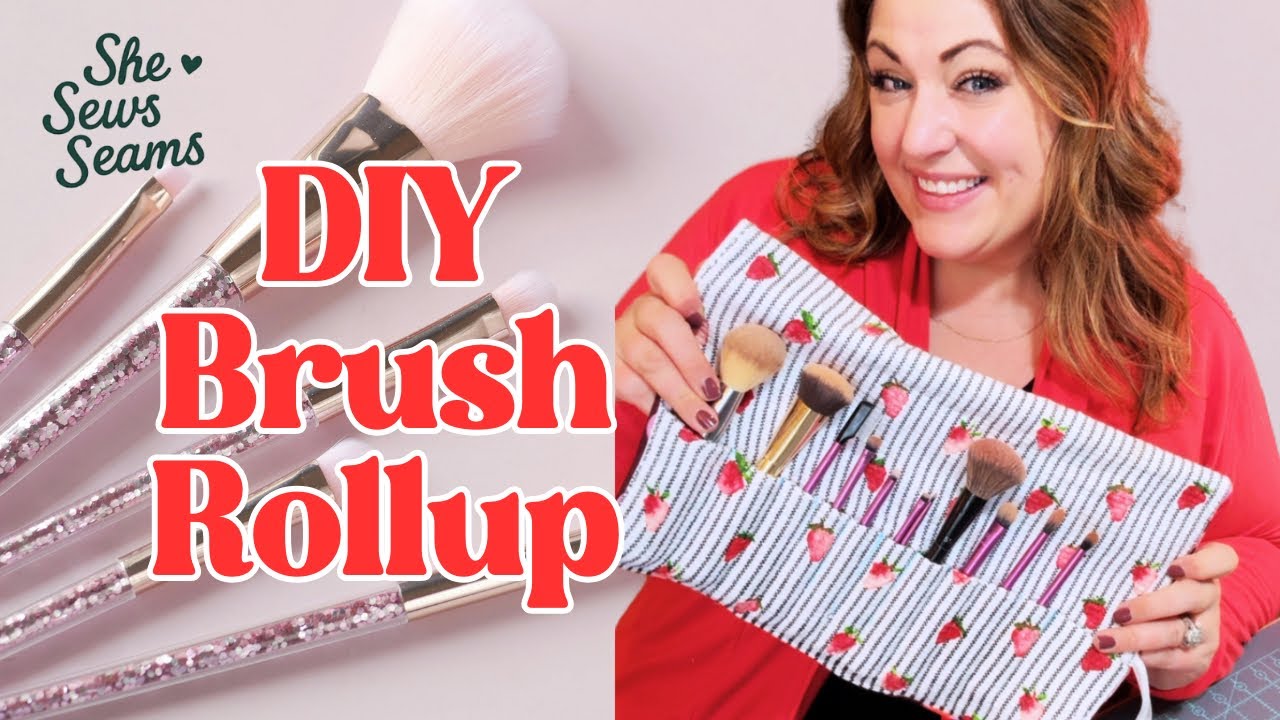
Brush rolls are the professional standard for transport and compact storage. A well-made roll keeps every brush in its own sleeve, bristles protected, nothing touching.
Brush Rolls vs. Brush Pouches
Brush rolls win on protection. Each brush slot is separate. Bristles don’t compress against each other. When rolled, the case is structurally rigid enough to absorb impact.
Brands like Bdellium Tools, Zoeva, and Royal Brush make rolls in canvas, leather, and synthetic materials. Canvas breathes better, which matters if brushes aren’t fully dry before packing. Leather looks better long-term but needs more care.
Pouches are faster. Zip open, grab a brush, go. But the tradeoff is that brushes sit loose inside. For a small kit of four or five brushes, a pouch is fine. For a full face set of fifteen or more, a roll is far better.
Zip pouches that compress from the outside when overfilled are the worst case. That sustained pressure on bristles during travel is exactly what causes deformation.
Best Use Cases for Each
- Canvas brush roll: Travel kits, MUA on-location bags, storing secondary sets at home
- Leather roll: Professional makeup artists who want a durable long-term solution
- Synthetic zip pouch: Minimalist everyday kits, gym bags, light travel
- Hard-sided brush case: Checked luggage, protecting premium brushes during long trips
Acrylic Organizers and Drawer Inserts

For people with a dedicated vanity or dressing table, drawer storage is a clean and dust-free option. It hides the clutter, keeps brushes at arm’s reach, and works well alongside other makeup organization systems.
Stackable Acrylic vs. Drawer Inserts
Stackable acrylic organizers from brands like Muji and InterDesign give individual slots to each brush. The individual slots prevent brushes from rolling together and protect bristle shape. These work on countertops or inside deep drawers.
Drawer inserts are flat trays with divided compartments. They keep brushes horizontal. Horizontal storage is acceptable only when brushes are fully dry and are being stored long-term, not for daily-use brushes that get wet and need to air out after washing.
The Dust Problem with Open Drawer Storage
A closed drawer is one of the cleaner storage environments available. But drawers that don’t fully seal still collect fine dust particles over time, especially in bathrooms.
- Clean drawer inserts monthly when you clean your brushes
- Avoid storing brushes in bathroom drawers near the toilet (aerosolized bacteria from flushing settle on surfaces within a few feet)
- Use drawer liners to make cleaning easier and reduce dust accumulation at the base
Muji’s acrylic organizer system is often recommended by professional MUAs for at-home storage because each slot is sized for individual brushes, the material is non-porous, and the drawers stack cleanly without taking up counter space.
Magnetic and Wall-Mounted Storage

Space-saving. Ventilated. Actually looks good on a vanity wall. Wall-mounted storage is underused by most people and works well for anyone with a consistent makeup setup.
Magnetic Strips and Brush Clips
Magnetic strips with brush clips or rings hold handles against a surface, leaving bristles hanging free in open air. Airflow is the main advantage over cup storage. Brushes dry faster and stay drier between uses.
The limitation is practical. Magnetic systems need a mounting surface, work best for brushes with smooth cylindrical handles, and aren’t ideal for fine detail brushes with short or tapered handles that don’t grip well.
Pegboard and Wall-Pocket Systems
Professional MUAs with dedicated stations often use pegboard setups with hooks and pockets. Acrylic wall pockets hold groups of brushes by category (face, eye, lip) and keep everything visible at a glance without taking up counter space.
DIY pegboard setups are genuinely popular among working artists. They’re cheap, completely customizable, and the open structure means brushes never sit in enclosed containers where moisture builds up.
| Method | Ventilation | Best For | Space Required |
|---|---|---|---|
| Magnetic strip | Excellent | Small, curated sets | Wall space only |
| Pegboard | Excellent | Large or professional collections | Requires wall panel |
| Acrylic wall pocket | Good | Medium collections, home vanity setups | Minimal wall space |
The makeup brush and tool market was valued at approximately USD 2.5 billion in 2023 and is projected to reach USD 4.8 billion by 2032 (DataIntelo), reflecting how seriously consumers now treat their brush investments, and why proper storage has become a real priority rather than an afterthought.
For learning how to get the most out of every brush during application, the storage setup matters as a foundation. Brushes in good shape consistently outperform neglected ones, regardless of brand.
How to Store Brushes After Washing

Post-wash storage is where most people quietly destroy their brushes without realizing it. The cleaning itself is fine. What happens in the next few hours is the problem.
Never Store Wet Brushes Upright in Cups
Water and ferrule glue do not mix. When a wet brush sits bristles-up in a cup, water drains directly into the ferrule zone and sits against the adhesive holding the bristles in place.
Over time, this loosens the glue. Shedding starts. The bristle count thins out gradually, which most people blame on age or cheap construction. Usually it’s storage.
According to NewBeauty, improper drying is one of the easiest ways to shorten brush life without realizing it. Brushes dried upright allow water to seep into the base, causing shedding that builds up wash after wash.
Drying Racks vs. Laying Flat
Bristles-down drying is the correct method after washing. Gravity pulls water away from the ferrule rather than toward it.
| Method | How It Works | Best For |
|---|---|---|
| Drying rack (bristles-down) | Holds handles so bristles hang downward, allowing water to drain away | Full brush sets, frequent cleaning routines |
| Flat on towel (bristles over edge) | Slight downward angle prevents water from entering the ferrule | Occasional washing, small brush kits |
| Bristles-up in cup (wet) | Water drains into the ferrule, loosening glue over time | Not recommended (causes long-term damage) |
Products like the Sigma Dry’n Shape and StylPro drying rack both use the bristles-down principle. The Sigma version also reshapes bristles during drying, which is useful for flat-head brushes that have splayed slightly from use.
Wait until brushes are fully dry before returning them to holders. Not mostly dry. Fully dry. Storing even slightly damp brushes in a cup or drawer introduces moisture to the storage environment and raises the risk of mold growth on natural bristles.
Long-Term and Travel Storage

Brushes not in daily rotation need a different approach than active-use storage. Humidity, light, and compression all cause slow damage that only shows up months later.
Travel Storage by Trip Type
Short weekend trips and carry-on packing? A canvas brush roll handles it fine.
Checked luggage is a different situation entirely. Bags get thrown, stacked, and pressurized. A soft roll offers almost no structural protection against the weight of a packed suitcase. Hard-sided brush cases with foam padding, like those from Japonesque or Zuca, are the right call here.
- Brush guards (silicone sleeves that slide over bristles) hold shape during transit inside any case
- Pack brushes bristles-pointing-in the same direction so they don’t press against each other
- Keep brushes away from liquid products in your bag, even sealed ones
Travel-sized brush sets are genuinely worth considering for frequent travel. They come with dedicated cases, take up less space, and keep your full home set from unnecessary wear.
Climate and Long-Term Archiving
Brushes stored for months or stored as backups need protection from humidity and temperature swings. Both affect the ferrule adhesive and natural bristle quality.
Key conditions to control:
- Humidity: Store in a cool, dry space. Bathrooms are poor long-term storage locations due to steam and moisture fluctuation
- Sunlight: UV exposure fades handles and weakens bristle fibers, especially natural hair
- Temperature swings: Metal ferrules expand and contract with heat changes, stressing the adhesive bond over time
Silica gel packets inside sealed pouches help control moisture for long-term archiving. Replace or reactivate them every few months. For high-value or collector brushes, this step is worth the minimal effort.
According to SustainabilityTracker, with proper care most makeup brushes can last one to ten years depending on quality, cleaning habits, and storage conditions. The gap between the low and high end of that range is almost entirely determined by care, not cost.
Common Storage Mistakes

Most brush damage is slow and self-inflicted. The mistakes below are the ones that show up again and again, and most people don’t connect them to the storage choices causing them.
Storing in Makeup Bags with Loose Products
A makeup bag is a brush’s worst environment. Loose products, caps-off lipsticks, and product-coated surfaces press against bristles constantly.
What happens: Bristles bend out of shape from compression, pick up residue from other products, and absorb contamination from surfaces that never get cleaned.
The bacterial contamination concern is real. Aventus Clinic research found eyeshadow brushes carried up to 928 colony-forming units of combined bacteria, yeast, and mold. Storing used brushes loose in a bag alongside other products speeds up this contamination cycle.
Keeping Brushes in Original Packaging
Plastic sleeves and rigid tubes that brushes come packaged in are for shipping, not storage. They compress bristles against a fixed form and trap any moisture present.
Fine for the first day. After that, take them out.
Overcrowding Brush Holders
Too many brushes in a single cup means handles lean against each other and bristles press into the sides. This is slow, consistent pressure on bristle shape every hour the brushes aren’t in use.
Two cups at different heights often solves this better than one large holder. Face brushes (larger, heavier handles) in one, eye and detail brushes in another.
Mixing Clean and Used Brushes
Used brushes carry product residue, skin cells, and oils. Clean brushes don’t.
Putting both in the same cup undoes the hygiene benefit of washing. Keep a separate tray or section for brushes that need cleaning, and don’t mix them back in until they’ve been washed and fully dried.
For anyone building out a more complete tool care routine, knowing how to clean makeup brushes properly pairs directly with storage, since clean-but-improperly-stored brushes still accumulate contamination over time.
And once storage and hygiene are handled, the next step is drying makeup brushes fast without damaging bristles, so the gap between washing and getting brushes back into rotation stays short.
FAQ on How To Store Makeup Brushes
Should makeup brushes be stored upright or flat?
Store dry brushes bristles-up in a cup or holder. This protects bristle shape and prevents bending. Flat storage in a drawer insert is fine for long-term or backup brushes, but upright is better for daily-use tools.
Can you store makeup brushes in a makeup bag?
Not ideally. Makeup bags compress bristles, collect product residue, and trap bacteria. If you must use one, keep brushes in a separate inner pouch with individual slots rather than loose alongside other products.
How should you store makeup brushes after washing?
Lay them flat with bristles hanging off a counter edge, or use a brush drying rack bristles-down. Never store wet brushes upright. Water drains into the ferrule and breaks down the adhesive, causing shedding.
Is it okay to store brushes in the bathroom?
It’s not the best spot. Bathroom humidity fluctuates with every shower, and a single toilet flush sends aerosolized bacteria onto nearby surfaces. A bedroom vanity or dry dressing area is a cleaner environment for brush storage.
How do you store makeup brushes for travel?
Use a canvas or leather brush roll with individual slots for carry-on travel. For checked luggage, a hard-sided case with foam padding offers better protection. Add brush guards over bristles for extra shape retention in transit.
How do you store large brush sets without overcrowding?
Split them across two cups or a multi-compartment acrylic organizer. Face brushes in one section, eye and detail brushes in another. Overcrowding causes handles to lean and bristles to press against each other continuously.
What is the best container to store makeup brushes in?
A glass, acrylic, or ceramic cup with enough space for brushes to stand without touching. Brands like Sigma, Muji, and Morphe make dedicated holders. A clean jar or repurposed mug works just as well for smaller sets.
How do you store makeup brushes long-term?
Keep them in a sealed pouch with a silica gel packet to control moisture. Store away from direct sunlight and heat sources. Make sure brushes are fully clean and dry before archiving, and check on them every few months.
Should you use brush guards for storage?
Yes, especially for travel or long-term storage. Brush guards are silicone sleeves that slide over bristles and hold their shape. They’re particularly useful for natural hair brushes, which are more prone to deformation under pressure.
How do you prevent cross-contamination between stored brushes?
Keep clean and used brushes in separate sections. Don’t mix a freshly washed brush back into a holder with used ones. Washing makeup brushes regularly and storing them separately cuts contamination risk significantly.
Conclusion
This conclusion is for an article presenting how to store makeup brushes in a way that actually extends their lifespan and keeps your skin cleaner between uses.
The right brush holder, a proper post-wash drying routine, and a travel-ready brush roll all make a real difference. So does knowing what not to do, like overcrowding a vanity cup or sealing damp bristles in a pouch.
Brush shape retention and cosmetic brush hygiene come down to consistent habits, not expensive organizers.
Whether you’re managing a full professional kit or a compact daily set, the same core rules apply: keep bristles protected, dry completely before storing, and separate clean brushes from used ones.
Good tools last when you treat them like tools worth keeping.

She started writing on the site after fielding the same questions from clients and friends often enough to just write the answers down: which red won't turn orange on a warm undertone, how to keep lipstick from feathering into fine lines, why a "12-hour" formula rarely survives dinner.
Every review on the site follows the same rule she uses with paying clients: wear it first, then decide if it's worth recommending.
- How to Make Eyeliner Last Longer Without Smudging - August 31, 2026
- How to Make Eyeshadow Last Longer All Day - August 29, 2026
- How to Find Your Undertone in 5 Easy Steps - August 27, 2026