Herpes simplex virus stayed infectious for up to 4 hours on plastic in one study that used virus taken from cold sore patients (Turner et al., Pediatrics, 1982).
No published study has measured how long herpes virus lives on lipstick itself. Every figure here comes from some other surface.
Newer tests ran longer. HSV-1 stayed infectious on steel, aluminum, glass and polypropylene for at least 24 hours at lower temperatures (Pageau et al., Journal of Applied Microbiology, 2023).
Those longer times mostly show how long a trace stays detectable in a lab. When a second person applies the product soon after the first, which is what shared lipstick use looks like, the hours figures fit better.
How Long Can Herpes Virus Live on Lipstick?
A few hours on moist, nonporous surfaces in the clinical studies, and a day or longer in newer lab tests on steel and glass.
Nothing was ever measured on lipstick. A physician answering this exact question on iCliniq says the same thing, that little work exists on viruses in lipstick.
Researchers used skin, cloth, plastic, steel and glass instead. Lipstick is a wax-and-oil film, so plastic and glass are the nearest stand-ins, though not equivalents.
What the lab studies measured
Turner’s group worked with virus from adults who had active cold sores. It survived up to 2 hours on skin, 3 hours on cloth and 4 hours on plastic (Turner et al., Pediatrics, 1982). That’s the closest match to a shared lipstick, because every other study below used laboratory virus stocks.
Nerurkar’s team kept plastic humid at 37 to 40 degrees C, and the virus lasted up to 4.5 hours (Nerurkar et al., JAMA, 1983). They add a caution too. Virus from human lesions may behave differently from lab stock because of tissue secretions and proteins.
The longest numbers come from Pageau and colleagues, who found HSV-1 infectious on steel, aluminum, glass and polypropylene for at least 24 hours at lower temperatures (Pageau et al., Journal of Applied Microbiology, 2023).
Schilling-Loeffler’s team dried HSV-1 on glass and stored it in darkness. The titer fell by 4.7 log10 PFU within 21 days (Schilling-Loeffler et al., Food Microbiology, 2024).
Why some sources say days or weeks
Beauty-site explainers love “hours to days, sometimes weeks” or “up to a week,” and they rarely name a study.
The Schilling-Loeffler paper shows where such numbers could start. Its authors conclude that dried HSV-1 can remain infectious on glass for up to several weeks.
Those experiments begin with a very high virus count in a lab medium and track how far it falls. A trace that’s still detectable after weeks tells you about the assay, not about what reaches a lip.
For two people sharing one lipstick in the same sitting, the hours figures describe the window that matters.
What Controls How Long the Virus Survives on a Surface?
Drying does most of the damage. Herpes simplex virus is enveloped, and its infectivity drops fastest once a droplet dries out.
The 1990 Microbios study saw infectious virus on plastic doorknobs and chrome taps fall sharply as the droplets dried, with no difference between the two surfaces. Nerurkar’s team tied survival in water to its free halogen content. Light plays a smaller part, since Schilling-Loeffler found shorter survival on glass stored in daylight than in darkness.
Temperature has the cleanest numbers. A 1996 ex vivo study in Applied and Environmental Microbiology measured an HSV-2 half-life of 1.44 hours on human skin at 32 degrees C, against 0.36 hours on metal at the same temperature and 0.96 hours on metal at 22 degrees C.
So skin held on to infectious virus longer than metal did, and cooler metal beat warmer metal. The data don’t say which condition a lipstick on the lips resembles.
That mix of variables is why hours and weeks both appear in the literature. Starting titer, medium, drying, light and detection limit all differ from one study to the next.
Does the Wax and Oil Base of Lipstick Change Survival?
Nobody has measured it. No study placed herpes simplex virus in a wax-and-oil base, so the effect of formulation stays unknown.
Formulas vary a lot, and the ingredients that go into a lipstick decide how the film behaves on the lips. Whether any of that helps or hurts a deposited virus is untested.
| Product | How it reaches the lips | Where virus can sit | Cleanup option |
|---|---|---|---|
| Lipstick bullet | Pressed directly on the lips | Outer layer of the bullet | Scrape the top layer, wipe with alcohol |
| Lip gloss with wand | Wand goes back into the tube after each use | Wand and the product inside | Replace the product |
| Lip balm stick | Rubbed directly on the lips | Outer layer of the stick | Scrape the top layer, wipe with alcohol |
| Store tester | Many users, often fingers or one shared applicator | Outer layer plus applicator | Disposable applicator, alcohol on the surface |
The table comes from how each product is used, not from measured survival times.
Lipstick bullet, gloss and balm
A solid stick is contaminated at its surface, and that layer can be removed. Gloss is a different problem.
Because the wand goes back into the tube, how lip gloss differs from lipstick matters for hygiene as well as texture, since whatever the wand carries can end up in the product itself.
Wiping the outside won’t fix that. A gloss used during a cold sore goes in the bin, and honestly I wouldn’t spend time debating it.
Store testers
A 2020 study in O Mundo da Saude, covering lipstick testers in pharmacies in southern Brazil, found that the waxy composition of lipstick hinders microbial contamination, yet the testers still carried large numbers of microorganisms.
Those counts are for bacteria and fungi, things that can grow in a product. A virus can’t replicate outside living cells, so for lipstick the only question is how long a deposited virus stays intact.
The study’s authors propose disposable applicators as the fix. Elizabeth Brooks, a biological sciences professor at Jefferson Medical College quoted by CBS News, also advises a new disposable applicator, with the tester cleaned by a tissue dipped in alcohol. UTMB’s Medical Discovery News adds scraping off the top layer.
When Does a Lipstick Carry Live Virus?
Whenever saliva or cold sore fluid reaches it, either directly or on a fingertip. That happens during an outbreak and, less often, when no sore is visible.
Turner and colleagues (Pediatrics, 1982) found herpesvirus in the mouth of 7 of 9 adults with active herpes labialis and on the hands of 6 of the 9. The sample was small, but the hand finding shows how a loaded fingertip can seed a lipstick.
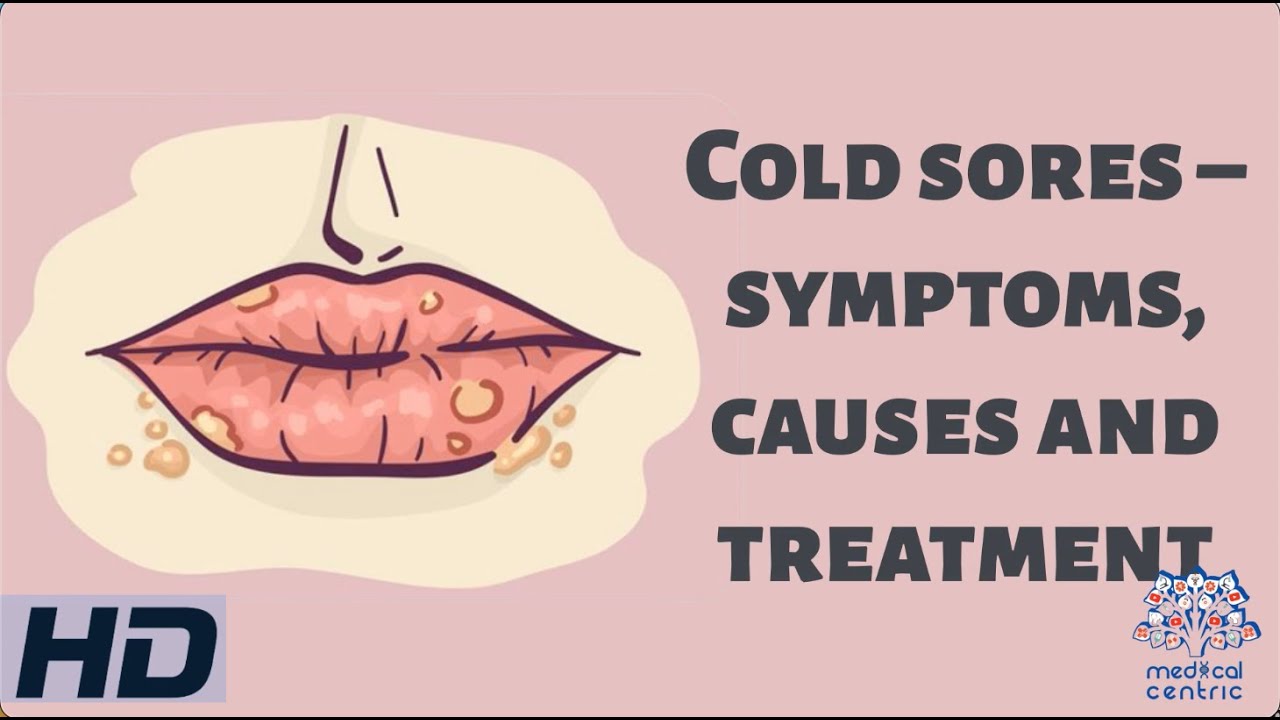
A cold sore usually announces itself with tingling, burning or itching on the lip before anything shows. Fluid-filled blisters follow, then burst, and Healthline calls that open stage the most contagious. A scab forms next, and eventually it falls off and normal skin shows.
Cleveland Clinic and the NHS give the same contagious window, from the first tingle until the cold sore has completely healed. A dry scab doesn’t close it.
For a lipstick, use that longest window when deciding whether a product was exposed.
No visible sore doesn’t mean no virus. A PCR swab study of eight adults with a history of oral herpes (indexed in PubMed Central) found that reactivation on the oral mucosa is common and usually without symptoms.
A lipstick can pick up virus from someone who has no idea they are shedding.
Can You Get a Cold Sore From Sharing Lipstick?
Possible, though the odds are low. UCI Health dermatologist Janellen Smith calls the chance extremely small even when someone applies a lipstick right after a person with an active cold sore.
Risk climbs when two people use the product close together and the first left it moist. Broken or irritated skin on the second person’s lips adds to it.
PopSci’s review of the Sephora case makes the same point. Transfer needs quick succession, and open wounds on the lips make it likelier.
Nerurkar’s 1983 JAMA paper adds that transmission may need rubbing of the skin or entry through abrasions. Cracked lips supply that, so keeping dry lips in good shape closes off one easy way in.
A customer sued Sephora in 2017, alleging she caught oral herpes from a common-use lipstick sampled at its Hollywood, California store in October 2015. Doctors quoted by PopSci doubted the claim could be proved, because the virus is common and often goes unnoticed.
Fomite transfer versus direct contact
Kissing or sharing a straw (Cleveland Clinic) moves virus skin to skin or through saliva. No product sits between the two people, so there’s no drying clock running.
Lipstick works differently. The virus has to stay infectious on the product between users, drying and light work against it, and a fingertip or applicator can be the middle step. Then the second user’s lips also have to give it a way in.
Direct contact is simply the more efficient route. Lipstick only gets there if the timing lines up.
HSV-1 and HSV-2

WHO estimated that 64% of people under 50 carried HSV-1 in 2020, against 13% of people aged 15 to 49 for HSV-2.
HSV-1 is the main cause of oral herpes, so it’s the virus a shared lipstick would carry. HSV-2 mostly causes genital herpes.
Pageau and Schilling-Loeffler tested HSV-1, and the 1996 skin study tested HSV-2. None of the studies cited here compares the two types on a cosmetic surface.
With a base rate that high, a first cold sore after sharing lipstick says little about where the virus came from.
When Do the Published Survival Times Not Apply to Lipstick?
Whenever the lab condition differs from real lipstick use, and the studies build several of those differences in from the start.
| Limit | What the studies did | What lipstick use looks like |
|---|---|---|
| Test surface | Plastic, steel, glass, skin disks | Wax-and-oil film on a bullet, wand or stick |
| Virus source | Culture fluid or buffer | Saliva, cold sore fluid, fingertip transfer |
| Endpoint | Infectious virus recovered in cell culture | Virus reaching broken skin on another person’s lips |
| Timing | Fixed intervals from minutes to weeks | Minutes between users, or weeks in a makeup bag |
Expert commentary fills the gap with plausible statements, not measurements. Dermatologist Melanie Chao-Lo told Allure Philippines that HSV-1 can survive for several hours on lipstick testers and that a moist, lipid-based environment suits the virus.
That fits the stand-in data, but it’s an inference.
UTMB’s Medical Discovery News put it plainly in 2013. Nobody knows whether makeup samples harbor viruses, though some viruses are stable enough that it’s possible. As of October 2026 the measurement is still missing.
The numbers fit best when two people share one lipstick in the same sitting, particularly a moist tester with fresh saliva on it. Fingertip transfer from an open sore fits too. They fit poorly for a lipstick one person uses alone for weeks, or a dried film left in a bag for days.
The drying-driven times describe exposed films. A closed gloss tube, where the virus never dries out, is a different situation, and nobody has tested whether the numbers hold there.
Should You Wipe, Scrape or Throw Away a Lipstick After a Cold Sore?

Throw away gloss and anything that touched an open sore. A solid bullet or balm stick can be scraped and wiped, but only if the exposure was brief and nobody else will use it. Anything shared goes in the bin as well, and the replacement can wait until the scab is gone.
A 1987 surface test in the Journal of Hospital Infection dried herpes virus onto a surface and found that 70% ethanol or isopropanol worked within 1 minute. Alcohols above 95% showed little activity in 10 minutes.
Stronger is not better here. An antiseptic comparison archived in PubMed Central found rubbing alcohol mixed 1:1 with liquid virus stock acted at zero time, so the one-minute wait matters only on dried residue.
Disinfect or discard
- Stop using the product at the first tingle.
- Keep it out of shared bags and away from other people.
- Bin any gloss, and anything else that comes in a jar or with a wand.
- Twist up a bullet or balm stick and scrape off the top layer with a clean tissue.
- Wet the surface with 70% isopropyl alcohol and leave it for a full minute.
- Let it air-dry before capping.
- Swap in a fresh product after the scab falls off.
Steps four to six follow the same logic as the fuller walkthrough on sanitizing a lipstick.
Skip lip color on an open sore altogether. Pressing a bullet into weeping skin loads it with fluid that no wipe will reach.
Using testers and shared products
Don’t share. That’s about the whole rule.
The NHS advises against kissing anyone while you have a cold sore, and WHO tells people with oral herpes symptoms to avoid sharing objects that touched saliva, which includes a lipstick.
In stores, keep testers off your lips. A swatch on the back of the hand shows the shade just as well.
Common Questions About Herpes Virus on Lipstick
Can herpes spread through shared glasses, straws and utensils?
It can, though rarely. Pageau and colleagues (Journal of Applied Microbiology, 2023) found HSV-1 stayed infectious on food-contact surfaces and called the transmission risk low but plausible.
WHO advises people with oral herpes symptoms to avoid sharing objects that touched saliva.
Can lipstick cause a reaction that looks like a cold sore?
It can. An allergic reaction to a lip product may resemble an outbreak, and PopSci notes that physicians can mistake one for the other.
Cleveland Clinic makes the same point, that not every bump or irritation on the lip is a cold sore. A clinician can usually tell by examining the lip.
Do antivirals like acyclovir or valacyclovir make shared lipstick safe?
No. Antivirals suppress outbreaks, according to PopSci, but there is no cure, and the virus stays in the nerve cells (UTMB’s Medical Discovery News).
Shedding without symptoms stays common in the mouth, so the rule against sharing lip products doesn’t change.
Can the virus sit on makeup brushes and applicators?
Yes. Brushes and applicators pick up saliva and fingertip virus the same way a lipstick bullet does, and dermatologist Cynthia Bailey names exchanged lipsticks and cosmetic brushes among the biggest risks because the virus needs moisture to stay active.
For reusable ones, it helps to know the basics of washing your makeup brushes properly. Testers call for a fresh disposable applicator.
Is a cold sore from a lipstick the same as genital herpes?
Not exactly, but the virus can be the same. A cold sore is usually HSV-1, which can also cause genital herpes through oral sex.
WHO’s 2020 estimates counted 376 million genital HSV-1 infections among people aged 15 to 49. A 2015 PLOS ONE estimate for 2012 had put the figure at 140 million. HSV-2 remains the main cause of genital herpes.
What to Do After Using a Shared Lipstick

Watch the lips for 12 days. The incubation period runs 2 to 12 days, with a mean of 4 (Stanford University virology pages), and that applies to any shared lipstick that may carry herpes simplex virus.
Symptoms appear days after any exposure, so a later cold sore cannot confirm the lipstick as the source.
Over those days, look for tingling, burning or blisters. At the first tingle, ask a pharmacist or doctor about antivirals, which work best when started within 48 hours of the sore forming (Cleveland Clinic). If the sore hasn’t healed within 10 days, see a doctor (NHS).
The order follows the clock. Antiviral treatment loses value after the first two days, while the 10-day check matters only if the sore persists.
A measurement taken on lipstick itself would change this advice, and none exists as of October 2026. Until one does, the rest of the kit that touched the lips deserves the same care, as laid out in a guide to sanitizing the rest of a makeup kit.

She started writing on the site after fielding the same questions from clients and friends often enough to just write the answers down: which red won't turn orange on a warm undertone, how to keep lipstick from feathering into fine lines, why a "12-hour" formula rarely survives dinner.
Every review on the site follows the same rule she uses with paying clients: wear it first, then decide if it's worth recommending.
- How to Make Eyeliner Last Longer Without Smudging - August 31, 2026
- How to Make Eyeshadow Last Longer All Day - August 29, 2026
- How to Find Your Undertone in 5 Easy Steps - August 27, 2026