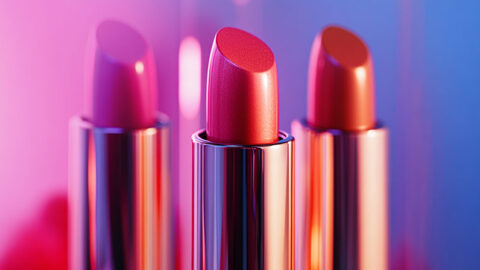
People treat lip gloss vs lipstick like a taste question, something you pick based on mood. It’s really a question about two different formulas that happen to sit in the same makeup bag and get compared anyway.
The size gap between the two categories is bigger than most people guess. The global lipstick market hit 17.49 billion dollars in 2024, according to Grand View Research, nearly four times the size of the lip gloss category the same industry tracks on its own.
Wax and dense pigment build one. Oil and polymer build the other. That single ingredient swap explains almost everything people notice when they set the two side by side.
Pick the wrong finish on the wrong day and it shows fast. Color slides off somewhere around lunch, or the shine never quite reads as color to begin with.
What Is Lip Gloss?

A doe-foot wand is the giveaway, not the tube. Gloss goes on as a semi-liquid or gel, built mainly to add shine and a light wash of color rather than full opaque coverage.
Oils and polymers make up the base instead of wax. Castor oil and jojoba oil do the sliding, and polymers like polybutene keep the shine sitting where it’s put instead of pooling into the corners of the mouth.
Mordor Intelligence sizes the category at 4.52 billion dollars in 2025, climbing toward 4.87 billion by 2026, with tinted formulas pulling share away from plain clear finishes.
Max Factor gets the credit for the original formula, built in 1930 for Hollywood actresses whose lips read flat under black-and-white studio lighting. The full story behind who actually invented lip gloss is worth a detour if the history interests you.
Types of Lip Gloss Formulas
The shelf mostly splits into a handful of formats, and the differences come down to how much oil versus polymer each one leans on.
- Sheer gloss, a light shine with barely any pigment
- Tinted gloss, closer to a lip tint with visible color
- Plumping gloss, spiked with cinnamon oil or capsicum extract
- Non-sticky gloss, built on silicone-polymer blends instead of raw oil
Fenty Beauty’s Gloss Bomb Heat uses capsicum frutescens fruit extract for its tingle, paired with shea butter for slip (Fenty Beauty ingredient listing, 2026). DuWop ran a similar plumping idea back in the early 2000s, a cinnamon, wintergreen, and ginger blend called Lip Venom. The full breakdown of lip gloss formats covers the rest.
What Is Lipstick?

Wax makes the stick hold its shape, and that’s really the whole story of what separates lipstick from everything else in a makeup bag. Wax content sits at 10 to 15 percent of the formula, enough to push the melting point up to roughly 65 to 85 degrees Celsius so a bullet survives a warm bag without collapsing (Schmidt + Haensch data).
Applied straight from the tube or laid down with a brush, the product itself is solid and heavily pigmented, nothing like the semi-liquid gloss covered above. Pigment concentration is really the split that matters here. Lipstick carries a dense, often opaque color layer, which is why a single swipe reads so differently from a gloss wand.
Grand View Research values the global lipstick market at 17.49 billion dollars in 2024, with shimmer finishes alone holding 37.2 percent of that revenue.
Common Lipstick Formula Types
Oil ratio is what separates most of these formulas from each other, and the category splits into a handful of finishes worth knowing by name.
- Matte, flat finish, higher pigment, lower oil
- Satin, a soft sheen between matte and cream
- Cream, glide-heavy with more emollient oil
- Sheer, light coverage with a tinted balm feel
- Liquid lipstick, a hybrid that dries down like a stain but sits closer to gloss on application
MAC’s Matte Lipstick and Charlotte Tilbury’s Matte Revolution both fall in the first camp. The gap between matte and satin finishes comes down almost entirely to oil ratio, and the liquid lipstick format exists specifically to blur the line between the two categories this article compares. A wider look at every option sits in the guide to lipstick types.
What Is the Difference Between Lip Gloss and Lipstick?
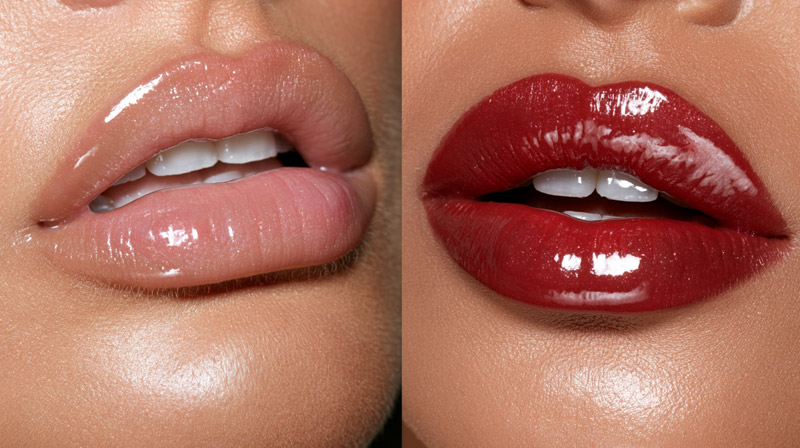
Finish and pigment load are what separate the two fastest. Gloss reflects light and sits sheer. Lipstick sits opaque and holds a shape on the lip.
| Attribute | Lip Gloss | Lipstick |
|---|---|---|
| Finish | Shine, sheer to high-gloss | Matte, satin, or cream |
| Pigment coverage | Sheer to semi-transparent | Opaque, full coverage |
| Texture | Thin, often tacky | Firm, structured bullet |
| Application tool | Doe-foot wand | Bullet or lip brush |
| Formula base | Oils and polymers | Wax and pigment |
The market numbers echo the same story in a different way. Lipstick’s 17.49 billion dollar global category (Grand View Research, 2024) runs nearly four times the size of lip gloss’s 4.52 billion dollar footprint (Mordor Intelligence, 2025), which tracks with lipstick’s longer shelf history and wider shade range.
Neither one is a lesser version of the other. Each solves a different problem: shine and lift from one, saturated and held color from the other.
How Do Lip Gloss and Lipstick Ingredients Compare?
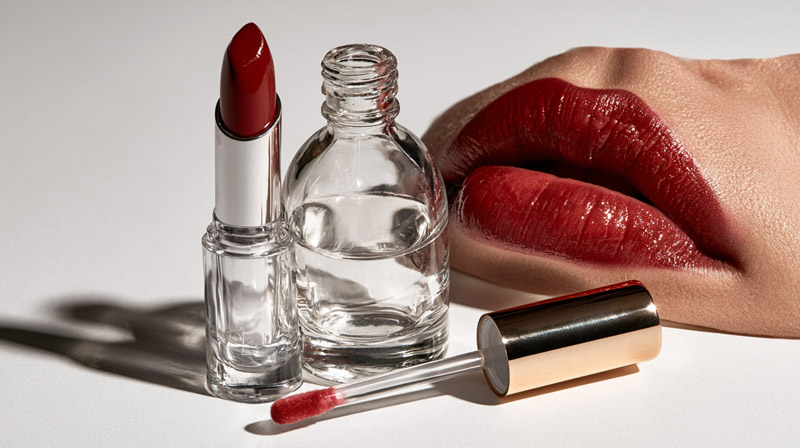
Oil and silicone carry gloss. Wax and pigment carry lipstick. That single swap accounts for almost every other difference between the two.
Beeswax has historically been used at concentrations up to 56 percent in lipstick and gloss formulas, according to Cosmetic Ingredient Review data, though modern lipsticks typically run wax closer to the 10 to 15 percent range once oils and pigment are factored in. Candelilla wax shows up at 3 to 10 percent use levels, and carnauba at 2 to 8 percent, both chosen for hardness and shine rather than bulk.
| Component | Lip Gloss | Lipstick |
|---|---|---|
| Oil and silicone | High, dimethicone and isododecane common | Low to moderate |
| Wax content | Minimal to none | 10 to 15 percent |
| Pigment load | Light, sheer wash | Dense, often opaque |
| Added actives | Vitamin E, hyaluronic acid, SPF in select formulas | Vitamin E, antioxidants in select formulas |
Pigment sourcing runs on the same short list for both products: iron oxides for reds and browns, mica for shimmer, and FD&C dyes for brighter shades. A full ingredient breakdown, including how each compound behaves on the lips, lives in the guide to lipstick ingredients.
How Does Application Differ Between Lip Gloss and Lipstick?
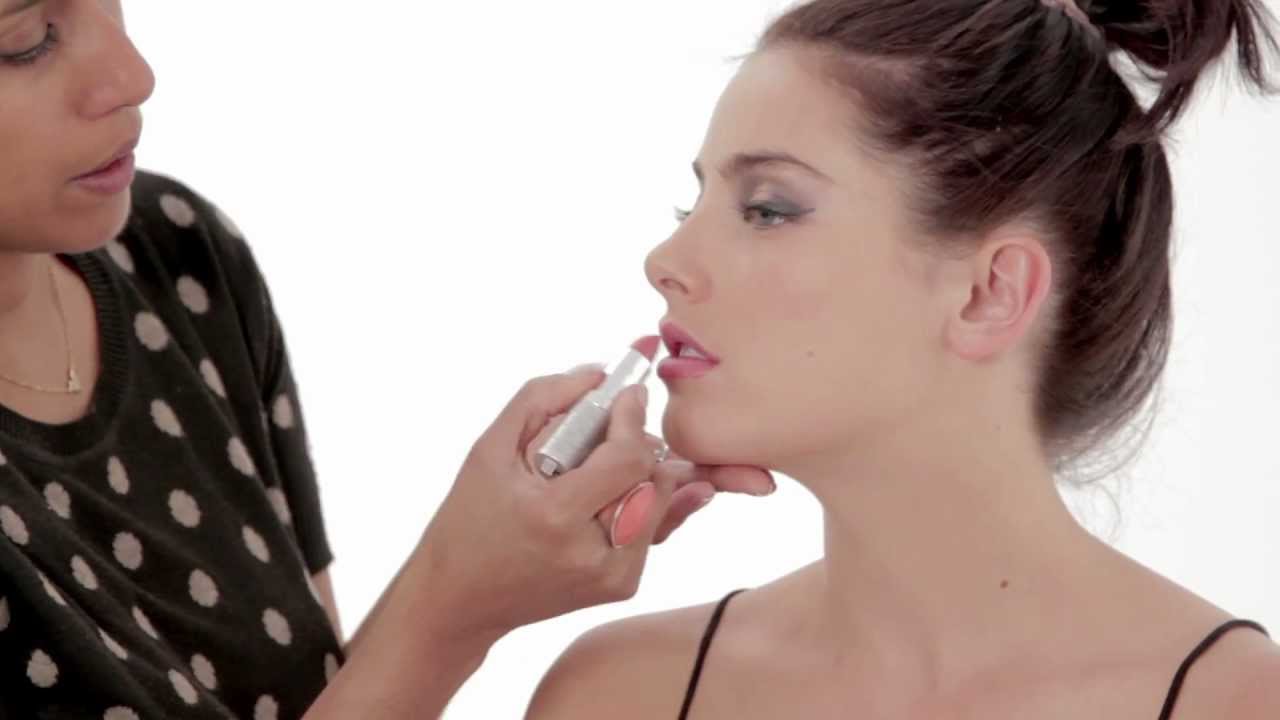
Gloss needs one tool. Lipstick tends to need three.
A doe-foot wand goes straight from tube to lip for gloss, no prep involved. Lipstick usually gets paired with lip liner first, to hold the edge and keep color from bleeding into fine lines around the mouth.
Tools Used for Each Product
Most makeup artists teach the same build order for a full lip look, working from the outside in.
- Liner, to define the shape
- Lipstick, applied from a bullet or with a brush for precision
- Gloss, layered on top at the center of the lip for dimension
Precision matters most around the cupid’s bow, where a brush gives more control than a bullet swiped straight from the tube.
Maybelline’s Super Stay 24 2-Step Liquid Lipstick shows the layering logic in miniature. Apply the color side, wait roughly 2 minutes for it to set, then seal with the conditioning balm (Maybelline product instructions, 2026). Full step-by-step routines exist for both products: one for applying lipstick, one for applying lip gloss cleanly without overshooting the lip line.
Which Lasts Longer: Lip Gloss or Lipstick?

Lipstick wins on raw wear time, and it isn’t close. Maybelline’s Super Stay 24 carries an official up to 24 hour no-transfer claim, backed by a marketing promise of holding through 200 bites and 120 sips (Maybelline, 2026).
| Product Type | Typical Wear | Main Fade Trigger |
|---|---|---|
| Standard lip gloss | Short, frequent touch-ups needed | Eating, drinking, cup transfer |
| Standard cream or satin lipstick | Moderate, fades over a few hours | Eating, talking, fabric transfer |
| Long-wear liquid lipstick | Up to 24 hours (Maybelline claim) | Rare, mostly oil-based removers |
Transfer resistance is where the two categories start to blur. Liquid lipstick and hybrid lip-stain formulas close most of the gap with gloss’s shine, since a lip stain dries into the skin instead of sitting on top of it.
Gloss fades the moment it touches a glass, a napkin, or another person. That’s the tradeoff for the shine. For a closer look at exactly how long lip gloss holds up, or how the numbers change for liquid lipstick specifically, both get their own detailed breakdown.
Which Is More Hydrating for Dry Lips?
Lip skin dries out faster than skin almost anywhere else on the body. A feasibility study out of the Rutgers Center for Dermal Research measured hydration across 18 participants, ages 24 to 68, using a corneometer at five points on the lip after a 2-hour lipstick application. It confirmed what dermatologists already assumed: lips don’t have the sebaceous or sweat glands that keep other skin moist, so they dry out faster.
Gloss tends to win here. Its oil-heavy base, the same castor oil and jojoba oil mentioned earlier, sits closer to an emollient than lipstick’s wax-and-pigment structure ever will.
Matte lipstick sits at the driest end of the spectrum, precisely because its formula trades oil for pigment to get that flat, non-reflective look. A few ingredients worth checking on the label if dryness is a concern: shea butter, hyaluronic acid, and squalane.
Fenty Beauty’s Gloss Bomb Oil leans into this with sodium hyaluronate, branded as “Hyaluronic Filling Spheres,” built for hydration on contact. A short prep routine still beats any formula fix: exfoliate first, then let a balm sit for a few minutes before color goes on. The full version of that routine is covered in the guides on exfoliating lips naturally and general lip care for dry lips.
Can You Layer Lip Gloss Over Lipstick?
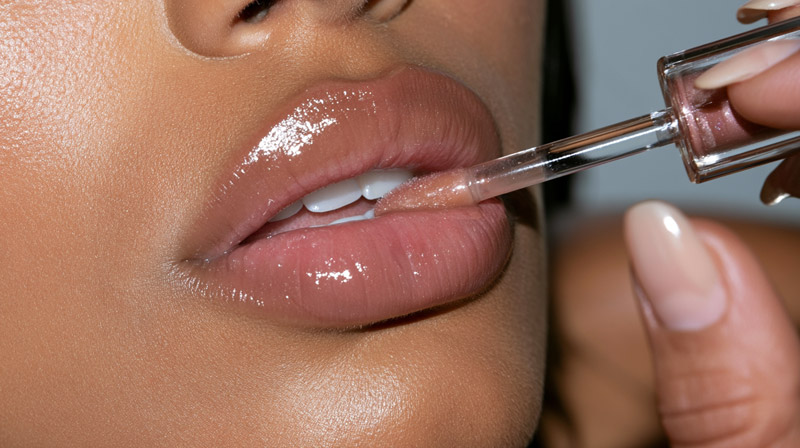
Yes, and it’s one of the oldest tricks in a makeup kit. Lipstick goes down first as the base coat, then gloss gets pressed into just the center of the lips, not the full surface.
The gloss catches light right where the lips curve the most, which reads as extra volume without changing the actual shape underneath. Color from the lipstick stays intact below it, since only a thin top layer gets the shine treatment.
A couple of pairings show up more than any other. Matte lipstick with a clear gloss gives definition plus a soft shine on top, and cream lipstick with a tinted gloss gives a deeper, richer color effect.
NYX built this exact idea into a single tube with its Shine Loud High Shine Lip Color, a dual-ended product pairing a pigmented base coat on one end with a non-sticky gloss tip on the other (NYX Professional Makeup, 2026).
The common mistake is going edge to edge with the gloss. Full-lip coverage adds slip, and that slip drags the lipstick underneath toward the lip line faster than it would fade on its own. A full walkthrough of the technique sits in the guide on layering lip gloss over lipstick.
Which Costs More: Lip Gloss or Lipstick?

Lipstick usually costs more per unit, and prestige lipstick widens that gap by a wide margin.
On the drugstore end, e.l.f. Cosmetics prices its Sheer Slick Lipstick at 6 dollars and its O FACE Satin Lipstick at 10 dollars (e.l.f. Cosmetics official pricing, 2026). NYX Professional Makeup sits on the same shelf, positioned as an affordable, mass-market alternative alongside e.l.f.
Prestige pricing looks nothing like that. Dior’s Rouge Dior lipstick runs around 50 dollars per tube at official retail, and Chanel’s Rouge Coco sits in a comparable range among French luxury houses.
| Tier | Example | Typical Price |
|---|---|---|
| Drugstore lipstick | e.l.f. Cosmetics | 6 to 10 dollars |
| Prestige lipstick | Dior Rouge Dior | around 50 dollars |
| Limited-release gloss-tint | Rhode Peptide Lip Tint | 20 dollars |
Reapplication frequency is the real cost driver, not the sticker price. A gloss that needs reapplying every couple of hours burns through a tube faster than a lipstick that holds for most of a workday, so the cheaper product can still cost more by the end of a month.
Rhode’s Peptide Lip Tint retails at 20 dollars and regularly sells out within its limited shade drops, a release pattern also seen with Rare Beauty’s small-batch lip launches (Rhode Skin official pricing, 2026).
Which Fits Different Occasions and Makeup Looks?

The occasion decides the finish faster than personal preference does.
- Everyday or office wear leans toward a sheer gloss or satin lipstick, since neither needs much upkeep through a workday
- Formal or evening events call for a bold matte lipstick, since it holds its edge under flash photography without sliding
- Natural or no-makeup looks pair best with a tinted gloss, close to the lip’s own color with just enough shine
- Studio lighting or video calls favor satin or gloss over flat matte, since a fully matte mouth can read as flat on screen
That last point runs against instinct. Matte reads as polished and controlled in photographs, but the same flatness that photographs well under a flash can look washed out under the softer, closer light of a webcam. Beauty editors covering video-call makeup consistently point toward gloss or satin for that setting, and save true matte for in-person events and formal photography.
What Are the Safety and Allergy Considerations for Each?
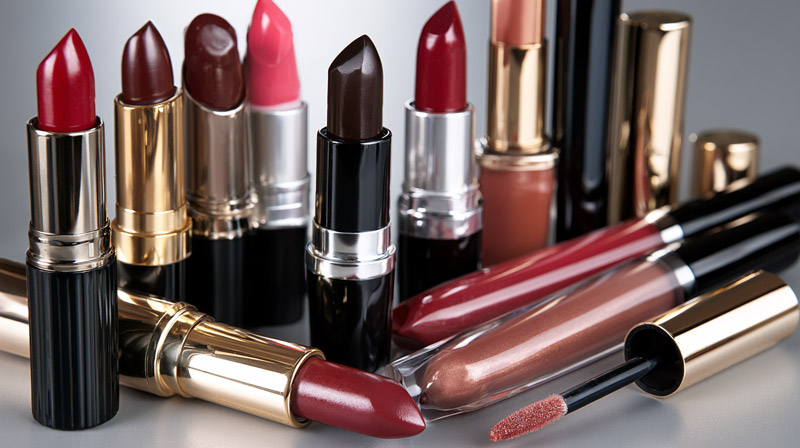
Both products carry the same core exposure risk. They sit on the lips, which absorb more of what touches them than skin does almost anywhere else on the face.
Common Allergens and Regulatory Limits
Carmine causes more reported reactions than any other lip-product ingredient. The FDA has required cochineal extract and carmine to be declared by name on cosmetic labels since a final rule took effect January 5, 2011, following reports of anaphylaxis linked to the pigment (Federal Register, FDA final rule, 2009).
A factory-based study of 25 dye workers found 42 percent showed sensitization to carmine, and 8 percent developed occupational asthma from it, though that exposure level runs far higher than anything a typical cosmetics user would face (cited in a cochineal allergy review, ScienceDirect, 2018).
Fragrance compounds and lanolin round out the most common triggers in both gloss and lipstick, since both rely on similar oil and wax carriers to hold pigment and scent.
| Region | Rule | Approach to Lead |
|---|---|---|
| United States | FDA guidance | Recommends a 10 ppm ceiling as an achievable impurity limit |
| European Union | Regulation 1223/2009, Annex II | Lists lead as a prohibited substance, trace amounts allowed only if technically unavoidable |
The two frameworks don’t fully agree on how to frame the same substance. FDA guidance treats a numeric ceiling as sufficient reassurance, while the EU treats lead as banned in principle and pushes manufacturers to justify any trace presence case by case, a stricter standard on paper even without its own single published ppm figure for lip products specifically.
Shelf Life and Contamination Risk
Lip gloss carries a higher contamination risk than lipstick, and more than one study backs that up.
A Saudi Arabian analysis of retail cosmetics found lip gloss to be the single most contaminated product category tested, with lipstick close behind (ScienceDirect, 2023). An earlier Aston University study examined 467 used products, including 107 lip glosses and 96 lipsticks, and found 79 to 90 percent of the full sample carried bacterial contamination (Bashir and Lambert, Journal of Applied Microbiology, 2019/2020).
The open wand is the likely reason. It travels from tube to lip and back on every use, dragging saliva and skin cells into a moisture-rich, oil-based formula that gives bacteria something to feed on. A sealed lipstick bullet gets wiped rather than dipped, which limits the same transfer.
Watch for visible mold growth or the texture changes that signal expired product side effects, and build a habit of sanitizing lipstick and gloss wands between uses.
Some hydrating gloss and lip oil formulas add SPF filters directly into the product, something standard lipstick formulas almost never include. Since a portion of both products gets swallowed over the course of normal wear, incidental ingestion is part of the reason regulators cap heavy metals in the first place, even though the exact lifetime ingestion total people quote online is closer to folklore than confirmed science.
Which Fits Different Lip Types and Shapes?

Lip shape changes which product actually solves the problem in front of it.
Thin lips do better with a gloss that carries a plumping agent (the capsicum or cinnamon-oil formulas covered earlier), since it adds volume through a mild flush rather than added pigment. Some people stick with lipstick instead and lean on shade and light reflection for a similar illusion, a different approach covered in a separate guide on lipstick for thin lips.
Full lips generally look better under matte lipstick, which defines the shape without adding the extra dimension gloss would introduce. The flat finish reads as intentional rather than overdone on lips that already have volume.
Textured or chapped lips show every flaw under lipstick, since a matte or satin finish sits on top of dry patches and makes them more visible. Gloss applied over an exfoliated, hydrated base smooths the same texture out instead of highlighting it.
Uneven or asymmetric lip lines are where lipstick has an option gloss simply doesn’t offer. Liner reshapes the outline before color goes on, correcting minor asymmetry in a way a gloss wand, applied freehand with no edge control, can’t replicate. Left unlined, the same asymmetry tends to show up as feathering along the lip line later in the day.
FAQ on Lip Gloss Vs Lipstick
Which Is Easier for a Beginner to Apply, Lip Gloss or Lipstick?
Gloss forgives more mistakes. A doe-foot wand spreads shine evenly with almost no precision needed. Lipstick needs a defined lip line, and usually a liner to keep it from bleeding, which makes gloss the easier starting point.
Can Men Wear Lip Gloss or Lipstick?
Yes, and more men’s grooming lines carry both now. Clear or lightly tinted gloss reads as subtle skincare rather than makeup. Pigmented lipstick reads as a deliberate style choice, especially in bold reds or deep berries.
Does Lip Gloss Make Lips Look Bigger Than Lipstick?
Gloss creates the illusion through light, not volume. Shine reflects off the center of the lip and tricks the eye into reading more fullness than is actually there. Plumping formulas add a mild flush too, using capsicum or cinnamon oil, and the guide on how a lip plumper works explains the mechanism.
Can Lip Gloss Double as a Cream Highlighter?
A dab of clear or shimmer lip gloss works in a pinch as cream highlighter, since the same oil-and-polymer base that creates shine on lips catches light the same way on skin. It won’t hold up as long as an actual highlighter formula though.
Is Liquid Lipstick Basically the Same Thing as Lip Gloss?
Not really. Liquid lipstick dries down to a stain-like matte or satin finish and stays put. Lip gloss stays wet and shiny the whole time it’s worn. Both apply from a wand, which is probably where the confusion starts.
Why Does Lip Gloss Feel Sticky?
Polymers and thick oils like castor oil build the shine, and those same ingredients build the tack. Non-sticky formulas swap in lighter silicone-polymer blends instead of raw oil, which cuts the stickiness without losing much shine.
Can You Make a Matte Lipstick Glossy Without Buying Anything New?
Yes, in most cases. A thin layer of clear gloss pressed over matte lipstick brings the shine back instantly. The full method, including product-free tricks using balm, is covered in the guide on making matte lipstick glossy.
Are Lip Gloss and Lipstick Vegan or Cruelty-Free by Default?
Neither is vegan by default. Carmine, a common red pigment in both products, comes from crushed cochineal insects, and beeswax turns up in plenty of lipstick formulas too. Checking the ingredient list is really the only reliable way to confirm either claim.
Does Lip Gloss Transfer Onto a Face Mask More Than Lipstick?
Gloss transfers more. Its oil-based, semi-liquid texture rubs off onto fabric more easily than matte or satin lipstick, which sets into the lips instead of sitting wet on top. Long-wear liquid lipstick holds up best against mask friction.
What Is the Actual Difference Between Lip Gloss and Lip Oil?
Lip oil sits closer to skincare than makeup, built almost entirely from nourishing oils with little shine-locking polymer. Gloss adds polymers, and often pigment, on top of that oil base for a more color-forward finish. The full breakdown of lip oil versus lip gloss covers the rest.
Conclusion
Settling lip gloss vs lipstick doesn’t actually require picking a side. It requires figuring out which one solves the problem sitting on your lips right now.
Start with a dryness check, not the shade card. Press a finger to your lower lip after a normal day goes by. Tight and flaky points toward gloss. Smooth points toward matte lipstick.
A two-product lip kit beats a drawer full of near-duplicate shades: one long-wear lipstick for structure, one clear or tinted gloss for movement and layering.
If you’re stocking a kit from scratch, buy the gloss first. It pairs with everything already in a bag, including lip liner and whatever lipstick shade you own, while a lone lipstick pairs with nothing until gloss shows up to join it.

She started writing on the site after fielding the same questions from clients and friends often enough to just write the answers down: which red won't turn orange on a warm undertone, how to keep lipstick from feathering into fine lines, why a "12-hour" formula rarely survives dinner.
Every review on the site follows the same rule she uses with paying clients: wear it first, then decide if it's worth recommending.
- How to Make Eyeliner Last Longer Without Smudging - August 31, 2026
- How to Make Eyeshadow Last Longer All Day - August 29, 2026
- How to Find Your Undertone in 5 Easy Steps - August 27, 2026