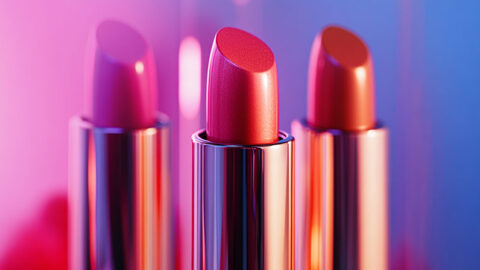
The stratum corneum on the lips runs three to five cell layers thick. Everywhere else on the face, that same barrier stacks fifteen to twenty layers deep.
That gap explains more about how lip plumper works than any ingredient list ever will.
People reach for these products constantly, swiping one on right before heading out the door, and most never stop to ask which of two completely different reactions is happening on their own mouth.
Every plumper on the shelf runs on one of two mechanisms: something irritating enough to pull blood toward the surface, or a humectant like hyaluronic acid that swells the tissue with water instead. Dermatologists have tracked both processes for decades. None of this started as a beauty trend. It just got marketed as one.
What Is a Lip Plumper
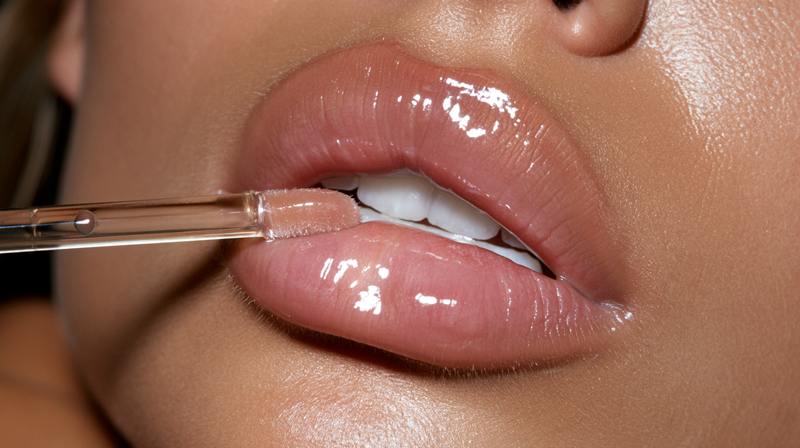
No needles. No numbing cream. No trip to a med spa. A lip plumper gets all its volume from a reaction that happens right at the surface, either an irritant pulling blood into the tissue or moisture swelling the outer layer.
That’s a different job than a regular lip gloss, which sits on the lip for shine and color and doesn’t touch what’s underneath at all.
It’s also nothing like a dermal filler. A filler goes under the skin with a needle. A plumper stays on top, and the effect fades in hours, not months.
Recognizable names in the category: Buxom’s Full-On Plumping Lip Polish, Too Faced Lip Injection Extreme, Dior Lip Maximizer.
Too Faced states its own formula is 100% needle free and warns users they may feel a tingle, which tells you exactly which mechanism is doing the work.
How Does a Lip Plumper Work

Two different reactions can create the same swollen look. One works through irritation: blood vessels near the surface widen. The other works through moisture: water gets pulled into the outer skin layer until it plumps on its own.
Both fade fast. Neither one touches collagen, and neither builds new tissue, regardless of what the label promises.
None of this would even be possible without how thin lip skin actually is. The stratum corneum there runs about 3 to 5 cell layers, compared with 15 to 20 layers across the rest of the face (OneSkin, 2025).
That thinner barrier is also why lips dry out faster, and why whatever gets applied reaches the reactive tissue underneath with less resistance.
Vasodilation and Blood Flow Response
Capsaicin works by activating a nerve receptor called TRPV1. Hungarian pharmacologists were already documenting capsaicin’s effect on sensory nerve fibers back in the late 1950s and through the 1970s, but the receptor itself wasn’t cloned and formally identified as TRPV1 until 1997, by Caterina and colleagues.
The receptor can’t tell real heat from a chemical copy of it. It fires either way, and vessels near the surface widen in response.
- Cinnamon and cayenne act on receptors that release substance P, the pathway behind spice-induced flushing (DermNet NZ, 2024)
- Benzyl nicotinate and L-arginine trigger blood flow directly, without a nerve pathway involved (DermNet NZ, 2024)
- Topical capsaicin produces vasodilation paired with visible edema within minutes of contact (bioRxiv, 2020)
Fièra’s Fulluptuous line claims a full plump within 10 minutes of application, which tracks with how fast this particular pathway fires.
Moisture-Based Tissue Swelling
Hyaluronic acid and glycerin skip the nerve pathway entirely. They bind water molecules to the outer layer of lip skin, which expands it slightly from within.
No signal fires. No vessel widens. The lip simply holds more water than it did an hour before.
Hyaluronic acid turns over fast in skin tissue, often cited with a half-life around 24 hours, so this kind of swelling tends to fade on roughly that same timeline unless the product gets reapplied.
What Ingredients Cause the Plumping Effect

Irritants, humectants, and peptides make up basically the entire plumping category. Capsaicin and cinnamon oil trigger blood flow. Hyaluronic acid and glycerin pull in moisture. Syn-Ake and similar peptides get marketed as collagen support, whether or not the science actually backs that claim up.
Concentration decides how strong the reaction feels. A trace of cinnamon oil tingles. A heavy dose burns.
| Category | Mechanism | Example Ingredients |
|---|---|---|
| Irritants | Nerve receptor activation, blood flow increase | Capsaicin, cinnamon oil, menthol, ginger extract |
| Humectants | Water binding in the outer skin layer | Hyaluronic acid, glycerin |
| Peptides | Marketed collagen support with repeated use | Syn-Ake, palmitoyl tripeptide-1 |
Irritant and Stimulant Compounds
Cinnamon oil has been a known contact allergen since the 19th century, when sucking on cinnamon-soaked toothpicks was first linked to skin reactions (Thermo Fisher Scientific allergen data).
- Capsaicin, from chili extract
- Cinnamon oil and cinnamic aldehyde
- Menthol and peppermint oil
- Ginger extract
- Benzyl nicotinate and L-arginine
Buxom pairs peptides and hyaluronic acid with a tingling agent in its Full-On formula on purpose, according to the brand’s own description. Not an accident of the formulation.
Hydrating and Humectant Compounds
Hyaluronic acid and glycerin don’t sting or tingle. They just pull water into place.
No nerve pathway gets involved. The mechanism is purely physical, water moving toward a molecule built to hold it.
- Hyaluronic acid binds water molecules to the skin’s outer layer
- Glycerin draws moisture from the air and lower skin layers toward the surface
Peptide and Collagen-Support Compounds
Peptides like Syn-Ake and palmitoyl tripeptide-1 show up constantly in plumper marketing as collagen boosters.
The honest problem is size. Most peptides are large, water-loving molecules, and they struggle to cross intact skin even with how thin lip tissue already is.
Lipid-conjugated versions do cross the stratum corneum at measurable levels in lab testing. Whether they reach living dermal cells at the lip in amounts that actually matter is a separate question, and no published study has answered it yet.
What Are the Different Types of Lip Plumpers
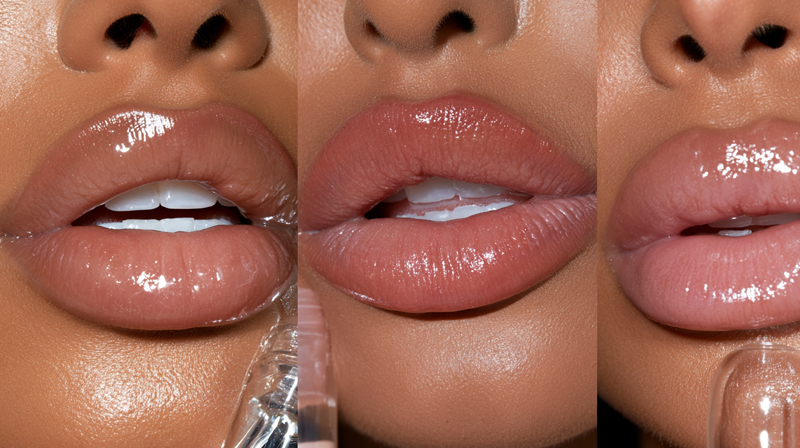
Glosses, serums, overnight masks, and suction devices cover the range of formats on the market right now. A tinted gloss gives an immediate, short burst. Serums and treatments get layered under other products. Overnight masks rely on extended contact time instead of a quick reaction. Suction devices skip chemistry completely and plump the lips mechanically.
| Format | Delivery | Example |
|---|---|---|
| Gloss | Irritant blend, short contact time | Buxom Full-On Plumping Lip Polish |
| Serum or treatment | Layered humectants and peptides | Too Faced Lip Injection Extreme, Dior Lip Maximizer |
| Overnight mask | Extended hydration contact time | Applied before sleep |
| Suction device | Mechanical blood flow, no chemicals involved | Fullips enhancer |
Suction devices work on an entirely different principle than the other three formats.
Fullips is probably the most recognized name in this format. The tool works through self-suction rather than chemistry: seal it over the lips, draw gentle suction in 15 to 30 second increments, and the pulling action pushes blood into the tissue mechanically (Fullips, brand instructions).
Results last 1 to 4 hours by the brand’s own directions, and the company specifically warns against hard suction, since it can cause bruising.
Overnight masks work through pure contact time instead. Left on for hours rather than minutes, a humectant-based mask has far longer to pull water into the lip’s thin outer layer than a gloss ever gets.
How Long Does the Plumping Effect Last

Irritant-based plumpers peak fast and fade within a couple of hours, usually somewhere between 20 minutes and 2 hours before the blood flow response wears off completely.
Humectant formulas behave differently from the start. The swelling reads subtler, and it tends to fade on roughly the same timeline that hyaluronic acid takes to turn over in skin tissue, generally cited around 24 hours.
Suction sits in its own category. Fullips reports results lasting 1 to 4 hours per use, and the brand’s FAQ claims the effects build somewhat with repeated sessions.
Fièra’s Fulluptuous line claims full plump within 10 minutes and tells users to reapply every 2 to 3 hours to hold the look, per the brand’s own directions.
Individual variation matters too, more than most people assume. Skin sensitivity, baseline lip hydration, and how densely packed someone’s TRPV1 receptors happen to be, all of it shifts the timeline in either direction.
How Do Lip Plumpers Differ From Lip Fillers
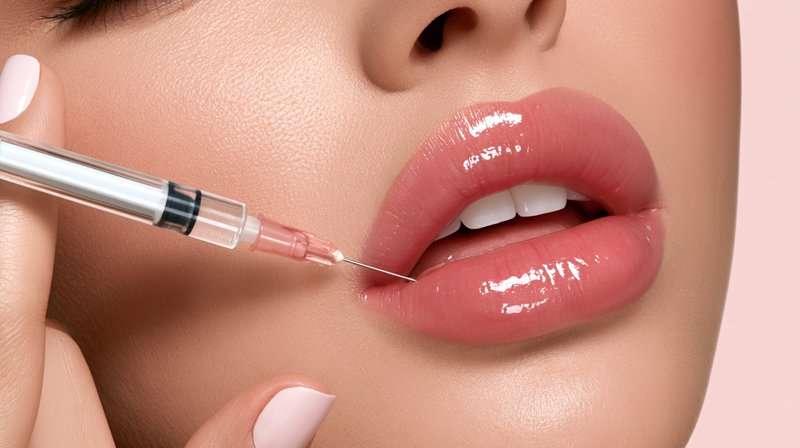
A lip plumper never breaks the skin. It’s just a topical cosmetic, nothing more technical than that.
A lip filler works completely differently. It’s an injectable hyaluronic acid product, regulated by the FDA, and the results last months instead of hours.
| Attribute | Lip Plumper | Lip Filler |
|---|---|---|
| Application | Topical, applied by hand | Injected with a fine needle or cannula |
| Regulatory status | Cosmetic, no FDA premarket approval required | Medical device, requires FDA approval |
| Duration | Minutes to a few hours | 6 to 18 months typically |
| Typical cost | $28 to $33 for a drugstore or prestige gloss | $959 national average per treatment |
Every lip plumper mentioned here counts as a cosmetic product, and cosmetics don’t require premarket approval from the FDA, aside from color additives (FDA, FDA Authority Over Cosmetics).
Hyaluronic acid dermal fillers sit in a different category entirely. Their effects last approximately 6 to 12 months according to the FDA’s own dermal filler guidance, while other sources put typical results for some formulations at 12 to 18 months depending on the product and injection site.
Restylane and Juvederm remain the two most recognized brand names for lip filler injections in the United States.
The American Society of Plastic Surgeons recorded more than 5.3 million hyaluronic acid filler treatments across the U.S. in 2024. Average cost per treatment runs $959, with a range between $332 and $2,354 (CareCredit, 2025).
That price gap is the clearest way to separate the two categories. A $30 gloss and a $959 injection are not competing for the same customer, even when the marketing language overlaps.
What Side Effects Can Lip Plumpers Cause

The same irritant ingredients responsible for the plumping response cause most of the side effects too: burning, redness, swelling that goes further than intended, allergic contact dermatitis, and in some cases increased sun sensitivity.
Contact dermatitis from cosmetics isn’t some rare fluke either. A 13-year retrospective study of patch-tested patients found 232 confirmed cases out of 1,405 records reviewed, a confirmation rate of 16.5 percent (retrospective cosmetics patch-test study, PMC).
Women made up 89.7 percent of confirmed cases, and the face was the most common reaction site at 25.8 percent.
- Burning or stinging from capsaicin, cinnamon oil, or menthol
- Redness and swelling that goes past what the product intended
- Allergic contact dermatitis, most often linked to cinnamon and cinnamic aldehyde
- Photodermatitis, or increased sun sensitivity, reported alongside cinnamon-related reactions
Cinnamon oil’s reputation here isn’t new. It’s been recognized as a contact allergen since the 19th century, first traced to people sucking on cinnamon-soaked toothpicks (Thermo Fisher Scientific allergen data).
Anyone already following a routine built around chronically dry lips tends to notice these irritation effects faster, since the skin barrier is already compromised before the plumper goes on.
There’s also an odd transfer risk worth knowing. DermNet NZ notes that a kiss soon after application can pass the irritant reaction straight to someone else’s skin. A published case report describes a child developing facial urticaria after being kissed by a parent wearing a capsaicin-based lip plumper.
Who Should Avoid Using a Lip Plumper
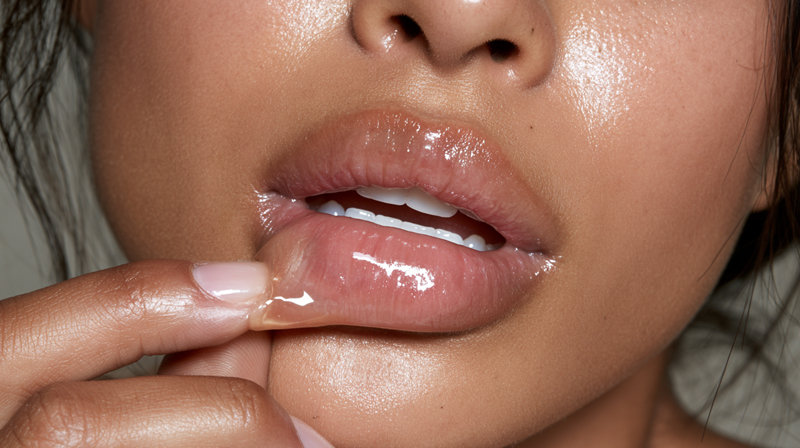
A handful of things make a lip plumper a bad idea, and most of them trace back to the same problem: a compromised skin barrier reacts harder to irritants, not softer.
Eczema and chronically chapped lips top the list. A damaged barrier absorbs irritants faster and reacts harder, so what would normally be a mild tingle turns into real inflammation.
A 2023 patch-test study of cheilitis (lip inflammation) patients referred to a Thai university hospital found allergic contact cheilitis confirmed in 32 percent of cases, and affected patients skewed young and female (Kanokrungsee et al., Contact Dermatitis, 2023). Similar patch-test studies of lip dermatitis patients elsewhere have found women make up 80 to 90 percent of confirmed cases.
A known allergy to cinnamon, capsaicin, or menthol matters here too. A prior reaction to any of these ingredients usually means the same one sitting in a gloss formula will repeat it.
Recent lip procedures come with their own restriction. Dermatology aftercare guidance commonly flags menthol and camphor as ingredients to avoid right after filler injections, and typically recommends holding off on active ingredients near the lips for at least a week post-treatment.
Pregnancy adds a layer of caution as well, since skin sensitivity tends to rise during it, and peppermint sits on the list of essential oils commonly flagged for caution during this period.
How Should You Apply a Lip Plumper for Best Results
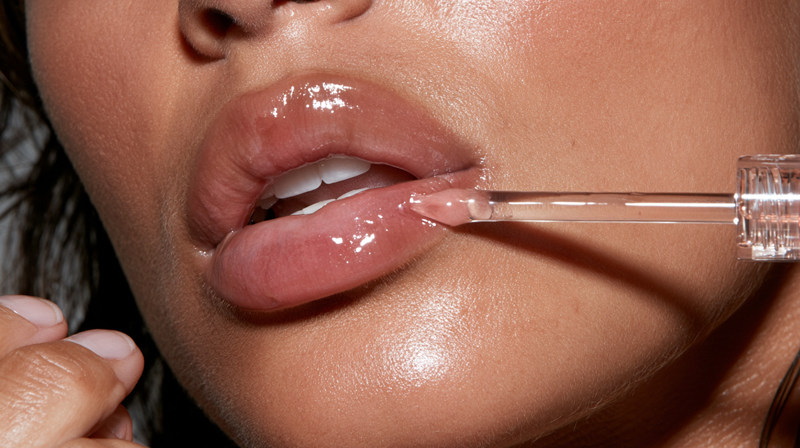
A few basics separate a good result from an irritated one: patch testing first, a light exfoliation beforehand, applying with actual intention, and paying attention to whether the skin is just tingling or genuinely reacting.
- Patch test before the first full application. Dermatology protocol calls for testing on the inner forearm for 24 to 48 hours, since a lot of allergic reactions take a full two days to show up.
- Exfoliate beforehand. A gentle scrub clears away dead surface cells, so the active ingredients reach reactive tissue faster instead of sitting on flaky skin doing nothing.
- Apply with purpose. Most formulas come with a doe-foot or teardrop applicator built for one even swipe, not repeated rubbing.
- Layer with intention. A hydrating serum applied underneath a plumping gloss can outperform either product on its own.
Dior’s own instrumental testing backs this up. Layering its Lip Maximizer Serum under the Lip Maximizer gloss multiplied the immediate hydrating effect by 2.9 times compared with the gloss worn alone, in a 10-subject test the brand ran itself.
For the exfoliation step, building a habit around exfoliating lips naturally beforehand makes a real difference in how evenly the product sits.
A few signs mean it’s time to back off: redness that doesn’t fade within an hour, peeling skin, or sensitivity that keeps getting worse with each use instead of settling down.
Any of those signs means it’s time to stop and let the barrier recover before trying again.
Do Clinical Studies Support Lip Plumper Claims
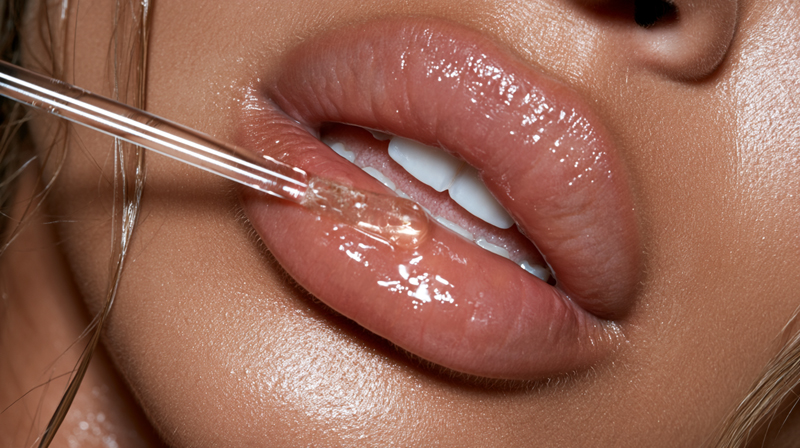
Clinical research backs the underlying mechanisms behind lip plumpers well enough.
Capsaicin’s vasodilation pathway and hyaluronic acid’s water-binding capacity are both well documented, but very few studies test finished lip-plumping cosmetics rather than the ingredients in isolation.
One exception ran in a major dermatology journal. A single-center, open-label study published in the Journal of the American Academy of Dermatology tested a two-step topical lip treatment built around benzyl nicotinate and fatty acids, in female subjects.
Lip plumpness improved at a statistically significant level over the course of the 4-week, twice-daily study, alongside measurable gains in hydration and lip thickness (JAAD, 2018).
That’s a real, peer-reviewed result, though it measures a cumulative month-long regimen rather than a single swipe of gloss.
A newer trial tells a more complicated story. Two single-center studies on a peptide-hyaluronic acid lip serum, published in the Journal of Cosmetic Dermatology, found the gains were not sustained once subjects stopped using the product.
Benefits drifted back toward baseline within a 2-week discontinuation period, and the study’s lead author disclosed consulting and research ties to several aesthetics manufacturers, while the study itself was funded by the product’s manufacturer (Journal of Cosmetic Dermatology, 2025).
| Test | Sample | Independence |
|---|---|---|
| JAAD two-step lip treatment trial | Single-center, peer-reviewed | Published, industry-conducted |
| Journal of Cosmetic Dermatology serum trial | Two single-center trials | Manufacturer-funded, authors disclosed industry ties |
| Dior in-house instrumental test | 10 subjects | Unpublished, brand-run |
That last row is the one worth sitting with. Most plumping claims printed directly on packaging trace back to small in-house instrumental tests rather than independent, peer-reviewed research.
The gap isn’t that the underlying chemistry is fake. A 10-subject brand test and a peer-reviewed dermatology trial just carry very different evidentiary weight, even when they’re describing the same basic mechanism.
FAQ on How Does Lip Plumper Work
Does lip plumper hurt, or just tingle?
Tingling and warmth, mostly, not actual pain. Capsaicin, cinnamon oil, and menthol activate nerve receptors that read as heat rather than injury. If it turns into sharp or lasting burning, that’s irritation, not the reaction the product is supposed to create.
Can you use lip plumper every day?
Depends on which type. Humectant formulas built on hyaluronic acid and glycerin are gentle enough for daily use. Irritant-based glosses with capsaicin or cinnamon oil work better applied now and then, since daily exposure raises the odds of building sensitivity or triggering contact dermatitis over time.
Do lip plumpers work on very thin lips?
Yes. If anything, the effect looks more dramatic on thin lips, just because there’s less existing volume to compare it against. The mechanism itself, whether blood flow or moisture, doesn’t care about natural lip size or shape.
How much lip plumper should you apply at once?
One thin layer does the job. Doe-foot and teardrop applicators are built for a single even swipe, not several passes. Piling on more product just raises irritation risk without adding volume, since the reaction runs on contact time, not how thick the layer is.
Can lip plumper be worn under lipstick or lip liner?
Yes. Most plumping glosses and serums are designed to work as a base layer, and applying liner or lipstick afterward locks in color without blocking the reaction underneath. A heavily pigmented matte lipstick on top can mute the visible swelling a bit, though.
Does lip plumper lose effectiveness with repeated use?
For the irritant route, sometimes. Capsaicin-triggered vasodilation can blunt with repeated exposure, a response researchers call tachyphylaxis, and it’s been observed in lab models of repeated application. Humectant-based swelling doesn’t follow that pattern, since it runs on water binding rather than nerve receptor activation.
Is lip plumper safe for teenagers?
There’s no FDA age restriction on cosmetic lip plumpers, unlike injectable fillers, most of which are approved only for patients 21 or older. That said, teenagers with sensitive skin or a history of eczema carry the same increased irritation risk adults with those conditions do.
Can lip plumper be used on cold sores or broken skin?
No. Broken skin, an active cold sore, or an open crack absorbs irritant ingredients faster and heals slower once capsaicin, cinnamon oil, or menthol gets involved. Better to wait until the skin closes over fully, otherwise you’re introducing bacteria on top of the irritation.
Does the tingling sensation mean the product is working?
For the irritant-based ones, yes, tingling is the nerve receptor activation that drives the blood flow response. A humectant-only formula with hyaluronic acid or glycerin won’t tingle at all, since that swelling comes from moisture rather than nerve stimulation.
Is lip plumper vegan or cruelty-free?
Entirely brand and formula dependent. Ingredients like beeswax or collagen-adjacent peptides can be animal-derived, and at the same time, drugstore and prestige lines increasingly market vegan, cruelty-free versions. Checking the ingredient label is really the only reliable way to know for sure.
Conclusion
Understanding how lip plumper works comes down to one real choice: a blood-flow reaction, or a moisture pull. Brand name, packaging, and price all sit downstream of that single decision.
Read the ingredient list before the marketing copy. Capsaicin, cinnamon oil, or menthol near the top signals the blood-flow route. Glycerin alone, without those actives, signals a gentler, moisture-only swell.
Daily wearers tend to get more mileage from the moisture-only route. Special-occasion volume favors the tingle, with a patch test as the one non-negotiable step before either.
Anyone chasing results closer to a dermal filler is comparing the wrong two products. The timeline and cost gap between a topical gloss and an injectable stays fixed, no matter which shade gets chosen.

She started writing on the site after fielding the same questions from clients and friends often enough to just write the answers down: which red won't turn orange on a warm undertone, how to keep lipstick from feathering into fine lines, why a "12-hour" formula rarely survives dinner.
Every review on the site follows the same rule she uses with paying clients: wear it first, then decide if it's worth recommending.
- How to Make Eyeliner Last Longer Without Smudging - August 31, 2026
- How to Make Eyeshadow Last Longer All Day - August 29, 2026
- How to Find Your Undertone in 5 Easy Steps - August 27, 2026