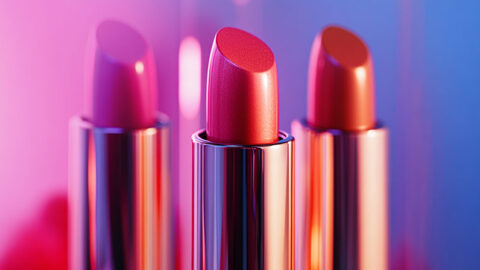
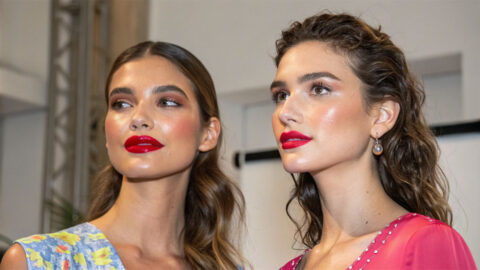
Lip oil and lip gloss get lumped together constantly, mostly because they both promise shiny lips. They’re not doing the same job on your lips, though, and the difference isn’t really about looks.
Search interest in lip oil jumped 39% year over year after Dior’s version went viral, according to Trendalytics (2024). That’s a real spike, and it’s part of why so many people are suddenly asking what actually separates the two products.
Lip oil is built around plant-based oils that soak into skin. Jojoba and squalane are the two ingredients you’ll see most often. Gloss works from a completely different base: polymers and wax that sit on the surface and build shine, without doing much for what’s happening underneath it.
That split in ingredients ends up deciding almost everything else about how each one performs. Finish, how long either one holds up, how often you’re digging back into a bag for a touch-up. Worth knowing before the next lip product lands in a cart.
What is lip oil
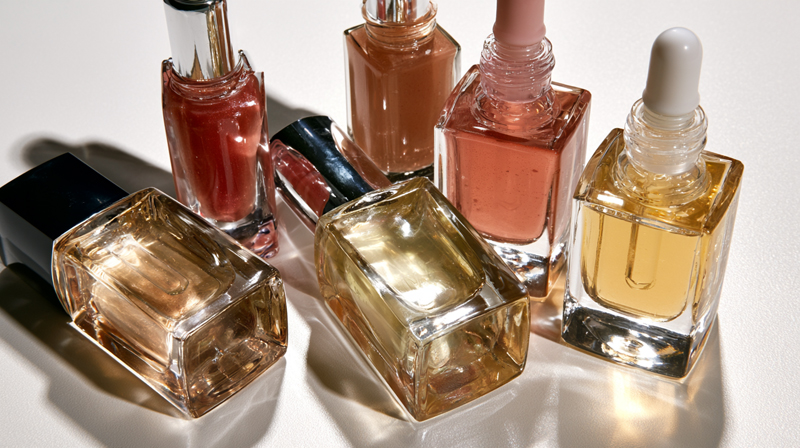
Half skincare, half makeup, that’s basically the whole pitch. A lightweight oil base carries just enough color to tint the lips without going anywhere near opaque.
The category has grown fast enough that it’s hard to call it niche anymore. The global lip and face oil market reached USD 6.5 billion in 2024 and is projected to grow at a 4.4% CAGR through 2034 (Global Market Insights, 2025).
Most formulas lean on the same handful of plant-based carrier oils: jojoba, castor seed, squalane, usually rounded out with a small dose of vitamin E. Pigment stays low on purpose. Push it any higher and you lose the sheer, barely-there tint that’s supposed to be the point.
Application is built for speed. Rollerball, dropper, or doe-foot tube, all designed so you can swipe it on without needing a mirror. Rollerball applicators specifically hold the largest revenue share in the lip oil category as of 2024, and it’s not hard to see why: they distribute product evenly without wasting much of it (Acute Market Reports, 2024).
That same spike, the 39% year over year jump in search interest, wasn’t just about Dior. Essence, Summer Fridays, and Fenty rode the same wave right behind it (Trendalytics, 2024). Dior’s Lip Glow Oil still gets most of the credit for pulling the category out of niche skincare shelves and into everyday makeup bags, though.
What is lip gloss
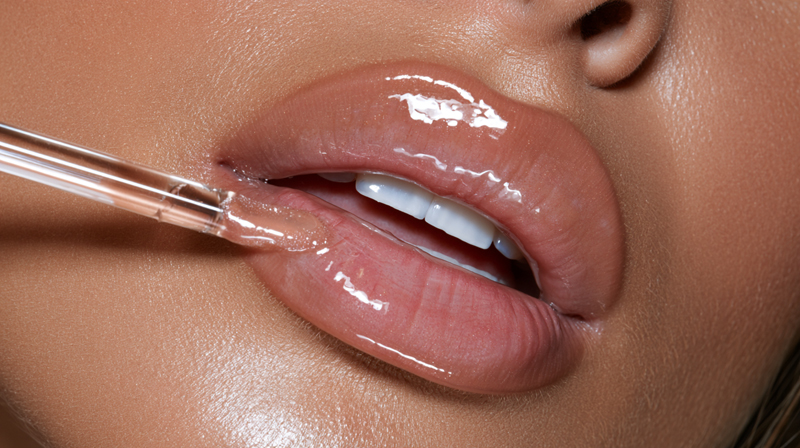
Shine is the entire point. Lip gloss skips the oil-based approach altogether and builds everything around film-forming polymers and wax instead, so the visual effect (glossy, reflective, sometimes a little wet-looking) does all the work.
Four ingredients show up in nearly every formula on the market:
- Polybutene and hydrogenated polyisobutene, for shine and film formation
- Dimethicone or cyclopentasiloxane, for slip and a non-sticky finish
- Candelilla or carnauba wax, for structure
- Mica or iron oxide pigments, for color and shimmer
The category isn’t small. The global lip gloss market was valued at USD 3.99 billion in 2024 and is on pace to reach USD 6.25 billion by 2033 (SkyQuest, 2025). L’Oreal, Estee Lauder, and Dior are among the biggest names competing for that market.
Fenty Beauty’s Gloss Bomb probably deserves more credit than any single product for turning high-shine gloss into its own category. A lot of that comes down to one thing: it doesn’t feel sticky, which used to be the main complaint about glosses in general.
Applicators tend to be a sponge tip or doe-foot wand, built for sweeping color across the lips rather than rolling it on the way an oil applicator would.
Shine first, treatment somewhere way down the list, maybe not at all. That’s really what a lip gloss actually does for the lips once you strip away the marketing language.
What is the difference between lip oil and lip gloss
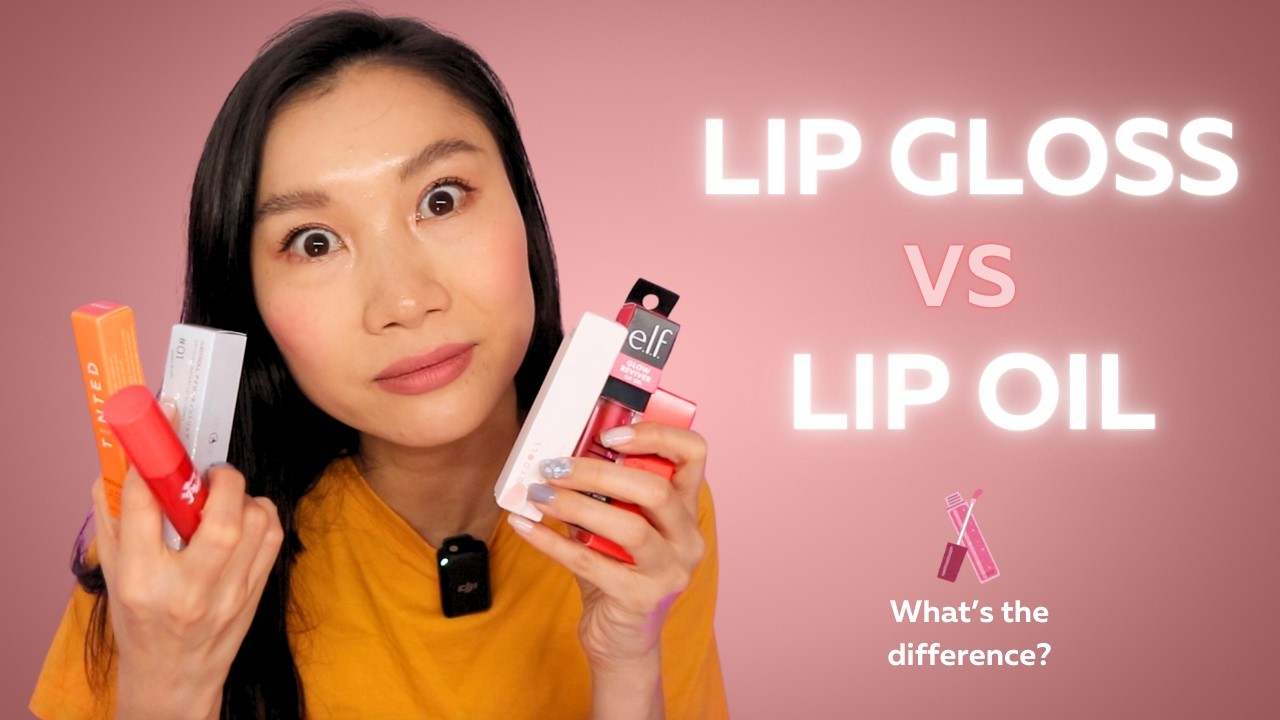
Everything traces back to the base ingredient. Oil-based formulas absorb into the lips, and that’s lip oil. Polymer-and-wax formulas sit on top without sinking in, and that’s lip gloss. One difference, and it cascades into basically everything else: finish, how hydrating it actually is, how often you need to reapply.
| Attribute | Lip Oil | Lip Gloss |
|---|---|---|
| Formula base | Plant oils (jojoba, castor, squalane) | Polymers and waxes (polybutene, dimethicone) |
| Finish | Sheer, soft sheen | High shine, glass-like coat |
| Hydration role | Treats and softens lips | Mostly cosmetic, little treatment |
| Wear time | Tint often outlasts the shine | Shine fades within a few hours |
Technically, both are lip color. They’re just not solving the same problem. If you’re reaching for lip oil, you’re usually asking something closer to “will this make my lips look better while doing something for them.” Gloss skips that question entirely and goes straight for maximum shine, right now, no multitasking required.
The money backs this up too. Gloss is still the bigger category by revenue, nearly USD 4 billion in 2024, against roughly USD 573 million for lip oil the same year (SkyQuest, 2025; Future Market Insights, 2025). Oil is catching up in search interest faster than it’s catching up in sales, which is its own kind of interesting.
Look at what a lip gloss actually is at the formula level, and the comparison clicks fast: one treats, one reflects. Not much overlap between the two jobs.
How do the ingredients in lip oil and lip gloss compare
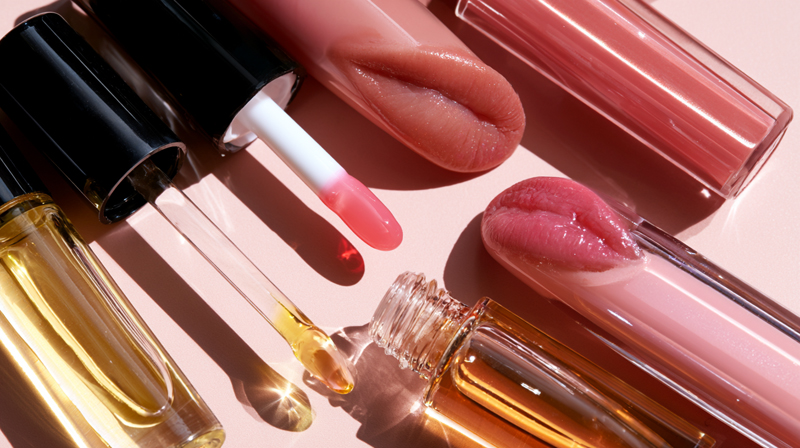
Ingredients tell you fast which category you’re looking at. Oils show up in one, polymers and film-formers show up in the other, and that distinction shapes basically every downstream difference in how the two perform.
| Ingredient | Found In | Function |
|---|---|---|
| Jojoba oil | Lip oil | Mimics sebum, softens lips |
| Squalane | Lip oil | Reinforces moisture barrier |
| Polybutene | Lip gloss | Creates glass-like shine |
| Dimethicone | Lip gloss | Adds slip, non-sticky feel |
Core ingredients in lip oil
Jojoba oil does most of the heavy lifting in these formulas. It’s technically a liquid wax rather than a true oil, and it mimics the skin’s own sebum closely enough that lips tend to absorb it without much resistance. Castor seed oil usually joins it for shine and a slightly thicker texture, and squalane reinforces the moisture barrier in a way that doesn’t feel greasy the way heavier oils can.
A clinical study on jojoba oil found it increased hydration by 30% within 30 minutes of application, with continued barrier improvement measured after 14 and 28 days of use (Jojoba Desert, 2022). That’s a real, measured effect, not just a marketing claim.
Vitamin E shows up in most formulas too, though its job is less glamorous. It’s there as an antioxidant, mostly protecting the oils from breaking down inside the tube rather than doing anything dramatic for your lips directly.
Core ingredients in lip gloss
No oils here. Gloss leans entirely on synthetic film formers instead.
Polybutene is doing double duty: it creates the glass-like shine and keeps pigment from separating out over time. Dimethicone handles slip, which is really just what lets the formula glide on instead of dragging or catching. Isododecane speeds up set time, and that’s the ingredient mostly responsible for killing the sticky, tacky feel older gloss formulas were known for.
Compared to the ingredients typical of lipstick formulas, gloss leans on liquid polymers rather than solid wax. That’s the whole reason it feels wetter and thinner the second it touches your lips.
How does the finish differ between lip oil and lip gloss

You can usually tell which one someone’s wearing from across a room. Gloss throws a mirror-like, high-shine coat that catches light hard. Lip oil is quieter than that, more of a natural, low-key sheen that doesn’t announce itself the same way.
Pigment load and film thickness explain the gap, more than any marketing copy does. Oil goes on thin, with light pigment, so the natural lip color still shows through underneath. It reads more like “your lips, but better” than “obviously wearing a product.”
Gloss builds a genuinely thicker film. Glossy-finish formulas held the largest share of lip gloss revenue in 2024, mostly because people like the hydrated, reflective look they produce (Data Bridge Market Research, 2024). Matte-finish gloss is actually the fastest-growing segment through 2032, though, which says something about how much of the category is chasing texture now instead of pure shine (Data Bridge Market Research, 2024).
There’s also a whole range of different types of lip gloss, frosted, glitter, metallic, clear, and each changes how light bounces off the lips in its own way.
Buildability is where they really split. Oil rarely goes past a light wash of color no matter how much you apply. Gloss can be layered for more opacity and still keep its shine.
Which lasts longer on the lips, lip oil or lip gloss
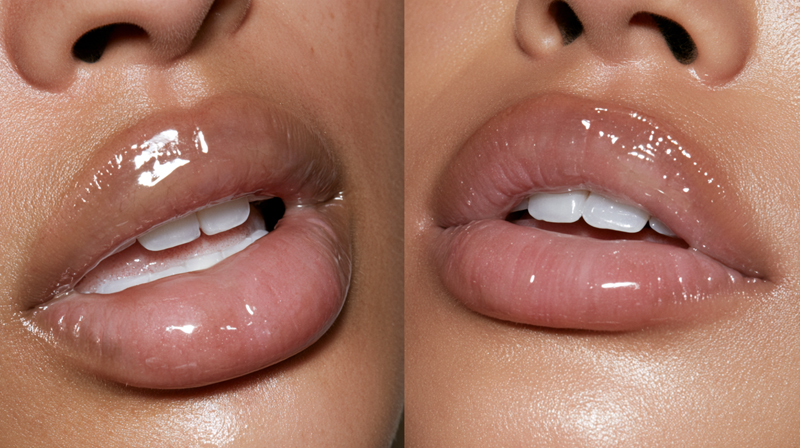
There’s no clean winner here, honestly. Gloss shine fades faster than lip oil’s tint does, but lip oil doesn’t hold onto its own glossy top layer nearly as long as an actual gloss will.
Wear time for gloss ranges from two to four hours before you’re reapplying, and thin liquid formulas fade the fastest of all, since the oils mixed into them get absorbed into lip tissue pretty quickly.
| Formula Type | Typical Wear | Why |
|---|---|---|
| Liquid lip gloss | 2 to 3 hours | Thin film, absorbs into lips fast |
| Balm-style gloss | 3 to 4 hours | Wax content anchors pigment |
| Tinted lip oil | Tint outlasts the shine | Oil absorbs, pigment stains lightly |
Eating, drinking, talking, all of it cuts wear time for both. Gloss tends to transfer more onto cups and glasses though, since the polymer film just sits on the surface instead of sinking in the way oil does.
That absorption is basically a trade-off for lip oil. The visible shine disappears fast. The tint underneath it sticks around longer than most people expect, which is sort of the point nobody talks about.
How do lip oil and lip gloss differ in hydration and lip care benefits
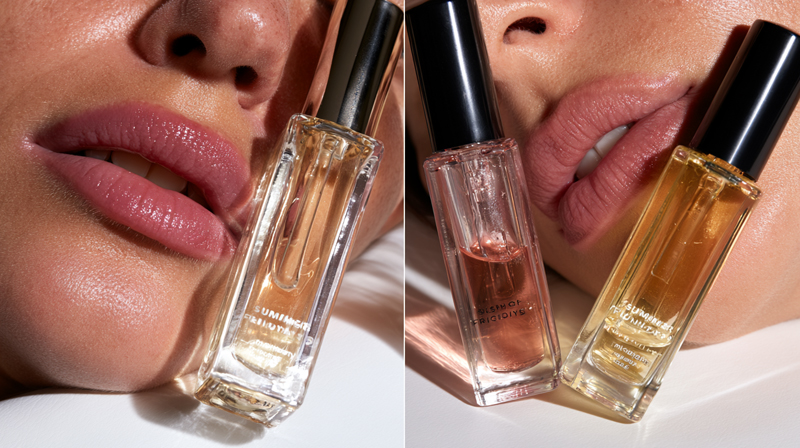
Here’s the honest version: oil actually treats the lips, gloss mostly just sits there looking good. Which one is “better” depends on what you’re trying to accomplish, but if hydration is the actual goal, this isn’t really a close call.
Consumer behavior backs this up. 73% of consumers now say they look for active ingredients in lip care products, up from 31% in 2023 (Lovinah Longevity Lab, 2026), and that shift is pulling lip oil further into skincare territory every year. Treatment-focused lip care sales grew 47% year over year, and premium lip care priced at $20 or more grew 89% year over year (Lovinah Longevity Lab, 2026). People are clearly willing to pay more for a lip product that does something besides add color.
Summer Fridays built a big chunk of its lip category presence around exactly this shift, positioning its oils as skincare first, with color treated almost as an afterthought.
A lot of newer lip oil formulas now list hyaluronic acid alongside niacinamide, the former for moisture, the latter for barrier support. You’ll often see hyaluronic acid marketed as capable of holding up to 1,000 times its weight in water. Worth being skeptical of that number: a 2023 peer-reviewed re-analysis of the underlying data found no experimental support for water-binding anywhere near that scale, with real-world measurements landing closer to tens of times its weight, not thousands. Hyaluronic acid still works, genuinely. It’s just not quite the outlier the marketing claim wants you to believe.
Gloss rarely makes this shift, and there’s a simple reason why: its polymer-and-wax base was never built to deliver moisture in the first place. Even a gloss labeled “hydrating” is mostly smoothing the surface rather than doing anything underneath it.
If dry or chapped lips are the actual issue, oil is going to do more for you than gloss will. Not because gloss is bad, just because the two were built to solve different problems.
How are lip oil and lip gloss applied differently

The motion gives it away before you even see the product. Oil goes on with a roll or a dab. Gloss needs a broader, sweeping stroke, which traces straight back to putting gloss on the lips with a completely different kind of applicator.
| Product | Common Applicator | Motion |
|---|---|---|
| Lip oil | Rollerball or dropper | Roll or dab |
| Lip gloss | Sponge tip or doe-foot wand | Sweep or paint |
A rollerball deposits oil in a thin, even coat and wastes almost nothing in the process, which explains why most oil tubes stick with that design instead of switching to a brush. Gloss wands go the opposite direction: wider, denser, built specifically to hold thicker pigmented formulas without streaking across the lips.
MAC Cosmetics’ Powder Sandwich Technique is worth knowing if gloss keeps sliding around on you. Setting powder goes over the lips first, then the lip color, then more setting powder dusted around the perimeter as a final step, sandwiching the color between two layers of powder to keep the shine from moving (MAC Cosmetics).
Prep is basically nonexistent for oil. Bare lips work fine. Gloss looks noticeably cleaner over a lip liner or a base coat of lipstick though, since that polymer film has a way of showing off every uneven edge underneath it.
Most people mess up oil the same way: too much product, which leaves that slick, slippery feel nobody actually wants. Gloss has its own common mistake, going too close to the edges and blurring the lip line as it spreads.
Which should you choose, lip oil or lip gloss
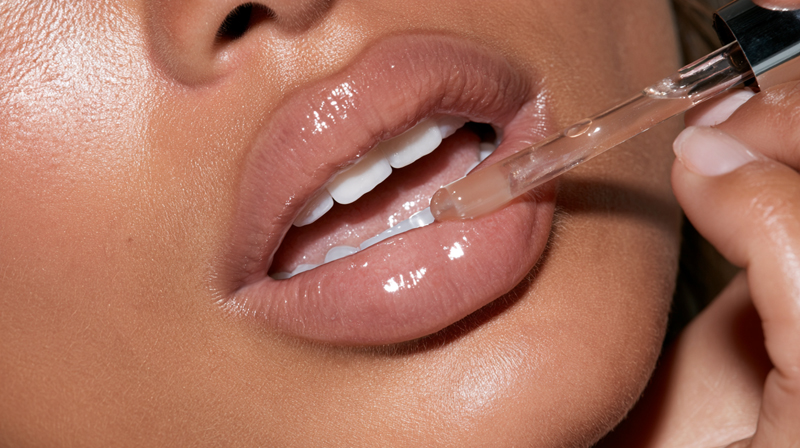
If comfort and low maintenance matter more to you than how much shine you’re throwing off, lip oil is the easy call. Gloss is for when the shine itself is the goal, a look that’s meant to be seen, not just worn.
Winter months account for 35% to 40% of annual lip-care unit sales across the US and Canada (IndexBox, 2026), which tracks with the obvious explanation: cold weather dries lips out fast, and that’s exactly when oil earns its keep. Indoor heating and cold air strip moisture quicker than most people expect, and a wax-and-polymer gloss just doesn’t replace what’s being lost.
| Scenario | Better Choice | Why |
|---|---|---|
| Dry or chapped lips | Lip oil | Treats while adding tint |
| Bold, high-shine look | Lip gloss | Thicker film, more reflective |
| Cold, dry climate | Lip oil | Oil reinforces the barrier |
| Evening or event makeup | Lip gloss | Builds more visible color |
Skin type matters here too, separate from climate. Naturally dry or flaky lips respond better to an absorbable, oil-based formula. Lips that are already smooth can wear gloss without it looking patchy or catching on rough spots.
Then there’s just personal taste, which honestly might matter more than either of the above. Some people want their lips to look like their lips, only healthier. Other people want the shine to be the whole point, nothing more nuanced than that.
A lot of people just carry both and switch depending on the day, oil during a desk-bound morning, gloss before dinner or a night out.
Can you wear lip oil and lip gloss together
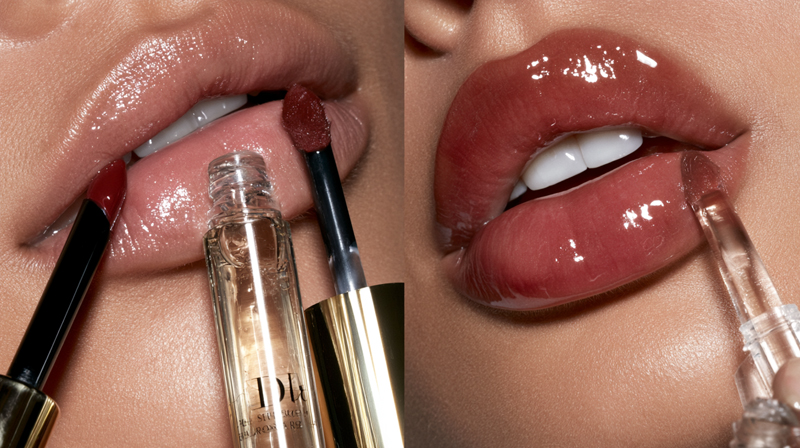
Yes, actually, this is one of the more common ways people use both products, not some rare exception. Order matters more than you’d think, though.
The setup people reach for most: Lining the lips first, then lip oil on top, for the glass lips look everyone’s been chasing since Dior blew up. There’s also lipstick or stain with a layer of gloss on top, which gives you color with a shine topcoat. And some people skip the liner entirely and just go tinted lip oil, then a thin coat of clear gloss over it, for extra shine without piling on more color.
Estee Lauder’s official four-step “glass lips” technique follows that first pattern almost exactly: lip liner, then a high-shine lip oil layered on top as the key finishing step, built for a plumped, mirror-like result (Estee Lauder, 2023).
Layering changes finish and wear time both. Base color tends to hold longer than either topper would manage alone, since the pigment sits right against the lip while oil or gloss just adds reflection on top of it.
Reapplying gets easier, too. L’Oreal Paris points out that once the shine wears off, a thin layer of gloss can go back on by itself without touching the base color underneath (L’Oreal Paris, 2025).
Stacking oil and gloss on bare lips, skipping the color base entirely, doesn’t add much. They’re both chasing the exact same shine, so all you really get is a heavier, more slippery texture without a real visual payoff.
The combo works best when each product actually has its own job. Color or treatment goes to one. Shine goes to the other.
FAQ on What Is The Difference Between Lip Oil And Lip Gloss
What is the difference between lip gloss and lipstick?
Lipstick is built for full, opaque color, solid waxes and heavy pigment doing the work. Gloss trades that for liquid polymers and shine, so color ends up sheer at best, sometimes nonexistent. Basically, one is chasing color, the other’s chasing shine. The full lip gloss vs lipstick comparison goes deeper if you want it.
How does lip oil differ from a lip stain?
Stain uses dye that actually bonds to the lips, so the color outlasts pretty much everything else on this list, just without much shine or hydration to show for it. Oil goes the other direction, real moisture, a soft sheen, but the tint itself fades quicker. More detail in what a lip stain is.
Does lip oil make lips look oily instead of glossy?
Only if the formula’s bad or you’re overdoing it. A well-made lip oil absorbs quickly and settles into a soft sheen rather than sitting there as a greasy film. Give it a couple of minutes and most modern formulas land on a glass-like finish, not an oily one.
Is lip oil less sticky than lip gloss?
Generally, yes. Oil is thin and absorbs fast, so tacky isn’t usually a complaint people have about it. Gloss depends more on its polybutene and wax content. Some formulas do feel sticky, though the newer ones using isododecane have closed a lot of that gap.
Do lip plumpers work the same way as lip oil or lip gloss?
Not even close. Plumpers work through irritation, cinnamon, capsaicin, menthol, ingredients that draw blood to the surface and temporarily swell the lips. Neither oil nor gloss is formulated to do any of that. Details on how lip plumpers actually work if you’re curious.
Does lip oil expire faster than lip gloss?
Not really, no. Both tend to stay usable for over a year unopened, based on gloss shelf-life data. Oil’s natural ingredients can go rancid slightly sooner than gloss’s synthetic polymers do, so trust your nose here. A smell change means it’s time to toss it.
Can lip oil be worn overnight as a lip treatment?
Yes, plenty of people already do this. A thicker, non-tinted oil applied before bed lets squalane and vitamin E work overnight, no makeup layer getting in the way. Gloss isn’t really built for this job. Its polymers are made for daytime shine, not overnight treatment.
Does either lip oil or lip gloss offer sun protection?
Rarely, and only if it says so right on the label. Most formulas, oil or gloss, carry no SPF at all, since the oils and polymers in them just weren’t built for UV defense. Lips have essentially no melanin protecting them, so a dedicated SPF balm matters a lot more than people assume once you’re out in direct sun.
What are the benefits of lip gloss beyond shine?
The mirror finish isn’t the only thing going for it. Gloss adds real dimension to bare lips, works well as a topcoat to bring a fading lipstick back to life, and photographs better than almost anything else in a makeup bag because of how it reflects light. It’s also just fast. No liner, no precision, swipe and go.
Can you make lip oil at home instead of buying it?
Yes, and it doesn’t take much. A basic version blends a carrier oil like jojoba with a few drops of castor oil for shine, plus a flavor extract if you want one. It won’t have the stability of a lab-formulated product, shelf life especially, but for casual use it works fine.
Conclusion
The real decision comes down to the ingredient panel, not the shelf display or whatever the shade name is trying to sell you.
Neither product is going to fix lips that are cracked, bleeding, or staying swollen. That’s a dermatologist’s job, not a job for a tinted oil or a high-shine gloss, no matter how good the marketing sounds.
For everyday wear, oil is generally the better call. Save gloss for the moments where reflective shine actually needs to do the talking, ideally layered over a stain or lipstick rather than worn completely alone.
Before buying either one, it’s worth actually reading the ingredient list:
- Castor oil or jojoba high up the list, if genuine hydration is what you’re after
- Polybutene or dimethicone, if lasting shine matters more to you than tint
- No added fragrance, if your lips are already irritated

She started writing on the site after fielding the same questions from clients and friends often enough to just write the answers down: which red won't turn orange on a warm undertone, how to keep lipstick from feathering into fine lines, why a "12-hour" formula rarely survives dinner.
Every review on the site follows the same rule she uses with paying clients: wear it first, then decide if it's worth recommending.
- How to Make Eyeliner Last Longer Without Smudging - August 31, 2026
- How to Make Eyeshadow Last Longer All Day - August 29, 2026
- How to Find Your Undertone in 5 Easy Steps - August 27, 2026