Mauve, berry, and a softer rose end up being the safe picks for almost any lavender dress. That’s the short version of what color lipstick goes with a lavender dress. The longer version has more to do with why those three keep winning out over everything else: lavender sits on the cool, muted side of purple, and warm or bright lipstick tends to fight that instead of working with it.
A deeper violet dress gives a lot more room to play, since the fabric itself carries more saturation to lean on. Lavender, being paler and cooler, just narrows the field faster.
Bridal and event makeup artists use this same logic across wedding guest, prom, and formal evening looks. They’re not matching to the word lavender printed on a swatch card. They’re matching to the actual tone of the dress standing in front of them.
Lavender belongs to the pastel purple family, and that family made up 61.6 percent of the purple tones seen on Spring/Summer 2023 runways, up from 57.2 percent the year before. That shift is part of why WGSN named Digital Lavender its Colour of the Year for 2023, based on the trend forecaster’s own catwalk analytics (WGSN, 2023).
What Color Lipstick Goes With a Lavender Dress

Mauve, berry, and a softer rose land at the top of the list for most lavender dresses. A muted nude can work too, mostly for the palest shades of the color.
Lavender is a cool pastel at its base, so the safer lipstick choices lean cool as well. Anything heavy on orange or gold tends to look off against it, sometimes surprisingly so.
The real decision comes down to which of these the dress leans toward: pale lilac, dusty lavender, or blue-lavender. Each one nudges the recommendation in a different direction, and there’s more detail on that further down.
Picking a lipstick color for an outfit usually starts with the fabric’s undertone rather than the name printed on the tag, and lavender follows that same rule.
Pantone files Lavender under PMS 15-3817, inside its broader purple family (Pantone). Worth mentioning here too is Very Peri, Pantone’s 2022 Color of the Year (17-3938), built as a periwinkle blue carrying a violet-red undertone (Pantone, 2021). Dusty lavender specifically is trending for fall 2026 bridesmaid dresses, showing up alongside chartreuse and chocolate brown (Green Wedding Shoes, 2026).
How Color Theory Decides Which Lipstick Pairs With Lavender
Pairing lips to an outfit runs on contrast, not literal matching. A lipstick in the exact same lavender as the dress tends to fall flat, sometimes even a little ghostly against skin.
There’s a reason for that, and it comes down to warmth. Johannes Itten, the Bauhaus color theorist, built a lot of his career around how color contrast works, warm against cool especially. His ideas are basically the foundation for why a cool base color reads more alive sitting next to something carrying a touch more warmth, short of jumping all the way to a true opposite hue.
Lavender sits in the violet-blue part of the wheel. Its literal complementary color is yellow-gold, and yellow-gold lipstick is, for fairly obvious reasons, not something people wear.
So what happens in practice is a workaround. Instead of the true opposite, the shade reaches for just enough red or pink to balance lavender’s cool base. Mauve does this. So does rose.
There are two ways to think about it. Complementary means adding warmth to counter that cool base: mauve, rose, a warmer berry. Analogous means staying inside the same cool family for a softer, more monochrome look, think soft plum or a cooler berry.
The lipstick pairing for a deeper purple dress runs on this same warmth-contrast logic. The difference is really just how much room there is to work with, since a fully saturated violet dress does less of the softening on its own, leaving space for a bolder, higher-contrast lip.
How Skin Undertone Changes Which Lipstick Works With Lavender
Undertone matters more than the dress color does on its own. It’s the real deciding factor in whether a mauve or berry lipstick ends up looking radiant, or just flat, against lavender.
The fastest check is the vein test. Look at the inside of your wrist in natural light, not under a bathroom bulb.
Blue or purple veins usually mean a cool undertone. Green leans warm. If you’re staring at your wrist and genuinely can’t tell which one it is, that’s usually neutral, and it’s a bigger group than most people expect.
Sephora built its Color IQ system with the Pantone Color Institute back in 2012 (a Lip IQ spinoff came later), and the tool has logged more than 14 million shade matches since (Digiday, 2023).
Cool Undertone
If your skin already reads cool, you’re starting on lavender’s own wavelength, so the lipstick doesn’t need much adjusting to work.
True mauve is the safest bet, the one that works almost every time. Rose is softer, better for daytime. A cool berry adds more depth for evening without clashing.
Shopping lipstick shades built for cool undertones is a decent shortcut, since most of what shows up there already lines up with what works against a lavender dress.
Warm Undertone
Warm undertones need more red or berry weight in the lipstick, or the lavender dress can wash the whole look out. A flat, cool-toned mauve tends to look chalky against golden or peachy skin, which is not the effect anyone’s going for.
The fix is fairly simple. Lean toward a warmer mauve, add a touch more pink or coral, and skip anything icy or frosted, since those cool shades end up fighting the skin rather than just the dress.
Lipstick shades built for warm undertones filter this down faster than testing tube after tube at the counter.
Neutral Undertone
Neutral sits right between the two, which makes it the easiest starting point of the three. There’s no strong warm or cool bias fighting the lipstick, so most mauve, rose, and soft berry shades work with little adjustment needed.
Best Lipstick Shade for Each Lavender Dress Tone
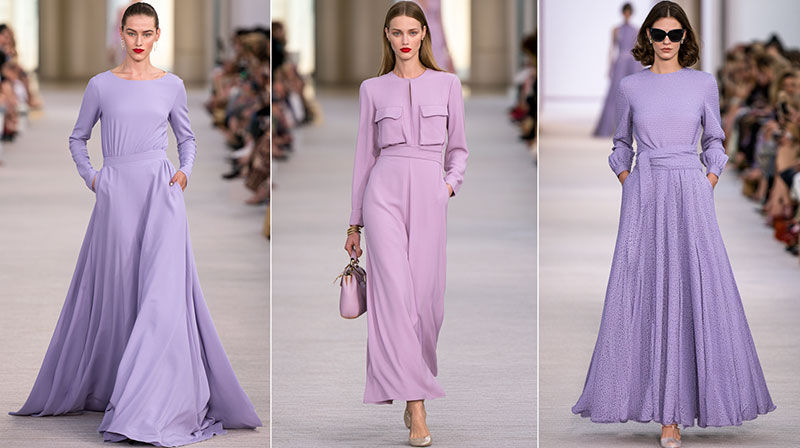
Lavender isn’t one fixed color. The exact tone of the dress moves the needle on which lipstick reads best against it, often more than expected.
Pale lilac, dusty lavender, and blue-lavender are the three most common, and each one shifts the recommendation slightly.
| Dress Tone | Undertone Match | Recommended Lipstick | Finish |
|---|---|---|---|
| Pale lilac | Cool to neutral | Soft rose or pink-mauve | Satin |
| Dusty lavender | Neutral to warm | Deeper berry or plum-mauve | Matte |
| Blue-lavender | Warm-leaning | Warm mauve or soft coral | Cream |
Pale lilac is the lightest and softest of the group, so a lipstick that’s equally light risks disappearing against it instead of complementing it.
Wearing a pink lipstick works well here too, as long as there’s enough pigment behind it to hold up in photos instead of sheering out to nothing.
Dusty lavender has a greyed-down, muted quality to it, and that’s part of why it can take a deeper berry or plum-mauve without looking mismatched.
Blue-lavender leans furthest into blue out of the three. A lipstick with a touch more warmth keeps the whole look from reading too cold together.
Lighting changes things too. Something that looks balanced under daylight can shift noticeably warmer indoors, so it’s worth checking both before settling on a shade.
Which Lipstick Shade Works Best for Your Skin Tone

Skin depth adjusts these same shade families further, on top of whatever undertone already narrowed the field. A shade that reads perfectly on medium skin can disappear on fair skin, or barely register on deep skin.
Fair Skin
On fair skin, lighter mauve and soft rose tend to read best against a lavender dress. Deep berry or plum can overpower a fair complexion fast, pulling all the attention to the mouth and away from the rest of the look.
Lipstick shades built for fair skin tend to sit in that same lighter, less saturated range for exactly that reason.
Medium Skin
Medium skin has the widest working range of the three. Rose and mauve both read cleanly, a deeper berry works for evening without overwhelming the face, and a warm nude holds its color instead of fading into the skin.
That flexibility is probably part of why medium skin tones show up so often in shade-range marketing for new lipstick launches. The color reads true across the widest number of formulas.
Deep Skin
On deep skin, rich berry, deep plum, and a bold red carry more visibly against a lavender dress than pale nudes do. A sheer nude can end up reading as unfinished rather than intentional, which undercuts the whole point of matching a color to the dress in the first place.
Natural lip pigment also changes how a shade renders once it’s applied, which is why lipstick shades suited to dark skin tend to favor higher-pigment formulas over sheer ones.
Mauve, Berry, Nude, or Red: Which Lipstick Family Fits Lavender

Mauve, berry, nude, and red cover pretty much every lavender dress scenario between them. Each one carries its own mood, and its own risk.
Mauve is the safe default. It flatters most undertones and most lavender tones without much thought, though it can look flat if it runs too cool for the skin wearing it.
Berry brings more contrast and works well for evening events specifically. The thing to watch is depth: go too dark on a pale lilac dress and the berry can end up overpowering it.
Nude keeps things understated and lets the dress carry the color. It suits deeper lavender tones better, since it tends to wash out against the paler end of the spectrum.
Then there’s red: bold, graphic, real contrast against a soft pastel. It also shifts the whole look from romantic to something closer to a statement, which isn’t always the goal on a lavender dress.
Picking a nude lipstick for this particular pairing means leaning warmer than the usual your-lips-but-better shade. A truly flat nude can disappear against lavender’s coolness instead of working with it.
Choosing a red lipstick here works best with a cool-based red rather than a warm orange-red. Orange-red happens to be one of the shades that clashes hardest with lavender’s blue base.
Which Lipstick Finish Works Best With a Lavender Dress

Finish changes how the color reads too, on top of whichever shade family gets picked. The same mauve looks different in matte than it does in gloss, not just shinier, genuinely different.
Satin still leads the category by a wide margin. It held 43.41% of the global lipstick market by finish in 2024, though matte is growing faster than anything else, projected at a 7.81% compound annual growth rate through 2030 (Mordor Intelligence, 2025).
Matte tends to hold up longest through something like a full wedding day, since it resists transferring onto glasses and fabric the way wetter finishes don’t. Satin sits in the middle, giving a softer, more natural finish suited to daytime rather than a formal evening look. Gloss adds shine that reads younger, which is probably part of why it shows up so often at prom.
Lipstick comes in a handful of formats beyond finish alone (stick, liquid, crayon, palette), and the different types of lipstick wear pretty differently even within the same finish.
The difference between matte and satin lipstick comes down to more than shine. Matte grips more pigment per layer and dries down completely, while satin keeps a thin reflective layer on top that softens the texture of the lips.
Best Lipstick Color for a Lavender Dress by Occasion
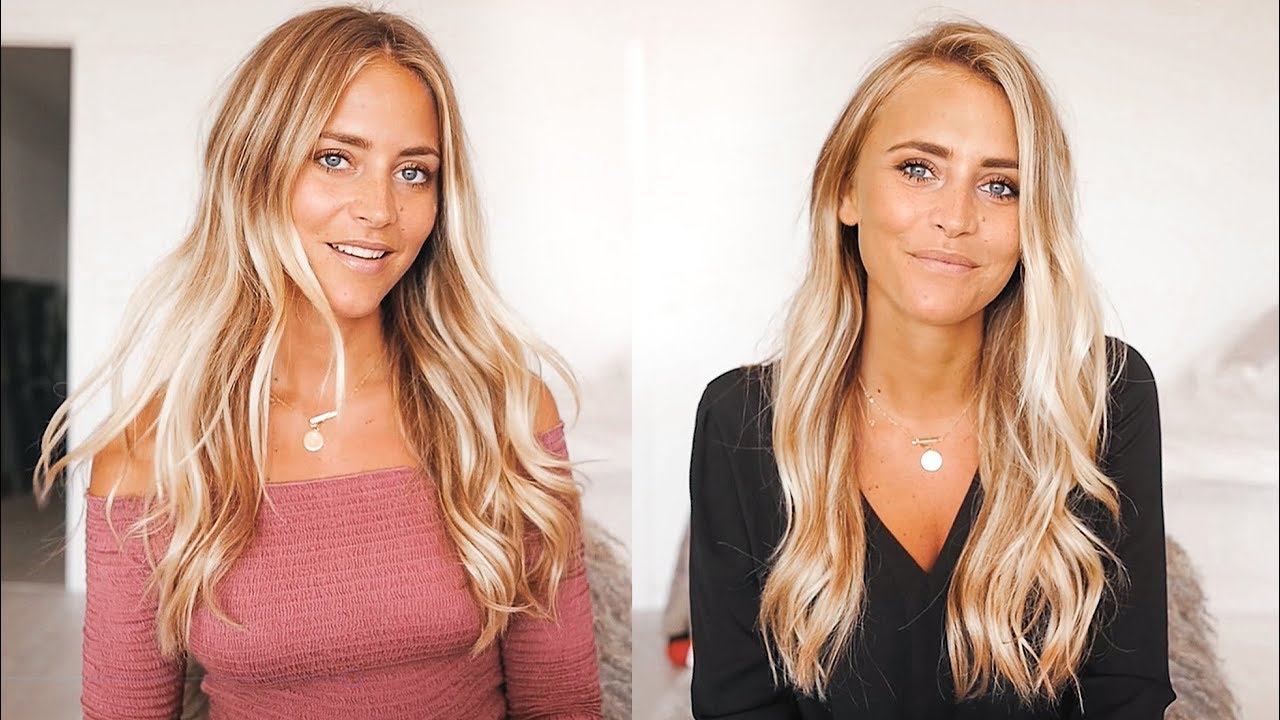
The event changes the pick as much as the dress tone does. A wedding reception, a prom, and a Tuesday lunch all call for a different level of lip color intensity.
| Occasion | Lip Color | Note |
|---|---|---|
| Wedding guest | Mauve or rose | Stays clear of the bride’s palette |
| Bridesmaid | Shared mauve or berry | Coordinated with the rest of the party |
| Prom | Berry or glossy rose | Holds color under flash |
| Evening event | Deep berry or red | Higher contrast for formal settings |
| Daytime | Soft nude-mauve | Low-key, easy to wear |
Wedding Guest
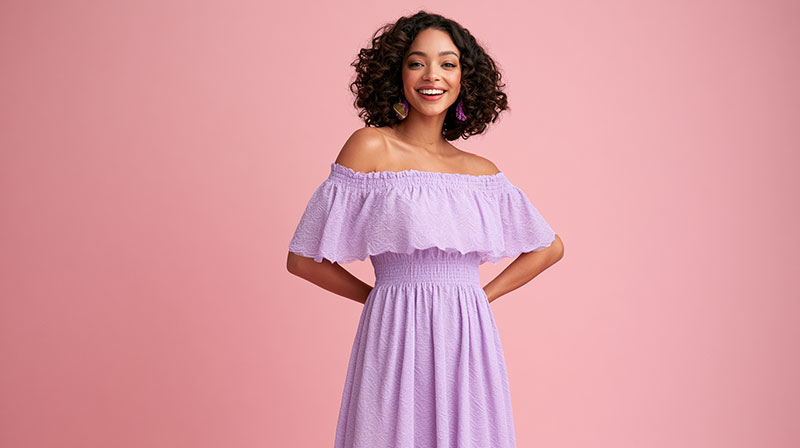
For wedding guest makeup, mauve or rose is the safer lane. The goal there is polished, not attention-grabbing. A full statement lip can end up competing with the bride’s own palette, especially if her colors already lean into similar mauve or berry tones.
Wedding makeup looks built around a lavender dress usually keep the lip a shade or two softer than what someone might wear on a regular night out.
Bridesmaid
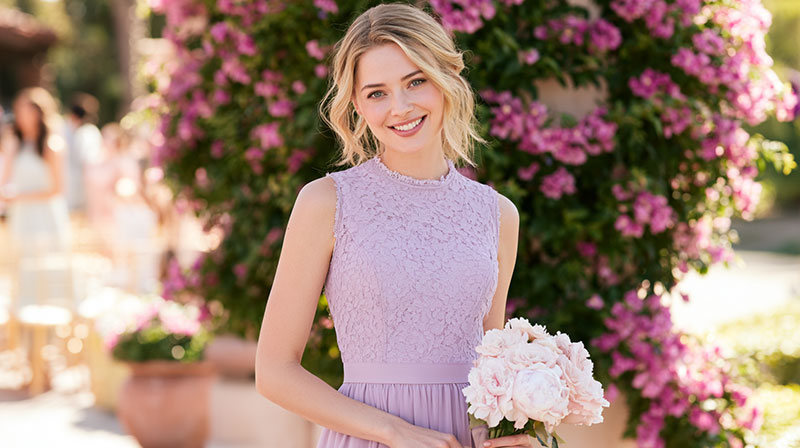
Bridesmaid lip color is rarely one person’s call. It’s usually set as a single shared shade across the whole party, chosen to work with the florals as much as the dresses, then nudged slightly per person rather than applied identically to every face.
Glamsquad, the mobile beauty service, has said bridal party makeup works best coordinated rather than identical, meaning each bridesmaid ends up wearing a version of the same tone level instead of the exact same product.
Bridesmaid makeup looks for a lavender dress usually land on a shared mauve or berry, then get adjusted individually from there.
Prom
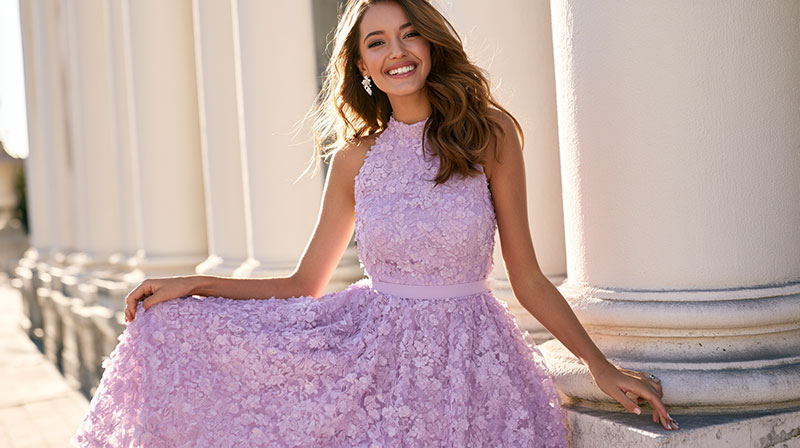
Prom photos run heavy on camera flash, and berry or a glossy rose tends to read best under that. Matte photographs closer to its true color under a direct flash. Very shiny finishes can bounce light back and blow out some of the detail in the shot.
Evening Event
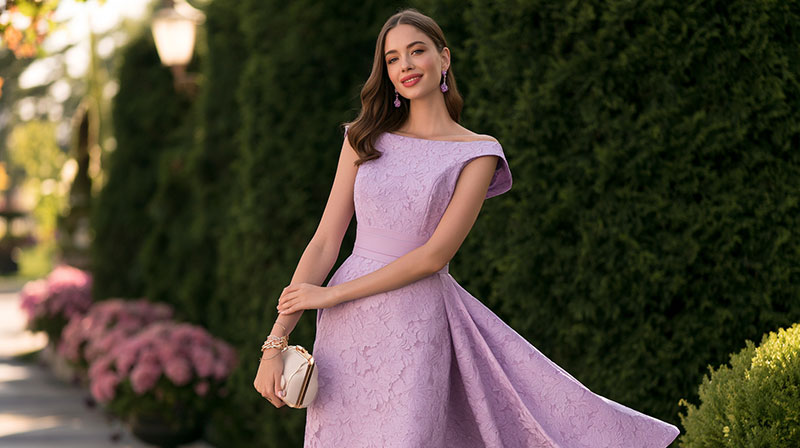
Lighting drops at most evening events, so pigment needs to go up to compensate. A deeper berry or red holds its color under dim, warm venue lighting in a way a soft daytime mauve just can’t.
Daytime
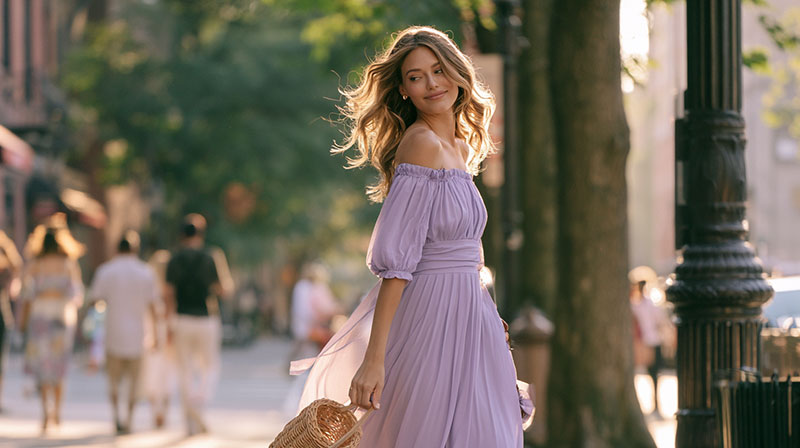
Soft nude-mauve covers pretty much anything before 5pm. It keeps the lavender dress as the visual focus and holds up through a full workday without much need for reapplication.
Lipstick Shades to Avoid With a Lavender Dress

A handful of shades work against lavender more than with it, and most share the same problem: too much warmth landing in the wrong place.
Orange-red sits almost directly opposite lavender’s cool base, and the result reads as tension rather than intentional contrast. Warm brown nude can flatten the whole look, going muddy against a pastel purple instead of neutral. Frosted or shimmer cool pink has its own issue, since the shimmer catches light unpredictably and tends to wash out under most indoor lighting. An overly dark plum can be too much for fair skin, especially against a pale lilac dress, where a near-black plum overwhelms everything else going on.
None of these are bad lipstick shades on their own. They just fight lavender’s particular cool, muted quality more than they support it.
How to Coordinate Eyeshadow and Blush With Your Lavender Dress Lipstick

The lipstick is only one piece of the look. Eyeshadow and blush either support it or compete with it.
Eyeshadow Pairing
Champagne, taupe, and soft plum all support a mauve or berry lip well, without pulling focus away from it. Matching the eyeshadow exactly to the dress tends to read as costume rather than styled, so a soft transition shade blended into the crease works better and keeps the eye from competing with the lip.
Applying eyeshadow well here really comes down to that blend. A hard line at the lid undercuts the soft effect the rest of the look is going for.
Blush Pairing
Soft peach or rose-pink blush balances out a cooler lip shade, adding a little warmth back into the face. Placed higher on the cheekbone it gives a lifted look, while closer to the apples of the cheeks it reads softer and younger.
Getting that placement right depends on face shape, and applying blush on different face shapes correctly is what keeps it framing the face instead of pulling focus from the lip.
Some bridal makeup artists have started blending a touch of the cream blush shade onto the center of the lips too, tying the whole face together in one warm, monochromatic note (The Knot, 2026).
Steps to Choose the Right Lipstick for a Lavender Dress
Picking the shade gets easier with a bit of order to it, rather than testing everything at once and hoping something clicks. Here’s roughly how that plays out in practice.
- Identify the exact lavender tone. Check the dress in natural daylight. Pale lilac, dusty lavender, and blue-lavender each call for a slightly different lipstick family.
- Figure out your undertone. Run the vein test from earlier, or do a quick silver-versus-gold jewelry check, before narrowing anything down.
- Test the shade against the actual fabric. Hold two or three finalists right up against the dress instead of judging them on the back of your hand.
- Check it under the venue lighting. A shade that looks right at home in the store can shift once it’s under the real lighting of the wedding, reception, or event space.
Picking a lipstick color this way takes a few extra minutes at the counter, but it beats the more common problem of a shade that looked perfect in the store and fell flat in every photo from the actual event.
When Lipstick-to-Dress Color Matching Does Not Apply
Everything above assumes color matching is the actual goal here. It isn’t always.
Formal dress codes can override the whole thing. Red lipstick has been the default, dress-color-independent choice for formal evening looks for a long time now, regardless of what’s being worn underneath it. Queen Elizabeth I gets credit for popularizing red lipstick among the English aristocracy during her reign, from 1558 to 1603, tying the color to status and formality in a way that’s echoed through fashion ever since (National Geographic, 2024).
Wearing a red lipstick to a formal event isn’t really a color-matching decision at that point. It’s a dress code decision, not a color one.
There’s also the personal signature look. Someone who always wears a bold, statement lip has every reason to skip the matching logic and keep their shade regardless. Wearing a bright lipstick as a personal trademark outweighs any dress-based recommendation, lavender or otherwise.
Photography and stage lighting distort things too, sometimes more than people expect. A shade that looks balanced to the naked eye can read completely differently once it’s compressed through a camera sensor or lit by colored stage lighting.
Skin pigmentation matters here as well, and it’s a real variable. A dermatology survey found that even tone, meaning the absence of hyperpigmentation, was cited by 38.1% of healthcare professionals as one of the top three features of healthy-looking lips (Journal of Cosmetic Dermatology, 2025).
Natural lip pigmentation changes how any recommended shade actually sits on the mouth. That’s why swatching a shade in person still beats following a general rule, no matter how solid the rule is.
FAQ on What Color Lipstick Goes With Lavender Dress
Is lavender a cool-toned or warm-toned color?
Cool-toned. Lavender’s built from blue and violet rather than red or yellow, and that cool base is why mauve, rose, and berry lipstick read better against it than anything leaning orange or gold.
Is red lipstick too bold for a lavender dress?

Not inherently, no. A cool-based red works fine for formal or evening settings with a lavender dress, while a warm orange-red clashes hard against lavender’s blue undertone. Whether it reads as bold really comes down to the shade’s temperature and the occasion more than the pairing itself.
Does nude lipstick look washed out against lavender?

A flat, cool-toned nude can wash out against pale lavender specifically. Something warmer, with more pink or peach in the mix, holds its color better, and nude generally works best against deeper lavender tones rather than the palest ones.
What lip liner shade should sit under lavender-dress lipstick?
Choosing a lip liner shade is really about matching undertone rather than the exact name on the label. A soft mauve or rose liner works under most mauve and berry lipstick, and a neutral liner suits nude shades without shifting the color underneath it.
What hair color pairs best with a lavender dress?
Cool-toned hair, ash blonde, cool brunette, silver, lines up with lavender’s own base naturally. Warm hair colors like golden blonde or copper still work fine, it just helps to warm the lipstick shade up slightly to bridge the two.
Is there an official Pantone name for the lavender dress shade?
Pantone files it under PMS 15-3817, within the broader purple family. Fabric rarely matches one exact code in real life though, so the dress’s actual visual tone (pale lilac, dusty lavender, blue-lavender) is a better guide than chasing down a specific number.
What Should You Decide First in What Color Lipstick Goes With Lavender Dress?
One decision has to happen before any other: what exact tone of lavender this dress is, pale lilac, dusty lavender, or blue-lavender, checked in natural light. Undertone, skin depth, and occasion all come after that, not before it.
The order matters. Dress tone gets checked first, then skin undertone, then occasion and finish last. Doing it backward, starting with occasion, is the common misstep, since a shade picked for the event can still clash once undertone actually gets checked.
Two numbers worth sitting with here: matte’s projected 7.81 percent growth through 2030, and pastel purple’s 61.6 percent share of purple tones on Spring/Summer 2023 runways. Put together, they point toward the same place. Cool-toned matte mauve looks set to stay the mainstream default, a read that holds up against WGSN’s latest seasonal catwalk analytics too.
From there it’s mostly a matter of matching finish to formula, and browsing matte lipstick shades narrows things down to options built for that cool, mauve-leaning look.

She started writing on the site after fielding the same questions from clients and friends often enough to just write the answers down: which red won't turn orange on a warm undertone, how to keep lipstick from feathering into fine lines, why a "12-hour" formula rarely survives dinner.
Every review on the site follows the same rule she uses with paying clients: wear it first, then decide if it's worth recommending.
- How to Make Eyeliner Last Longer Without Smudging - August 31, 2026
- How to Make Eyeshadow Last Longer All Day - August 29, 2026
- How to Find Your Undertone in 5 Easy Steps - August 27, 2026