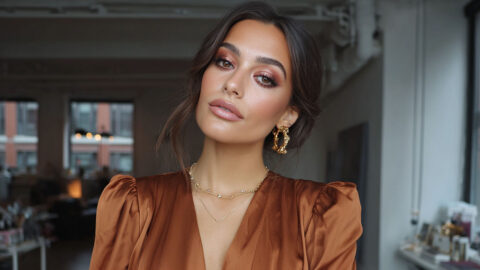
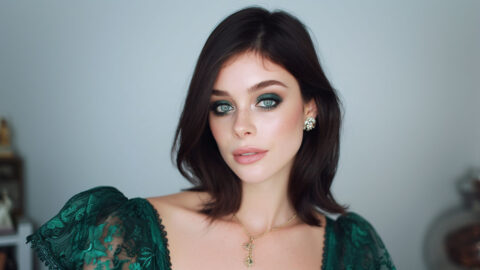
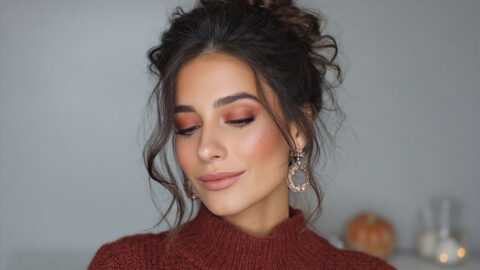
Which decade you mean matters before you buy anything. The 1960s flower child wore almost nothing, just sheer skin and clear gloss with light brown mascara as the only real product. The 1970s face was bronzed, with full brows and green or gold on the eyes.
Face art sits on top of either one, mostly painted flowers and peace signs plus the occasional rainbow, and it turns up at Halloween and festivals as much as at themed parties.
Costume paint comes with a regulatory catch. FDA treats Halloween and theatrical makeup as cosmetics (FDA color additive fact sheet, 2022), which means every color in the paint has to clear the same color additive approval as everyday makeup.
How do 1960s and 1970s hippie makeup looks differ?

Mostly in how much product ends up on the face. The 1960s version strips makeup back to sheer skin, with light brown mascara and clear gloss as the only color. The 1970s version brings in bronzed skin and full brows, plus eyeshadow in earth tones or green.
Both sit apart from mod makeup, which built the face around a pale lid and heavy lashes.
| Feature | 1960s flower child | 1970s earth tone | Modern festival |
|---|---|---|---|
| Skin | Sheer, sparse powder, light blush | Bronzed, sun-kissed | Dewy, highlighted |
| Eyes | Light brown mascara, thin upper line | Brown, gold, green, blue | Pastel or rainbow, glitter |
| Brows | Natural, unpenciled | Bushy, full | Brushed up, soft |
| Lips | Clear gloss or light pink | Glossy nude | Sheer gloss, peach, berry |
| Accent | A flower, real or painted | Gold highlighter | Face gems, cheek art |
Where the 1960s version came from
TeachRock’s lesson on San Francisco in 1967 puts it at nearly 100,000 young people arriving for the Summer of Love, with Haight-Ashbury at the center.
That crowd wore the no-makeup face, and it reached a national stage at Woodstock in Bethel, New York, on August 15 to 18, 1969. More than 400,000 people were trying to get in, against early estimates of 50,000 to 200,000 (HISTORY.com).
The late 1960s face was light brown mascara and clear gloss, or a touch of light pink on the lips, with only sparse blush and powder on the skin.
Vintage Dancer and Central Casting’s period guide describe the same face independently.
Vintage Dancer adds a caveat. Hippies between 1966 and 1968 still wore the mod look, so the bare face belongs to the end of the decade.
Why the 1970s version got bolder
Bronze replaced blush as the color that anchors the face.
Skin went bronzed and sun-kissed, sculpted along the cheekbones and forehead, and the brows got bushy and full, which is a clear step up from the natural 1960s brow. Eyes picked up green liner and golden highlighter over earth-tone shadow. Lips stayed a glossy nude.
Charlotte Tilbury’s 70s tutorial builds the decade around exactly these pieces, and ties the gold and green eye to disco.
Disco pushed the decade toward sparkle, and the wider set of 70s makeup looks covers that side in full.
What separates hippie from mod and disco makeup
Mod means a sharp black crease line on a pale lid, the signature associated with Twiggy (Hair and Makeup Artist).
Disco goes for sparkling eyes and a gold highlight, a night-out finish. Hippie is the soft one, smudged and nature-colored, and light on the skin.
Anything that looks drawn on is mod, and anything glittered for the dance floor is disco.
Anyone who wants the mod side in detail can browse the full range of 60s makeup looks.
Which skin finish and lip color work for a hippie look?
Keep skin sheer for the 1960s version and bronzed for the 1970s one, then finish with gloss in a clear, pink, peach or nude shade. Coverage stays light in both.
Hair and Makeup Artist, Central Casting and Vintage Dancer all describe the 1960s base the same way, with sparse powder and sparing blush, nothing heavy.
Bare and dewy skin

Full-coverage foundation fights this look. A skin tint or a dab of concealer only where needed is enough.
Moisturizer or a light primer first, then spot concealer. Cream blush goes on the apples of the cheeks.
Vintage Dancer lists a light pink-brown blush on the apples as the period choice, and cream formulas give the dewy finish without powder.
Bronzed skin
Bronzer is the 1970s signature, and it does not belong on the 1960s face.
Charlotte Tilbury starts her 70s routine with foundation and concealer, adds bronzer, then sculpts the cheekbones, nose, forehead and jaw for a sun-kissed result.
A light hand matters more than the shade, and a guide to applying bronzer helps keep it from going muddy.
Lip shades and finishes
| Shade | Finish | Fits |
|---|---|---|
| Clear gloss | Glassy | 1960s bare look |
| Light pink | Sheer | 1960s flower child |
| Peach | Glossy | Sun-kissed 1970s |
| Glossy nude | Glossy | 1970s earth tone |
| Berry | Sheer stain | Modern festival |
Gloss is the common thread. Vintage Dancer, Central Casting, Charlotte Tilbury and e.l.f. Cosmetics each put it on the lips, and matte formulas pull the look toward a different decade.
Dab gloss on the center of the lips and press them together, and check a quick guide to applying lip gloss for the finer points.
What eye makeup suits a hippie look?
Earth tones do most of the work, meaning matte browns, golds and forest green with a touch of blue, all smudged softly instead of sharply lined.
The 1960s version drops back to light brown mascara and a thin upper line with no wings.
Earth-tone shadow
e.l.f. Cosmetics’ 70s tutorial makes a handy template. It puts a matte nude-brown all over the lid, a shimmery golden yellow in the inner corner and bright blue in the crease, then smudges forest green along the lower lashes.
Charlotte Tilbury takes a different route with a green liner in a V shape and gold highlighter on the lid.
Blending the edges matters more than the exact shades, and a walkthrough on applying eyeshadow covers the technique.
Pastel and rainbow eyes

As of October 2026, FDA’s color additive guidance states that no color additive may be used in the area of the eye unless its regulation specifically permits that use.
The eyelids, eyebrows, the skin below the brow and the lashes all count as eye area, so bright pigments and glitter near the eye need eye-safe labeling.
Pastels and rainbows work if you keep them light, like a pale lilac or mint wash on the lid, or thin rainbow bands across it. Glitter, if there is any, stays on the inner corner only.
Colored mascara has period backing too. Central Casting notes that 1960s mascara ran from standard black to pastel purple.
For sparkle, a guide to applying glitter eyeshadow covers adhesion and fallout.
Liner and lower lashes
Soft and smudged beats sharp and drawn.
Central Casting describes the natural hippie liner as a lightly lined upper lid in black, with no wings or embellishment. The 1970s swaps that for green liner.
Under the lower lashes, a smudge of green or brown reads hippie, where a sharp black crease line on a pale lid would read mod.
Which face art designs belong in hippie makeup looks?

Flowers lead, followed by peace signs, rainbows, stars, butterflies and paisley. Hair and Makeup Artist ties face and body painting to the flower power movement and describes it as full of color.
Flowers go on the cheek or temple and rate easy to medium, drawn with a liner pencil and a small brush. A peace sign sits on the cheek, takes medium effort and needs only a liner pencil. Rainbows run as an arc from the temple or from above the brow, also medium, and call for a fine brush with several colors.
Stars are easier. They go at the outer corner of the eye or on the cheekbone, done in liner or with face gems.
Butterflies cross the eyelid or cheekbone and rate hard, with a fine brush. Paisley curves along the temple or cheekbone and is just as hard, needing a fine brush and liner.
Easiest designs for beginners
Small dots and tiny flowers scattered across the nose and cheeks as flower freckles are the lowest-effort option. Stars come second.
Butterflies and paisley need steady brushwork. Skip them on a first attempt.
Placement that keeps the look wearable
Motifs sit on the cheek, temple, brow bone or eyelid.
Pick one focal motif. Two competing designs read as costume clutter instead of a look.
Anything on the eyelid or brow falls under the eye-area rule, so use eye-safe products there.
For color layouts beyond the classic arc, rainbow-themed makeup looks are worth a scroll.
Which products and tools do you need, and which are skin-safe?
The kit is short. It takes skin prep, a bronzer or cream blush, cream eyeshadows, liner pencils, lip gloss and one water-based cosmetic face paint. Everything that touches skin has to be made for skin.
FDA’s novelty makeup guidance (content current as of November 2022) says the same thing, which is don’t decorate your face with things that aren’t intended for your skin.
| Item | Safe choice | Skip |
|---|---|---|
| Face paint | Water-based, cosmetic-grade | Craft or acrylic paint |
| Glitter | Cosmetic-grade, labeled for its area | Craft glitter |
| Face gems | Adhesive made for skin | Craft glue |
| Neon shades | Cosmetic neon, away from the eyes | Neon near the lids |
The core kit

Beyond skin prep, the kit comes down to a cream bronzer or blush, cream shadows in browns, greens and golds, liner pencils and lip gloss, with primer under all of it.
Primer earns its place. Skin Inc.’s Halloween makeup safety roundup reports a dermatology practice recommending it under costume makeup for a smoother finish and a small defense against clogged pores.
If you have never used one, this walkthrough on using makeup primer is a quick read.
Face paint
Snazaroo’s paint is water-based, fragrance-free and cosmetic-grade, sold in classic, sparkle and metallic finishes, and the brand says it washes off with soap and water.
Mehron’s Paradise AQ comes as water-activated cakes, described as made with FDA and EU compliant ingredients. Removal is makeup remover, soap and water, and the 7 g cakes refill palettes of 6, 8, 12 and 30 colors.
A one-off look needs a handful of colors from either brand. Refillable cakes pay off only if face art becomes a habit.
Labels deserve a second look. AAP’s HealthyChildren site notes that cosmetics don’t need FDA testing before sale, and that what FDA actually approves is the color additives inside them.
So “FDA approved” on a tin really means approved colors. Check the ingredient list against FDA’s Summary of Color Additives, and remember that a Colour Index or E number does not show FDA certification (FDA color additive fact sheet, current as of June 2022).
University of Miami Health (2019) adds that “non-toxic” carries no regulatory meaning at FDA, so that word settles nothing.
Neon rainbows need extra care. FDA’s novelty makeup page counts eight fluorescent colors approved for cosmetics (its color additive fact sheet lists seven and leaves out D&C Yellow No. 7), and none may be used near the eyes.
Glitter and face gems

FDA’s fact sheet uses “holographic” glitter, aluminum bonded to etched plastic film, as its example of a combination that can form a new pigment without approval for the intended use.
TKB Trading, a cosmetic ingredient supplier, reports that FDA has let such glitter products into the US while it reviews petitions. That leaves glitter in a gray zone, which is a good reason to buy brands that state cosmetic-grade and skin use.
Sources split on the eye area. FDA says colors approved specifically for the eye area may be used there. University of Miami Health (2019) says to skip paint and glitter near the eyes, and to keep both off open sores, pimples included.
The stricter advice would rule out even inner-corner glitter. The compromise is to keep loose glitter on cheekbones and temples, and use a cream shimmer labeled for eyes if the lid needs sparkle.
Face gems and rhinestones need an adhesive made for skin. FDA’s guidance on removal applies here too, so take adhesives off the way the label says.
Which hippie look fits Halloween, a festival or a themed party?
Match the look to the risk. Halloween can carry the boldest face art. Festivals call for lighter choices, and everyday wear sticks to the sheer 1960s version.
| Occasion | Best look | Skill level | Main risk |
|---|---|---|---|
| Halloween | 1970s eyes plus one large motif | Medium | Costume-kit paint with unchecked colors |
| Festival | Dewy skin, gems, cheekbone glitter | Easy to medium | Glitter drifting toward the eyes |
| Themed party | 1960s flower child plus one flower | Easy | Overdecorating |
| Everyday | Sheer 1960s version | Easy | Reads as no makeup at all |
Halloween and costume parties
The best fit is 1970s earth-tone eyes with one large motif, such as a rainbow or a peace sign. Use water-based paint and test it on the arm days ahead.
FDA recommends face paint over masks, because a mask can block your view of where you are going.
Costume kits tempt with a full palette. Check every color on the label before it goes anywhere near the face.
Festivals
Festivals call for the lighter version.
Large outdoor events such as Coachella, which runs across two April weekends in Indio, California (April 9 to 11 and 16 to 18 in 2027, per DJ Mag), mean hours of wear in the same face. That points to dewy skin, cream blush, small gems on the cheekbones and one painted motif.
Skip full-face coverage. One motif plus gems delivers the festival look with a fraction of the removal work at night.
More sparkle ideas sit in this collection of glitter-heavy makeup looks.
Everyday and retro-inspired wear
The sheer 1960s version needs no special products, just light brown mascara and clear gloss with a touch of blush.
It sits closest to natural-leaning makeup looks, which is why it passes as everyday makeup without a costume attached.
Beginners should start at the party or everyday version. Every step after that adds product and time, and a bit more risk.
How to do a hippie makeup look step by step
Work from the skin outward and leave the face art for last, after prep, base, brows, eyes, cheeks and lips. The motif takes the most time, since the base and eyes go fast once the products are laid out.
- Cleanse and moisturize, then apply primer.
- Build the base with a sheer skin tint or spot concealer for the 1960s version, or cream bronzer for the 1970s version.
- Set the brows. Brush them natural for the 1960s version, or fill and fluff them for the 1970s version.
- Do the eyes with earth-tone shadow first, then a thin upper line, mascara and a smudge under the lower lashes.
- Add cream blush on the apples of the cheeks, then gloss.
- Paint the motif. Outline with a liner pencil, then fill with water-based paint.
- Finish by setting gems with skin-safe adhesive, keeping glitter on the cheekbones, and checking both sides in good light.
Skin prep decides how evenly everything sits, and this walkthrough on prepping skin before makeup covers the basics.
The flush matters more than the shade. A guide to applying cream blush shows where it sits best.
Face art goes last because paint smears over a finished base, and a mistake there can’t be fixed without redoing what is underneath. Practice the motif on the back of your hand first.
Stop after step 5 and you already have the 1960s look. Steps 6 and 7 add the festival and Halloween layer.
Where do hippie makeup looks go wrong, and how do you remove them safely?

Most problems come from the wrong product on skin or a skipped patch test, and sometimes from makeup left on overnight. Removal follows the product label.
Common failure points
FDA records face paint recalls in March 2005 and May 2009, after products caused rash, irritation, itching and minor swelling where they were applied.
Craft paint is the obvious wrong product, along with kit colors that fail the label check. Paint with a very bad smell is contaminated, and FDA says to throw it away.
AAP’s HealthyChildren site lists latex in face and body paints, plus cobalt and nickel, as causes of sensitivities. It also advises against sharing makeup and against storing it somewhere too warm or moist.
Patchy paint usually means dry skin underneath, so moisturize and prime before adding more product.
Brushes and sponges touch every product in the kit. Saint Louis University’s dermatology guidance lists clean applicators among its basics, and washing makeup brushes between uses is the easy fix.
Patch-testing and who should skip face paint
Credible sources don’t agree on the routine.
| Source | Where | Timing |
|---|---|---|
| FDA | Dab on the arm | A couple of days before |
| University of Miami Health (2019) | Behind the ear or inner wrist | 3 to 4 hours, then wash off |
| Saint Louis University dermatology | Inner arm under a bandage | 48 hours covered, 48 more watching |
The disagreement is about timing. The short test catches quick irritation, while the longer windows give slower allergic reactions time to show.
The same Saint Louis University dermatologist notes that contact dermatitis from face paint is uncommon but unpredictable. People with known contact allergies or sensitive skin should skip face painting.
For them, the sheer 1960s version with regular cosmetics still delivers the look.
Removing face paint and glitter
FDA’s guidance says to follow the label, so cold cream if it says cold cream and soap and water if it says that. The same goes for eye makeup remover.
Water-based paint comes off with soap and warm water. Stubborn pigment may need an oil or balm first, then a gentle wash. Glitter gets a gentle wash too, per University of Miami Health (2019), and adhesives for gems come off however the label specifies.
The skin around the eyes is delicate, and FDA says to remove makeup there gently. Eye shadow, liner and glitter near the lids come off best with a dedicated remover, and a guide to removing eye makeup covers the routine.
Never go to bed in it. FDA warns that wearing makeup too long can irritate skin, and flaked or smeared bits can end up in the eyes.
Hippie Makeup Looks FAQ
How long does hippie face paint last?
No fixed wear time exists. Mehron describes its Paradise AQ paint as long-lasting and crack-free once dry, but the listing gives no hours, and sweat, plus rubbing and touching, wear down any water-based paint first.
Carry a touch-up kit, and never sleep in it.
Can you do a hippie look without face paint?
Yes. The sheer 1960s version needs only light brown mascara and clear gloss, with a little cream blush.
For art, draw small flowers or dots with a liner pencil, or set cosmetic-grade gems with an adhesive made for skin.
Is hippie face paint safe for kids?
Yes, but only with cosmetic-grade, water-based paint whose colors are FDA-approved for cosmetics.
AAP’s HealthyChildren site says to test a small amount on the arm a few days ahead, and never to share makeup between children.
Can real flowers go on the face?
Yes, as an accent. Place whole petals with an adhesive made for skin and keep them away from the eyes.
Crushed produce makes a poor dye, since blueberries can stain skin for days, according to a DermOne physician assistant quoted by Skin Inc.
Which hairstyle goes with hippie makeup?
Long, loose, natural-looking hair suits both the 1960s and 1970s versions.
A flower tucked near the temple repeats the face art without adding another product.
When to Test and Practice Hippie Makeup Looks
Hippie makeup looks need a patch test at least two days before the event, and four days if skin reacts easily.
The four-day figure adds Saint Louis University’s 48 hours covered and 48 hours watching, roughly double the minimum FDA gives.
Patch-test the paint, adhesive and glitter first, then rehearse the full motif once. Gloss, cream blush, a liner pencil and cotton swabs get packed last.
Testing goes first since a failed test changes what gets bought, and the rehearsal that follows shows how long the motif really takes.
The cost is a locked shopping list, since any product swapped on the day needs a new test.
The position here was verified on October 4, 2026, against FDA pages last updated in 2022, and a change to FDA’s color additive summary would alter which paints qualify.
For a long day outdoors, a guide to making makeup last all day is the next read.

She started writing on the site after fielding the same questions from clients and friends often enough to just write the answers down: which red won't turn orange on a warm undertone, how to keep lipstick from feathering into fine lines, why a "12-hour" formula rarely survives dinner.
Every review on the site follows the same rule she uses with paying clients: wear it first, then decide if it's worth recommending.
- How to Make Eyeliner Last Longer Without Smudging - August 31, 2026
- How to Make Eyeshadow Last Longer All Day - August 29, 2026
- How to Find Your Undertone in 5 Easy Steps - August 27, 2026