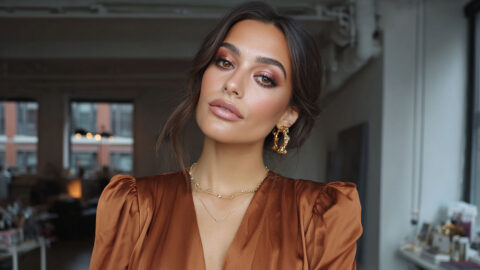
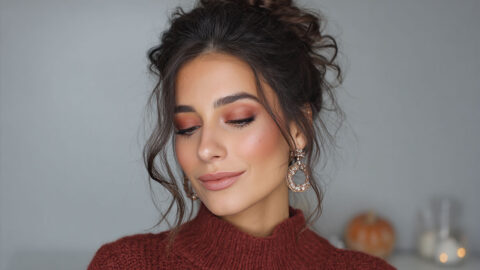
Most makeup advice ignores your undertone completely. Deep winter makeup looks fix that by working with your natural coloring instead of against it.
If you’ve been typed as a deep winter in the 12-season color analysis system, your best shades are cool, saturated, and intense. Jewel-toned eyeshadows, blue-based reds, berry lips, and icy highlights. Not warm nudes. Not golden bronzers. Not coral anything.
This guide covers everything from identifying your deep winter skin tone to choosing the right foundation undertone, building eye and lip looks that actually suit you, and editing out the shades that don’t. Whether you have fair, medium, or deep skin, the palette works the same way. Cool undertones. High contrast. Bold depth.
What Is a Deep Winter Color Palette in Makeup?

Deep winter is one of three sub-seasons within the winter category of the 12-season color analysis system. It sits between true winter and dark autumn on the seasonal spectrum, and it’s the deepest, most dramatic palette of the three.
The colors are cool, saturated, and intense. Think sapphire blue, emerald green, rich plum, burgundy, and blue-based reds. Even the neutrals run dark and cool: black, charcoal, navy, and cool espresso.
What separates deep winter from other winter sub-seasons comes down to depth and saturation. Cool winter leans icier and brighter. Bright winter has more clarity and pop. Deep winter pulls everything toward darkness and richness, with jewel tones doing the heavy lifting.
And here’s the part that trips people up. Deep winter shares a border with dark autumn, which means some of the palette’s shades carry a very slight warmth to them. But the dominant undertone stays cool. If you pull those colors apart, the blue base is still there.
Color Me Beautiful, one of the longest-running authorities on seasonal color analysis, has helped over 26 million women identify their best shades since the 1980s. Their system confirms that deep winters do best in cool-toned, rich, dark colors rather than warm or muted palettes.
For makeup specifically, this palette translates to a pretty clear set of rules. Your best shades will be jewel-toned eyeshadows, blue-based lip colors, cool-toned blush, and foundation with neutral-cool undertones.
Skip the warm oranges. Leave the golden bronzers alone. This palette is about high contrast and cool depth, not warmth.
How Deep Winter Differs from True Winter and Dark Autumn
This is where most confusion happens, and I get it. The seasons that sit next to each other on the color wheel look close.
| Feature | Deep Winter | True Winter | Dark Autumn |
| The “Vibe” | Intense, Velvety, Mysterious | Crisp, Icy, High-Voltage | Rich, Earthy, Burnished |
| The “Neutral” | Charcoal & Pine Green | Stark Black & Pure White | Espresso & Olive Drab |
| Lip Direction | Black Cherry / Merlot | True Red / Fuchsia | Oxblood / Terracotta |
| Blush Tone | Deep Plum | Cool Berry | Spiced Cinnamon |
Deep winter vs. true winter: True winter is cooler and a touch brighter. Deep winter pulls darker and heavier. If icy pastels wash you out but deep jewel tones make your skin come alive, you’re likely deep winter.
Dark autumn shares that same level of depth. But the temperature flips. Dark autumn leans warm with earthy, red-brown undertones. Deep winter stays cool with blue-black undertones. Gold jewelry looks off on a deep winter. Silver sits right.
How to Identify a Deep Winter Skin Tone

You can’t figure out your color season by looking at a chart online and guessing. Well, you can, but you’ll probably land on the wrong one. Took me a while to accept that, honestly.
Deep winter features share a few common threads, though your skin can range from very fair to very deep. The defining factor isn’t lightness or darkness of skin alone. It’s the combination of cool undertones, high contrast, and depth across your features.
Skin, Hair, and Eye Patterns
Hair: Typically dark brown to black. This is a non-negotiable characteristic for most deep winters. If your natural hair is light or warm blonde, this probably isn’t your season.
Eyes: Often dark brown, deep hazel, dark olive, or near-black. Some deep winters have deep blue eyes, but that’s less common. The eyes tend to appear warmer than the overall coloring, which can be confusing during self-analysis.
Skin: This is the variable one. Deep winters span a wide range, from light beige to deep cocoa. Undertones lean neutral-cool, though it isn’t always obvious at first glance. Many deep winters have olive complexions, which adds another layer of complexity.
The contrast between features matters more than any single feature on its own. Dark hair against lighter skin. Or deep skin with bright, clear whites of the eyes creating that sharp contrast.
Testing Methods That Actually Work
The vein test gets talked about a lot. Look at your inner wrist. Blue or purple veins suggest cool undertones. Green veins suggest warm. If you see both, you might be neutral-cool, which fits deep winter.
But the most reliable method is still color draping. Professional color analysts place different colored fabrics near your face and observe how your skin reacts. Some colors make you look washed out or sallow. Others make your skin look clearer and more alive.
House of Colour, which has grown from a handful of consultants to over 300 across the U.S. since the color analysis trend resurged on TikTok, uses this draping technique as their core assessment method. A single consultation typically runs between $250 and $400, depending on your area.
If you can’t get to a professional, the DIY approach works in a pinch. Hold a warm orange fabric and a cool blue-red fabric next to your face in natural daylight. No makeup. Hair pulled back. If the cool shade makes your skin glow while the warm one flattens it, you’re in the cool camp.
Celebrity References Commonly Typed as Deep Winter
Color analysts frequently type Megan Fox, Kim Kardashian, and Courteney Cox as deep winters. Dark hair, cool undertones, high contrast between features. They all wear deep reds, black, and jewel tones consistently well, which lines up with the palette.
Looking at real faces is easier than reading about undertone theory. If your coloring mirrors any of these examples, deep winter is a strong possibility.
Foundation and Base Makeup for Deep Winter Complexions

The base layer sets the tone for everything that follows. Get this wrong and even the best eyeshadow palette won’t save the look.
A Benchmarking Co. report from January 2025 found that 93% of consumers rank shade match as the most important factor when buying color cosmetics. For deep winters, shade match goes beyond just the right depth. The undertone of your foundation has to be neutral-cool, or it’ll look muddy against your skin.
Choosing the Right Foundation Undertone
Skip anything with a strong yellow or golden base. Deep winters need foundations that lean neutral to cool. Some brands label these with a “C” for cool or “N” for neutral.
NARS runs a solid range of cool-undertone foundations. Their Sheer Glow and Natural Radiant lines both include shades that work across the full depth spectrum for cool-toned skin. If you’re not sure how to get the best coverage from their formulas, check out this guide on applying NARS foundation.
Fenty Beauty launched with 40 shades specifically because founder Rihanna understood that undertone variety matters as much as depth. Their Pro Filt’r line includes plenty of cool and neutral options across light, medium, and deep ranges.
MAC’s Studio Fix formula is another reliable pick. Their shade numbering system separates cool (C), neutral (N), and warm (W) very clearly, which cuts down on guesswork.
Setting and Finishing the Base
Once your foundation is blended, lock it in place with a setting powder that doesn’t shift the undertone. Translucent powders work for most, but some can leave a slight warm cast on deeper skin. Here’s a quick breakdown on applying translucent powder without flashback or caking.
For deep winters, avoid warm-toned bronzers entirely. This is one of the biggest mistakes I see. The standard golden bronzer that works beautifully on autumns will make a deep winter look orange or muddy.
Use a cool-toned contour shade instead. Think taupe, cool brown, or even a grey-brown to add dimension. And for highlighting, go icy: silver, cool champagne, or a pale pink shimmer. Warm gold highlighters clash with the cool base of this palette. If you’re exploring how to apply cream highlighter, blend in thin layers so the shimmer stays subtle.
Deep Winter Eye Makeup Looks

This is where the deep winter palette really gets to show off. Your eyes can handle color intensity that would overpower other seasons, and that opens up some options most people don’t get to play with.
Sensient Beauty’s 2024-2025 color trends report noted that dark lip colors and bold eye makeup are becoming major trends, with deep berry, black, and brown shades “redefining luxury.” Deep winters were built for this shift.
Everyday Eye Looks for Deep Winters
You don’t need a full jewel-toned smoky eye just to grab coffee. But you also don’t need to default to boring beige.
Cool-toned taupe is the workhorse neutral for deep winters. It’s your version of “no-makeup makeup” on the eyes. Blend a matte taupe across the crease and a soft mauve on the lid. Done. Clean and pulled-together without looking like you tried too hard.
For liner, deep plum or midnight blue adds subtle dimension without the harshness of jet black. These shades read as almost-neutral from a distance but give your eyes more depth up close. And for mascara, black is the obvious choice, but deep navy works if you want something slightly different for daytime. Learning the basics of applying eyeshadow with the right blending technique makes these subtle shades look intentional rather than muddy.
A cool berry shade in the crease with a wash of icy shimmer on the center of the lid is another easy option. Quick. Flattering. Doesn’t require 14 brushes.
Evening and Glam Eye Looks for Deep Winters
This is where you stop being polite about it.
A smoky eye using navy, charcoal, and deep plum instead of basic black gives dimension that a single dark shade can’t match. Layer a matte navy in the outer corner, blend charcoal through the crease, and press a silver or icy lilac shimmer onto the center of the lid.
Jewel-toned looks go hard for deep winters. Emerald on the lid with a black crease. Sapphire blue blended out with cool grey. Burgundy and deep wine paired with a hint of gold (yes, gold, but only as a tiny inner-corner accent, not as the base).
Graphic liner in deep tones is another route. A sharp wing in midnight blue or eggplant purple reads high-fashion without looking costumey. Pair it with a clean lid and lots of mascara.
Urban Decay’s eyeshadow palettes tend to lean cool and include the kind of deep, pigmented shades that actually show up on deep winter lids. Their formula works well with an eyeshadow primer underneath for all-night hold. For a full breakdown of what different eye makeup looks you can pull off, there’s more to explore beyond just the smoky eye.
Best Lip Colors for Deep Winter Makeup

Lips might be the fastest way to tell if someone’s wearing their right colors. A deep winter in a coral lipstick looks off. The same person in a blue-based red looks like a completely different human.
Global Cosmetic Industry data from 2025 shows that lip products were the top-performing color cosmetics category, increasing 19% year-over-year, driven by hybrid products with both color payoff and skin benefits. The deep winter palette is perfectly positioned for this trend because the shades that suit it, deep berries, rich reds, bold plums, already look expensive.
Blue-Based Reds vs. Orange-Based Reds
This distinction matters more for deep winters than almost any other season.
A blue-based red has a cool, slightly crimson quality. It makes teeth look whiter and skin look brighter on cool-toned people. An orange-based red leans toward tomato or brick. On a deep winter, this reads as “something’s wrong” without you being able to pinpoint exactly what.
MAC’s Ruby Woo is a classic blue-red matte that gets mentioned in nearly every deep winter lip guide, and for good reason. Pat McGrath Labs’ Elson is another staple. Charlotte Tilbury’s Walk of No Shame sits right in that blue-red sweet spot too.
When picking out lipstick shades for cool undertones, look for words like “berry,” “wine,” “crimson,” and “raspberry” on the label. Avoid “coral,” “peach,” “terracotta,” and “warm nude.”
Bold and Deep Lip Options
Berry and wine shades are the bread and butter of a deep winter lip collection. Deep raspberry, blackberry, and mulberry read as sophisticated and slightly dramatic without being over the top.
Plum and deep purple sit well too. If you want to go darker, a near-black plum or oxblood shade can work beautifully. The trick with wearing dark lipstick shades is clean edges. Messy application makes them look goth-by-accident rather than intentional.
For evenings, dark lipstick makeup looks paired with minimal eye makeup create that bold-lip-bare-eye balance that makeup artists have been pushing hard through 2025. Vogue Scandinavia reported that celebrity artists now call it “low effort, big impact” because a bold lip with bare eyes reads like you spent an hour in front of the mirror.
Everyday and Nude Lip Options
Deep winters can’t just grab any nude off the shelf. Most commercial “nude” lipsticks lean warm, with peachy or beige-gold tones that look ashy or strange against cool skin.
Look for cool-toned nudes: mauve, dusty rose, cool pink-brown, or a muted berry that reads as “my lips but better.” These are your winter lipstick colors for days when you want something understated.
A matte formula in these shades tends to last longer and look more polished. If matte dries your lips out, layer a tiny bit of clear lip gloss over the center for dimension without shifting the color warm.
Always line first. A lip liner matched to your lipstick shade (or one shade deeper) gives a clean definition that high-contrast features demand. Deep winters can’t really get away with blurred, undefined lip edges the way softer seasons can. For tips on choosing the right lip liner, the shade should blend seamlessly with your lipstick rather than creating a visible ring.
Blush and Cheek Color for Deep Winter Skin

Cheek color gets treated like an afterthought a lot of the time. But it changes the whole balance of a look, especially on high-contrast faces where the wrong shade sticks out immediately.
Accio market research data from 2024-2025 shows that search interest for powder and liquid highlighters on Amazon peaked at 709.8 monthly searches in August 2025, confirming that cheek products remain a high-interest category for consumers actively building their routines.
Best Blush Shades for Deep Winters
Stay in the cool lane.
Cool pink, berry, plum, and deep rose are the blush families that work. If you pick up a blush and it looks like a peach or a warm coral, put it back. Those are autumn blush shades.
On lighter deep winter skin, a soft cool pink or raspberry gives a fresh, healthy flush. On medium to deep skin, a richer berry or deep plum adds color without looking chalky.
Rare Beauty’s liquid blush has become a staple for a reason. It’s intensely pigmented, which means deep winters with deeper skin tones can actually see the color. For a full rundown on applying Rare Beauty blush, start with a single dot and blend outward. You need far less than you think.
Powder vs. Cream Formulas
| Format | The “Pro” Evolution | 2026 “Studio” Hack |
| Powder Blush | Baked & Micronized formulas (less chalky). | Apply over a light dusting of translucent powder to prevent “grabbing” or patchiness. |
| Cream Blush | Cream-to-Powder hybrids (more stable). | Warm the product on the back of your hand first to “melt” the waxes for a seamless blend. |
| Liquid Blush | Serum-infused with Skincare (Hyaluronic Acid). | Mix one drop with your Skin Tint for a “Lit-from-Within” glow that never looks like makeup. |
Cream blush blends into skin more naturally and gives that “flushed from within” look that works well with minimal base makeup. If you prefer the cream route, here’s a guide on applying cream blush so it sits right on your cheekbones without streaking.
For placement, applying blush on different face shapes changes where the color sits. Deep winters with high contrast should keep blush placement on the apples and slightly upward toward the temples. Dragging it down makes the face look longer and less vibrant.
Highlighter Pairing
Icy silver, cool champagne, or pale pink. Those are your three highlighter options. Warm gold and bronze highlighters work on autumn palettes, not yours.
Apply highlighter to the tops of the cheekbones, bridge of the nose, and cupid’s bow. Keep it subtle. Deep winters already have high contrast in their features, so a heavy-handed highlight can tip the look into “too much” territory fast. Using a highlighter correctly means building thin layers rather than packing on shimmer.
Deep Winter Makeup Looks for Different Skin Depths
Deep winter isn’t a skin color. It’s a pattern of contrast, depth, and undertone that shows up across the full range of human complexions.
That’s worth repeating because too many color analysis guides default to showing one type of face. Mintel data shows 50% of beauty consumers prioritize inclusivity when buying products. When a color season only gets represented by one skin depth, people with different complexions wrongly assume it doesn’t apply to them.
Deep Winter on Fair Skin
High contrast is the giveaway. Fair-skinned deep winters usually have very dark hair against noticeably light skin, creating a sharp visual difference that’s hard to miss.
Jewel-toned eyeshadows like sapphire and emerald pop against fair skin without looking overdone. For lips, a blue-based red or deep berry reads dramatic, not harsh. Keep the base sheer or light-coverage since heavy foundation flattens that natural contrast.
If you’re working with fair skin and cool undertones, look at matte lipstick options specifically for fair skin to find shades that complement rather than wash out your complexion. Lipstick colors matched to fair skin tones tend to lean cooler in the deep winter range.
Deep Winter on Medium Skin
Arbelle research found that most foundation shade ranges cluster heavily around mid-tones, which sounds like good news but often means the undertone variety is lacking in this range. Medium-skinned deep winters need neutral-cool options, not the yellow-leaning shades that dominate mid-range selections.
Plum eyeshadow, burgundy liner, and wine-toned lips look striking without overpowering medium complexions. An icy pink or silver highlighter adds brightness without the warm shift that gold creates.
ColourPop and Natasha Denona both carry cool-leaning eyeshadow palettes with enough depth and pigment to show up well on medium skin tones.
Deep Winter on Dark Skin

Pigmentation matters here more than anything else. Products that look fine on lighter skin can appear chalky or ashy on deeper tones if the formula isn’t pigmented enough to actually show color.
Key adjustments:
- Choose richly pigmented blush in deep berry or plum (skip anything with a white base)
- Go for deep wine, blackberry, or near-black plum lip shades
- Opt for cool-toned matte lipstick formulated for dark skin that delivers full color payoff
Pat McGrath Labs and Danessa Myricks Beauty are both known for formulas that perform well across deep skin tones. Their pigment intensity means the jewel tones and deep shades of the deep winter palette actually translate to the skin.
For full face ideas, check out dark skin makeup looks and glam black girl makeup looks that lean into the kind of rich, saturated shades deep winters need.
Colors Deep Winters Should Avoid in Makeup
Knowing what to skip saves more money and frustration than knowing what to buy. At least in my experience.
Advanced Dermatology’s 2024 study found that American consumers spend an average of $25 per month on makeup alone. That adds up. Every wrong shade sitting unused in a drawer is money wasted on a color that was never going to work.
Warm Tones That Clash with Cool Undertones
| The “Fail” Shade | The “Power” Alternative | Why it Works in 2026 |
| Coral / Peach | Cool Watermelon / Raspberry | Replaces the yellow base with a pink/blue base that harmonizes with your blood’s natural cool undertone. |
| Golden Bronze | Pewter / Silver-Taupe | Provides the “metallic” shine you want without the yellowing effect that makes Deep Winter skin look tired. |
| Warm Nude | Mauve-Nude / Greige | These have a hint of purple or gray, which disappears into cool skin for a true “natural” look. |
| Terracotta | Oxblood / Black Cherry | Maintains the “darkness” of terracotta but uses red-blue pigments that emphasize your high contrast. |
| Warm Olive | Emerald / Forest Green | These are “True” greens with no yellow. They read as regal and rich rather than “muddy.” |
Orange-based lipstick is probably the single most common mistake. People grab a “red” off the shelf without checking the base tone, and it shifts warm on the lips. If you’ve ever wondered why a red lipstick looked incredible on your friend but weird on you, this is likely why. Understanding the difference between a cool versus warm red lipstick solves this problem instantly.
Coral lipstick falls firmly in the “avoid” category for deep winters. Same goes for orange lipstick shades. Both are warm-season territory.
Muted and Earthy Shades Borrowed from Autumn
Muted equals muddy on a deep winter. Soft, dusty tones that look cozy on autumn palettes just flatten everything on your face.
Warm browns, rust, mustard yellow, and burnt sienna all steal the crispness from your natural coloring. Your palette needs saturation and coolness. Earthy, blended-out warmth does the opposite.
Even “universal” shades miss the mark sometimes. A nude lipstick marketed as “flattering on everyone” almost always leans warm beige or peachy, neither of which belongs on a deep winter. Picking the right nude lipstick means reaching for cool mauve or dusty rose instead.
How to Build a Deep Winter Makeup Collection

You don’t need 47 palettes and a vanity the size of a desk. You need the right 10 to 15 products that actually match your coloring, and you’ll use every single one.
Statista data shows that U.S. millennials spent an average of $2,670 on beauty products in 2023, the highest of any age group. A lot of that money goes to products that end up unused because they were trending, not because they were right. Building a collection around your confirmed palette prevents that.
Core Products to Start With
The deep winter starter kit:
- Cool-undertone foundation (neutral to cool, matched properly)
- One bold lip in a blue-based red or deep berry
- One everyday lip in cool mauve or dusty rose
- Cool-toned eyeshadow palette with jewel tones and icy shimmers
- Cool pink or berry blush
- Black mascara and a deep-toned eyeliner
That’s it for the basics. Everything else (second lip shade, additional eye looks, specialty highlighter) builds from there. For advice on picking lipstick colors that match your undertone, start by holding the tube next to your inner wrist to check if the shade reads cool or warm against your skin.
Drugstore vs. Prestige for Cool-Toned Products
Benchmarking Co.’s January 2025 report found that 88% of consumers rank finish and texture as the most important factor when buying color cosmetics, above brand name or price point.
Drugstore wins: NYX, ColourPop, and e.l.f. all carry cool-toned lip and eye products at accessible prices. NYX’s Soft Matte Lip Cream in Copenhagen and Prague are deep winter staples. ColourPop’s pressed shadow singles let you build a custom palette without buying shades you’ll never touch.
Prestige picks: MAC, Charlotte Tilbury, and Pat McGrath deliver richer pigment, smoother blending, and often better undertone accuracy. MAC’s lipstick range is one of the easiest to shop by undertone since their shade descriptions specifically mention cool, warm, or neutral bases. If you want to explore MAC-specific looks, MAC makeup looks can give you a feel for what their formulas do on different skin tones.
Editing Out Warm-Toned Products
Go through what you already own. Pull out anything that reads orange, warm gold, peach, or earthy brown and set it aside.
Try each piece on in natural daylight. Some products look different in the tube than they do on your skin. A lipstick that seems neutral in packaging might pull very warm once applied. If it washes you out or makes your skin look yellow, it doesn’t belong in your rotation. And if your lips tend toward dryness during this whole process, keeping up a solid lip care routine makes testing shades much easier.
Seasonal Adjustments to Deep Winter Makeup
Your color season doesn’t change with the weather. But the products you reach for, the textures you prefer, and how much intensity feels right absolutely do shift.
Accio research data from 2024-2025 shows “summer makeup” drives 60% of seasonal beauty queries, peaking in May and June, while December sees a 33% spike in searches for trendy and festive makeup. People switch their routines when seasons change, even if their palette stays the same.
Summer Adjustments for Deep Winters
Lighter textures, same cool tones. Swap full-coverage foundation for a tinted moisturizer or skin tint with cool-neutral undertones. Switch matte lipstick for a sheer berry lip stain or a tinted balm.
Icy shimmer eyeshadow in silver or pale lavender looks fresh for warmer months without dipping into warm territory. Skip the dark smoky eye and go with a wash of cool taupe or mauve instead.
If sun exposure temporarily shifts your skin’s appearance, don’t switch to warmer makeup to “match your tan.” Your undertone hasn’t changed. Going warm will just look off. For more warm-weather ideas that still work within cool-toned parameters, summer makeup looks offer plenty of starting points.
Winter Adjustments for Deep Winters
This is your season to go all in.
| Product | Summer “Atmospheric” Strategy | Winter “Studio” Strategy |
| Lip Color | Sheer Berry / Black Honey | Full-Pigment Merlot / Blue-Red |
| Eye Look | Cool Taupe / Icy Lilac Wash | Emerald / Navy / Charcoal Smoke |
| Base | Skin Tint / Spot Concealing | Satin-Finish Foundation |
| The “Glow” | Glassy / Wet Finish | Velvet / Soft-Matte Finish |
Rich matte textures and full-depth jewel tones feel right when the weather turns cold. A deep plum or oxblood lip paired with a charcoal smoky eye is peak deep winter.
Hydration matters more in cooler months because dry skin makes makeup look flaky and uneven. Prepping your skin before makeup with a heavier moisturizer and hydrating primer keeps the base smooth.
If dry lips are an issue (and they usually are in cold weather), look into lip care specifically for dry lips before layering on matte or dark shades. Flaky lips and dark lipstick are a bad combination. Also worth knowing: keeping your lips moisturized while wearing matte lipstick takes a bit of prep, but it’s the difference between a polished look and one that cracks by noon.
Holiday and Christmas makeup looks lean naturally into what deep winters already do well. Silver shimmer, deep reds, cool metallics. You don’t have to force anything. Your palette is the holiday palette.
FAQ on Deep Winter Makeup Looks
What is a deep winter color season?
Deep winter is a sub-season within the 12-season color analysis system. It sits between true winter and dark autumn, defined by cool undertones, high contrast between features, and deep, saturated coloring in skin, hair, and eyes.
How do I know if I’m a deep winter?
Look for dark hair, cool or neutral-cool undertones, and high contrast between your features. The color draping method is the most reliable test. Silver jewelry flattering you more than gold is another strong indicator.
What makeup colors look best on deep winters?
Jewel tones like sapphire, emerald, plum, and burgundy. Blue-based reds and deep berry shades for lips. Cool pink or berry blush. Icy silver highlighter. Stick to cool, saturated, and deep shades across every product category.
What colors should deep winters avoid in makeup?
Warm oranges, corals, golden bronzers, peach blush, and earthy browns. Muted or dusty tones borrowed from autumn palettes also tend to flatten deep winter coloring. Anything with a strong yellow base will clash.
Can deep winters wear nude lipstick?
Yes, but only cool-toned nudes. Look for shades in mauve, dusty rose, or cool pink-brown. Most commercial nudes lean warm beige or peach, which reads ashy on cool skin. Always check the undertone before buying.
What is the difference between deep winter and dark autumn?
Both seasons are deep and dark. The difference is temperature. Deep winter leans cool with blue-black undertones. Dark autumn leans warm with red-brown undertones. Silver suits deep winter. Gold suits dark autumn.
Does deep winter work on all skin tones?
Yes. Deep winter spans fair to deep complexions. The defining factor isn’t skin lightness or darkness. It’s the combination of cool undertones and high contrast between hair, eyes, and skin that determines the season.
What eyeshadow palettes work for deep winters?
Palettes with cool-toned jewel shades, icy shimmers, and deep neutrals like charcoal and navy. Urban Decay, Natasha Denona, and ColourPop all carry options that lean cool with enough pigment and depth.
Should deep winters avoid bronzer completely?
Standard warm bronzers, yes. They pull orange on cool skin. Use a cool-toned contour shade in taupe or grey-brown instead to add dimension. Pair it with an icy highlighter rather than a golden one.
How do deep winter makeup looks change by season?
The palette stays the same. Textures shift. Summer calls for lighter formulas, sheer lip stains, and icy washes of color. Winter invites full-depth jewel tones, matte textures, and rich, saturated lip shades.
Conclusion
Getting deep winter makeup looks right comes down to one thing: respecting your undertone. Cool, deep, saturated. That’s the formula. Once you stop fighting it, everything clicks.
Your personal color analysis results aren’t a limitation. They’re a filter that cuts through the noise of trending shades and impulse buys. Blue-based reds over orange reds. Berry blush over peach. Silver shimmer over warm gold. Simple choices that make a real difference.
Whether you’re building a collection from scratch or editing what you already own, the deep winter palette gives you clear direction. Cool-toned foundation, jewel-toned eyeshadow, and rich lip color in plum, wine, or crimson will carry you through every season and occasion.
Stop second-guessing shade choices. Trust the palette. Wear what actually works with your skin, not what the algorithm told you to buy last week.

She started writing on the site after fielding the same questions from clients and friends often enough to just write the answers down: which red won't turn orange on a warm undertone, how to keep lipstick from feathering into fine lines, why a "12-hour" formula rarely survives dinner.
Every review on the site follows the same rule she uses with paying clients: wear it first, then decide if it's worth recommending.
- How to Make Eyeliner Last Longer Without Smudging - August 31, 2026
- How to Make Eyeshadow Last Longer All Day - August 29, 2026
- How to Find Your Undertone in 5 Easy Steps - August 27, 2026