

Summarize this article with:
A good masquerade look doesn’t need a physical mask. It needs the right pigments, steady hands, and a face paint design that holds up past midnight.
Masquerade makeup looks replace traditional masks with painted designs using eyeshadow, metallic pigments, rhinestones, and cosmetic glitter directly on skin. They trace back to the Venetian Carnival, and today they show up at masquerade balls, Halloween parties, Mardi Gras celebrations, themed weddings, and editorial shoots.
This guide covers the most common masquerade face designs, from dark gothic styles to minimalist liner-only masks. You will find step-by-step application techniques, tested color combinations for specific dress colors, and placement adjustments for different face shapes.
What Are Masquerade Makeup Looks

Masquerade makeup looks are face designs that replicate or replace a physical mask using cosmetic products like face paint, eyeshadow, eyeliner, rhinestones, and metallic pigments. They cover the eye area, temples, cheekbones, and sometimes the forehead to create the illusion of a decorative mask directly on skin.
These looks originated from Venetian Carnival traditions in Venice, Italy, where ornate masks were worn during celebrations. Today they show up at masquerade balls, Halloween parties, Mardi Gras events, themed galas, and even editorial photo shoots.
The key difference from regular costume makeup? Everything centers on the upper face. The design frames the eyes and extends outward, mimicking the silhouette of a Colombina or Bauta mask. Cosmetic glitter, adhesive gems, gold leaf, and false lashes are common finishing elements.
How Masquerade Makeup Differs from Costume Makeup
Costume makeup covers the full face and often changes facial structure entirely, think zombie prosthetics or skull face paint. Masquerade makeup stays focused on the eye area and upper face, creating a mask shape without altering bone structure or skin texture underneath.
It replaces a physical mask rather than transforming the whole face. That Venetian origin is still the blueprint.
Who Wears Masquerade Makeup
Masquerade ball attendees, Halloween partygoers, cosplayers, drag performers, editorial models, and brides at themed weddings. Skin tone matters here because metallic pigments like gold and copper read differently on fair skin versus dark skin.
Types of Masquerade Makeup Looks
Each style below has a distinct color palette, technique set, difficulty level, and occasion fit. Pick based on what you are actually attending and how much time you have.
Venetian Mask Makeup Look

A symmetrical mask design painted around both eyes using gold, black, deep red, or royal blue pigments. Gold leaf and filigree patterns across the brow bone and temples give it that classic Carnival of Venice feel.
Difficulty is moderate to high. Best for masquerade balls and formal themed galas. You will need metallic eyeshadow, a fine detail brush, and gold foil.
Dark Gothic Masquerade Makeup Look

Black, deep purple, burgundy, and silver dominate this one. Think heavy smoky blending around the eyes, sharp contour lines defining the mask edge, and a dark lip to finish.
Lace stencil patterns and black rhinestones add texture. Difficulty is moderate. Works well for Halloween, goth-themed events, and nights out.
Glitter and Rhinestone Masquerade Look

This is the one people photograph. Cosmetic glitter across the brow bone, crystal rhinestones at the outer eye corners, adhesive gems trailing toward the temples. Body glue or eyelash adhesive holds everything in place.
Difficulty is low to moderate. Perfect for New Year’s Eve, prom, and glitter-heavy party looks.
Half-Face Masquerade Makeup Look
One side painted as a full mask, the other side clean or minimal. The asymmetry creates a dramatic split-face effect using hard edge blending and color blocking.
Difficulty is high because symmetry errors are obvious when only half the face is done. Best for photo shoots, editorial work, and stage performances.
Feathered Masquerade Makeup Look

Painted feather shapes extend from the outer eye, sometimes paired with real feather accents or feathered false lashes. Peacock tones and jewel tones work best here, things like emerald, sapphire, and amethyst.
Difficulty is moderate to high. Great for carnival events and creative looks that need a theatrical edge.
White and Gold Masquerade Makeup Look
White cream base across the mask area with gold foil accents and pearl shimmer on the high points. Clean, elegant, and surprisingly wearable.
Difficulty is low to moderate. Ideal for bridal masquerade themes, upscale galas, and gold-focused looks.
Colorful Carnival Masquerade Makeup Look

Multi-color, neon, bright pigments, all at once. Color blocking and rainbow blending across the eye area with graphic liner to define the mask shape. This is Mardi Gras and Brazilian carnival territory.
Difficulty is moderate. Not subtle, not supposed to be. Works for festival makeup and colorful party looks.
Minimalist Masquerade Makeup Look
A suggested mask shape using only eyeliner and a single eyeshadow shade. No rhinestones, no glitter, no face paint. Just the silhouette.
Difficulty is low. Perfect for masquerade-themed dinner parties where you want the vibe without the full production. Needs a good liner, setting spray, and about 15 minutes.
How to Do Masquerade Makeup Step by Step
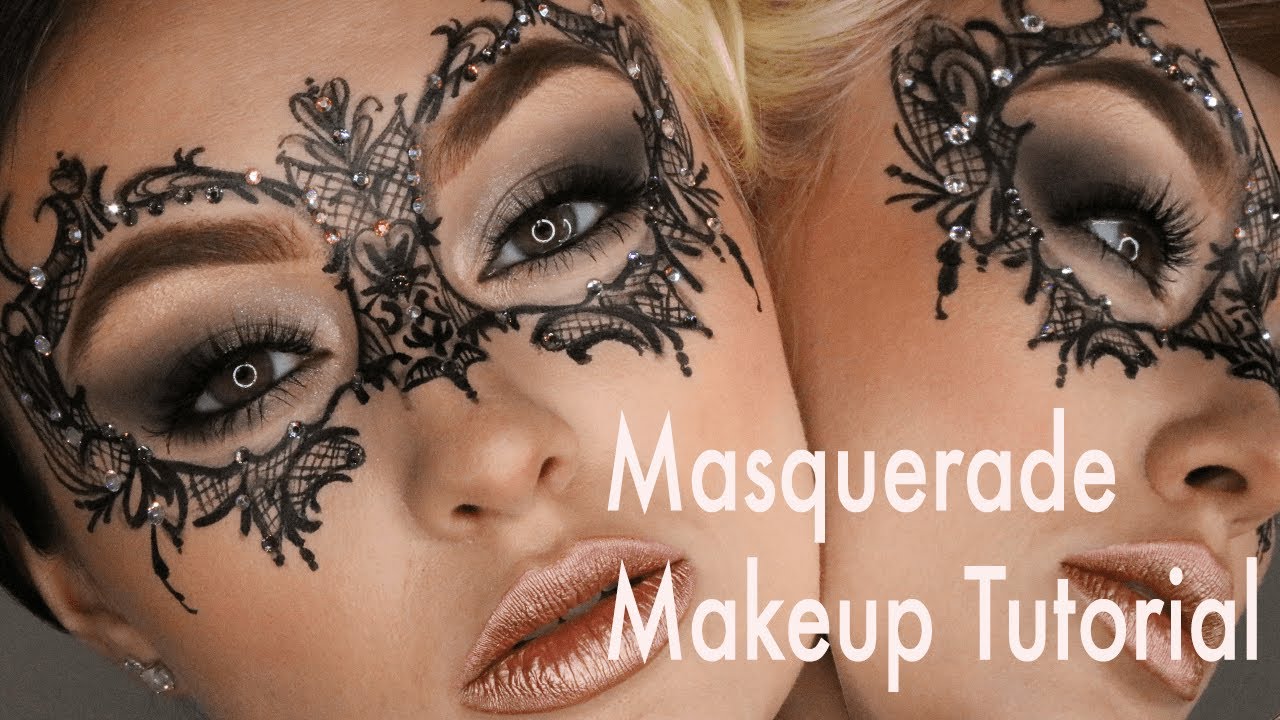
The process has five stages: product prep, skin prep, mask shape creation, embellishment, and setting. Skip any stage and the look falls apart before midnight.
What Products Do You Need for Masquerade Makeup
- Face primer (silicone-based holds better under heavy product)
- Full-coverage foundation
- Cream and powder eyeshadows (brands like Mehron, Kryolan, or Ben Nye for theatrical pigment)
- Liquid or gel eyeliner for mask outlines
- Setting powder and setting spray
- Cosmetic adhesive (spirit gum or Duo Lash Adhesive)
- Rhinestones, face gems, cosmetic glitter
- False lashes, detail brushes, beauty tape
How to Prep Your Skin Before Masquerade Makeup
Start with a gentle cleanser, then moisturizer. Wait two minutes. Apply a silicone-based primer across the entire area you plan to paint, not just the eyelids.
Oily skin types need a mattifying primer or the mask edges will slide within an hour. Dry skin needs extra moisturizer under the primer to prevent flaking under heavy pigment.
How to Create a Symmetrical Mask Shape on Your Face
Map the shape first using a light eyeliner pencil or beauty tape. Use three reference points: the inner brow bone, the outer brow tail, and the top of the cheekbone. Connect those points on both sides before filling in any color.
An angled brush works best for the initial outline. A flat shader brush fills the interior. Took me years to figure out that taping the lower edge before blending upward gives the cleanest mask line every time.
How to Apply Rhinestones and Gems for Masquerade Makeup
Eyelash glue works for lightweight gems. Spirit gum for anything heavier or for looks that need to last 4+ hours. Apply the adhesive to the skin, wait until it gets tacky (about 30 seconds), then press the gem in place with tweezers.
Place gems along the brow bone and outer eye corners first, then fill in. Remove later with oil-based cleanser or adhesive remover, never pull them dry.
How to Set Masquerade Makeup So It Lasts All Night
Layer translucent setting powder over cream products before adding powder eyeshadow on top. This locks the base layer and gives the top layer something to grip.
Finish with two coats of setting spray, letting the first dry before the second. For events longer than four hours, carry a small touch-up kit: a detail brush, your main eyeshadow shade, and the setting spray.
Best Color Combinations for Masquerade Makeup

Color pairing makes or breaks a masquerade look. The wrong combination reads muddy or cheap under event lighting. These pairings are tested under both warm and cool light.
What Colors Work Best for a Dark Masquerade Look
- Black + gold (the classic, always works)
- Black + silver (cooler, more modern)
- Burgundy + black (rich, slightly vampiric)
- Deep purple + gunmetal (unexpected, looks incredible under dim lighting)
Match the metal tone to your skin’s undertone. Gold for warm undertones, silver for cool undertones.
What Colors Work Best for a Light or Elegant Masquerade Look
- White + gold (bridal, angelic)
- Champagne + rose (soft, flattering on most skin tones)
- Pearl + silver (icy, striking)
- Blush pink + copper (warm and approachable)
These lighter palettes suit fair skin and olive skin particularly well. On deeper skin tones, swap white for champagne to avoid ashy results.
What Colors Match Specific Masquerade Dress Colors
Red dress: gold mask makeup with black liner detail. Pair with a lip shade that complements red.
Black dress: silver or jewel-tone mask, anything from sapphire to emerald. Full creative freedom here. Check makeup options for a black dress for more pairing ideas.
Navy dress: copper and bronze mask tones. The warmth against cool navy creates contrast that photographs beautifully. If you are wearing a navy blue dress, keep the lip neutral.
White dress: soft gold or rose gold mask with minimal rhinestones. Anything too heavy competes with the dress.
Purple dress: gold accents and warm-toned shadows. A coordinated lip ties everything together.
Masquerade Makeup for Different Face Shapes
A mask shape that looks perfect on an oval face can look completely wrong on a round or square one. The placement of the mask edges, the width of the design, and where the highest point of decoration sits all shift depending on your bone structure.
How to Adjust Masquerade Makeup for a Round Face
Extend the mask shape upward and outward past the temples to elongate the face visually. Keep the design narrower at the cheeks. Avoid rounding the lower mask edge because it follows the face shape and makes everything look wider.
How to Adjust Masquerade Makeup for an Oval Face

Oval faces are the most flexible for mask placement. Follow your natural bone structure for the outline. Most traditional Venetian mask shapes sit well without adjustments on oval face shapes.
How to Adjust Masquerade Makeup for a Square Face
Soften the mask edges with rounded corners instead of sharp angular points. Place the highest embellishment point at the outer brow rather than the temple, this draws attention up and away from the jawline.
How to Adjust Masquerade Makeup for a Heart-Shaped Face
Widen the mask design slightly at the cheekbone level to balance a narrower chin. Avoid heavy decoration at the temples since heart-shaped faces are already wider at the forehead. Keep the focus around the eyes and mid-face.
FAQ on Masquerade Makeup Looks
What Is the Easiest Masquerade Makeup Look for Beginners?
A minimalist mask outline using black gel eyeliner and a single shimmer eyeshadow shade. Skip rhinestones and glitter for your first try. This takes about 15 minutes and needs no special tools beyond a basic beginner kit.
Can You Do Masquerade Makeup Without a Stencil?
Yes. Map the mask shape freehand using three reference points: inner brow bone, outer brow tail, and top of cheekbone. Connect lightly with eyeliner pencil first. Beauty tape along the lower edge gives a clean line without any stencil.
What Adhesive Works Best for Face Gems and Rhinestones?
Eyelash glue holds lightweight gems for 2-3 hours. Spirit gum holds heavier stones and lasts 6+ hours. Duo Lash Adhesive is a reliable middle ground. Always test adhesive on a small skin patch before applying near your eyes.
How Long Does Masquerade Makeup Take to Apply?
A simple liner-based mask takes 15-20 minutes. A full Venetian mask design with gold leaf, rhinestones, and layered pigments takes 45 minutes to over an hour. Factor in skin prep and setting time on top of that.
What Is the Best Way to Remove Masquerade Makeup?
Oil-based cleanser dissolves heavy pigments and cosmetic glitter. Remove adhesive gems first using a cotton pad soaked in adhesive remover or coconut oil. Follow with micellar water, then your regular cleanser. Moisturize after since theatrical products can dry skin out.
Will Masquerade Makeup Smudge or Transfer During an Event?
It will if you skip setting. Layer translucent powder between cream and powder products, then finish with two coats of setting spray. Avoid touching your face. Cream-only looks without powder will transfer within the first hour.
What Colors Work Best for a Masquerade Ball?
Black and gold is the classic pairing. Burgundy with silver reads rich under warm event lighting. Deep purple with gunmetal works for cooler tones. Match metals to your skin undertone, gold for warm, silver for cool.
Can You Wear Regular Makeup with a Masquerade Mask?
Yes, but the mask hides most eye detail. Focus on bold lip color and visible cheek definition instead. A smoky eye works since it peeks through the mask cutouts. Skip detailed liner work that won’t be seen.
Is Masquerade Makeup Safe for Sensitive Skin?
Use cosmetic-grade face paint from brands like Mehron or Snazaroo, which are formulated for skin contact. Avoid craft glitter since it is not eye-safe. Patch test spirit gum 24 hours before the event. Remove everything gently with fragrance-free products.
What Face Shape Looks Best with Masquerade Makeup?
Oval faces suit most traditional mask shapes without adjustment. Round faces benefit from extended upward mask lines that add length. Square faces need softened edges. Heart shapes need wider placement at the cheekbones to balance the forehead.
Conclusion
Getting masquerade makeup looks right comes down to three things: the right mask shape for your face, color pairings that work under event lighting, and a setting routine that keeps everything locked in place for hours.
Whether you go with a full Venetian mask design in gold leaf and filigree or a simple eyeliner-only silhouette, the techniques stay the same. Map your reference points. Build from cream to powder. Set everything before adding gems.
Match your mask palette to your dress color and skin undertone. Use cosmetic-grade face paint and eye-safe glitter only.
Start with the minimalist version if this is your first attempt. You can always add rhinestones, feather accents, and dramatic blending once the base technique feels comfortable.

- What Is Skin Tint and Why Everyone Is Obsessed - July 11, 2026
- What Is Foundation and How Do You Choose One? - July 6, 2026
- How to Make Blush Last Longer - July 3, 2026


