

Summarize this article with:
A cat eye flick, some painted whiskers, maybe a few leopard spots. Sounds simple enough until you actually try it and end up looking like a melted crayon.
Animal makeup looks take real technique. The difference between a stunning deer face and a patchy mess comes down to product choice, blending method, and understanding the animal’s actual features.
This guide covers seven of the most popular animal face paint designs, from cats and foxes to butterflies and snakes. Each section breaks down the exact products, color palettes, brushes, and step-by-step techniques you need.
You’ll also find tips on skin prep, blending methods, common mistakes, and how to make your look last through an entire Halloween party or festival without cracking apart by hour two.
What Are Animal Makeup Looks

Animal makeup looks are face paint and cosmetic designs that recreate the features of specific animals on human skin. They range from subtle cat eye styles to full-face leopard transformations.
These looks show up everywhere. Halloween parties, Comic Con cosplay events, music festivals, editorial photo shoots, theater productions, and TikTok trends.
The most common animals people recreate include cats, deer, foxes, butterflies, leopards, bunnies, and snakes. Some go for a soft, wearable version. Others commit to a full special effects makeup look that barely looks human anymore.
What separates a good animal face design from a bad one? Technique. Color accuracy. And understanding the actual bone structure of the animal you’re copying.
A deer look lives or dies by its freckle placement and soft brown contour. A snake look depends entirely on how well you build the scale pattern. You can’t just slap some whiskers on your cheeks and call it a cat, either. Well, you can. But it won’t fool anyone past the age of six.
What Products Are Used for Animal Makeup Looks

The product list changes depending on how far you want to take the look. A subtle cat eye needs different tools than a full-face reptile transformation.
Here’s what covers most animal looks:
- Cream-based face paints from brands like Mehron, Snazaroo, or Wolfe FX for base coverage and color blocking
- Water-activated body paints (Diamond FX, Graftobian) for sharp detail work
- Eyeshadow palettes with pigmented mattes, like Morphe or Sugarpill, for blending and shading
- Fine-tip brushes (Sigma face brushes work well) for whiskers, scales, and thin lines
- Beautyblender sponges or stipple sponges for fur texture and gradient effects
- Spirit gum adhesive and liquid latex for prosthetic ears, horns, or 3D scale pieces
- Setting spray and translucent powder to lock everything in place
For softer, more wearable animal looks, regular cosmetics do the job. A good liquid lipstick in black or deep brown works for nose details. Gel eyeliner handles whisker lines better than liquid because it doesn’t skip on textured skin.
Kryolan and Ben Nye theatrical makeup palettes give you a wider color range than standard beauty brands. If you’re building a full-face peacock or parrot look, you need pigments that actually show up bold. Drug store eyeshadow won’t cut it.
One thing people skip: a good makeup primer. Heavy face paint slides off bare skin within an hour, especially around the nose and chin. Prime first. Always.
How to Prepare Skin Before Applying Animal Makeup

Skin prep for animal makeup is not the same as your everyday routine. You’re layering heavier product, covering more surface area, and wearing it longer than a typical look.
Start with a clean face. Use a gentle cleanser to remove oils and old product. Pat dry completely.
Apply a lightweight moisturizer and let it absorb for about five minutes. If you go in with paint on damp, freshly moisturized skin, everything shifts and cracks. Took me way too long to figure that out.
Next, prime. A silicone-based primer works best under cream paints and theatrical makeup. It fills pores and creates a barrier between your skin and the pigment. For oily skin types, a mattifying primer around the T-zone prevents that midday meltdown where your carefully painted leopard spots start sliding toward your chin.
If you have sensitive skin, patch test any face paint brand at least 24 hours before the event. Mehron and Snazaroo are generally well-tolerated, but everyone’s skin reacts differently. Especially around the eyes.
Skip heavy skincare actives (retinol, AHAs) the night before. They make skin more reactive under thick layers of pigment and adhesive.
For looks that extend to the lips, exfoliating your lips beforehand prevents flaking under paint. A smooth lip surface holds color better and looks cleaner in the final design.
What Are the Most Popular Animal Makeup Looks
Some animal looks keep coming back year after year. Others blow up seasonally on social media and then fade. The seven listed below have stayed consistently popular across Halloween, cosplay, festival, and editorial settings.
Each one has a different difficulty level. A bunny look takes twenty minutes. A full snake scale transformation can take two hours or more.
The technique and color palette shift dramatically between animals, so don’t assume skills from one look transfer directly to another. Blending a soft deer contour is nothing like building geometric leopard rosettes.
How to Create a Cat Makeup Look

The cat is the single most recreated animal makeup look, and the one most people get wrong. A strong cat face depends on three things: the cat eye wing, the nose contour, and whisker placement.
Use black gel liner or a cream paint to extend your wing past the outer corner, angling sharply toward the temple. The goal is an elongated, almond-shaped eye. White or nude liner on the waterline opens the eye further.
For the nose, use a dark brown cream to paint a small inverted triangle on the tip. Extend a thin line downward to the cupid’s bow. Fill the upper lip area with black to mimic a cat’s mouth line. Applying product on thin lips actually works in your favor here because a smaller lip shape reads more feline.
Whiskers go on the cheeks, angled slightly upward. Three per side. Use a fine-tip brush, not a pencil. Pencils drag and create uneven lines.
Add false lashes with extra volume at the outer corners to push the cat eye effect further.
How to Create a Fox Makeup Look

Fox makeup sits between cat and deer in terms of intensity. It’s warmer than a cat look, sharper than a deer look.
The color palette centers on burnt orange, rust, warm brown, and white. Grab an eyeshadow palette with strong warm tones or use cream face paint for stronger coverage.
Start with an orange-toned base across the forehead, temples, and outer cheeks. Blend white down the center of the face, from forehead to chin, mimicking the fox’s natural facial markings. The contrast between the orange sides and white center is what makes it read “fox” instead of “random orange makeup.”
Eyes should be sharp and angled. Use a dark brown or black liner to create an exaggerated winged eyeliner shape that extends toward the hairline. Foxes have narrow, angular eyes.
The nose is similar to the cat, a small black triangle on the tip with a thin line to the lip. But the shape is rounder and less sharp than a feline nose.
Blend the edges of each color section with a damp sponge. Hard lines between orange and white look painted. Soft gradients look like actual fur.
How to Create a Deer Makeup Look
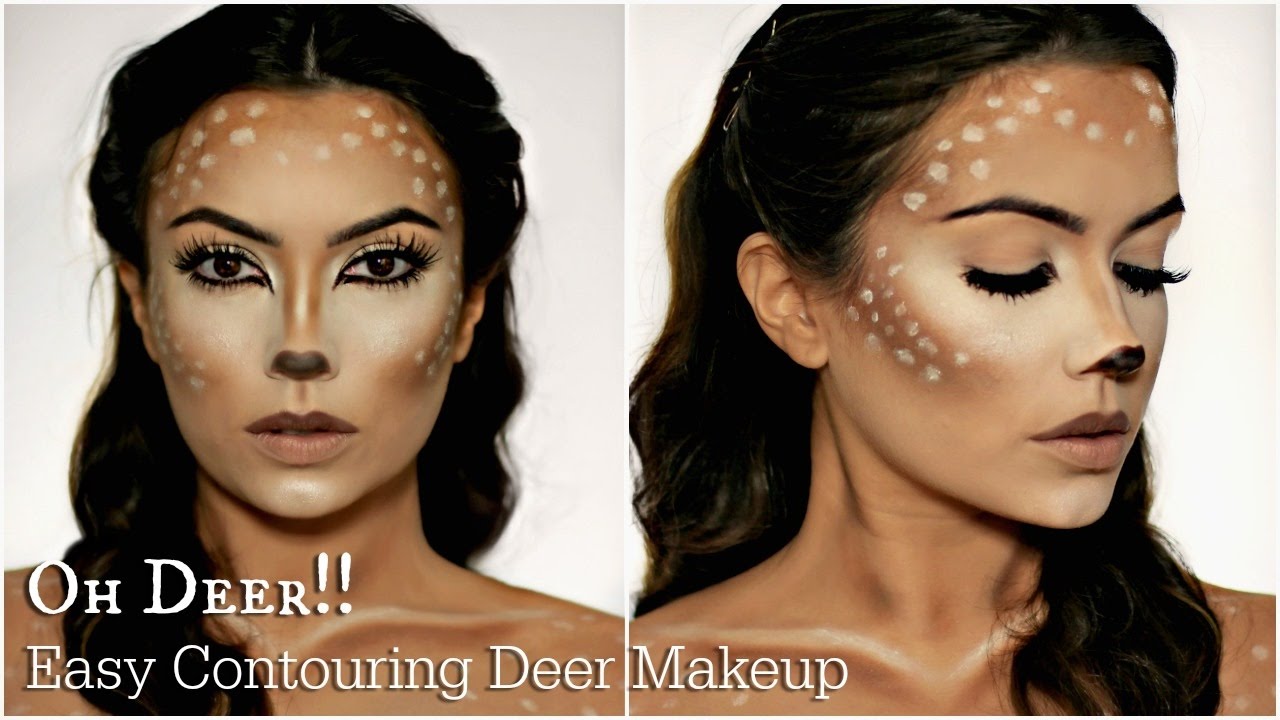
The deer look is soft, warm, and surprisingly quick to pull off. It leans on brown tones and delicate details rather than heavy face paint.
Start with a flawless base. Apply foundation one shade lighter than your natural tone to mimic a deer’s pale face. Contour the sides of the nose to make it appear narrower and slightly longer.
The freckles make or break this look. Use a light brown eyeliner pencil or a thin brush dipped in matte eyeshadow. Dot freckles across the nose bridge, cheeks, and forehead in a scattered, organic pattern. Not evenly spaced. Real fawn spots are random and clustered.
Paint the tip of the nose with a dark brown or black cream, blending it into a rounded, slightly oversized shape. Deer noses are wider than human noses, so extend the color past your natural nose tip.
Bambi-style lashes are key. Layer two sets of mascara or use dramatic falsies with extra length on both top and bottom lash lines. Big, innocent eyes sell the whole thing.
A touch of cream highlighter on the inner corners and the center of the lower lip finishes the look with that dewy, woodland feel.
How to Create a Butterfly Makeup Look

This is where animal makeup crosses into art territory. Butterfly looks take the most time but also photograph the best, which is probably why they dominate Instagram and creative makeup look roundups.
Pick your butterfly species first. Monarch butterflies use orange, black, and white. Blue morphos need vivid cobalt and black. Painted ladies mix orange, brown, black, and white patches. The species determines your full color map.
Center the design around the eyes. Each eye becomes one half of the butterfly wing. The nose bridge acts as the body. Use a thin brush to outline the wing shape first, extending from the inner corner of the brow down to the mid-cheek on each side.
Fill in the wing with your base color. Then add the vein lines, those thin dark lines that run through butterfly wings, using a fine detail brush or a sharp eyeliner. This is the tricky part. Shaky hands show up fast here.
Symmetry matters more in this look than any other animal design. Use a ruler or tape guide if you need to. No shame in it.
For extra dimension, press small rhinestones or gems along the wing edges. Rhinestone details catch light and add that editorial quality that flat paint alone can’t match.
How to Create a Leopard Makeup Look

Leopard print is one of the most recognizable animal face paint patterns, and also the easiest to mess up. The spots aren’t circles. They’re rosettes, irregular rings with a lighter center.
Base your face in a warm golden or tan shade. Use a bronzer or cream paint to get an even, sun-kissed canvas before adding any spots.
Mix brown and black cream paints. Using a small, stiff brush, paint C-shaped or U-shaped marks across the forehead, cheeks, jawline, and nose bridge. Leave the inside of each rosette lighter than the surrounding skin. That negative space is what makes it look like actual leopard fur instead of polka dots.
Vary the size and spacing of the rosettes. Bigger ones on the forehead and cheeks. Smaller, tighter clusters near the temples and jawline. Uniform spots look mechanical and fake.
For the eyes, a heavy black smokey eye blended outward gives that predatory cat gaze. Gold shimmer on the lid adds dimension.
You can do this look full-face or half-face. Half-face (one side leopard, one side glam) has been trending hard on TikTok and works well for Halloween makeup looks where you still want to look recognizably yourself.
FAQ on Animal Makeup Looks
What is the easiest animal makeup look for beginners?
The bunny makeup look is the simplest to start with. It only needs pink eyeshadow, a nose highlight, and some whisker lines. No complex blending, no layered patterns. Twenty minutes and you’re done.
What products work best for animal face paint?
Cream-based face paints from Mehron, Snazaroo, or Ben Nye give the strongest coverage. Pair them with fine-tip brushes, a Beautyblender sponge, and a good setting spray. Regular eyeshadow palettes work for softer, wearable versions.
How long does animal makeup take to apply?
It depends on the design. A simple cat look takes 20 to 30 minutes. A full-face butterfly or snake scale transformation can take 1.5 to 2 hours, especially if you’re building prosthetic details with liquid latex.
Can I use regular makeup instead of face paint?
Yes, for subtle looks. Foundation, cream contour, gel eyeliner, and pigmented eyeshadow handle cat, deer, and fox designs well. Full-coverage animal transformations need theatrical-grade cream paints like Kryolan or Graftobian for proper opacity.
How do I make animal makeup last all night?
Prime your skin first. Layer setting powder between paint layers, then finish with a long-wear setting spray. Avoid touching your face. Carry a small brush for touch-ups around the nose and chin where paint cracks first.
Is animal makeup safe for sensitive skin?
Most professional brands like Snazaroo and Mehron are hypoallergenic and FDA-compliant. Patch test any new product 24 hours before wearing it. Avoid liquid latex near the eyes or on broken skin. Remove everything gently with an oil-based cleanser.
What animal makeup looks are trending right now?
Half-face leopard designs, neon-toned reptile looks, and ethereal butterfly eye art are dominating TikTok and Instagram in 2025. Editorial insect looks with rhinestone details are also gaining traction in festival makeup circles.
How do I remove heavy animal face paint?
Use an oil-based makeup remover or micellar water first to break down the pigment. Follow with a double cleanse. For spirit gum or liquid latex pieces, apply adhesive remover before peeling. Moisturize after to restore your skin barrier.
What brushes do I need for animal makeup?
A flat shader brush for color blocking, a fine-tip detail brush for whiskers and scales, and a fluffy blending brush for gradient effects. Sigma and Mehron both make brush sets designed for face painting and body art work.
Can kids wear animal face paint safely?
Yes, with the right products. Use water-activated paints labeled non-toxic and FDA-compliant, like Snazaroo or Diamond FX. Avoid liquid latex, spirit gum, and any solvent-based removers on children. Stick to simple designs like cats, bunnies, or butterflies.
Conclusion
Getting animal makeup looks right comes down to picking the correct products, prepping your skin properly, and practicing the specific techniques each design demands. There’s no shortcut around that.
Whether you’re building a full-face snake scale pattern with Kryolan cream paint or keeping it light with a soft deer contour using regular cosmetics, the fundamentals stay the same. Prime. Layer. Blend. Set.
Start with a simpler look like a bunny or cat before jumping into butterfly wing symmetry or leopard rosettes. Build your confidence with face painting brushes and cream-based pigments on low-stakes practice runs.
Your face shape, skin type, and the event setting all change which animal design works best for you. Try a few. Keep what clicks. Ditch what doesn’t.
And clean your brushes after. Every single time.

- What Is Skin Tint and Why Everyone Is Obsessed - July 11, 2026
- What Is Foundation and How Do You Choose One? - July 6, 2026
- How to Make Blush Last Longer - July 3, 2026


