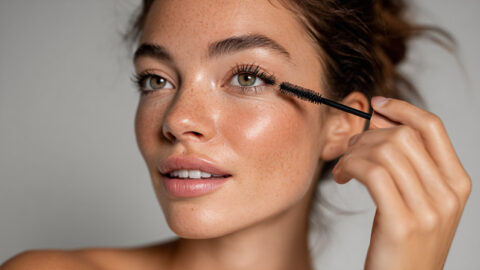
Eyeliner is one of those products that looks simple but changes everything once you know how to use it.
Whether you’re curious about your first pencil liner or trying to figure out why your liquid formula smudges by noon, understanding what eyeliner is and how it actually works saves a lot of trial and error.
This guide covers the main eyeliner types, formula differences, application zones, and how to match the right product to your eye shape and skin type.
You’ll also find the key safety facts that most product pages skip entirely.
What Is Eyeliner

Eyeliner is a cosmetic product applied along the lash line or eyelid to define, shape, and enhance the eyes.
It works by creating contrast between the eye and the surrounding skin, making the lash line appear fuller and the eye shape more defined. The result ranges from a barely-there line to a dramatic, graphic statement depending on how it’s used.
Applied to the upper lash line, lower lash line, waterline, or tightline, eyeliner changes the perceived shape and size of the eye without altering the face itself. That’s a lot of visual control from a single product.
Global market size: the eyeliner category was valued at USD 6.54 billion in 2024, according to Market Research Future, and is projected to reach USD 10.8 billion by 2035. Demand is being driven by long-wear formulas, clean beauty reformulations, and Gen Z’s appetite for bold eye looks.
Women account for roughly 70% of eyeliner sales globally (Market Reports World, 2024), though the male segment grew by 10% in the same year, reflecting broader shifts in how beauty products are marketed and used.
Liquid eyeliner holds the largest product-type share at approximately 42% of global sales, followed by gel at 28% (Market Reports World, 2024). Pencil formats remain consistent sellers, particularly among beginners and for softer, smudged looks.
Types of Eyeliner
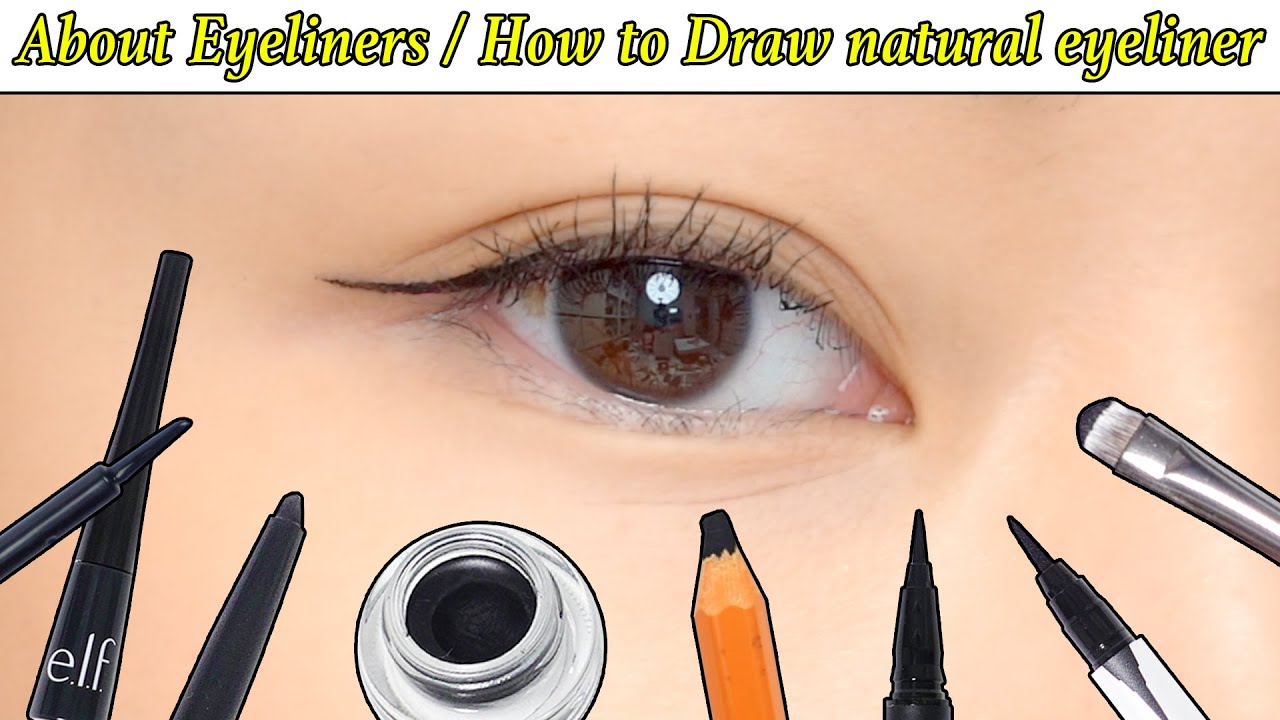
Each eyeliner format has a different texture, applicator, and finish. The right choice depends on the look you want and how comfortable you are with the application.
| Type | Finish | Best For | Skill Level |
| Pencil | Soft, smudgeable | Everyday looks, smoky eye | Beginner |
| Liquid | Sharp, high pigment | Winged liner, precise lines | Intermediate to advanced |
| Gel | Creamy, buildable | Tightlining, graphic looks | Intermediate |
| Felt-tip pen | Defined, fluid | Cat eye, quick application | Beginner to intermediate |
| Kohl | Soft, powdery | Smoky eye, waterline | Beginner |
Pencil Eyeliner
The most accessible format. Pencil eyeliner has a waxy core that glides easily along the lash line without pulling the delicate skin around the eye.
It’s forgiving. If the line isn’t perfect, you can smudge it out with a brush or your fingertip. That flexibility makes it a go-to for smoky eye looks and everyday wear.
- Works on both upper and lower lash lines
- Available in dozens of colors, including classic black and brown
- Requires regular sharpening to maintain a precise tip
Brands like Urban Decay and Charlotte Tilbury offer pencil formats that sit between traditional pencil and gel in terms of creaminess. Worth knowing when you’re shopping.
Liquid Eyeliner
Liquid eyeliner dominates the market for a reason. The pigment is intense, the finish is sharp, and a well-applied line stays put all day.
Two applicator styles exist: a fine brush tip for maximum control, and a felt-tip pen for faster, more fluid strokes. The felt-tip is generally easier to handle. The brush tip rewards patience.
Liquid eyeliner is the format most associated with the winged eyeliner technique and the cat eye. It’s also the hardest to fix once it’s dry, so working in small strokes rather than one long line helps.
The waterproof segment of liquid eyeliner is growing at 8.16% CAGR through 2030, according to Mordor Intelligence. That tracks with what’s actually happening in the market: consumers want liner that survives heat, humidity, and long days.
Gel Eyeliner
Gel eyeliner sits between pencil and liquid. The formula is creamy and blendable when first applied, then sets to a longer-wearing finish.
It’s applied with an angled brush, which gives more control than a pencil but more flexibility than a liquid liner’s fine tip. That combination makes it a favorite for tightlining, where liner is placed between the lashes rather than directly on the lid.
According to Mordor Intelligence, the gel/cream segment is growing at the fastest rate in the eyeliner category, at 7.23% CAGR from 2025 to 2030. The appeal is the hybrid result: liquid precision with a slightly softer finish.
Brands like Bobbi Brown and MAC Cosmetics have long-running gel liner pots that professionals use regularly on set. There’s a reason those haven’t been replaced by newer formats.
Kohl Eyeliner
Kohl is the oldest eyeliner format in existence. The modern version is a soft, powdery formula, usually in dark matte shades, that smudges easily on contact.
It’s commonly used inside the waterline and for smoky eye looks where a diffused edge is the goal. Not for precise lines. Not for graphic looks.
- Smudgeable by design
- Best for lower lash line and waterline application
- Lower wear time than gel or liquid
Traditional kohl used in parts of South Asia, North Africa, and the Middle East still contains lead-based compounds, which carry health risks. Commercial kohl sold in regulated markets uses synthetic alternatives. Worth checking the label if you’re buying from specialty stores.
Felt-Tip Eyeliner
Felt-tip liners use a liquid formula delivered through a firm, pen-style tip. Think of it as a marker for your lash line.
The advantage: consistent ink flow, a relatively steady tip, and no dipping or reloading required. That makes it faster than brush-tip liquid liners for most people.
The tip can dry out over time, and the line quality depends on keeping the pen at the right angle. Store them horizontally to slow that process down. Brands like NYX Professional Makeup and Maybelline offer felt-tip options at accessible price points.
Eyeliner Ingredients and Formulas
Eyeliner is a composite product. The specific ingredients vary significantly depending on whether it’s a pencil, liquid, gel, or kohl formulation.
All formats share three core ingredient categories: pigments for color, binders or film-formers to keep the product in place, and a base that determines texture and consistency.
| Ingredient Category | Common Examples | Function |
| Pigments | Carbon black, iron oxides, ultramarines | Provide color and opacity |
| Waxes | Beeswax, carnauba wax, candelilla wax | Structure in pencils, smooth glide |
| Film-forming agents | Acrylates copolymer, PVP | Smudge resistance and long wear |
| Solvents/carriers | Water, ethanol, castor oil | Texture and application consistency |
| Preservatives | Phenoxyethanol, parabens | Prevent microbial contamination |
Pencil and Kohl Formula Composition
Traditional wax-based eyeliner pencils are roughly 50% wax by weight, according to Wikipedia’s formulation overview. That wax blend typically includes Japan wax, beeswax, carnauba wax, or paraffin, combined with oils to create a smooth, moldable core.
Pigments are mixed into the wax at high temperatures, then cooled into a solid stick. The softer the wax blend, the creamier the application. Kohl formulas push this further, using a higher oil-to-wax ratio for maximum softness and smudgability.
Stearyl heptanoate is found in most commercial eyeliner pencils and acts as an emollient, improving glide and reducing drag on the skin.
Liquid and Gel Formula Composition
Liquid eyeliners use water or an alcohol-based carrier as their main medium. Pigments are suspended in this carrier alongside film-forming polymers that bond the color to the skin once the liquid evaporates.
Acrylates copolymer is one of the most common film-formers in long-wear liquid eyeliner. It forms a tough, flexible film on the skin that resists water, oils, and physical friction. That’s what keeps liquid liner in place through a full day.
Gel eyeliners use a semi-solid base built from waxes and gelling agents. The result is a product that applies like a cream but sets firmer than a pencil, offering a middle ground between the two.
Waterproof formulas rely on additional hydrophobic polymers and silicone-based ingredients to resist moisture. Those same ingredients make waterproof liner harder to remove, which is why oil-based cleansers work better than micellar water for removing eye makeup at the end of the day.
Sensitive Eye and Contact Lens Formulas
Ophthalmologist-tested eyeliners are formulated without fragrance, certain preservatives, and known irritants. They don’t automatically mean “safe for all eyes,” but they do reduce the most common causes of irritation.
- Fragrance-free: removes a top allergen from the formula
- Paraben-free options: available but not automatically safer
- Contact lens wearers: should avoid applying liner directly to the waterline, where particles can transfer to the lens
Brands like Clinique and NARS are frequently cited for ophthalmologist-tested formulations. That label is worth looking for if you have sensitive eyes or wear contacts regularly.
Where Eyeliner Is Applied

Where you place eyeliner changes the shape and perceived size of the eye more than almost any other makeup decision.
Each placement zone has a different effect on the eye’s appearance, and some are more technique-dependent than others.
Upper Lash Line
The standard placement. Liner sits directly above the upper lashes, following the natural curve of the eye from inner to outer corner.
A thin line close to the lash line creates subtle definition. A thicker line adds drama. Extending the line past the outer corner toward the brow creates the winged or cat eye shape that remains one of the most searched eye makeup techniques globally.
For those learning to apply eyeliner, the upper lash line is the safest starting point. It’s the most forgiving placement zone in terms of both technique and wear.
Lower Lash Line
Liner on the lower lash line adds depth and intensity. It can also make the eye appear smaller if the line is too thick or too close to the inner corner.
- Smudged out: creates a smoky, diffused effect
- Sharp line: adds a graphic, defined look
- Applied only to the outer two-thirds: elongates the eye without closing it in
A common mistake is running a full, dark line across the entire lower lash line. That works for some eye shapes and some looks. For everyday wear, keeping the inner corner lighter keeps the eye open.
Waterline and Tightline
The waterline is the inner rim of the lower eyelid, directly above the lower lash root. Applying liner here intensifies the eye with no visible line on the skin.
Black or dark liner on the waterline makes the eye look smaller and more dramatic. Nude or white liner does the opposite, making the whites of the eye appear larger and the look more awake.
Tightlining is a separate technique. Liner is placed between the upper lashes at the root, on the inner upper rim. The result is the appearance of a thicker lash line without a visible liner line on the lid. Gel eyeliner and a small angled brush work best for this. You can find a detailed breakdown in this guide on how to tightline eyes.
A 2015 study found that applying eyeliner to the waterline increases the risk of cosmetic particles contaminating the tear film. Using waterproof formulas and replacing waterline products every three months reduces that risk.
Eyeliner Finishes and Colors

The finish and color of an eyeliner change the mood of the look as much as the placement does.
Matte, Shimmer, Metallic, and Glitter Finishes
Most eyeliners sold are matte. The finish is flat, opaque, and wears without reflection. It reads as clean and precise, which is why it’s the default for classic liner looks.
Shimmer and metallic finishes contain fine particles that reflect light. Metallic liners in gold, copper, or silver shift the look from polished to editorial quickly. They work particularly well for inner corner highlights and evening looks.
Glitter liners carry larger particles than shimmer formulas and are mostly used for graphic or festival-type looks. They require a different removal approach since standard cleansers don’t always break them down fully.
Cake eyeliner, which is dry until activated with water or setting spray, falls outside the usual finish categories but offers the most control over color intensity of any format. It’s used heavily in professional editorial and film work.
Classic Colors vs. Colored Liners
Black is the top-selling eyeliner color globally. Brown is second. Both work across most eye shapes, skin tones, and looks without requiring any additional thought.
Colored liners are a different decision. Navy blue makes brown and hazel eyes appear warmer and deeper. Forest green works similarly. Plum and burgundy pick up red and copper tones in the iris. White and nude are tools, not just colors: they open and brighten the eye when placed on the waterline or inner corner.
- Navy: pairs with brown, hazel, and blue eyes
- Green: works well on hazel and brown eyes
- Plum/burgundy: flatters olive and deep skin tones
- White/nude: brightens, opens, and fakes a full night’s sleep
Ariana Grande’s R.E.M. Beauty released a gel eyeliner collection in 2024 with 10 shades including jet black, chocolate brown, white, nude, baby blue, and reddish brown. That range reflects what consumers are actually buying across the color spectrum right now.
Eyeliner Techniques and Looks
Technique is where most people get stuck. The product matters, but how you apply it matters more.
Classic Line
A single line along the upper lash line, close to the roots, from inner to outer corner. No wing, no drama.
It works on every eye shape. Thin and close to the lash root for a natural, defined look. Slightly thicker for more intensity.
The trick most people skip: working in small strokes rather than one continuous line. Starting from the outer corner and working inward gives more control, especially on hooded or round eyes where the lid space is limited.
Winged Liner

Winged liner extends the upper lash line past the outer corner and lifts into a point toward the tail of the brow. The angle and length of the wing determine whether the look reads as subtle or dramatic.
Getting consistent wings on both eyes takes practice. Most people have a dominant hand that produces a cleaner line, which makes the second eye harder. A piece of tape placed at the outer corner as a guide helps keep the angle consistent.
- Short wing, thin line: everyday, polished
- Long wing, thick line: dramatic, editorial
- Rounded outer flick: soft, retro-inspired
Felt-tip liners are easier for winged looks than brush-tip liquid. The firmer tip gives more control over the line’s direction. If you’re working toward cat eye makeup, start with a felt-tip before moving to a brush.
Smoky Liner
Smoky liner is not a sharp line. It’s a deliberately blurred, diffused edge created by smudging pencil or kohl immediately after application.
Tools that work: a small smudge brush, a cotton swab, or a clean fingertip. The key is blending while the formula is still soft, usually within 30 to 60 seconds of application.
Applying a matte eyeshadow in a similar shade on top of the smudged liner sets it in place and deepens the effect. That two-step approach is what separates a blended smoky look from liner that simply smeared.
Pencil eyeliner is better suited to this technique than liquid. Liquid sets quickly and doesn’t blend once dry. For smokey eye makeup, kohl or a soft pencil is the right starting point.
Floating Liner
Floating liner sits above the crease rather than on the lash line. The line “floats” independently on the lid, disconnected from the lash root.
It’s a graphic, intentional look that works best with bold colors and precise application. Liquid or gel liner applied with an angled brush gives the cleanest result.
This technique became increasingly popular through social media-driven editorial content from 2022 onward. It requires a steady hand and a bit of practice to place the line consistently, but it’s one of the more visually distinctive looks you can create with a single liner product.
Eyeliner by Eye Shape
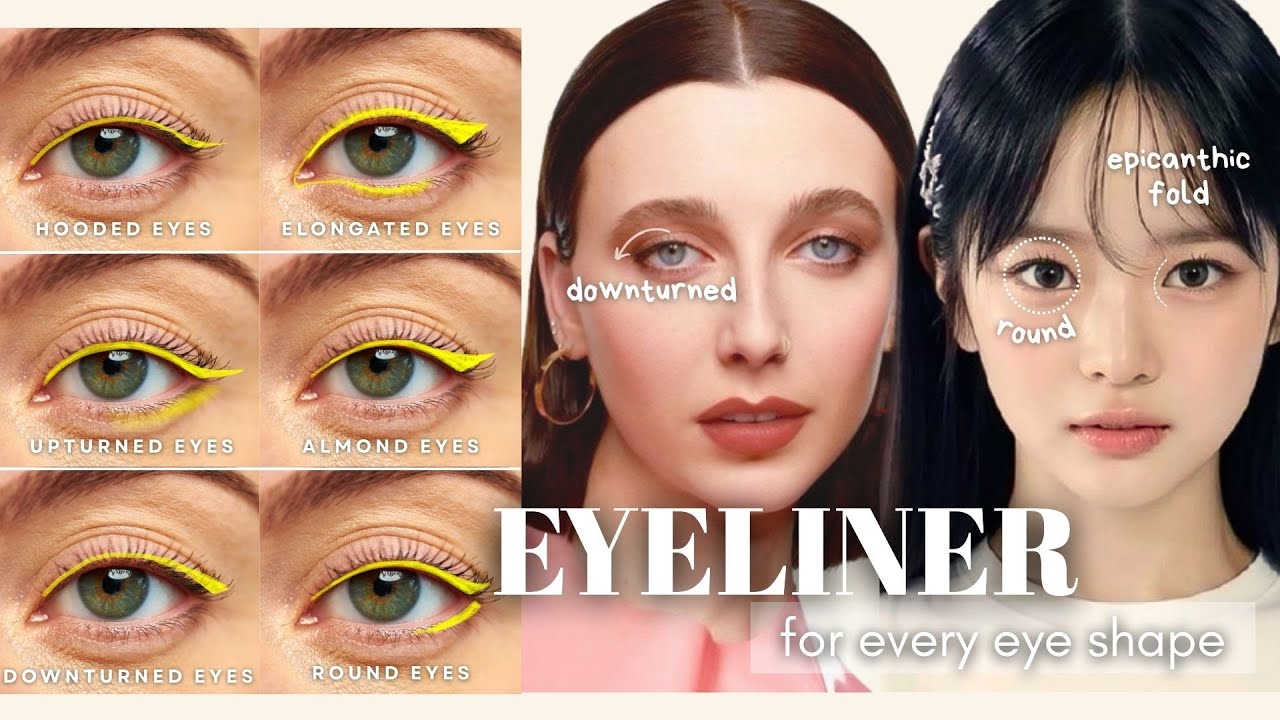
The same liner technique doesn’t work on every eye. What flatters an almond eye can disappear entirely on a hooded lid.
Identifying your eye shape before choosing a liner placement saves a lot of frustration. Most people have a combination of characteristics, so use these as starting points, not strict rules.
| Eye Shape | Key Challenge | Best Liner Approach |
| Hooded | Liner disappears into crease | Tightline or thin line applied with eye open |
| Monolid | No crease for reference point | Start at outer third, extend outward |
| Round | Eyes appear larger, more circular | Outer corner emphasis, smoky liner |
| Downturned | Outer corners pull downward | Wing angled upward past outer corner |
| Almond | Naturally balanced, versatile | Classic line or cat eye both work well |
Hooded Eyes
The main problem: you apply a careful line, open your eyes, and half of it vanishes under the fold of skin.
The fix is tightlining, or keeping the liner very thin and applied with eyes open so you can see where the line actually sits when visible. Applying with eyes closed is how liner ends up in the crease.
For a wing on hooded eyes, the batwing technique works: draw the wing shape with your eye open, connecting the outer corner to the lash line. The line looks exaggerated when the eye is closed and correct when open. Maybelline’s makeup guides note that bold, obvious lines work better on hooded eyes than thin ones that simply disappear.
Monolid Eyes
Monolid eyes have no visible crease, which means many standard eyeliner tutorials don’t translate.
Professional makeup artists recommend starting liner at the outer third of the lash line rather than the inner corner. Drawing too far inward makes the eye look smaller, not larger.
- Extend the line outward rather than upward for a more flattering angle
- Waterproof gel or liquid holds best on oilier lids common with this eye shape
- Setting pencil liner with a matching eyeshadow prevents transfer
Fenty Beauty’s Flyliner, with its fine felt tip, is frequently cited by makeup artists for monolid application because the narrow tip gives precise control without overloading the lid space.
Round and Downturned Eyes
Round eyes have a well-defined crease and appear more circular. The goal with liner is usually elongation, achieved by focusing weight at the outer corners and keeping the inner corner clean or light.
Downturned eyes benefit most from a wing that angles upward sharply past the outer corner, counteracting the natural downward pull. The wing should extend toward the tail of the brow, not horizontally outward.
For round eyes, a smoky liner effect along the outer upper and lower lash line creates depth and pulls the shape into a longer, more almond appearance. Avoid lining the full lower waterline in dark shades, which closes the eye in rather than opening it.
How to Choose the Right Eyeliner
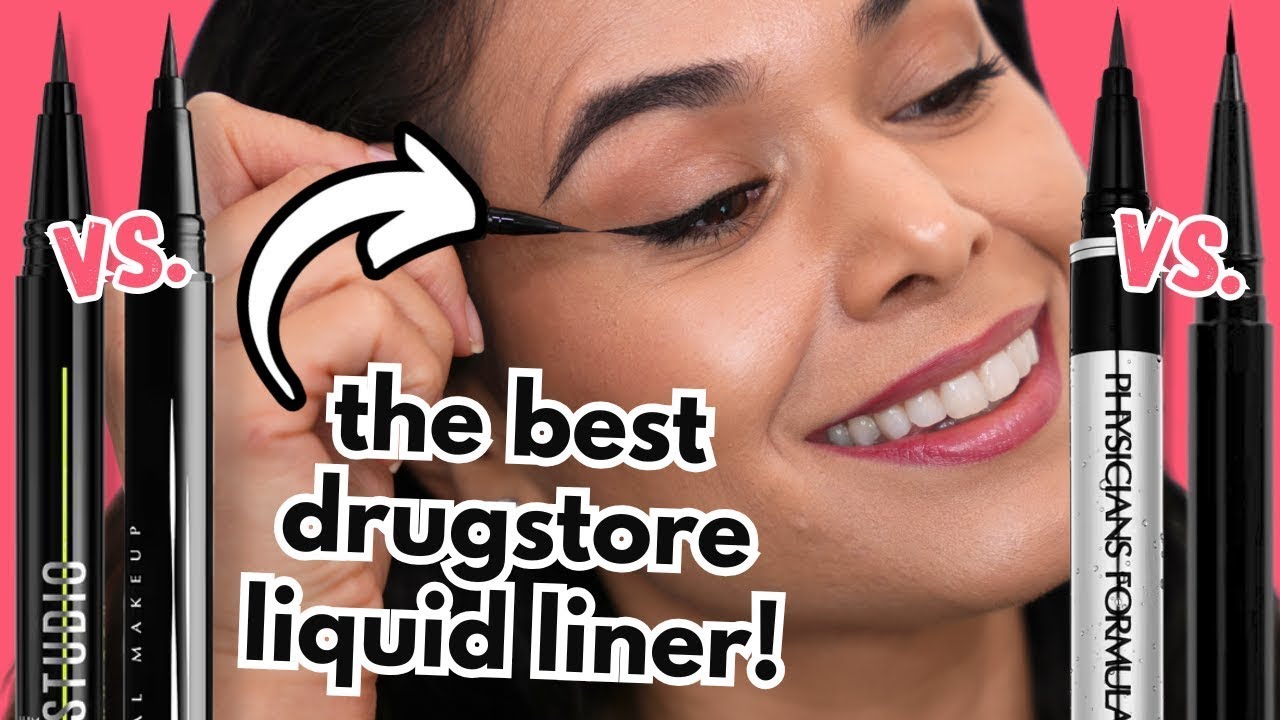
The best eyeliner is the one that matches how you actually apply makeup. Not the one with the best reviews.
Choosing by Skill Level and Application Style
Pencil eyeliner and felt-tip pens are the most forgiving formats for anyone still getting comfortable with application. Pencil gives you time to blend and fix. Felt-tip delivers more intensity with less technique required than a brush-tip liquid.
Brush-tip liquid liner rewards practice. It gives the sharpest lines and the most control over line thickness, but it sets quickly and doesn’t forgive unsteady hands. If you’re drawn to liquid but finding it frustrating, the felt-tip format is the logical next step before committing to a brush tip.
Gel liner sits in the middle. Applied with an angled brush, it requires some technique but stays workable longer than liquid before setting. It’s the format most used on set by professional makeup artists for eye makeup looks that need to last through long shoot days.
Choosing by Formula and Skin Type
Oily lids are the main reason eyeliner migrates, smudges, and disappears by midday. Waterproof formulas address this directly.
- Oily lids: waterproof liquid or gel, set with matching eyeshadow
- Dry or mature skin: creamier pencil formulas, avoid very matte finishes that can look patchy
- Sensitive eyes: fragrance-free, ophthalmologist-tested formulas from brands like Clinique
- Contact lens wearers: avoid applying directly to the waterline; opt for outer lash line placement only
Waterproof eyeliner outsells non-waterproof by roughly 3:1 in markets with humid climates, according to Market Growth Reports. That ratio reflects a real consumer need, not just marketing.
Choosing by Brand and Budget
Drugstore and prestige eyeliners can perform identically in terms of wear time and pigment. The difference is usually in the applicator quality and the formula consistency from batch to batch.
Maybelline and NYX Professional Makeup offer strong drugstore options across pencil, liquid, and gel formats. Urban Decay, MAC Cosmetics, and Charlotte Tilbury are the most consistently referenced prestige options.
Schwan Cosmetics launched its ALLNIGHT liquid eyeliner in March 2025 with a stated 30-hour wear claim and multiple applicator options, aiming at the long-wear segment that’s growing at 8.16% CAGR through 2030. Worth testing if extreme wear time is the priority.
Eyeliner vs. Eye Pencil vs. Eyebrow Pencil
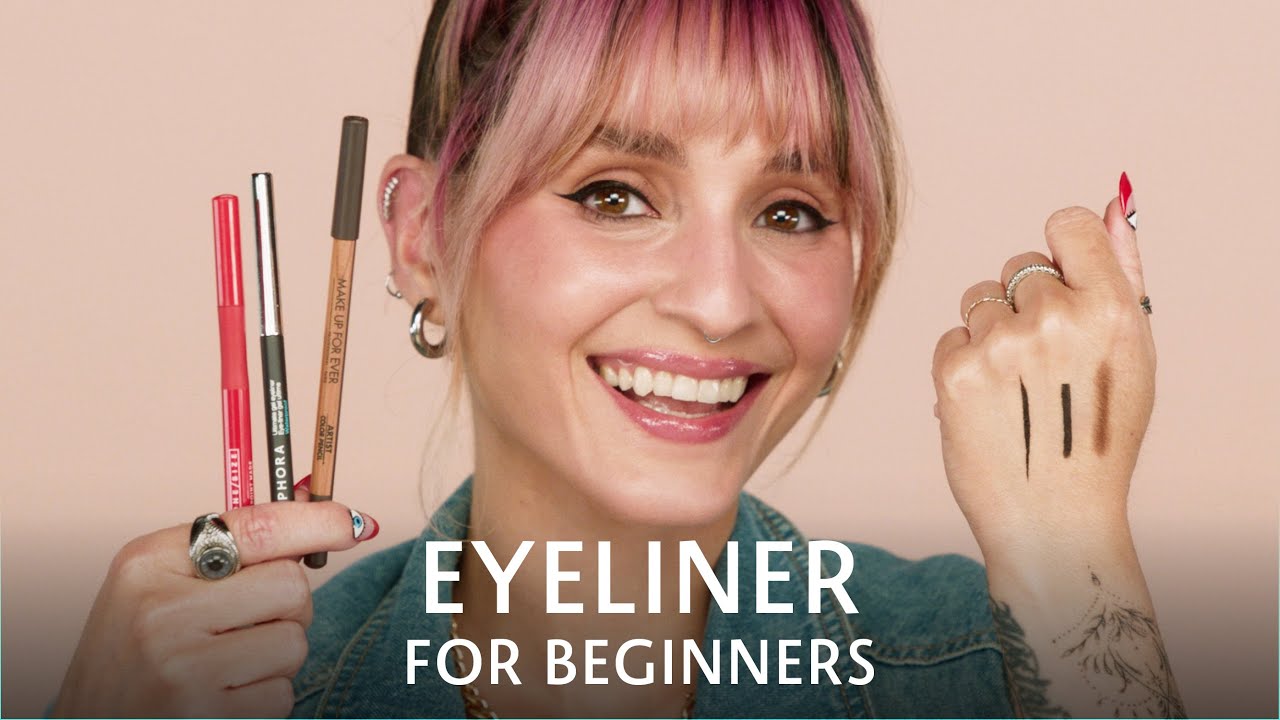
These three products look almost identical in packaging. The formulas are meaningfully different.
Eyeliner vs. Eye Pencil
The terms are often used interchangeably, and in most commercial contexts they refer to the same product.
Technical distinction: “eye pencil” sometimes refers to a softer, more blendable formula designed for smudging and smoking out, while “eyeliner pencil” implies a firmer core for sharper, more defined lines. In practice, many brands label the same product both ways depending on the intended look on the packaging.
The practical takeaway: check the formula texture rather than the label. A softer, creamier core blends. A harder, drier core defines. Both are safe for the eye area when formulated correctly.
Eyeliner vs. Eyebrow Pencil
These are genuinely different products and should not be used interchangeably on a regular basis.
Eyebrow pencils have a harder, waxier core with less pigment density. They’re designed to mimic hair-like strokes on a textured surface (brow hairs and skin) rather than deposit heavy color on a smooth lid. RMS Beauty notes that eyebrow pencils typically have a harder tip that could damage the fragile skin of the eyelid if pressed firmly.
- Eyeliner on brows: can work as a temporary fix, but the softer formula smudges faster and won’t hold natural-looking hair strokes
- Eyebrow pencil on eyelids: the harder core can tug on delicate lid skin; not recommended for regular use
The finish is also different. Eyeliner typically has a glossier result. Eyebrow pencils are deliberately matte to mimic the appearance of natural brow hairs without shine. Using one where the other belongs reads as off, even if you can’t immediately place why.
If you’re shopping and genuinely unsure which product you’re holding, test it on the back of your hand. The harder, lighter-feeling product is the brow pencil. The softer, darker one is the eyeliner.
Eyeliner Safety and Eye Health
Eyeliner is one of the cosmetics applied closest to the actual surface of the eye. The safety concerns are real, but most are manageable with basic habits.
Waterline Application Risks
A University of Waterloo study found that within five minutes, between 15 and 30 percent more particles moved into the eye’s tear film when eyeliner was applied to the inside of the lash line compared to outside it.
The particles alter the tear film, adding to discomfort and raising infection risk for contact lens wearers and people with dry eye conditions.
A 2025 study published in Scientific Reports found that eyeliner users had a significantly higher rate of dry eye symptom scores above clinical thresholds than non-users (42.93% vs. 33.38%). Those who applied liner directly to the lid margin showed an even higher rate at 48.17%.
The practical guidance from the same study: apply eyeliner on the outer side of the lash line for daily use, not on the waterline or inner margin. Reserve waterline application for occasions, not every day.
Hygiene and Product Replacement
Eyeliner applied to the lash line or waterline picks up bacteria with every use. The applicator tip contacts the eye area, then goes back into the tube or pot.
Replace liquid eyeliner every 3 months after opening. Pencil formats last longer because sharpening removes contaminated product, but the cap and case still need to stay clean.
- Never share eyeliner products
- Keep caps on tightly between uses
- Discard any product that smells different, changes texture, or has been exposed to water
A survey of 484 Malaysian adults found that only 29% agreed sharing cosmetics can transmit bacterial infection, according to research published in Ocular Surface (2023). That’s a significant gap between actual risk and consumer awareness.
Removing Eyeliner Properly
Leaving eyeliner on overnight is one of the most consistent contributors to eye irritation and, over time, lash damage from rubbing during removal.
Oil-based cleansers and micellar water break down most formulas. Waterproof eyeliner needs something oil-based specifically. Micellar water alone usually isn’t enough and leads to rubbing, which is where the damage happens.
The correct approach for removing waterproof makeup is to press a soaked cotton pad against the eye for 20 to 30 seconds before wiping, letting the product dissolve rather than dragging it across the lash line. That one change reduces lash fallout noticeably over time.
For contact lens wearers: remove lenses before removing eye makeup. Cleansing products that migrate into the eye are less of a concern without a lens surface to bind to.
FAQ on What Is Eyeliner
What is eyeliner used for?
Eyeliner defines the lash line, shapes the eye, and changes how the eye appears in terms of size and intensity.
It can make lashes look fuller, the eye look larger or smaller, and the overall look more awake or dramatic depending on placement.
What is the difference between eyeliner and eye pencil?
The terms are mostly interchangeable. In practice, “eye pencil” often refers to a softer, more blendable formula.
Eyeliner pencil typically implies a firmer core for sharper lines. Check the texture, not the label.
What is kohl eyeliner?
Kohl is the oldest eyeliner format, originating in ancient Egypt. Modern versions use a soft, powdery formula in dark matte shades.
It smudges easily by design. Best for smoky looks and waterline application, not precise lines.
What is gel eyeliner?
Gel eyeliner has a creamy, semi-solid formula applied with an angled brush. It blends easily on application, then sets to a longer-wearing finish than pencil.
The gel/cream segment is the fastest-growing eyeliner category, at 7.23% CAGR through 2030, according to Mordor Intelligence.
What is liquid eyeliner?
Liquid eyeliner uses a fluid formula with intense pigment, delivered through a brush tip or felt-tip pen applicator.
It holds the largest market share at roughly 42% of global eyeliner sales. Best for sharp, precise lines and winged looks.
What is eyeliner made of?
Most eyeliners contain pigments (iron oxides or carbon black), waxes, film-forming polymers like acrylates copolymer, solvents, and preservatives.
Pencil formats are roughly 50% wax by weight. Liquid formulas use water or alcohol as the main carrier.
What is the best eyeliner for beginners?
Pencil eyeliner or a felt-tip pen liner. Both are forgiving on unsteady hands and easier to correct than brush-tip liquid.
Felt-tip gives more intensity with less technique required. Pencil allows blending and smudging if placement is off.
What is tightlining with eyeliner?
Tightlining means placing eyeliner between the upper lashes at the root, on the inner upper rim of the lid.
The result is fuller-looking lashes with no visible liner line on the lid. Gel eyeliner and a small angled brush work best for this technique.
Is eyeliner safe to use on the waterline?
Occasional use is generally fine. Daily waterline application carries more risk.
A University of Waterloo study found 15 to 30 percent more particles migrated into the tear film when liner was applied inside the lash line versus outside it.
How long does eyeliner last before it expires?
Liquid eyeliner should be replaced every three months after opening due to bacterial contamination risk near the eye area.
Pencil formats last longer since sharpening removes exposed product. Discard any liner that smells off or changes texture.
Conclusion
This conclusion is for an article presenting what is eyeliner in full, from its ancient kohl origins to modern gel and liquid formulas built on film-forming polymers and cosmetic pigments.
The format you choose matters. So does where you apply it.
Pencil suits beginners and smoky looks. Liquid eyeliner delivers precision. Gel sits in between, with the fastest growth in the category for a reason.
Eye shape changes everything, from tightlining hooded lids to extending monolid liner outward rather than upward.
On the safety side, waterline application carries real risks backed by clinical research. Replace liquid formulas every three months. Apply on the outer lash line daily, not inside it.
The right liner, placed correctly, does more for an eye look than almost any other single product.

She started writing on the site after fielding the same questions from clients and friends often enough to just write the answers down: which red won't turn orange on a warm undertone, how to keep lipstick from feathering into fine lines, why a "12-hour" formula rarely survives dinner.
Every review on the site follows the same rule she uses with paying clients: wear it first, then decide if it's worth recommending.
- How to Make Eyeliner Last Longer Without Smudging - August 31, 2026
- How to Make Eyeshadow Last Longer All Day - August 29, 2026
- How to Find Your Undertone in 5 Easy Steps - August 27, 2026