Not all eyeliners work the same way, and liquid eyeliner sits in a category that rewards anyone who takes the time to understand it.
So, what is liquid eyeliner, exactly? It is a fluid, pigment-based formula that dries on contact with skin, delivering sharper lines and stronger color payoff than pencil or gel alternatives.
This guide covers everything from formula ingredients and applicator types to waterproof vs. regular options, finish types, wear time, and how to match your liner choice to your eye shape.
By the end, you will know how to pick the right product and use it well.
What Is Liquid Eyeliner
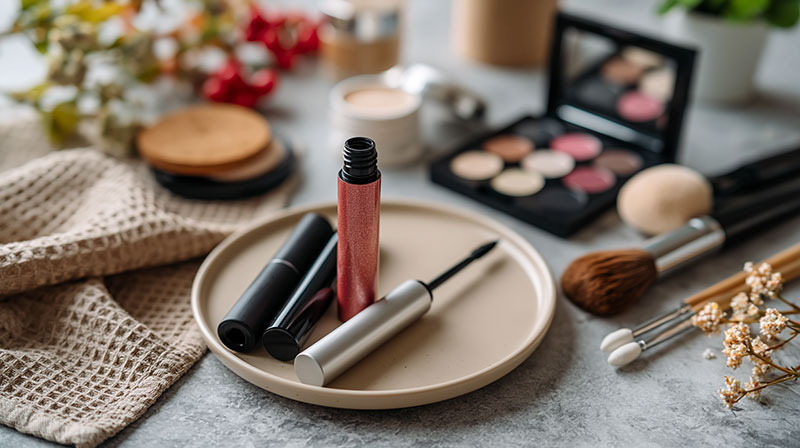
Liquid eyeliner is a cosmetic product that delivers pigment in a fluid, ink-like formula applied directly to the eyelid. It sits in a category of its own, separate from pencil and gel eyeliner, because of how the formula behaves on skin and how precisely it lays down color.
The formula is a suspension of finely milled pigment particles held in a water-based or solvent-based carrier. That carrier flows through an applicator tip and dries on contact with skin, leaving behind a thin, defined line.
Liquid eyeliner dominated the global eyeliner category in 2024, holding roughly 45% of total eyeliner market share, according to Reports and Data. That is not a coincidence. The format does something pencil and gel cannot match: it creates sharp, high-pigment lines with consistent edge definition.
| Format | Texture | Line quality | Typical finish |
| Liquid eyeliner | Fluid, ink-like | Sharp, precise | Matte, glossy, metallic |
| Pencil eyeliner | Waxy, soft | Softer, smudgeable | Matte, kohl-style |
| Gel eyeliner | Creamy, semi-solid | Buildable, blendable | Matte to satin |
Finish types for liquid eyeliner include matte, glossy, and metallic. Matte is the most common for everyday wear. Glossy gives a lacquered, graphic effect that catches light. Metallic formulas carry shimmer particles suspended in the pigment base.
Waterproof and non-waterproof versions use different chemistry, which affects both wear time and how the product comes off at the end of the day. That distinction matters more with liquid than with any other eyeliner format.
How Liquid Eyeliner Works
The formula is built around three core components: pigment, film-forming agents, and a solvent or carrier. According to cosmetic chemist Nick Morante, all eyeliner formulas, regardless of type, rely on this same trio.
Film-forming agents are the real performers here. They are polymer substances (PVP, acrylates copolymer, shellac) that deposit a thin, flexible layer on skin as the solvent evaporates. That layer locks pigment in place and resists moisture.
The drying sequence matters:
- Formula hits skin through the applicator tip
- Solvent begins evaporating on contact
- Film-forming polymers contract and bond to the skin surface
- Pigment particles are sealed inside the dried film
This is why liquid eyeliner smudges when touched too soon. The film has not fully formed. Most formulas need 30 to 60 seconds to set completely.
Flaking happens when the film becomes brittle (usually from oily lids breaking down the polymer layer) or when the formula is past its shelf life and the polymer structure has degraded. An eyelid primer creates a drier surface for the film to bond to, which extends wear time noticeably.
Maybelline’s EyeStudio Master Precise was one of the first mass-market felt-tip liners to use a fast-dry acrylates copolymer system, which helped establish the felt-tip pen format as the go-to for precise liner application at a drugstore price point.
Types of Liquid Eyeliner Applicators
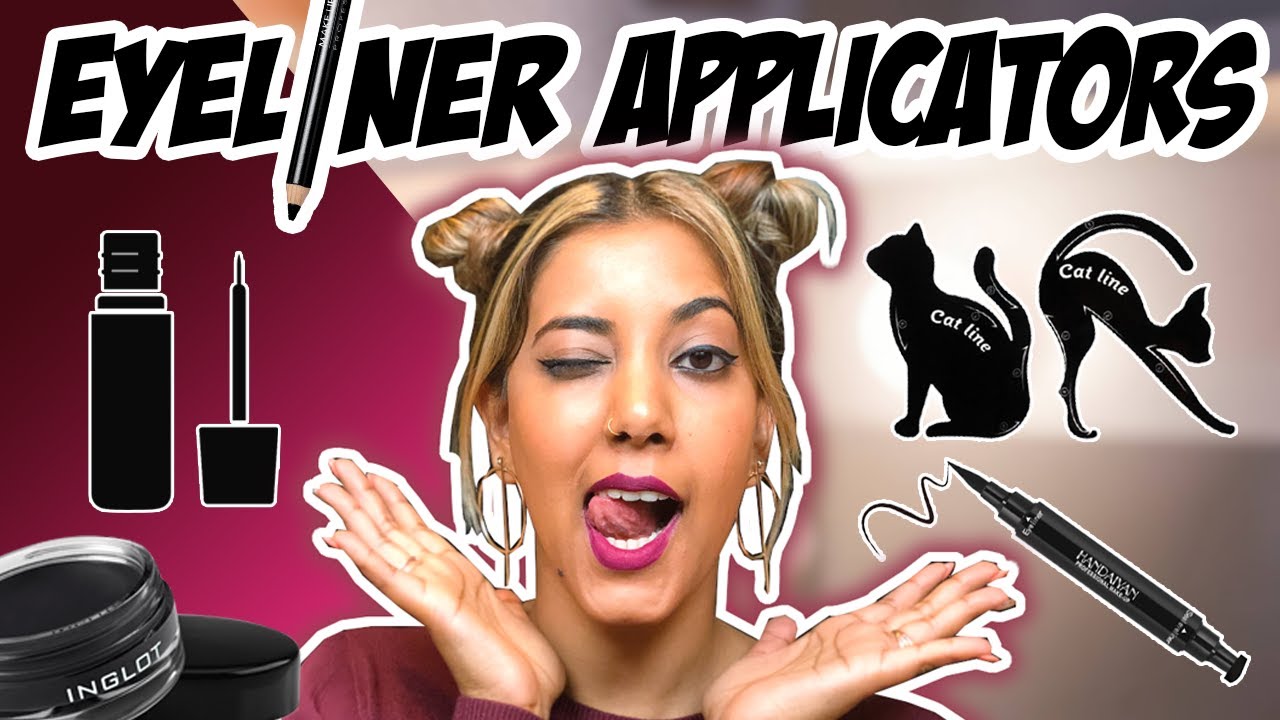
The applicator tip controls everything: line width, precision, learning curve, and how the product performs on different lid types.
Felt-Tip Pen Applicator
The felt tip is the most common format in the market. It uses a porous fiber tip that feeds formula through capillary action. Line width stays consistent because the tip maintains its shape under light pressure.
Best for: Beginners, quick application, sharp wing shapes.
- Delivers consistent line thickness
- Dries faster than brush applicators
- Less formula control for varying line width
Fine Brush Applicator
The brush tip, usually a tapered synthetic bristle, offers genuine flexibility. You can press harder for a thicker line or use the very tip for a hairline stroke. Takes longer to learn. Worth it once you do.
Most professional makeup artists default to brush applicators when precision and customization both matter, especially for editorial and runway work where line weight changes mid-lid.
Foam-tip applicators sit between the two: softer than felt, less flexible than a brush. They produce slightly diffused lines and work better for tight-lining than for sharp wings.
| Applicator | Control level | Best use | Learning curve |
| Felt tip | Medium | Clean liner, sharp wing | Low |
| Brush tip | High | Variable line weight, editorial | Moderate to high |
| Foam tip | Low | Soft liner, tight-lining | Low |
If you are learning to apply eyeliner for the first time, start with a felt-tip pen. You can always move to a brush once the hand stability is there.
Liquid Eyeliner Formula Ingredients
According to cosmetic formulation data, a standard liquid eyeliner relies on a water-based system supported by film-forming polymers and finely dispersed pigments. The formula must flow through a narrow applicator without clogging and dry fast without cracking.
Pigments: Carbon black (CI 77266) for deep black shades, iron oxides for brown and earthy tones. Synthetic dyes for color formulas. Pigment particle size must stay around 5 microns or smaller to flow through felt or brush tips without blocking them.
Film formers: PVP (polyvinylpyrrolidone), acrylates copolymer, and shellac are the most common. These form the flexible film that holds color to skin and resists water. As Nouryon’s formulation guides note, film-forming polymers like DERMACRYL C are specifically designed for mascara and eyeliner to build fast-dry, water-resistant performance.
Solvents: Water-based formulas use purified water as the carrier. Alcohol-based versions dry faster. The solvent choice affects drying time, formula stability, and how the product feels on skin during application.
Preservatives: Phenoxyethanol is the most widely used. Water-containing formulas require effective preservation to prevent microbial growth in the eye area, where infections are a real risk.
Ingredients to watch for if you have sensitive eyes: fragrances, parabens, and certain solvents. Clean-beauty formulas now routinely drop these in favor of gentler alternatives.
Waterproof Liquid Eyeliner vs. Regular

The formula difference between waterproof and regular liquid eyeliner is significant. They are not the same product with different marketing language.
Regular formulas use water-soluble film formers (PVP, standard acrylates). Waterproof versions swap those out for silicone-based resins, specifically cyclopentasiloxane and trimethylsiloxysilicate, that form a water-repelling barrier over skin. That barrier resists sweat, humidity, and water contact for the entire wear period.
The trade-off is removal. Oil dissolves silicone resins. Water does not. This is why waterproof eyeliner needs an oil-based remover or micellar water with added emollients, not just a wet wipe.
Side-by-side comparison:
- Regular formula: Water-soluble polymers, easier removal with micellar water, typical wear of 6 to 8 hours on prepped lids
- Waterproof formula: Silicone resin base, requires oil-based removal, wear of 12 to 16 hours depending on lid type
Sleeping in waterproof eyeliner without removing it is genuinely risky. Overnight, the formula can flake into particles that clog the meibomian glands on your eyelids, which leads to dryness, inflammation, and sometimes styes. Removing eye makeup properly every night is not optional if you wear waterproof liner regularly.
For removing waterproof makeup, press a soaked cotton pad against the lid for 15 to 20 seconds before wiping. That dwell time lets the oil penetrate the silicone film before you pull.
How to Apply Liquid Eyeliner
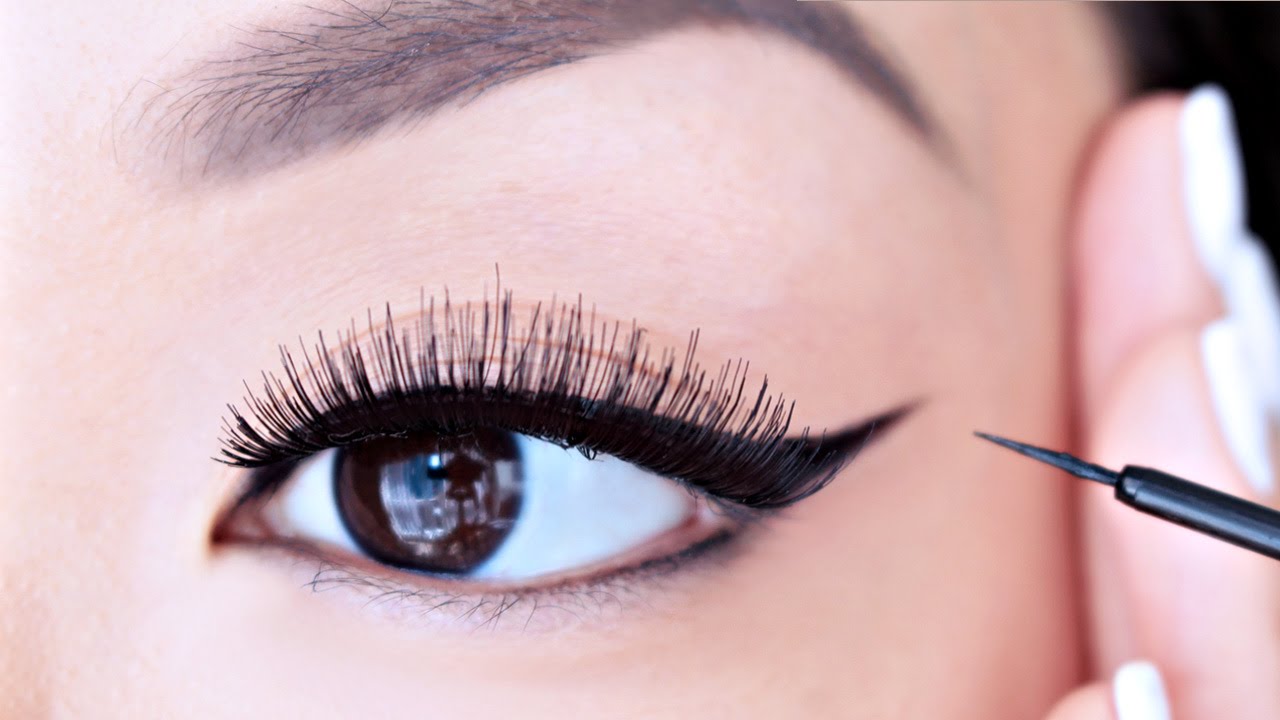
Most people struggle with liquid eyeliner because of hand stability, not skill. The fix is mechanical, not practice-based.
Preparing the Eyelid
Oil control matters before anything else. An eyelid primer or a thin swipe of translucent powder creates a drier base. Without it, the film former in the formula has less to bond to, and the line breaks up faster.
Skip heavy eyeshadow base under the liner line itself. It creates an uneven surface that makes clean lines harder to achieve.
Applying the Line
Rest your elbow on a flat surface. That one change eliminates most of the hand tremor that causes jagged lines.
Two methods for building the line:
- Dot-connect: Place small dots along the lash line first, then connect them. Lower risk of pulling off-course.
- Single stroke: One continuous pass from inner to outer corner. Faster, but needs a steadier hand.
Keep your eye half-open, not fully shut, when applying to the upper lash line. A fully closed lid creates a fold that shifts the liner placement when you open your eye.
Mistakes are fixable while still wet. A clean, dry cotton swab lifts fresh formula without smearing. Once the film has set, use a small brush dipped in oil-based remover for precision correction.
How to Do a Sharp Wing with Liquid Eyeliner
The angle of the wing flick follows the natural lower lash line extended outward. Not upward at a sharp angle. That’s where most people go wrong, and it changes the shape of the eye dramatically.
The tape method: Place a strip of tape angled from the outer corner toward the tail of your eyebrow. Apply the wing using the tape edge as a guide. Peel immediately after.
For matching wings without tape, do both sides in stages: draw the wing flick on both eyes first, then fill in the liner body. Matching tails before committing to the full line is much easier than trying to match a complete liner look on one eye to a blank eye on the other.
When doing winged eyeliner, the flick length should stay proportional to the eye size. A short, tight flick reads cleaner on smaller eyes. A longer flick needs enough lid space to land without looking disconnected.
The cat eye is really just a winged liner with a more dramatic elongation. The technique is the same; only the scale changes.
Liquid Eyeliner Finish and Pigmentation
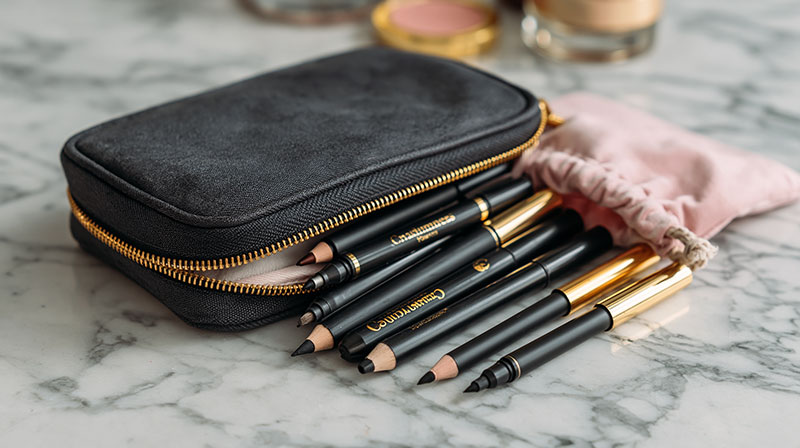
Finish and pigment load are not the same thing, and confusing them leads to buying the wrong product. A highly pigmented matte formula looks completely different from a lightly pigmented metallic one, even if the base color is identical.
Liquid eyeliner dominates the global eyeliner category partly because of finish variety. According to market research, liquid formulas are specifically called out for their range of finishes (matte, glossy, satin) compared to other eyeliner formats.
| Finish | Light behavior | Best for |
| Matte | Absorbs light | Everyday, defined looks |
| Glossy | Reflects light | Graphic, editorial eyes |
| Metallic | Refracts light via shimmer particles | Evening, statement liner |
Matte finish creates a flat, ink-like line with no shine. It reads as more graphic and deliberate. Most professional eyeliner looks on runways use matte black because it photographs cleanly without glare.
Glossy finish catches and bounces light. The effect is lacquered, which can make a thin line look bold. The trade-off is that glossy formulas tend to take longer to dry fully.
Metallic finishes carry suspended shimmer particles (mica, synthetic fluorphlogopite) in the pigment base. Particle size matters here. Finer particles create a smoother, more satin-like shine. Larger particles produce more obvious glitter. NYX’s Epic Wear Metallic Liquid Liner uses six shades with a waterproof formula that the brand claims lasts up to 36 hours without cracking or fading.
Pigment density varies noticeably across price tiers. Higher-end formulas typically use more concentrated pigment loads, meaning one pass delivers full opacity. Drugstore formulas often need a second coat.
How Long Liquid Eyeliner Lasts
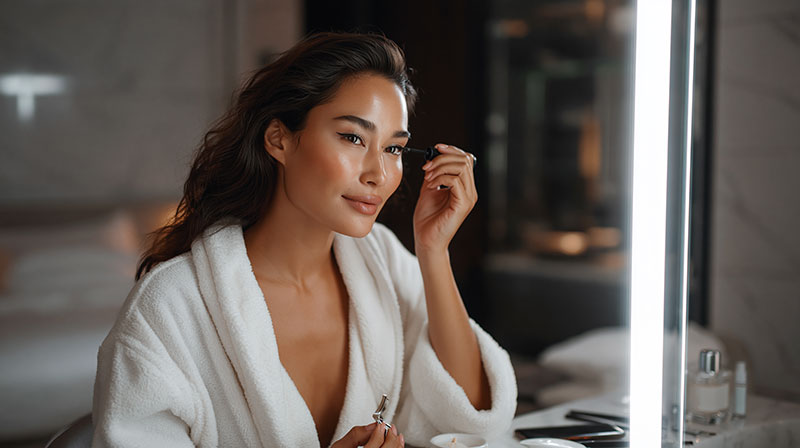
Two different questions get lumped under this topic: how long it stays on your face, and how long the product itself is safe to use. Both matter.
Wear Time on Skin
Most liquid eyeliners hold well for 8 to 12 hours on prepped lids. Oily lids cut that down fast because the skin’s natural sebum breaks down the polymer film.
Factors that reduce wear time:
- Skipping eyelid primer
- Humid conditions or heavy sweating
- Applying over moisturizer or eye cream near the lash line
- Rubbing the eye area throughout the day
A translucent setting powder pressed lightly over dried liner can extend wear by another 2 to 3 hours, especially on oily lids. The powder fills the tiny gaps in the film and limits oil penetration.
Shelf Life After Opening
Liquid eyeliner has one of the shortest shelf lives of any makeup product. According to Lancome, MasterClass, and Red Apple Lipstick, the PAO (Period After Opening) for liquid eyeliner is 3 to 6 months.
The reason is straightforward: water-containing formulas in close contact with the eye area carry real infection risk once contamination begins. The applicator tip touches the lid with every use.
Signs the formula has expired:
- Dried or clogged applicator tip
- Separation of pigment from the carrier
- Off or chemical smell
- Line that flakes immediately after application
Stila Stay All Day Waterproof Liquid Liner is one of the more referenced products for longevity on oily lids, but even high-performance formulas follow the same expiry window. The formula degrades regardless of how good the product was when new.
Liquid Eyeliner for Different Eye Shapes
Same product, completely different technique depending on eye shape. The liner itself does not change; what changes is where you place it, how thick you go, and which direction the wing (if any) faces.
Hooded Eyes

The hood eats liner. Thin lines applied directly on the lid become invisible when the eye opens.
Two techniques that work:
- Apply with eyes open, not shut, mapping placement while the lid is in its natural position
- Keep the line slightly above the lash line so it stays visible under the fold
Waterproof formula is non-negotiable for hooded eyes. The skin fold creates friction against the liner all day.
Monolid Eyes

Monolid lids have no visible crease, common in East Asian eye shapes. The entire lid is a canvas. Bolder, thicker lines read better here because there is no crease to create natural depth.
An exaggerated wing works well on monolids. Extending the liner significantly past the outer corner creates the illusion of a lifted, elongated eye shape. Maybelline’s Eyestudio Master Precise is specifically cited by the brand for monolid application, with a precision tip that supports the controlled, extended strokes the shape calls for.
Downturned Eyes
The outer corners of downturned eyes slope downward. The goal with liner is to visually lift that corner.
Draw the wing flick upward at a 45-degree angle from the outer corner, angling toward the tail of the brow rather than following the natural droop. Avoid extending liner along the lower lash line too far out; it reinforces the downward pull.
Deep-Set Eyes
Keep lines thin. Deep-set eyes already sit back in the socket with a prominent brow bone, so heavy liner can make the eyes appear smaller and recede further.
Skip dark liner on the waterline. A nude or white pencil on the waterline opens the eye visually, which is more flattering for this shape than a standard black liner approach.
If you are working on makeup for hooded eyes specifically, the technique changes more significantly than for most other shapes. The eye makeup looks need to be planned with the lid fold in mind from the start.
How to Choose a Liquid Eyeliner

Skill level and lid type are the two variables that narrow the choice fastest. Everything else (finish, color, brand) is secondary to getting those two right.
Liquid eyeliner is the most searched eyeliner format globally, with Google Trends data showing it peaked at a search index of 96 in November 2024 (Accio, 2025). But search interest does not mean every buyer finds the right product. Wrong applicator and wrong formula for skin type are the two most common reasons liquid liner fails for beginners.
| Priority | Choose this | Avoid this |
| Beginner skill level | Felt-tip pen applicator | Brush applicator |
| Oily lids | Waterproof, silicone-resin formula | Non-waterproof, water-based formula |
| Everyday wear | Matte or satin finish | Heavy metallic or glitter |
| Sensitive eyes | Fragrance-free, tested | Formulas with fragrances/parabens |
For oily lids, waterproof is the only formula worth considering. Non-waterproof liner on a very oily lid starts breaking down within a couple of hours regardless of primer. The formula chemistry simply is not built for that environment.
Finish preference is straightforward once you know what you are dressing the liner for. Matte for every day. Metallic for evenings or editorial looks. Glossy when you want something graphic and high-impact without shimmer particles.
Ingredients to avoid if you have sensitive eyes: fragrance (listed as “parfum”), certain preservatives like methylparaben, and alcohol-based solvents. Look for products labeled ophthalmologist-tested or hypoallergenic as a baseline filter, not a guarantee.
If you want to go beyond liner and think about how the whole eye look fits together, doing eye makeup well means planning liner, eyeshadow, and lash work as a system rather than individually. Liquid eyeliner has a different relationship with eyeshadow depending on whether you apply it before or after shadow.
And liquid eyeliner is just one piece of a full eye makeup look. The finish and pigment load of your liner should match the rest of the look, not fight it.
If you want to understand how liquid eyeliner compares to pencil eyeliner directly before deciding, the differences in application, formula, and finish are worth reading through before committing to one format.
FAQ on What Is Liquid Eyeliner
What is liquid eyeliner made of?
Liquid eyeliner is made of pigments, film-forming agents, and a solvent carrier. Carbon black provides deep black color. Polymers like PVP and acrylates copolymer create the flexible film that bonds to skin and holds color in place after drying.
What is the difference between liquid eyeliner and pencil eyeliner?
Liquid eyeliner uses a fluid, ink-based formula that dries to a sharp, defined line. Pencil eyeliner has a waxy texture that smudges more easily. Liquid gives higher pigmentation and edge definition. Pencil is more forgiving for beginners and better suited for soft, blended looks.
Is liquid eyeliner hard to apply?
It has a learning curve, especially with a brush applicator. A felt-tip pen format is easier to control. Resting your elbow on a flat surface removes most hand tremor. Most people get consistent results within a few practice sessions.
How long does liquid eyeliner last on the eyes?
Most formulas hold for 8 to 12 hours on prepped lids. Oily lids shorten that significantly. Using an eyelid primer and a light dusting of translucent powder over dried liner extends wear time noticeably throughout the day.
How long does liquid eyeliner last before it expires?
According to Lancome and MasterClass, liquid eyeliner should be replaced every 3 to 6 months after opening. Signs it has expired include a dried applicator tip, separated formula, or an off smell. Expired liner near the eye area risks irritation and infection.
What is waterproof liquid eyeliner?
Waterproof liquid eyeliner uses silicone-based resins, specifically cyclopentasiloxane and trimethylsiloxysilicate, instead of standard water-soluble polymers. These create a moisture-resistant barrier on skin. The formula resists sweat and humidity but requires an oil-based remover to break down properly.
Can liquid eyeliner be used on the waterline?
Most eye-care sources advise against it. Liquid formulas are designed for the lash line, not the waterline. Applying them inside the rim can block meibomian glands and increase irritation risk. A kohl or pencil eyeliner is a safer choice for the waterline.
What is the best liquid eyeliner for beginners?
A felt-tip pen applicator is the best starting point. It delivers consistent line thickness without requiring a steady hand. Brands like Maybelline, NYX, and Stila offer beginner-friendly formulas with quick-dry, smudge-proof performance at accessible price points.
Does liquid eyeliner work on hooded eyes?
Yes, but technique matters. Apply with eyes open to map placement accurately. Keep the line slightly above the lash line so it stays visible under the lid fold. A waterproof formula is recommended to prevent transfer onto the hood throughout the day.
How do you remove liquid eyeliner?
Regular liquid eyeliner lifts easily with micellar water. Waterproof formulas need an oil-based remover or cleansing balm. Press a soaked cotton pad against the lid for 15 to 20 seconds before wiping. Avoid tugging, as the skin around the eye area is thin and delicate.
Conclusion
This conclusion is for an article presenting what is liquid eyeliner, and the core takeaway is simple: formula, applicator, and technique are the three variables that determine whether liquid liner works for you.
The pigment suspension, film-forming agents, and applicator tip all affect how the line lands on skin and how long it holds.
Waterproof formulas suit oily lids. Felt-tip pens suit beginners. Brush tips suit anyone who wants variable line weight.
Eye shape changes where and how you apply the liner, not which product you reach for.
Replace your liquid liner every 3 to 6 months. Keep lids prepped. And if the smudge-proof wear time still disappoints, primer and setting powder fix that before you blame the formula.

She started writing on the site after fielding the same questions from clients and friends often enough to just write the answers down: which red won't turn orange on a warm undertone, how to keep lipstick from feathering into fine lines, why a "12-hour" formula rarely survives dinner.
Every review on the site follows the same rule she uses with paying clients: wear it first, then decide if it's worth recommending.
- How to Make Eyeliner Last Longer Without Smudging - August 31, 2026
- How to Make Eyeshadow Last Longer All Day - August 29, 2026
- How to Find Your Undertone in 5 Easy Steps - August 27, 2026