Most people have a bronzer sitting in their makeup bag that they only half know how to use.
Bronzer is a pigment-based cosmetic product designed to add warmth, sun-kissed glow, and soft depth to the skin without UV exposure.
It sounds simple. But the difference between a natural, radiant complexion and an orange, streaky mess often comes down to understanding what bronzer actually does, and what it does not.
This guide covers everything: formula types, shade selection, correct placement, ingredients, wear time, and the mistakes that make bronzer look wrong on almost every skin tone.
What Is Bronzer

Bronzer is a cosmetic product used to add warmth, depth, or a sun-kissed glow to the skin. It deposits pigment on the skin surface to mimic the look of a natural tan, without UV exposure.
It is not a self-tanner. It does not change the skin itself. The color sits on top and washes off.
The global bronzer market was valued at $3.12 billion in 2023 and is projected to reach $4.91 billion by 2030, growing at a CAGR of 6.67% (Research and Markets, 2024). That’s not a niche product. That’s a staple.
Bronzer comes in multiple formats, each suited to different skin types and application preferences.
- Pressed powder: The most common format. Easy to layer, travel-friendly, buildable coverage
- Loose powder: Lighter feel, often used for all-over body application
- Cream and stick: Blend into the skin for a natural, skin-like finish
- Liquid: Can be mixed into foundation or applied solo for a radiant effect
Powder bronzers held a 50.2% market share in 2024, largely because they suit both beginners and experienced users (Grand View Research, 2024). Cream and liquid formats are the fastest-growing segment, driven by the demand for dewy, natural-looking skin.
Bronzer is not a substitute for SPF. Some formulas now include skin-nourishing additions like vitamin E or hyaluronic acid, but that does not make them skincare replacements.
Types of Bronzer

The format matters as much as the shade. Using the wrong type for your skin type or the look you want is one of the most common bronzer mistakes.
Pressed Powder Bronzer
Pressed powder is the default for most people. Buildable, blendable, and easy to control.
It suits oily and combination skin well because it does not add extra moisture. For dry skin, it can look patchy if the skin is not prepped properly beforehand.
Works over or without foundation. Available in matte, shimmer, and satin finishes.
Cream and Stick Bronzer
Best for: dry skin, mature skin, and anyone after a natural, skin-fused finish.
Cream bronzers blend with fingers or a damp sponge. They sit into the skin rather than on top of it, which reads as more natural in photos and in person.
Rare Beauty’s Bronzer Stick is a good example of how a cream stick bronzer formula can work for multiple skin types without looking cakey or overdone.
Cream formulas do not layer as easily as powder. If you want buildable, intense coverage, powder wins.
Liquid Bronzer
Liquid bronzer surged in popularity alongside the skin-care-makeup crossover trend. It can be mixed directly into moisturizer or foundation, or applied alone for an all-over glow.
The liquid bronzer segment is projected to grow at the fastest CAGR of 10% through 2034, according to Emergen Research. That tracks with how many brands are now launching liquid bronzer drops.
Harder to control than powder. Not the right pick for beginners unless you dilute it first.
Matte vs. Shimmer vs. Satin
| Finish | What It Does | Best For |
| Matte | Absorbs light, adds depth without glow | Contouring, oily skin, bright lighting |
| Shimmer | Reflects light, creates glow | Everyday warmth, dry skin, soft natural light |
| Satin | Low-key sheen, middle ground | Most skin types, versatile everyday use |
Bronzer vs. Contour vs. Highlighter

These three products get confused constantly, even by people who use them daily. They look similar in the pan but do completely different things on the face.
The short version: bronzer adds warmth, contour adds shadow and structure, highlighter adds light.
Bronzer vs. Contour
Key difference: undertones. Bronzers carry warm undertones (golden, peachy, amber). Contour products use cool, neutral, or even grayish tones to replicate natural shadows.
Applying a warm bronzer where cool shadows should fall can make the face look muddy. That is not a shade problem. It is a product choice problem.
Bronzer goes where the sun hits: temples, cheekbones, nose bridge, jawline. Contour goes where shadows naturally fall, which is underneath the cheekbones and along the sides of the face.
Both can be used together. Apply contour first to define bone structure, then layer bronzer to bring warmth back after a foundation flattens everything out.
Bronzer vs. Highlighter
Bronzer and highlighter are both applied to high points of the face, which is where the confusion starts.
Bronzer: Adds color and warmth. Mimics a tan.
Highlighter: Adds reflective light. Iridescent or shimmery, designed to make features appear more prominent.
Bronzer with shimmer can double as a light highlighter on the cheekbones for a casual look. But for more precise sculpting, they serve different purposes and apply to slightly different zones. The highlighter vs. bronzer distinction becomes clearest when you see both used on the same face.
When to Use Each
| Product | Purpose | Undertone | Placement |
| Bronzer | Warmth, sun-kissed glow | Warm | Where sun hits |
| Contour | Shadow, structure, definition | Cool/neutral | Where shadows fall |
| Highlighter | Light, luminosity | Iridescent | Highest face points |
| Blush | Color flush, healthy look | Pink/peach/berry | Apples of cheeks |
How to Choose the Right Bronzer Shade
Wrong shade is the number one reason bronzer ends up looking orange, muddy, or fake. The rule is simple but often skipped: go one to two shades deeper than your natural skin tone.
Going three or more shades darker reads as unnatural on most fair and light skin tones. On medium to deep complexions, three to four shades darker can work, but only if the undertone matches.
Shade by Skin Tone
Undertone matters more than depth. A bronzer with the wrong undertone will not blend into the skin naturally regardless of how close the shade depth is.
- Fair skin: Light golden or taupe shades. Avoid anything with heavy orange pigment
- Light to medium skin: Warm golden or soft copper tones work well
- Medium to tan skin: Rich warm browns, caramel tones, deeper coppers
- Deep skin: Dark warm browns, mahogany, deep amber. Avoid bronzers that read ashy
Undertone Matching
According to makeup artist Beth Follert, the goal is a neutral-to-warm bronzer shade. Nothing too orange, nothing too red (unless you have olive skin, which carries red undertones naturally).
Warm undertones: Go for golden or peachy bronzers.
Cool undertones: Taupe-leaning bronzers with less orange pigment blend more naturally.
Neutral undertones: Most bronzers will work. Focus on depth over undertone correction.
One test that actually works: swatch the bronzer on your jaw and blend slightly. If it disappears into the skin, it fits. If it sits on top looking like a completely different color, try a different shade.
Where to Apply Bronzer
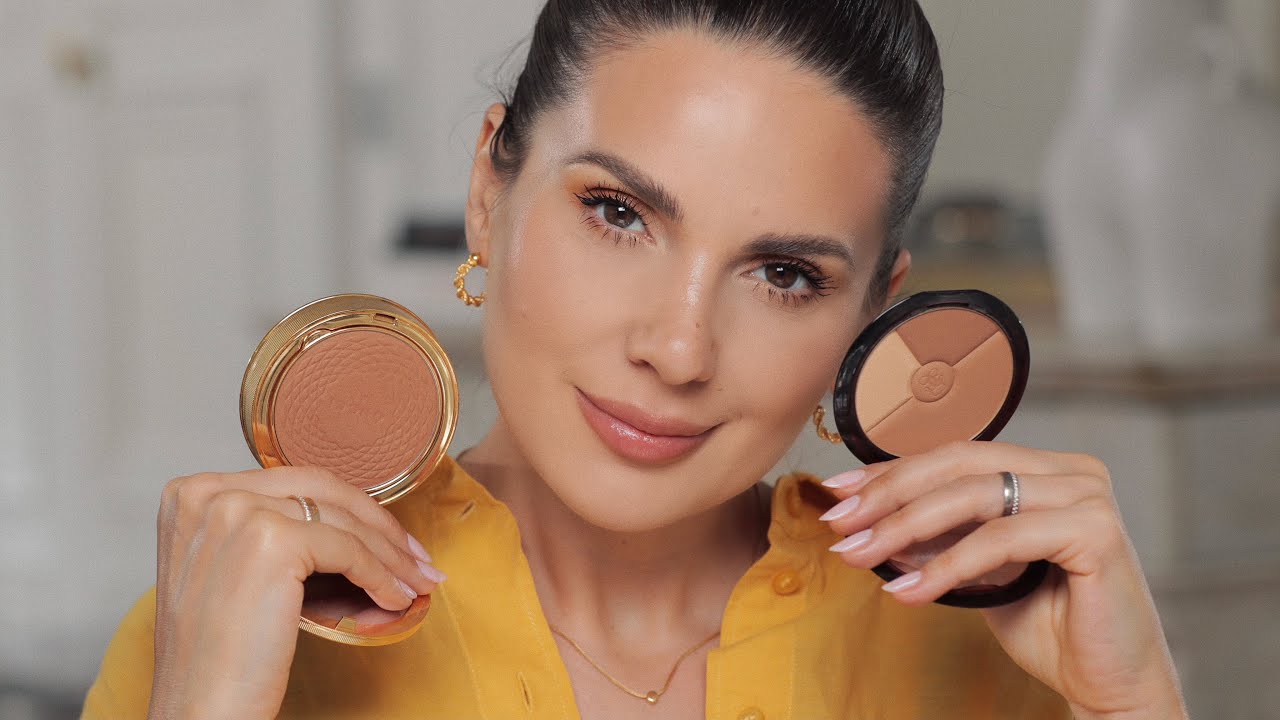
Placement is what separates a natural look from one that looks like a makeup mistake. The logic is straightforward: apply bronzer where the sun would naturally hit your face first.
The “3” Method
Sweep bronzer in the shape of a number 3 on each side of the face: starting at the forehead/temples, curving under the cheekbones, and finishing along the jawline.
This placement adds warmth without flat color across the entire face. It keeps the center of the face lighter, which reads as more natural.
A fluffy brush works best for this. Angled brushes give more precision for the cheekbone area specifically.
Areas to Hit and Areas to Skip
Apply bronzer here:
- Temples and hairline
- Just above and along the tops of the cheekbones
- Lightly across the nose bridge
- Along the jawline to blend into the neck
Skip these areas:
- Under-eye area (will look muddy and age the face)
- Center of the forehead alone without blending into the hairline
- Inner corners of the eyes
The neck and decolletage matter more than most people realize. A perfectly bronzed face sitting on a pale neck looks disconnected. Blend bronzer lightly down the neck and onto the collarbone for a cohesive result, especially when wearing lower necklines.
Bronzer Placement by Face Shape
Placement shifts slightly depending on bone structure.
Round faces benefit from bronzer concentrated more along the perimeter and less through the center. Oval and long faces can be a bit more generous across the temples. For heart-shaped faces, keep bronzer off the forehead center and focus on the cheekbones and jaw.
There is no placement that works identically on every face. The “3” method is a starting point. Learn how your own features interact with warmth and adjust from there.
How to Apply Bronzer by Skin Type and Finish
The formula you pick and the tools you use need to match. A powder bronzer applied with a damp sponge or a cream bronzer applied with a dense powder brush will not work the way either product is designed to.
Applying Powder Bronzer
Tap off excess product before touching your face. That single step prevents the streaking and over-application that gives powder bronzer a bad reputation.
Use a fluffy, dome-shaped brush for diffused coverage across the temples and cheekbones. Switch to an angled brush if you want more defined placement along the cheekbone specifically.
Blend in circular or sweeping motions. Always blend past the edges of where you applied the bronzer so there are no harsh lines. If you can see exactly where the bronzer starts, it needs more blending. For a full walkthrough on applying bronzer with different brush types, technique matters as much as placement.
Applying Cream and Stick Bronzer
Best tools: fingertips, a damp beauty sponge, or a dense synthetic brush.
Warm the product on your fingers first. Then press and blend into the skin. Pressing gives a more skin-fused result than dragging.
Apply before setting powder if you are layering with powder products on top. Cream first, powder second. This sequence keeps the finish from looking separated or uneven.
Layering Bronzer Over Foundation
Foundation can flatten the face significantly, especially medium to full coverage formulas. Bronzer after foundation restores the dimension that foundation removes.
Wait for foundation to set before applying powder bronzer. About 60 seconds is enough. Applying too soon means the bronzer picks up wet foundation and moves around instead of sitting where you placed it.
Cream bronzer can go directly over foundation without the wait. Blend quickly before either product dries down.
When applying makeup in layers, the sequence is: skincare, primer, foundation, concealer, cream color products (blush, bronzer), setting powder, then powder bronzer or highlighter on top.
Bronzer Ingredients and Formula Differences
What a bronzer is made of determines how it feels on the skin, how long it lasts, and what finish it delivers. Two bronzers that look identical in the pan can perform completely differently based on their base ingredients.
Formula transparency has improved a lot in the last few years, especially as clean beauty brands have pushed for more ingredient disclosure. In 2024, several major brands reformulated bronzers to include skincare actives alongside pigment.
The Base Ingredients
Talc is still the most common base in pressed powder bronzers. It makes up as much as 70% of some formulas, and its main function is spreadability. It gives powder products their smooth, low-coverage slip.
Mica is the ingredient responsible for shimmer. It is a naturally occurring mineral with a flat, plate-like structure that reflects light. Most bronzers with any kind of glow contain it.
Synthetic fluorphlogopite is a lab-made alternative to natural mica. It delivers more consistent quality, fewer impurities, and better light reflection. Brands like Haus Labs and Benefit Cosmetics use it as a primary base in their bronzer formulas. It is increasingly the preferred choice in clean and luxury formulations.
Kaolin clay is added for oil absorption and mattifying effect. Useful in bronzers designed for oily or combination skin. It will not dry out the skin the way more aggressive clays can.
Skincare Additions in Modern Bronzers
The trend toward functional cosmetics is clear in bronzer ingredient lists. Hyaluronic acid now appears in formulas from brands like YSL and Marcelle. Tocopherol (vitamin E) and tocopheryl acetate show up across both luxury and mid-range bronzers as antioxidants.
| Ingredient | Function in Bronzer | Common In |
| Talc | Spreadability, slip | Conventional powder bronzers |
| Mica | Shimmer, light reflection | Most bronzers with shimmer finish |
| Synthetic fluorphlogopite | Superior shimmer, cleaner alternative to mica | Luxury, clean beauty formulas |
| Kaolin clay | Oil absorption, matte effect | Matte bronzers, oily skin formulas |
| Hyaluronic acid | Skin hydration | Skincare-hybrid bronzers |
Mineral Bronzers vs. Conventional Formulas
Mineral bronzers replace talc with mica, zinc oxide, or rice powder as the base. They tend to suit sensitive skin better and carry fewer synthetic fillers.
The tradeoff: mineral bronzers often have less color payoff and a shorter wear time than conventional pressed powders. Good for everyday low-key use. Less ideal for high-coverage or long-event wear.
Iron oxides (red, yellow, and black) create the actual bronze tone in almost all formulas. Blending these three pigments in different ratios is how brands produce the range of shades from light golden to deep mahogany, across both mineral and conventional bronzer lines.
How Long Does Bronzer Lasts and How to Set It

Bronzer wear time varies a lot depending on formula, skin type, and whether you set it properly. Powder bronzer on bare, unprimed skin can fade within three to four hours. The same bronzer over a primed, moisturized base can last a full day.
Powder bronzers have a shelf life of up to 24 months once opened. Cream bronzer formulas typically last around 12 months before the formula starts to break down (Red Apple Lipstick). That matters for anyone who rotates products slowly.
What Affects Wear Time
Skin type is the biggest variable. Oily skin breaks down powder bronzer faster because sebum mixes with the formula and causes it to shift or fade. A 2024 study in the Journal of Cosmetic Dermatology found that skin moisture and sebum levels change within just 20 minutes of activity, which directly affects how makeup holds.
Other factors that cut bronzer wear time:
- Skipping primer or moisturizer before application
- Touching the face throughout the day
- High humidity or heat
- Applying bronzer directly onto foundation before it has set
Setting Powder Bronzer
Powder bronzer does not need a separate setting step. The powder formula is self-setting. What it does need is the right base underneath.
Apply a thin layer of translucent or tinted setting powder over your foundation before going in with bronzer. This creates a grippier surface that holds the bronzer pigment better. You can also apply setting powder lightly over bronzer if you want extra staying power, but use a light hand so it does not dull the finish.
Setting Cream Bronzer
Cream bronzer needs to be locked in with powder, otherwise it will move. Dust a fine layer of translucent or bronzed setting powder over the cream product immediately after blending.
Setting spray is the other option. High-quality formulas can extend makeup longevity by 8 to 16 hours depending on skin type and conditions (StansOut Beauty, 2024). For cream bronzer specifically, spritz setting spray after all powder products are done, not immediately after the cream layer.
Celebrity makeup artist Sir John layers powder bronzer directly on top of cream bronzer to extend wear time. It is a professional technique that works well and also adds a slightly more matte dimension over the cream base.
Touch-Ups During the Day
Powder bronzer is the easiest to touch up. A small fluffy brush and a pressed bronzer compact is all you need.
Cream bronzer mid-day is trickier. If the base is still intact, a light layer of powder bronzer over it works. If the base has broken down, blotting first with a paper tissue before applying any product gives a much cleaner result.
Common Bronzer Mistakes
Most bronzer problems come down to three things: wrong shade, wrong amount, or wrong placement. Not blending properly is a close fourth.
A study published in the International Journal of Cosmetic Science (2024) found that 71% of makeup users do not blend products properly, making insufficient blending one of the most widespread application errors across all face makeup.
Using Too Much Product
This is the most common bronzer mistake. Visible shimmer glitter, orange stripes along the cheekbones, and a muddy complexion are all signs of over-application.
Celebrity makeup artist Sir John taps excess product off the brush before every application. Going in with a loaded brush is what creates uneven, heavy deposits that are hard to correct once on the skin.
The fix: start with less than you think you need. Build up slowly. You can always add more. You cannot easily remove bronzer once it has been blended into the skin without disturbing the rest of your makeup.
Choosing the Wrong Shade or Undertone
Too orange: undertone is too warm or too red for the skin tone. Common in fair to light skin types who pick up shades designed for deeper complexions.
Too ashy: undertone is too cool, which reads as grey or flat on the skin.
The fix is always undertone-first selection, not depth-first. A bronzer that is the right undertone for your skin will blend in naturally even if the depth is slightly off.
Skipping Neck and Jaw Blending
Bronzed face, pale neck. It happens constantly and it looks exactly as disjointed as it sounds.
Blend bronzer past the jawline and lightly down the neck after finishing the face. It takes 10 extra seconds and completely changes how cohesive the look reads, especially in photos. When layering makeup products, bronzer should always be the last step before setting, which makes it easier to bring down to the neck without disrupting earlier layers.
Wrong Brush Type
Dense, short-bristle brushes deposit too much product in too small an area. They create stripes, not warmth.
Sir John recommends bristles at least one and a half inches long for bronzer application. Loose, fluffy bristles diffuse the product instead of packing it on. Fan brushes work for subtle, sheer application. Angled brushes are better for defined cheekbone placement specifically.
Applying Bronzer Before Foundation
Bronzer goes over foundation, not under it. Applying it first and then covering it with foundation completely defeats the purpose of either product.
There is one exception: some people apply a very light dusting of bronzer to bare skin before foundation for an all-over warmth effect, but this is a specific technique, not the default approach. When applying makeup with a brush, working in the correct sequence keeps each product functioning as designed rather than fighting against the layers above or below it.
FAQ on What Is Bronzer
What does bronzer do to your skin?
Bronzer deposits warm pigment on the skin surface to mimic a sun-kissed glow. It adds warmth and soft depth without changing the skin itself. The color sits on top and washes off with your regular cleanser.
Is bronzer the same as contour?
No. Bronzer adds warmth using warm undertones. Contour creates shadow using cool or neutral tones. Using bronzer where contour belongs makes the face look muddy, not sculpted.
Where do you apply bronzer on your face?
Apply bronzer where the sun naturally hits: temples, tops of the cheekbones, nose bridge, and jawline. Blend past the jaw and lightly down the neck for a cohesive result.
What is the difference between bronzer and highlighter?
Bronzer adds color and warmth to mimic a tan. Highlighter adds reflective light to make features appear more prominent. Both go on high points of the face, but they serve completely different purposes.
How do I choose the right bronzer shade?
Pick a shade one to two deeper than your natural skin tone. Undertone matters more than depth. A warm-toned bronzer blends naturally. A cool or overly orange shade will sit on top of the skin visibly.
Can I use bronzer instead of blush?
You can, but the results differ. Bronzer adds warmth across the face. Blush adds a flush of color specifically to the cheeks. On fair skin especially, bronzer alone can look flat without some color on the cheeks.
What type of bronzer is best for oily skin?
Matte pressed powder bronzer. It does not add extra glow to already shiny skin and helps absorb excess sebum. Cream and liquid bronzers tend to slide on oily skin without a good primer underneath.
How long does bronzer last on the skin?
Powder bronzer on a primed base lasts a full day. On bare unprimed skin, expect three to four hours. Powder bronzer has a shelf life of around 24 months after opening before the formula degrades.
Is bronzer bad for your skin?
Most bronzers are well-tolerated. Ingredients like talc, mica, and iron oxides are broadly considered safe for cosmetic use. If you have sensitive or acne-prone skin, look for non-comedogenic, fragrance-free formulas with minimal synthetic fillers.
Do you apply bronzer before or after foundation?
After. Bronzer goes over your foundation base, not under it. Apply foundation first, let it set briefly, then layer bronzer on top. Applying bronzer first and covering with foundation cancels out both products entirely.
Conclusion
This conclusion is for an article presenting what is bronzer as more than just a cosmetic product. It is a tool for adding skin warmth, buildable color payoff, and dimension to any complexion.
The right bronzer shade comes down to undertone first, depth second.
Formula matters too. Pressed powder suits oily skin. Cream and liquid formulas work better on dry skin or anyone after a natural, skin-fused finish.
Placement is what separates a believable sun-kissed glow from obvious makeup. Blend past the jawline. Always.
Whether you reach for a matte bronzer for contouring or a shimmer formula for everyday warmth, the principles stay the same: right shade, right formula, right brush, blended well.

She started writing on the site after fielding the same questions from clients and friends often enough to just write the answers down: which red won't turn orange on a warm undertone, how to keep lipstick from feathering into fine lines, why a "12-hour" formula rarely survives dinner.
Every review on the site follows the same rule she uses with paying clients: wear it first, then decide if it's worth recommending.
- How to Make Eyeliner Last Longer Without Smudging - August 31, 2026
- How to Make Eyeshadow Last Longer All Day - August 29, 2026
- How to Find Your Undertone in 5 Easy Steps - August 27, 2026