The easiest way to catch a soft autumn mistake is to walk outside. Shimmer that looked fine in the bathroom mirror turns into glitter on the cheekbones, and lip gloss starts to look like a coat of varnish. The Concept Wardrobe reports that soft autumn has the least tolerance for brightness, which is why both get easier to wear after dark.
The palette is one of 12 in the modern color analysis system, and it suits skin from fair to tan. Everything in it is muted, warm-neutral and low in contrast, so the face reads as one blended picture instead of a set of separate features.
Retailer fall roundups muddy this by using similar wording for seasonal trends. Berry lips (Priceline) are a good example, since that shade family often pulls blue against warm-neutral skin.
What Are Soft Autumn Makeup Looks?

The Concept Wardrobe, a specialist color analysis site, describes the season as muted first and warm second. That ordering matters, because it means softness wins any argument with warmth.
Undertone runs warm-neutral. Contrast is gentle, and that’s the reason black and ruby red weigh the face down (Curate Your Style). Chroma is where the muted part comes in, with colors like sage, muted terracotta, warm taupe and soft peach.
In the Munsell color system, hue is the name of a color and value is how light it is. Chroma, the third axis, is how intense it is. It starts at 0 for neutral gray and has no fixed upper limit: the commonly cited figure for a fully saturated color is about 18 to 20 (MFA Boston, CAMEO), but Munsell Color notes that the scale runs past 20 for some hues and materials.
Soft autumn shades sit in the muted range of that scale.
According to The Concept Wardrobe, soft autumns do best with gentle, nude-leaning makeup, so a natural makeup routine is the right place to start before anything dramatic.
Search results tend to mix two different things together, so it helps to pull them apart. A color season is a fixed palette tied to undertone, contrast and chroma, and you wear it year-round. Autumn trends are the fall roundups of seasonal products and techniques. Priceline’s autumn guide, for example, pushes berry lips and glass skin. Everything below follows the color season.
Soft Autumn vs Soft Summer vs True Autumn: Which Makeup Palette Fits?

Soft autumn fits when muted shades and warm-neutral tones both work on you. If muted works but warmth looks off, soft summer is the better call. True autumn is for people whose coloring holds up richer, more saturated warmth.
The Concept Wardrobe places soft autumn between soft summer and true autumn on the seasonal flow chart, leaning toward the autumn palette.
| Season | Primary aspect | Undertone and contrast | Makeup consequence |
|---|---|---|---|
| Soft autumn | Muted | Warm-neutral, gentle contrast | Neutral eyeshadow, dusty bronzer, nude and muted lips |
| Soft summer | Muted | Leans cooler than soft autumn | Cooler-leaning shades; very warm browns can look off |
| True autumn | Warm | Warm to very warm, no coolness | Richer, warmer shades hold up; cool tones clash |
The split exists because the four-season model in Carole Jackson’s Color Me Beautiful (1980) gave soft autumn and true autumn a single shared Autumn palette. The 12-season method came later. Kathryn Kalisz (1948 to 2010), a master Munsell colorist, developed it under the Sci\ART name, according to color analyst Indigo Tones.
That shared palette is why generic autumn makeup advice so often runs warmer than soft autumn can handle. Curate Your Style tells soft autumns to avoid very yellow or orange-based colors and to go for neutral, golden shades that lean only slightly warm.
For the cooler neighbor, how soft summer makeup is put together shows the same muted logic with less warmth.
If brown makeup, bronzer and earthy tones flatter you, soft autumn is likely. If very warm, orange-leaning shades overpower your coloring, you’re looking at soft autumn or soft summer and not true autumn. And if muted shades leave you looking washed out and you want richer color, test true autumn (a Substack seasonal guide suggests it for people too light or muted for soft autumn).
Adjacent seasons share most shades. The difference shows up in saturation and warmth, not in shade names.
Foundation, Bronzer and Finish for Soft Autumn Skin
Foundation should be neutral to neutral-warm, with a dusty bronzer over it and a soft matte or satin finish. Complexion products keep shimmer to a minimum.
Foundation undertone

Neutral to neutral-warm covers skin from fair to tan. Shade matching itself follows the usual skin tone matching steps, with that undertone filter applied first.
Fenty Beauty’s Pro Filt’r Soft Matte Longwear Foundation comes in 50 shades, and retailer shade names state the undertone, such as “light with neutral undertones” (Sephora India listing, as of October 2026).
One testing tip from Fenty Beauty: let a soft matte foundation dry completely before you judge the match, because its pigments shift as it dries.
Bronzer shade
The Concept Wardrobe suggests a pinker, dustier bronze or a golden peanut shade, and says to skip anything overly warm, dark or shimmery.
A Substack guide to the autumn seasons lands in the same place, calling for dusty, soft bronzers with pink, pale gold or muted champagne tones. Two independent sources agree, which makes bronzer the most settled shade in the complexion routine.
Sweep it lightly where the sun would naturally hit, using basic bronzer application as long as the product stays this soft.
Radiant or matte finish
The Concept Wardrobe says to avoid dewy and radiant foundation finishes because they fight muted coloring. The Substack guide goes the other way and recommends a neutral to neutral-warm foundation with a natural or radiant finish.
The disagreement comes down to shine. The Concept Wardrobe links soft autumn’s low tolerance for brightness to its muted primary aspect, and dewy skin adds brightness.
Soft matte or satin is the safer call for most days. Fenty Beauty describes Pro Filt’r as soft matte without looking flat, which is about what you want.
Highlighter follows the same rule. Satin, not glitter.
How to Choose Eyeshadow, Eyeliner and Mascara for Soft Autumn Eyes
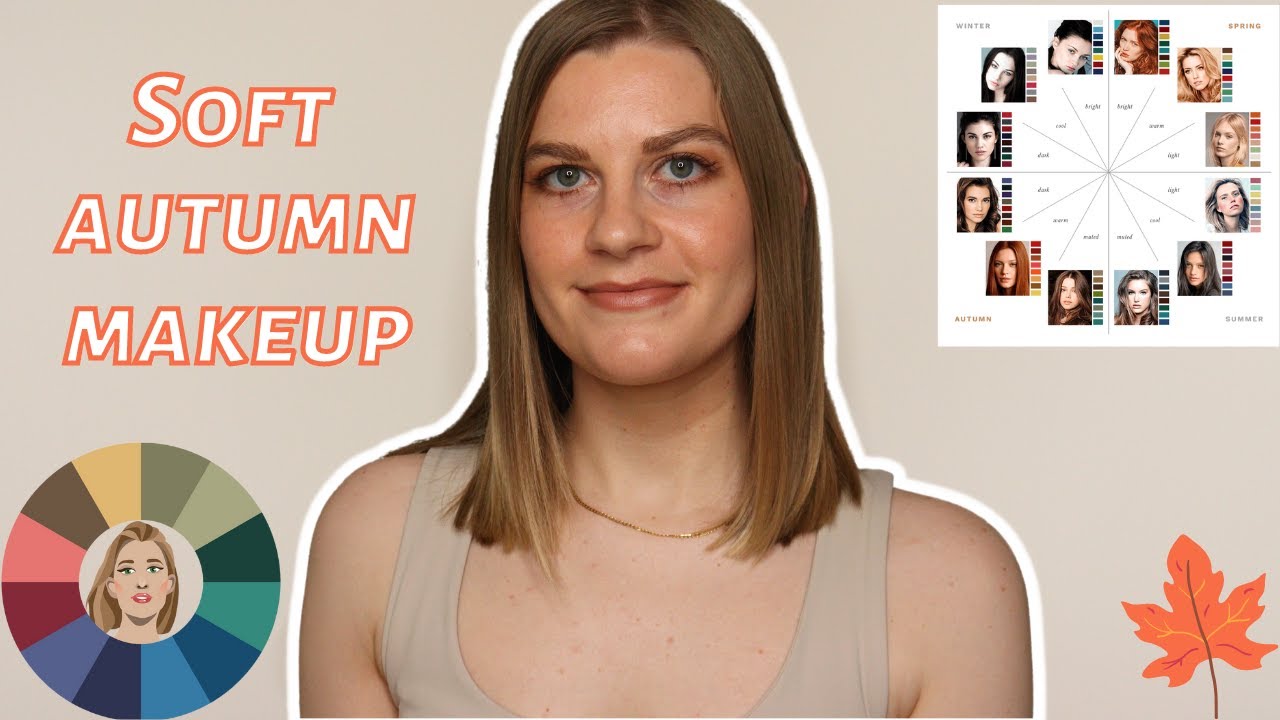
Neutral warm shades in matte or satin make the base. One muted accent that suits your eye color goes on top, and dark brown replaces black. Icy shades and high-chroma colors stay out.
| Eye color | Eyeshadow shades | Liner and mascara | Skip |
|---|---|---|---|
| Blue | Warm taupe, soft peach, copper-brown | Dark brown liner, brown mascara | Icy blue, silver |
| Green | Muted plum-brown, warm mauve, soft bronze | Espresso liner, brown mascara | Emerald, neon green |
| Brown and hazel | Olive, sage, satin warm bronze | Dark brown liner, brown mascara | Stark black, cool gray |
Blue eyes
Warm shades sit opposite blue on the color wheel, which makes the eyes look clearer. Keep them dusty, so warm taupe, soft peach or copper-brown.
The Concept Wardrobe flags icy colors as too cool and too harsh for this season, so silver and ice blue stay in the pan.
Green eyes
Muted plum-brown pulls out the green without adding contrast. Warm mauve gets you there more softly, and soft bronze is the quiet option for daytime.
Technique carries over from general eye makeup tips for green eyes, just in muted shades. Perfect Corp warns that high-contrast colors such as emerald green overpower the soft autumn palette.
Brown and hazel eyes
Olive, sage and bronze echo the green and gold in hazel eyes and the warmth in brown ones.
Urban Decay’s Naked3 palette is a useful test case. It holds 12 rose-hued neutrals, so it leans pinker than this palette needs, and only part of it works.
- Nooner (medium pinky-brown matte), Factory (pinky-brown satin) and Darkside (deep taupe-mauve satin) are fine to wear.
- Buzz and Mugshot (metallic shimmers) and Blackheart (smoky black matte with rosy red sparkle) are not.
Shade descriptions come from the Sephora UK listing. More makeup ideas for hazel eyes help when the flecks of green or gold shift in different light.
Liner, mascara and brows
Black is the one swap that changes the look the most. Eyeliner goes dark brown or espresso, smudged along the lash line instead of winged. Mascara is brown. Brows stay soft brown, close to your hair color, filled lightly and never stark.
Curate Your Style lists black among the colors that weigh down soft autumn features, and dark brown does the same defining job without the weight.
Which Blush and Lipstick Shades Suit Soft Autumn?
Blush stays in muted peach, soft berry or terracotta. Lips lean nude, rose-brown or muted plum-pink, in a matte or satin finish. This palette has little saturation to hide behind, so a wrong color shows immediately (The Concept Wardrobe).
Blush
Paris Select Book’s coverage of the 2026 autumn transition points the same direction, with sheer washes of soft brown, understated burgundy or terracotta on the cheeks.
Rare Beauty’s Soft Pinch Liquid Blush comes in 13 shades in matte and dewy finishes (Space NK listing, as of October 2026; other retailers list more, so check the current range). Joy is a muted peach, Hope a nude mauve and Encourage a soft neutral pink (Rare Beauty), and all three sit in the dewy group. So you end up choosing between the right color and the right finish.
NARS Orgasm is a peachy pink with golden shimmer. The powder carries noticeable shimmer while the liquid version is subtler (Lookfantastic’s NARS listing), so the liquid fits a low-shimmer palette better.
Lipstick

Neutral lipsticks do the most work for this palette, and very bright or overly cool shades look clownish (The Concept Wardrobe).
MAC Cosmetics describes Velvet Teddy as a balance of pink, peach, brown and nude tones in a matte finish, which puts it squarely in range. Choosing a nude lipstick from there is a matter of how much pink or brown you want.
Priceline’s autumn roundup recommends a berry lip, but cool berries pull blue against warm-neutral skin. A soft berry or rose-brown does the same job without the chill.
Finish matters less than shade here. How matte and satin lipsticks compare comes down to comfort against wear time, and either one suits the palette.
Shades That Wash Out Soft Autumn Coloring (and What to Wear Instead)

Brightness, coolness, contrast and shine each break a different dimension of the palette, so the fix depends on which one a shade violates.
| Problem | Shades and products | What goes wrong | Wear instead |
|---|---|---|---|
| Brightness | Neon pink, vivid true red, high-chroma shadow | Adds saturation the coloring lacks | Muted rose, brick, soft deep berry |
| Coolness | Icy pastels, blue-based pinks | Fights the warm-neutral undertone | Dusty peach-pink, golden brown |
| Contrast | Black liner and shadow, stark white highlighter | Splits the features apart | Brown, taupe, warm grey |
| Shine | Lip gloss, glitter, dewy base | Reads as extra brightness | Satin base, matte lip |
Perfect Corp sorts the colors soft autumn avoids into bright and vivid, cool-toned and high-contrast groups. Shine is the fourth problem, and it comes from The Concept Wardrobe, which says shiny finishes, lip gloss and shimmer can overwhelm a muted appearance.
Red is the hardest family to shop. The Concept Wardrobe points dramatic lips toward reddish browns instead of true red, and telling a cool red from a warm one is the first filter.
A few exceptions hold up. Light shimmer in blush and eyeshadow is fine, though chunky sparkle is not. Shimmer in general becomes more wearable after dark. Bronzer stays, but the orangey tones made for true autumn do not.
A wrong shade is obvious on this palette because there is no saturation to hide it, per The Concept Wardrobe. Work out which dimension a product breaks and swap only that.
How to Build an Everyday Soft Autumn Makeup Look

Build it in thin layers from base to lips, blending every edge as you go. Soft autumn coloring shows harsh lines quickly, so soft edges matter more than coverage.
Skin products go on before color, and creams before powders, which is the usual logic behind layering makeup in the right order.
- Put on a thin layer of satin foundation with a light yellow undertone, plus concealer only where needed.
- Add a dusty bronzer, or a powder slightly darker than the foundation, and blend until no edge shows.
- Dot peachy pink or russet blush high on the cheeks and blend it well.
- Fill the brows lightly with soft brown.
- Sweep one beige or taupe wash across the lid, then add brown liner or eye powder for definition.
- Use soft brown or warm grey mascara, nothing too rich.
- Finish with a lip shade close to your natural lip color.
Step choices come from The Concept Wardrobe’s complexion, eye and cheek guidance for this season, including the powder substitute for bronzer.
For a faster routine, a general everyday makeup routine works as the skeleton once these shades replace the defaults.
The short version is base, blended bronze, blush, mascara and lip. Skip the eyeshadow, since The Concept Wardrobe keeps eye makeup to a minimum in a natural look.
The most common error is stacking warm products until the face turns orange. The Concept Wardrobe ties orangey tones to true autumn, so bronzer, blush and lip should not all lean warm at once.
Taking Soft Autumn Makeup to Evening, Smoky Eyes and Weddings
Evening intensity comes from depth and blending, not extra saturation. The Concept Wardrobe suggests a brown smoky eye or soft, deep berry lips, and it allows shimmer once the light drops.
Evening and smoky eye
Dim light reflects less intensely, so shimmer reads gentler at night than it does in daylight (The Concept Wardrobe).
KIKO’s autumn guide gives a workable smoky-eye frame. Start with a nude base, then layer two or three shades of one color at different intensities, with the darkest at the inner and outer corners.
- Nude shadow across the lid
- Brown blended into the corners
- A smoky pencil on the upper and lower lash lines, blended out
The mechanics match standard smoky eye makeup basics, with brown doing the job black usually does.
Beaut.ie recommends a blending shade with an orange-yellow undertone to soften dark brown edges. Keep it golden-neutral here, not orange.
Accent color is allowed too. The Concept Wardrobe lists soft reds, pinks, purples, blues and greens from the accent area of the palette, as long as they stay soft.
Wedding makeup
A daytime ceremony calls for a matte lip and minimal shimmer. By the evening reception, shimmer on the lids and cheeks becomes an option.
That split applies the night rule above to a wedding schedule. Arabia Weddings pairs a brown smoky eye with nude or soft pink lips for fall brides and recommends a full trial before the day.
Woodhall Manor’s planners suggest Charlotte Tilbury’s Matte Revolution in Glastonberry for an autumn wedding berry lip. Charlotte Tilbury now sells that shade as Festival Magic, a muted berry purple. Muted purple can read cooler than a soft berry, so swatch it against your skin first.
Slashed Beauty’s own fall-bride tutorial dropped a deep burgundy lip for a neutral one to avoid constant touch-ups. Wear time belongs in the lip decision.
Beyond color, wedding makeup planning adds logistics like photos and timing.
Where to Find Soft Autumn Shades at Every Price
Finish comes first when shopping, then undertone, then saturation. The brand matters less than the shade. A drugstore line works when its shades are muted, and a prestige line fails when they are not.
What a drugstore line offers
Maybelline’s US site lists 20 shades of Super Stay Teddy Tint, including 10 added nudes, while Kroger’s listing still shows the original 10 (as of October 2026).
It works on lips and cheeks with a blurred matte finish, and one swipe stays sheer while three build to bold, per Maybelline. Layering thinly, as in using Teddy Tint step by step, keeps it inside the palette.
Maybelline’s own shade guide describes Mascara Tear as a deep cool nude and Wild at Heart as a deep berry red-pink. The nude end fits better, but because Maybelline calls Mascara Tear cool, swatch it against warm-neutral skin first.
Where budget ranges fall short
- Super Stay Matte Ink is sold as a super-saturated liquid lipstick in 36 shades, so only the nude and earth-tone shades fit.
- Fit Me Matte + Poreless mattifies for normal to oily skin, which sits past the satin foundation finish The Concept Wardrobe prefers.
- Shade range varies by market, with Fit Me at 40 shades on Chemist Warehouse’s Australian page and 18 on Maybelline India’s page.
Long-wear liquid formulas also need a proper remover. Maybelline pairs Matte Ink with its SuperStay Eraser, and removing Super Stay Matte Ink goes faster with a dedicated product.
A shopping rule that works at any price
Maybelline India advises swatch testing or its virtual try-on before buying foundation. The same habit protects every product here.
Check the finish, then the undertone, then how saturated the shade looks on skin.
Soft Autumn Makeup Looks FAQ
Is muted autumn the same season as soft autumn?
Usually yes. Curate Your Style notes that some analysts call this season muted autumn or toned autumn.
Product lines labeled muted autumn are not standardized, so check that the shades are muted and not only warm.
How reliable is AI color analysis for confirming a soft autumn season?
Less reliable than professional draping. House of Colour says screens distort color, and Kettlewell Colours found inconsistent results from the apps it tested, even under studio lighting.
Soft autumn and soft summer are the most commonly confused pair, so a borderline result needs draping on makeup-free skin.
Can soft autumn makeup work on mature skin?
Yes, because the palette follows coloring and not age. The one point of conflict is lip finish. The Concept Wardrobe recommends matte, while West Cork People calls matte lipsticks drying on mature skin.
A muted cream or satin lip is the workable middle. Cream blush also blends without folding into lines.
Does a summer tan change which shades suit soft autumn?
No, the palette stays and only the complexion match moves. The Concept Wardrobe places soft autumn skin anywhere from fair to tan and says foundation and concealer should be color-matched to your own skin.
Re-match foundation to the tanned skin, then re-check blush and bronzer against it.
How to Check Soft Autumn Shades in Daylight
Soft autumn makeup looks pass a daylight check when the color sits inside the skin instead of on top of it. A cheek or lip shade that reads as a visible layer fails.
Test bare skin beside a window first, then blush and lip one swatch at a time, and eyeshadow last.
Eyes go last because they draw on a wide range of beiges, taupes, khakis and browns, while blush and lip draw on the narrower pink and plum areas of the palette (The Concept Wardrobe).
The trade-off is drama. Muted pigment gives up the bold lip and the high-impact cheek.
Brand shade lists and finish ranges change at relaunch, so recheck any named product against its current listing. This position was verified in October 2026.

She started writing on the site after fielding the same questions from clients and friends often enough to just write the answers down: which red won't turn orange on a warm undertone, how to keep lipstick from feathering into fine lines, why a "12-hour" formula rarely survives dinner.
Every review on the site follows the same rule she uses with paying clients: wear it first, then decide if it's worth recommending.
- How to Make Eyeliner Last Longer Without Smudging - August 31, 2026
- How to Make Eyeshadow Last Longer All Day - August 29, 2026
- How to Find Your Undertone in 5 Easy Steps - August 27, 2026