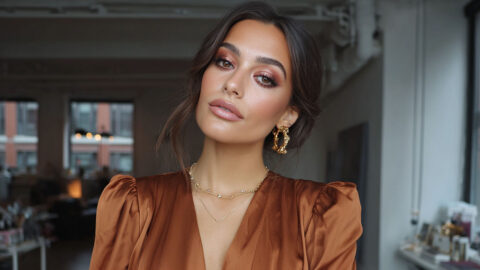
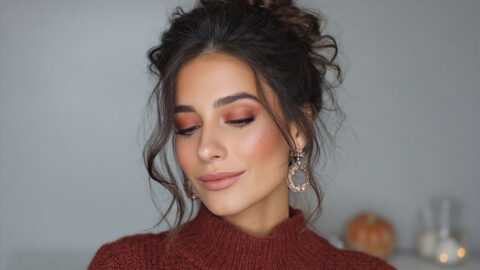
A hazel iris is rarely one color. Green and brown are usually in there, with gold somewhere near the pupil, and the shadow you wear decides which one gets noticed. A shade from the opposite side of the color wheel brightens a tone, and one from right beside it makes that tone deeper.
Hazel isn’t rare, at least in the United States. A 2014 American Academy of Ophthalmology survey of more than 2,000 Americans put it in third place at 18%, behind brown (45%) and blue (27%).
According to the Academy, the color comes from melanin. A hazel iris mixes several tones, so it can look different from one lighting setup to the next, and eyeshadow, liner and mascara placed right beside it move things around even more.
Why Hazel Eyes Change Color With Makeup and Light
Which tone dominates depends on the light and on whatever colors sit next to the eye.
Cleveland Clinic places hazel in the middle: less melanin than a brown iris, more than a blue or green one.
The pigment isn’t spread evenly, either. Plenty of hazel irises run one hue around the pupil and another out at the rim, a gradient Warby Parker’s hazel eye guide says can create a sunburst effect.
Light scattering matters most where melanin is thin. The American Academy of Ophthalmology compares the blue in blue eyes to the way water and the sky get their color. Hazel irises hold more pigment, so scattered light is only part of the picture.
The iris itself doesn’t change. What shifts is the tone your eye lands on, and shadow around the eye pushes that tone one way or the other. Charlotte Tilbury’s 2026 guide says the shade you wear decides which part of the iris shows most.
Some hazel eyes lean green, with a green ring or wash and gold closer to the pupil. Others lean gold, which reads as amber or honey and looks warm in nearly any light. And plenty are mostly light brown, with green flecks out at the edges.
Check yours by a window in daylight, with no makeup on. The tone that covers the most area is the one to target first.
How the Color Wheel Picks Shades for Hazel Eyes
Start by deciding which tone you want to see more of. From there you can go to its neighbor on the color wheel, which makes the tone richer (that’s an analogous pairing), or to its opposite, which makes it brighter.
Purple sits opposite yellow, so plum and violet push the gold in a hazel iris forward. Charlotte Tilbury makes this case for purple shadow directly.
Red sits opposite green. That is why Clinique points to pinks and berries with red undertones for the green and yellow specks.
Sources don’t fully agree on greener irises, though. Charlotte Tilbury recommends green shadow to echo the green flecks, and Clinique goes the other way with red-toned berries to contrast them.
Both routes work, and they do different jobs. Matching deepens the green. Contrasting separates it from the brown around it.
Matching is the quieter route. Green shadow over green flecks, or gold and bronze over gold and brown, and you end up with a richer eye that’s lower in contrast. Going the other way, plum and violet sit against gold, and berry and burgundy sit against green.
When two tones compete, target the one that covers more of the iris.
Green-dominant irises borrow a lot from looks designed for green eyes, so it pays to compare notes.
Which Eyeshadow Colors Suit Hazel Eyes?

Hazel eyes take warm metals well. Plum and olive green change the look the most, and warm browns hold the middle ground. What each family lifts is in the table.
| Shade family | Tone it lifts | Finish and placement |
|---|---|---|
| Bronze and gold | Gold flecks, brown | Metallic or satin, center of lid |
| Copper and terracotta | Brown, warm gold | Satin on lid or soft wash in crease |
| Plum and violet | Gold, by contrast | Matte in crease, shimmer on lid |
| Olive and forest green | Green flecks | Satin lid or outer corner |
| Warm taupe and soft brown | Brown, everyday depth | Matte crease and outer corner |
Brand tutorials from Clinique and Charlotte Tilbury follow the same placement logic. The deeper or metallic shade goes on the lid, and a medium shade goes in the crease and blends upward.
Shades That Bring Out the Green
Olive and forest green echo the green flecks. Charlotte Tilbury favors rich, golden greens, and Woman & Home pairs a smoky olive with green and brown eyes.
Berry and burgundy go the contrast route, which also warms the brown. Charlotte Tilbury says burgundy sets off any green tones in the iris.
If the flecks run brown, blue or green, Clinique recommends blues and greens, and teal fits in there too.
Clinique’s hazel eyeshadow guide uses the deep green in its All About Shadow Quad in On Safari for a smoky eye, swept over liner on the lid.
Pick one of these, not all of them.
Shades That Bring Out Gold and Brown
Gold and bronze metallics make the brown tones in hazel eyes look golden, according to Charlotte Tilbury.
That makes warm metals the lowest-effort choice for gold-dominant and brown-dominant irises. Copper does the same job with a redder cast.
In practice that means a bronze or gold metallic across the lid and copper or terracotta through the crease. If you’d rather contrast the gold than echo it, plum or violet does that.
Plum is the contrast route, and purple-toned eye looks run from soft lilac to deep aubergine. Charlotte Tilbury points to the plum end of that range for making gold flecks stand out.
Urban Decay’s Naked Heat palette is built around this family. It holds 12 amber-toned neutrals, including a red-brown matte plus a copper and a bronze, though Urban Decay lists it as discontinued, so check retailer stock first.
Neutral Shades for Everyday Wear
A neutral eye is the easiest hazel look to wear daily. Warm taupe, soft brown, champagne and matte nude all work.
Woman & Home calls matte nude one of the truly universal colors for hazel eyes and suggests taupe in cooler months.
Warm browns echo the gold. Cool-toned browns separate from it instead, which is the route Charlotte Tilbury favors for contrast. Both hold up.
One palette is enough here. These neutral makeup ideas show how far two or three browns can go.
Matte, Satin and Metallic Finishes
Matte shadow belongs in the crease and at the outer corner, where it adds depth without competing with the iris. Metallics and shimmer go in the center of the lid. They catch light, so gold and green flecks read brighter.
Charlotte Tilbury’s bronze look follows this split: a matte brown sculpts the crease, and a shimmering bronze covers the lid.
Shimmer also exaggerates lid texture, so keep it to the center if your lids are creased.
Eyeliner and Mascara Colors That Work on Hazel Eyes

Brown liner and black mascara are the safe default for hazel eyes. A colored liner is the quickest way to move the iris toward green or gold.
Maybelline UK’s hazel eye guide says black liner intensifies the lash line and suits both structured and smoky looks.
Brown liner gives a soft edge that keeps attention on the iris, though it won’t give you much drama at night. Black gives the sharpest definition and holds wings and smoky edges well. It can feel heavy along the full lower lash line, and in daylight.
Colored liner in plum, forest green, teal or cobalt points the eye at one tone, and turquoise against the green is the example Woman & Home gives. The catch is that strong color pulls attention to the line itself, so keep it thin or smudged.
Makeup.com’s 2023 hazel eye roundup pairs a cobalt wing with NYX Epic Wear Liquid Liner in Sapphire, which it describes as waterproof.
A kohl pencil smudges into a soft smoky edge and works on the waterline, while gel liner draws a sharper line. Clinique rates its High Impact Gel Tech Eyeliner at 24-hour wear on lids and 12-hour wear on the waterline (a brand claim, not an independent test).
Tightlining the upper lash line adds definition with no visible line, which suits daytime hazel looks.
No mascara shade is made for hazel eyes. Black gives volume and contrast, and brown softens a natural look.
On the lower lash line, keep the liner thin and to the outer third. Clinique’s dramatic-eye tutorial tapers it from thick at the outer corner to thin toward the inner corner so the eye does not close up.
Maybelline UK also suggests skipping bottom mascara for a lifted, low-effort finish.
Hazel Eye Makeup Looks, From Natural to Smoky
The same palette reads differently depending on where the shade sits, and that’s most of what separates a natural look from a smoky one. These run roughly from least effort to most.
Natural Daytime Look

Natural means one or two shades, a soft liner and mascara.
Woman & Home’s version is a wash of light brown across the lid, a soft brown liner for shape and black or brown mascara.
On green-dominant eyes, Maybelline UK says olive, taupe or dusty rose lift the green without overpowering it. Gold or brown-dominant eyes do better with caramel, soft gold or cinnamon, which echo the warmth.
Maybelline UK’s daytime routine runs five steps: champagne shimmer across the lid, soft beige or taupe in the crease, a tightlined upper lash line, mascara in Green Altitude and a dab of shimmer in the inner corner.
The lowest-effort version skips the crease and uses a single wash, the way these natural makeup ideas do.
Soft Glam
Soft glam is the natural look with shimmer, a defined liner line and fuller lashes.
A copper, bronze or rose gold wash goes over the lid, with matte taupe or warm brown through the crease. Liner stays thin, or gets a small flick at the outer corner. Finish with volumizing mascara and a bright inner corner.
Woman & Home’s copper glam is the easiest way in: one wash of copper over the lid, then black liquid liner for drama or a bright inner corner for lift.
The same guide says copper flatters the green, brown and gold in the iris, which makes it the safe default when no single tone leads.
Smoky Eye
Smoky just means the shadow is smudged along the lash line and blended up into the crease. The color is up to you.
Celebrity makeup artist Gina Brooke told Huda Beauty in 2019 that she sweeps copper with a splash of yellow onto hazel eyes for her smoke. She then lines the waterline with black pencil and finishes with brown mascara that has shimmery flecks.
A warm smoke uses copper, bronze or burgundy, which lift gold and brown. Woman & Home blends brown transition shades into red wine tones for its burgundy version. A cool smoke goes grey and black, a pairing Woman & Home calls an instant pop for hazel eyes, with shimmer over the lid for evening.
First attempts go better with a step-by-step smoky eye tutorial open beside the mirror.
For less effort, Woman & Home suggests a one-shade bronze smoke from a stick or pencil, buffed out with a finger, then a fresh layer of color on the lid to restore it.
Cut Crease and Halo Eye
A cut crease is a darker crease shade blended upward, with a lighter cream shadow or concealer carved across the lid beneath it. Makeup artist Caroline Forrest told Marie Claire UK that the crease color must be darker than the lid color. Lancome’s guide uses concealer as the cutting tool, swept outward with an angled brush.
The halo eye flips the logic. A deeper shade goes on the inner and outer corners, and a lighter shimmer gets pressed onto the center of the lid (Huda Beauty). On hazel eyes, plum or bronze corners with gold or champagne in the center keep the lid in the gold family and add contrast at the edges.
Covergirl’s cut crease tutorial with makeup artist Safai Kelly combines the two, brushing champagne at the top center of the eye for a halo cut crease.
The halo is the more forgiving look. Makeup.com calls the cut crease an Olympic-level eyeshadow look and recommends a half cut crease, defined on only half the eye, for newer hands.
How to Apply Hazel Eye Makeup Step by Step

The order matters more than any single shade. Matte goes down before shimmer and soft before defined, so each layer sits on a clean base.
- Prime the lids with a thin layer and let it dry for a minute or two (Red Apple Lipstick’s tutorial).
- Sweep a soft matte taupe or brown through the crease with a fluffy brush and blend upward.
- Deepen the outer corner with matte espresso, plum or deep brown, blending the edge into the crease.
- Pat a metallic or satin shade across the center of the lid with a flat brush or a fingertip.
- Repeat the crease shade along the outer half of the lower lash line with a small brush.
- Tap away any fallout with a clean brush, then line the upper lash line, brown or black depending on the look.
- Place a dot of champagne or pale gold in the inner corner.
- Coat the lashes: one or two light coats for day, two to three for evening, with extra product on the outer lashes (Maybelline UK).
- Check the finished look beside a window before leaving the mirror.
An eyeshadow primer keeps shades from creasing and gives pigment something to grip.
For smoky variations the order flips. Clinique’s smoky-eye tutorial lines the upper and lower lash lines first, lays the deep shadow over the liner so it smudges, then blends a medium shade into the crease.
A fluffy blending brush handles the crease and outer corner, and a flat brush or a fingertip handles the lid. The lower lash line and inner corner need something small, like a pencil or round brush. A lash comb is worth having for separating coats.
Most mistakes are easy to spot. Hard edges where shades meet get fixed by blending with a clean brush and no new product. Fallout from the metallic lid is why it gets tapped away in step six, before the liner goes on. Clumped lashes get a lash comb between layers, per Maybelline UK.
Mascara goes on last, and applying mascara cleanly comes down to wiggling the wand at the lash base, then combing through.
Does Skin Tone, Hair Color or Occasion Change the Look?
Skin tone and hair color change the depth and warmth of the look, and the iris still sets the hue. Occasion mostly decides how much contrast and staying power you need.
Skin Tone

Who What Wear’s makeup artist panel says skin undertone, whether warm, cool or neutral, shapes which shades flatter beyond eye color.
For the lid base, Lancome’s cut crease guide uses a neutral that closely matches the skin. In the crease, Makeup.com’s half cut crease tutorial uses a neutral one to two shades deeper than the skin.
On deeper complexions the same ladder applies, and general advice on makeup for dark skin covers the base and contour choices around the eye. The hazel shade families slot into that structure unchanged.
Hair Color
Hair color has far less published guidance than skin tone, so treat this as a working rule, not researched fact.
Warm hair (brown, auburn, golden blonde) sits in the same palette as warm browns, copper and bronze. Ash or platinum hair does better with taupe, cool browns or plum, which keep the palette consistent.
Woman & Home adds that peach and orange tones suit brown eyes and brown hair together.
Weddings and Evening Events

Charlotte Tilbury’s 2023 wedding guide builds the bridal eye from pearlescent, rose-gold and warm brown shades, with a champagne liner to open up the eyes and a black feline flick.
For guests, the same guide offers a modern matte smoky eye.
Brides weighing options can browse a wider set of wedding makeup looks before settling on one.
Primer goes under every shade, and Maybelline UK recommends a waterproof formula to keep liner in place all day. For evenings, a halo or cut crease works because the contrast carries across a room.
When Common Hazel Eye Makeup Advice Fails
Advice fails when it ignores which tone dominates the iris or the undertone of the shade itself. Brand guides often make opposite claims about the same shadow, and both can be right.
| Shade | Claim A | Claim B | What decides |
|---|---|---|---|
| Bronze | Makes brown read golden (Charlotte Tilbury) | Gold-toned bronze lifts green (Woman & Home) | Shimmer reflex and undertone |
| Purple | Contrasts green (Maybelline UK) | Contrasts gold (Charlotte Tilbury) | Which tone dominates |
| Taupe | Purple-toned lifts green (Woman & Home) | Bronze-toned or grey lifts brown (Woman & Home) | The taupe’s undertone |
Woman & Home says a bronze’s effect depends on its glitter reflex and deeper undertone. That one sentence explains most of the disagreement.
Red Apple Lipstick advises against matching shadow exactly to the eye color, which cuts against the easy “match your eyes” rule.
Blanket bans on blue don’t hold up either. Charlotte Tilbury and Woman & Home endorse blues or cool tones for hazel eyes, and makeup artist Katie Jane Hughes (via Who What Wear) lists blue among the jewel tones that look incredible on hazel.
If the iris is evenly mixed with no leading tone, Woman & Home says layered beiges bring warmth and lift both green and brown, so choose by occasion.
Lighting muddies all of it. Maybelline UK notes hazel eyes seem to change with light, outfit and makeup, so a look judged in one light can read differently in another.
Treat any “brings out green” claim as relative contrast, not a guarantee.
Swatch the shade on the lid and check it beside a window and under indoor light before committing to a full look.
Hazel Eye Makeup FAQ
Why do sources disagree on how rare hazel eyes are?
Each figure counts a different population. The American Academy of Ophthalmology’s 2014 survey covers only Americans, while global estimates, such as the 5% Woman & Home quoted in 2024 without citing a source, include regions where brown eyes dominate.
On those figures, hazel is far more common in the United States than worldwide.
Do glasses change which shades work on hazel eyes?
Yes. Frames work like an outfit color beside the iris, and Maybelline UK notes hazel eyes shift with the colors around them.
Test shades with the frames on. Lens strength also changes how large the eye looks, so check liner thickness the same way.
Which affordable palettes suit hazel eyes?
Maybelline UK builds its daytime hazel look on The Nudes palette, using a champagne lid and a beige or taupe crease.
For a greener effect, Who What Wear picked ColourPop’s Wine & Only palette of deep merlots and sparkling rosés. Choose neutrals for gold and brown tones, berries for green.
What blush and lipstick colors go with hazel eyes?
Warm ones. In Huda Beauty’s hazel eye guide, makeup artist Gina Brooke recommends warm tones and a blush and highlighter combination to flatter the eyes, and makeup artist Mary Wiles suggests a bright coral orange lipstick for more impact.
Which waterline pencil color works best with hazel eyes?

It depends on the effect. Brooke lines the waterline with black to intensify the edges of the eye, and Wiles uses a khaki pencil to flatter brown flecks.
Charlotte Tilbury’s wedding guide uses a champagne liner to open up the eyes. Use a soft pencil, and apply it while looking down.
Does eyeshadow primer change how shades look on hazel eyes?
Yes, mostly by evening out the lid. Birchbox’s halo-eyes guide describes a multitasking eye primer as creating a smooth surface, evening out discoloration and keeping shadow in place.
The shade on the lid then looks closer to the shade in the pan, which matters most for metallics and plums.
Which Hazel Eye Makeup Look Suits Beginners Best?
Beginners should start with the natural wash: one matte taupe or warm brown across the lid, soft brown liner and brown mascara. A single neutral keeps green, gold and brown all in play while technique develops.
Change one variable at a time, because that shows which shade produced the result. Begin with the neutral wash on the lid, then add a deeper crease or outer corner, and only after that bring in a single shade family, plum for green or copper for gold.
What you give up is contrast. Neutrals are the safest choice, yet they deliver the least color separation, so the iris stands out less than it does under plum or copper.
Last checked October 11, 2026. This advice changes only if one iris tone clearly dominates in daylight, at which point that tone’s shade family replaces the neutral.

She started writing on the site after fielding the same questions from clients and friends often enough to just write the answers down: which red won't turn orange on a warm undertone, how to keep lipstick from feathering into fine lines, why a "12-hour" formula rarely survives dinner.
Every review on the site follows the same rule she uses with paying clients: wear it first, then decide if it's worth recommending.
- How to Make Eyeliner Last Longer Without Smudging - August 31, 2026
- How to Make Eyeshadow Last Longer All Day - August 29, 2026
- How to Find Your Undertone in 5 Easy Steps - August 27, 2026