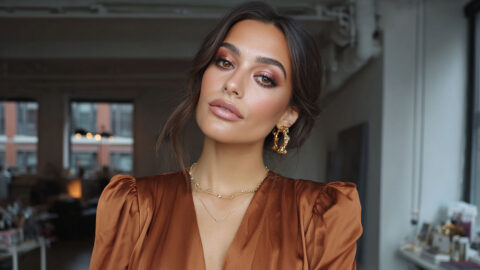
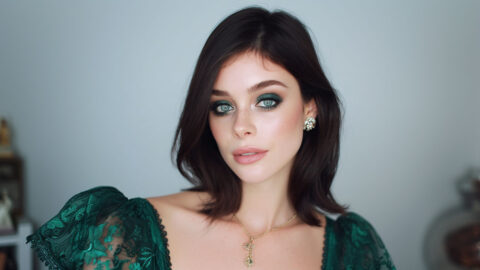
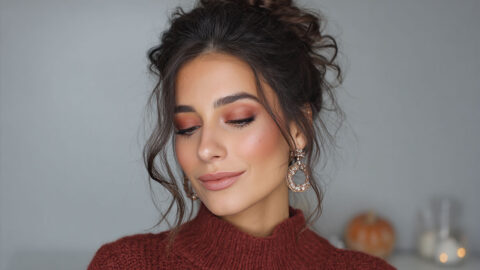
A purple dress narrows the color choices more than most people expect. Gold works. Silver usually doesn’t. Get the eyeshadow shade wrong and the whole face ends up fighting the dress instead of finishing it off.
Most makeup artists start from basic color theory here. Warm metallics like gold and bronze sit close to purple’s opposite point on the color wheel, so they read as contrast instead of clash. From there the choice narrows again based on skin tone, eye color, and how dressed up the event actually is.
WGSN and Coloro named Fresh Purple one of five Key Colours for the Autumn/Winter 2026/27 season (WGSN, 2024). Purple isn’t just a once-a-year prom color at this point. It’s showing up in formal wardrobes on a longer cycle than that.
What Is a Purple Dress Makeup Look?
The dress sets the direction, and everything else (the exact shade of purple, your own skin tone, how dressed up the event is) gets decided against it.
Most versions of this look reach for warm metallics like gold, bronze, and copper, since those sit close to purple’s opposite point on the color wheel. A smaller group skips the contrast altogether and goes tonal instead, pairing purple eyeshadow or a plum lip with the dress rather than working against it.
Oprah Winfrey went tonal at the December 2023 world premiere of The Color Purple, wearing a custom Dolce and Gabbana purple gown with smokey purple eyeshadow and a plum lip instead of gold (Yahoo Entertainment, 2023).
Both count as a purple dress look. Contrast just happens to be the version most makeup artists reach for first.
Why Gold and Bronze Tones Complement a Purple Dress

Purple and gold aren’t just a stylish pairing. They sit on opposite sides of the color wheel, which is exactly why they read as such strong contrast against each other. Colors near opposite points intensify one another instead of blending in, and that’s the whole mechanism behind why a bronze eye makes a purple dress pop instead of disappearing into it.
Color theorists have a name for this: complementary colors. Purple sits opposite yellow on the traditional twelve hue color wheel, the exact position that defines a complementary pair (Britannica). The effect itself has a name too, the law of simultaneous contrast, first described by the nineteenth century chemist Michel-Eugene Chevreul (Britannica).
The color world has been leaning into violet tones for a while now. Pantone’s 2022 Color of the Year, Very Peri (17-3938), was a newly created periwinkle-blue shade with a violet-red undertone, one Pantone said was inspired by trends in gaming, the metaverse, and digital design rather than pulled from an existing natural source (Pantone, 2021). Purple eye makeup showed up on the red carpet too. Amanda Seyfried and Da’Vine Joy Randolph were among three major stars wearing it at the 2024 Golden Globes, which pushed the color into mainstream red carpet beauty (Marie Claire, 2024).
Blue based purples, think violet or true lilac, sit closer to blue on the wheel. They pull best against a slightly cooler gold rather than a deep, orange-leaning bronze. Red based purples like plum and eggplant already carry some warmth of their own, so a heavier copper or bronze won’t turn them muddy the way it might on a cooler shade.
This same warm and cool logic shows up across most purple makeup looks, not just the ones built around a dress. It runs the other way too. Gold makeup looks pull their strongest partner colors from the purple end of the wheel.
Which Eyeshadow Shade Matches Your Purple Dress Shade

Undertone matters more than the color name on the tag. Two dresses can both get called “purple” and still pull different eyeshadow partners once you look at whether they lean warm or cool.
| Dress shade | Undertone | Eyeshadow shade | Finish |
|---|---|---|---|
| Lavender | Cool, blue leaning | Champagne, rose gold | Shimmer |
| Plum | Warm, red leaning | Copper, burnt orange | Matte or satin |
| Eggplant | Deep, warm | Gold, warm brown | Metallic |
| Violet or lilac | Cool, blue leaning | Soft gold, bronze | Shimmer or satin |
A dress that photographs more blue than purple under indoor lighting usually wants the lighter end of that range. Push too dark or too orange on a pale lavender dress and the eye makeup starts fighting the dress instead of finishing it.
Eyeshadow Palettes to Try for Each Purple Shade

For lavender, champagne and rose gold do the job without tipping into orange. Urban Decay’s Naked palette line sits comfortably in that range, and Anastasia Beverly Hills’ soft metals work too.
Plum calls for something heavier: copper or burnt orange. Too Faced Chocolate Bar builds a copper crease well, and Charlotte Tilbury’s warmer eyeshadow quads do the same thing.
Eggplant is dark enough to handle deep gold and warm brown without getting lost. Huda Beauty’s darker neutrals and Pat McGrath Labs metallics both carry enough pigment to hold up against a saturated dress like that one.
Violet and lilac stay lighter. A soft gold or bronze, a shade or two lighter than what you’d reach for on eggplant, keeps the cooler undertone from turning heavy.
Anyone leaning toward a lighter lilac dress can browse full lilac makeup looks for more shade pairings beyond just the eye.
Shimmer or glitter finishes work especially well on eggplant, since the deeper base color soaks up some of the shine instead of looking flat. Anyone new to applying glitter eyeshadow should pack it over a cream base rather than loose powder. Loose glitter over nothing tends to fall out by midnight.
Which Eyeshadow Shade Works Best for Your Skin Tone and Eye Color

Pigment behaves differently depending on skin tone. A gold or bronze shade that reads clearly on medium skin can wash out on fair skin or barely register on deep skin. Eye color shifts which side of that warm range looks strongest on top of that.
Fenty Beauty’s 2017 launch, which debuted with forty foundation shades and later expanded to fifty, is part of why this kind of tone specific advice is even possible at the range the beauty industry now offers (Well+Good, 2022).
Adjusting for Fair, Medium, and Deep Skin Tones
| Skin tone | Best eyeshadow range | Why |
|---|---|---|
| Fair | Champagne, rose gold | Deep bronze can look heavy and muddy the eye |
| Medium | Bronze to copper, full range | Matches the skin’s own warmth without adjustment |
| Deep | Rich gold, deep copper | Holds pigment instead of washing out under evening light |
If you’re not sure where your own coloring lands, matching makeup to skin tone is worth doing before committing to a specific palette.
Adjusting for Brown, Blue, and Green Eyes
- Brown eyes can go straight for warm gold, since there’s little color contrast to manage.
- Blue eyes tend to look better with a slight copper lean, which pushes gently against blue’s own coolness instead of fighting it.
- Green and hazel eyes already carry warm flecks, so bronze tends to pick those up nicely.
Brown eyes are the most common eye color worldwide, part of why so many makeup looks for brown eyes default to gold as a safe starting point.
Which Eye Makeup Technique Suits a Purple Dress Look

Smokey eye, cut crease, winged liner, halo eye, all four work fine with gold and bronze tones. Which one you actually pick comes down to the event more than the dress itself. A photographed, high stakes evening calls for more precision than a casual daytime version of the same colors.
Smokey Eye
Layered gold and bronze shadow, blended out until there’s no hard edge left, holds up under low light and camera flash better than almost anything else here. Building a proper smokey eye takes patience with blending, since the whole point is a soft gradient rather than a visible line.
- Pros: forgiving on eye shape, photographs well, easy to soften if too intense
- Cons: takes longer to blend, needs a light hand to avoid looking muddy by midnight
Cut Crease
A sharp line separates the lid color from the crease color, giving a more editorial finish than a blended smokey eye.
- Pros: sharp, photograph ready definition, strong choice for prom or a shoot
- Cons: unforgiving of a shaky hand, harder to fix once the line sits wrong
Winged Liner
A thin wing adds definition without covering the whole lid, which keeps things lighter for a daytime version of the same dress. Getting a clean winged eyeliner shape usually comes down to short strokes rather than one continuous line.
- Pros: quick to apply, works day or evening, low maintenance
- Cons: less dramatic than a full lid of color, can smudge without a waterproof formula
Halo Eye
Shimmer sits concentrated at the center of the lid and fades toward the outer corners, giving a lighter option for anyone who wants some shine without committing to a full smokey base.
- Pros: subtle, brightens the eye, faster than a full smokey eye
- Cons: less impact from a distance, not built for the boldest formal events
What Lip and Cheek Color Pairs With a Purple Dress

Nude and mauve lips let a bold gold eye stay the focal point. Berry and red work better when the eye makeup stays subtle instead. Both features rarely go bold at the same time without one of them getting lost in photos.
Nude or mauve pairs with a bold, fully built smokey eye or cut crease. Berry or red suits a lighter winged liner or halo eye better. Warm brown or terracotta sits in the middle, flexible enough to bridge either eye style without competing with it.
Picking the right shade gets easier once you think about the whole outfit instead of the lip color on its own, which is basically the idea behind choosing a lipstick color for your outfit.
Blush and highlighter need to stay warm too, or they end up looking mismatched against a gold or bronze eye. A warm peach blush matches gold-toned eye looks better than a cool pink does, and a warm gold or champagne highlighter keeps cheekbones from clashing with the metallic eyeshadow.
NARS’s famous Orgasm blush is actually a warm peachy pink with golden shimmer, which is why it pairs so easily with a warm gold eye. It’s the brand’s genuinely cool-leaning pink shades that can fight a warm gold eye instead of finishing it, so check the undertone on the specific shade before assuming any pink blush will work.
Rare Beauty’s Soft Pinch Liquid Blush, part of the brand’s 2020 launch, has a cream-like finish that blends sheer rather than sitting on top of foundation, which keeps a warm cheek from competing with a bold gold eye.
Where blush actually sits changes by face shape, and getting that placement right matters almost as much as the shade itself. That’s covered in more detail under applying blush by face shape.
Which Makeup Look Fits Which Occasion
The same gold and bronze pairing scales up or down depending on how formal the event is and how much attention the makeup is allowed to take.
| Occasion | Intensity | Focus |
|---|---|---|
| Prom | Bold, fully built | Saturated eye, matching lip |
| Wedding guest | Moderate | Softer eye, neutral lip |
| Formal evening | Bold to moderate | Deepest bronze, smokiest eye |
| Daytime event | Subtle | Matte warm tones, minimal shimmer |
Budget matters here too. Professional application isn’t cheap for a single event, and the average cost for a professional prom makeup artist runs about $80, typically covering eyes, lips, and cheeks in one sitting (Fash, 2026). Anyone shopping specifically for that event can start with prom makeup looks built around this exact color logic.
Wedding guest makeup follows a different rule. Soften the eye, keep the lip closer to neutral, and let the dress carry the color instead of the face. A full set of wedding makeup looks covers that balance in more depth, including options built around other dress colors.
Formal evening events, galas, black tie dinners, support the deepest bronze and the smokiest eye of anything on this list.
Daytime versions of the same look drop the shimmer almost entirely and lean on matte warm tones instead. Direct sunlight makes heavy shimmer look greasy rather than glowing, which is the whole reason for the switch.
How to Apply a Purple Dress Makeup Look
Order matters more than which products you actually own here.
Most women who wear makeup spend 20 minutes or less on a regular routine, with 45 percent finishing in under 10 minutes, according to YouGov (2023). A full purple dress look for a formal event runs longer than that, since it layers base, eye, and lip work that a daily routine just skips.
Here’s the order that actually holds up.
- Prep skin with moisturizer, then follow with a primer suited to your skin type
- Build foundation and concealer in thin layers instead of one heavy pass
- Apply eyeshadow primer, then build the gold or bronze shade from lid to crease
- Add liner and lashes based on whichever technique you picked: smokey eye, cut crease, winged liner, or halo eye
- Fill in brows and set them so they hold through the night
- Apply blush, highlighter, and bronzer in that order, warm tones only
- Finish lips last, once you can see how the eye and cheek balance out
- Lock everything in with a setting spray over the whole face
Skipping straight to eyeshadow without a base coat is the single most common shortcut, and it’s usually the reason the look doesn’t survive past hour two.
Bobbi Brown’s Long-Wear Eye Base is formulated to extend eyeshadow wear by up to 8 hours over bare lid application, according to the brand’s own product claims. That kind of gap is the difference between makeup that holds through a formal dinner and makeup that needs a midway touch up.
The category built around that exact problem isn’t small either. The global setting spray market was valued at $966.4 million in 2023 and is projected to reach $1.73 billion by 2030, tracking rising demand for makeup that survives a full night out (Grand View Research, 2024).
Anyone building the base layer of this look from scratch can start with using a makeup primer correctly before foundation goes on. The final setting spray application matters just as much, since it’s the step most people rush or skip entirely.
Editorial makeup artist Kevyn Aucoin built his signature looks by layering color in thin, translucent passes rather than one heavy application, a principle that keeps gold and bronze from looking flat or muddy on the lid.
When Gold and Bronze Eyeshadow Does Not Work With a Purple Dress

Gold and bronze eyeshadow don’t fail a purple dress because of taste. They fail for structural reasons, something about the lighting, the setting, or a competing piece of color already in the outfit.
Knowing these conditions ahead of time saves a redo an hour before the event.
| Condition | Why it fails | Better choice |
|---|---|---|
| Cool, blue-based purple dress | Heavy orange bronze clashes instead of complementing | Cooler champagne or silver-gold |
| Strict workplace dress code | Bold shimmer reads as too much for the setting | Matte neutral eye |
| Flash photography | Camera flash flattens warm shimmer and washes out depth | Deeper matte base with light shimmer accent |
| Bold jewel-toned jewelry | Metallics compete with statement pieces for attention | Softer eye, let jewelry lead |
The workplace condition shows up more than people expect. Only 28 percent of women wear makeup every day to work, and 38 percent wear it rarely or never, according to InHerSight (2024). A bold, fully built gold or bronze eye made for a formal evening reads as excessive in that kind of setting, even when the dress itself is completely appropriate. Anyone dressing a purple outfit for something closer to an interview or workplace event should scale the same color logic down instead of skipping it entirely.
Flash photography creates a separate problem. Camera flash flattens facial dimension and washes out shimmer depth, which is why looks built for makeup for a photoshoot lean matte with only targeted shimmer instead of an all-over metallic lid.
A dress with heavy embellishment or a statement necklace creates a fourth failure point of its own. Two loud metallics compete for the same attention, and the eye usually loses to the jewelry in photos taken from any real distance.
Common Mistakes That Ruin a Purple Dress Makeup Look
Most failed versions of this look come down to the same handful of repeatable mistakes, not bad luck.
| Mistake | What it looks like | Fix |
|---|---|---|
| Bronze too orange | Eye pulls warm-orange instead of gold | Choose a bronze with a red or neutral base, not yellow-orange |
| Bold eye and bold lip together | Face looks overdone, no clear focal point | Pick one feature to build up, keep the other soft |
| Skipping primer | Color fades unevenly through the event | Prime both face and lid before color goes on |
| Blush too cool | Cheeks look mismatched against a warm eye | Match blush undertone to the eyeshadow, not the dress |
The orange-leaning bronze mistake is the easiest one to make and the hardest to catch in the mirror at home. Warm indoor lighting can make a shade look gold when it actually reads orange under daylight or flash. Testing any new bronzer application in natural light before event day catches this before it becomes a problem on camera.
Makeup artist Bobbi Brown has said the most common mistake she sees is not wearing enough of the right product, rather than too much of it, a principle that applies directly to balancing a bold eye against a bold lip. Pick one as the lead feature and keep the other one quiet.
Skipping primer causes more slippage over a long evening than any single product choice does. Prepping the skin properly before color goes on is the step most people cut first when they’re running late. A full walkthrough of prepping skin before makeup covers the order that actually holds up under a full night of wear.
Blush that leans too cool is the mistake people notice last, if at all, since it tends to show up in photos more than in the mirror. Matching the blush to the eyeshadow’s warmth, rather than to the purple of the dress itself, keeps the whole face reading as one coordinated look instead of two competing ones.
FAQ on Makeup Looks For Purple Dress
Does the makeup change for different purple dress fabrics, like velvet versus satin?
Fabric changes how light behaves more than it changes the color choice. Velvet absorbs light, so it needs a bit more shimmer to actually read on camera. Satin already reflects light, so a matte or satin eyeshadow finish keeps the face from turning too shiny.
Can the same look carry from a daytime event into evening?
Yes, with two small changes. Add a deeper layer of bronze or copper into the crease, then take the lip from nude up to berry or red. Skipping a full reapplication keeps the transition quick without breaking the color logic already in place.
What hair color pairs best with a purple dress makeup look?
Warm hair tones, blonde, red, warm brunette, pair naturally with gold and bronze eye makeup, since both sit on the same side of the color wheel. Cool-toned or platinum hair still works, just swap in a silver-gold or champagne shade instead of a deep bronze.
How long does the full application usually take?
A full purple dress look for a formal event usually takes 30 to 45 minutes, longer than an everyday routine. That covers priming, base makeup, eye color, liner, brows, cheek color, lips, and a final setting spray.
What Should You Fix First in Makeup Looks For Purple Dress?
Eyeshadow shade first. That’s the choice everything else calibrates against, from lip color to blush tone to which eye technique you end up using. Eye technique comes second, matched to the occasion. Lip and cheek color get decided last, balanced against whichever feature is doing the heavy lifting.
The $80 a professional artist typically charges for prom makeup (Fash, 2026) buys a lot more time than the 20 minutes most women who wear makeup spend on a daily routine (YouGov, 2023), since a full purple dress look layers in steps that a quick face just skips.
Committing to complementary contrast trades speed for durability. Primer, eyeshadow base, and setting spray each add a step that a neutral eye doesn’t need.
Anyone dressing for a black-tie or gala setting moves next to how to do makeup for a formal event, which covers the base layer this piece assumes throughout.

She started writing on the site after fielding the same questions from clients and friends often enough to just write the answers down: which red won't turn orange on a warm undertone, how to keep lipstick from feathering into fine lines, why a "12-hour" formula rarely survives dinner.
Every review on the site follows the same rule she uses with paying clients: wear it first, then decide if it's worth recommending.
- How to Make Eyeliner Last Longer Without Smudging - August 31, 2026
- How to Make Eyeshadow Last Longer All Day - August 29, 2026
- How to Find Your Undertone in 5 Easy Steps - August 27, 2026