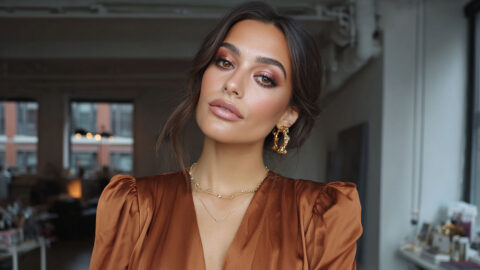
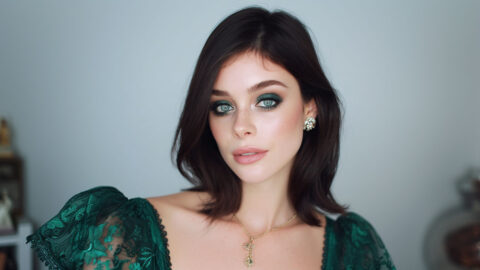
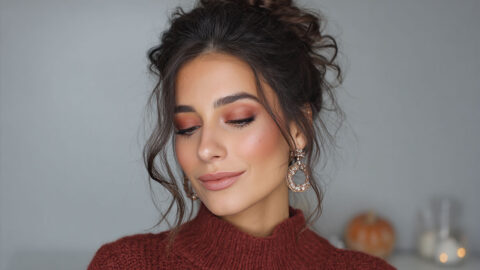
Most people searching for Latina makeup looks want the full-glam version: thick arched brows, winged liner, lined lips and bronzed, glowing skin.
Social media treats it as one trend, but it’s really a modern adaptation of the 90s Chicana look (Elle India, 2025). That makes it one tradition, not a standard for every Latina face.
The census numbers point the same way. The Census Bureau’s 2022 American Community Survey counted 22.5 million single-race Hispanics who chose only the category some other race (Pew Research Center, 2024). Hispanic identity doesn’t map to a single look.
What Are Latina Makeup Looks?

Think sharp brows, winged eyes and defined lips sitting on a sculpted, glowing complexion.
Elle India (December 2025) traces the trend to the 90s Chicana look and lists its parts as thick brows, winged eyes, sculpted contour, highlighter and full, glossy lips.
The label is newer than the style. It’s social media shorthand for a look with much older roots.
A first-person essay syndicated on AOL says Chicana makeup has been evolving since the 1940s, with cholas in Southern California shaping the dark brows, sharp liner and brown-lined lips.
Beauty writer Thalia Henao (quoted by Egyptian Streets) gives Black women’s makeup the credit for the dark lip liner, which she says was born of a 1940s shortage of lip shades for darker complexions.
Both accounts date the look to the 1940s, decades before it trended.
It also went mainstream later, when Naomi Campbell wore dark brown lip color past her natural lip line, according to Marie Claire’s history of overdrawn lips. That puts the look inside the wider 90s makeup trends as well as Chicana beauty.
Hispanic isn’t a race, so Latina can’t be one look either. Pew Research Center tabulations of 2019 Census data (published 2021) show 66% of Hispanic adults identify as White, 26% as some other race, 2% as Black and 1% as American Indian or Alaska Native.
A creator quoted in the AOL essay compares labeling one look as Latina makeup to labeling a single Korean look as Asian makeup. Treat the style as a set of techniques, not a template for every face.
Selena Quintanilla is the clearest reference, with strong brows, lined eyelids and precisely lined red lips (NPR, 2016).
MAC Cosmetics turned that look into a product line in October 2016 after a fan petition passed 37,000 signatures, and the online launch sold out on day one (NPR and the Associated Press, 2016).
Jennifer Lopez, who played Selena on screen, is the other reference point, mostly for bronzed, luminous skin.
The Signature Features of Latina Makeup Looks

Brows, eyes, lips and a sculpted, glowing base do most of the work. If any one of them goes missing, the whole thing reads as generic glam.
Brows
Brows frame the face, which is why they go on before the eyes. You want them thick and arched, with a clear edge.
Fill with short, hair-like strokes and keep the highest point of the arch toward the outer third. Clear brow gel sets it. A pomade or pencil from a brand such as Anastasia Beverly Hills handles the filling.
Blocky brows are the usual failure. You want structure, not a painted stripe.
Eyes
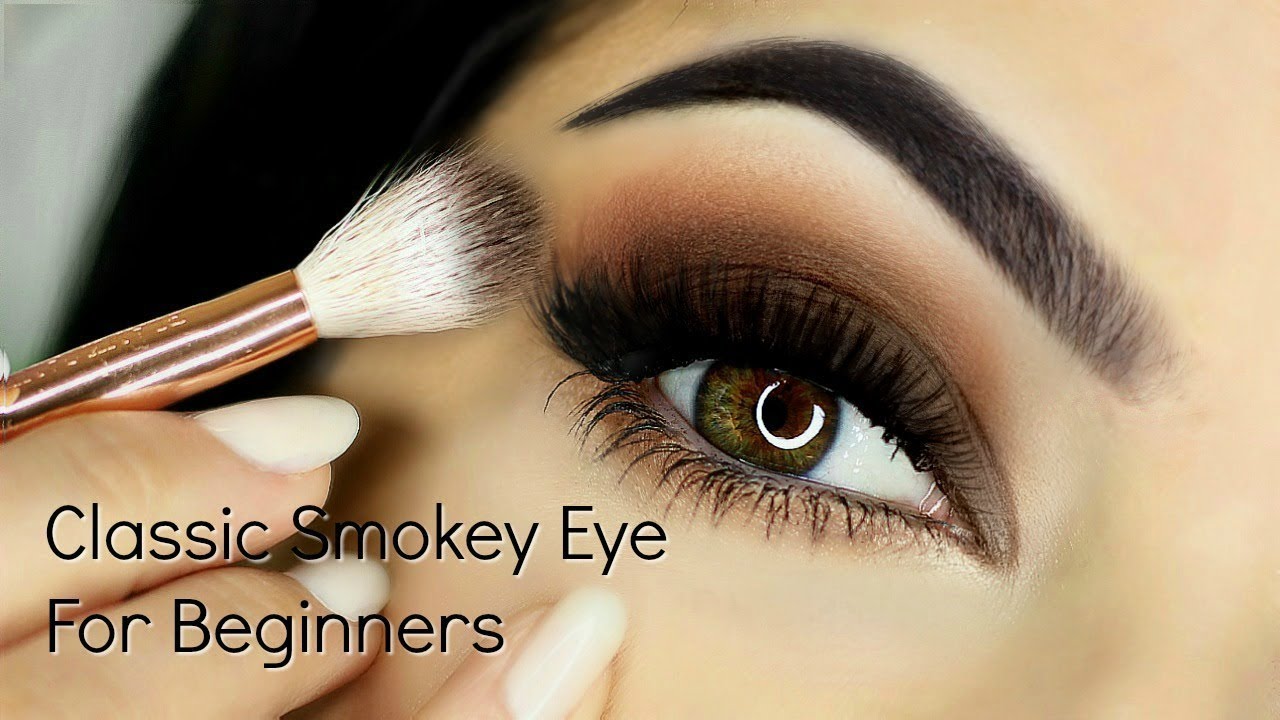
A winged liner with a sharp tail pointed toward the end of the brow is the standard. Some people swap in a cut crease, which is a defined line in the crease over a lighter lid, and others go smoky with warm brown and bronze shadow blended outward.
False lashes or a lengthening mascara finish things off, depending on the event.
A wing only looks sharp when both tails match, so the angle matters more than the product. This guide to drawing a clean winged eyeliner walks through the mechanics.
Lips

Most people choose between dark brown liner with a nude lipstick or gloss, a deep red, or a dark-to-red ombre. MAC’s Selena collection included a deep red shade called Amor Prohibido, per Texas Public Radio, 2016.
Line the lips first, a shade deeper than the lipstick, then blend the liner inward so no hard ring shows. How you go about applying lip liner matters more than which pencil you own.
Skin and Contour
Sources split on finish. Elle India calls for a full-coverage matte base, while creator tutorials stress hydrated skin with a glow.
The workable middle is a full-coverage base with powder only where shine breaks through. Then contour under the cheekbones, blush on the high points and a small highlight on top.
Setting powder extends wear, but too much of it flattens the glow.
Which Latina Makeup Look Fits Which Occasion?

Intensity should follow the event. Natural glam handles daytime, and soft glam covers dinners and dates. Weddings, quinceaneras and big nights out are where full glam makes sense.
| Look and intensity | Eyes and lips | Best for | Watch out |
|---|---|---|---|
| Natural glam (low) | Brown shadow, mascara, brown-nude lip | Daytime, work | Skipping the brows loses the look |
| Soft glam (medium) | Warm neutral lid, thin wing, lined nude lip | Dinner, date night | Too much powder dulls the glow |
| Classic red lip (medium) | Soft neutral eyes, defined red lip | Weddings, parties | A red that fights the undertone |
| 90s brown liner (medium) | Dark brown liner, nude lipstick or gloss, thin wing | Casual nights, throwback themes | Liner too dark for the lipstick |
| Full glam (high) | Smoky bronze or cut crease, sharp wing, lashes, overlined lip | Quinceaneras, big nights | Reads heavy in daylight |
Outside a full-glam event, push one feature at full strength and keep the rest at half. A bold lip pairs with soft eyes, or a sharp wing with a nude lip.
A soft glam look keeps the lined lip and neat wing but trims the contour and lashes. If you want to see how that plays out, soft glam makeup ideas are a good place to browse.
Weddings suit the classic red lip with soft eyes. The wider range of wedding makeup looks shows how far to dial the glam up or down.
For quinceaneras, go full glam, since the event runs long and the photos are close. Waterproof liner and a setting spray matter more than the exact shadow shade.
How to Match Shades to Skin Tone and Undertone
Match undertone first and depth second. Warm and olive undertones usually look better in gold or honey bases than in pink-based ones.
Jewelry is a quick undertone check. If gold flatters you, you’re likely warm, and if silver does, cool. When both work, you’re probably neutral.
Swatch along the jaw in daylight, since the face and neck are what the base has to match. This guide to matching makeup to your skin tone goes deeper.
The Fitzpatrick scale is the label dermatologists use, but it grades UV response, not undertone. Thomas B. Fitzpatrick developed it in 1975 (Journal of Clinical and Aesthetic Dermatology, 2024), and a Cutis editorial on MDedge says it does not adequately capture baseline pigmentation or undertone.
For makeup, treat it as a rough depth guide and nothing more.
A big shade count doesn’t guarantee good coverage. Fenty Beauty launched in September 2017 with 40 foundation shades and later grew to 50 (Cosmetics Business). Cosmetics Business has since reported that the brand retired that foundation in 2026 and replaced it with Pro Filt’r Fluid Flex, which launched in September 2026 with 50 shades.
The Pudding’s 2018 analysis found Make Up For Ever also had 40 shades by then, but that Fenty’s were spread more evenly across the lightest and darkest ends.
Tan and Olive Skin
Start with a golden or olive-leaning foundation, then add bronzer one to two shades deeper with a warm cast rather than an orange one.
Terracotta, warm peach and rosy brown all work as blush. Eyes suit bronze, copper, warm brown and gold. For lips, brown-nude over a deeper brown liner is the safe pick, and brick red or a warm true red are the bolder ones.
Brown eyes take all of those shadows well. Browsing makeup looks that flatter brown eyes helps narrow down pairings.
Brown and Deep Skin
Deep skin needs depth-specific shades, and at the same depth the undertone can run red or golden, or sit neutral.
Pick foundation from a line that actually carries deep shades, and swatch it in daylight. A rich bronze is fine, though skipping it is fine too. Gold or copper highlighter looks best, and chocolate liner pairs well under berry, plum or deep red lips.
If a shade needs heavy blending to disappear, it is the wrong shade.
How to Do the Full Look Step by Step

Order matters here. The brows go in before the eyes so the wing can follow the arch.
- Prep: moisturizer, primer and a lip balm
- Base: full-coverage foundation and concealer, pressed in until the surface looks even
- Sculpt: contour in the hollows, blush on the high points, blended upward
- Brows: outline the underside of the arch toward the tail, add hair-like strokes at the front, then blend with a spoolie
- Eyes: a warm transition shade first, bronze or brown on the outer lid, then the wing, then lashes last
- Lips: line first, fill with lipstick, add gloss to the center last
- Finish: a small highlight on the nose and cheekbones, then setting spray
Elle India (December 2025) runs the first five steps in this order. The brow directions follow Anastasia Beverly Hills’ own instructions for the Brow Wiz, per its LookFantastic listing.
The usual mistake is drawing the wing before the brows, which leaves the two angles fighting each other.
Cream products blend best with a damp sponge, and a guide to using cream contour covers placement in more detail.
Wear time comes from thin layers more than extra products, which is the logic behind making makeup last all day.
Which Products Work at Drugstore and High-End Prices?

Spend on the products that draw the structure, meaning the brow pencil and liquid liner, plus the eyeshadow palette. Save on lip liner and mascara.
| Step | Product | Tier and list price |
|---|---|---|
| Lip liner | NYX Professional Makeup Slim Lip Pencil | Drugstore, about $6 |
| Mascara | Maybelline Lash Sensational Sky High | Drugstore, $13.99 |
| Brows | Anastasia Beverly Hills Brow Wiz | High-end, $23 |
| Winged liner | KVD Beauty Tattoo Liner | High-end, GBP 21 |
| Eyeshadow | Urban Decay Naked Reloaded | High-end, GBP 52 |
Prices are list prices from Walmart, Olive Young, LookFantastic and Escentual listings, and they move with sales and region.
The Brow Wiz is a retractable pencil with a fine mechanical tip that draws hair-like strokes (Anastasia Beverly Hills, via LookFantastic). If I had to pick one splurge, it would be this.
KVD Beauty’s Tattoo Liner is waterproof and comes with a 0.01mm needle-tip brush, and the Mad Max Brown shade suits a softer wing (KVD Beauty, via LookFantastic).
Urban Decay’s Naked Reloaded packs 12 neutrals, including a bronze metallic, a warm terracotta and an iridescent chocolate brown (Urban Decay).
On the saving side, lip liner is easy. NYX offers browns such as 802 Brown and 820 Espresso, and shade matters more than price. Mascara is the same story, partly because the FDA says some industry experts recommend replacing it 3 months after purchase.
A mascara you rebuy four times a year is the wrong place for a premium price. Skip the prestige lip liner too.
Slim pencils need sharpening, and the steps for sharpening an NYX lip liner take a minute.
New to brow products? Start with this explainer on brow pencils.
When Do Latina Makeup Looks Not Work?
The look struggles most on hooded eyes and on dry or mature skin. Cool undertones and sensitive eyes need adjustments too.
On hooded eyes, a wing drawn with the eyes closed disappears into the lid fold, so draw it with the eyes open. A separate guide to makeup for hooded eyes goes further on placement.
Dry or mature skin doesn’t get along with a matte, full-coverage base, which clings to dry patches and settles into lines. A longer walkthrough of applying makeup on dry skin is worth reading before you commit to that base.
Bronze shadow and brown liner can turn muddy on cool undertones, so shift to rosy browns and cooler reds.
Waterline liner is the weak point if you wear contact lenses or have dry eye. Pencil applied behind the lash line moves into the tear film faster than pencil applied outside it.
A pilot study by University of Waterloo and Cardiff University researchers in Eye & Contact Lens found peak tear-film contamination 5 to 10 minutes after application. A University of Waterloo release put the difference at 15% to 30% more particles.
The sample was three women, and contamination from the pencil was negligible two hours later, so read it as a caution rather than a ban.
Creator tutorials list waterline pencil as an optional step. Skip it if you wear contacts or have dry eyes, and keep the liner on the skin side of the lash line.
Latina Makeup Looks FAQ
How do I wing liner on hooded eyes?
Draw the wing with the eyes open, aiming the tail toward the end of the brow. Build it in short strokes and keep a slightly thicker tail, because a thin line disappears behind the lid fold.
Can anyone wear Latina makeup looks?
Yes, the techniques work across skin tones when the shades match the undertone.
Elle India (December 2025) covers why South Asian women have adopted the style, so credit the Chicana roots when you share the look.
What is a quick version for beginners with few products?

A brow pencil, bronzer, blush, mascara, a brown lip liner and a gloss are enough.
Leave out the wing and false lashes at first, and skip contour until the brows and lips feel steady.
How long does the full look take?
Longer than a standard routine, because it stacks brows and contour with a wing across seven steps.
Practice the wing and the brows on their own first, because those two steps run slowest while you are learning.
How to Practice Latina Makeup Looks Before an Event
Practice the wing first, then the brows, then the lashes, and finish with one timed run. That order differs from the application order because the wing is the least forgiving step and the brows have to match its angle.
Draw the wing on a bare lid until both tails match. Then draw the brows to the wing’s angle, and apply lashes with the wing already in place.
False lashes take their own practice, and a guide to applying false eyelashes covers the technique.
Do the timed run a week before the event and wear the finished face for the event’s full length.
It costs one extra face of product and an evening of time, which is cheaper than a smudged wing mid-event. As of October 2026 this order holds, unless the trial smudges before the event ends, in which case switch to a waterproof liquid liner.

She started writing on the site after fielding the same questions from clients and friends often enough to just write the answers down: which red won't turn orange on a warm undertone, how to keep lipstick from feathering into fine lines, why a "12-hour" formula rarely survives dinner.
Every review on the site follows the same rule she uses with paying clients: wear it first, then decide if it's worth recommending.
- How to Make Eyeliner Last Longer Without Smudging - August 31, 2026
- How to Make Eyeshadow Last Longer All Day - August 29, 2026
- How to Find Your Undertone in 5 Easy Steps - August 27, 2026