Gray hair has its own undertone, and that’s the thing that actually decides which lipstick looks right, not skin tone by itself. The shade that flattered someone at 30 can look off once their hair goes silver, because the hair itself now reads as cool, warm, or neutral the same way skin does.
That shift shows up once the gray, silver, or white actually carries a visible cast of its own. Usually that’s somewhere in a person’s forties or fifties, and it gets judged on the same cool-warm-neutral scale normally reserved for skin.
Worth knowing before any of this: most people aren’t as gray as they think they are. Only 6 to 23 percent of people actually reach 50 percent gray coverage by age 50, well below the widely repeated 50-50-50 rule (Panhard et al., British Journal of Dermatology, 2012).
The Best Lipstick Color for Gray Hair Depends on Undertone, Not Skin Alone
Most color guides stop at skin tone and call it done. That’s the gap. Once hair goes gray, it stops being neutral background and starts acting like a second undertone sitting right at the jawline, cool-blue, warm-cream, or somewhere in between.
That second undertone doesn’t always agree with the skin’s. Sometimes it fights it, and when it does, that’s what ends up deciding whether a lipstick reads as flattering or slightly wrong.
There’s a reason blue-based reds work so well against cool-toned gray. They sit on complementary sides of the color wheel. Nothing mysterious about it.
Almost every gray-haired face falls into one of three groups. Cool-toned gray pairs with blue-based reds, berry, and cool mauve. Warm-toned gray leans toward brick red, coral, and warm rosewood. Neutral gray is the forgiving one, it wears almost the full spectrum, from true red to soft plum.
The usual advice on how to pick a lipstick color skips this second variable entirely, which is exactly why a shade that worked fine with dark or blonde hair can suddenly look wrong once that same hair turns silver.
What Undertone Does Your Gray Hair Have

About 74% of people between the ages of 45 and 65 show some gray hair, with an average coverage of roughly 27% (Panhard et al., British Journal of Dermatology, 2012).
Gray hair, silver hair, salt-and-pepper, whatever it gets called at home, isn’t one flat color. It carries its own undertone the same way skin does. That undertone usually lands in one of three visual categories, though plenty of heads carry a mix depending on the light in the room.
Cool-Toned Gray Hair
Cool-toned gray hair carries a blue or silver-lavender cast, not a flat plain gray. Under daylight or bathroom lighting it can show an actual bluish sheen, and the roots especially will look almost icy or platinum compared to the rest of the strand. Purple-based toning products push this even further, Wella’s blue-violet lines being a common example, so a gray that already reads cool tends to get cooler once a toning shampoo enters the routine.
Warm-Toned Gray Hair
Warm-toned gray hair rarely reads as truly white. It leans cream, ivory, or pale yellow instead of silver, and it usually grows in from hair that was naturally brown or auburn before it lost pigment. Under fluorescent office lighting especially, this is the gray that can look a little dull, almost dishwater.
Neutral Gray Hair
Neutral gray hair sits between the two. No strong blue cast, no cream cast pulling it one way. It’s the easiest category to dress for, honestly, since it doesn’t fight against cool or warm lip shades either way.
How to Determine Your Skin and Hair Undertone Together
None of this needs a colorist. Skin undertone alone stops being enough once hair has gone gray, because the hair now sits close enough to the face to shift how any lip color actually reads.
- Check the veins on the inside of your wrist in natural light. Blue or purple veins point to a cool undertone, greenish veins point to warm.
- Hold gold and silver jewelry against your jawline. Skin that brightens under silver usually reads cool. Skin that warms up under gold usually reads warm.
- Compare that reading against the gray hair itself, blue-silver strands against cream-toned strands.
- When the two disagree, let the hair undertone win. It sits directly next to the lips and eyes, so it carries more weight in how the whole look reads.
Most guides on matching makeup to skin tone only run through the first two steps and stop right there. Gray hair is the missing third variable, and skipping it is probably the single most common reason a technically correct lipstick shade still looks slightly off.
Which Lipstick Shades Match Cool, Warm, and Neutral Gray Hair

Once the undertone is confirmed, the shade choice narrows fast.
| Hair Undertone | Shade Family | Example Shades | Best Finish |
|---|---|---|---|
| Cool-toned gray | Blue-based red, berry, cool mauve | Revlon Fire and Ice, blue-based reds | Satin or matte |
| Warm-toned gray | Brick red, coral, warm rosewood | Terracotta-leaning reds, warm coral | Cream or satin |
| Neutral gray | True red, soft mauve, universal pink-nude | Charlotte Tilbury Pillow Talk | Any finish |
Cool-Toned Shades
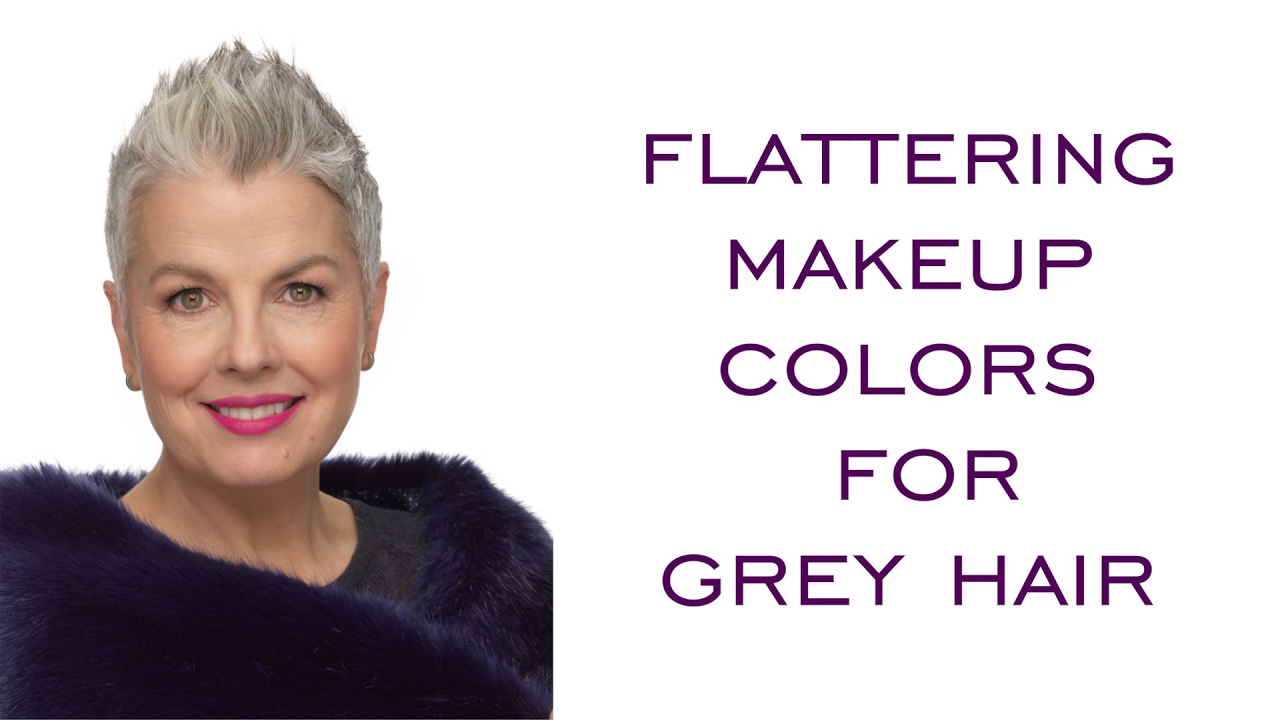
Cool-toned gray hair sits best next to blue-based reds and berry tones, since both echo the same blue undercurrent already running through the hair. Think blue-based true red, in the same family as Revlon’s Fire and Ice, or berry and wine for daytime depth without going full red, or cool mauve and plum for a softer everyday version of the same idea. Shades built for cool undertones generally carry that same blue-pink base that flatters this hair type.
Warm-Toned Shades
Warm-toned gray hair wants shades with orange or brown sitting in the base, not pink. Brick red works because it carries a visible orange undertone rather than a blue one. Coral works too, bright but warm enough that it doesn’t look chalky against cream-toned hair. And warm rosewood, a brownish pink, reads warm without turning muddy the way some rose shades do. Shades built for warm undertones generally share that same orange-leaning base.
Neutral Shades

Neutral gray hair is the one category that can wear almost anything, which is either lucky or a little anticlimactic depending on how much you enjoy picking lipstick. True red without a heavy blue or orange lean works. So does soft mauve for everyday wear. And universal pink-nudes, Charlotte Tilbury’s Pillow Talk being the obvious example, read well against a gray with no strong cool or warm cast.
Lipstick Colors to Avoid With Gray Hair

A few shade families tend to work against gray hair rather than with it. Frosted or shimmer pink is the biggest offender, it washes out cool-toned gray hair and can flatten the whole face under bright light. Orange-based nude clashes with cool-silver hair, and it tends to flatten warm-toned gray hair too, instead of complementing it the way you’d expect. Brown-heavy nude is the third one, and it reads dull or aging against most gray shades, especially in a matte finish.
Orange-based nudes carry another cost beyond clashing with hair undertone. They overlap with the shade family covered in the guide on which lipstick colors make teeth look whiter, and orange-leaning shades generally work against that effect rather than for it.
A shade that suited pre-gray hair color, especially a rich brown or auburn, often stops working the moment that hair fades to silver or white. That doesn’t mean giving up on nude lipstick altogether though, it usually just comes down to picking a nude shade with the right undertone.
Best Lipstick Finish for Gray Hair and Mature Skin
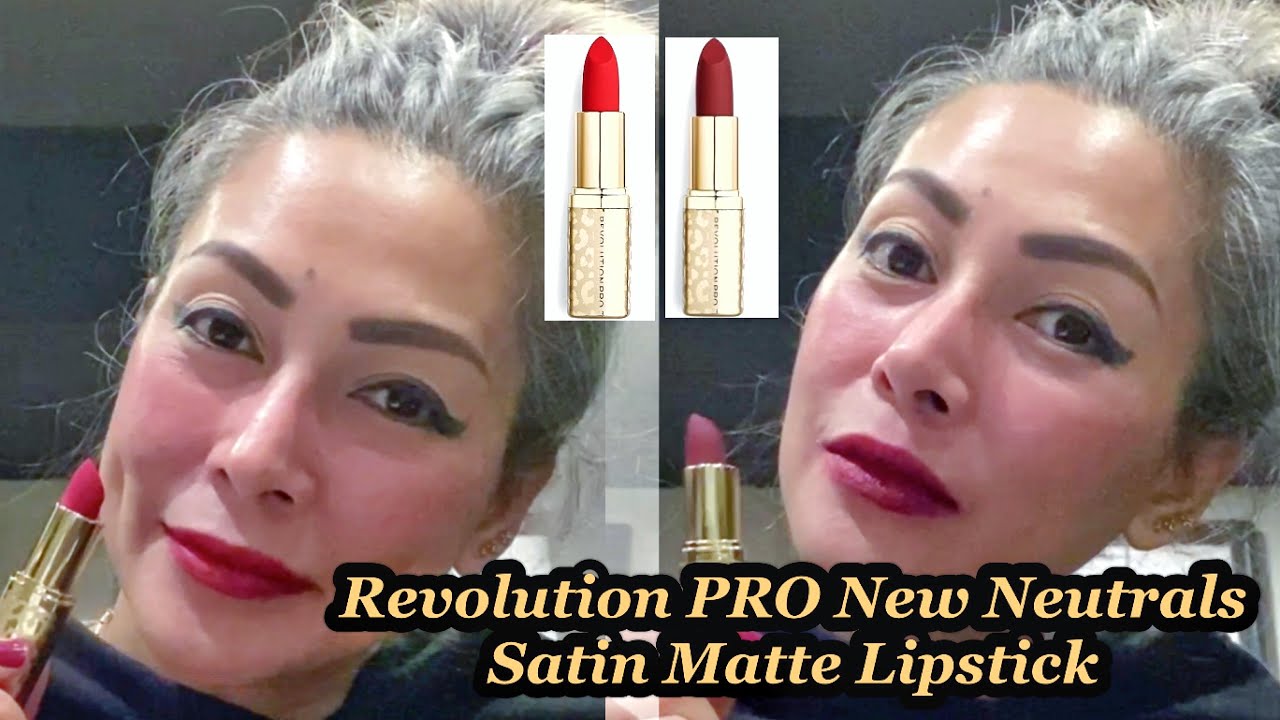
Finish matters just as much as color once lips have thinned or dried with age. A shade that reads perfectly on paper can still look wrong in the wrong texture, especially against fine lines.
| Finish | Pros | Cons | Best For |
|---|---|---|---|
| Matte | Sharpest color payoff, longest wear | Can settle into fine lines, drying without prep | Confident, bold color days |
| Satin | Balances pigment with comfort | Slightly shorter wear than matte | Most mature lips, most days |
| Cream | Adds shine without full gloss | Can migrate into lip lines by midday | Softer, everyday looks |
| Gloss | Youthful, reflects light off the lip | Shortest wear, needs frequent reapplication | Evening or low-movement events |
Matte formulas lean on wax-heavy bases to hold color in place, and that same wax is what pulls moisture out of the lip over the course of a day. A 2023 CosmoDerma survey of lipstick users found that 30% of those who reported a skin reaction cited dryness as the specific complaint (CosmoDerma, 2023).
Building in a hydrating step matters more here than shade choice alone. The guide on keeping lips moisturized under a matte formula covers the order of operations that actually helps. For lips that already run dry, satin finish usually holds color almost as well as matte, without the same trade-off.
How Gray Hair Changes Your Natural Lip and Skin Coloring

Gray hair rarely shows up alone. It tends to arrive alongside a handful of other visible changes in skin and lip color, and those changes are a big part of why a shade that worked at 30 can look off by the time hair’s gone fully silver.
Collagen production in skin and lips drops by roughly 1 to 1.5% a year through most of adulthood (npj Aging, 2025), a slow enough decline that most people don’t clock it happening in real time. Hair graying tends to start earlier or later depending on ethnicity, averaging the mid-30s for Caucasian hair, the late 30s for Asian hair, and the mid-40s for African hair (Maymone et al., Journal of Clinical and Aesthetic Dermatology, 2021). Menopause lands around age 52 on average in the United States (CDC, 2024), roughly the same decade when hormonal shifts and visible graying both tend to speed up.
Lower collagen means thinner lips with a less defined border. That’s also why the same techniques used for applying lipstick on naturally thin lips tend to work just as well here.
Natural lip pigment fades around the same time skin loses contrast. That’s exactly why a bold shade that once looked balanced can start to look heavier, or more jarring, against a lighter, grayer backdrop.
How to Pair Lip Liner With Lipstick for Gray Hair
Lip liner does two different jobs against gray hair, and picking the right one changes the whole effect. Match the liner to the lipstick and the two blend into one soft block of color. Line one shade deeper than the lipstick instead, and the border sharpens, reading as more defined from a distance.
| Liner Approach | Effect | Best For |
|---|---|---|
| Same shade as lipstick | Soft, blended, no visible outline | Everyday cool-toned or warm-toned looks |
| One shade deeper | Sharper border, more defined shape | Bold red or evening looks |
| Neutral or clear liner | Prevents feathering without adding color | Any shade, especially on drier lips |
Liner matters more once hair’s gone gray, since the natural border between lip and skin has usually softened by then too. The lip line does more visual work here than the lipstick color itself.
The most common mismatch is a liner that leans warmer or cooler than the lipstick sitting on top of it. That combination makes the whole lip look muddy instead of defined. MAC’s standalone lip pencils are a decent example of a liner range wide enough to match most cool-toned and warm-toned lipsticks without much guesswork.
Getting this right starts with choosing a lip liner in the same undertone family as the lipstick, cool with cool, warm with warm. The order matters too, and the guide on applying lip liner covers the sequence that keeps color from settling into fine lines.
Everyday and Bold Lipstick Shades for Gray Hair by Occasion
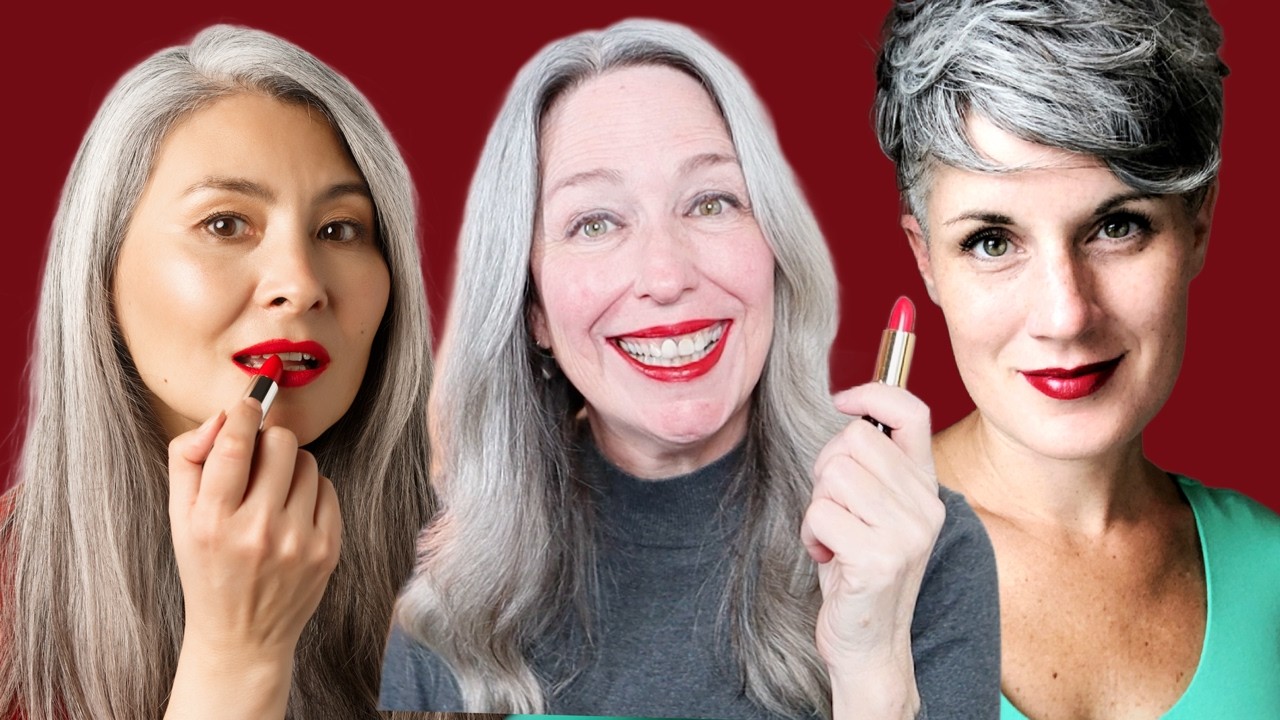
The undertone rule stays fixed across every occasion. Only the saturation changes. Daytime calls for restraint, evening calls for more pigment, and the shade family underneath stays exactly the same either way.
For daily wear that usually means muted mauve if the hair runs cool, soft rosewood if it runs warm, or a sheer berry worn as a tinted balm for either one. Push the saturation up for evening and cool-toned hair moves toward true red or wine, warm-toned hair moves toward brick red or deep coral, and neutral gray hair can carry fuchsia better than most, it seems to handle heavy saturation without looking costume-y.
Finish shifts with occasion too. A satin everyday mauve can turn into a matte evening red without changing the undertone logic underneath it at all.
45% of American women say they wear makeup specifically for special occasions, more than any reason besides a confidence boost (YouGov, 2023). Drugstore lines like Maybelline’s Color Sensational cover most of the muted everyday shades well enough, while a house like YSL leans hard into fully saturated evening reds.
Picking a bright, saturated shade for evening doesn’t mean abandoning the undertone match set for daytime. It just turns up the volume on the same shade family. The same logic carries over to choosing a lipstick color for an outfit, where the event or the clothing decides saturation, not the undertone rule itself.
When Undertone-Matching Does Not Apply to Lipstick Choice
Undertone-matching is a useful starting point, not a rule that overrides everything else. A handful of situations make the system less reliable, and they’re worth knowing before trusting it completely.
Personal preference is the biggest one. A shade someone actually feels confident in can outperform a shade that’s theoretically correct on paper. Transitional gray hair is another, hair that still holds pigmented roots or ends resists clean undertone classification because it’s genuinely two things at once. Toned or color-treated gray hair complicates things further, since a purple-based toning shampoo shifts the undertone reading away from the hair’s natural cast. And photography or stage lighting throws the whole system off too, since bold lip color reads differently under artificial light than it does in daylight.
Confidence carries real weight here. 49% of American women say they wear makeup mainly for a confidence boost rather than to follow a specific color rule (YouGov, 2023).
Lighting changes the picture more than most people expect, too. A 2023 study in Frontiers in Neuroscience found that lipstick preference and purchase-intent ratings dropped significantly under warm, low-temperature lighting around 2,500K compared to cooler light sources (Tian et al., 2023). The same study found no significant correlation between how a lipstick color was rated on the lips versus swatched on the forearm, which undercuts the common habit of testing a shade on the back of the hand before buying it.
Toned or freshly color-treated gray hair adds one more variable. A purple-based shampoo or a recent dye job can shift the hair’s undertone reading for days or weeks at a time, independent of what the hair underneath is actually doing.
None of this cancels the undertone rule, it just marks where the rule stops being the deciding factor.
FAQ on What Color Lipstick Goes Best With Gray Hair
Does lipstick color for gray hair change based on skin tone, fair versus deep?
Skin tone still matters, just as a second filter rather than the main one. Fair skin tends to suit softer saturation, deep skin can carry more pigment without looking overdone, but both still follow whatever cool-toned or warm-toned hair undertone sits underneath.
Does the best lipstick shade change for short gray hair versus long gray hair?
No. Length has nothing to do with it, only pigment does. A pixie cut in cool-toned gray and long gray hair carrying that same cast both pair with the same blue-based red or cool mauve family.
How do you test a lipstick shade against gray hair before buying it?
Swatch it on the inner lip line, not the back of the hand, and look at it in daylight near a mirror. Testing on skin alone skips the hair undertone entirely, and that’s the variable actually deciding whether it works.
What mistakes do people commonly make when picking lipstick for gray hair?
Matching lipstick to skin tone alone, and ignoring hair undertone entirely, is the big one. Reaching for a frosted pink or orange-based nude out of sheer habit is close behind it. So is skipping lip liner once lips have thinned with age.
Can the same lipstick shade work for both cool-toned and warm-toned gray hair?
Rarely, and only somewhere in the neutral zone between the two. A soft, balanced mauve can straddle both cool-toned and warm-toned gray hair. True blue-based reds and brick reds don’t budge though, they stay locked to their own undertone family.
Do lipstick brands formulate shades specifically for gray-haired customers?

Not by hair color specifically, no. MAC, NARS, Charlotte Tilbury and most others organize shades by undertone and skin tone instead. Gray-haired customers end up using the same cool-warm-neutral system as everyone else, just applied to hair instead of skin.
What Should You Check First in What Color Lipstick Goes Best With Gray Hair?
Lipstick color for gray hair starts with one confirmed variable: the hair’s own cool, warm, or neutral undertone. That gets checked before shade, finish, or lip liner enter the decision at all, since everything that follows branches directly out of that first classification.
- Confirm hair undertone first, cool-toned, warm-toned, or neutral.
- Cross-check skin undertone second, and let hair undertone win any disagreement.
- Choose finish last, satin or cream for drier lips, matte for a bold red or wine.
Ranking hair undertone above skin undertone does carry one trade-off. A blue-based red or cool mauve that flatters cool-toned gray hair can still read a shade too icy against warmer skin. It’s a compromise, but usually worth accepting for the stronger overall match.
Shade selection only pays off with clean application. The guide on applying lipstick covers the technique that keeps a chosen color, from a soft berry to a full brick red, sitting exactly where it belongs.

She started writing on the site after fielding the same questions from clients and friends often enough to just write the answers down: which red won't turn orange on a warm undertone, how to keep lipstick from feathering into fine lines, why a "12-hour" formula rarely survives dinner.
Every review on the site follows the same rule she uses with paying clients: wear it first, then decide if it's worth recommending.
- How to Make Eyeliner Last Longer Without Smudging - August 31, 2026
- How to Make Eyeshadow Last Longer All Day - August 29, 2026
- How to Find Your Undertone in 5 Easy Steps - August 27, 2026