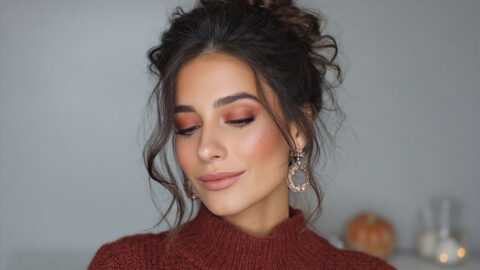
The National Retail Federation’s 2025 survey ranked the vampire as the second most popular adult Halloween costume, behind the witch. At most parties you’ll be standing near at least one other vampire.
The face is where you can stand apart. Every version, from old-film Dracula to a quiet “vampire skin” finish, is built from the same layers: pale base, hollowed cheeks, dark eyes, deep lips and blood if you want it.
How much of that you actually apply comes down to skill and how much time you have.
Which vampire makeup looks fit your skill level and occasion?

Classic Dracula, gothic, glam, subtle “vampire skin” and gory bite cover most of what people actually wear. They all use the same layers (pale base, sculpted hollows, dark eyes, red or black lips, blood), and what changes is which ones you add or leave out.
| Look | Roots | Difficulty | Layers used |
|---|---|---|---|
| Classic Dracula | Bela Lugosi’s 1931 Dracula | Moderate | Pale base, dark brows, red lips |
| Gothic | Count Orlok in Nosferatu (1922) | Moderate | Base, heavy hollows, black eyes and lips |
| Glam | Interview with the Vampire | Moderate | Base, soft contour, burgundy eyes, deep lips, veins |
| Subtle vampire skin | Twilight, TikTok #vampireskin | Easy | Cool base, shimmer, soft shadow |
| Gory bite | Christopher Lee’s Hammer Dracula films | Hard | Full stack plus wax wound and blood |
Pick by the time you have and how much product your skin will tolerate, not by taste alone.
If you’re short on time, go with subtle vampire skin. Party lighting tends to be dim, and heavy shadow still reads in low light, so gothic holds up there. Classic Dracula suits anyone who wants to play a character instead of wearing an accessory. Gory bite is for people with patience and a good mirror.
Nylon ties TikTok’s #vampireskin trend to Twilight, and it is the easiest of the lot. Facepaint.com’s Twilight-style tutorial puts the whole application at about 20 minutes with water-activated cake makeup.
The gothic row borrows its black shading from goth makeup styles that people wear well outside October.
For kids, a pale base, soft grey shadow under the eyes and one drawn bite mark is plenty. Leave out wax and heavy product layers on young skin.
Which product types work best for vampire makeup?

Most convincing looks mix at least two product types, and which two depends on the effect you’re after.
Cream, such as Ben Nye F/X Creme Colors, gives the strongest coverage for a pale face. According to Ben Nye’s product description, it lasts when set with Ben Nye’s Neutral Set Powder and sealed with Final Seal. It goes on with a brush, sponge or fingertips. Leave it unset and it transfers and creases.
Mehron Paradise AQ and Kryolan Aquacolor are water-activated, which makes them the easiest to apply and wash off. A little water wakes them up, soap and water takes them off, and Mehron lists the Paradise AQ formula as crack-resistant. The catch is that the color stays water-soluble, so sweat and rain lift it unless a barrier spray goes on top. Too much water streaks as well, and Mehron notes that each color needs a different amount.
Powder handles soft, buildable shadow in the hollows over a set base. On its own, the coverage comes out patchy.
Wax is the only way to get a raised wound. Ben Nye Nose and Scar Wax builds bite and scar edges that paint can’t fake, but the edges need feathering into the skin with cream color or the wound looks stuck on. It needs sealing like any cream product.
Whatever base you choose, a neutral powder locks it down, and a short read on what setting powder actually does helps you pick between translucent and tinted.
You can skip face paint entirely. Makeup.com and Maybelline both build their vampire tutorials from foundation, concealer, contour and liquid lipstick. That route works for subtle and glam looks and falls short for gory ones, since a bite wound needs wax.
For children, buy a face paint line made for kids, such as Snazaroo, and check its ingredient list against the FDA color additive summary covered below.
Is vampire makeup safe for skin, and who should skip it?
For most people, yes, provided the product is a cosmetic with approved colors. Patch test it first and wash it off properly.
Cosmetic allergy is more common than most people assume. Among 10,061 patients patch tested at North American Contact Dermatitis Group clinics between 2001 and 2004, 21.8% had an allergic reaction linked to a cosmetic (Warshaw et al., Journal of the American Academy of Dermatology, 2009).
That is a clinic population, so the rate for the general public sits lower. It still shows that cosmetic allergy is routine, which is why a new theatrical product deserves a test.
What to check before the first brush stroke
Dab each product on the inner forearm a few days ahead and watch for redness, rash or swelling, the signs FDA tells Halloween shoppers to look for.
FDA requires every color in face paint and theatrical makeup to be approved for cosmetic use, so compare the ingredient list with FDA’s Summary of Color Additives. The eye area is stricter. Under 21 CFR 70.5(a), no color additive goes around the eyes unless its own regulation permits it.
Craft paint is out. It is not sold as a cosmetic, so nobody has vetted it for skin.
As of October 2026, FDA’s novelty makeup page still says that a color missing from its approved list means the maker is not following the law.
In May 2009, FDA told consumers to stop using six colors of children’s water-based face paint distributed by Oriental Trading Co. A cluster of children had developed rashes, itching, burning and swelling at one event, and an FDA lab found significant microbial contamination in most of the products.
Mehron says its Barrier Spray goes on before application to prevent staining. For shared kits, sanitizing palettes between users closes the contamination gap that case exposed.
Who should skip or modify a full look
Anyone with a known contact allergy should hold off on new products until a dermatologist has patch tested them. Mayo Clinic describes patch testing as the standard way to confirm allergic contact dermatitis.
Reactive or eczema-prone skin can still wear a subtle look. Keep it to one thin layer, and start from a guide to makeup for sensitive skin.
Mehron describes Paradise AQ as suitable for sensitive skin. That is a manufacturer claim, so the patch test still applies.
Young children should stay with the pale base, grey shadow and drawn bite mark. No wax, no fake blood, and nothing without an ingredient list.
Long events need a plan for removal too. FDA says never to sleep in it, to remove it gently and to follow the product’s own removal directions.
How to build a pale vampire base on any skin tone

Go with a cool-toned shade lighter than your own skin and blend it past the jawline. Flat white doesn’t work.
Cool greys and blue-leaning pales look undead, while warm cream shades mostly just look tired.
Kryolan’s own vampire how-to places a pearl foundation on the highest points of the face for an icy accent and says the step reduces the impression of warmth. Ben Nye’s character-makeup guidance calls for at least three creme colors: one each for base, highlight and contour.
Light and medium skin
Start with clean, moisturized skin. Boots and Maybelline both open there, and Boots adds that a base slightly paler than normal is enough for an easy look.
Mix white into your usual foundation in small amounts until it sits clearly lighter than your neck. Then carry it over the neck and ears so no line shows at the jaw.
Set it with powder pressed on with a puff, following a standard translucent powder application routine so the cream does not drag.
The usual failures are cracking on dry skin (moisturize first) and a visible line at the jaw or hairline. Patchy edges where the sponge stopped show up too.
Deeper skin tones
A flat white base on deep skin turns grey and chalky, and it rarely looks undead.
A full white base leaves a chalky cast and a hard edge at the neck and hairline, and it takes a lot of product to get there. Selective pallor works better. Lighten the center of the face with a cool-toned cream, keep the outer edges closer to your own tone, and let deep plum, burgundy and metallic highlights carry the vampire effect.
Choose the cream by undertone, not by how light it looks in the pan. Techniques for makeup on dark skin cover undertone matching before you add any cool pigment.
Sculpting sunken cheeks and hollow temples
Shade the hollow under each cheekbone, the temples, both sides of the nose and the jawline with a cool grey-brown, then blend until no stripe is left.
Maybelline’s Halloween guide picks greyish-brown or ashy tones for the sharp, undead quality. It carries the shading down the neck, into the hollows and onto the collarbones.
Run the cheek shading from the ear toward the corner of the mouth, stopping short of it. Temples get a lighter hand, starting at the hairline and working inward. On the nose, shade only the sides of the bridge. Carry the jaw shading down the neck so the face doesn’t read as a mask.
A lighter concealer on the high point above each hollow makes the hollow read deeper. Maybelline builds that brightening step in before the contour goes on.
Grey-brown looks like shadow and drains the face. Boots goes warm instead, using a cream bronzer under the cheekbones, across the forehead and under the chin, which suits a glam look that should still seem alive.
Cream goes on first and powder second. For the cream step, a standard cream contour method of dabbing the shade on and blending outward keeps it from streaking over a cream base.
Hard edges read as dirt, not shadow. Blend until the line disappears.
Eyes and lips: color choices that read as vampire

Black, plum and burgundy around the eyes and deep red, burgundy or black on the lips read as vampire. Where the color sits matters as much as which color you pick.
Eyes
Darkness does most of the work.
Daily Vanity says to go slowly with black and pack the pigment in rather than sweep it on. Boots buffs a plum-red liner across the lid and along the waterline, layers red shadow over it, and adds highlighter in the inner corners. Cosmetify uses a soft wash of pink-red under the eyes to suggest a vampire who has not slept. For dark circles, grey or plum shadow under the lower lashes works, built from shadow rather than concealer.
For the classic version, a smoky eye technique with the darkest shade at the outer corners and a lighter center gives the sunken look without a heavy lid.
FDA warns against using a lip liner as an eyeliner. The pencil may carry color additives not approved for the eye area, plus bacteria from the mouth.
As of October 2026, FDA’s own pages disagree on mascara. Its eye cosmetics Q and A says to discard it three months after purchase, while its Eye Cosmetic Safety page says manufacturers usually recommend two to four months.
Either way, open a fresh tube for a dramatic lash look.
Mehron does not recommend red, yellow or orange Paradise AQ shades on the eyes, so keep the red wash to powder or cream shadow.
Lips
Wet finishes include a glossy red that stays wet-looking, which is how Daily Vanity suggests blood, and diffused, blurred color, which Nylon links to a vampire who has just fed. Dry finishes mean matte burgundy or plum, or matte black.
Maybelline names deep red, burgundy and black as the lipstick colors that work best for the look.
Burgundy and black need a steady hand, and a primer on wearing dark lipstick covers outlining and blending so the edges stay clean.
Mehron does not recommend blue or green Paradise AQ shades on the lips.
How to make blood, bite marks and veins
Veins and blood drips take a few minutes with liner and gloss, while a raised bite wound needs adhesive, wax and a seal.
Veins
Boots draws veins with the same reddish liner used on the eyes, running from just under the waterline to mid-cheek. It blends them with a small brush so they look less perfect, then traces over them with red liquid lipstick to define.
SFX artist Michele Mulkey of QC Makeup Academy traces veins in blue eyeliner down the neck and into the face instead, which reads colder. Pick red for a glam face and blue for a corpse.
Ruler-straight lines look drawn on. Blur them.
Choosing fake blood
Gloss or liquid lipstick is the fastest option for a drip at the lip corner. Ben Nye Fresh Scab sets to the touch on the top layer, though the corn syrup content can stain some fabrics, so test it first. Near the eyes, Baltimore Magazine’s DIY wound tutorial uses cream red because alcohol-activated paint can sting.
Makeup.com calls red lip gloss a good stand-in for fake blood. Layering lip gloss over lipstick gives a drip its wet shine, and Nylon calls a drip hanging off the lips an unmistakable vampire signifier.
Ben Nye notes that its products may stain fabrics, so keep blood off the collar until the last minute.
Building a bite wound
- Mist Mehron Barrier Spray on clean, dry skin if you worry about adhesive, since Mehron says it can insulate sensitive skin from harsh adhesives.
- Brush spirit gum onto the neck and wait until it turns tacky.
- Warm a small piece of Ben Nye Nose and Scar Wax between your fingers, press it into the gum and blend the edges into the skin. Ben Nye says a little Quick Cleanse or baby oil on the fingertips cancels the stickiness.
- Seal the edges with liquid latex, let it dry, then set with powder. Ben Nye lists Castor Sealer for a translucent finish that takes color.
- Press two small puncture holes into the wax with a modeling tool or the back of a brush.
- Paint the holes with cream red, shade a dark maroon ring around them and fade a purple-grey bruise outward. Baltimore Magazine’s tutorial adds translucent powder to take the shine off modeling wax.
- Finish with blood along the puncture edges and one thin drip.
Skip the seal and the wax soaks up color and loses its look, according to a Feroca product guide.
How to set vampire makeup and remove it
Set cream makeup with powder first, then mist a sealer from at least 6 to 8 inches away. Removal works layer by layer, with a different remover for each type of product.
Setting
Ben Nye’s sealer directions are blunt. Cream makeup, including foundation and concealer, gets set with powder before Final Seal goes on.
Ben Nye Final Seal is alcohol-based, mint-scented and flammable, so spray it in a well-ventilated area and take care around the eyes and sensitive skin. Ben Nye LiquiSet is the fragrance-free alternative for sensitive skin. Mehron Barrier Spray goes under makeup to hold back sweat, or over it to stop color rubbing off on costumes.
Do all blending first, because sealed makeup will not move. Any sealer goes on last in a fine, even mist, the way you would approach applying a setting spray over everyday makeup.
Removal
| Layer | Remove with | Note |
|---|---|---|
| Cream color | Ben Nye Quick Cleanse, then rinse | Oil-based, also lifts glitter |
| Water-activated paint | Hydra Cleanse, or soap and water | Hydra Cleanse also cleans brushes used with water-based color |
| Wax and spirit gum | Modeling tool, then Spirit Gum Remover, Quick Cleanse or soap and water | Lift the wax off first |
| Sealer | Hydra Cleanse or soap and water (Final Seal), makeup remover then soap and water (Barrier Spray) | Check the product’s own directions |
Ben Nye’s own page lists Hydra Cleanse or soap and water for Final Seal. A reseller’s guide recommends an oil-based remover instead, so the sources differ.
Start with the manufacturer’s route and add oil only if residue stays.
Sealed color behaves like waterproof makeup. Follow the same approach as removing waterproof makeup: let the remover sit on the skin, then lift the color instead of rubbing it in.
Ben Nye describes Hydra Cleanse as gentle enough for the eye area. FDA warns against scratching the eyeball while removing eye cosmetics, so use a soft pad and no force.
If a rash, redness or burn follows, FDA asks consumers to report it through MedWatch at 1-800-FDA-1088.
FAQ About Vampire Makeup Looks
Can men wear the same vampire makeup looks?
Yes, and the layers are the same: pale base, shadowed hollows, dark eyes, deep lips.
Stubble shows through a thin base, so build the cream in light layers and set it with powder before sealing.
How do fake fangs fit into the makeup?
Fangs go in last, after lip color and sealer, so they never smear the finish.
Take them out to eat or drink, then check the lip color before putting them back.
Are red contact lenses safe to wear with a vampire look?
Only with a prescription and a fitting by an eye doctor. FDA classes decorative lenses as medical devices, and unfitted pairs carry risks including corneal ulcers, infection and vision loss.
Can you wear vampire makeup to school or work?
A subtle version is the realistic choice: cool pale base, soft grey shadow, burgundy lip.
A full gory or gothic look depends on the dress code, so confirm it before the day.
How do you stop vampire makeup from rubbing off on a mask or collar?
Set cream color with powder, seal it, and let every layer dry before you dress.
Apply fake blood last and keep it away from the collar, since Ben Nye warns its products may stain fabric.
How Far Ahead to Practice Vampire Makeup Looks
Vampire makeup looks need a patch test at least five days before the event and one timed rehearsal with the exact products, sealer and remover.
Mayo Clinic dermatologists report that reactions in clinic patch testing can take 4 to 5 days to appear (Mayo Clinic, 2021). A test the night before can miss a slower reaction.
The order matters because a failed patch test changes the product list, and a rehearsal run on rejected products is wasted. So patch test every product five days out. Then rehearse the full look once with a timer, and rehearse removal too before checking the skin.
It costs a second round of product on the face and one spare evening, and what you get is a look that holds for hours instead of failing mid-party.
Repeat the test whenever a product’s ingredient list changes. This position reflects FDA and Mayo Clinic guidance as checked in October 2026.

She started writing on the site after fielding the same questions from clients and friends often enough to just write the answers down: which red won't turn orange on a warm undertone, how to keep lipstick from feathering into fine lines, why a "12-hour" formula rarely survives dinner.
Every review on the site follows the same rule she uses with paying clients: wear it first, then decide if it's worth recommending.
- How to Make Eyeliner Last Longer Without Smudging - August 31, 2026
- How to Make Eyeshadow Last Longer All Day - August 29, 2026
- How to Find Your Undertone in 5 Easy Steps - August 27, 2026