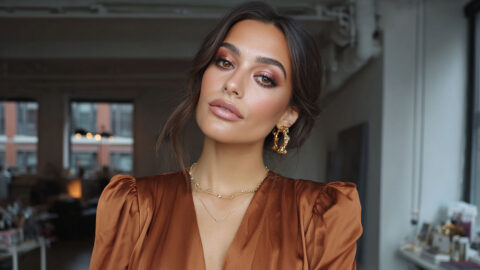
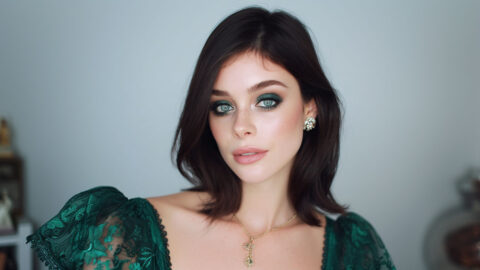
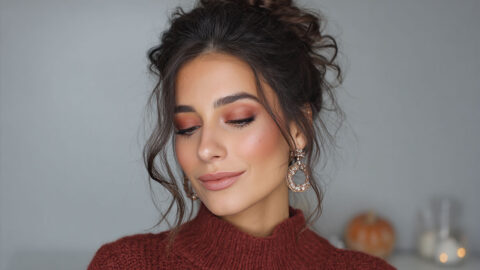
Most people use “Asian makeup looks” to mean some blend of Korean, Japanese, and Chinese beauty traditions. All three start with the skin and work around features like monolids, hooded eyes, and yellow, olive, or neutral undertones. They split on the finish of the base and on brow shape, and the blush ends up in different places too.
A survey of 506 women in Korea, Greater China, Japan, and Thailand asked what they were aiming for. Respondents in Greater China, Japan, and Thailand wanted to look natural, and Korean respondents wanted to look clear (Kim and Li, Korean Journal of Aesthetics and Cosmetology, 2014).
That difference shows up in the base. Korean styling pushes a pale, luminous finish, while Japanese styling stays closer to the natural skin shade.
What Are the Main Asian Makeup Looks?

There’s no single Asian look. Korean, Japanese, and Chinese makeup all begin with skin, then go their own ways on finish, brows, and where the blush sits.
| Look | Base | Eyes and brows | Lips and cheeks |
|---|---|---|---|
| Korean | Pale, luminous, dewy | Peach or orange lids, straight thick brows | Gradient lips, light peach blush |
| Japanese | Semi-matte, natural shade | Pastel lids, blended shading | Soft pink lips, strong blush under the eyes |
| Chinese (Douyin) | Gleaming highlighter on high points | Defined doll eyes, skinny straight brows, glitter | Gradient lips from K-beauty, pink blush |
Korean look

SoraNews24’s 2018 side-by-side describes the Korean version as pale and luminous, with straight, thick brows that connect to a nose shadow.
The idea is to build an ideal face by filling in what’s missing, whereas Japanese styling blends toward something natural.
Most Korean-inspired makeup looks just swap the lip or the lid and leave this base alone.
Japanese look

The Japanese base is semi-matte and sits in a natural shade (SoraNews24, 2018). On the lids, Taiken lists peach, light orange, lavender, and pink, with pale shimmer in the inner corners. Blush runs stronger than in the Korean version and gets worn under the eyes and out toward the side of the nose.
The base has shifted over time, though. Lisa Eldridge, Lancôme’s global makeup creative director at the time, said in 2016 that Japanese makeup had picked up Korean influence and turned dewier (Refinery29).
That blended, low-contrast finish is still what sets makeup looks from Japan apart from their Korean counterparts.
Chinese look and the Douyin label

Douyin makeup is the name usually given to the Chinese look, after the Chinese version of TikTok. The China-Britain Business Council, citing a Tong Global market paper, describes straight, skinny brows and doll eyes as the core of it. On top of that sit a gleaming highlighter borrowed from Western contouring and glitter from music-festival looks. The gradient lips come from K-beauty.
How women in four countries compare
A peer-reviewed survey by Kim and Li compares regional color choices directly. It dates from 2014, so read it as a baseline, not a trend report.
The researchers surveyed 506 women aged 20 to 40 across Korea, Greater China, Japan, and Thailand (Kim and Li, Korean Journal of Aesthetics and Cosmetology, 2014). On eyeshadow, orange led in Korea and Japan, while neutral tones led in Greater China and Thailand. Pink was the favorite lip color in all 4 countries. Blush split differently: peach in Korea, pink in Greater China, Japan, and Thailand. The slanting eye was the preferred eye technique in Korea, Greater China, and Japan.
The stated goals split by country too, as noted earlier. Natural won in Greater China, Japan, and Thailand, and clear won in Korea.
Put that next to the SoraNews24 and Eldridge accounts and the picture gets simpler. Korean and Japanese lids end up in the same orange and peach range, so the real gap between those two looks sits in base finish and brow shape, plus blush placement.
How Do You Match Foundation Shade and Undertone for Asian Skin?
Start with undertone. Depth comes next and finish last. Asian skin runs from yellow to olive to neutral and warm, and a base that matches depth but not undertone sits grey or pink on the face.
A 2024 Nature Communications study of 48,433 East Asians scored skin on lightness, redness, and yellowness, and foundation matching works with those same variables. That’s why depth alone never settles a shade.
Yellow skin does best in a base with a golden tilt, and pink-leaning formulas are worth skipping. Olive skin belongs in yellow-neutral bases, since rosy shades fight the green cast. With a neutral or warm undertone, match the depth first, because either direction works.
Finish shifts the target a little. Taiken notes that Korean BB creams go for brighter skin, and that Japanese makeup matches the skin color to look natural.
So a Korean-style base can sit a touch brighter than the neck, but only when the undertone matches. For a Japanese-style base, match exactly. Swatch along the jaw in daylight, and if the swatches disagree, a guide on matching a base to your skin tone helps.
How Do You Get Glass Skin and a Dewy Base?

Glass skin is mostly hydration plus a thin base. Light goes only on the high points of the face, and that’s what gives the smooth, luminous finish.
The cushion compact does most of the work here. AmorePacific launched the IOPE Air Cushion in March 2008, and cumulative global sales of its cushion compacts had passed 100 million units by late 2016 (Korea Times, 2016). The sponge matters because, according to AmorePacific researchers, a good cushion helps color adhere evenly and not thickly (Korea Times, 2017).
Hydrate first, then press the puff over the center of the face and build coverage only where it’s needed. Skip the concealer on top. Liquid highlighter goes on last, and powder doesn’t.
Eldridge’s observation lines up with that. Japanese and Korean makeup users often skip concealer over foundation and spread the cushion’s formula over the areas they want to hide.
Dewy bases show every dry patch, so prepping skin before makeup matters more here than under a matte formula.
For the semi-matte Japanese finish, drop the liquid highlighter. Keep the same thin base and concentrate on applying setting powder only where the face shines.
How Do You Do Eye Makeup on Monolids, Hooded Eyes and Double Eyelids?
Lid shape decides the technique. Monolids need shadow placed with the eyes open. Hooded lids do better with floated or lifted liner, and double eyelids can take ordinary crease work.
Monolids

A monolid has no visible crease, so a crease line drawn with the eyes closed disappears when they open.
Asian-American makeup artists quoted by AOL Lifestyle recommend applying shadow with the eyes open so the color lands where it will show. Gel or pencil liners give control, and a bold graphic line stays visible on the lid.
Peach-orange or watermelon pink on the lid and lower lash line suits the look, per the same AOL Lifestyle piece. Black liner makes small eyes look smaller, according to MakeupMew’s guest tutorial on Lab Muffin.
That same tutorial goes with tightlining the upper lash line and leaves the lower lash line bare.
Hooded eyes
Hooded eyes carry a crease, but a fold of brow skin covers it.
Floating liner, which draws an outline on the crease with negative space instead of on the lash line, suits hooded lids. Makeup artist Ayami Nishimura starts with a light facial massage to depuff.
Heavy contour isn’t needed here, and blending shadow just above the crease gives a rounder lid (Makeup.com). Check any cat-eye wings with the eyes open, since they curve once the lid drops.
For more on placement, this set of makeup techniques for hooded eyes goes into more detail.
Double eyelids and eyelid tape

A visible crease means ordinary crease-based shadow placement works.
Eyelid tape and glue can create a temporary crease, and the same crease rules apply after that. Tape is optional, and the monolid and hooded techniques above work without it.
How Do You Do Gradient Lips and Blurred Lip Tints?
Press a tint into the center of the lips and blur it outward with a finger or a cotton swab. Let each layer dry before adding the next so the center stays the most saturated part.
With a tint alone, dab a small amount on the center of the bottom lip, press the lips together, and blend the edges with a swab (Watsons). If gloss is involved, blend the tint from the inner lips outward with a finger and add the gloss afterward, avoiding the tinted center (Global Sources).
Tints suit gradients because coverage builds in thin layers, according to Women’s Weekly Singapore, whose K-drama tint list includes Peripera’s Ink the Velvet. Style Korean sells that tint for gradient or full coverage.
Wipe the excess off after the tint dries if you want a stain and not a layer of color. The difference is easier to judge once you see how a lip tint differs from lipstick.
Western tutorials call the same blended-center technique ombre lips.
Where Does Blush Go, and Which Brow Shape Fits Each Look?
Blush placement is the clearest split between the looks. In the Korean look it sits on or just below the cheekbone, and in igari it goes almost directly under the eyes. Brow shape matters about as much, and a straight brow flatters some faces far more than others.
Blush placement
Daily Vanity Singapore puts Korean blush on or right below the cheekbone, to accentuate the feature. Igari goes between the cheekbone and the corner of the eye, almost directly under the eyes. Japanese makeup artist Shinobu Igari created the technique and gave it her name.
Georgia Sakurai of Shu Uemura told Makeup.com in 2018 to put the most pigment on the apples and get close to the lower lids, with no highlight or contour.
Advice splits by face shape. Celebrity makeup artist Japeth Purog warns round faces off the apples and sweeps blush up along the cheekbone toward the hairline. It pays to adjust blush for different face shapes before copying a tutorial.
The old Korean versus Japanese split is also blurring. The Korea Times reported in 2025 that under-eye blush is now popular in Korea under the name “hangover makeup,” with a clear, dewy base as the prerequisite.
Texture decides how forgiving the look is. Glamour South Africa recommends cream or liquid formulas for igari because color builds as you go, and applying cream blush in thin layers avoids a patchy flush.
Brow shape
Straight brows are the Korean signature, and they are easy to overdo.
Ramy Gafni, via Beautylish, says to fill the top of both ends so an imaginary straight line connects them. Project Vanity adds that the angles should be softened, since early K-beauty versions looked cartoonish. Pigment-heavy pomades are best skipped, because they make brows look solid and not feathery.
Gafni cautions that a straight brow can look expressionless and severe. It works best on delicate, small features.
In What Order Do You Apply a Full Asian Makeup Look?

The order runs from skin to lips, with powder only at the end and only where the face shines.
- Hydrate the skin and let it absorb before any base goes on.
- Put on a thin layer of base, adding extra cover only on the spots that need it.
- Shape the brows before the eyes so the lids have a frame.
- Apply shadow with the eyes open, then liner.
- Cream blush goes on before any powder so it melts into the base. ELLE India’s igari steps place blush right after the base.
- Lips come last, so the blended edges of a gradient stay clean.
- Set selectively with a light translucent powder on the T-zone only (ELLE India).
When layers slide or pill, a refresher on layering makeup in the right sequence fixes most of it.
The minimum kit is a cushion or skin tint, a brow pencil, a cream blush, and a lip tint.
Eyes are optional in the blush-forward versions. The Korea Times describes igari-style looks as keeping eyes, lips, and brows minimal around the cheeks.
Which Brands Make Each Look, and Where Do You Buy Them?
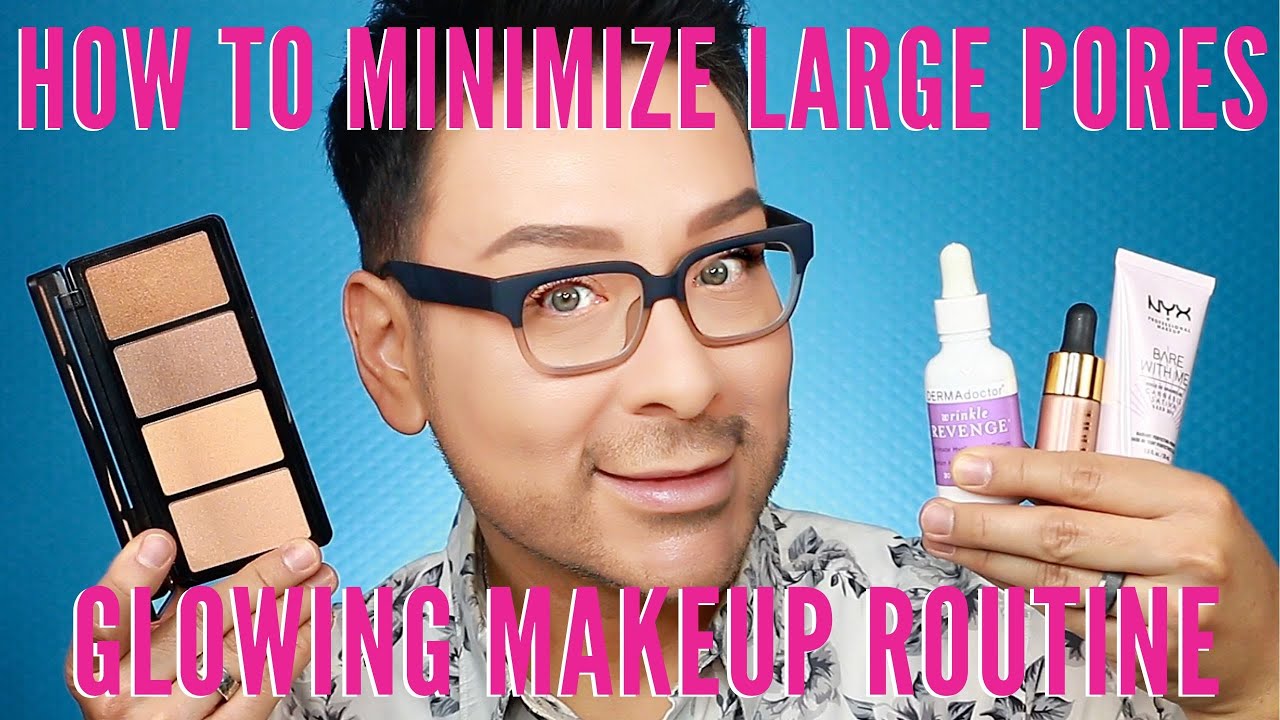
For Korean looks, Clio and 3CE are the usual starting points. Canmake or Majolica Majorca cover the Japanese side, and Perfect Diary, Judydoll, or Florasis cover the Chinese one.
| Brand | Region | Signature product | Best for |
|---|---|---|---|
| Clio | Korea | Kill Cover Founwear Cushion | Semi-matte cushion base |
| 3CE | Korea | Velvet Lip Tint, Mood Recipe palettes | Lips and soft lids |
| Canmake | Japan | Cream Cheek, Glow Fleur Cheeks | Igari blush |
| Majolica Majorca | Japan | Lash Jelly Drop EX | Lash-led eyes |
| Florasis | China | Engraved lipstick, floral-relief eyeshadow palette | Ornate lids and lips |
Korean brands
Clio’s Kill Cover Founwear Cushion is semi-matte, according to retailer listings, not dewy. That makes a Korean product usable for the Japanese-style base too.
L’Oreal’s brand page says 3CE was created in 2009 inside the Seoul fashion label Stylenanda. Its own claim is that the brand ranks at the top in eyes, lips, and blush.
Etude House sells 10-pan Play Color Eyes palettes, with warm-brown versions as the usual entry point.
Japanese brands
Canmake is a drugstore brand that sells both a cream blush (Cream Cheek) and a powder one (Glow Fleur Cheeks). Shiseido’s Synchro Skin Self-Refreshing Foundation is a semi-matte, medium-coverage base, per Cult Beauty’s listing. Majolica Majorca, a Shiseido brand launched in 2003, targets women in their late teens and twenties.
Canmake’s cream formula is the drugstore route into igari, since cream blush builds in layers.
Chinese brands
Florasis passed 1 billion yuan in Douyin sales in 2022 on a smaller product line than its rivals (ChemLinked).
Perfect Diary is best known for its animal-themed Explorer Eyeshadow Palettes. Judydoll goes after Gen Z with palettes, a curling mascara, and a lip gloss.
Where to buy
Olive Young Global offers free shipping on orders over USD 60 per its own site. As of October 2026 the site states it does not ship to the U.S. and points U.S. shoppers to a separate US Online Store.
YesStyle launched in July 2006 by Hong Kong-based YesAsia and ships from Hong Kong, with Korean, Japanese, and Chinese brands in one cart (YesPress).
Japanese drugstore brands are sold at most drugstores in Japan, including Matsumoto Kiyoshi (JW Web Magazine).
When Do These Looks Not Work?
The biggest limit is shade range, which tends to be built for lighter skin. Dewy finishes also struggle on oily skin or in hot weather, and a straight brow can look wrong on the wrong face.
Shade ranges
Consumers interviewed by the Korea JoongAng Daily in 2023 pointed out that most brands launch foundation in only 10 or fewer shades.
Shade counts on paper and on shelves also differ. A U.S. retailer lists 13 shades for Clio’s Kill Cover Founwear Cushion The Original, while a Hwahae tester reported only 2 colors at an Olive Young store in March 2025.
Dr. GIO Cosmetics, the JoongAng Daily notes, sells 6 shades made only for deeper skin tones.
Eyeshadow is the second problem. Soompi notes that pale shades may not show on deeper lids, so makeup for dark skin guidance matters more than any regional rule.
Skin type and weather
The same Hwahae tester found the Clio cushion unflattering and not recommended for dry skin, and saw it turn cakey under powder in summer. For oily skin, Purog suggests powder blush for the under-eye blush look.
If wear time is the real issue, techniques that make makeup last all day help more than switching looks.
Face structure and brows
Straight brows are not universal.
Gafni says they suit delicate, small features, and Project Vanity advises filling a high arch into a gentle slope, not a hard line. When the face reads severe, loosen the angle before dropping the look.
FAQ About Asian Makeup Looks
How does Asian makeup differ from Western makeup?
Maybelline India describes Asian looks as favoring a luminous base and soft color. Western looks favor brightening concealer and bold brows, along with matte liquid lipstick.
The gap is a tendency, not a rule. Lisa Eldridge noted in 2016 that Japanese makeup users are more likely to brighten under the eyes with concealer.
What is aegyo sal, and how does makeup create it?
Makeup can highlight the small pocket under the lower lashes, known as aegyo sal, to give the eyes a youthful, innocent look (Daily Vanity Singapore).
Korean styling puts the shimmer right below the eye, while the Japanese version moves it up onto the lid.
What is gyaru makeup?
The dramatic end of Japanese beauty is gyaru, tied to the Shibuya subculture in Tokyo. It uses heavy eyeliner and false lashes, plus contouring, to make the eyes look wider (Fun! Japan).
That puts it far from the natural, blended look of the mainstream Japanese style.
Which Asian makeup looks are trending in 2026?
Harper’s Bazaar calls blended blush the Korean trend most visible on Seoul’s streets in 2026. A glazed lavender nude lip shows up next to it, and so does a skin-melding approach the magazine calls lingerie makeup.
Olive Young’s 2026 Trend Keywords report points the same way, treating makeup as an extension of skin care.
Can non-Asian people wear these looks?
Yes. Lid shape and undertone drive the techniques, along with the finish you want, and ethnicity doesn’t. 1-800 Contacts’ Eye Society notes that monolids occur in people of all ethnicities.
Match the base to the undertone first, then pick the regional look that suits the finish you want.
Which Asian Makeup Look to Try First
Start with the undertone match, then pick a finish for your skin type and the weather. After that, add one feature, either blush or gradient lips. In practice that usually means a semi-matte base for oily or hot conditions or a dewy one for dry skin.
A wrong shade survives every later step, while a feature swaps out in minutes. The trade-off is giving up full glass-skin luminosity in exchange for wear that holds.
Shade range is the constraint most likely to change. Lisa Payne, Head of Beauty at the analytics firm Stylus, expects K-beauty’s second global wave to push brands toward wider skin-tone ranges (Cosmetics Business, February 2026), a position verified in October 2026.
Until those ranges arrive, a pared-back start works best. More minimal makeup looks follow the same one-feature logic.

She started writing on the site after fielding the same questions from clients and friends often enough to just write the answers down: which red won't turn orange on a warm undertone, how to keep lipstick from feathering into fine lines, why a "12-hour" formula rarely survives dinner.
Every review on the site follows the same rule she uses with paying clients: wear it first, then decide if it's worth recommending.
- How to Make Eyeliner Last Longer Without Smudging - August 31, 2026
- How to Make Eyeshadow Last Longer All Day - August 29, 2026
- How to Find Your Undertone in 5 Easy Steps - August 27, 2026