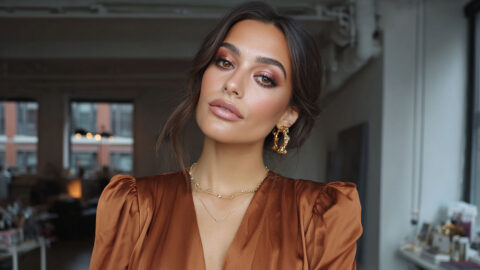
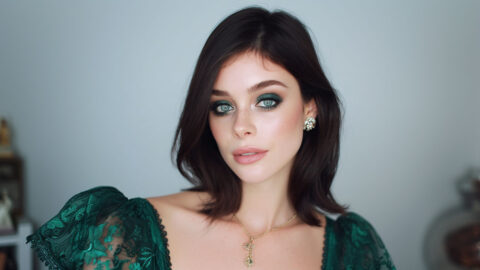
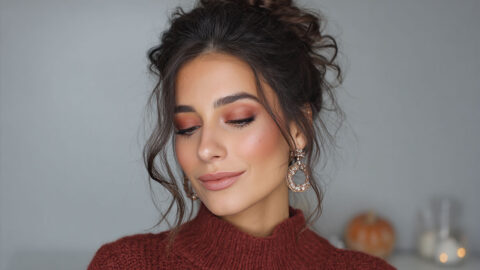
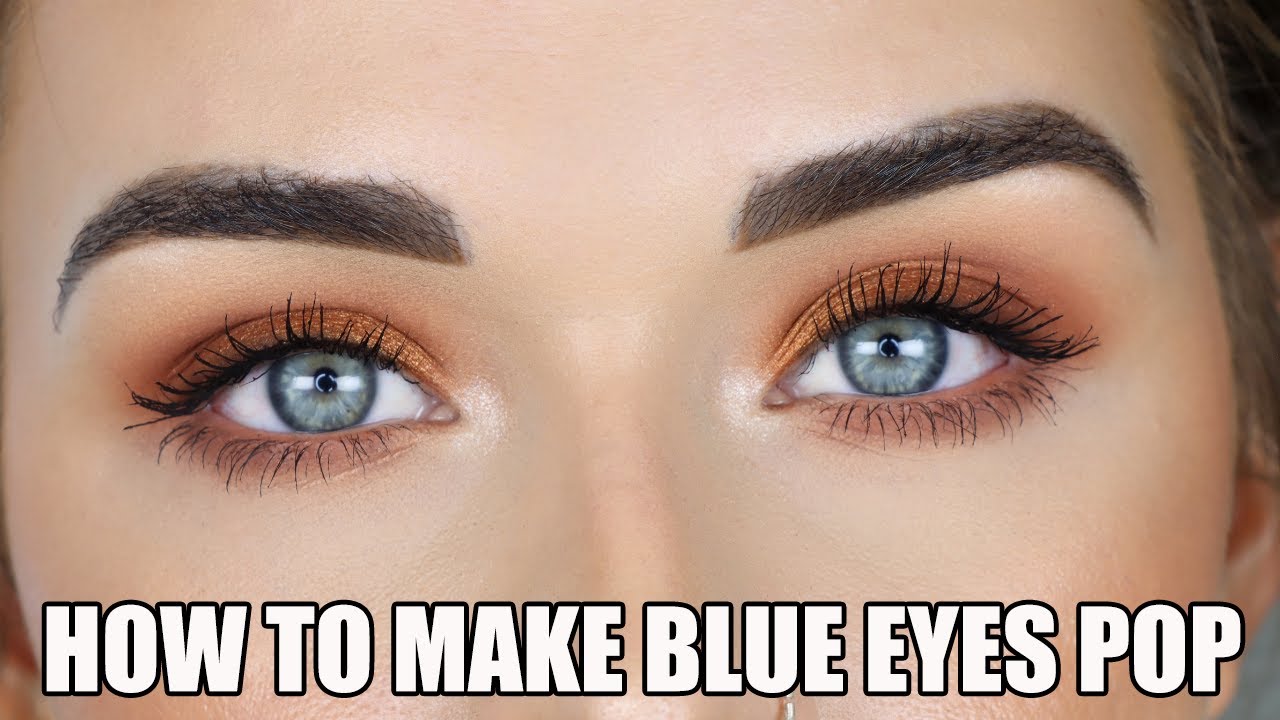
Blue and orange sit on opposite sides of the color wheel. That’s the whole reason copper eyeshadow keeps showing up in blue-eye tutorials: warm tones push against a cool iris and make it stand out, while cool tones next to a cool iris tend to blend in and go a little flat.
Eye makeup gets used way more often than most people probably assume. A 2023 survey of more than 2,600 US consumers by The Benchmarking Company found that 90 percent of women apply it three or more times a week. A mismatched shade isn’t a one-time mistake either, since it repeats pretty much every day.
The Color Theory Behind Makeup Looks for Blue Eyes
Blue eyes aren’t actually the global default, even though they show up constantly in makeup marketing. They occur in roughly 8 to 10 percent of the global population, concentrated heavily in Northern Europe (WorldAtlas). In the US, that number climbs to about 27 percent, based on a 2014 American Academy of Ophthalmology survey. Finland and Estonia sit at the far end of the scale, with blue eyes reaching close to 89 percent of the population there.
Cool undertones next to a cool eye tend to flatten it rather than frame it. Warmth does the opposite, and that’s basically the whole idea behind every recommendation in this guide.
Pantone Color Institute puts out an annual color forecast that beauty brands lean on when developing new eyeshadow shades. It’s part of why warm-toned launches keep cycling back into palettes year after year.
Nearly every shade suggestion below comes back to this one rule: warm beats cool, at least when the goal is contrast.
Best Eyeshadow Colors for Blue Eyes

Copper, bronze, and warm brown top most lists, and for good reason. They sit closest to true orange on the color wheel, which puts them in maximum contrast with blue.
- Copper and burnt orange, the strongest contrast shades available
- Bronze and warm terracotta, slightly softer but still effective
- Rust and deep amber for evening depth
- Gold as a lighter, more everyday warm option
- Purple and plum as a secondary route, since violet also sits opposite the yellow-green undertones some blue irises carry
Cool grays and icy blues work against the goal here. Silvery taupe does too, for the same reason: it matches the eye instead of contrasting it, so the color gets swallowed rather than framed.
Charlotte Tilbury built an entire cult following around this same rose-gold-into-copper progression with the Pillow Talk palette. It’s proof the formula works well beyond one brand.
Once a shade is picked, the real payoff comes down to blending. A proper eyeshadow application routine, working color from the lash line into the crease with a soft brush, makes even a small amount of copper or bronze look intentional.
Skip the cool tones. Lean warm, every time, if contrast is the goal.
Eyeshadow Finishes That Suit Blue Eyes
Finish changes how much light bounces back toward the iris, and that matters almost as much as shade choice.
A flat matte copper reads differently than the same copper in a metallic finish, even though the underlying color hasn’t changed at all.
Matte
Matte finishes absorb light instead of reflecting it, keeping the focus on the shape of the eye rather than on sparkle.
- Best for daytime and office settings
- Blends without fallout landing under the eye
- Warm matte brown is the safest starting shade for anyone new to this whole approach
- Layers cleanly under a shimmer shade if you want a little extra depth later
Matte holds up in pretty much any lighting, which is probably why most tutorials default to it first.
Shimmer and Metallic
Shimmer and metallic finishes reflect light straight back into the iris. That’s part of why they photograph so well under flash and evening lighting.
Anastasia Beverly Hills built several metallic shades into its Modern Renaissance palette specifically to add that reflective punch against the surrounding matte warm tones.
Applying glitter or foil shadow takes a different hand than blending matte powder. A quick look at a proper glitter eyeshadow application guide prevents the fallout that tends to ruin metallic looks by midday.
Satin
Satin sits between matte and shimmer. Slight sheen, minimal glitter, wearable for both office and evening without switching products.
It works well for anyone who wants a little dimension without going full metallic.
Best Eyeshadow Palettes for Blue Eyes
| Palette | Brand | Dominant Finish | Price Tier |
|---|---|---|---|
| Naked | Urban Decay | Matte and shimmer mix | Prestige |
| Modern Renaissance | Anastasia Beverly Hills | Matte with metallic accents | Prestige |
| Chocolate Bar | Too Faced | Matte and shimmer | Prestige |
| Ultimate Shadow Palette, Warm Neutrals | NYX Professional Makeup | Matte, satin, and shimmer | Drugstore |
Urban Decay’s original Naked Palette alone has sold more than 30 million units and generated over a billion dollars in sales since its 2010 launch.
That’s not really a coincidence. Warm neutral palettes like this one lean almost entirely on the copper and bronze family that flatters blue eyes by default.
Skin needs prepping before any of these palettes go on. A good eyeshadow primer routine keeps warm pigment from creasing into the lid by midafternoon.
NYX Professional Makeup covers the same warm-tone logic at a fraction of the price, which matters for anyone testing the theory before committing to a forty-dollar palette.
Makeup Looks for Blue Eyes by Hair Color
Hair color shifts how much shadow intensity a blue-eyed look can carry before it stops reading as natural.
Blonde Hair
Lighter hair pairs best with softer, lower-saturation warm tones. A full bronze smokey eye can overpower fair coloring, while a wash of soft copper on the lid does the same contrast job more gently.
Think soft champagne or rose-gold as a base, then light copper or peach on the lid. Brown eyeliner instead of black keeps things from turning harsh against pale coloring.
A whole set of makeup looks for blondes is built around this exact lighter-intensity logic.
Brunette and Black Hair
Deeper hair carries deeper pigment well. Full bronze, rust, even near-black smokey looks read as intentional instead of heavy against brunette or black hair.
Cyprus Umber and Venetian Red, two of the deeper shades in the Modern Renaissance palette, were built for exactly this level of saturation.
Red Hair
Red hair and blue eyes together are genuinely rare. Only about 1 to 2 percent of the global population has natural red hair, and the overlap with blue eyes is smaller still.
Warm copper can clash with red hair’s own warmth, so plum or burgundy tends to be the safer route. Soft gold works too, if something lighter is what you’re after.
A closer breakdown of makeup looks for red hair covers exactly which warm tones to avoid and which ones actually work.
Makeup Looks for Blue Eyes by Skin Tone
Skin undertone decides how much pigment a shade needs before it shows up the way it does swatched in the pan.
Getting this wrong is the most common reason a shade that looked perfect on a wrist falls flat on the eye. A quick pass through matching makeup to skin tone solves most of that guesswork upfront.
| Skin Tone | Works Well | Tends to Wash Out |
|---|---|---|
| Fair | Soft copper, rose-gold | Deep chocolate, heavy black |
| Tan | Bronze, terracotta, gold | Pale champagne |
| Deep | Rust, burnt orange, deep plum | Light taupe, pastel shades |
Fair Skin
Fair skin shows pigment fast, so a little copper goes further than it looks like it will sitting in the pan.
Start light and build the color gradually instead of applying full pigment in one pass. Stay warm with rose-gold or soft peach, since those stay wearable for daytime. Watch the liner too, heavy black can overwhelm fair coloring faster than dark shadow does.
Tan Skin
Tan skin and bronze eyeshadow are a natural match. The warmth already in the skin reinforces the warmth in the shadow instead of competing with it.
Terracotta and gold both read as richer, not muddier, against tan undertones.
Deep Skin Tone
Deep skin tone carries far more pigment saturation before a shade looks flat or washed out.
Rust and burnt orange stay visible and vivid here, and deep plum holds up the same way, rather than fading the way pale shades tend to on darker undertones.
Fenty Beauty built part of its reputation on solving exactly this kind of undertone gap, launching in 2017 with 40 foundation shades and later expanding the range to 50.
The same undertone logic applies above the cheekbone. A full guide to makeup for dark skin goes deeper into which warm families hold up best.
Eyeliner and Mascara Colors for Blue Eyes

Brown eyeliner works harder than black for blue eyes, softening the line while still defining the shape.
Brown is the most versatile option here. It pairs with nearly every shadow combination above without pulling focus. Plum and navy liner intensify blue without the starkness of true black, landing somewhere between brown’s softness and black’s full contrast. Black eyeliner still works too, especially for evening, though it tends to read harsher against lighter blue eyes than it does against darker ones.
Technique matters as much as color choice here. A tight, controlled line from a good eyeliner application routine does more for definition than switching shades ever will.
Brown-black mascara gives a softer, more natural finish. True black works fine when the rest of the look is already warm and soft, since there’s less risk of it looking stark. Volumizing formulas tend to beat lengthening ones here too, mostly because blue eyes photograph better with fuller lash lines.
Maybelline’s brown-black shade options remain some of the most widely stocked drugstore choices for exactly this softer finish.
Getting the formula onto the lashes evenly matters more than the shade itself. A step-by-step mascara application routine prevents the clumping that undoes an otherwise good look.
Makeup Looks for Blue Eyes by Occasion
How long a look needs to last changes which products and techniques make sense.
| Occasion | Time to Apply | Key Products |
|---|---|---|
| Everyday | Under 15 minutes | Cream shadow stick, brown liner |
| Evening | 30 to 45 minutes | Full palette, false lashes |
| Bridal and Prom | 45 minutes or more | Waterproof formulas, pro application |
Everyday

Most women who wear makeup keep it fast. 73 percent of women who wear makeup say they spend 20 minutes or less applying it (YouGov, 2023).
A single cream shadow stick in copper or bronze, swept on with fingers, does most of the contrast work without a full palette.
A cream shadow stick beats a full palette for speed. Brown liner instead of black keeps it soft. Skip the falsies too, curling the lashes and adding one coat of mascara is usually enough.
There is a broader set of everyday makeup looks built around this same fast, low-product approach.
Rare Beauty built its reputation on exactly this kind of low-maintenance formula, which fits the pace most everyday routines actually run on.
Evening

Evening looks call for more layering than daytime ever does.
Full bronze-to-plum gradients read better under artificial light and flash photography, and so does a stronger liner. False lashes help too, especially for photos.
Setting spray stops being optional here too, since evening events run longer than a typical workday.
Bridal and Prom
Bridal makeup gets photographed more than almost any other look a person will wear, which raises the stakes on longevity.
The Knot’s 2026 Real Weddings Study puts average professional wedding makeup at 150 dollars, part of a combined 300 dollar day-of hair and makeup budget.
Waterproof mascara and eyeliner matter more here than shade choice, since tears and long hours are part of the day.
A closer look at wedding makeup looks covers how to make a warm-toned blue-eyes look hold up through an entire reception.
Named Eye Makeup Techniques for Blue Eyes
Shade and finish only go so far. The technique used to apply them decides whether a look reads as polished or messy.
A handful of named approaches keep showing up in most eye makeup for blue eyes guides: the smokey eye, the cut crease, and the halo eye.
| Technique | Pro | Con | Best For |
|---|---|---|---|
| Smokey Eye | Forgiving, blends easily | Muddy if not layered light to dark | Most eye shapes |
| Cut Crease | Sharp, photographs well | Needs practice and time | Hooded eyes |
| Halo Eye | Opens up the eye | Precise blending required | Round or almond eyes |
Smokey Eye

The smokey eye is the most forgiving technique on this list, which is why most tutorials start here.
- Apply a matte transition shade through the crease
- Pack a darker warm shade onto the outer half of the lid
- Blend the edges until there is no visible line
- Add a lighter shimmer shade to the center of the lid
- Finish with mascara and a soft smudge of liner along the lash line
A full smokey eye makeup walkthrough covers blending tools and common trouble spots in more depth.
Kevyn Aucoin’s original smokey eye structure from the 1990s still forms the basic template most artists teach today, just with warmer shades swapped in for blue eyes.
Cut Crease

Cut crease work relies on a hard line between the lid and the crease, usually set with concealer or a light shade before darker color fills in around it.
Pat McGrath has built some of her most recognizable runway looks around exaggerated cut creases, proof the technique scales from subtle to full editorial drama.
It takes longer than a smokey eye and rewards a steady hand more than forgiveness.
Halo Eye
A halo eye places the lightest shade in the center of the lid and rings it with darker color on both the inner and outer corners.
Blue eyeshadow moments have made a similar splash on the red carpet. Makeup artist Ernesto Casillas put Zendaya in a widely covered icy-blue eye look at more than one 2026 red carpet appearance, a reminder that the light-versus-dark placement principle behind the halo eye can extend beyond neutral shades (TheZoeReport, 2026).
It works best on rounder eye shapes, since the light center opens things up and makes the eye look wider and brighter. It does need a clean, precise center highlight though, or the effect falls apart fast.
When Warm Tones Do Not Work for Blue Eyes
The warm-over-cool rule from earlier holds most of the time. It isn’t absolute, though.
Redness-prone or rosacea-affected skin is one exception. Copper and rust shadow can read as inflamed rather than warm on that kind of skin, which is worth knowing given that rosacea affects roughly 5.1 percent of adults worldwide (Journal of the American Academy of Dermatology, 2024). Deep-set or hooded eyes are another exception, since heavy warm pigment can pool in the crease there and look muddy instead of sculpted. Then there’s whatever’s actually trending. Heading into 2026, Pinterest reported “frosted makeup” searches up 150 percent and “icy blue” searches up 50 percent, which points to a cool-toned counter-trend running against the warm, contrast-driven looks recommended throughout this guide (Pinterest Predicts 2026).
A dedicated guide to makeup for hooded eyes covers placement adjustments for that second situation.
None of this cancels the underlying contrast logic. It just means skin condition and personal style, or sometimes just whatever’s trending, can outweigh the default recommendation.
Bobbi Brown built an entire brand philosophy around letting skin condition, not just color theory, decide what actually looks good on a given face.
Makeup Mistakes That Flatten Blue Eyes
Good shade choice can still fail if the application undoes it.
The single most common mistake is reaching for cool tones out of habit, silver, icy blue, cool gray shadow, since they match the eye instead of contrasting it. Skipping primer is another one. Warm pigment creases and dulls by midday without a base layer underneath it. Eyeliner that’s too thin or too thick throws off everything else too, a line that doesn’t match the rest of the look either disappears or takes over. And mismatching the finish to the occasion, heavy shimmer under office lighting for instance, tends to look more costume than polished.
The creasing mistake is the easiest one to fix. A quick guide to preventing creasing under the eyes solves it in one extra step.
MAC Cosmetics built its professional artist training around priming the lid first for exactly this reason, before color ever touches the eye.
One fix at a time works better than overhauling the whole routine at once.
FAQ on Makeup Looks For Blue Eyes
Are Blue Eyes Rare, and Does That Affect How They Get Styled?
Blue eyes are less common globally than brown, though the share swings a lot by region, as the population numbers above show. That rarity doesn’t change the styling logic. The same complementary color approach applies whether blue eyes are common or scarce, and it’s part of why eye-color-specific tutorials keep getting made.
What Tools or Brushes Are Needed to Execute These Looks?
A flat shader brush packs color onto the lid, while a fluffy blending brush softens the crease. A small pencil brush works shimmer into the inner corner. An angled brush applies liner precisely, and a spoolie blends out mascara clumps.
Can These Looks Be Adapted for Hooded Eyelids or Glasses?
Hooded lids need color placed higher, since the visible crease sits above the natural one, and matte shades work best there. Strong minus lenses shrink the eye, so slightly heavier liner and matte over shimmer keep the look visible through glasses.
Should Contouring or Highlighter Be Part of a Blue Eyes Look?
Highlighter on the brow bone and inner corner brightens the eye area and reinforces the contrast effect. A matte transition shade in the crease acts as contour. Neither step is required, but both make a warm-toned look read as more finished.
What Should You Buy First for Makeup Looks for Blue Eyes?
One warm eyeshadow shade, copper or bronze, does more for contrast than a full palette, a brow kit, and a matching liner bought all at once. That’s really where this whole thing starts.
The order matters less than getting that first shade right, but here’s how the buildout usually goes:
- Warm eyeshadow, copper or bronze
- Brown or plum eyeliner
- Brown-black mascara
Most women who wear makeup keep their overall routine short, with 73 percent spending 20 minutes or less on it (YouGov, 2023), and 90 percent applying eye makeup three or more times a week (The Benchmarking Company, 2023). Against that pace, one correctly chosen shade earns its place before a nine-pan palette does. That shade-first choice does trade away some depth, since evening and bridal looks need layered color that a single shadow can’t give.
The same shade-first logic applies to makeup looks for brown eyes, where the complementary family shifts to blues and violets instead of copper.

She started writing on the site after fielding the same questions from clients and friends often enough to just write the answers down: which red won't turn orange on a warm undertone, how to keep lipstick from feathering into fine lines, why a "12-hour" formula rarely survives dinner.
Every review on the site follows the same rule she uses with paying clients: wear it first, then decide if it's worth recommending.
- How to Make Eyeliner Last Longer Without Smudging - August 31, 2026
- How to Make Eyeshadow Last Longer All Day - August 29, 2026
- How to Find Your Undertone in 5 Easy Steps - August 27, 2026