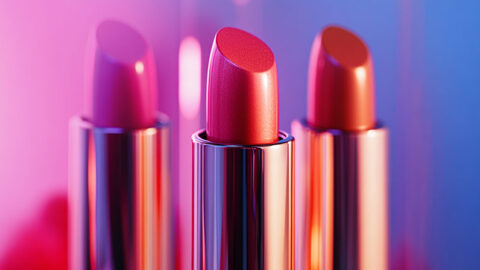
Lip gloss counts as a liquid at every TSA checkpoint. Solid stick balms and lipstick are the only lip products that skip the bag completely, under the 3-1-1 rule.
TSA puts lip gloss in the same bucket as sunscreen and liquid foundation, and that call comes down to texture, not what the label says. Anything that spreads or pours counts as a liquid, and a wand of gloss does exactly that. Wax sticks are built differently. They hold a shape on their own, which is the whole reason they dodge the rule.
The Transportation Security Administration runs this through the 3-1-1 liquids rule at every checkpoint in the country. Each container has to read 3.4 ounces or 100 milliliters or under, and it has to fit inside one quart-sized bag.
By mid-2026, TSA had CT scanners running at close to 300 US airports (296, to be exact, with more than 1,160 machines installed), and at those checkpoints travelers can leave their liquids bag packed in the carry-on during screening (AFAR, 2026).
Is Lip Gloss Considered a Liquid When Flying?
Checkpoints treat gloss the same way they treat sunscreen or hand sanitizer, lumping it under the 3-1-1 liquids rule along with foundation that comes in a bottle instead of a compact. The category itself is broad. Lip gloss can mean anything from a sheer, almost-oil finish to a thick, tacky glaze, and what counts as lip gloss covers most of that range.
What matters to TSA isn’t the finish or the shade. It’s whether the stuff spreads. A wand that leaves a trail on skin gets treated as liquid no matter how thin the coat looks going on. Solid sticks are really the only lip product built to escape that test, since they hold a shape the pourable formulas never do.
If it pours or spreads, it’s going in the bag.
What Does TSA Consider a Liquid, Gel, or Paste?

TSA’s own definition covers anything that pours, squeezes, or spreads, which is deliberately wide. That’s the reason makeup sits in the same bag as ketchup packets and travel-size toothpaste. Nobody drew a narrower line for cosmetics specifically.
In practice, it comes down to a few numbers:
- 3.4 ounces (100 ml) or less per container
- One quart-sized, clear, resealable bag per passenger
- One bag per traveler, not one per carry-on
Kristi Noem, who leads the Department of Homeland Security, floated loosening that size limit at the Hill Nation Summit in July 2025. Nothing had changed by mid-2026 though (Aerospace Global News, 2025).
The 3-1-1 rule has applied at every US checkpoint since 2006, and lip gloss has never gotten a pass. If a specific product or situation doesn’t fit neatly into any of this, AskTSA answers real questions in real time over social media.
Why Are Solid Lip Balm and Lipstick Exempt From the Liquid Rule?
Room temperature does the deciding here. A wax-based stick holds its shape sitting in a bag for hours, and anything that manages that automatically counts as solid, no matter how creamy it feels going on skin. That’s the entire test TSA runs, and it has nothing to do with brand, price, or how the tube is packaged. The difference between lip gloss and lipstick, at least at the checkpoint, comes down to that one physical fact.
Brands That Skip the Liquids Bag
A handful of sticks never touch the liquids bag no matter how much is packed:
- ChapStick sticks, in any quantity, in any pocket of the bag
- Burt’s Bees stick balms, unrestricted by size
- Twist-up solid lipstick, built to hold a fixed shape
None of them need to go anywhere near the quart bag. Twist-up solid lipstick isn’t alone here either. Plenty of other types of lipstick use the same solid build and get the same pass.
Carmex, Blistex, and the Jar Problem
Carmex and Blistex both sell jar and squeeze-tube balms that read as gel under TSA’s test, even though the stuff looks pretty solid sitting on a shelf. Confusingly, both brands also make twist-up sticks, and those sticks get the same pass ChapStick gets. Format decides the classification here, not the brand on the label.
Vaseline runs into the identical problem. It’s petroleum jelly, gel-based by TSA’s definition, and the size cap applies no matter how thick or waxy it feels in the jar. The test really only asks one thing: does it hold a shape once it’s out of the container. If yes, it’s solid. If it slumps or spreads, it’s liquid.
Are Lip Oil, Liquid Lipstick, and Lip Stain Treated the Same as Lip Gloss?
Every one of those formulas gets swept into the same liquid bucket lip gloss sits in. Texture decides it, not whatever the label calls the product. Here’s how the formulas break down:
| Product | Texture | TSA Classification | Example |
|---|---|---|---|
| Lip gloss | Fluid, spreadable | Liquid | Standard wand gloss |
| Lip oil | Flows, reshapes in tube | Liquid | Dior Lip Glow Oil |
| Liquid lipstick | Fluid, dries matte | Liquid | NYX Soft Matte Lip Cream |
| Lip stain | Fluid before it sets | Liquid | Doe-foot applicator stains |
| Solid lipstick | Fixed wax stick | Exempt | Twist-up bullet format |
At the checkpoint, the difference between lip oil and lip gloss barely registers. Both flow freely, both land in the same bag. A doe-foot wand of liquid lipstick, Fenty Stunna Lip Paint included, gets treated as liquid no matter how matte or transfer-proof it turns out once it dries down.
Lip stain runs into the same rule, and pot-format products like LANEIGE Lip Sleeping Mask get caught by the packaging alone. Nobody’s checking the ingredient list.
What Container Size and Bag Does Lip Gloss Need to Pass Security?
The number on the container matters, not how full it is. Anything printed at 3.4 ounces or 100 milliliters or under clears the cap, and that limit applies per container, not per brand or product line, so three half-used glosses from the same brand don’t average out to one allowed size.
Getting it through comes down to a few things: the container sits at or under 3.4 oz (100 ml), it goes inside the clear quart-sized bag, and it rides along with the rest of the toiletry kit rather than a separate cosmetics pouch.
A full guide to packing makeup for travel gets into how lip gloss fits alongside foundation, mascara, and skincare without blowing past the one-bag limit. A bottle too big for the cap doesn’t have a carry-on workaround. Checked luggage is the only option left.
Should Lip Gloss Go in a Carry-On or Checked Bag?

For lip gloss in bulk, checked luggage is the easier call since nothing about it is capped by size or count. Carry-on, or hand luggage if flying internationally, keeps a tube close enough to reapply somewhere over the Atlantic.
Carry-On Tradeoffs
Quick access during boarding, layovers, mid-flight, whenever, is the whole point of carry-on. The catch is that every tube shares space with sunscreen, contact solution, and whatever else is already crammed into the liquids bag. One or two everyday tubes work fine here. A full lip product collection does not.
What Checked Bags Skip
No ounce limit. No quart bag. No per-passenger cap, so full-size bottles and a few backup tubes travel free and clear. The tradeoff is access, or the lack of it: nothing packed in a checked bag gets touched again until baggage claim. Travelers hauling several liquid lip products around tend to land on this split anyway, moving the overflow out of the personal item and into the hold.
Do CT Scanners Change How Lip Gloss Gets Screened?
What changes at CT-equipped checkpoints is the screening process, not the underlying rule. The 3.4 ounce cap stays exactly the same whether an officer pulls the bag out by hand or a scanner reads it sitting inside the carry-on. These machines live in what TSA calls Automated Screening Lanes, building a 3D image of everything packed inside the bag rather than a flat X-ray silhouette.
By mid-2026, TSA had CT scanners running at close to 300 US airports (296, with more than 1,160 units installed), covering major hubs like Atlanta, Los Angeles, Chicago O’Hare, JFK, and Dallas-Fort Worth (AFAR, 2026; The Hill, 2026). West Virginia’s Yeager Airport has gone a step further, letting passengers leave 3-1-1 liquids packed at its CT-equipped lanes entirely, lip gloss included (Upgraded Points, 2026).
Most checkpoints in the country are still running older X-ray lanes though. Until the signage at a given airport says otherwise, pulling the quart bag out by hand is still the safer default.
Does the Lip Gloss Liquid Rule Change on International Flights?
Cross an ocean and the fixed US cap stops applying uniformly. Some airports abroad have used CT scanners to actually raise the container limit, not just speed up how bags get checked.
The UK is a good example of how uneven this gets. Heathrow, Gatwick, Edinburgh, and Birmingham now allow containers up to 2 liters, and Bristol and both of Belfast’s airports made the same switch. Manchester, Stansted, Luton, Glasgow, and Liverpool are still stuck at the old 100 ml cap. Which specific airport a traveler flies out of ends up mattering more than which country they’re in. The split comes down to whether that airport’s scanners have cleared UK government approval, and that rollout has run years behind its original schedule, according to Which? (2026).
Italy and Ireland went through a similar shift in 2025. Rome Fiumicino, Milan Malpensa, and Milan Linate started accepting containers up to 2 liters on 26 July 2025, once the European Civil Aviation Conference recertified their scanners. Fiumicino kept the old 100 ml cap for flights headed to the US and Israel though, since those routes follow the destination country’s own rules. Dublin Airport wrapped up the same rollout across both its terminals on 18–19 September 2025 (Irish Times, 2025; TravelWires, 2025).
The safest approach is packing for whichever airport on the itinerary has the strictest rule. What actually decides the bag is the return leg, not departure.
When Does the Lip Gloss Liquid Rule Not Apply?
A handful of situations pull lip gloss out of the standard rule entirely, and it’s not only about the size cap.
Private and Charter Terminals
Private jet passengers never see a TSA checkpoint. They board through a Fixed-Base Operator instead, and screening happens there under frameworks like the Twelve-Five Standard Security Program, which covers charter aircraft over 12,500 pounds. The 3.4 ounce cap isn’t written into that framework at all (Jet Management Services, 2026). A full lip gloss collection travels just fine on a charter flight. Weight and cabin space are the only real limits.
Checked Baggage
Checked luggage has no ounce cap for lip gloss, already covered above under carry-on versus checked. Less obvious: TSA can still open a checked bag for inspection, and a leaking gloss tube is a fairly common reason that happens.
- Pack lip gloss upright, away from anything it could stain if it opens
- A sealed sandwich bag inside the suitcase catches most leaks before they spread
Exemptions That Do Not Cover Cosmetics
Medical liquids and baby formula get waved past the size cap without much argument. Lip gloss never does, regardless of how the request gets phrased at the belt.
There’s one narrow carve-out in TSA’s cosmetics screening, and duty-free purchases sometimes qualify for it, but only when every part of the following holds true (TSA):
- Purchased internationally, at an airport retailer, with a connecting flight into the US
- Sealed in a transparent, tamper-evident bag by the retailer itself
- Original receipt inside the bag, dated within 48 hours of screening
A tinted lip balm in stick form still has to pass the same solid-shape test to skip the bag. Looking dense on a shelf doesn’t mean it holds a shape once it’s out of the tube. The same restriction applies to lip stain bought at a regular check-in counter. Without the retailer’s tamper-evident bag and a receipt to go with it, it follows the standard 3.4 ounce cap like everything else.
How Do You Pack Lip Gloss for Airport Security Without Delays?
Getting through the line without a holdup really just means front-loading a few checks, not doing anything at the checkpoint itself. Skip one of them and suddenly the whole line behind is waiting on it.
- Check the ounce marking printed on the container, not how much product is actually left inside
- Confirm it reads 3.4 oz (100 ml) or under before it goes anywhere near the bag
- Place it inside the clear, quart-sized resealable bag with the rest of the liquids
- Keep that bag in an outer pocket if the departure airport isn’t running CT lanes yet
- Swap it for a tinted balm stick when packing light, since sticks skip the bag entirely
Cadence makes magnetic travel capsules in 0.56 oz, 1.32 oz, and 2.75 oz sizes, built specifically for decanting lip and skin products under the TSA cap. None of this is complicated. It just has to happen before the bin, not while a line is watching.
FAQ on Is Lip Gloss Considered A Liquid When Flying
Does Altitude or Cabin Pressure Make Lip Gloss Tubes Expand or Leak?
Cabin pressure drops during climb, and any trapped air inside a tube expands right along with it. Squeeze tubes and wand applicators are the worst offenders for leaking. Packing the tube upright, cap tightened, inside the quart bag keeps the mess contained if it happens anyway.
Does Lip Gloss Count Against the One Quart-Sized Bag Limit Along With Other Liquids?
There’s no separate space carved out for cosmetics. Lip gloss shares the same quart bag as any other liquid or gel in the carry-on, competing for room with sunscreen, toothpaste, contact solution, all of it. TSA hands out one bag per passenger, not one per product category.
Does TSA PreCheck Skip the Lip Gloss Liquid Rule?
PreCheck speeds up the ID check and means shoes stay on, but none of that touches the liquids rule. A 3.4 ounce container in a quart bag is still required in PreCheck lanes, exactly like standard screening.
Does Petroleum Jelly Follow the Same Rule as Lip Gloss?
Vaseline and other petroleum jelly products are gel-based, which puts them in the same liquid category lip gloss sits in. The 3.4 ounce cap applies no matter how thick or waxy it feels going on skin. Texture on skin and texture in the container are two different things as far as TSA is concerned.
What Happens if a Lip Gloss Tube Gets Flagged or Confiscated at the Checkpoint?
An oversized or unbagged tube gets pulled right at the bin. From there it’s on the traveler to toss it or step out of line and check a bag instead, since mailing something back mid-security-line rarely works out logistically. TSA doesn’t hold, ship, or return anything that gets confiscated.
Can I Buy Lip Gloss After Security to Avoid the Liquids Bag?
Buy it past the checkpoint, at a gate shop or duty-free counter, and the 3-1-1 rule doesn’t apply at all, since it never has to cross the screening line as a liquid in the first place. It still has to physically fit in whatever bag boards the plane though.
Does an Unlabeled Lip Gloss Container Get Flagged Even Under 3.4 Ounces?
Decanted or unlabeled containers can still get pulled for a second look, even sitting well under the cap, simply because an officer has no way to confirm the size without a label. Keeping the original packaging, or at least a written size marker, speeds things up.
Is a Tinted Lip Balm Stick With Color Payoff Treated as Solid the Same Way Plain Balm Is?
Color payoff has nothing to do with the classification. A tinted balm stays exempt right alongside plain balm, as long as it holds a fixed shape outside the tube. Same solid-shape test either way.
What’s the Fastest Way to Get Lip Gloss Through Security Without Guessing?
The texture test works best done before packing, not at the bin: anything that pours or spreads goes in the quart-sized bag, and anything that holds a shape on its own doesn’t. Texture comes first, the label on the container comes second, and where it was purchased comes last, in roughly that order of importance.
- Texture: does it hold a shape outside the container
- Label: does the printed size read 3.4 ounces or less
- Context: was it purchased duty-free with a sealed receipt
Going with a solid stick over liquid gloss sidesteps the bag completely, though it trades away the wet shine finish only a fluid formula actually delivers. Once the security question is out of the way, the next thing worth figuring out is how to apply lip gloss so it survives an entire flight.

She started writing on the site after fielding the same questions from clients and friends often enough to just write the answers down: which red won't turn orange on a warm undertone, how to keep lipstick from feathering into fine lines, why a "12-hour" formula rarely survives dinner.
Every review on the site follows the same rule she uses with paying clients: wear it first, then decide if it's worth recommending.
- How to Make Eyeliner Last Longer Without Smudging - August 31, 2026
- How to Make Eyeshadow Last Longer All Day - August 29, 2026
- How to Find Your Undertone in 5 Easy Steps - August 27, 2026