Every makeup routine has a product that does the heavy lifting with the least effort. For cheek color, that product is blush.
Blush is a pigmented cosmetic applied to the cheeks to mimic the natural flush of blood rising to the skin’s surface. It adds warmth, dimension, and life to the face in a way that no other cheek product quite replicates.
It comes in powder, cream, liquid, stick, and gel formulas. Each works differently depending on skin type, finish preference, and application technique.
This guide covers what blush is, how it’s formulated, which shades suit different skin tones, how to apply it, and how to choose the right product for your routine.
What Is Blush

Blush is a pigmented cosmetic applied to the cheeks to add color, warmth, and dimension to the face. Its core job is simple: mimic the natural flush that happens when blood rises to the skin’s surface.
The word “blush” is used both for the product and the involuntary skin response. From a cosmetic standpoint, blush refers specifically to the cheek product. It sits in a different category from bronzer, highlighter, and contour, even though all four are used on the face.
Blush does two things well. It adds color (that rosy, healthy-looking cheek flush). And it helps define the face by drawing attention upward toward the cheekbones.
Placement varies. Classic application goes on the apples of the cheeks, sweeping upward toward the temples. The draping technique takes it further, across the cheekbones and into the temples. Some people dust it lightly across the nose bridge for a sun-kissed look. There’s no single right way.
The face blush market was valued at USD 23.70 billion in 2023, projected to reach USD 37.26 billion by 2030 at a 6.67% CAGR (360iResearch). That’s not a niche product. That’s a staple.
Modern blush comes in powder, cream, liquid, stick, and gel formats. Each works differently on skin. Each suits different skin types. The format you choose affects everything from how the color looks to how long it lasts.
Blush Formulations and Product Types
The format of a blush changes how it applies, how it wears, and what it looks like on skin. Powder and cream are the most common. Liquid has been gaining fast.
Powder blush holds roughly 50% of global blush sales, making it the most widely used format by far (Market Reports World, 2024). It works on most skin types but performs best on oily or combination skin, where the dry formula helps control shine.
Here’s a quick breakdown of each format and what it’s actually good for:
| Format | Best Skin Type | Finish | Key Trait |
| Powder | Oily, combination | Matte to satin | Easy to blend and layer |
| Cream | Dry, mature | Satin, dewy | Blends into skin naturally |
| Liquid | All skin types | Dewy, natural | Buildable, long-wear |
| Stick | Normal, dry | Cream-like | Portable, dual lip and cheek use |
| Gel | Combination, oily | Sheer, glassy | Lightweight, fresh-skin look |
Powder Blush
Powder blush is the format most people start with. It’s pressed into a compact, applied with a brush, and builds easily from sheer to more visible coverage.
Key advantages:
- Forgiving and easy to blend out if you apply too much
- Long shelf life compared to cream formulas
- Works over foundation or setting powder without disrupting the base
The downside? On very dry or mature skin, powder can settle into fine lines and look patchy. That’s when cream or liquid is the smarter call.
Cream and Liquid Blush
The liquid blush market was valued at USD 2.6 billion in 2024, growing at a CAGR of 8.03% through 2032 (Verified Market Research). The growth makes sense: liquid blush is pigmented, blendable, and sits naturally on skin.
Rare Beauty (Selena Gomez’s brand) helped push liquid blush into the mainstream. Their Soft Pinch Liquid Blush sold over 70 million units by mid-2025, which is a remarkable number for a single cheek product.
Cream blush applies similarly to liquid but with a thicker consistency. It works best when applied with fingers or a damp sponge, before setting powder. Dry skin especially benefits here because cream formulas don’t sit flat or cling to dry patches.
Both formats require a different application approach than powder: less product, more blending time. Go in with a light hand.
Stick and Gel Blush
Stick blush is compact and travel-friendly. Most sticks are cream-based, which means the same rules apply: blend well, use sparingly, apply before powder if you’re layering.
Many stick blushes double as lip color, which is convenient for a minimal routine.
Gel blush is the least common but growing. The gel blush segment reached USD 500 million in 2025, driven by demand for dewy, glassy finishes (Market Reports World). Gel formulas are lightweight and sheer, sitting on top of skin rather than sinking in. They look almost like a natural flush rather than an applied product.
Worth knowing: gel blush dries quickly. Blend fast.
Blush Ingredients and Pigmentation
Blush formulas vary by format, but the core ingredients follow a recognizable pattern. Knowing what’s in your blush helps you pick the right one for your skin type and preferences.
Iron oxides are the primary colorants in almost every blush formula, used by brands from drugstore to luxury including MAC, Chanel, and Armani (League of Permanent Cosmetic Providers). They’re stable, safe, and produce the full range of pinks, reds, and corals.
Base Ingredients by Formula Type
The base of a blush changes completely depending on format.
Powder blush base ingredients:
- Talc: makes up to 70% of most pressed powder formulas; gives spreadability and low coverage
- Mica: adds light-reflecting properties; creates shimmer or a satin finish depending on particle size
- Silica: oil-absorbing, helps with long wear
- Zinc stearate or magnesium stearate: binders that hold the powder together
Cream and liquid blush base ingredients:
- Oils and waxes (emollient base)
- Water and silicones (for liquid texture)
- Emulsifiers and preservatives like phenoxyethanol
Clean beauty formulas often swap talc for rice starch or sericite, a type of mica. Both work well as talc substitutes and carry fewer concerns around asbestos contamination in raw mineral forms.
Pigments: What Creates the Color
Iron oxides cover the core spectrum. Red iron oxide (CI 77491) creates pinks and roses. Yellow iron oxide (CI 77492) adds warmth for corals and peaches. Black iron oxide (CI 77499) deepens and mutes shades for berries and mauves.
Shimmer in blush comes from mica coated with titanium dioxide. The coating creates an interference effect where light reflects off layered surfaces, producing that pearl-like glow without glitter particles.
Matte blush relies purely on flat iron oxide pigments with no reflective coating. That’s why matte shades look more intense and opaque on skin. Satin sits between the two, with a small amount of coated mica mixed into the formula.
Ultramarines (synthetic blue pigments) occasionally appear in cooler-toned blushes. Carmine, a red dye from cochineal insects, is used in some formulas but avoided in vegan products.
Blush Shades and Skin Tone Compatibility

The right blush shade comes down to two things: your skin tone depth and your undertone. Get both right and blush looks natural. Miss one and it can look muddy, too pink, or completely washed out.
Undertone matters as much as depth. A cool-undertoned medium skin might need a different blush than a warm-undertoned medium skin, even though they’re similar in depth.
| Skin Tone | Recommended Shades | Shades to Approach Carefully |
| Fair (cool) | Soft pink, baby rose, lilac-pink | Deep berry, heavy terracotta |
| Fair (warm) | Peach, apricot, light coral | Cool-toned mauves |
| Medium (cool) | Dusty rose, mauve, cool berry | Overly orange corals |
| Medium (warm) | Warm coral, brick pink, peachy rose | Very pale pinks |
| Deep | Rich berry, plum, deep coral, warm brown-red | Sheer pinks (often invisible) |
Olive skin tones are tricky because they sit between warm and neutral. Terracotta and bronze-toned pinks tend to work better than straight pink or straight coral.
On deeper skin tones, sheer formulas often disappear entirely. Look for high color payoff formulas or buildable options where you can layer until the shade registers on skin. NARS, Milani, and NYX all make blushes with strong pigmentation across depth ranges.
How Blush Is Applied

Application technique affects the final result more than most people realize. The same blush can look very different depending on where you place it, what tool you use, and how much product you pick up.
In 2024, nearly 60% of blush products launched globally included additional multifunctional features like hydration or UV protection (Market Reports World). But even the best product doesn’t work if it’s applied in the wrong spot.
Brush Application vs. Finger Application
These two methods produce noticeably different results. Neither is wrong. They’re just different.
Brush application:
- Best for powder blush
- Fluffy dome brush: diffused, soft color
- Angled brush: more defined placement along the cheekbone
- Fan brush: very light, sheer wash of color
Finger application:
- Best for cream and liquid blush
- Warms the product, helps it melt into skin
- Faster and more natural-looking than a brush for cream formulas
A damp beauty sponge works well for both cream and liquid blush too, especially if you want a blurred, skin-like finish. Tap, don’t swipe.
Placement by Face Shape
Classic placement: smile gently, apply to the rounded part of the cheeks, blend upward toward the temples. Works on most face shapes.
For applying blush on different face shapes, the logic changes. Round faces benefit from placement higher on the cheekbones, angled upward toward the temples, to add lift. Longer faces can go slightly more horizontal across the cheek to add width.
The draping technique skips the smile-and-apply entirely. Blush goes high on the cheekbones, sweeping up through the temples, sometimes continuing lightly across the forehead and down the nose. It’s a heavier hand, more editorial, but done well it looks like the most natural thing in the world.
Start with less product than you think you need. You can always build up. Going too heavy and trying to blend it out is much harder.
Blush vs. Bronzer vs. Highlighter

These three products get used together often, but they do completely different things. Mixing them up is one of the most common mistakes in face makeup.
Blush adds color and flush. Bronzer adds warmth and shadow. Highlighter adds light and dimension. That’s the whole breakdown, really.
What Sets Each Apart
Blush vs. bronzer: Blush is pink, peach, coral, or berry. Bronzer is brown, tan, or golden. Using bronzer where you’d use blush creates warmth but no color, which reads more as contouring or sun-kissed skin than a flush. On deeper skin tones, some people use bronzer as a warm, natural-looking blush. That’s a valid choice, not a mistake, as long as it’s intentional.
Blush vs. highlighter: Highlighter sits at the highest points of the face where light naturally hits: tops of cheekbones, brow bone, nose bridge, Cupid’s bow. Blush goes slightly below and behind that highlight point. Layering them correctly creates dimension. Putting highlighter in the blush zone just makes the cheek look reflective without the color payoff.
Layering order when using all three: bronzer first (to sculpt and add warmth), blush second (to add color), highlighter last (to add light on top). Each one has its lane.
Highlighter vs. bronzer is its own conversation, but for blush specifically, the easiest rule is color. If there’s a clear pink, peach, or berry tone, it’s blush. If it’s brown or golden, it’s bronzer. When in doubt, swatch it on your inner wrist.
Hybrid Products
Some products combine blush and highlighter into one formula, usually called a blush topper or illuminating blush. These have a base of pigmented blush with shimmer particles mixed through or layered on top.
They work best on skin that doesn’t have prominent texture, since shimmer on dry or uneven skin can make the surface look rough. For smooth, well-moisturized skin, an illuminating blush can be a time-saver.
Cream blush vs. powder blush is also worth understanding before you choose a hybrid, since the base formula affects how the shimmer reads on skin.
Blush in Makeup History
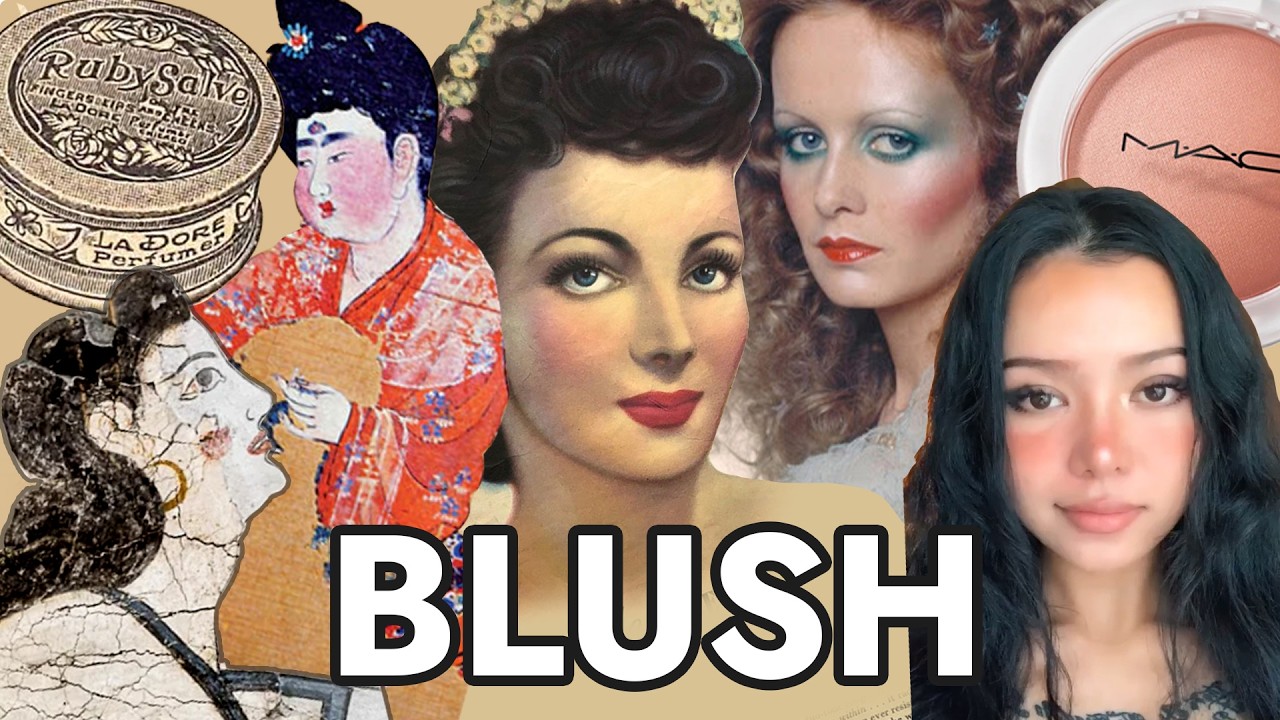
Blush is older than most cosmetic products. Ancient Egyptians used red ochre mixed with fat on both lips and cheeks as far back as 3000 BCE, and it wasn’t purely decorative. It signaled health, vitality, and social rank.
In China, rouge made from safflower petals was a staple as early as the Shang Dynasty (1600-1046 BCE). By the Tang Dynasty, heavy blush worn from the jawline to the temples was a full court look. A flushed complexion meant status, not embarrassment.
Ancient Origins Through the 18th Century
Key timeline of blush across cultures:
- Ancient Egypt (3000 BCE): Ground red ochre with fat; worn by men and women alike
- Ancient Greece: Crushed mulberries and alkanet root as stick rouge
- Roman Empire: Red clay, berries, and eventually cinnabar (mercury sulfide, toxic)
- 15th-century Europe: Countess Caterina Sforza documented rouge made from red sandalwood and ethanol in her DIY beauty book, “Experimenti”
- 18th-century France: Marie Antoinette wore heavy carmine rouge applied in dramatic circles, symbolic of aristocracy
The 18th century was blush at its most theatrical. Both men and women at the French court painted their cheeks in bold circles using safflower, carmine, or cinnabar. After the French Revolution, overt blush became associated with the overthrown aristocracy and fell sharply out of favor (3INA Cosmetics).
19th Century to the Rise of Modern Blush
Victorian-era blush was essentially banned in polite society. Queen Victoria declared heavy makeup the domain of performers and people of “loose morals.” Women pinched their cheeks or dabbed beet juice before social calls instead.
Still, blush never fully disappeared. French cosmetics brand Bourjois created the first powder blush in 1863 as an alternative to theatrical greasepaint, marking the shift from DIY formulas toward commercial products (allbeauty).
By 1915, Elizabeth Arden launched one of the first commercially packaged cheek rouges sold in elegant compacts. The 1920s changed everything: flappers embraced rosy cheeks openly, and Hollywood’s silent film era required visible color to register on black-and-white film.
Blush sales in the U.S. prestige market reached $462 million in a 12-month period through mid-2024, with Amazon alone driving nearly $59 million of that (Circana, via Zoe Report). That’s a product with staying power across 5,000 years.
20th Century Trends and the Draping Revival
Makeup artists of the 1970s and 1980s pushed blush into editorial territory. Way Bandy famously draped heavy blush across Cher’s cheekbones and temples. Martin Pretorius gave the models in Robert Palmer’s “Addicted to Love” video that sculpted, deep-blush look still referenced today.
Each decade shifted the approach:
- 1920s-30s: Bold, circular application from Hollywood influence
- 1950s-60s: Softer pastels, more natural placement
- 1970s-80s: Heavy draping, contouring with blush
- 1990s: The “no-makeup” era pushed blush to the background
- 2020s: Draping returned, liquid blush exploded, and blush-as-full-face-color became mainstream
The pandemic-era wellness focus brought blush back in a big way. A product historically linked to health and vitality made sense when people were thinking about looking alive again (Makeup Museum).
Blush Finish Types and Their Effects

The finish of a blush changes how skin looks more than the color does. A deep berry in matte reads completely differently than the same shade with shimmer. The light interaction is the difference.
Circana data from 2024 shows liquid blush, stick, and balm formats gaining traction specifically because they deliver dewy, skin-like finishes that traditional pressed powders can’t match. Finish preference is shifting.
Matte and Satin Finishes
Matte blush contains zero reflective particles. Pure pigment, flat finish, absorbs light. It reads the most “real” on skin because natural skin doesn’t reflect light from the cheeks.
Best for: oily or combination skin, contouring effects, photography under harsh lighting, hot climates where shimmer breaks down faster.
Matte formulas are more buildable and forgiving than shimmer. Apply too much and you can blend it out more easily than a shimmery overdo.
Satin sits between matte and shimmer. It has a soft sheen from fine mica particles, but nothing chunky or sparkly. This finish is the most universally flattering and the one most makeup artists default to for editorial and everyday work. It works on most skin types and reads naturally in photos without looking flat.
Shimmer and Glitter Finishes
Shimmer blush contains visible reflective mica particles coated with titanium dioxide. The larger the particle size, the more obvious the shimmer. Fine shimmer adds glow. Chunky shimmer adds glitter.
On camera, shimmer magnifies. What looks like a subtle glow in person can read as intense glitter under flash photography. Worth knowing before a wedding or headshot session.
For oily skin, shimmer can backfire. Natural skin oils break down the reflective particles by midday, creating a greasy-looking finish rather than a dewy one. Matte or satin is the smarter choice here.
Glitter blush is almost entirely editorial. Large sparkle particles don’t belong in everyday looks, and they settle into fine lines and texture. For performance, stage makeup, or themed events: fine. For daily wear: skip it.
Finish vs. Skin Type Quick Reference
| Finish | Best Skin Type | Avoid If |
| Matte | Oily, combination | Very dry or mature skin |
| Satin | All types | Rarely a wrong choice |
| Fine shimmer | Dry, normal | Oily or acne-prone skin |
| Glitter | Performance/editorial only | Everyday wear, mature skin |
A hybrid approach works well in practice: matte powder blush as a base for longevity, then a small dot of cream satin blush on the apples of the cheeks for dimension. Two products, one layered finish.
How to Choose a Blush Product

Choosing blush comes down to four things: skin type, desired finish, pigmentation level, and budget. Get those four aligned and the specific product almost picks itself.
Makeup usage increased by 3 percentage points in 2023 and surpassed pre-pandemic levels, with blush and lip oils among the key drivers in prestige makeup growth (Circana 2023). More people are buying blush again, which means more options at every price point.
Matching Blush to Skin Type
This is the most practical starting point. Formula first, shade second.
Oily skin: powder blush, oil-free and non-comedogenic. Matte or satin finish. Avoid cream formulas unless you’re setting them with powder immediately after.
Dry skin: cream or liquid blush. Apply before setting powder or skip powder entirely. Fingers or a damp sponge blend cream formulas better than a brush on dry skin.
Combination skin: powder or liquid. Liquid blush applied with fingers or a sponge works surprisingly well because you control exactly how much product goes where.
Mature skin: cream or liquid, never powder alone. Powder can settle into lines and look patchy. A cream base under a light dusting of powder extends wear without the flat, dry look.
Pigmentation and Buildability
Pigmentation level matters more than people give it credit for. A sheer blush that disappears on deeper skin tones is frustrating. A highly pigmented blush on fair skin that can’t be sheered out is a mess.
Look for these terms on packaging:
- Sheer: very light color payoff, good for fair skin or a no-makeup look
- Buildable: light on first application, can be layered for more intensity
- Full coverage / high pigment: strong color payoff, best for deeper skin tones or bold looks
Buildable is almost always the safest bet. You can go from light to bold, but you can’t go the other way once it’s on.
Budget and Brand Tiers
Good blush exists at every price point. Honestly, some drugstore formulas outperform luxury options in pigmentation and longevity.
| Tier | Brands | Price Range |
| Drugstore | Milani, NYX, e.l.f., Revlon | $5 – $20 |
| Mid-range | NARS, Tarte, Rare Beauty | $25 – $50 |
| High-End | Charlotte Tilbury, Hourglass | $35 – $75 |
| Luxury | Chanel, Dior, Armani Beauty | $55 – $100+ |
NARS Orgasm blush is often cited as the best-selling blush in prestige beauty. It’s a satin-finish peachy-pink with gold shimmer that works across a wide range of skin tones. Worth knowing as a benchmark when comparing options.
For sensitive or acne-prone skin, check for non-comedogenic, fragrance-free, talc-free labels. Brands like e.l.f. and Milani both offer mineral-based options at drugstore prices that work well on reactive skin.
Looking at how applying liquid blush differs from powder application can help you decide which format suits your routine before committing to a product. And if you’re building out a full face and want to know how blush fits into the broader sequence, understanding layering makeup properly makes the whole routine more effective.
FAQ on What Is Blush
What is blush in makeup?
Blush is a pigmented cosmetic applied to the cheeks to add color and warmth. It mimics the natural flush of blood rising to the skin. Available in powder, cream, liquid, stick, and gel formats, it suits every skin type and routine.
What is the difference between blush and bronzer?
Blush adds pink, coral, or berry color to the cheeks. Bronzer adds warmth using brown or golden tones. They serve different purposes. Blush creates a flush. Bronzer creates a sun-kissed or sculpted effect.
What does blush do for your face?
Blush adds color, warmth, and dimension. It draws attention upward toward the cheekbones, making the face look more awake and defined. Good blush placement can also create a subtle lifting effect without contouring.
What is the best blush formula for oily skin?
Powder blush works best for oily skin. It absorbs excess sebum and lasts longer than cream or liquid formulas. Look for oil-free, non-comedogenic options with a matte or satin finish to avoid emphasizing shine.
What is liquid blush?
Liquid blush is a fluid formula that blends into skin for a natural, dewy cheek flush. It offers buildable color payoff and long wear. Rare Beauty’s Soft Pinch Liquid Blush popularized the format significantly in recent years.
What blush shade suits fair skin?
Soft pinks, light peaches, and baby roses work best on fair skin tones. Shades with cool undertones suit fair skin with pink undertones. Warm apricots and light corals work better for fair skin with yellow or golden undertones.
What is blush used for in contouring?
Blush can contour when placed high on the cheekbones and swept toward the temples. The draping technique uses heavy blush placement to sculpt and define the face. It replaces or complements traditional contour powder.
What is the difference between cream blush and powder blush?
Cream blush blends into skin for a natural, skin-like finish. It suits dry or mature skin. Powder blush sits on top of skin and lasts longer on oily skin. Each requires a different application tool and technique.
What ingredients are in blush?
Most blushes contain iron oxides for pigment, mica for shimmer, and talc or silica as a base in powder formulas. Cream versions use oils, waxes, and emollients. Preservatives like phenoxyethanol keep formulas shelf-stable.
What is the best blush for deep skin tones?
Deep skin tones need high-pigment formulas. Sheer blushes often disappear entirely. Look for rich berries, warm corals, deep brick reds, and plum shades. Buildable formulas work best so color payoff can be adjusted gradually.
Conclusion
Blush is one of those products that looks simple but has a lot going on under the surface. Formula, finish, pigment level, placement. Get those right and it works. Miss one and the whole look falls flat.
Start with your skin type. That narrows the format. Then pick a shade that matches your undertone, not just your depth. From there, technique does most of the work.
The short version: powder for oily skin, cream or liquid for dry, buildable pigment for deeper tones, and always blend up toward the temples.
That’s really all you need.

She started writing on the site after fielding the same questions from clients and friends often enough to just write the answers down: which red won't turn orange on a warm undertone, how to keep lipstick from feathering into fine lines, why a "12-hour" formula rarely survives dinner.
Every review on the site follows the same rule she uses with paying clients: wear it first, then decide if it's worth recommending.
- How to Make Eyeliner Last Longer Without Smudging - August 31, 2026
- How to Make Eyeshadow Last Longer All Day - August 29, 2026
- How to Find Your Undertone in 5 Easy Steps - August 27, 2026