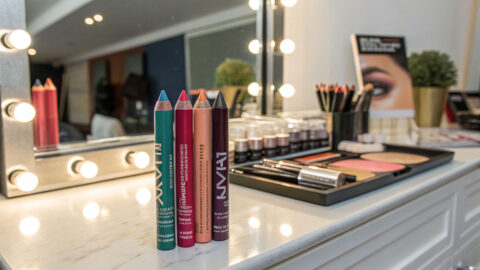
NYX eyeliner pencils trip people up right out of the packaging. It’s a wood-cased pencil, and once the tip goes dull, getting fresh pigment back means running a blade over it, not twisting a base like you would with a click pen.
L’Oreal’s Consumer Products Division distributes the line across more than 70 countries, and that sharpening step is exactly what separates the pencil lineup from NYX’s mechanical, twist-up liners.
Most cosmetic sharpeners solve this with two holes built into the same tool. A standard hole strips wood and rebuilds a fine point, while a wider second hole is sized for jumbo barrels. Staedtler, Faber-Castell, and KUM all build their sharpeners around that same dual-hole setup, so the concept isn’t unique to NYX.
What a NYX Eyeliner Pencil Actually Is, and What Sharpening Does to It

Sharpening one down works a little differently than people expect. The blade shaves away a thin layer of wood along with the creamy pigment sitting underneath it, and it’s that combination, a wood casing wrapped around a soft wax core with nothing to click or twist forward, that makes a blade necessary in the first place.
Toni Ko launched NYX Professional Makeup in 1999 with an 18-shade line of eyeliner and lip liner pencils, its very first products. By her own account, that lineup brought in about $2 million in revenue within the first year. L’Oreal bought the brand in 2014, in a deal reported at roughly $500 million (the actual figure was never confirmed publicly), and NYX still sits under L’Oreal’s Consumer Products Division today.
Eyeliner comes in a handful of different builds, and pencil-style eyeliner is the one built entirely around that sharpenable core. Liquid and gel-pen formulas skip the wood and wax setup for a brush or felt tip instead, so liquid eyeliner never comes near a blade, a distinction NYX makes clear in its own eyeliner guide.
NYX Eyeliner Pencil Formats That Require Sharpening
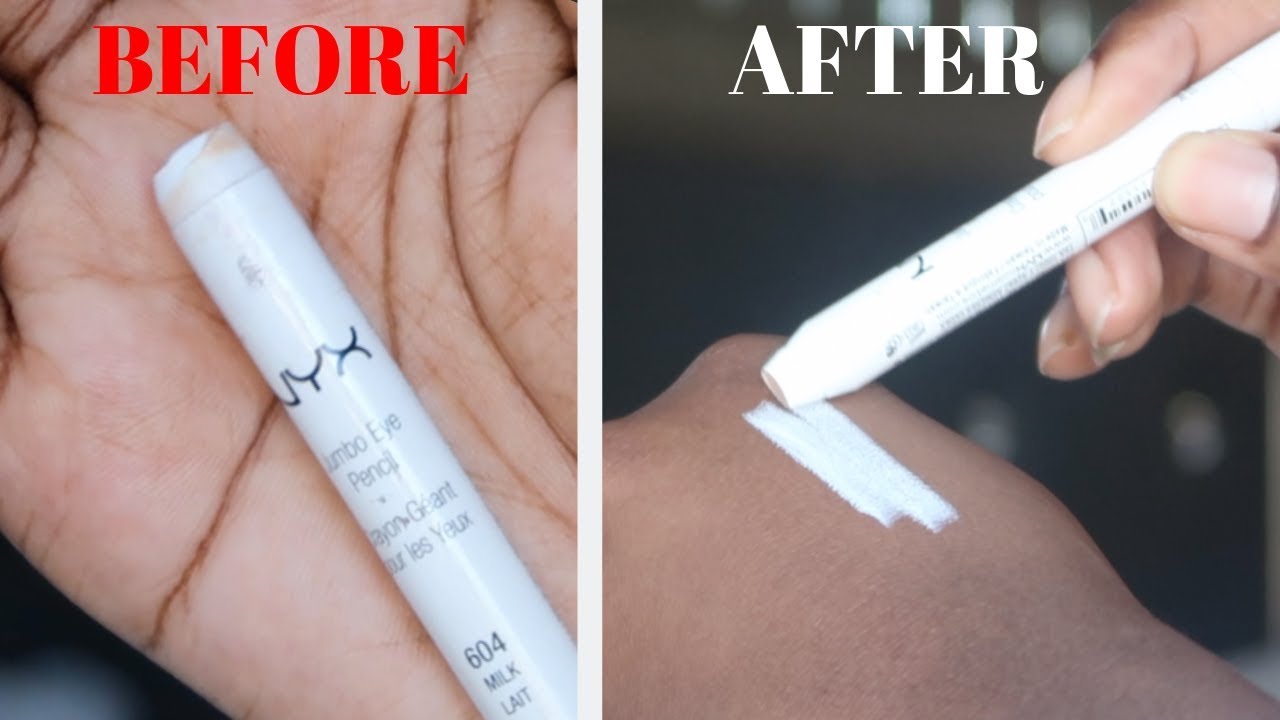
NYX sells both sharpenable pencil eyeliners and mechanical liners that never touch a blade. The Slim Eye Pencil, Jumbo Eye Pencil, Slide On Eye Pencil, and Epic Wear Liner Stick all need a sharpener. The Vivid Rich Mechanical Eyeliner is the odd one out, it twists up instead.
Pencils That Need a Sharpener
Each of these carries its own real, sharpenable core, though the specs vary quite a bit between them:
- Slim Eye Pencil: standard wood barrel, roughly two dozen shades depending on region and stock, and the brand’s original best-selling eye and lip pencil
- Jumbo Eye Pencil: oversized barrel, 16 shades, doubles as eyeliner, eyeshadow crayon, and eye primer
- Slide On Eye Pencil: slim waterproof barrel, 18 shades, sharpened with a small-hole sharpener rather than a jumbo one
- Epic Wear Liner Stick: 33 matte and metallic shades, rated for up to 36 hours of wear
The Epic Wear Liner Stick causes the most confusion out of the four, mostly because its plastic-look casing reads as a twist-up product at first glance. NYX’s own product listing says otherwise. Keep the tip sharp with a double pencil sharpener, it tells you, and a wave of TikTok posts backs that confusion up, one clip summing it up as nobody having warned her the pencil needed sharpening at all.
The One NYX Liner That Doesn’t

The Vivid Rich Mechanical Eyeliner is the true exception in the eye pencil lineup. It twists forward like a lipstick bullet, and NYX’s own listing states plainly that it needs no sharpening at all, just a twist and apply.
Go with a pencil like the Slim or Jumbo and you get creamier payoff, easier blending for smoky or smudged looks, and a wider shade range than the mechanical option offers across the board. That flexibility isn’t free though. You need a sharpener within reach, and every sharpen wastes a small amount of product.
The mechanical liner skips all of that. Twist it, apply it, done, no tools, no shavings anywhere. Its tip also holds a consistent shape every time since there’s no blade involved in reshaping it. But that consistency cuts both ways: once the tip wears down at an angle, there’s no fixing it. A pencil gets a fresh point whenever you need one. The mechanical liner just keeps wearing unevenly until you replace the whole thing.
Beyond sharpening, the Epic Wear formula has its own application quirks worth knowing, covered in a separate guide to using the NYX eyeliner stick. The jumbo pencil pulls triple duty as liner, shadow, and primer too, a versatility explained in a full breakdown of the jumbo eye pencil.
Which Sharpener Works Best for a NYX Eyeliner Pencil?

A NYX eyeliner pencil needs a sharpener matched to its barrel width. Get that wrong and nothing else about your technique really matters.
The Slide On Eye Pencil calls for a small-hole sharpener. The Slim Eye Pencil uses a standard hole. Jumbo Eye Pencil barrels need the wider jumbo hole. All three cut cleanest with a steel blade built specifically for soft cores, not the cheap plastic blade that comes in a lot of drugstore sharpeners.
Matching the Hole to the Barrel
Staedtler’s own sharpener specifications put a standard pencil barrel at up to 8.2mm across, sharpened at a 23-degree angle, while jumbo barrels run up to 10.2mm and get sharpened at a wider 30-degree angle inside a double-hole sharpener. That size gap is exactly why a Slim Eye Pencil clicks neatly into a normal drugstore sharpener while a Jumbo Eye Pencil just spins loose in the same hole.
Sharpener manufacturer KUM treats cosmetic pencils as their own specialized category, grouped alongside soft, porous-lead colored pencils and kept separate from ordinary graphite pencils. The company even makes a dedicated line of precision cosmetic sharpeners built around that softer-core need for a gentler blade. Makes sense once you think about it, a graphite-grade blade just isn’t built for wax.
A dull or generic plastic blade tends to tear a soft NYX core instead of slicing it. A stainless or high-carbon steel blade keeps a clean edge over far more uses.
| Sharpener Type | Barrel Fit | Blade Material | Best For |
|---|---|---|---|
| Small-hole cosmetic sharpener | Slide On Eye Pencil, thin pencils | Stainless steel | Fine, controlled points |
| Standard dual-hole sharpener | Slim Eye Pencil, most drugstore liners | Stainless steel | Everyday sharpening |
| Jumbo dual-hole sharpener | Jumbo Eye Pencil, oversized crayons | High-carbon steel | Wide barrels, less breakage |
| NYX Double Makeup Pencil Sharpener | Both jumbo and regular NYX pencils | Steel with shavings catcher | One tool for the whole lineup |
The jumbo barrel trips up more first-time buyers than any other size mismatch, honestly, a problem covered in more depth in a dedicated guide to sharpening the jumbo eye pencil. The same barrel-matching logic carries over to wood-cased pencils outside the NYX lineup too, including Urban Decay’s sharpenable eyeliner pencils.
How to Sharpen a NYX Eyeliner Pencil Step by Step

Insert the pencil fully into a barrel-matched sharpener, hold it steady, and turn the sharpener around the pencil rather than the other way around. For soft-core pencils like these, three to four gentle rotations is usually enough to rebuild the tip. Check after each one so the core doesn’t over-sharpen.
- Wipe the pencil tip clean before first use to clear any packaging dust
- Insert the barrel into the matching hole, standard for the Slim Eye Pencil, jumbo for the Jumbo Eye Pencil
- Hold the pencil still and turn the sharpener around it, not the pencil in the sharpener
- Turn gently for three to four rotations, checking the point after each pass
- Stop once the wood and pigment form a clean cone, since sharpening past that point wastes product
- Clear the shavings from the blade edge before putting the sharpener away
A finer point matters most for precise techniques like tightlining along the lash line, where a blunt tip drags instead of gliding through the waterline. Once the pencil is sharp, everything else folds into a standard eyeliner application routine.
How Often Should You Sharpen a NYX Eyeliner Pencil?
Frequency really just depends on how often the pencil gets used and which formula it is.
Sharpen daily-wear precision looks every few days to keep the point fine enough for lash-line work. Occasional or smudged looks stretch a lot further, maybe once a week or less. The Epic Wear Waterproof formula is rated for up to 36 hours of wear per application, so you’re doing fewer mid-day touch-ups in general, and fewer touch-ups means the tip stays usable longer between actual sharpenings.
A wider jumbo barrel also holds a usable point longer between sharpenings than a slim barrel does, simply because there’s more material sitting between the tip and the wood. The Slim Eye Pencil retails around $4.50, which is cheap enough that the small amount of product lost to each sharpening rarely matters to anyone.
Beauty blog Glossip Girl’s review of the Slide On line notes the format requires frequent sharpening, which leads to some product wastage, a tradeoff for its liquid-liner-like color payoff.
Why NYX Eyeliner Pencils Crumble or Break When Sharpened

Most breakage traces back to a handful of things working against you at once. Cold, dry conditions make the wax brittle before the blade even touches it. A dull or rusted blade tears instead of slicing. Push too hard on a wide jumbo barrel and the core cracks under the pressure, or force the pencil into a hole that doesn’t match its width and it snaps sideways instead of shaving down evenly.
Faber-Castell’s own sharpening guidance lists several things that determine how cleanly a pencil cuts, the sharpness of the blade, the angle it meets the wood at, the taper of the sharpener’s cone, and how rigid the whole mechanism is. A pencil core is more likely to tilt and snap when the sharpener opening runs too large for the barrel.
Softer cores, the kind used in colored pencils and cosmetic pencils, are generally cut to a shorter, blunter point than a hard graphite pencil, since a fine point shears off more easily on a soft core. A creamy NYX core behaves closer to a soft colored-pencil lead than a hard graphite one, which is why gentle, even pressure matters more here than speed does.
Warming the pencil for a minute between your palms softens the wax just enough to cut this risk before sharpening. Small habit, but it helps. Customer reviews for the Slide On Eye Pencil line frequently flag sharpening trouble and wood-casing breakage as a common complaint against the format.
Sharpening a NYX Eyeliner Pencil Without a Dedicated Sharpener
No cosmetic sharpener around? A clean utility blade or craft knife can stand in, shaving the wood away in thin, controlled layers the same way a real sharpener would.
Nail clippers and kitchen scissors are the wrong tool for this. They crush the wood instead of slicing it, and you end up with a jagged, uneven point (box cutters run into the same problem). Carving by hand also risks angling into the casing at the wrong spot, wasting more product than a proper sharpener would.
NYX founder Toni Ko has talked about burning the tip of her Maybelline eyeliner pencil with a lighter, years before NYX existed, back when she couldn’t afford higher-end makeup. That fix still shows up today. Hold the flame back from the tip for a second or two, just enough to soften the wax, then reshape it against a tissue. No cutting involved.
None of this beats an actual sharpener, though. A basic dual-hole cosmetic one costs only a few dollars, so improvising really only makes sense in a genuine pinch.
How to Clean and Sanitize a NYX Eyeliner Pencil and Sharpener
Cleaning a NYX eyeliner pencil means disinfecting the sharpener blade, not just wiping visible wax off the tip. A quick alcohol pass before first use and after each sharpening keeps bacteria from transferring between the blade and the fresh pigment sitting underneath it.
The FDA’s own eye cosmetic safety guidance is blunt about this. Don’t share or swap eye cosmetics, and keep containers clean. A peer-reviewed FDA survey of 93 eye area cosmetics found low or high levels of microbial growth in about 40 percent of the samples tested (32 percent at low levels, 8 percent at higher levels), including contamination above 100 CFU per gram or milliliter in that 8 percent. That risk sits right in the surface layer a sharpener blade removes, which is exactly why a clean blade matters as much as a clean tip.
Wipe the pencil tip down before first use, that clears any packaging dust sitting on it. The sharpener blade needs an alcohol wipe after each use so product doesn’t build up along the edge. And don’t skip the shavings chamber either, empty it out every so often so old wax doesn’t smear onto whatever fresh point you just cut.
70 percent isopropyl alcohol is the concentration used across most cosmetology sanitation guides for disinfecting metal tools like a sharpener blade, since it penetrates residue without evaporating before it can actually work.
| What to Clean | Method | How Often |
|---|---|---|
| Pencil tip | Alcohol wipe | Before first use, after any drop |
| Sharpener blade | 70% isopropyl alcohol | After each sharpening session |
| Shavings chamber | Empty and dry-brush | Every few uses |
Some makeup artists reach for dedicated products like Beauty So Clean cosmetic wipes to disinfect a sharpener’s blade and housing between clients. A more complete routine for sanitizing pencils, blades, and the rest of a makeup bag sits in a full guide to sanitizing makeup.
How to Store the Pencil Between Uses

Storage affects both hygiene and how easily the next sharpen goes. Keep the cap on between uses, it blocks dust and moisture better than most people assume. Heat is the real enemy here too, since warmth softens the wax and gives bacteria an easier time growing, so keep the pencil away from direct heat sources. It’s also worth keeping it separate from other makeup that could scratch or crack the wood casing while it’s rattling around in a bag.
A cool, capped, dry spot does more for a NYX eyeliner pencil’s condition than any cleaning step done after the fact. General storage habits that apply across a whole makeup bag, not just eye pencils, are covered in a broader guide to storing makeup.
When Sharpening a NYX Eyeliner Pencil Does Not Work

Sharpening fixes a dull tip. It does not fix a dead pencil.
A dried-out core stays brittle even after warming it, and cutting into it just breaks it further. Cracks or splits in the wood casing expose pigment unevenly, so no blade angle is going to produce a clean point there. If the barrel’s worn down too short to grip safely inside a sharpener, it needs replacing, not sharpening. And a rusted or dull blade will shred the tip on every single pass, no matter how careful the technique is.
Sources disagree on how long sharpening can actually keep a pencil safe to use, and that disagreement is worth stating plainly rather than picking a side. The American Academy of Ophthalmology’s own guidance sets a flat three-month window for eye makeup generally, with no separate exception carved out for pencils.
Several beauty and vision-clinic sources claim pencil eyeliner gets a longer run, up to two years, as long as it’s sharpened regularly to remove the contaminated outer layer. That claim gets pushback from inside the beauty industry itself. Some beauty writers covering eyeliner shelf life argue sharpening only strips the visible surface, and the rest of the exposed core stays just as compromised as it was before.
The disagreement really comes down to what sharpening actually removes, a thin outer layer of contamination, not the preservative breakdown happening deeper in the core over months of storage. EWG’s Skin Deep database rates several NYX eye pencil shades as moderate hazard based on ingredient data, which is a separate concern from contamination that no amount of sharpening addresses.
General guidance on eyeliner shelf life across formats, not just pencils, sits in a full breakdown of how long eyeliner lasts.
FAQ: How to Sharpen a NYX Eyeliner Pencil
Is a NYX eyeliner pencil the same as a kohl pencil?
No. Kohl is a traditional powder-based eye cosmetic, and the FDA does not approve it as a color additive for use in the eye area in the US. A NYX eyeliner pencil runs on a wax-based, creamy formula inside a sharpenable wood casing, which puts it in a different category entirely.
Why does temperature change how easily a NYX eyeliner pencil sharpens?
Cold, dry conditions stiffen the wax core, making it brittle and more likely to snap under the blade. Warmth softens that same wax, so it glides more easily but can smear inside the sharpener. Room temperature gives you the safest, cleanest cut.
Should you sharpen a NYX eyeliner pencil before or after applying it?
Before. Sharpening produces shavings and a slightly rough new edge, both easier to manage before the pencil goes anywhere near your eye. Sharpening after application also risks nicking makeup you’ve already applied or smudging a finished line.
Can you fix a NYX eyeliner pencil tip using a lighter or hot water instead of a sharpener?
A lighter works in a pinch. Hold the flame back from the tip for a second to soften the wax, then reshape it against a tissue. Hot water is riskier, since soaking the wood seam can warp the casing.
Does sharpening waste more product than necessary?
A little, but not much. A gentle sharpen removes only a thin shaving of wood and pigment, not a chunk of the core. Over-sharpening past a clean point wastes far more product than a normal sharpen ever does.
Does a sharpened NYX eyeliner pencil point hold up for waterline application, or does it round off fast?
It rounds off fast on the waterline. Moisture and blinking wear a fine point down within a few strokes, faster than it would along the dry skin of the lash line. A slightly blunter point actually holds up longer for waterline use.
Do waterproof and creamy NYX formulas need different sharpeners?
No, barrel width decides the sharpener, not the formula. A waterproof Slide On Eye Pencil and a creamy Slim Eye Pencil both use standard or small-hole sharpeners, since formula hardness changes technique more than it changes hole size.
What to Fix First When Troubleshooting a NYX Eyeliner Pencil
The barrel-to-sharpener match comes first. An oversized or undersized hole causes more breakage than blade dullness, technique, or temperature combined, so checking fit before anything else prevents most repeat failures.
- Match the barrel to the sharpener hole first
- Check the blade for dullness or rust next
- Adjust technique and temperature last, once the tool itself checks out
A rusted or visibly chipped blade crosses a line no barrel match can fix. At that point the job stops being about sharpening technique and becomes replacing the sharpener itself.
Prioritizing fit over speed costs a little extra time testing an unfamiliar sharpener, which is a small trade against snapping a pencil that took real care to shape in the first place. Once the point holds, winged eyeliner is the natural next technique to build on a freshly sharpened tip.

She started writing on the site after fielding the same questions from clients and friends often enough to just write the answers down: which red won't turn orange on a warm undertone, how to keep lipstick from feathering into fine lines, why a "12-hour" formula rarely survives dinner.
Every review on the site follows the same rule she uses with paying clients: wear it first, then decide if it's worth recommending.
- How to Make Eyeliner Last Longer Without Smudging - August 31, 2026
- How to Make Eyeshadow Last Longer All Day - August 29, 2026
- How to Find Your Undertone in 5 Easy Steps - August 27, 2026