Shine sells. It’s pulled in billions for the beauty industry over the last hundred years, and the person who gets credit for lip gloss wasn’t even trying to make a beauty product. He was trying to fix a lighting problem on a film set in 1930.
That person was Max Factor. Hollywood actresses were showing up on screen with lips that looked flat and lifeless under the new studio lights, because ordinary lipstick absorbed the glare instead of catching it.
Factor’s fix became X-Rated, the first lip gloss ever sold to regular shoppers, and it eventually turned into the multibillion-dollar category that sits on drugstore shelves now.
None of this means gloss started in 1930, though. Sumerians and Egyptians were mixing crushed gemstones and fish scales into their lip color thousands of years before Factor was born. They just never packaged it, named it, or sold it more than once.
What Is Lip Gloss

Shine, not solid color. That’s really the whole distinction between gloss and everything else in a makeup bag. The formula sits somewhere between liquid and semi-solid, and instead of laying down opaque pigment the way lipstick does, it coats the lip surface so light bounces off it.
Coverage was never really the point.
| Product | Finish | Best For |
|---|---|---|
| Gloss | Wet, high shine | Layering or wearing alone |
| Balm | Matte, low shine | Daily moisture |
| Stain | Matte, long wear | Color without reapplying |
| Lipstick | Opaque, solid | Full pigment coverage |
These formats now split into several distinct lip gloss types, from thick lacquers to thin, oil-based tints.
Most modern formulas pair a film-forming base with light-reflecting particles. That combination is what gives lips a glassy look under pretty much any light source now, not just the hot studio lamps Factor was dealing with in 1930.
The category isn’t just old, it’s still growing. Lip gloss was 2024’s top-performing prestige makeup segment, climbing 19 percent year over year (Circana, February 2025).
Who Invented Lip Gloss
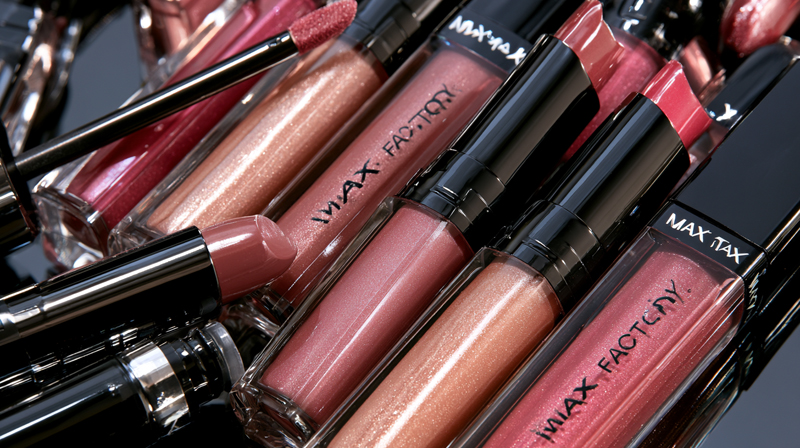
Max Factor gets the credit.
He was born Maksymilian Faktorowicz in Poland, then built his business in Los Angeles as a cosmetic chemist. Lip gloss came out of that shop in 1930, made specifically for Hollywood film actresses.
Flat, matte lipstick read dull under studio lights, and Factor wanted something that caught the camera instead of absorbing it.
| Year | Product | Purpose |
|---|---|---|
| 1909 | Max Factor and Company founded | Theatrical makeup supplier |
| 1914 | Color film greasepaint | Natural look on early color stock |
| 1929 | Panchromatic makeup | Matched sound-era film sensitivity |
| 1930 | Lip gloss | Reflective shine for black and white film |
That old Hollywood polish still turns up in modern vintage makeup looks built around glassy, glamorous lips.
Max Factor’s Career Before Lip Gloss
Lip gloss wasn’t Factor’s first invention, not even close. By 1930 he’d already spent close to two decades solving problems for the film industry.
- 1914: introduced a 12-toned greasepaint for early color motion pictures
- 1929: launched Panchromatic makeup for the new sound-film stock
- Credited with coining the term “make-up” itself
Gloss was just the next problem on his list, not some debut idea.
Why Studio Lighting Created the Need for a New Product
Between 1927 and 1929, Hollywood swapped silent, orthochromatic film for panchromatic stock.
Suddenly every flaw in a flat lipstick finish showed up on screen, the cracking, the dullness, all of it.
A liquid, reflective coating fixed a lighting problem years before anyone thought of it as a beauty trend.
Did Lip Shine Exist Before Max Factor’s Formula
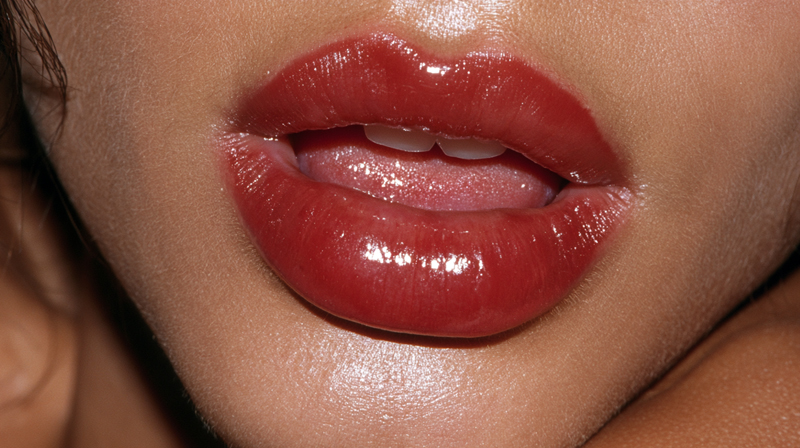
Glossy lips are not a 20th-century idea.
Sumerian women in Mesopotamia crushed gemstones and minerals into lip color roughly 5,000 years ago, according to The Historians Magazine (2025), which traces the practice to the burial goods of Queen Schub-ad of Ur.
- Ancient Egypt: red ochre and plant dye mixed with beeswax for color
- Cleopatra-era formulas: crushed carmine beetles and fish scales, credited by beauty historian Rachel Weingarten, added a pearlized shine
- Aztec civilization: crushed cochineal beetles used for a similar red pigment
Modern recreations of ancient Egyptian makeup looks still lean on that same fish-scale shine trick.
What actually separates these from Factor’s invention is repeatability. Ancient formulas were hand mixed fresh each time, ground and blended right before use, not a manufactured recipe sold again and again under one name.
That gap, hand-mixed versus manufactured, is what keeps the invention credit with Factor instead of ancient Mesopotamia.
How Was the Original 1930 Lip Gloss Formula Made
Factor built the formula around petroleum jelly, blended with mineral oil, beeswax, and pigment.
Unlike the wax-heavy lipstick ingredients of the same decade, Factor’s gloss leaned almost entirely on jelly and oil for its slip.
Factor tested batches directly under studio lights, adjusting thickness until the shine read correctly on camera.
Traditional 1930s lipstick was dry, waxy, and prone to cracking.
Gloss stayed flexible, applied without pressure, and let natural lip color show through instead of covering it completely.
What came out of that testing behaved nothing like the solid sticks already on the market, a liquid finish with actual give to it.
What Was X-Rated, the First Commercial Lip Gloss
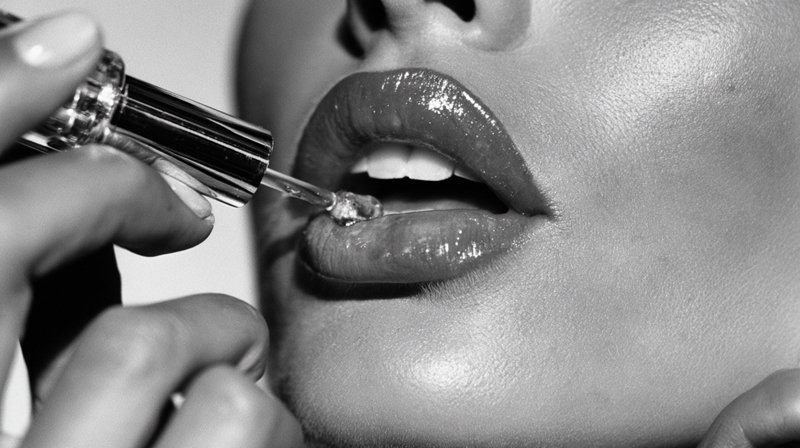
X-Rated was the name Max Factor gave his first public gloss.
It stayed exclusive to Hollywood talent through the early 1930s before reaching regular consumers.
- 1932: public release, the first lip gloss sold directly to shoppers
- Ownership: Max Factor and Company later became part of Procter and Gamble
- 2003: Procter and Gamble discontinued the formula
That run adds up to 71 years on shelves, from 1932 to 2003, longer than most cosmetics brands survive at all.
X-Rated didn’t really have competition either, not for decades. Nothing else showed up in the category until the 1970s.
How Did Bonne Bell Turn Lip Gloss Into a Teen Product in 1973
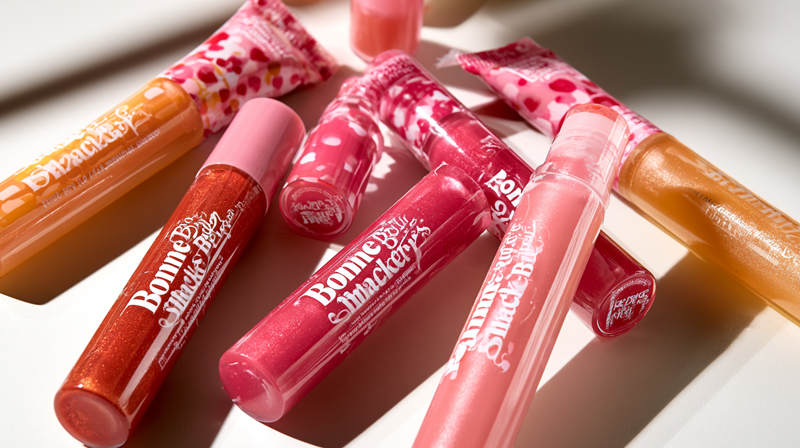
Hollywood’s gloss stayed a niche item for four decades.
Bonne Bell changed that on June 25, 1973, when Jess Bell launched Lip Smackers at the company his father, Jesse Grover Bell, had started in Cleveland, Ohio in 1927.
Strawberry, the first flavor, came out of a family ski trip. Bell just wanted the lip balm they already used to actually taste like something instead of nothing.
- Original “Biggy” tube launched in 1973
- Smaller Lil’ Smackeroos added in 1977
- Early flavors: strawberry, lemon, green apple
The line fit right into the broader wave of 70s makeup looks built around a dewy, natural face rather than heavy color.
By 1985, Lip Smackers had grown into a $50 million business, turning what Factor built for movie sets into something teenagers carried on their keychains.
Who Brought Lip Gloss Back in the Y2K Era
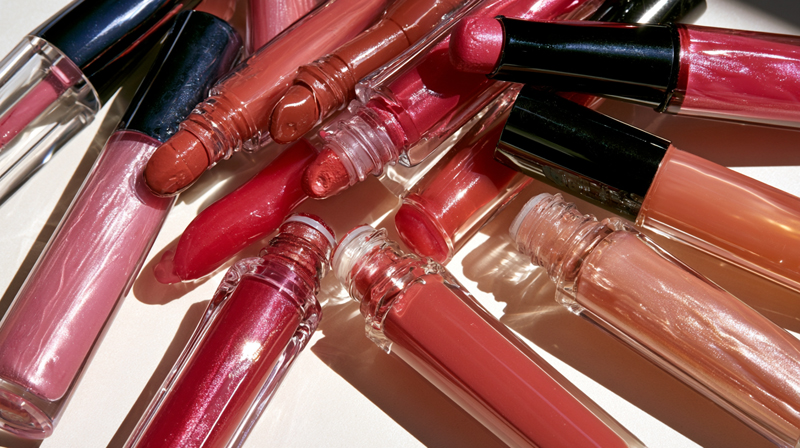
Gloss went quiet through most of the 1980s and 1990s.
DuWop kicked off the revival first, launching Lip Venom in 1999, and Lancome followed a year later in 2000 with Juicy Tubes.
| Feature | Juicy Tubes | Lip Venom |
|---|---|---|
| Brand | Lancome | DuWop |
| Launch year | 2000 | 1999 |
| Signature trait | High-shine, fruit scent | Tingling, plumped finish |
Lancome Juicy Tubes
Lancome says it sold roughly 20 tubes per minute in the US at the line’s peak, according to Glossy (2025).
The squeeze-tube format and scented shades built a following that outlasted most gloss competitors from the same decade.
- Discontinued in 2018
- Revived in 2020 for its 20th anniversary
- Still sold in its original 10 shades today
DuWop Lip Venom and the Plumping Trend
The formula mixed cinnamon, wintergreen, and ginger, the same trio that still shows up in a lot of tingle-based plumpers.
The tingle worked the same way modern formulas explain how lip plumper works, drawing blood toward the surface of the lip.
DuWop built a cult following through repeat sellouts on QVC.
Lip gloss stayed a growth story well past the Y2K wave. The mass lip category grew 8 percent in 2024 to a $1.4 billion business (Circana, 2024).
What Is the Difference Between Lip Gloss and Lipstick

Gloss reflects light. Lipstick delivers pigment.
That single distinction drives every other difference between the two.
| Trait | Lip Gloss | Lipstick |
|---|---|---|
| Texture | Liquid, slides on | Solid stick, needs pressure |
| Coverage | Sheer, buildable | Opaque, full pigment |
| Wear time | Shorter, needs reapplication | Longer, especially matte formulas |
| Base | Oils and film formers | Waxes and pigment |
Lipstick alone splits into several types of lipstick, including matte, satin, and cream finishes, each behaving differently on the lip.
The line blurs on purpose in a lot of newer formulas, though.
- Gloss-lipstick hybrids add pigment to a glossy base
- Lip stains bring long wear without the wax structure
- Tinted balms borrow gloss shine with balm-level care
Anyone weighing the two head to head can see the full lip gloss vs lipstick breakdown for a side-by-side look at wear time and finish.
When Does the Max Factor Origin Story Not Apply
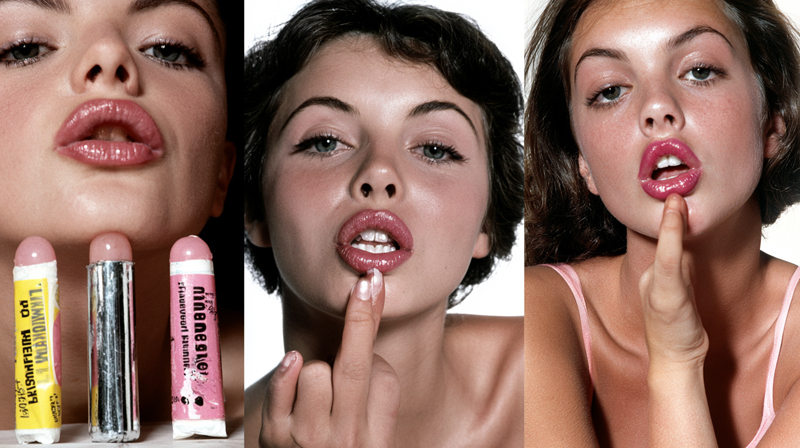
A “who invented it” answer only works within its own definition.
Push past 1930’s petroleum-jelly base, and Factor’s story stops covering everything sold as gloss today.
There’s also a naming problem worth pointing out. Bonne Bell’s own current site calls Lip Smackers the “world’s first flavored lip balm,” while decades of 1970s press coverage and collector archives describe the same product as the first flavored lip gloss.
Neither claim is wrong exactly. The product blurred both categories from day one, and the brand has told the story both ways depending on the decade.
- Ancient shine techniques predate Factor by thousands of years but were never a manufactured, repeatable formula
- Modern peptide and hyaluronic acid glosses add skincare functions his 1930 formula never touched
- Some current lip products marketed as gloss are trademarked as balm, and vice versa, depending on filing rather than formula
The invention claim holds for the reflective, film-based product category. It stops holding the moment a brand’s own marketing team redraws the label.
Which Brands Lead the Lip Gloss Category Today
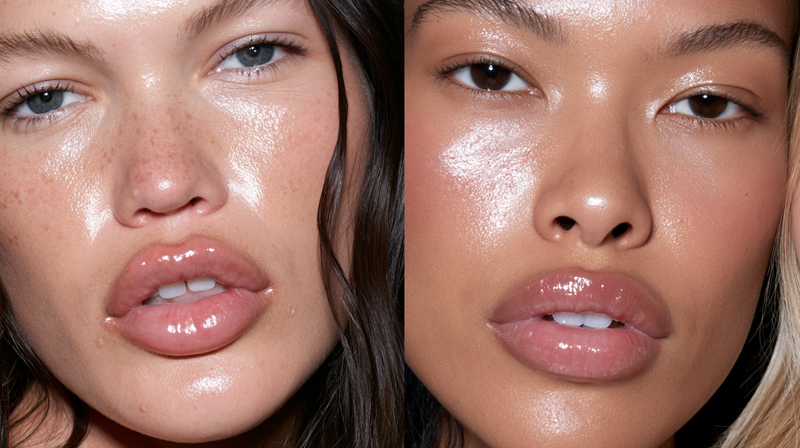
Fenty Beauty reset the category in 2017.
Rihanna’s brand built the Gloss Bomb Universal Lip Luminizer into a signature product; Fenty says it sells one every 10 seconds, based on the brand’s first-half 2025 sales data.
- Multiple universal shades, priced around $21
- Glass-like finish with a light plumping effect
- Expanded into the Gloss Bomb Stix stick format in 2024
Lip-care purchases grew 10 percent year over year in 2025, with lip plumper sales up 182 percent (IPSY 2026 Beauty Discovery Report).
That surge explains why brands keep layering skincare actives, peptides and hyaluronic acid, into what used to be a pure-shine product.
The market-size numbers don’t even agree with each other, for what it’s worth.
SkyQuest puts the 2025 global lip gloss market near $4.2 billion, while Reports and Data estimates it closer to $4.8 billion for the same year, a gap that shows how differently firms segment the category.
Rhode and Laneige now compete for the same shelf space Bonne Bell and Lancome once owned, pairing gloss shine with skincare claims Max Factor’s original formula never made.
FAQ on Who Invented Lip Gloss
What was lip gloss originally called before the name stuck?
Some early accounts describe Max Factor’s 1930 product as “lip pomade” before the industry settled on “lip gloss.” The rebrand helped separate the shiny new formula from traditional lipstick pomades already on drugstore shelves.
Did Max Factor patent his lip gloss formula?
No confirmed patent filing for the 1930 formula is publicly documented. Company records reference formulation notes and ingredient testing rather than a registered patent, common for cosmetic houses guarding trade-secret recipes instead of filing publicly.
Why did Max Factor name his first public gloss X-Rated?
The reasoning was never publicly documented by Max Factor and Company. The name likely leaned on the word’s provocative edge in 1930s marketing, a common tactic for standing out on a drugstore counter crowded with plainly named lipsticks.
What happened to Max Factor after he invented lip gloss?
Max Factor died in 1938, just eight years after releasing lip gloss to Hollywood actresses. His son Frank continued the company’s innovation streak, later co-developing Pan-Cake makeup for full-color film.
Who owns Max Factor and Company today?
Procter and Gamble bought Max Factor in 1991, decades after the original invention. Coty acquired the brand in a 2016 deal covering 41 beauty labels and relaunched Max Factor globally in 2018.
Is Bonne Bell still in business today?
The Bonne Bell name stopped operating after Markwins International bought the company and its Lip Smackers brand in 2015. Lip Smackers itself survived the sale and still ships flavored lip gloss under Markwins ownership.
Did Charlie’s Angels really help popularize lip gloss?
Popular history accounts credit the 1976 series with pushing glossy lips into the mainstream, since its stars regularly wore high-shine formulas on screen. The timing lines up with gloss becoming a drugstore staple beyond Bonne Bell’s teen fan base.
Is the Cleopatra lip gloss story historically accurate?
Historians dispute part of it. The carmine beetle detail gets repeated often, but modern cochineal dye came from insects native to the Americas, unavailable in Cleopatra’s Egypt. The fish-scale shine technique has more consistent historical support.
What is the difference between lip oil and lip gloss?
Lip oil runs thinner and prioritizes skincare benefits over shine, while gloss leans on film-forming polymers for a thicker, glassier finish. Anyone weighing the two can check a full difference between lip oil and lip gloss breakdown for more detail.
Which celebrities are linked to Lancome’s Juicy Tubes comeback?
Lancome’s 2025 anniversary campaign featured Paris Hilton, Hilary Duff, Ed Westwick, Mischa Barton, Kelly Rowland, and Rachel Bilson, all reminiscing about the gloss during its original Y2K run on shows like TRL.
Conclusion
Settling who invented lip gloss matters less than knowing what that answer is worth today.
Every brand claiming a “vintage formula” or “original recipe” should be measured against Max Factor’s actual 1930 base: petroleum jelly, mineral oil, and pigment, nothing else.
If a modern tube lists twenty ingredients, it’s a hybrid built on that foundation, not a recreation of it.
That distinction matters more when shopping than any origin story does.
Check the ingredient panel before the marketing copy. Any brand claiming to be “the first” gloss on shelves deserves the same scrutiny X-Rated’s own name got back in 1932.
History rewards the formula that solved a real problem, not the one with the better slogan.

She started writing on the site after fielding the same questions from clients and friends often enough to just write the answers down: which red won't turn orange on a warm undertone, how to keep lipstick from feathering into fine lines, why a "12-hour" formula rarely survives dinner.
Every review on the site follows the same rule she uses with paying clients: wear it first, then decide if it's worth recommending.
- How to Choose a Foundation for Your Skin Type - August 20, 2026
- Makeup Looks for Brown Dress: 5 Shades, One Undertone - August 18, 2026
- How to Pick a Contour Shade for Your Skin Tone - August 17, 2026